Korean onion production covers approximately 20,000–25,000 hectares annually, with Changnyeong County (South Gyeongsang Province) as the most commercially significant production origin. The onion’s above-ground visual appearance — a round bulb sitting at the soil surface — creates a misleading impression that stones do not affect onion quality. This impression is wrong in a specific and important way: while the mature onion bulb sits above the soil surface, its basal plate (the compressed disc from which all layers grow outward) is embedded 8–15 cm below the surface during the entire 8-month growth cycle. A stone at this depth applies lateral pressure to the basal plate continuously throughout the season, progressively deforming the symmetry of every layer that develops above it.
Korean onion farming stone clearing addresses a quality problem that is invisible during growth and only becomes commercially significant at harvest — when the kimchi manufacturer or supermarket buyer grades the bulbs and finds that irregular shape and basal plate deformation disqualify 20–35% of un-cleared field production from Grade 1. This guide covers the deformation mechanism, the Changnyeong premium chain, the October–June winter production calendar, and the mechanization economics that determine when stone clearing investment produces the fastest payback in the Korean onion production system.
The Basal Plate Deformation Mechanism — Why Onion Stone Damage Is Unique
Korean onion (Allium cepa) bulb development is a layered process that fundamentally differs from the single-axis growth of radish or the clove-cluster expansion of garlic. The onion forms its edible bulb through the accumulation of fleshy leaf bases — each new layer wraps around the previous, building from inside out over the full growing season. The basal plate is the anchor point from which each new layer grows: it is a compressed disc of stem tissue approximately 2–3 cm in diameter at harvest, embedded at the base of the bulb below the soil surface throughout development.
How stone contact deforms the onion
A stone at 8–15 cm depth rests against the developing basal plate from one side. As each new layer of the bulb forms and expands outward from the basal plate, it encounters asymmetric resistance — the side facing the stone cannot expand as freely as the opposite side. Over 8 months of continuous growth, this asymmetry accumulates into a measurable deformation: the bulb is flattened, elongated, or “pushed” to one side, with the innermost layers showing more severe deformation than the outer layers that formed later in the season when the bulb had partially grown past the stone’s influence zone.
Why stone clearing prevents this
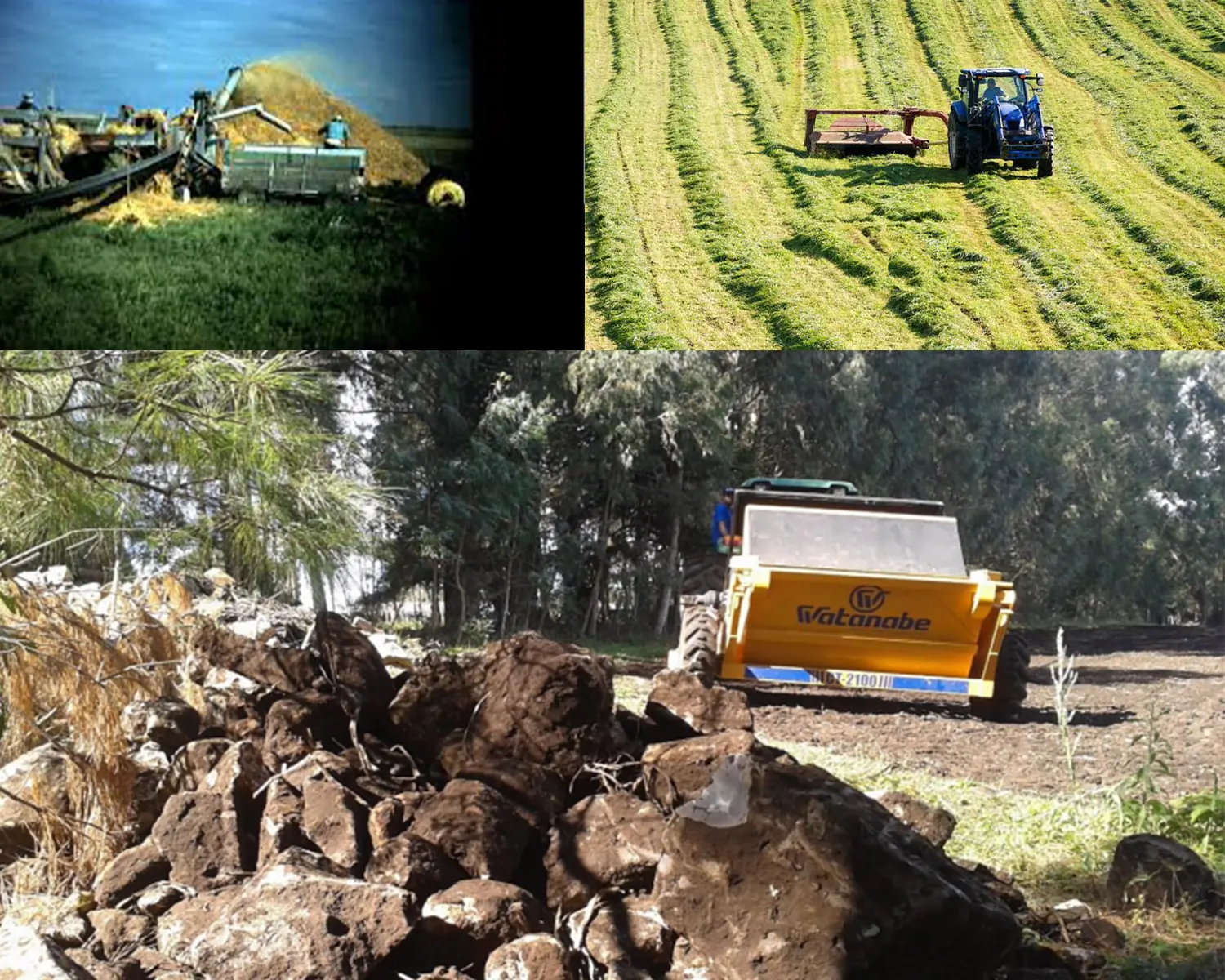
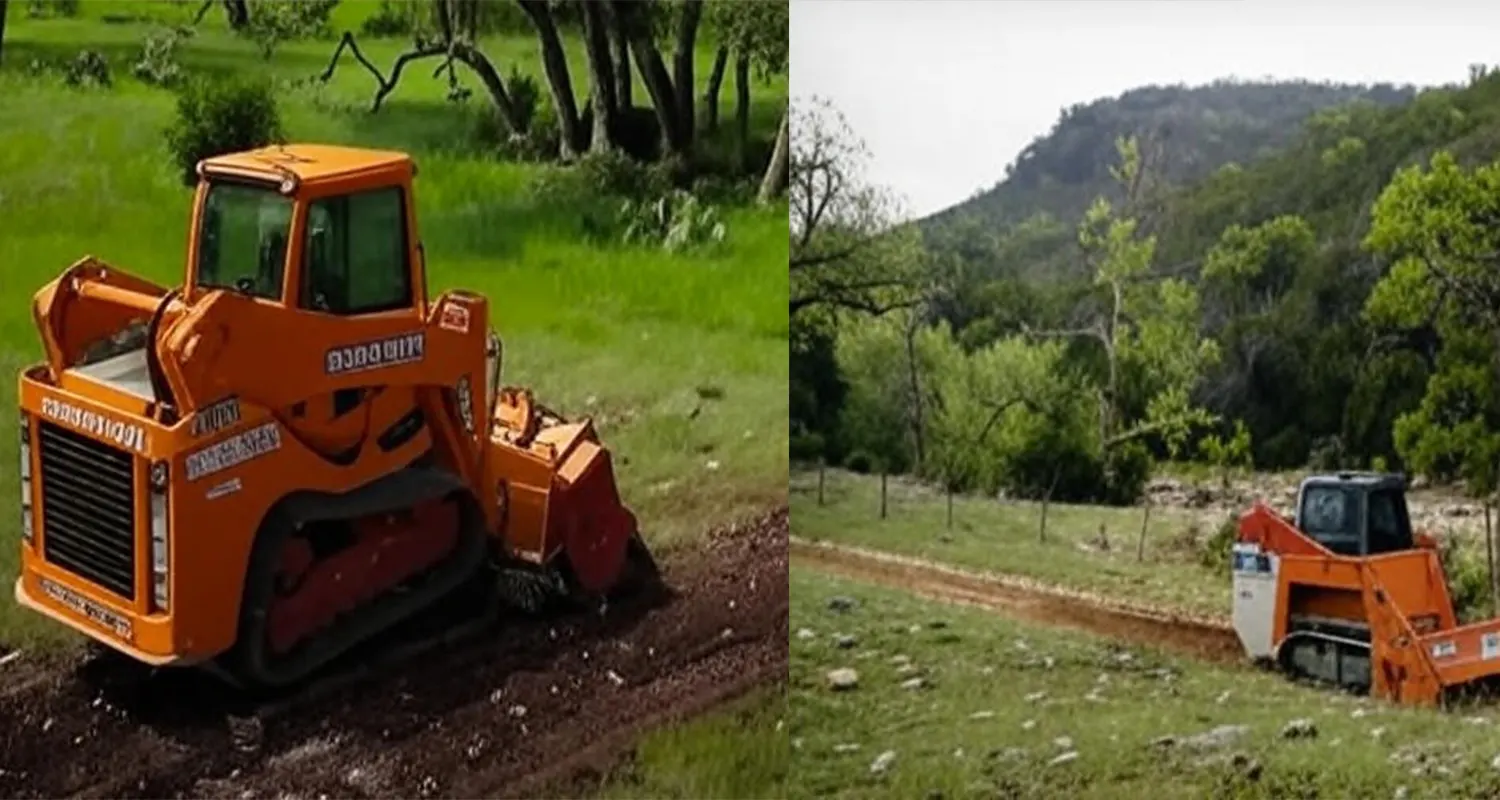
The THOR 2.4 clearing pass removes stones from the 10–25 cm zone — the full range of basal plate development depth for Korean winter onion varieties. Without stones in this zone, the basal plate anchors symmetrically in fine-tilth soil, and each bulb layer expands in the circular pattern that produces the round, uniform Grade 1 bulb that buyers require. The cleared field also allows the transplanting hole to be made at exactly the correct depth without deflection — another stone contact point that causes early establishment asymmetry.
| Deformation type | Visual appearance | Primary cause | Stone clearing impact |
|---|---|---|---|
| Lateral flattening | Bulb flattened on one side, round on the other. Circular cross-section becomes elliptical. | Stone at 8–15 cm depth on one side of the basal plate. Stone clearing eliminates this. | 90%+ reduction |
| Elongation | Bulb grows taller than wide. Neck to shoulder ratio abnormal. Inner layers elongated. | Stone directly below basal plate forces upward growth. OR excessive nitrogen causing abnormal elongation (not stone). | Partial — stone cause eliminated |
| Basal cracking | Visible cracks at the base of the bulb. Soil entry and rot acceleration. | Stone causes basal plate asymmetry → differential layer expansion → basal crack. ALSO occurs from rapid moisture fluctuation. | Stone-caused cases eliminated |
| Double bulb | Two bulbs sharing a basal plate. Not stone-related. | Genetic (multiple growing points) or temperature-caused vernalisation interruption. Not a stone problem. | Not affected by stone clearing |
The Changnyeong Premium — What Stone-Free Production Unlocks
Changnyeong County (South Gyeongsang Province) is Korea’s most recognised onion origin, equivalent in premium-market terms to what Euiseong is for garlic. Changnyeong-certified onions command a consistent 30–60% premium over equivalent non-certified origins in Korean supermarkets and export markets. Understanding the Changnyeong certification standard — and how stone clearing interacts with it — is the commercial foundation of Korean highland onion investment planning.
Changnyeong Onion Certified Origin — Key Quality Requirements
Smooth, round bulbs. Diameter 80–120 mm. No visible deformation, basal cracking, or skin blemish. This standard is consistently achievable only on stone-cleared fields — un-cleared fields at typical Korean granite stone density produce 25–35% deformed or undersized bulbs that fail Grade 1.
Changnyeong-certified onions must test above a minimum pyruvic acid level that confirms the high-pungency character of the local ecotype. Stone-cleared, pH-managed fields at proper nutrient balance produce higher pyruvic acid than stressed, stone-affected plants — a direct quality link between field management and flavour standard.
Changnyeong certified onions must demonstrate minimum 4-month shelf life at ambient conditions — a quality characteristic that depends on low moisture content in the outer skins, tight layer formation, and no basal damage. Basal cracks from stone deformation are the primary shelf-life failure mechanism: a cracked base allows moisture entry and rot that destroys a lot within 2–3 weeks of harvest.
Changnyeong certified Grade 1 onion: 1,200–2,500 KRW/Kg at seasonal peaks. Standard cooperative channel Grade 1: 400–900 KRW/Kg. The 30–60% premium is specifically available on certified, deformation-free bulbs — stone-cleared field production consistently achieves this standard; un-cleared field production frequently falls below it.
The Korean Winter Onion Calendar — 8 Months Underground and the Clearing Window

Korean winter onion (the dominant commercial production type) has the longest underground development period of all major Korean highland crops — planted in October, overwintering in the soil, and harvested in May–June the following year. This 8-month cycle completely defines the stone clearing timing strategy.
Korean Winter Onion Production Calendar
Stone Clearing Depth — Where Onion Sits in the 4-Crop Korean Highland System
Korean onion requires the shallowest stone clearing depth of the four major highland crops — 20–25 cm for first-season clearing, and 16–18 cm for annual maintenance. This is shallower than radish (30–35 cm) and potato (28–32 cm) because the onion’s edible bulb and basal plate do not extend as deep as other root-zone crops.
Stone Clearing Depth Requirements — 4 Korean Highland Crops
20–25 cm — Shallowest
25–28 cm
28–32 cm
30–35 cm — Deepest (of these 4)
Planning implication: a farm rotating onion → potato → garlic → radish can clear to the radish standard (30–35 cm) once and service all four crops from that single primary clearing. Annual maintenance passes at the shallowest crop requirement (18–20 cm for onion) are sufficient for maintenance years.
Highland vs Lowland Onion — Why Altitude Improves Onion Quality
The conventional Korean onion production zones are lowland (Changnyeong at 20–50 m elevation, Muan at sea level). Korean highland onion production at 400–700 m is a smaller but growing segment driven by a specific altitude effect on onion flavour chemistry:
Mechanization Economics — When Stone Clearing Pays Back on Korean Onion Farms
Academic research published in 2025 (Agronomy, MDPI) evaluated the mechanization economics of Korean onion production across transplanting, harvesting, and collecting operations. The key finding: harvesting machines produce positive returns regardless of farm size, while transplanting machines become economically viable above 10.2 ha and collecting machines above 6.95 ha. Stone clearing investment follows a parallel logic — the per-hectare cost of clearing is most efficiently amortised on farms above 3–5 ha where the cleared area generates sufficient Grade 1 revenue improvement to cover the system cost within 1–2 seasons.
Korean Onion Farm Stone Clearing ROI — Scale-Based Analysis
Revenue figures based on 65%→88% Grade 1 improvement, 30 t/ha yield, 1,500 KRW/Kg average Grade 1 net price improvement. Actual returns vary with local onion market prices and stone density. Break-even periods are estimates — confirm with Korea Watanabe’s financial model for your specific farm parameters.
Frequently Asked Questions
Korean onion farming stone clearing guide — what is the correct depth and timing for winter onion production?
The recommended THOR 2.4 stone clearing depth for Korean winter onion production is 20–25 cm on a first-season clearance of un-cleared ground, reduced to 16–18 cm for annual maintenance on previously cleared fields. The timing constraint is the tightest of all Korean highland crops — the August–September preparation window (after summer crop harvest, before October transplanting) gives only 4–6 weeks for the complete sequence: THOR 2.4 fragmentation, CT-2100 collection, DCW 2.2 lime application, and PSW-3200 ridge formation. For onion fields above 3 ha, the THOR 3.0 (3.0 m working width, 230 HP) is recommended over the THOR 2.4 (2.4 m, 180 HP) specifically because the compressed August–September window requires maximum daily coverage to complete all field preparation before the October 1 transplanting deadline. The 25% wider pass width of the THOR 3.0 reduces the required operating days by approximately 25%, providing a critical buffer when the preceding summer crop is harvested later than planned.
What is the difference between onion stone damage and garlic stone damage — and does it require a different clearing standard?
Onion stone damage and garlic stone damage share the same underlying cause (lateral stone pressure on the developing underground structure) but differ in the tissue affected and the visual result. Garlic: stones apply lateral pressure during bulb initiation, causing the clove wrapper to split — the entire bulb separates into multiple exposed cloves. The damage event is acute and occurs at a specific growth stage. Onion: stones apply progressive pressure on the basal plate throughout the 8-month growing season, causing cumulative layer-by-layer deformation that builds up slowly. The damage is chronic rather than acute. From a stone clearing perspective, both crops require removal of stones from the 8–20 cm depth zone — but the onion’s slightly shallower basal plate (8–12 cm) vs garlic’s bulb initiation depth (10–15 cm) means the onion clearing standard at 20–25 cm is marginally shallower than garlic’s 25–28 cm. On farms growing both onion and garlic in rotation, clearing to the garlic standard (25–28 cm) covers the onion requirement without any additional clearing depth.
Can the same stone clearing system (THOR 2.4 + CT-2100) serve both onion and potato production in a Korean highland rotation?
Yes — the same THOR 2.4 rock crusher and CT-2100 rock picker system serves both crops with the same machine — the only difference is operating depth (20–25 cm for onion vs 28–32 cm for potato) and the seasonal timing (August–September for winter onion vs October–November for spring potato). The annual maintenance pass for an onion field (16–18 cm) is shallower than the potato maintenance pass (22–25 cm) — when both crops are in rotation, the potato-standard maintenance clearing (22–25 cm) also covers the onion requirement and is the recommended uniform maintenance protocol. Korea Watanabe’s standard system configuration serves the complete Korean highland crop rotation (potato, garlic, radish, onion, cabbage) from a single THOR 2.4 + CT-2100 investment without any additional attachment or modification.
What is the soil pH requirement for Korean onion, and how does this compare to the other major highland crops?
Korean onion has the widest pH tolerance of the major Korean highland allium crops — the acceptable range is 6.0–7.0, substantially wider than garlic’s 6.0–6.5 and notably broader than radish’s 6.0–6.5 for maximum root quality. At pH below 5.8, onion roots suffer from aluminium toxicity on Korean highland granite soils (aluminium solubility increases sharply below pH 5.5 on granite-parent soils), which stunts development and reduces bulb size and pungency. Above pH 7.2, iron chlorosis appears as yellowing of the flag leaves, which signals reduced chlorophyll production and lower carbohydrate allocation to the bulb. The target for Korean onion production is pH 6.2–6.8 — achievable with a standard DCW 2.2 lime application and PSW-3200 incorporation on most Korean highland granite soils within one application cycle. Because onion’s pH range is wider than garlic’s, a field limed to pH 6.5 for a garlic crop is also correctly calibrated for the following onion crop — the rotation does not require a separate lime rate recalculation between garlic and onion years.
Does the Korean agricultural machinery subsidy apply to THOR 2.4 purchases for onion field preparation specifically?
Yes — the MAFRA agricultural machinery subsidy applies to the THOR 2.4 purchase regardless of which crop the cleared field will be used for, as long as the purchaser is a registered Korean agricultural business operator with a field registration for onion or other qualifying crops. The subsidy rate (40–50% in the 2026 programme cycle, confirm with county) applies to the machine certification price and is not crop-specific. For Korean onion farms considering the THOR 2.4 investment, the combined subsidy calculation should account for the full rotation that the cleared field will support — not just the onion crop year. A cleared field serving a 4-year rotation (onion → potato → garlic → onion) generates Grade 1 revenue improvement from all four crops, and the cumulative revenue improvement across the rotation is the correct basis for evaluating the THOR 2.4 investment return. Contact Korea Watanabe before the January subsidy application window to confirm current rates for onion and other crops in your stone management system configuration.
Onion Field Preparation — August is the Critical Window
Field area + summer crop harvest date + planned transplanting date + tractor HP → Korea Watanabe provides the August–September clearing schedule, THOR depth protocol, DCW 2.2 lime rate and 2026 subsidy calculation for winter onion production.
Editor: Cxm