
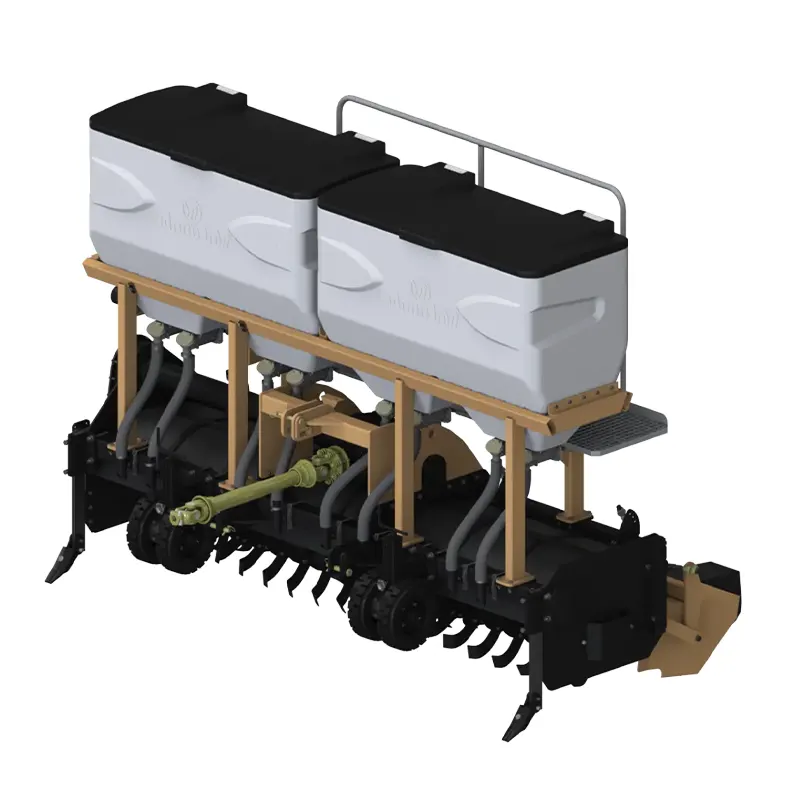
The EP-ERA rotary cultivator series is the in-season companion to the PSW-3200 rotavator — where the PSW-3200 creates the pre-planting seed bed and initial ridge structure, the EP-ERA performs the 2–3 progressive hilling passes that build the final potato ridge around the growing plant. This distinction between pre-planting and in-season machinery is fundamental: the EP-ERA is not a substitute for the PSW-3200 and the PSW-3200 cannot replace the EP-ERA. Each machine performs a specific function at a specific stage of the Korean highland potato production cycle.
The three EP-ERA models — 2100 (2-row), 3100 (3-row), and 5100 (5-row) — share the same 75 HP, Cat.2, 540 RPM specification and differ only in row configuration. This guide covers all three, with specific guidance on which farm scale and row-spacing system each model serves, the progressive hilling protocol, the inter-row weed control technique, and the stone damage mechanism that makes EP-ERA operation on un-cleared Korean highland soil significantly more costly than on cleared fields.
EP-ERA vs PSW-3200 — Why Both Are Required in the Korean Highland System

A Korean highland potato farm that has the PSW-3200 but not the EP-ERA is missing the in-season component that converts the PSW-3200’s initial ridge into a final hill. A farm with the EP-ERA but not the PSW-3200 cannot achieve the soil structure depth that the EP-ERA’s 6–12 cm shallow pass builds upon. The two machines are a functional system, not alternatives — Korea Watanabe designs the full Korean highland potato machinery system with both machines specified for complete, season-long production support.
EP-ERA 2100 / 3100 / 5100 — The Model Selection Decision
| Specification | EP-ERA-2100 | EP-ERA-3100 | EP-ERA-5100 |
|---|---|---|---|
| Row configuration | 2 rows | 3 rows | 5 rows |
| Minimum tractor HP | 75 HP | 75 HP | 75 HP |
| Hitch type | Cat.2 | Cat.2 | Cat.2 |
| PTO speed | 540 RPM | 540 RPM | 540 RPM |
| Daily hilling coverage | 2.0–3.5 ha/day | 3.0–5.0 ha/day | 5.5–8.0 ha/day |
| Must match planter | EP-PAI-2100 (2-row) | 3-row planting system ★ | EP-PAI-480-AR (4-row+) ★ |
| Primary Korean highland application | 5–12 ha terrace farms. Matches EP-PAI-2100 standard system. | 10–20 ha mid-scale. Maximum use on Korean highland terrace widths. | 20+ ha commercial scale. Large lowland-adjacent highland blocks. |
| Also suitable for | Garlic hilling (Oct–Apr), onion inter-row weeding | Potato + radish bed formation after transplanting | High-volume potato + corn highland production |
★ Confirm 3-row and 5-row planter row-spacing match with Korea Watanabe before purchase. Row spacing must be identical between planter and EP-ERA.
The Progressive Hilling Protocol — Three Passes, Three Different Objectives
Korean highland potato hilling is not a single-pass operation — the optimal hill structure is built progressively across three separate EP-ERA passes, each performed at a different growth stage and each adding soil to the hill for a different agronomic purpose. The common mistake — attempting to build the full final hill in a single large pass — results in either ridge compaction damage to the young plant or insufficient hill height at the final stage.
Progressive Hilling Calendar — Korean Highland Potato (post-planting timing)
Korean Highland Potato Hill Cross-Section — Correct vs Too-Flat vs Too-Steep
Too Flat ❌
shallow 12cm
green shoulders, tuber exposure
Correct ✅
25-30cm above furrow
tubers covered, good drainage
Too Steep ❌
erosion risk, narrow top, drought
Cross-sections schematic. Correct hill: 25–30 cm height above furrow, 35–50° shoulder slope, 20–30 cm flat crown for drip tape, tuber zone completely covered.
Stone Damage on EP-ERA Tines — Why Shallow Cultivation Is More Stone-Sensitive Than Deep Tillage
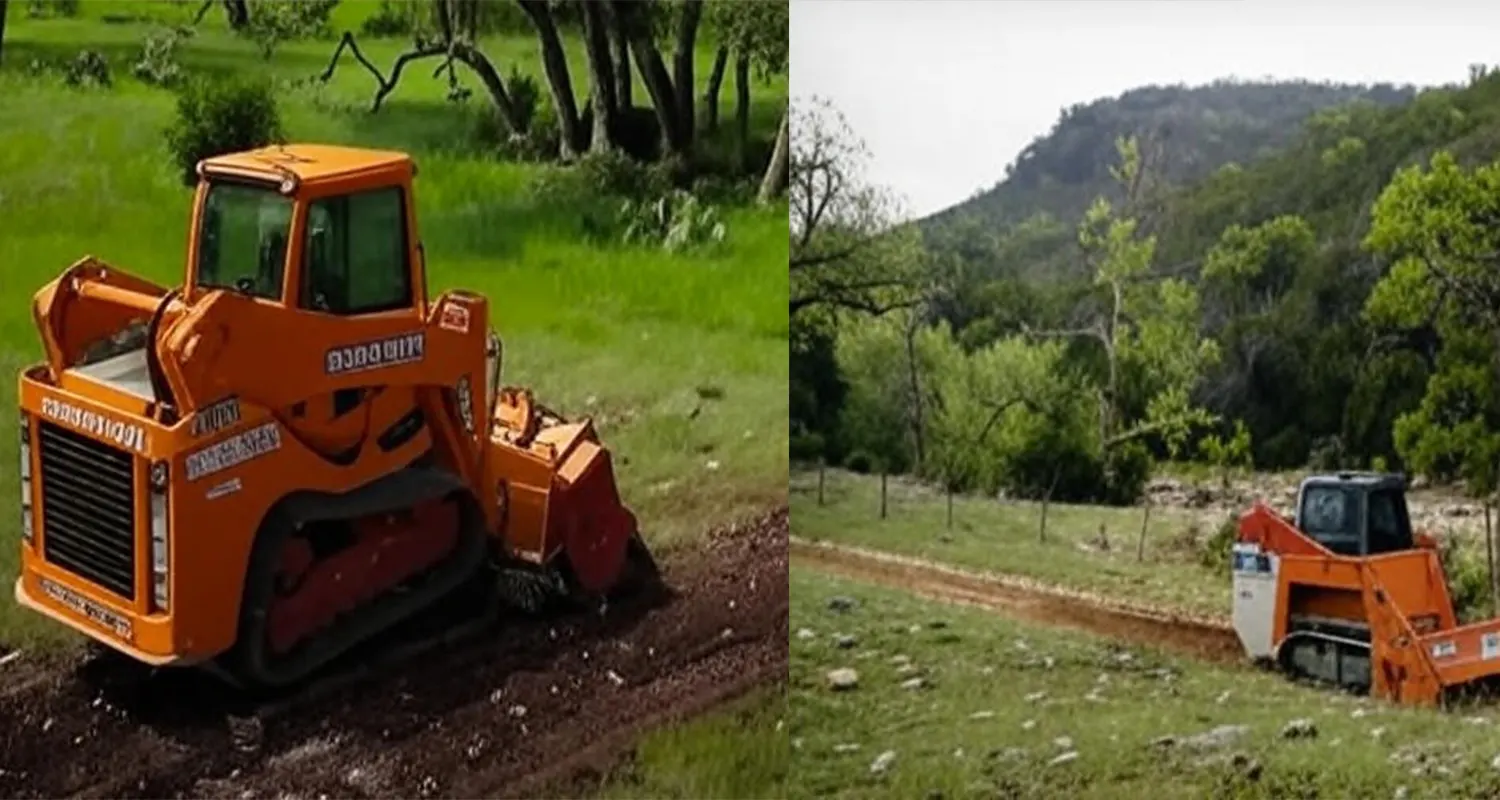
There is a counter-intuitive aspect to stone damage on the EP-ERA: the shallow 6–12 cm operating depth makes the EP-ERA more sensitive to stone damage, not less. The PSW-3200 operates at 18–25 cm with heavy-duty tines designed for initial soil break-up and stone encounter tolerance. The EP-ERA tines, by contrast, are designed for shallow soil cultivation between growing plants — they are lighter, more precisely positioned, and have less tolerance for stone contact at the 540 RPM operating speed.
On un-cleared highland ridge
Stone fragments from frost heave accumulate at 6–15 cm depth — the EP-ERA’s exact operating zone. At 540 RPM, a tine encounters a 3–5 cm stone at approximately 8 m/s tip speed. This impact bends tines (2–4 per pass on moderate stone density), damages the tine holder bracket on the rotor, and in severe cases cracks the rotor shaft. Tine replacement cost on un-cleared Korean highland granite: 80,000–160,000 KRW per hilling pass on a 3 ha field.
On cleared highland ridge
The THOR 2.4 stone clearing followed by CT-2100 collection removes stones from the 0–30 cm profile. Annual frost-heave residual on cleared fields produces stones typically below 2 cm maximum dimension — below the EP-ERA’s tine damage threshold at 540 RPM. Tine replacement on cleared Korean highland granite: typically zero per season for first 3 years after clearing. One to two tines per season thereafter from natural small-stone residual at maintenance clearing intervals.
Inter-Row Weed Control — Using EP-ERA Cultivation to Replace Herbicide Programmes
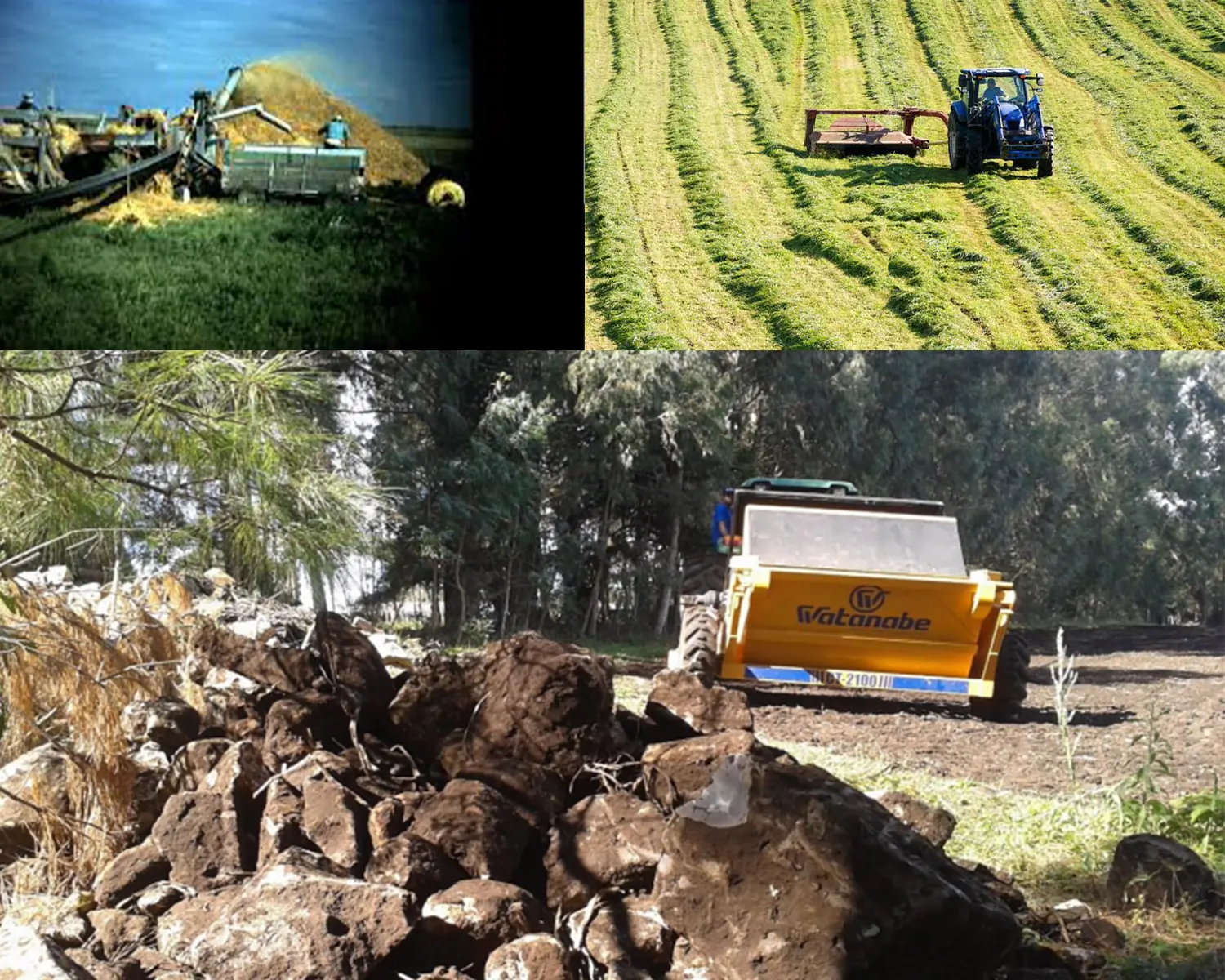
Korean highland farms using the EP-ERA correctly can significantly reduce herbicide programme costs — the inter-row cultivation on Pass 1 and Pass 2 achieves weed suppression equivalent to a pre-emergence herbicide application if timed correctly (weed cotyledon stage, before root system establishment). The key is timing precision, which requires that the EP-ERA tines run exactly in the inter-row space without stone deflection causing root zone damage.
| EP-ERA Pass | Weed target | Operating depth | Forward speed | Weed kill effectiveness |
|---|---|---|---|---|
| Pass 1 (Wk 2–3) | Cotyledon weeds — not yet rooted | 6–7 cm | 2.0–2.5 km/h | 85–95% |
| Pass 2 (Wk 4–5) | Established weeds — small rosette stage | 8–10 cm | 2.5–3.0 km/h | 65–80% |
| Pass 3 (Wk 6–7) | Last inter-row access before canopy closes | 10–12 cm | 3.0 km/h | Mechanical only — after this canopy suppresses |
| Un-cleared field (stone deflection) | As above, but tines deflect off stones | Variable ±3 cm | Reduced 1.5 km/h | 40–55% — stone zones missed entirely |
The weed control effectiveness drop on un-cleared fields (40–55% vs 85–95% on cleared Pass 1) is not a result of the EP-ERA operating differently — it is a consequence of stone deflection pulling tines off the inter-row line during the pass. When a tine encounters a stone and deflects, it creates an untreated strip adjacent to the stone where weed seeds are not disturbed. These stone-adjacent strips become the weed refugia that seed the next generation of weeds later in the season, requiring herbicide follow-up that the mechanical cultivation programme was designed to avoid.
Crop-Specific EP-ERA Settings — Potato, Garlic and Onion Hilling Profiles
Frequently Asked Questions
EP-ERA rotary cultivator Korean highland guide — which model should I choose for my farm size?
The model selection is determined primarily by your planting row count and farm scale. If you are using the EP-PAI-2100 (2-row planter), the EP-ERA-2100 is the matching cultivator — it hills both planted rows in a single pass with consistent inter-row alignment. For farms above 12 ha that have moved to 3-row or 4-row planting systems, the EP-ERA-3100 or EP-ERA-5100 matches the wider planting system and delivers proportionally higher daily coverage. The 75 HP minimum tractor requirement is the same for all three models — if you already run a 75 HP or larger tractor for the EP-PAI-2100, the same tractor operates any EP-ERA model without modification. The critical constraint is row-spacing match: the EP-ERA model you choose must be configured to the exact same row spacing as your planter. Korea Watanabe configures the EP-ERA to match the planting system row spacing at the time of purchase and confirms the match before delivery — confirm this configuration step is included when ordering.
How many hilling passes does Korean highland Dubaek potato need with the EP-ERA, and what is the timing?
Dubaek potato for cold storage production requires three progressive EP-ERA hilling passes on Korean highland granite soil: Pass 1 at Week 2–3 post-emergence (plant height 10–15 cm), Pass 2 at Week 4–5 (25–35 cm height), and Pass 3 at Week 6–7 (40–55 cm height). The 3-pass protocol is specifically important for Dubaek because this variety forms its tubers relatively high in the ridge — meaning shallow or insufficient hilling at Pass 2 and Pass 3 leaves tubers exposed to light at the ridge shoulder, which triggers solanine accumulation and produces the green shoulder defect that disqualifies Dubaek from cold storage intake. Atlantic potato for processing does not require the same strict 3-pass protocol because its tolerance for slight greening is higher and its tuber position in the ridge is somewhat lower than Dubaek’s — 2 passes are acceptable for Atlantic in most Korean highland conditions. Sumi potato falls between Dubaek and Atlantic; 2–3 passes depending on the initial ridge height from the PSW-3200 preparation.
Can the EP-ERA operate on Korean highland fields that have not been cleared with the THOR 2.4?
Yes — the EP-ERA can physically operate on un-cleared Korean highland granite soil fields. However, as described in the stone damage section, the 540 RPM tine speed at 6–12 cm operating depth encounters stones in the exact depth zone where frost-heave stones concentrate on Korean highland granite soils. The consequences are progressive tine bending and breakage, irregular hill geometry from stone deflection, reduced weed control effectiveness in stone-adjacent zones, and potential root damage to plants in the rows adjacent to stone contact events. Korea Watanabe’s experience with Korean highland farms transitioning from un-cleared to cleared production is that the EP-ERA maintenance cost difference between cleared and un-cleared fields typically pays for 40–60% of the annual THOR 2.4 maintenance clearing cost — making the maintenance clearing investment partially self-financing through the EP-ERA cost saving alone, before any crop quality improvement is counted.
What is the correct EP-ERA operating speed for Korean highland terrace conditions?
EP-ERA forward speed on Korean highland granite terraces should be matched to plant height and tractor stability on the gradient, not to maximum throughput. The specific speed guidance: Pass 1 (young plants, precision required) — 2.0 km/h maximum; Pass 2 (larger plants, more hill volume needed) — 2.5 km/h; Pass 3 (near full-canopy, maximum hill height) — 2.5–3.0 km/h on flat sections, 1.5–2.0 km/h on gradients above 12%. On Korean highland terraces with gradients above 15%, reduce forward speed to 1.5 km/h for all passes — the downhill force on the tractor increases tine penetration depth beyond the intended setting, and the uphill resistance reduces it; speed reduction minimises the depth variation between uphill and downhill passes. Headland turns on Korean highland terraces require complete PTO disengagement before the turn begins — turning with the EP-ERA engaged and tines in the ground on a tight terrace headland risks tine contact with the turn direction’s outside row plants.
Does the EP-ERA qualify for the Korean agricultural machinery subsidy in 2026?
Yes — all three EP-ERA models (2100, 3100, 5100) carry Korean agricultural machinery certification and qualify for the MAFRA 2026 programme under the cultivation and hilling machinery category. The standard subsidy rate applies (30–40%, confirm with county). Korea Watanabe’s recommended purchase strategy for the complete Korean highland potato machinery system is a three-stage approach: Stage 1 (Year 1) — THOR 2.4 rock crusher + CT-2100 rock picker stone clearing; Stage 2 (Year 1–2) — PSW-3200 + DCW 2.2 soil preparation; Stage 3 (Year 2–3) — EP-PAI-2100 planter + EP-ERA cultivator + EP-AWB harvester. The EP-ERA is the Stage 3 investment that completes the in-season machine set after the clearing and soil preparation system is established and generating revenue. Submitting the EP-ERA subsidy application in January of Year 2 or 3 — after the cleared-field revenue has funded the Stage 1 and 2 investments — places the application in the county system before quota is exhausted and before the spring clearing season begins.
EP-ERA Configuration and Row-Spacing Match — Confirmed Before Delivery
Planting row count + row spacing + current planter model + farm area + primary crop → Korea Watanabe confirms the correct EP-ERA model, configures row spacing to match your planter and confirms the 2026 subsidy strategy as part of the complete in-season machinery system.
Editor: Cxm