
Korean highland granite soils have a characteristic natural pH range of 5.0–5.5 — moderately acidic, buffered by the feldspar and mica minerals in the weathered granite parent material. This natural acidity is well below the optimum pH for most crops in the highland rotation (highland cabbage requires 6.5–7.0; highland radish 6.0–6.8; potato 5.8–6.5) and needs active management through lime application to produce the soil chemistry conditions in which each crop performs to its potential.
Lime management on Korean highland farms is not a single application decision — it is a crop-specific, rotation-integrated programme that must be recalibrated each year against soil test results because each crop in the 4-year rotation has different pH requirements, different buffering effects on soil pH from their organic matter inputs, and different risks from incorrect pH. This guide covers the natural pH chemistry of Korean granite soils, the crop-specific pH targets, the lime application rates and timing for each rotation year, the use of the DCW 2.2 binder spreader for precision lime application, PSW-3200 rotavator incorporation depth, and the critical risk of over-liming that activates common scab in potato years.
Korean Granite Soil Natural pH — Why Active Management Is Required
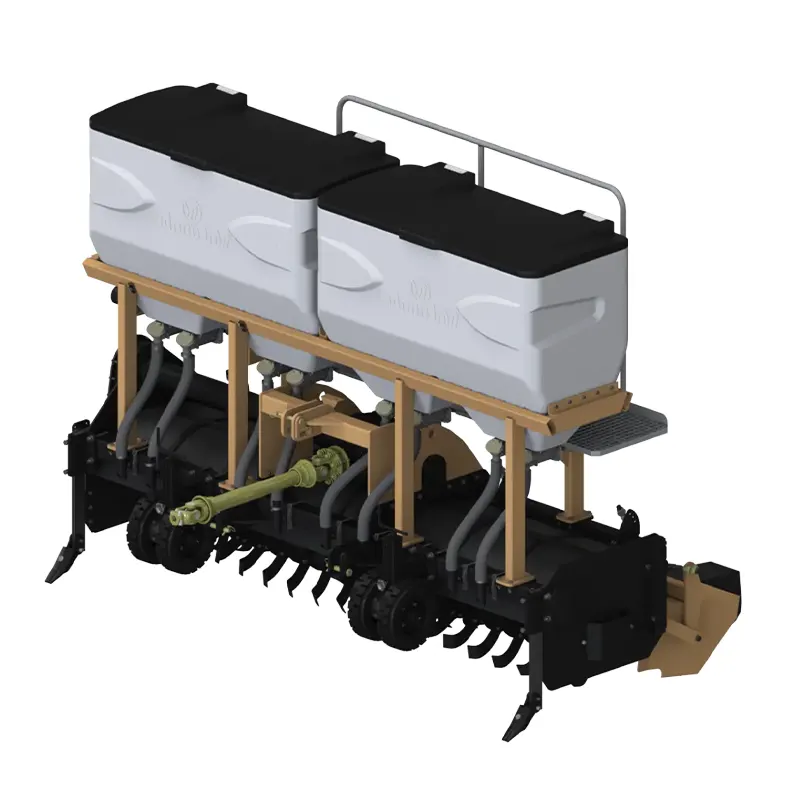
Korean highland Taebaek granite soils are naturally acidic for two reasons that are specific to their geological and ecological history. Understanding these reasons explains why stone clearing and lime management are complementary steps in new land development — not separate activities:
Reason 1: Granite parent material
Granite weathers to produce silica, aluminium oxides, and iron oxides — all moderately to strongly acidic weathering products. Unlike limestone-derived soils that buffer toward neutral pH, granite-derived soils have no natural alkaline buffering mechanism. Without lime additions, the natural pH tendency of Korean highland granite soil is progressive acidification toward pH 4.5–5.0 under cultivation.
Reason 2: Previous forest cover
Korean highland land converted from forest (the source of most highland agricultural development) inherits acidic soil conditions from the conifer litter that dominated the forest floor. Conifer needles have a pH of 3.5–4.5 when they decompose — each year’s needle fall acidifies the upper 15 cm of soil. Korean highland fields recently converted from conifer plantation (including THOR FLM land clearance sites) commonly test at pH 4.5–5.2 in the first year — requiring substantial lime application before any crop can be established.
Reason 3: THOR stone crushing releases acid
The THOR 2.4’s crushing action fragments granite stones, exposing fresh stone surfaces to weathering. Freshly exposed granite surfaces have a slightly lower pH than weathered surfaces — meaning the immediate post-THOR soil pH may be 0.2–0.3 pH units lower than the pre-THOR measurement. This is not a reason to avoid stone clearing, but it is a reason to run the post-THOR soil test 4–6 weeks after clearing (allowing the freshly exposed surfaces to stabilise) rather than immediately after, to get an accurate baseline for lime rate calculation.
Crop-Specific pH Targets for the 4-Year Korean Highland Rotation
| Rotation year / Crop | Target pH | Key pH sensitivity | Lime timing |
|---|---|---|---|
| Year 1 — Potato (Sumi/Dubaek/Atlantic) | 5.8–6.2 | Above 6.5: common scab (Streptomyces) activated. Below 5.5: aluminium toxicity restricts root development | Autumn before planting year; PSW-3200 incorporated; allow full winter reaction before spring planting |
| Year 2 — Highland Radish | 6.0–6.8 | Radish tolerates moderate acidity; optimal pH range broad; clubroot (Plasmodiophora) risk increases below 6.0 | Spring before planting if soil test shows pH below 6.0 from potato year acidity |
| Year 3 — Highland Cabbage | 6.5–7.0 | Clubroot (Plasmodiophora brassicae) is strongly suppressed at pH above 7.0 and severe at pH below 6.5 — cabbage year lime application is the most critical in the rotation | Autumn after radish harvest. Highest lime rate. PSW-3200 deep incorporation for full reaction before spring transplanting |
| Year 4 — Legume / Cover Crop | 6.0–7.0 (broad tolerance) | Legumes fix nitrogen most efficiently at pH 6.0–6.8; the high pH from cabbage year lime application usually requires modest acidification management before the following Year 5 potato | Minimal lime in legume year. Allow pH to naturally decline toward 6.0–6.2 before Year 5 potato return |
| Ginseng fields (separate) | 5.5–6.0 | Lower than other crops; over-liming beyond 6.5 increases nematode and Pythium risk on ginseng | Conservative lime application; soil test mandatory before any lime addition to ginseng land |
The Common Scab Risk — Why Over-Liming After Cabbage Year Is Dangerous for Potato

The most serious pH management error on Korean highland potato farms is applying the cabbage-year lime rate (targeting pH 6.5–7.0) to the potato year without soil testing. This error is surprisingly common — farmers apply lime once every 2–3 years at a fixed rate, without adjusting for which crop is coming next in the rotation. The consequence is direct and economically significant:
Common scab (Streptomyces scabies) at pH above 6.5
Streptomyces scabies, the causal agent of common scab on potato, is a soil actinomycete whose growth is strongly influenced by soil pH. At pH 5.2–5.8, Streptomyces activity is low — the acidic conditions suppress the organism’s growth and spore germination. At pH 6.5 and above (the cabbage year target), Streptomyces activity increases sharply. Potato tubers developing in soil at pH 6.8–7.0 — achieved by cabbage-year lime applied to the potato block without the pH naturally declining back to 6.0–6.2 during the legume year — experience severe common scab infection. The scabby lesions on tuber skin are not a food safety issue but are a Grade 1 disqualifier that can affect 30–60% of tubers in severely over-limed potato fields. This grade loss is entirely preventable through pH management — a soil test in October before each potato year confirms whether lime is needed or should be withheld.
Lime Application Rates — From Soil Test Result to Kg per Hectare
The lime application rate (Kg/ha of calcium carbonate equivalent, CCE) required to raise pH from the measured value to the target value depends on the soil’s buffering capacity — how much base is needed to shift the pH against the soil’s resistance. Korean highland granite soils have moderate-to-high buffering capacity from their clay and organic matter fractions. General guidance for converting soil test pH to lime application rate:
Using the DCW 2.2 for Agricultural Lime Spreading — Secondary Application Beyond FDR
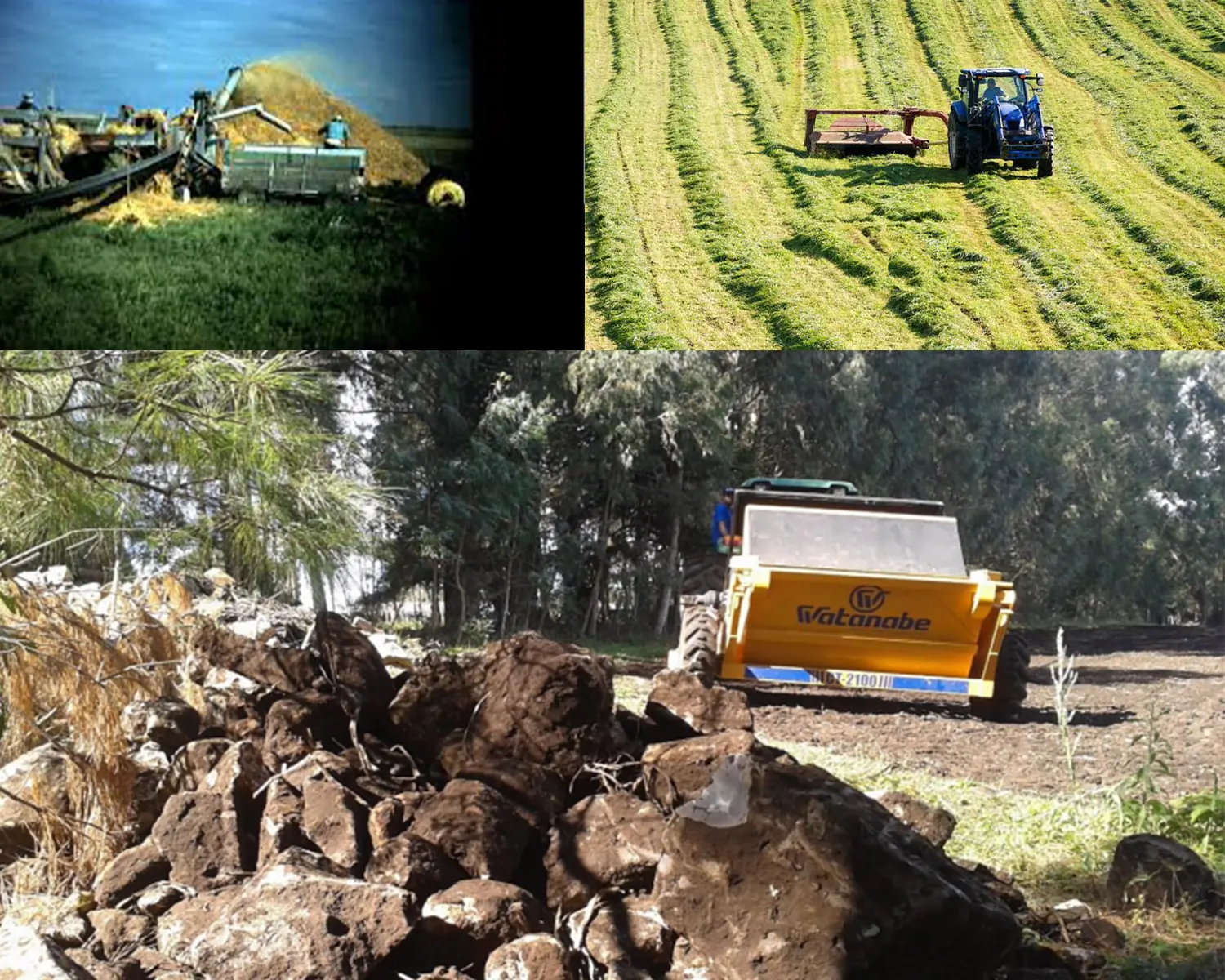
The DCW 2.2 binder spreader, covered in detail in the FDR road stabilisation guide, has a direct secondary application in Korean highland field lime management. The DCW 2.2’s precision electronic cab control, speed-compensated metering, and 2,140 mm working width make it technically superior to manual tractor-spinner lime spreaders for Korean highland field application:
The DCW 2.2’s electronic control maintains the target Kg/m² lime application rate regardless of forward speed variations on Korean highland terrace gradients — preventing the over-application in slow sections and under-application in fast sections that standard spinner spreaders produce. For lime management where the difference between 1.5 tonnes/ha (correct for pH 5.8 potato field) and 2.5 tonnes/ha (over-application that risks driving pH above 6.5) determines the common scab outcome, this application rate accuracy is agronomically significant.
Agricultural limestone (calcium carbonate, typical bulk density 900–1,100 Kg/m³) has a different bulk density from Portland cement or quicklime used in FDR applications. The DCW 2.2’s electronic control calibration must be re-verified when switching between materials — as described in the DCW 2.2 operation guide. Re-calibrate before the first lime application pass using the static calibration procedure to confirm the rate setting matches the actual material being spread.
The DCW 2.2 applies lime to the surface of the field before PSW-3200 incorporation. If the field surface contains residual stones from inadequate THOR clearance, the stones create irregular distribution patterns — the lime accumulates against stone surfaces rather than distributing uniformly across the field area. Stone-cleared fine tilth is the correct substrate for DCW 2.2 lime application: uniform surface, no obstruction to even distribution, and the PSW-3200 subsequently incorporates the lime to a consistent 25 cm depth rather than the variable depths that stone-disrupted tilth produces.
Annual Soil Testing Schedule — When and How to Test for Reliable pH Data
Annual soil testing is the foundation of rotation-integrated lime management. Without current pH data, lime application decisions are necessarily guess-based — and the common scab risk from over-liming or the yield penalty from under-liming are both preventable only with accurate, up-to-date pH measurement. The Korean highland soil testing calendar:
| Timing | Sample method | Purpose |
|---|---|---|
| October (post-harvest) | 20 cores per field block, 0–20 cm depth. Composite into one sample per block. Submit to county RDA laboratory. | Determine lime requirement for the coming rotation year (cabbage year: highest rate; potato year: may be zero). October testing allows autumn lime application and PSW-3200 incorporation before winter. |
| February (before potato planting) | 5–8 cores per block, 0–15 cm depth (shallower sample reflects planting zone pH more accurately than 0–20 cm) | Confirm whether autumn lime has reacted to target range. If pH still below 5.8 for potato: small corrective application possible. If pH above 6.5: confirm no lime; monitor for common scab. Critical decision point. |
| New THOR-cleared land | 20 cores, 0–20 cm depth, 4–6 weeks after THOR clearance (allow fresh stone surfaces to stabilise) | Baseline pH for new land that may be significantly more acid than established rotation blocks. Determines the initial lime rate for the development phase. |
Korean RDA soil testing service
Each county RDA (Rural Development Administration) office provides soil testing service at low or no cost for registered Korean farmers. Samples submitted in October typically return results within 2–3 weeks — providing data before the decision window for autumn lime application closes. The RDA test report includes pH, available phosphorus, exchangeable potassium, calcium, and magnesium — the full nutrient picture that supports rotation-specific fertilisation decisions beyond just the lime requirement. Submit one sample per field block per year as standard practice; submit additional samples whenever significant changes in management have occurred (first year after THOR clearance, first year after organic matter addition, first year after changing rotation crop).
PSW-3200 Lime Incorporation — Depth Matters as Much as Rate
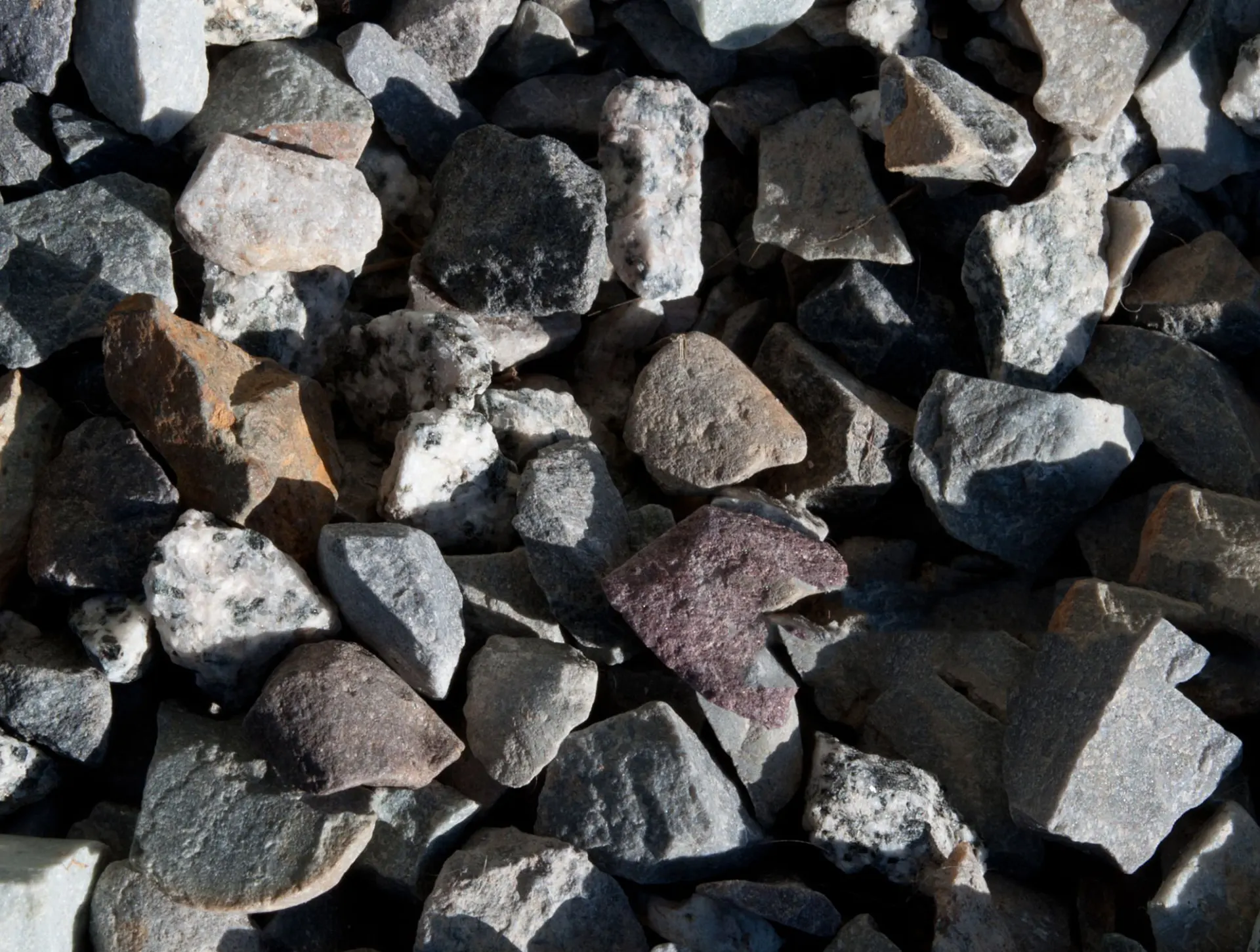
Lime applied to the soil surface without incorporation remains in the top 2–3 cm — reacting only in the shallow zone rather than throughout the 15–25 cm root zone where pH affects crop performance. The THOR 2.4 rock crusher stone clearing creates the uniform stone-free tilth that allows the PSW-3200 to incorporate lime to full operating depth without the resistance from embedded stones that produces variable incorporation depth on un-cleared fields. The PSW-3200 lime incorporation protocol:
PSW-3200 double pass at 25 cm depth immediately after DCW 2.2 lime application. The deep incorporation distributes lime through the full cabbage root development zone. Allow 4–6 months reaction time over winter before spring transplanting for full carbonate reaction to raise pH to target.
PSW-3200 single pass at 20 cm depth immediately after DCW 2.2 application. Allow minimum 3 weeks reaction time before planting for partial pH correction. Note: spring lime application has shorter reaction time than autumn — never expect a full 1.0 pH unit increase from a spring application; limit spring correction to small adjustments (0.3–0.5 pH unit maximum target from spring application alone).
Frequently Asked Questions
Should I use ground limestone (calcium carbonate) or quicklime (calcium oxide) for Korean highland fields?
For most Korean highland field pH management situations, finely ground agricultural limestone (calcium carbonate, CaCO₃) is the correct choice. It is safe to handle, reacts gradually enough to allow uniform pH correction without pH overshoot, and is widely available in Korea through agricultural supply cooperatives. Quicklime (calcium oxide, CaO) is faster-reacting and stronger (equivalent pH correction requires about 56% of the limestone rate by weight) but is more hazardous to handle, can cause localised over-alkalisation (burning) on plant residues if applied unevenly, and requires more precise application rate control to avoid overshooting the target pH. Quicklime through the DCW 2.2 is the preferred option for FDR road stabilisation and for situations where a large pH adjustment must be achieved in a short time window. For routine annual rotation pH management on Korean highland agricultural fields, finely ground limestone is the safer and more controllable material.
Does organic matter addition (compost from the EP-DESTROYER compost barn) affect soil pH?
Yes — mature aerobic compost from the EP-DESTROYER compost barn system has a slightly alkaline to near-neutral pH (pH 6.5–7.5 for well-matured cattle manure compost). Annual compost application at 10–20 tonnes/ha contributes a modest lime equivalent (approximately 0.1–0.3 pH units of buffering capacity per 15 t/ha annual application) in addition to its organic matter and nutrient benefits. On Korean highland granite soils where natural acidification is the dominant trend, this compost pH contribution partially offsets the acidification from nitrogen fertiliser and crop removal — reducing (but not eliminating) the lime requirement. Farms with well-managed EP-DESTROYER compost barn systems consistently applying 15+ tonnes/ha annually typically need 20–30% less lime per year to maintain the same pH target compared to farms relying on synthetic fertiliser only. Factor compost application history into the lime rate calculation — the soil test October reading will already reflect the compost’s cumulative pH contribution, so the lime rate recommendation from the test result is already adjusted for the compost effect if the test is run after compost application has stabilised in the soil.
How does stone clearing affect lime distribution uniformity compared to un-cleared fields?
Stone clearing improves lime distribution uniformity through two mechanisms: (1) The THOR 2.4 + PSW-3200 combination produces fine, uniform tilth that allows the DCW 2.2 to distribute lime evenly across the entire field surface without obstruction. On un-cleared fields, surface stones deflect the lime material as it leaves the spreader — creating lime-rich zones adjacent to stones and lime-deficient zones further from the obstruction. (2) The PSW-3200 on stone-cleared fine tilth incorporates lime to consistent depth across the field — each rotor pass moves through uniform material to the same depth. On un-cleared fields, PSW-3200 passes that contact residual stones ride up over the stones, reducing incorporation depth at those points and leaving lime concentrated in the shallow zone rather than distributed through the full 25 cm root zone. pH measurements taken across stone-cleared versus un-cleared fields 3 months after equivalent lime applications consistently show lower spatial variability in the stone-cleared fields — confirming that stone clearing improves not just average pH but pH uniformity, which is what drives consistent crop performance across the field rather than just average performance.
Is subsidised lime supply available for Korean highland farmers?
Yes — the Korean government provides agricultural lime at subsidised prices through the agricultural production material support program (nongup saengsanjae gupip jiwon). Registered Korean farmers can purchase approved agricultural lime materials at prices 30–50% below retail through county agricultural cooperative supply channels. The subsidy covers calcium carbonate-based ground limestone for soil pH improvement — the most commonly used form for Korean highland potato and vegetable rotation management. Application for subsidised lime is typically through the county agricultural cooperative (nong-hyup) purchasing system — confirm current year allocation and application procedure with your county cooperative in autumn (October–November) before the spring planting season. Korea Watanabe can advise on DCW 2.2 configuration for spreading the specific subsidised lime materials available in your county.
What is the fastest way to lower pH if I accidentally over-limed a potato block?
If a potato block has been over-limed (pH above 6.5 at February soil test), the options are limited: (1) Acidifying fertilisers — ammonium sulphate (a sulphur-containing nitrogen fertiliser) has acidifying effect during nitrification in the soil. Applying 200–300 Kg/ha of ammonium sulphate as the nitrogen source rather than calcium ammonium nitrate or urea can lower pH by 0.2–0.4 units over 4–6 weeks. This is the fastest agronomically practical acidification measure that is safe for the crop. (2) Elemental sulphur — applying elemental sulphur at 100–200 Kg/ha and incorporating with PSW-3200 produces acidification through microbial oxidation to sulphuric acid over 4–8 weeks. Effective but slow — only useful if applied in autumn for spring potato planting. (3) Accept the elevated pH and manage common scab risk — certified seed + seed treatment + vigilant inspection. The most effective response to over-liming is prevention through soil testing before any lime application decision is made.
Soil pH Management — From THOR Clearance to Rotation-Calibrated Lime Programme
Current rotation year + October soil test result + DCW 2.2 availability → crop-specific lime rate recommendation with PSW-3200 incorporation timing and common scab risk assessment. Korea Watanabe, Ansan-si, Gyeonggi-do.
Editor: Cxm