Korean 발효우사 (fermentation barn, compost barn) is a livestock housing system where cattle are kept on a deep bedding layer of wood chips or rice straw that undergoes aerobic composting in-place — eliminating the need for liquid manure management infrastructure and producing finished compost as a primary by-product. The compost aerator — the machine that turns, mixes, and aerates the bedding layer to maintain aerobic conditions — is the critical operational machine in the 발효우사 system.
Watanabe offers two compost barn aerator models for Korean 발효우사 operations: the EP-DESTROYER 2.0 (75 CV, 2 m working width, 460 Kg) and the EP-DESTROYER 3.0 (80 CV, 3 m working width, 660 Kg). Both models perform the same aerating operation using the same rotor mechanism. The selection between them is a barn geometry and throughput calculation — not a quality or capability hierarchy.
EP-DESTROYER 2.0 vs 3.0 — Complete Specifications

All specifications from the Watanabe official product brochure.
EP-DESTROYER 2.0
75 CV · 2 m width · 460 Kg · Cat.2 · 540 RPM
EP-DESTROYER 3.0
80 CV · 3 m width · 660 Kg · Cat.2 · 540 RPM
How the EP-DESTROYER Works — The Aerating Mechanism
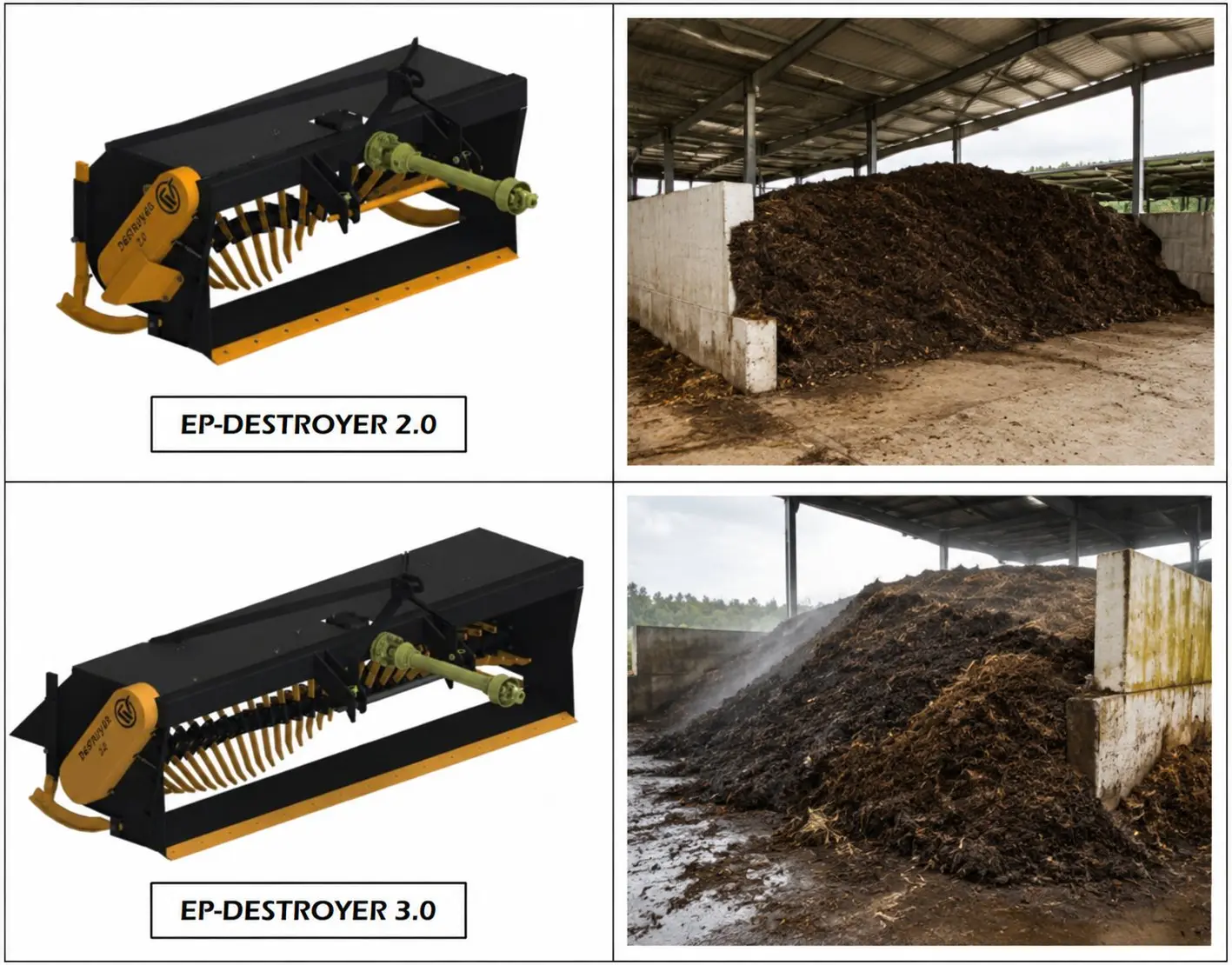
Both EP-DESTROYER models use the same operational principle: a PTO-driven rotor fitted with hardened steel tines penetrates the compost bedding layer to 80 cm depth as the tractor advances through the barn aisle. The rotating tine action simultaneously breaks up compacted zones in the bedding, introduces oxygen to the anaerobic regions of the deep bedding layer, and brings damp lower material up to the surface where it can dry and re-enter the aerobic composting zone.
The 80 cm working depth is the key operational specification. Korean 발효우사 bedding layer management is based on a target bedding depth of 50–80 cm — sufficient depth for the aerobic composting process to maintain internal temperatures above 50°C that kill pathogens and odour-producing anaerobic bacteria. If the EP-DESTROYER’s tines cannot penetrate the full bedding depth, the lower portion of the bedding transitions to anaerobic decomposition — producing ammonia, hydrogen sulphide, and methane that create odour problems and reduce animal welfare.
Aeration frequency recommendation
NAAS and Korean livestock research guidance on 발효우사 management recommends aeration frequency of every 3–5 days in warm-weather months (May–September) when moisture and temperature conditions accelerate composting and ammonia production, and every 5–10 days in cool-weather months (October–April) when composting is slower. EP-DESTROYER aeration frequency is the most important single management variable in 발효우사 operation — under-frequent aeration produces ammonia accumulation that stresses animals; over-frequent aeration is unnecessary operating cost without additional benefit.
Barn Width Is the Primary Selection Factor
The single most important variable in EP-DESTROYER model selection is the available working width in your barn’s aisle configuration. The EP-DESTROYER must pass along the barn aisle between the barn side walls or pen dividers — the working width must fit within the aisle width minus the tractor width on each side. Measure this before selecting a model:
| Barn aisle width | EP-DESTROYER 2.0 (2m) | EP-DESTROYER 3.0 (3m) |
|---|---|---|
| Below 2.5 m | ❌ Too narrow | ❌ Too narrow |
| 2.5–3.0 m | ✅ EP-DESTROYER 2.0 only | ❌ Too wide |
| 3.0–3.5 m | ✅ 2.0 (multiple passes) | ✅ 3.0 (single pass at 3m) |
| 3.5–5.0 m | ✅ 2.0 (2+ passes needed) | ✅ 3.0 preferred (1–2 passes) |
| Above 5.0 m | ✅ 2.0 (3+ passes) | ✅ 3.0 preferred (fewer passes) |
The Korean 발효우사 Standard Barn Layout
Korean 발효우사 barn dimensions follow NAAS 발효우사 design guidelines based on animal welfare standards and composting performance requirements. Typical barn configurations for different herd sizes:
50–80 head barn
Typical aisle width: 3.0–4.0 m. EP-DESTROYER 2.0 handles in 1–2 passes; EP-DESTROYER 3.0 handles in 1 pass on 3 m aisles. Both models appropriate — 2.0 if existing 75 HP tractor; 3.0 if 80+ HP tractor available.
100–200 head barn
Typical aisle width: 4.0–6.0 m. EP-DESTROYER 3.0 is the appropriate choice — completes the aeration session in fewer passes per aisle, reducing total session time from 45–60 min to 25–35 min at this herd scale.
200+ head barn
Multiple aisle system, each 4.0–6.0 m wide. EP-DESTROYER 3.0 is standard for this scale. Consider two EP-DESTROYER 3.0 machines (or two aeration sessions per day) for very large barns to maintain the 3–5 day aeration frequency at peak season.
The Tractor in the Barn — Korean 발효우사 Tractor Requirements
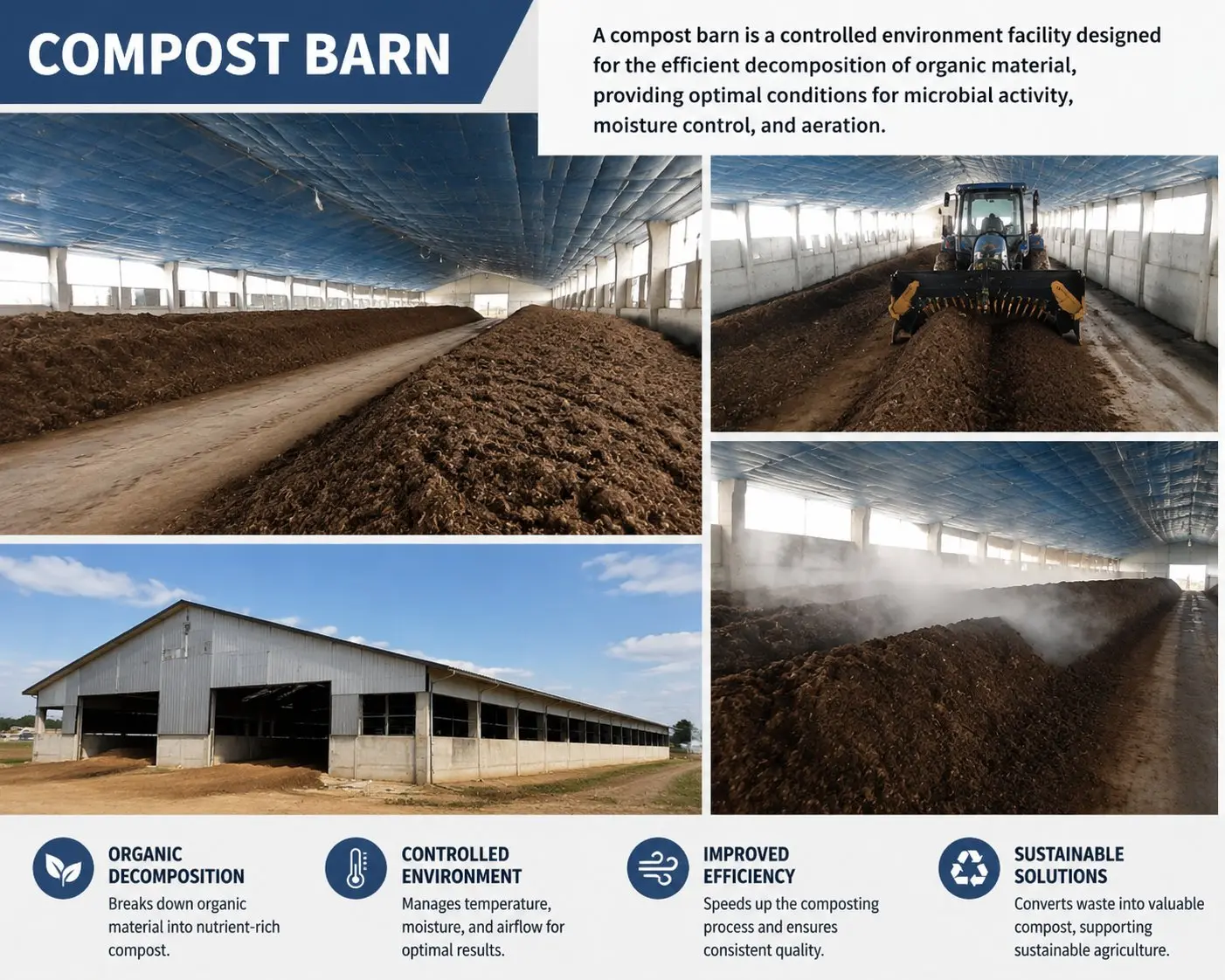
Unlike the THOR stone crusher (which requires 180+ HP for the crushing PTO load), the EP-DESTROYER 2.0 and 3.0 run on standard Korean farm tractors — 75 and 80 CV respectively. Both CV requirements are within the range of Korean domestic brand tractors (Daedong/Kioti, LS, TYM) in their commercial agricultural range.
However, operating a tractor in a 발효우사 barn presents specific requirements beyond raw HP that must be confirmed before purchasing the aerator:
Tractor height vs barn door clearance: Korean 발효우사 barn entry doors have a design clearance height that must accommodate the tractor plus the EP-DESTROYER mounted on the rear hitch at transport position. Confirm the maximum transport height of the EP-DESTROYER 2.0 or 3.0 (contact Korea Watanabe for this dimension) against your barn door clearance before installation.
Tractor turning radius at barn end: At the end of each barn aisle, the tractor must turn 180° to align with the adjacent aisle pass. In compact Korean 발효우사 barn designs, the headland space at the barn end may be limited. Confirm the tractor’s minimum turning radius (including the EP-DESTROYER’s rear overhang at the turning point) against available headland space in your specific barn before ordering.
Tractor exhaust and ventilation: Tractor diesel exhaust in an enclosed barn space requires adequate barn ventilation to prevent carbon monoxide accumulation. Korean 발효우사 NAAS design standards specify minimum ventilation requirements for motorised equipment operation inside the barn — confirm your barn’s ventilation system meets these requirements for tractor operation, particularly in winter when barn doors may be partially closed to retain heat.
발효우사 + Stone Clearing — How the Two Operations Connect
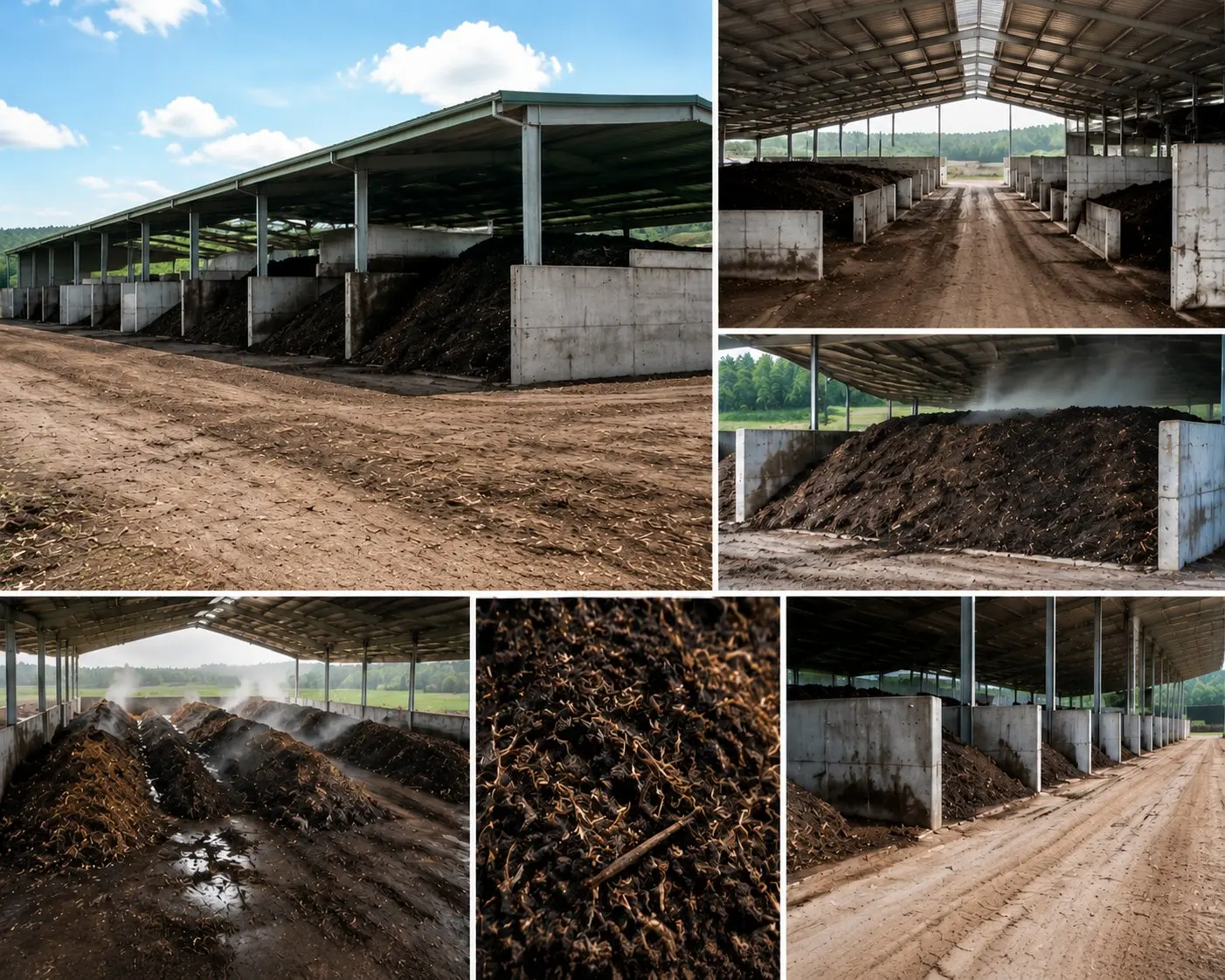
Many Korean highland farms operate both livestock (cattle, black Angus, Korean native cattle) in 발효우사 barns and crop production (potato, vegetable, ginseng) on adjacent highland land. The stone clearing machinery (THOR 2.4 stone crusher, CT-2100 rock picker) and the EP-DESTROYER barn aerator serve separate operations on the same farm — but their outputs are connected.
The finished compost from the 발효우사 operation — the fully composted bedding material that is removed after 3–6 months and replaced with fresh bedding — is a high-quality organic soil amendment for the adjacent crop fields. Farms that have completed stone clearing and soil-building programmes on their crop land use the 발효우사 compost as the primary organic matter source for annual application before PSW-3200 tillage. The livestock and crop operations form a closed-loop system where livestock manure management (발효우사) supplies the organic matter that the crop production system requires — and the crop residues from harvest can return to the barn as fresh bedding material.
For Korean highland farms considering the THOR 2.4 stone crusher for crop land clearance alongside the EP-DESTROYER for livestock barn management, Korea Watanabe provides equipment planning that integrates both machinery systems into a single farm equipment consultation — covering tractor sharing between operations (the 75–80 HP barn tractor is different from the 180 HP stone clearing tractor) and subsidy application co-ordination for both equipment categories.
Bedding Material Selection — What Works Best with the EP-DESTROYER
The EP-DESTROYER’s 80 cm tine penetration is designed to operate in the bedding materials that Korean 발효우사 design standards specify. The bedding material selection affects both composting performance and EP-DESTROYER operating effectiveness:
Saw dust / Wood chips (톱밥) — preferred
20–30 mm particle size. High carbon-to-nitrogen ratio supports aerobic composting. EP-DESTROYER tines penetrate consistently to 80 cm in well-managed saw dust bedding. This is the primary bedding material in Korean 발효우사 operations and the material for which the EP-DESTROYER’s tine configuration is optimised.
Rice straw (볏짚) — secondary
Whole straw at 10–15 cm lengths can tangle in the EP-DESTROYER tines if not chopped. Chopped straw (5–8 cm) works adequately but tends to compact faster than wood chip bedding — increasing aeration frequency requirement. If using straw, chop to below 10 cm before barn loading and increase aeration frequency by 20–30% versus saw dust bedding.
Wet or clay-contaminated bedding — avoid
Bedding material that has become waterlogged (from roof leaks or drainage failure) or clay-contaminated loses its aerobic composting capability — the material becomes anaerobic regardless of EP-DESTROYER aeration frequency. Remove waterlogged or clay-contaminated bedding sections and replace with fresh material before EP-DESTROYER operation resumes.
Compost Output — What the 발효우사 Produces and Its Agricultural Value
The compost bedding removed from a Korean 발효우사 barn at the 3–6 month change-out is a high-quality organic amendment for crop land — directly relevant to Korean farms that operate both livestock and crop production (as described in Art.43 soil building guide). Understanding the compost output helps quantify the closed-loop benefit of combining 발효우사 operation with highland crop production:
| Parameter | Typical value for 발효우사 compost |
|---|---|
| Composting period | 3–6 months in-barn before removal; additional 2–3 months windrow curing post-removal |
| N-P-K content | Typically 1.0–1.5% N, 0.5–1.0% P₂O₅, 0.8–1.2% K₂O (dry weight) — varies by cattle type and bedding material |
| Organic matter | 45–55% organic matter content — premium organic soil amendment for highland crop production |
| Application rate on crop land | 10–30 t/ha per year incorporated by PSW-3200 rotavator into tillage depth |
| Value vs commercial compost | Well-managed 발효우사 compost is equivalent quality to commercial livestock manure compost (가축분 퇴비) — eliminating the commercial compost purchase cost for Highland crop operations |
Seasonal Management Calendar for Korean 발효우사 Operations
The EP-DESTROYER’s operating intensity varies seasonally — the composting process is temperature-driven, and Korean summers create very different management requirements from Korean winters. A practical EP-DESTROYER aeration calendar for Korean highland and lowland cattle 발효우사 operations:
June–September (Summer)
Aeration every 3–4 days. High ambient temperatures (30–38°C) accelerate both aerobic composting and ammonia volatilisation — the bedding can transition to surface dryness with anaerobic lower zones if aeration is delayed. Summer is the highest-frequency, most critical management period for Korean 발효우사 animal welfare and odour control.
October–April (Cool Season)
Aeration every 6–10 days. Lower temperatures slow composting — extended aeration intervals are acceptable without accumulating ammonia to welfare-impacting levels. The bedding temperature at 40–50 cm depth should remain above 40°C for effective pathogen kill — check periodically with a compost thermometer and increase aeration frequency if temperatures drop below 35°C.
An important seasonal consideration for Korean highland 발효우사 operations: in winter months (December–February) when barn doors are partially closed for heat retention, tractor exhaust management during EP-DESTROYER aeration sessions is critical. Schedule aeration sessions to coincide with brief barn ventilation windows — opening barn access doors fully during the 5–10 minute EP-DESTROYER session to allow exhaust gas clearance before doors are returned to the reduced-opening winter position.
The EP-DESTROYER’s low operational time per aeration session (typically 5–15 minutes per session depending on barn size and model) means that daily or near-daily barn checks can be combined with aeration on the same brief tractor deployment — one visit handles both bedding assessment and the aeration operation when the aeration frequency interval has been reached. Korean 발효우사 operators who establish a routine daily check-and-aerate schedule during peak season report the most consistent composting performance and lowest ammonia-related livestock health issues.
Frequently Asked Questions
What is the difference between the aeration depth of the EP-DESTROYER and other Korean compost barn aerators?
The EP-DESTROYER 2.0 and 3.0 both achieve 80 cm penetration depth — the full recommended bedding layer depth for Korean 발효우사 operating at NAAS optimal bedding management standards. Some alternative barn aerators available in the Korean market have shallower tine penetration (40–60 cm) that is insufficient for optimal aerating of the full-depth bedding layer. The 80 cm depth of the EP-DESTROYER was determined from Watanabe’s operational experience in compost barn environments where partial-depth aeration produced anaerobic zones in the lower bedding layer despite surface aeration appearing complete. Confirm the actual tine penetration depth of any alternative machine — tine length is not the same as working depth if the machine’s ground clearance or frame geometry limits actual penetration.
Is the EP-DESTROYER eligible for Korean government 발효우사 support programs?
The EP-DESTROYER barn aerator qualifies under the Korean government livestock environmental improvement equipment support program (축산환경개선 장비 지원사업), administered through MAFRA and provincial livestock support offices. This program supports mechanisation of livestock manure management — which 발효우사 aeration directly falls under. Additionally, farmers establishing new 발효우사 operations or upgrading existing operations may be eligible for the 친환경 축산 지원사업 (eco-friendly livestock production support program) that covers both barn construction improvement and aeration equipment. Confirm the current year’s applicable program with your county livestock extension officer (축산기술센터). Korea Watanabe provides EP-DESTROYER technical documentation for both livestock equipment subsidy and standard agricultural machinery subsidy applications.
How do I calculate the correct aeration session time for my barn size?
Aeration session time = (total barn aisle area ÷ EP-DESTROYER working width) × average pass time per unit length, plus turning time between passes. For a concrete example: a 30m × 6m barn (180 m² total aisle area) aerating with EP-DESTROYER 3.0 (3 m width) requires 2 passes of 30 m length each. At a working speed of 2–3 km/h (typical for barn aeration), each 30 m pass takes approximately 40–60 seconds. Two passes = approximately 2 minutes total rotor time, plus 2–3 minutes for barn entry/exit and turning — total aeration session approximately 5–8 minutes per session. This rapid session time is one of the significant operational advantages of the 발효우사 system — aeration requires only minutes per session compared to manual turning which takes hours in a barn of comparable size.
Summary: EP-DESTROYER 2.0 or 3.0 in one sentence
If your barn aisle is below 3.0 m or your tractor is a standard 75 HP Korean domestic model — EP-DESTROYER 2.0. If your barn aisle is 3.5 m or wider and your herd is 100+ head — EP-DESTROYER 3.0. Both achieve the same 80 cm aeration depth and the same composting result; the only difference is how many passes are needed per session. Contact Korea Watanabe with your specific barn width measurement and we will confirm the right model for your 발효우사 configuration.
Fermentation Barn Scale + Aisle Width
Barn aisle width (m) + herd size + existing tractor HP → EP-DESTROYER 2.0 or 3.0 recommendation with aeration session time estimate. Korea Watanabe, Ansan-si, Gyeonggi-do.
Editor: Cxm