
Thirty-five application scene articles into this E-series guide, the stone management arguments have covered mechanisms ranging from the instantaneous (sugar cane chopper blade shattering, E-31) to the generational (ginseng root bifurcation discovered six years later, E-29) and from the purely physical (banana pseudostem anchorage, E-32) to the deeply biochemical (mango calcium translocation and jelly seed, E-27). Pineapple (Ananas comosus) adds three genuinely new dimensions to this progression: the fastest stone-to-infrastructure contact in the series (plastic mulch perforated the moment it is laid), the only crop with two functional nutrition pathways whose stone-mediated imbalance causes internal quality failure, and the shortest clearing-to-ROI cycle in the guide.
The plastic mulch argument is straightforward and urgent. In the strawberry guide (E-18), stone damaged drip tape infrastructure during machinery installation — a process with some delay between stone exposure and tape contact. Pineapple plastic mulch has no such delay: a stone fragment protruding 2–3 cm above the raised bed surface punctures the film in the instant that the film is pressed down over it, before a single plant is placed and before anyone has had the opportunity to inspect. The bromeliad nutrition argument requires more explanation. Pineapple is the world’s only commercially cultivated terrestrial bromeliad — the only crop in commercial agriculture that absorbed its botanical architecture from a family of plants that evolved to feed themselves through leaves rather than roots. This dual feeding architecture, unique to the Bromeliaceae family, means that when stone restricts pineapple roots, the plant does not simply produce less — it shifts its nutrition strategy, and the nutritional shift produces internal quality failures that, like the mango jelly seed (E-27) and the pomegranate aril split (E-25), are invisible at harvest and discovered by the end consumer. This guide covers the rock crusher for pineapple application through all three mechanisms and across three major producing geographies where they converge.
Plastic Mulch and Planting Depth — Stone’s Most Immediate Infrastructure Impact
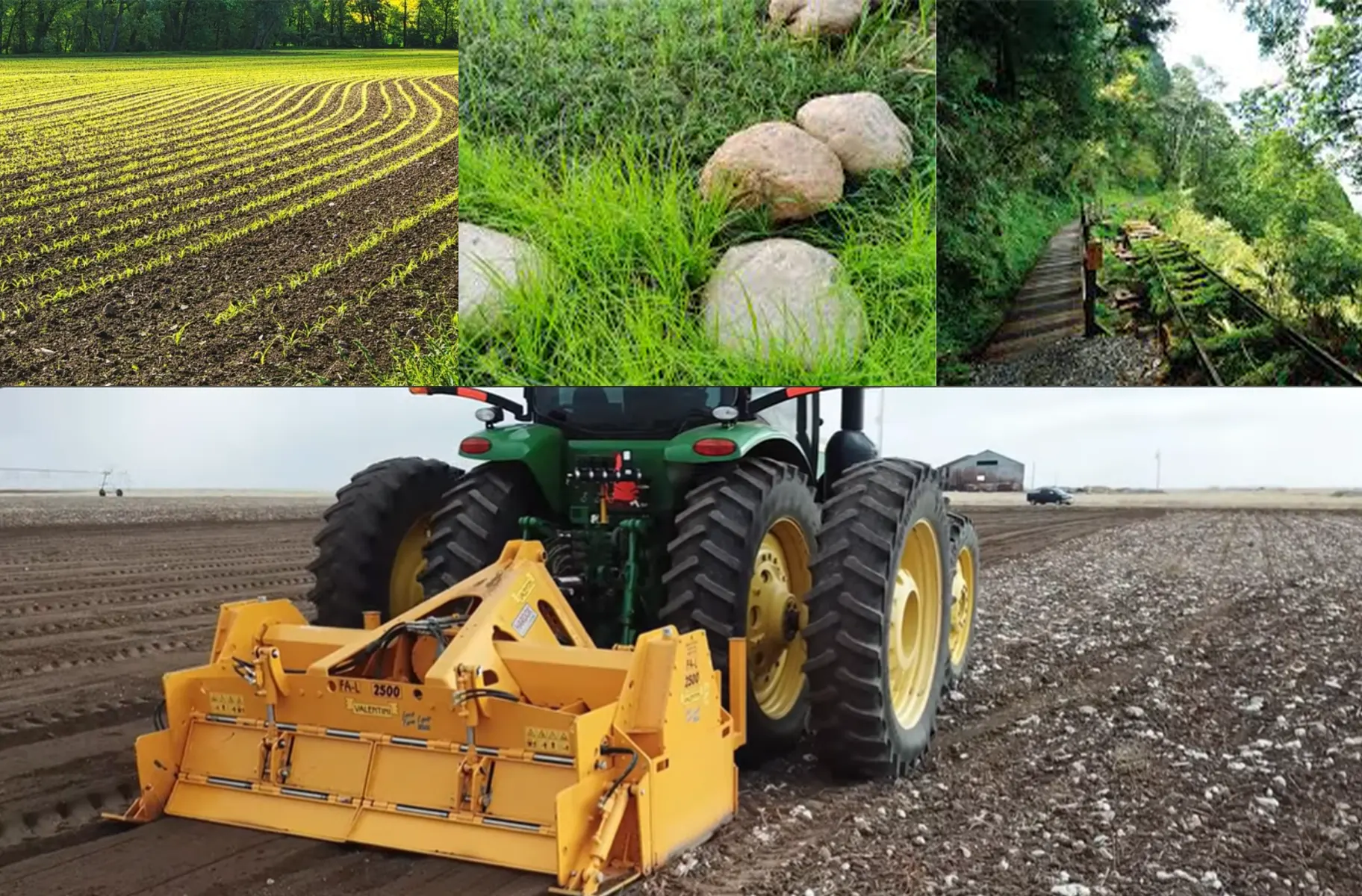
Modern commercial pineapple production is organised around the raised-bed-with-mulch system: beds 90–120 cm wide are shaped with a bed former, a single layer of black polyethylene film is laid over the bed, and pineapple crowns or suckers are pushed through holes made in the film at 25–30 cm spacing. The plastic mulch system provides three functions that are each critical to pineapple’s commercial performance: weed suppression (pineapple’s shallow roots make it acutely sensitive to weed competition), soil moisture retention (pineapple requires consistent moisture at 0–15 cm depth), and soil temperature management (pineapple root growth is fastest at 29–32°C, and mulch raises soil temperature by 3–8°C compared to bare soil in the first month after planting). Stone in the bed zone degrades all three functions simultaneously.
The Bromeliad Dual Nutrition Pathway — Black Heart and the Calcium Imbalance
Pineapple is the only commercial crop in agricultural production that evolved from a plant family that abandoned soil roots as the primary nutrition pathway. Ananas comosus belongs to the Bromeliaceae — a tropical plant family whose most famous representatives (the “air plants” or atmospheric bromeliads like Tillandsia) absorb water and minerals almost entirely through specialised leaf scales called trichomes, with roots serving primarily for anchorage rather than nutrition. Cultivated pineapple is a terrestrial bromeliad and has a functional root system that provides the majority of its nutrition — but it has retained the bromeliad trichome absorption capability in its leaf surfaces, creating a dual nutrition architecture that has no equivalent in any other commercially cultivated plant species.
The bromeliad trichome absorption capability of pineapple leaves is not merely theoretical — commercial pineapple growers actively exploit it. Foliar urea application (spraying 2–3% urea solution into the plant’s central rosette) is the STANDARD nitrogen delivery method for commercial pineapple production in Costa Rica, Philippines, and Thailand — and it works precisely because pineapple’s trichomes absorb nitrogen from liquid applied to the leaf surfaces. This is the only major commercial fruit crop in the world where the primary nitrogen delivery route is foliar rather than root-applied. The foliar/trichome pathway contributes 15–25% of pineapple’s total nitrogen uptake in normal commercial conditions, with the root pathway providing the remaining 75–85% (figures from CIRAD Réunion pineapple nutrition research programme). The central rosette functions as a “tank” — when the leaves overlap, they create a funnel structure that concentrates rainfall, foliar spray, and dissolved organic debris into the centre of the plant, where trichomes on the leaf base surfaces absorb the dissolved minerals.
When pineapple root function is reduced by stone restriction, the plant cannot simply import less nutrition — it must find nutrition. The trichome/tank pathway cannot fully compensate for root nutrient loss because the mineral profile of water collected in the central tank (primarily rainwater) is fundamentally different from the mineral profile of soil solution. The critical mineral in this comparison: calcium. Rainwater has extremely low dissolved calcium content — typically 0.5–2 mg/L Ca²⁺ in tropical rainfall, compared to soil solution Ca²⁺ of 50–200 mg/L in productive pineapple soils. Pineapple calcium demand during fruit development is significant — calcium is required for: (1) cell wall formation in the fruit cortex, which prevents the cell autolysis that causes internal browning; (2) membrane integrity in the fruit’s central tissue (the core cylinder), where breakdown first appears. When stone restriction of roots reduces soil calcium uptake AND the plant increases reliance on the tank pathway (which delivers almost no calcium), the developing fruit receives insufficient calcium → cell walls weaken → calcium-mediated enzymatic browning begins in the internal fruit tissue → black heart (internal browning disorder) develops. Black heart renders the fruit unmarketable: the internal dark brown discolouration is only visible when the fruit is cut at processing or consumption — a consumer-discovered quality failure structurally identical to mango jelly seed (E-27) and pomegranate aril split (E-25), but caused by the unique bromeliad nutrition architecture.
Beyond the calcium-black heart connection, the dual nutrition pathway imbalance also affects pineapple’s Brix-to-acid ratio. Pineapple quality is measured not only by Brix (total dissolved sugar, equivalent to sweetness) but by the relationship between Brix and titratable acidity (primarily citric acid). MD2 Grade A export specification requires Brix ≥14% AND a Brix-to-acid ratio ≥6:1 (sweet-forward profile). Potassium (K⁺) is the primary co-factor for citric acid metabolism in pineapple — specifically, adequate potassium suppresses citric acid accumulation in the fruit by directing photosynthate toward sucrose rather than organic acid synthesis. Rainwater collected in the tank has a moderate-to-high K content relative to Ca (potassium is more soluble in pure water than calcium), making the trichome pathway relatively potassium-sufficient but calcium-deficient. Stone restriction → more reliance on tank → relatively higher K intake via tank BUT lower Ca intake → altered citric acid metabolism → higher acid relative to sugar → Brix-to-acid ratio falls below 6:1 → MD2 downgrade. This dual mechanism (black heart from Ca deficit + Brix-acid imbalance from K-Ca ratio shift) is unique to pineapple’s bromeliad nutrition architecture and has no equivalent in any prior E-series article.
MD2 Grade A and the Fastest ROI Cycle in This Guide
The ROI cycle for stone clearing investment varies dramatically across the 35 E-series articles — from date palm (E-28, 100 years) and pistachio (E-22, 40–50 years) at the longest, to raspberry (E-26, 2–3 seasons) and strawberry (E-18, annual) at the shorter end. Pineapple now establishes the shortest clearing-to-first-ROI cycle in the series. It also introduces the fastest multi-cycle compounding in any perennial crop outside sugar cane (E-31).
| Crop cycle | Months from planting | Typical yield (t/ha) | Stone impact |
|---|---|---|---|
| Plant crop | 18–22 | 55–70 t/ha | Mulch perforation + shallow crown → 15–25% lower yield; black heart incidence up |
| 1st ratoon | 26–32 | 45–60 t/ha | Root restriction compounds; black heart incidence increases further in ratoon |
| 2nd ratoon | 34–42 | 35–50 t/ha | Stone remains permanently — ratoon root system already compromised from prior cycles |
MD2 (USDA PI 147761, developed by Del Monte as the “D10” hybrid; commercialised under “Del Monte Gold” and “Dole Gold” branding) is the dominant commercial pineapple variety, accounting for approximately 65% of global export pineapple. MD2’s commercial value rests on its consistent sugar-to-acid profile: Brix target 14–17%, Brix-to-acid ratio ≥6:1, minimum 35% yellow exterior colour at harvest maturity. The Grade A premium: US$0.28–0.42/kg FOB Costa Rica for Grade A MD2 vs US$0.12–0.20/kg for Grade B (lower Brix or higher acid) and US$0.08–0.14/kg for conventional non-grade product. On a 10 ha Costa Rica farm producing 60 t/ha plant crop: Grade A revenue at US$0.35/kg = US$210,000/ha. Grade B revenue at US$0.16/kg = US$96,000/ha. The stone-related grade downgrade on black heart incidence and Brix-acid imbalance affects 20–35% of fruit on high-stone-density sites (CORBANA Costa Rica pineapple research station data) — translating to US$22,800–40,425/ha annual grade loss. Against stone clearing investment of US$1,200–2,500/ha: payback within the first crop cycle.
Three Markets — Costa Rica, Philippines and Thailand
Machine System — Zero-Tolerance Surface Protocol for Mulch Integrity
Frequently Asked Questions
Rock crusher for pineapple — can the bromeliad calcium-black heart argument be addressed through calcium fertilisation rather than stone clearing?
Calcium fertilisation is indeed used in commercial pineapple production specifically to reduce black heart incidence — calcium nitrate and calcium chloride solutions are applied either to the central crown tank (exploiting the trichome absorption pathway) or as soil drenches around the plant. However, foliar calcium application to the tank has a fundamental limitation: calcium applied as a dissolved salt in tank water is still in a form with much lower bioavailability than soil calcium (Ca²⁺ in soil solution is complexed with organic matter that facilitates root uptake). Additionally, calcium applied to the tank competes with potassium already present in the tank water, and at high concentrations can disrupt the K-Ca balance in the other direction. The USDA Tropical Research and Education Center (TREC) pineapple black heart research programme has documented that while foliar calcium application reduces black heart incidence from approximately 35% to 18% on stony soils, root zone stone clearing reduces black heart incidence to 6–10% without any calcium supplementation — and combining clearing with standard calcium management reduces incidence to 3–6%. The root zone clearing is therefore the primary intervention; foliar calcium is an effective complement but not a substitute for providing the roots with the stone-free soil they need to extract calcium from soil solution at the rates required for normal fruit development.
Is the pineapple trichome absorption pathway large enough to meaningfully change fruit quality when roots are stone-restricted — or is the trichome pathway too small to matter at commercial scale?
The trichome pathway is commercially significant enough to be the BASIS of the standard nitrogen management programme for commercial pineapple production. Foliar urea application (2–4% solution sprayed into the crown tank) is explicitly prescribed in all major commercial pineapple growing protocols — Del Monte, Dole, and independent Costa Rica grower guidelines all recommend crown-applied urea as the primary nitrogen source. CIRAD estimates that 15–25% of pineapple’s total nitrogen uptake occurs through the trichome pathway under normal production conditions. When root function is restricted, the compensatory shift toward the tank pathway can increase this proportion to 35–45% — a shift large enough to meaningfully alter the Ca-K ratio in nutrients reaching the developing fruit. The calcium implications of this shift (rainwater Ca ~1 mg/L vs soil Ca ~100 mg/L) are commercially significant because black heart incidence shows a 5–8× higher rate on stony root-restricted sites compared to stone-free sites with similar calcium foliar management. The trichome pathway is therefore NOT a marginal biological curiosity — it is a commercially central nutrition delivery system that stone management interacts with in a commercially measurable way.
For Costa Rica’s large-scale MD2 pineapple farms (100–500 ha), is stone clearing operationally feasible at the speed required to match the planting calendar?
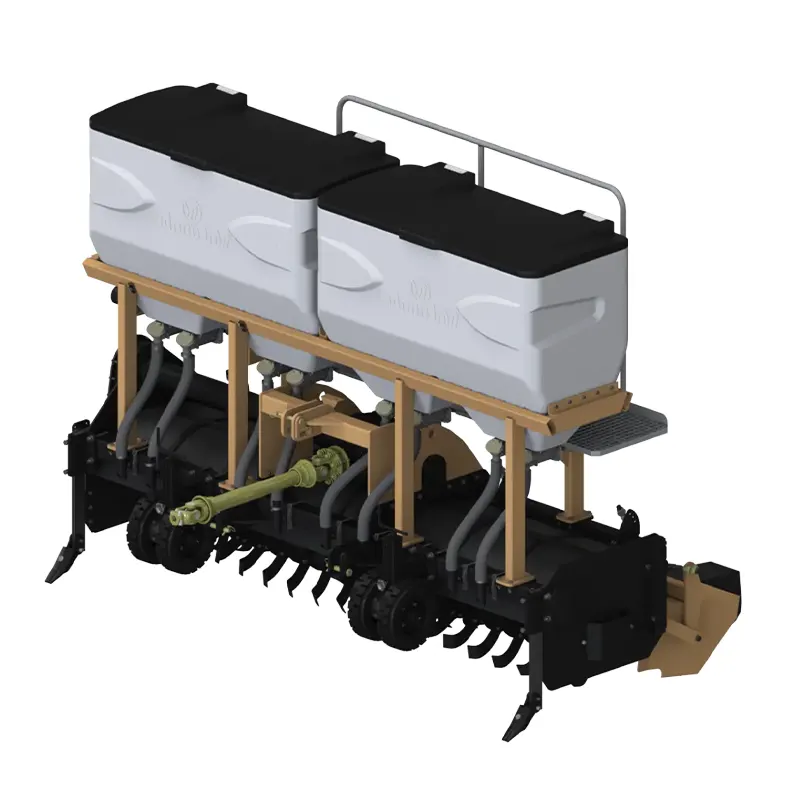
Costa Rica’s large commercial pineapple farms operate on tight planting calendars — most farms plant 30–60 ha per month during the main planting window (January–April for first-crop harvest by July–October of the following year, targeting EU Christmas and New Year premium pricing). This means stone clearing must cover 30–60 ha per month to stay ahead of the planting schedule. THOR 3.0 at standard operating speed on Costa Rica basaltic alluvial soil: approximately 3.5–5 ha per day. CT-2100 collection: approximately 4–6 ha per day. BlackBird surface final pass: 5–6 ha per day. PSW-3200 bed forming: 4–6 ha per day. With one equipment set running 6 days per week: approximately 18–28 ha per week clearance capacity. For a 30–60 ha/month planting programme, one or two THOR/CT-2100 equipment sets running in tandem provide adequate throughput. For the largest Del Monte and Dole operations (500+ ha per cycle), a fleet of THOR units operated by contracted crews is the standard approach — consistent with Costa Rica’s existing farm machinery hire and contractor market structure. Korea Watanabe provides multi-unit operation documentation and contractor fleet pricing for large Costa Rica volume operators through the Korea Trade-Investment Promotion Agency (KOTRA) San José office.
Does the bromeliad dual nutrition argument apply to any other commercially grown fruit — and is pineapple truly unique in having this architecture?
Pineapple (Ananas comosus) is the only commercially significant cultivated food crop in the Bromeliaceae family and therefore the only food crop with a commercially functional foliar trichome absorption system. Several other Bromeliaceae species are grown as ornamentals (various Tillandsia, Guzmania, and Billbergia species) — these have more extreme trichome dependence than pineapple, since many are epiphytic with no soil roots at all, but none are food crops. Outside Bromeliaceae, some orchid species have pseudobulb water storage systems that can absorb nutrients from foliar spray, and some Loranthaceae (mistletoe relatives) absorb minerals directly from host plant tissue — but neither of these families contains commercially significant food crops that bear comparison to pineapple’s agricultural scale. The closest functional analog in commercial horticulture is foliar calcium spray on apple trees (which can absorb some calcium through leaf stomata) — but this is a minor supplementary uptake mechanism, not a primary nutrition pathway as it is for pineapple. The dual nutrition architecture argument is genuinely unique to pineapple and applies specifically because of pineapple’s bromeliad ancestry.
What is the combined ROI calculation for pineapple stone clearing across the plant crop and two ratoon cycles?
For a 10 ha Costa Rica MD2 pineapple farm on medium-density alluvial basalt (20% stone coverage at 8–22 cm): Clearing investment (THOR 3.0 + CT-2100 + BlackBird final + PSW-3200): approximately US$18,000–28,000 for 10 ha. Benefits across three-cycle programme (plant crop + ratoon 1 + ratoon 2, approximately 38 months): (1) Mulch film protection: 10 ha × US$3,200/ha film + labour = US$32,000 film cost. Stone clearing prevents 70–85% perforation-related film failure → reduces supplementary weeding by 2–3 cycles per crop at US$900–1,200/ha/weeding = US$18,000–36,000 over 3 cycles. (2) Grade A retention from reduced black heart: 10 ha × 60 t/ha plant crop + 50 t/ha R1 + 45 t/ha R2 = 1,550 t total. 22% reduction in grade B downgrade on cleared site vs stone-restricted site (CORBANA data) × US$0.19/kg grade differential × 1,550 t × 0.22 = US$64,670 over 3 cycles. (3) Yield improvement from correct planting depth: 8–12% yield improvement on cleared vs stone-restricted sites = 124–186 additional tonnes × US$0.25/kg MD2 average = US$31,000–46,500 over 3 cycles. Total 38-month benefit: US$113,670–147,170. Against investment of US$18,000–28,000: ROI 4:1 to 8:1 over 38 months — a 3-year return rate among the strongest in the series, and with the shortest absolute payback period (often within the first 18-month plant crop cycle).
Rock Crusher for Pineapple — Mulch Integrity, Black Heart Prevention and MD2 Grade Protocol
Stone type (basalt/calcareous/laterite) + farm scale + planting calendar + MD2/Smooth Cayenne variety + black heart history → Korea Watanabe provides the correct rock crusher for pineapple bed zone specification, film protection protocol and 38-month plant-to-ratoon ROI calculation.
Korea Watanabe Rock Crusher Tractor Co., Ltd. — Ansan-si, Gyeonggi-do
Editor: Cxm