The stone management arguments in this 32-article E-series guide have covered an extraordinary range of mechanisms: calcium deficiency in mango fruit (E-27), mycorrhizal hyphal gaps in truffle soil (E-24), corm daughter expansion in saffron fields (E-23), and chopper blade shattering in sugar cane (E-31). In every case, the underlying relationship was the same: stone restricts or damages the root system, and the root system’s reduced function is expressed as lower yield, lower quality, or in extreme cases a catastrophic equipment failure. The plant itself remained vertical throughout. This guide introduces the first application in the series where the primary stone management consequence is not what the plant produces, but whether the plant can remain standing at all.
Banana (Musa spp., primarily Musa acuminata Cavendish group) is not a tree. It is the world’s largest herbaceous flowering plant — a giant monocot that produces its commercial product, the banana bunch, on a pseudostem made entirely of tightly packed leaf bases with no woody tissue, no lignification, and no structural strength of its own. The pseudostem is held vertical by tension in the root system anchoring it to the soil. Stone fragments at 0–40 cm reduce the density of this anchoring root system. In the typhoon corridors of the Philippines and the cyclone zones of coastal India, this reduction in anchoring root density translates directly to pseudostem toppling in wind events — and a toppled pseudostem with a half-developed bunch represents the total loss of an entire growth cycle’s investment. This guide covers the rock crusher for banana farm application through this unique structural argument, the follower succession quality chain that compounds across generations within a permanent banana stand, and the TR4 Fusarium drainage consequence that makes banana stone management a disease prevention argument with no equivalent in the series.
The Pseudostem Anchorage Argument — Stone Management’s First Structural Problem
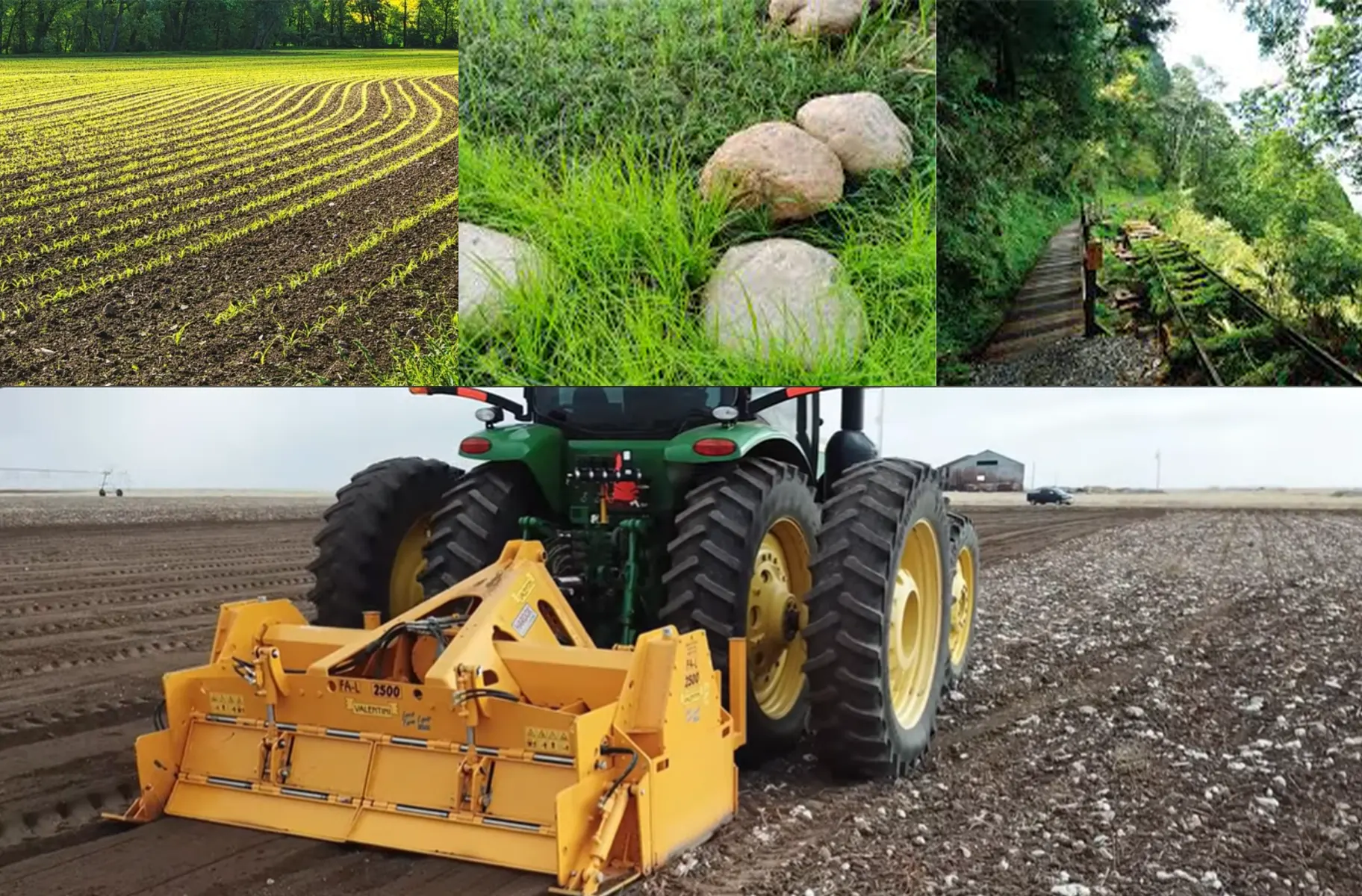
To understand why banana stone management is a structural engineering problem as much as an agronomic one, it is necessary to understand what holds a banana plant upright — and what does not.
The standard response to toppling risk in commercial banana production is propping — bamboo or plastic stakes inserted alongside the pseudostem and tied to it to provide lateral support. Propping adds some wind resistance and is widely used in typhoon-zone Philippines and cyclone-zone India. However, propping is a supplement to root anchorage, not a substitute. The prop resists lateral movement at the stake contact point but transfers the load to the stake-soil interface — on stone-filled soil with reduced root density, the stake’s anchor is also weaker. A well-rooted, well-propped banana on stone-free soil survives most Category 1–2 typhoon wind speeds intact. A poorly-rooted, propped banana on stone-filled soil loses the prop anchor at higher wind speeds before the pseudostem anchor would have failed on stone-free soil.
The Philippines is simultaneously the world’s most typhoon-exposed major banana-producing country and a country where the primary banana production geology — the volcanic basalt soils of Mindanao (Davao del Sur, Cotabato, Sultan Kudarat provinces) — produces stone fragments at exactly the depth where banana anchoring roots operate. The 2021 Typhoon Rai (Odette) destroyed an estimated PHP 20 billion in agricultural losses, with banana comprising a disproportionate share in Mindanao. Post-typhoon surveys consistently show higher toppling rates in plots with higher sub-surface stone density at 15–35 cm — the correlation that makes THOR clearing at 28–38 cm the most commercially urgent stone management investment in Philippine export banana.
Follower Succession — How Stone Degrades the Banana Stand Across Generations
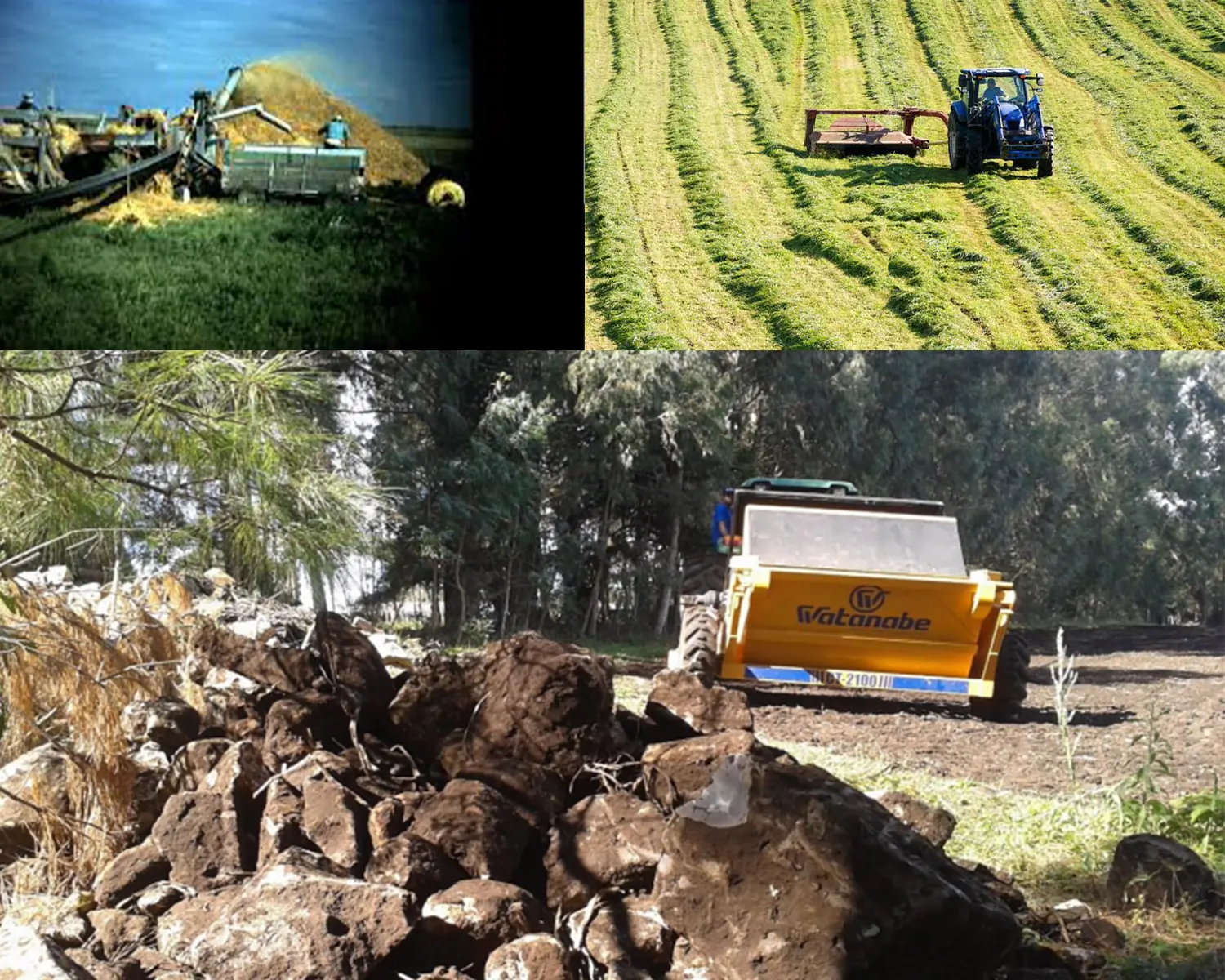
Banana production is not an annual replanting system (like sugar cane every 5–7 years) or a permanent tree system (like pistachio for 40–50 years). It occupies a unique middle position: a perennial stand that renews itself continuously through vegetative succession, with each individual pseudostem fruiting once and then being replaced by a selected sucker (follower/ratoon) from the mother corm. This succession system is the source of banana’s second stone management argument — one that is distinct from every prior E-series article.
The banana corm (underground swollen stem base) produces 5–15 suckers over its productive life. The grower selects ONE of these as the “follower” — the plant that will carry the next production cycle after the mother pseudostem fruits and is cut. The follower’s vigour at the time of selection depends directly on the resources available to the corm from which it emerged: the size of the corm, the density of the corm’s own root system, and the soil conditions around the corm. A large, well-nourished corm in stone-free soil produces vigorous, large-diameter suckers with an established root system before they are even selected as the follower. A corm restricted by stone at 8–25 cm produces smaller-diameter suckers with a compressed root base — and the selected follower begins its productive cycle at a disadvantage that it cannot overcome through subsequent management alone.
Over a 10–15 year banana stand life, the effect of stone restriction on follower quality compounds across generations. Mother plant on stone-impeded corm → smaller sucker selected as follower (Generation 1 follower) → G1 follower has compressed corm in the same stony soil → even smaller sucker for G2 follower → progressive reduction in bunch size and pseudostem height across the stand generations. Commercial banana growers in Ecuador and India refer to this as “stand rundown” or “mat decline” — a gradual deterioration of productive capacity that is attributed to soil fatigue, nematode accumulation, and variety degeneration, but is in many stone-soil cases primarily driven by the progressive corm restriction from stone accumulation in the mat zone. Stone clearing at the beginning of a new stand cycle (or before replanting after an old stand is removed) restores the corm expansion space that allows full sucker vigour in Generation 1 — which then provides the genetic and physical foundation for vigorous G2 and G3 followers that maintain stand productivity across the full 15-year stand life.
This succession argument extends the series’ compounding damage theme but with a novel structure. Saffron (E-23): stone restricts daughter corm QUANTITY — fewer corms, declining population density. Sugar cane (E-31): stone damages the same stool across multiple ratoon CUTS — the same biological unit degrades. Banana (E-32): stone restricts follower QUALITY across biological generations — each DIFFERENT organism begins its life cycle weaker than the previous one. This is the first article in the series where the compounding damage operates through genuine biological generational succession — the grandmother corm passes a disadvantage to the mother corm, which passes an amplified disadvantage to the daughter corm, across organisms that are each botanically distinct plants sharing a corm lineage but not the same corm tissue.
Fusarium Wilt TR4 — The Most Irreversible Disease Consequence in This Guide
Every disease argument in the prior 31 E-series articles has involved a manageable pathogen — one that, while damaging, could be controlled through chemicals, cultural practices, variety selection, or improved drainage. Phytophthora cinnamomi in macadamia (E-30) can be suppressed by improved drainage and fungicide management. Cane blight in raspberry (E-26) can be managed by wound prevention and copper fungicides. PSA in kiwifruit (E-19) has variety tolerance options. Fusarium Wilt TR4 (Fusarium oxysporum f. sp. cubense Tropical Race 4) in banana has none of these properties — it is the most irreversible and commercially final disease consequence described in the E-series guide.
TR4 is a strain of Fusarium oxysporum f. sp. cubense (Foc) that colonises and blocks the xylem vessels of susceptible banana varieties, preventing water and nutrient transport to the pseudostem and bunch. It causes rapid wilting and plant death, and persists in soil as chlamydospores for 20–30 years — far longer than most soilborne pathogens. There is no registered fungicide treatment capable of curing a TR4-infected banana plant or eradicating TR4 from infected soil. The Cavendish banana variety (which comprises approximately 47% of global banana production and >95% of internationally traded export bananas) is highly susceptible. Once TR4 is established in a soil, Cavendish bananas cannot be replanted on that soil without complete fumigation or a 20+ year fallow — a commercial option that is economically impossible for most farm operations. This is why TR4 is described by the FAO, the Food and Agriculture Organization, as one of the most significant threats to global food security in tropical agriculture.
Fusarium oxysporum Foc TR4 produces chlamydospores that can survive in soil for decades and motile microconidia that disperse through soil water movement. The organism is most aggressive in poorly drained, anaerobic soils — the same drainage conditions that E-12 (avocado) and E-30 (macadamia) described for Phytophthora species. Stone fragments at 15–40 cm in banana-growing soils create exactly the stone-adjacent saturation pockets where anaerobic conditions develop: the soil immediately adjacent to and below each stone fragment drains more slowly than the surrounding matrix, creating micro-environments where Foc microconidia can disperse through accumulated soil water to neighbouring root systems. On tropical soils that already have moderate to high rainfall, stone fragments amplify the local drainage heterogeneity sufficiently to increase the contact frequency between Foc propagules and new banana root tissue. Stone clearing that removes these drainage-impeding fragments reduces the soil-water transport conditions that Foc exploits for dispersal — making it a primary (not sole) prevention strategy for TR4 establishment risk on susceptible sites.
For P. cinnamomi in macadamia (E-30), poor drainage is the primary establishment condition and stone clearing is the primary preventative soil management. The consequence if P. cinnamomi establishes: orchard productivity declines over 12–18 years, tree mortality reaches 15–35%, and replanting with resistant varieties is possible with changed soil management. For TR4 in banana, poor drainage is again the primary establishment condition and stone clearing is again a key preventative — but the consequence if TR4 establishes is categorically more severe: complete plantation abandonment with no possibility of Cavendish replanting and no variety resistance available at commercial scale (as of 2025). The FDOV variety programme and other TR4 resistance breeding efforts have produced promising candidates but none with Cavendish’s market acceptance have reached commercial scale. Biosecurity — preventing TR4 entry — is therefore the only viable strategy. Stone clearing that improves drainage is one element of a biosecurity package that also includes equipment sanitation, controlled access, and drainage infrastructure. It is not a standalone TR4 prevention — but it addresses one of TR4’s primary dispersal pathways.
Three Markets — Ecuador, India and the Philippines

Machine System — Anchorage, Succession and Drainage Protocol
Frequently Asked Questions
Rock crusher for banana farm — is the pseudostem anchorage argument supported by research, or is it an extrapolation from general root density data?
The relationship between root density and pseudostem toppling resistance is documented in both academic literature and industry practice. PhilRootcrops and the Philippine Banana Industry Foundation (PBFI) have both documented higher toppling rates in plots with sub-surface stone restriction compared to matched stone-free plots on the same soil type and management level. The biomechanical reasoning is well-established in the monocot plant physiology literature: monocots with no secondary woody growth (including banana, sugarcane, and maize) depend entirely on root-soil friction and lateral root distribution for structural stability against wind loading. Root pull-out resistance experiments on banana (conducted by Malaysian Agricultural Research and Development Institute, MARDI, and confirmed by Universitas Gadjah Mada Indonesia) show linear correlation between lateral root density in the 10–35 cm zone and the force required to displace the plant from the vertical at 45° — the critical angle beyond which recovery is impossible. Stone density at 10–35 cm (which directly reduces root density in this zone) is therefore causally connected to reduced pull-out resistance through well-documented plant biomechanics, even if the specific stone-density vs toppling-rate relationship has not been published as a controlled THOR-intervention trial.
Does stone clearing for banana biosecurity risk spreading TR4 if the THOR equipment has been used on a TR4-positive site?
Yes — this is the most important biosecurity consideration for stone clearing equipment on banana farms. TR4 spreads through soil movement, and any equipment that moves soil from an infected site to an uninfected site is a potential vector. The International Society for Horticultural Science (ISHS) banana biosecurity protocols (adopted by major exporting countries’ agricultural departments) require thorough cleaning and decontamination of all soil-contacting agricultural machinery before moving between sites where TR4 presence is uncertain. Decontamination protocol for THOR, CT-2100, and BlackBird equipment: (1) pressure wash all soil from the machine immediately after use on any site; (2) allow to dry; (3) apply 2% sodium hypochlorite or 70% ethanol to all soil-contacting surfaces; (4) wait for full surface evaporation before moving to next site. This biosecurity requirement applies regardless of whether the previous site had confirmed TR4 — in TR4-present regions (South-East Asia, Australia, parts of Africa and Middle East), all soil-contacting equipment must be treated as potentially carrying Foc propagules. Korea Watanabe provides equipment biosecurity documentation upon request for export banana operators in TR4-present regions. The biosecurity consideration does not negate the clearing benefit — it simply requires that clearing operations are planned as part of the farm’s broader biosecurity programme.
For Ecuador — where typhoons are not a significant risk, is the stone clearing argument primarily about TR4 prevention and follower succession, or are there other commercial drivers?
In Ecuador, the stone management argument has four concurrent commercial drivers beyond typhoon risk. First, TR4 biosecurity — as described in Section 3, Ecuador’s Guayas zone has confirmed TR4 presence and the drainage management argument is commercially urgent. Second, follower succession — Ecuador’s major growers operate 8–15 year continuous banana stands where progressive corm compression from stone accumulation is a documented cause of “stand rundown” reducing bunch weight in the 8th–12th year of production. Third, bunch weight and grade — Ecuador’s premium Cavendish is exported at Chiquita, Dole, and Del Monte standards that include minimum bunch weight per grade. Stone-compressed corm → smaller follower → smaller bunch → lower grade at packing. Fourth, root system health for nematode and Sigatoka disease management — well-developed root systems in stone-free soil have greater compensatory capacity when nematode (Radopholus similis) or black Sigatoka (Pseudocercospora fijiensis) further reduce root function. On stony soil, the combination of stone restriction plus nematode damage pushes root function below the threshold that supports commercial grade bunch weight in dry seasons. The combined argument in Ecuador: TR4 drainage + succession quality + bunch grade + disease resilience — without the typhoon urgency of the Philippines.
How does the banana stone clearing ROI compare with other crops in the series — given the relatively low market value per kilogram?
Banana’s per-kilogram market value is lower than most other E-series crops — export Cavendish wholesale typically US$0.15–0.35/kg at origin. However, the production scale (30–60 tonnes per hectare per year) and the severity of loss events makes the ROI calculation very different from premium crops. For a 20 ha Philippines Mindanao export farm: Clearing investment (THOR 3.0 + CT-2100 + PSW-3200): approximately PHP 2.5–4.0 million for 20 ha. Annual benefits: (1) Typhoon-season toppling reduction (Philippines average 15–25% toppling on stony uncleared volcanic farms during significant typhoon events; 3–8% on cleared farms): 20 ha × 1,800 plants/ha × 18% reduction × 30 kg average bunch × PHP 25/kg = PHP 2,430,000 saved per significant typhoon event. (2) Annual BlackBird pass: PHP 150,000–200,000/year, saves typically 2–4% additional toppling from resurfacing. (3) Follower succession quality: 5–8% bunch weight improvement sustained → PHP 600,000–900,000/year additional revenue. (4) TR4 prevention contribution (partially valued as risk reduction): PHP 500,000–1,500,000 expected value (probability × cost of TR4 establishment). Total annual benefit: PHP 3.5–5.0 million assuming one significant typhoon event every 3 years (amortised annual) + succession + TR4. Against initial investment of PHP 2.5–4.0 million: payback within 12–18 months. 10-year NPV: PHP 25–40 million. ROI: 6:1 to 10:1 — lower per-kilogram but large production scale makes the absolute financial case very strong.
What is the minimum field size where THOR clearing is economically justified for banana — given that many farmers operate small holdings of 1–3 ha?
The minimum economic field size for THOR clearing on banana farms is lower than for most permanent crops because the ROI payback period is short (12–24 months) rather than multi-year, and the consequences of not clearing are immediate rather than gradual. As a practical guideline: for Philippines typhoon-zone export banana farms with confirmed volcanic stone at 15–30 cm, THOR clearing is economically justified at field units of 2 ha and above — the clearing investment (approximately PHP 180,000–280,000 for 2 ha) is recovered within one significant typhoon season through reduced toppling losses. For Ecuador and India smallholders: economic minimum is approximately 3 ha, as the TR4 and succession arguments have a longer payback horizon than the immediate typhoon argument. For smallholders below these thresholds, cooperative equipment sharing — where THOR machinery is shared across a farmers’ group covering 15–30 ha collectively — is the commercially viable model. The Philippines banana growers’ association PBGEA and India’s banana cooperative societies (particularly in Jalgaon, Maharashtra) have both piloted equipment sharing programmes that could include THOR deployment. Korea Watanabe can provide group purchase documentation and collective clearing programme proposals for farmer cooperative groups.
Rock Crusher for Banana Farm — Anchorage, Succession and TR4 Drainage Protocol
Stone type (volcanic basalt/calcareous alluvial) + typhoon zone exposure + TR4 regional risk + stand age + bunch grade target → Korea Watanabe provides the correct rock crusher for banana farm anchorage zone specification, follower succession improvement programme and TR4 drainage management protocol.
Editor: Cxm