Every article in this E-series guide, from E-1 (vineyard) through E-28 (date palm), follows a structural sequence that has never varied across 28 crops: stone is in the ground, roots grow through the ground, roots are restricted or damaged by the stone, and the above-ground commercial product — grape, olive, truffle body, date cluster, saffron stigma, mango fruit — suffers as a consequence. The root is the mechanism. The product is something else. Stone management improves the root’s ability to support whatever the plant produces above ground or, in the case of truffle (E-24), underground but as a fungal body growing through the root. In all 28 prior articles, the root was never itself the thing for sale.
Ginseng (Panax ginseng in Korea and China; Panax quinquefolius in North America) is the first crop in this guide where this structural logic is entirely reversed. The ginseng root — the six-year-old underground primary root of the plant — is the commercial product. Not a fruit it produced. Not a leaf it photosynthesised through. Not a flower it formed. The root itself, harvested in its entirety at Year 6, is extracted from the soil, cleaned, graded, and sold for prices ranging from ₩50,000 per kilogram at standard grade to ₩5,000,000 per exceptional human-shaped specimen. Stone management for ginseng does not improve the root so that the root can produce a better crop. Stone management produces a better root because the root is the crop. And stone management failure — specifically, stone in the growth path of the developing ginseng root — does not merely reduce the root’s yield capacity. It permanently deforms the root’s morphology in a way that destroys the premium that six years of careful cultivation was intended to produce. This guide covers the rock crusher for ginseng farm application through this unique root bifurcation mechanism, the pharmacological quality chain that connects root biomass to ginsenoside certification, and the geological contexts across Korea, China, and North America where these mechanisms converge.
The Structural Inversion — When the Root Itself Is the Product
To understand why ginseng stone management operates differently from every prior crop in this guide, it is helpful to briefly contrast the structural logic of ginseng with that of the two most comparable prior articles in terms of underground importance: truffle (E-24, where the product is also underground) and pistachio (E-22, where the root descent barrier was the primary mechanism).
Product is underground (truffle fruiting body). But the product is produced by a FUNGUS that grows through a HOST TREE’s root system. Stone management serves the tree root → tree root serves the fungus → fungus produces the truffle. Two intermediate organisms between stone management and product.
Product is above ground (nut). The pistachio taproot descends to 5-8m. Stone clearing enables the root to begin its 5-8m descent. The root provides drought resilience → drought resilience supports the tree → tree produces nuts. Three intermediate steps between stone management and product.
Product IS the root. Stone in the growth path → root bifurcates around obstacle → deformed root is the product. Zero intermediate organisms or steps. Stone management failure = product deformation. ONE direct link between stone and product quality.
The most direct stone-to-product relationship in the E-series
In the quality chain for raspberry (E-26), stone creates abrasion wounds on the primocane in Year 1, a pathogen enters, a latent canker develops over 12 months, and the floricane collapses in Year 2 — a four-step chain across two growing seasons. In the quality chain for saffron (E-23), stone restricts corm daughter production, population density declines over multiple field cycles, and ISO 3632 grade falls because of reduced mineral access — a complex chain involving corm biology, plant demography, and biochemical synthesis.
For ginseng: stone in the root growth path → root turns to avoid the obstacle → root bifurcates at the turn point → at Year 6 harvest, the bifurcated root is removed from the soil and graded. The bifurcation is visible, physical, and irreversible. The link between the stone event (which may have occurred in Year 1 or 2) and the product consequence (discovered at Year 6 harvest) is direct, permanent, and as mechanically simple as a tree root growing around a rock.
Root Bifurcation — How Stone Deforms the Commercial Product
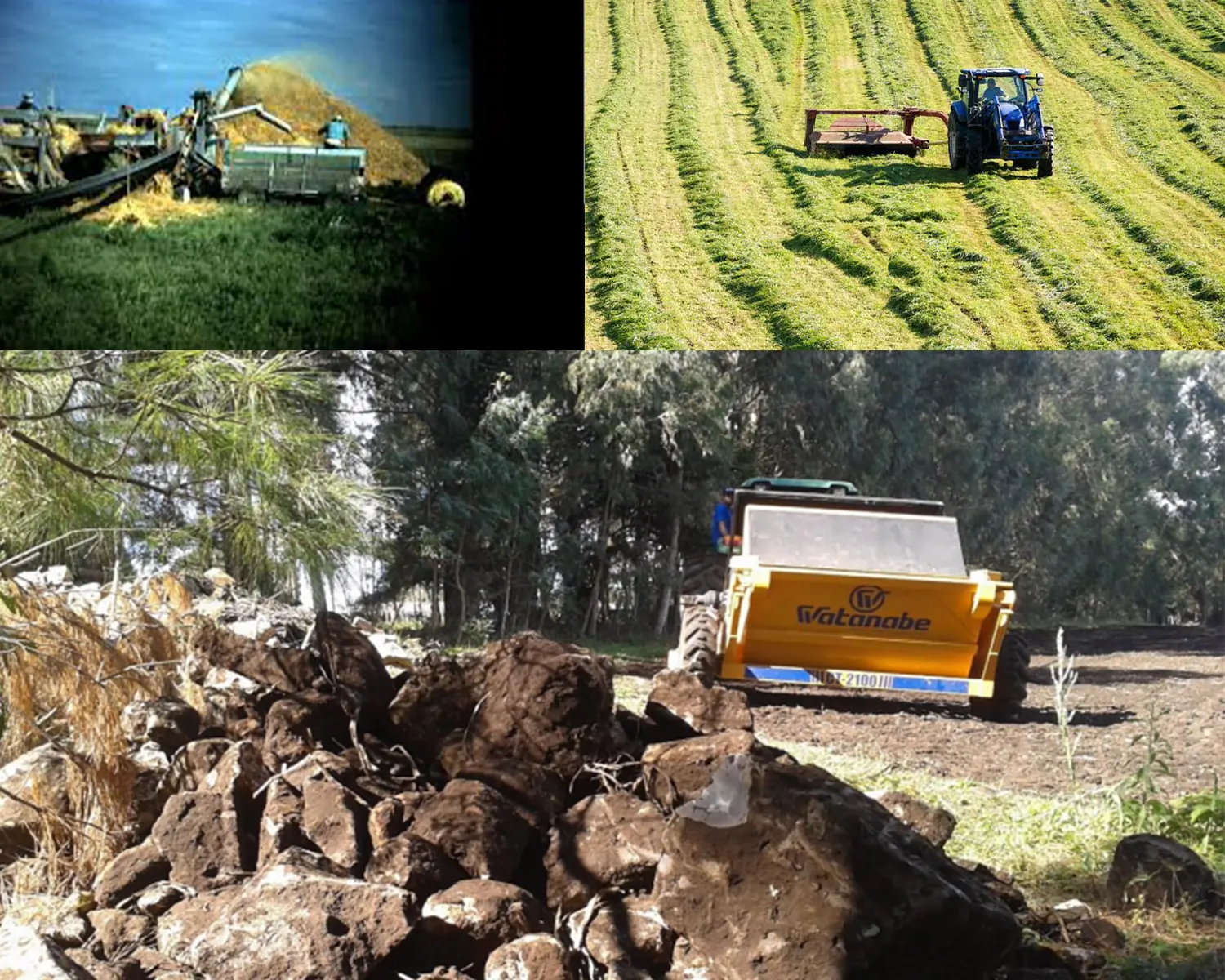
Panax ginseng root morphology is the central commercial variable in Korean and Chinese ginseng grading systems. The ideal commercial root has a specific structure: a single primary root (the “main body” or mongsam in Korean) descending vertically to 15–35 cm, from which two pairs of lateral roots branch — the upper pair resembling outstretched arms, the lower pair resembling legs. This “human form” (人蔘, insam) root configuration, when well-developed and symmetrical, represents the highest commercial grade. The anthropomorphic form is not merely aesthetic tradition — it is a proxy indicator for a well-developed, unobstructed root that has grown freely through stone-free soil for six years, producing the high root biomass and dense cellular structure that correlates with ginsenoside concentration.
Ginsenoside Concentration — The First Pharmacological Quality Chain in This Guide
Beyond the root morphology grading system (which determines premium grade through visual form assessment), Korean ginseng is also subject to pharmacological quality certification based on ginsenoside concentration — the second independent quality argument for stone management in ginseng, and the first time in this 29-article series that the quality chain is pharmacological rather than culinary, sensory, or aesthetic.
Ginsenosides are a class of triterpenoid saponin compounds unique to Panax species — they do not occur in significant concentrations in any other commercially cultivated plant. The primary ginsenosides — Rb1, Rb2, Rc, Rd (protopanaxadiol group) and Re, Rg1, Rg2 (protopanaxatriol group) — are the pharmacologically active compounds responsible for ginseng’s documented physiological effects, including its adaptogenic, immunomodulatory, and neuroprotective activities. Korean Good Agricultural Practice (GAP) certification for pharmaceutical-grade ginseng, administered by the Korea Agro-Fisheries and Food Trade Corporation (aT) in collaboration with the Ministry of Agriculture, Food and Rural Affairs (MAFRA), requires minimum total ginsenoside content of ≥10 mg/g dried root weight for pharmaceutical certification. Roots with ≤5 mg/g are classified as lower grade and may only be used in food product applications rather than pharmaceutical preparations — a price difference of 2–5× depending on the specific preparation.
Ginsenosides are synthesised throughout the ginseng root tissue and accumulate progressively over the 6-year growing cycle. The total ginsenoside content of a harvested root is directly proportional to the total root biomass — specifically the volume of cortical root tissue (the outer layer where ginsenoside concentration is highest). A ginseng root with unrestricted growth in stone-free soil develops a larger, denser cortical layer than a root that has been forced to bifurcate around stone obstacles. Bifurcated roots have the same total root length as an unobstructed root but this length is distributed across multiple smaller-diameter branches rather than concentrated in a single large-diameter main body. The smaller-diameter branches have proportionally lower cortical tissue mass per unit length than the large-diameter main body would have had — producing lower total ginsenoside content per gram of root at harvest. Korean National Institute of Horticultural and Herbal Science (NIHHS) research comparing stone-free and stone-impeded ginseng beds consistently shows 15–30% lower total ginsenoside concentration in roots harvested from high-stone-density beds.
This is the first instance in the E-series guide where the product’s value is defined by its pharmacological activity rather than by sensory quality, visual appearance, or dietary nutrition. Prior quality chains in the series: crocin concentration for ISO 3632 saffron grade (E-23, a colorimetric measurement of culinary colour quality); ORAC/punicalagin for pomegranate premium (E-25, an antioxidant food quality standard); theanine/EGCG for tea grade (E-20, flavour and antioxidant food quality); Brix for mango Taiyo no Tamago (E-27, culinary sweetness). All of these are food quality standards. Ginsenoside concentration is a pharmaceutical standard — the active compound is being measured not for how the product tastes or looks but for how it functions as a medicinal agent. This distinction matters commercially: pharmaceutical-grade ginseng is subject to different regulatory standards, different buyers (pharmaceutical companies, traditional medicine dispensaries), and different pricing structures than food-grade ginseng. Stone management that maintains root morphology integrity and root biomass quality is the foundation of pharmaceutical-grade ginseng certification.
Three Markets — Korea, China and North America
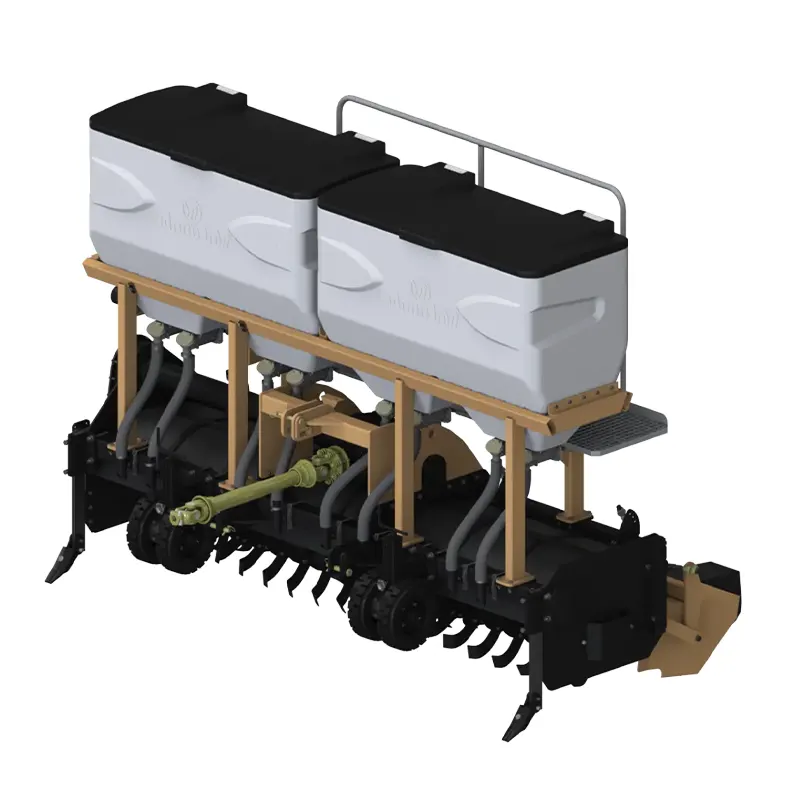
Machine System — Pre-Cycle Root Zone Protocol for the 6-Year Commitment
Frequently Asked Questions
Rock crusher for ginseng farm — does stone really cause root bifurcation in ginseng, or is root forking caused by soil disease, incorrect planting depth, or other factors?
Root forking in ginseng has multiple causes, and stone is one among them. Korean National Institute of Horticultural and Herbal Science (NIHHS) ginseng cultivation research identifies the primary causes of non-human-form root morphology as: (1) physical obstacles in the root growth path (stone fragments being the most common); (2) soil hardpan or compaction zones that cause the growing tip to deflect; (3) nematode infection of the root tip that disrupts directional growth; (4) excessive wet/dry cycling that creates soil structure heterogeneity; (5) incorrect planting depth or orientation of the seed/transplant. Stone is consistently the most cited cause of bifurcation on Korean granite and basalt ginseng soils — it produces the characteristic sharp-angle fork at the obstacle contact point that distinguishes stone-caused bifurcation from the more gradual, branching pattern associated with nematode damage or soil structure variation. The NIHHS stone density vs root form quality correlation studies (published in Korean Agricultural Research journals, multiple editions) show a direct linear relationship between detected stone density at 10–25 cm depth and Grade 3 root incidence at harvest, with the relationship holding across different Korean ginseng production districts. The stone-bifurcation connection is empirically well-established in Korean ginseng agronomy even if peer-reviewed English-language publications are less extensive than for some other crops in this guide.
Why can’t ginseng cultivators simply use the traditional “tong” raised-bed system to avoid stone contact — is THOR clearing really necessary when raised beds already elevate the growing medium?
The traditional Korean ginseng cultivation system uses raised beds (dududuk, dududuk) — slightly mounded planting rows 80–120 cm wide, built up 15–25 cm above the field level. This raised-bed system does reduce stone contact for the first 15–20 cm of root development by placing the planting zone above the natural soil level. However, it does not eliminate stone contact for three reasons. First, the raised bed is built from the existing field soil — if the field soil contains stone, the raised bed contains stone. Unless the soil used to form the bed has been stone-sorted (an extremely labour-intensive manual process), the raised bed simply moves the stone-containing soil into a slightly elevated position. Second, the ginseng taproot descends 15–35 cm into the natural field soil below the raised bed surface — it inevitably encounters the native stone profile at this depth regardless of the raised bed height. Third, the roots grow both downward and outward: the lateral roots extend horizontally from the main root into the surrounding field soil at depths of 5–25 cm, where they contact stone in the native profile directly. THOR clearing addresses the native soil profile below and around the raised bed — which the raised bed construction itself cannot address. The two approaches are complementary: THOR clearing improves the underlying native soil, while the raised bed provides surface drainage and improved tillage quality in the upper planting zone.
What is the financial return of stone clearing on a Korean ginseng farm — given the 6-year investment cycle and the possibility that stone damage is only discovered at harvest?
For a 200-pyeong (661 m²) ginseng bed on Geumsan granite grus with 25% stone density at 8–25 cm — a standard commercial unit in Korean ginseng country: Establishment cost (land lease, shade structure ₩8–12 million, seed ₩500,000, 6-year maintenance labour ₩6–10 million): total investment approximately ₩15–23 million per bed over 6 years. THOR 2.4 clearing + CT-2100 collection + PSW-3200 bed preparation: approximately ₩1,200,000–1,800,000 (US$900–1,350) for a 200-pyeong bed. Without clearing: Grade 3 root incidence on high-stone beds typically 35–55% of harvested roots by weight. With clearing: Grade 3 incidence typically 8–18%. Grade 3 price: ₩8,000–20,000/kg. Grade 1 equivalent: ₩200,000–1,000,000+/root, or ₩80,000–200,000/kg by weight for Grade 2. Revenue impact of moving from 45% to 13% Grade 3 on a 200-pyeong bed producing 60 kg dried root: 32% of 60 kg × (₩100,000 average Grade 2 − ₩15,000 Grade 3) = 19.2 kg × ₩85,000 = ₩1,632,000 additional annual revenue. Over 6-year cycle: ₩1,632,000 is the first-cycle benefit (one harvest). Clearing cost: ₩1,500,000. Payback: first cycle harvest. But the additional Grade 1 human-form roots (stone clearing increases Grade 1 incidence from ~5% to ~15-20% of roots): a single exceptional Grade 1 root at ₩500,000 = entire clearing cost. In the best case (one exceptional Grade 1 human-form root on a cleared bed vs a Grade 3 bifurcated equivalent on an uncleared bed): ROI at that single root exceeds 200:1.
How does American ginseng (Panax quinquefolius) in Canada and Wisconsin compare with Korean ginseng for stone management requirements — are the same specifications applicable?
American ginseng shares the same root-as-product architecture, the 4–6 year cultivation cycle, and the root morphology grading system as Korean ginseng. The stone bifurcation mechanism is identical — American ginseng taproot deflects around stone obstacles exactly as Korean ginseng does, and the resulting multi-forked root receives the same grade penalty at harvest. The primary differences are: (1) Stone types: Ontario’s glacial erratic gravel (mixed quartzite, limestone, granite from the Laurentian Shield, Mohs 4–7) and Wisconsin’s Prairie quartzite gravel (Mohs 6–7) differ from Korean granite grus (Mohs 4–5). THOR 3.0 recommended for Ontario glacial erratics with hard quartzite/granite; THOR 2.4 for Wisconsin sandy prairie gravel. (2) Cultivation depth: American ginseng is typically planted slightly shallower than Korean ginseng (crown depth 3–5 cm vs 5–8 cm for Korean), and the root descends to 20–30 cm over 4–5 years vs 25–35 cm for Korean over 6 years. THOR clearing to 30–35 cm is adequate for American ginseng vs 30–38 cm for Korean. (3) Market grade: American ginseng is primarily graded and exported to Chinese wholesale buyers who use a root form quality system equivalent to Korea’s. The same Grade 1/2/3 form premium structure applies. (4) CFIA (Canadian Food Inspection Agency) and USDA Organic certification: American ginseng stone clearing is fully compatible with certified organic production programmes — the clearing operation uses no inputs.
Given that Korean ginseng beds are typically replanted on different soil every 6 years (non-consecutive planting in the same field), does stone clearing need to be repeated with each new field cycle?
Yes, stone clearing must be repeated with each new field cycle on each newly allocated field section — and this is actually one of the most commercially compelling aspects of ginseng stone management economics. Korean ginseng cultivation follows a strict non-repeat soil protocol: after a 6-year bed cycle, the same soil cannot be used for ginseng again for 10–15+ years (to allow soil-borne pathogen and allelopathy cycles to reset). Each new 6-year cycle therefore begins on soil that has not been cleared before — regardless of whether the previous beds on that farm were cleared. A ginseng farm that systematically clears each new field section before planting becomes the clearing’s primary annual investment: approximately ₩1,200,000–1,800,000 per new 200-pyeong bed section cleared per cycle. For a farm cycling 2–3 beds per year (a common small Korean ginseng farm scale), the annual clearing investment is ₩2,400,000–5,400,000 — and the annual benefit from improved Grade 1 and 2 root incidence across the currently bearing beds is substantially larger. The clearing investment is not a one-time establishment cost as for permanent crops (pistachio E-22, date palm E-28) — it is a recurring annual investment that is cost-accounted within each 6-year cycle’s bed preparation budget. This makes ginseng stone clearing the most regularly recurring stone management investment in the series, second only to the annual surface passes described for raspberry (E-26) and tea (E-20).
Rock Crusher for Ginseng Farm — Root Bifurcation Prevention Protocol
Stone type (granite/basalt/glacial gravel) + stone density survey result + target grade (premium human-form / pharmaceutical GAP) + cultivation system (Korean tong / open field) → Korea Watanabe provides the correct rock crusher for ginseng farm root zone zero-tolerance specification, 6-year cycle ROI and ginsenoside certification protocol.
Editor: Cxm