Wear-Resistant Steel in Stone Crushers — Why Material Specification Determines Machine Life in Korea

Two stone crushers of identical working width and power may cost the same — but deliver very different service lives on Korean granite and basalt. The difference is in the wear components. Here is what to look for and why it matters.

Ask a Technical Question

The agricultural machinery market in Korea — and specifically the stone crusher segment — includes machines across a wide price range, often with superficially similar specifications: comparable working widths, comparable HP ratings, and comparable rotor configurations described in dealer brochures. When Korean buyers compare these machines based on price and nominal working width alone, they are frequently surprised to find that service lives, wear part replacement frequency, and operational costs differ significantly between machines that looked similar on paper at the time of purchase.

The source of these differences is almost always in the wear components — the parts of the machine that are in direct, continuous contact with the stone and soil being processed. The carbide teeth that fracture the rock, the wear-resistant steel liners that protect the housing from fragment impact, and the output grid that determines fragment size and passes abrasive material continuously — these components determine the actual service life and operating cost of a stone crusher far more than the nominal horsepower rating or working width listed in the spec sheet.

This guide explains the wear mechanisms, component specifications, and maintenance implications that determine stone crusher service life in Korean granite and basalt conditions. All technical content is based on established materials science and agricultural machinery engineering principles — not on proprietary claims about specific brands.

Where Wear Occurs in a Stone Crusher — The Four Critical Zones

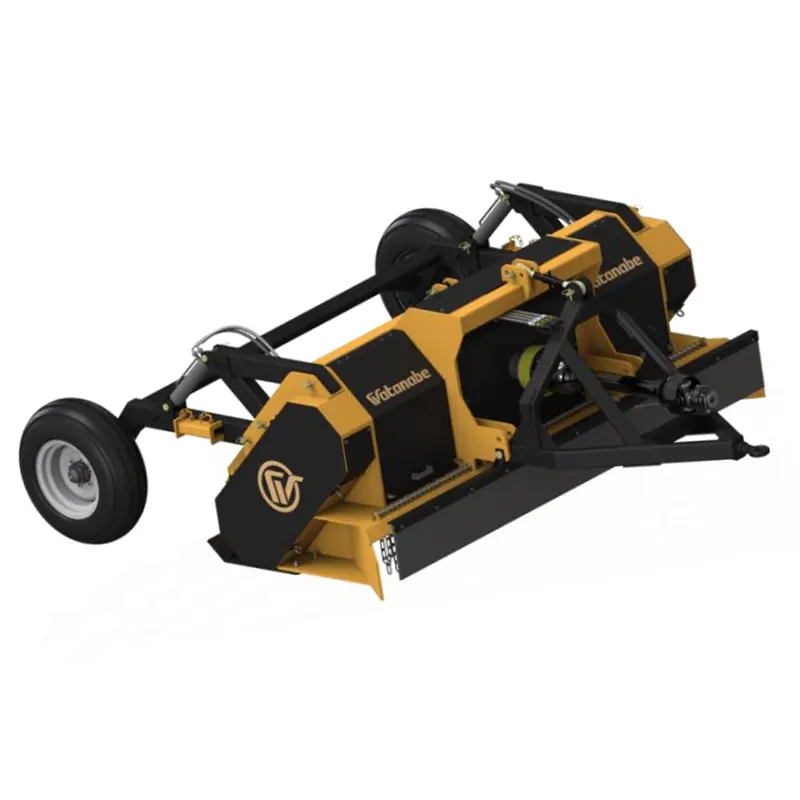
THOR 2.4 stone crusher — carbide teeth, wear-resistant steel housing, output grid, the four wear zones of a PTO stone crusher

A tractor-mounted PTO stone crusher contacts abrasive material in four distinct zones, each with different wear mechanisms and different material requirements:

Zone 1 — The Carbide Teeth (Primary Wear Zone)

The carbide-tipped teeth are the primary working tools of the stone crusher — they are in direct, high-velocity contact with rock on every rotor revolution. Each tooth tip experiences two distinct types of wear simultaneously:

Abrasive wear: As the carbide tip slides and cuts through rock, the harder mineral phases in the rock (quartz, feldspar silicates, basalt silicate groundmass) abrade the carbide surface continuously. This is analogous to sandpaper wear — fine-scale removal of carbide material at the tool tip surface wherever contact occurs. On Korean highland granite with high quartz content (Gangwon-do, North Gyeongsang), and on Jeju basalt with its fine uniformly distributed silicate matrix, abrasive wear is the dominant tooth wear mechanism. The wear rate depends on the relative hardness of the rock mineral phases and the carbide grade — harder, more abrasion-resistant carbide grades wear more slowly but are also more brittle and susceptible to the second wear mechanism.

Impact fatigue: Each time a tooth strikes a stone, it receives a sudden high-force impact that loads the carbide tip and its bond to the tooth body in bending and compression. If the impact exceeds the carbide’s fracture toughness in that load direction, the tip chips or spalls rather than wearing smoothly. This impact fatigue mechanism is most pronounced on large, dense stones (where the impact energy per strike is high) and on vesicle-variable basalt where density variation produces unpredictable impact force spikes. Tougher, less brittle carbide grades resist impact fatigue better but may wear faster from abrasion — the carbide specification in a well-designed stone crusher is a balance between these two competing requirements.

This wear mechanism duality is why carbide tooth grade matters more than simply “harder is better.” A tooth optimised only for hardness (abrasion resistance) may chip prematurely on the first large-stone impact; a tooth optimised only for toughness (impact resistance) may wear down too quickly in high-abrasion granite conditions. The carbide specification in a machine designed specifically for agricultural stone crushing in granite and basalt conditions — like the THOR’s design validated on Brazilian Paraná basalt and Korean highland granite — reflects this balance, tuned for the actual rock types and impact conditions encountered.

Zone 2 — The Rotor Body and Tooth Mounting System

The rotor drum carries the teeth and transmits the drive torque from the gearbox to the cutting action. Two wear-related concerns apply to the rotor body:

The tooth mounting system — whether bolted pockets, welded holders, or other configurations — must maintain precise tooth positioning and angular orientation even as individual teeth wear and are replaced over thousands of operating hours. A tooth mounting that loosens, allows angular variation, or is difficult to access for individual replacement creates maintenance problems that increase over the machine’s life. The bolt-mounted tooth system used on the THOR range — where each tooth is individually bolted to its mounting pocket, removable with a standard wrench without rotor removal — directly addresses this concern: any tooth can be replaced in the field, at any operating location, without workshop tools or equipment.

The rotor drum itself — behind and between the tooth mounting positions — is also exposed to abrasive contact from rock fragments passing around the rotor during the crushing process. In machines where the tooth mounting geometry leaves significant drum surface exposed to fragment contact, drum wear adds a structural maintenance concern alongside tooth replacement. Well-designed rotor geometry minimises exposed drum surface area by placing tooth mountings closely enough that fragment bypass is minimised.

Zone 3 — The Housing Liners (Secondary Impact Zone)

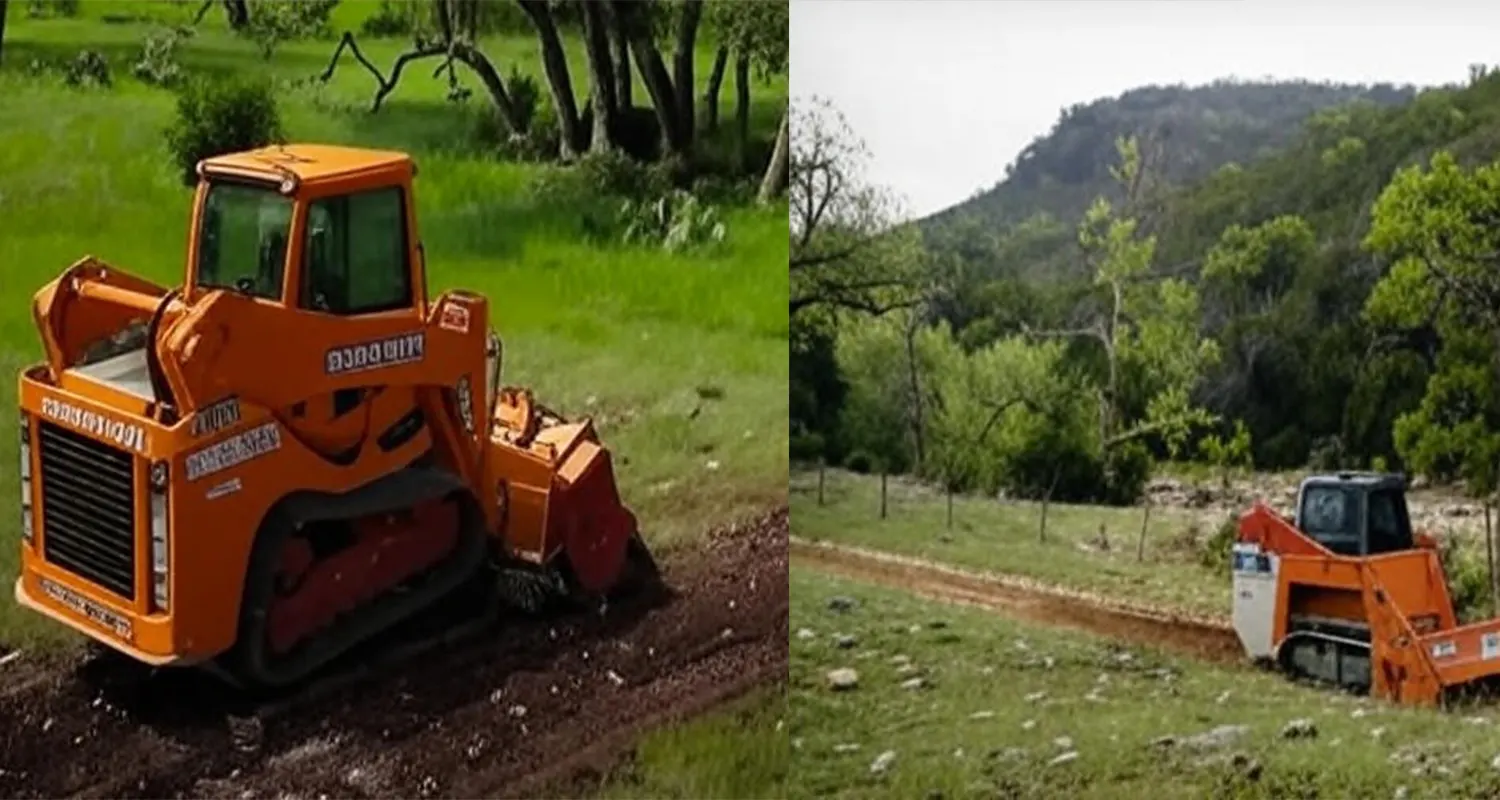
THOR 2.4 stone crusher at work — wear-resistant steel housing liners protect structure from secondary fragment impacts

Crushed stone fragments thrown by the rotor impact the inside of the crusher housing — the front wall, side walls, and rear hood — before passing through the output grid. This secondary impact mechanism affects the housing walls in two ways: direct impact abrasion from fragments striking the wall surface, and gouging from sharp-edged angular fragments sliding along the wall under centrifugal force from the rotor’s airflow.

Standard structural steel — the mild steel typically used for frame components, brackets, and non-wear-critical parts — is suitable for the machine’s primary structure but insufficient for the housing surfaces exposed to fragment impact. Wear-resistant steel — a category of high-hardness steels produced specifically for applications where abrasion and impact resistance are the primary material requirements — is the appropriate material for housing liners in the secondary impact zone.

The key characteristic of wear-resistant steels that distinguishes them from standard structural steels is their elevated hardness, typically achieved through alloying (manganese, chromium, boron additions to the steel composition) and controlled heat treatment during production. Higher hardness resists abrasive wear more effectively than standard mild steel — a housing liner in wear-resistant steel may outlast an equivalent mild steel liner by 3–5 times in the same stone crushing conditions. In a machine designed for sustained Korean highland granite or Jeju basalt operation, housing liners in wear-resistant steel are a basic specification requirement, not a premium upgrade.

The practical buyer implication: when comparing stone crushers, ask specifically whether the housing liner material is wear-resistant steel or standard structural steel. This information is not always prominently stated in marketing materials — ask for the specific component material specification, not just the machine’s overall steel content. A machine with standard steel liners in the secondary impact zone will require liner replacement or structural housing repair significantly earlier than a machine with properly specified wear-resistant steel liners in the same Korean rock type conditions.

Zone 4 — The Output Grid

The output grid — the perforated or bar-grate structure at the rear of the crushing chamber through which crushed material passes — is continuously abraded by the stream of crushed aggregate flowing through it. The grid opening size determines output fragment size (adjusted hydraulically from the tractor cab), and the grid material must resist the abrasive flow of angular granite and basalt fragments under the pressure of the rotor’s airflow.

Output grids in wear-resistant steel extend service intervals significantly compared to mild steel equivalents in the same application. Most output grids are designed as bolt-on replaceable units — the complete grid, or individual grid sections, can be replaced without major disassembly when wear reduces the opening accuracy or structural integrity. A grid worn beyond its usable thickness produces inconsistent output fragment sizing (the worn openings pass larger fragments than the nominal setting), which affects both road aggregate quality and agricultural seedbed fragment size uniformity.

How Korean Rock Types Affect Wear Rate — A Field-Relevant Guide

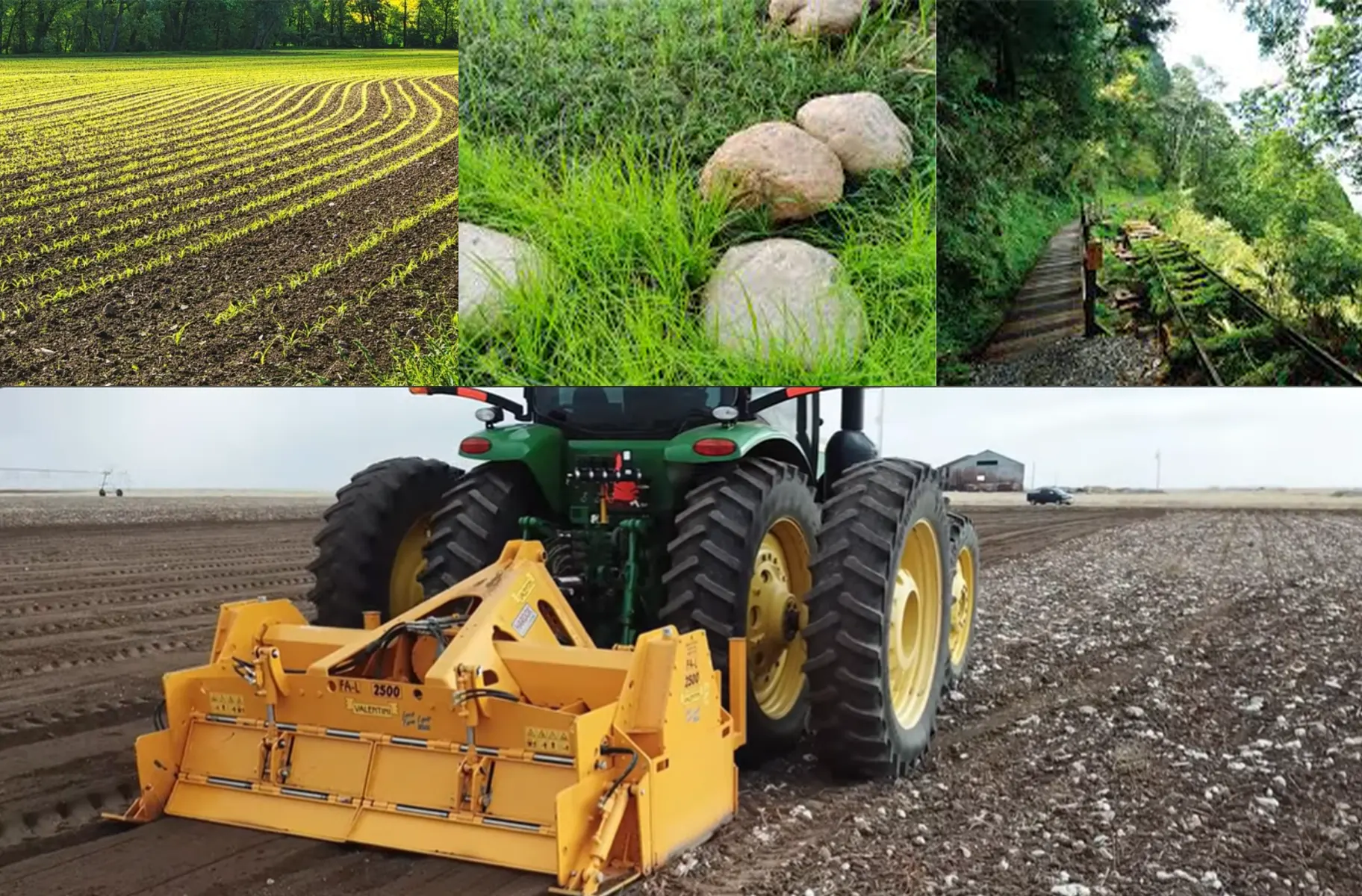
THOR 3.0 stone crusher on Korean field — wear rates differ between Gangwon granite, Jeju basalt, and other Korean rock types

Korean agricultural zones present three primary rock types with distinctly different wear implications for stone crushing equipment:

Gangwon-do and Gyeongsang Highland Granite

Korean granite is a coarse-grained crystalline rock with high quartz content — quartz being one of the hardest common minerals in agricultural rocks (approximately Mohs 7). The large quartz grains in Korean highland granite are individually abrasive and create stress concentration points at grain boundaries during impact fracture. On granite, abrasive tooth wear is the primary concern; impact fatigue is secondary because granite’s internal grain boundaries provide fracture planes that reduce the peak impact force per tooth strike compared to more homogeneous rock types.

Tooth replacement frequency on Gangwon-do granite, operated within the machine’s rated working parameters (HP at rated minimum, stone size within rated maximum, correct forward speed): typically 150–250 hours between tooth inspections, with replacement of individual worn teeth rather than full set replacement at each inspection. Well-managed Korean highland granite operations track individual tooth wear and replace teeth as they reach the wear threshold — maintaining consistent output quality and preventing the secondary damage that a broken tooth causes to its neighbours.

Jeju Island Basalt

Jeju basalt’s fine crystalline microstructure produces higher abrasive wear rates than coarse-grained granite because abrasive contact is continuous across the fine matrix rather than concentrated at discrete grain boundaries. Additionally, Jeju basalt’s vesicle-variable density produces impact force variation that increases impact fatigue loading on tooth tips and gearbox bearings beyond what uniform-density rock would produce at the same working speed.

On Jeju basalt, both tooth wear rate and housing liner wear rate are measurably higher than on Gangwon-do granite in equivalent operating conditions. Korean operators running identical machines on both rock types consistently report Jeju basalt consuming wear parts approximately 30–60% faster per operating hour than mainland granite. Inspection and replacement intervals should be shortened accordingly — a 100-hour inspection interval that is appropriate for Gangwon-do granite should be reduced to 65–75 hours for Jeju basalt operation.

South Chungcheong and South Jeolla Sedimentary Zones

The coastal agricultural zones of South Chungcheong and South Jeolla include sedimentary rock types — mudstone, shale, and cemented conglomerate — with lower hardness than granite or basalt. These softer rocks are less abrasive per unit volume processed, resulting in longer tooth and liner service lives than the harder igneous rocks of highland and volcanic zones. Operators transitioning machines between highland granite work and lowland sedimentary clearance can expect noticeably longer wear intervals in the lowland sedimentary zone. The inverse also applies: machines optimised and maintained for lowland sedimentary conditions should not be assumed adequate for highland granite or Jeju basalt without first confirming the component specification is appropriate for the harder rock.

Practical Wear Management — Inspection, Replacement, and Cost Planning

Watanabe quality certifications — wear component specification and quality control for Korean granite and basalt stone crushing

Tooth Inspection Protocol

A structured tooth inspection protocol — rather than waiting for visible performance degradation or machine stoppage — is the professional maintenance approach for Korean commercial stone crusher operators. Performance degradation from tooth wear develops gradually and may not be noticed until output quality is significantly compromised. The correct approach is scheduled inspection at defined intervals:

Pre-season inspection: Before the start of each spring clearing season, inspect all teeth for tip integrity, wear depth, and mounting torque. Replace any teeth with chipped tips, excessive nose wear, or loose mounting before field operation begins. A pre-season inspection at spring start catches wear accumulated from the previous season before it results in a field breakdown during the peak clearing period.

Mid-session inspection: After each multi-day heavy-stone session — particularly after sessions involving large embedded boulders at or near the machine’s rated maximum stone size — inspect the teeth on the rotor sections that engaged the heaviest stones most frequently. The teeth at the lateral edges of the rotor working width (where the side teeth engage material at a different approach angle than the central teeth) and the teeth in the leading positions of the helical pattern (which engage fresh material at the leading edge of the pass) typically experience the highest wear rates and merit priority inspection.

Jeju basalt-specific interval: For machines operated on Jeju basalt, standard mainland granite inspection intervals are too long. Shorten the inspection interval to approximately 60–80 hours for Jeju operation — the higher abrasion rate requires more frequent inspection to catch teeth approaching the replacement threshold before they fail during operation.

The Cost of Deferring Tooth Replacement

Deferring tooth replacement past the wear threshold — operating with excessively worn teeth — has costs that exceed the cost of the overdue tooth replacement in multiple ways:

Output quality degradation: Worn teeth deliver less impact energy per strike, producing coarser, less uniform output. For agricultural seedbed preparation where fragment size affects CT-2100 picking efficiency, worn-tooth output reduces picking quality even before the machine shows obvious performance problems.

Secondary tooth damage: A tooth that progresses past wear threshold to fracture — the tip breaking under impact load rather than wearing gradually — sends carbide fragments into the crushing chamber at high velocity. These carbide fragments impact adjacent teeth at angles that may cause sympathetic tip damage to neighbouring teeth, converting what would have been a single tooth replacement into a multi-tooth replacement event.

Rotor body exposure: Severely worn teeth expose the tooth mounting pocket and surrounding rotor drum surface to direct rock contact — damage that cannot be corrected by tooth replacement alone and may require rotor body repair or replacement, a significantly more expensive intervention than planned tooth replacement.

Replacement carbide teeth for the THOR 2.4 石料破碎机 and THOR 3.0 stone crusher are stocked locally in Ansan-si, Gyeonggi-do — next-day domestic dispatch is available throughout the Korean clearing season. Carrying a small on-site spare set during remote field operations avoids the logistics delay of emergency ordering if teeth need replacement at a remote Gangwon-do or Jeju site.

Wear Component Checklist — Questions to Ask When Comparing Stone Crushers

When evaluating stone crusher options for Korean granite and basalt conditions, the following wear-component questions are as important as the headline working width and HP specifications:

1

Can individual teeth be replaced in the field without removing the rotor? — Field-replaceable teeth are the standard for professional stone crushing operations in Korea. Machines requiring rotor removal for tooth replacement create unacceptable downtime during the spring clearing season when rotor-removal repair means transport to a workshop and multi-day machine absence.

2

What material is the housing liner — wear-resistant steel or standard structural steel? — Ask specifically for the liner material specification, not a general statement about machine build quality. Wear-resistant steel housing liners extend liner service life by 3–5× compared to standard steel in Korean granite and basalt conditions.

3

Is the output grid a bolt-on replaceable unit? — A grid that requires welded-in replacement rather than bolted replacement significantly increases the cost and time of grid maintenance. Bolt-on grids can be replaced in the field by the operator; welded grids require workshop intervention.

4

Are replacement teeth available locally — next-day if needed? — Tooth replacement is a routine seasonal maintenance event, not a workshop repair. Replacement teeth must be available within 1–2 days during the clearing season for operations in remote Korean highland zones. Confirm whether the dealer maintains local tooth stock or relies on import ordering.

5

Has the machine been validated on the specific Korean rock types you will be working in? — Performance data from soft sedimentary or tropical laterite conditions does not directly transfer to Korean highland granite or Jeju basalt. Ask for specific Korean operator references or regional validation data — not just international certifications that may reflect different operating conditions.

Wear in the CT-2100 Rock Picker — Tine Tips and the Basalt Factor

The stone crusher’s companion in the complete clearance system — the CT-2100 型捡石机 — also experiences abrasive wear in its tine tips. The CT-2100’s picking tines are carbide-tipped for durability in Korean granite and basalt conditions — the same material consideration applies: higher rock abrasivity (Jeju basalt, dense Gangwon-do quartzite) produces faster tine tip wear than softer sedimentary or weathered granite conditions.

Tine tip inspection for the CT-2100 follows the same logic as tooth inspection for the THOR crusher: scheduled interval inspection, shortened for Jeju basalt conditions, with individual tine replacement when tips reach the wear threshold. Worn tine tips reduce picking efficiency — stones that a sharp tine catches cleanly slip past worn tips and are not collected, reducing the effectiveness of the picking pass and leaving more residual stone in the field than a properly maintained machine would leave. Korea Watanabe stocks CT-2100 replacement tine tip sets locally in Ansan-si alongside THOR replacement teeth.

Frequently Asked Questions — Stone Crusher Wear Components

How do I know when a carbide tooth needs to be replaced rather than just cleaned?

Tooth replacement indicators to look for during inspection: visible tip shortening (the carbide nose is measurably shorter than a new tooth); chipping or spalling on the carbide tip surface (visible cracking or missing material on the tip face); rotation failure (the tooth should be able to rotate freely in its mounting — a tooth that will not rotate is likely seized due to rock fines compaction, which can be cleared; a tooth that rotates but wobbles has a damaged mounting); and mounting looseness (check bolt torque — loose tooth mounting accelerates angular wear and can allow the tooth to shed entirely during operation). Carry a new tooth for visual comparison during inspection — if the difference in nose length between a new tooth and the inspected tooth is visible to the naked eye, the tooth is past replacement threshold.

Is it more economical to buy a cheaper stone crusher and replace wear parts frequently, or invest in a higher-specification machine?

For Korean highland granite and Jeju basalt conditions, this question deserves a specific analysis rather than a general answer. The key variables are: annual operating hours (a machine working 200+ hours per season encounters significantly more wear-related cost events than a machine working 50 hours), rock abrasivity (Jeju basalt amplifies the cost difference between well-specified and under-specified wear components), and the cost of unplanned downtime during the spring clearing window (a machine breakdown during the 2–3 week Gangwon-do spring preparation period has a real opportunity cost). For operations above approximately 100 hours annual machine use on Korean highland granite, or any Jeju basalt operation, the higher initial cost of a machine with correct wear component specification is typically recovered within 2–3 seasons through reduced wear part replacement frequency, longer component intervals, and avoided breakdown events. For very small operations (below 50 hours annual use), the wear part frequency difference between specifications is less significant in absolute cost terms.

Can I fit aftermarket teeth to my stone crusher to reduce replacement cost?

Aftermarket carbide teeth exist for most major stone crusher rotor configurations — they are available at prices below OEM tooth costs and are sold through agricultural supply distributors in Korea. The variables to assess before using aftermarket teeth: dimensional compatibility (tooth shank dimensions must match the mounting pocket exactly — even small mismatches create vibration and mounting looseness), carbide grade matching (aftermarket teeth may not use the same carbide grade as the OEM specification — a harder grade may chip in impact conditions the OEM tooth handles safely), and warranty implications (using non-OEM teeth may affect the machine warranty — confirm with Korea Watanabe before using aftermarket teeth on a machine still under warranty). For machines outside warranty, carefully evaluated aftermarket options from reputable suppliers may offer cost advantages; low-quality generic teeth from unknown suppliers are a false economy that typically leads to faster wear and greater damage risk than the OEM cost saving justifies.

Does operating at a higher forward speed affect tooth wear rate?

Yes — in two ways. At higher forward speeds, more stones pass through the crushing zone per unit time, increasing the number of tooth impacts per hour and the total stone volume processed per hour. This increases both abrasive wear rate (more rock-tooth contact per hour) and impact fatigue loading (more impact events per hour). There is also a quality effect: at high forward speeds, some stones may be pushed aside rather than struck cleanly — these partially engaged stones cause asymmetric tooth loading that increases chipping risk more than clean centred impacts do. The correct working speed is the fastest speed at which all encountered stones are processed cleanly — not the fastest speed the tractor is capable of pushing the machine. Reducing forward speed by 20–30% below maximum often reduces tooth wear rate by more than 20–30% while maintaining acceptable throughput, because the efficiency of each tooth impact improves at lower speeds.

How should I store a stone crusher during the off-season to minimise corrosion of wear components?

For storage during the Korean winter off-season (November–March for most highland operations): clean all soil and stone debris from the rotor chamber, tooth mountings, and housing interior — compacted soil traps moisture and accelerates corrosion at the tooth-to-mounting interface. Apply a light oil or anti-rust spray to exposed metal surfaces, including tooth shanks, housing interior welds, and exposed fasteners. Store in a covered location; if outdoor storage is unavoidable, cover the machine with a waterproof tarp that keeps moisture out but allows airflow to prevent condensation buildup. Before storage, check all tooth mounting bolt torques — torque any that have loosened during the season to prevent fretting corrosion at the mounting interface during the storage period. Perform the pre-season tooth inspection described earlier at spring recommissioning rather than waiting until the first working day of the season.

Questions About Stone Crusher Wear Components for Your Korean Field Conditions?

Tell us your rock type (granite / basalt / sedimentary), annual operating hours, and any wear component concerns you have encountered — we provide maintenance schedule guidance and confirm replacement part availability for THOR 2.4 and THOR 3.0. Korea local stock, Ansan-si, Gyeonggi-do.

立即联系我们

Editor: Cxm

TAGs: