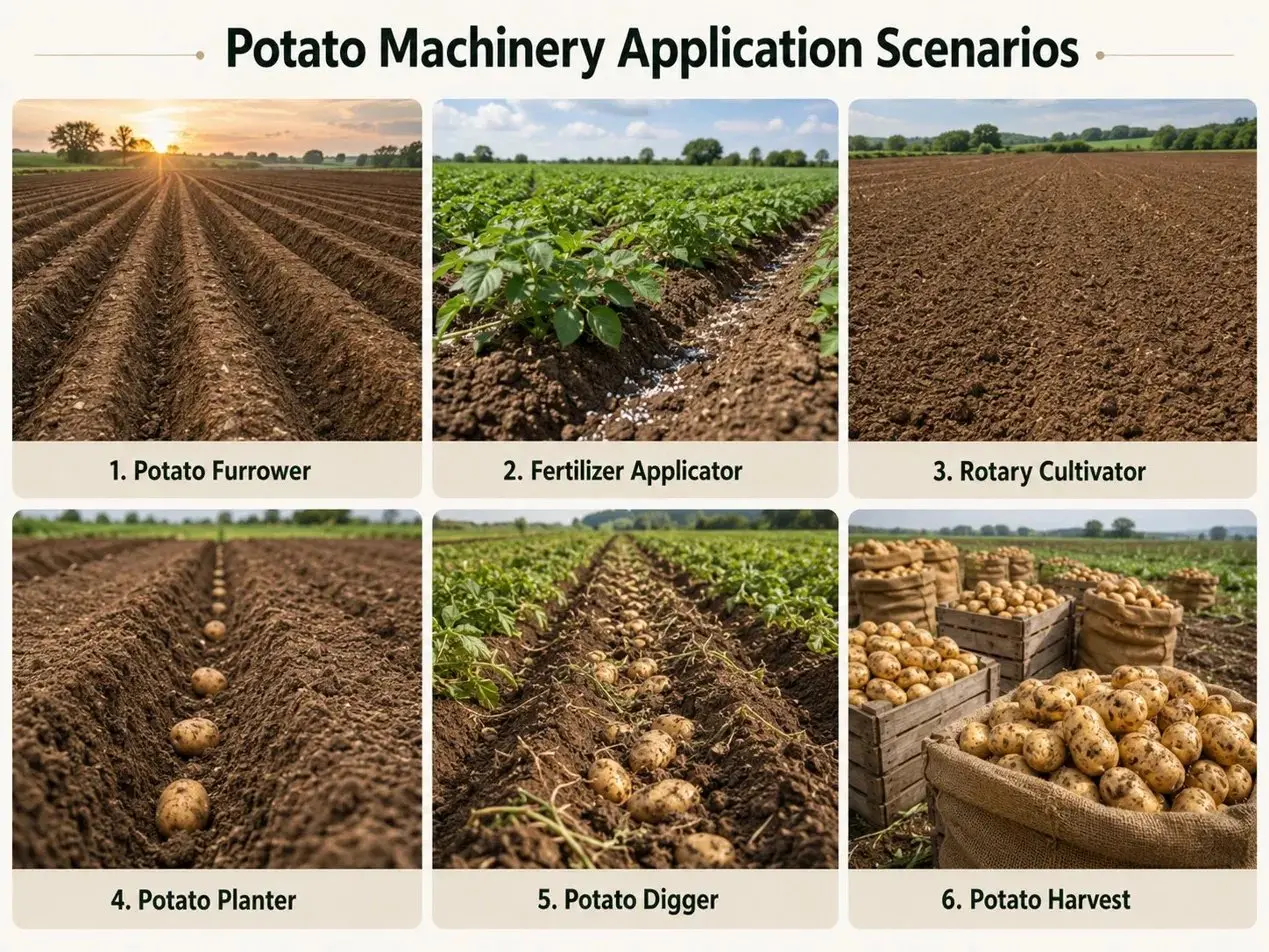
Gangwon-do’s highland potato zones — Pyeongchang-gun, Hoengseong-gun, Jeongseon-gun, and Inje-gun at 400–800 m altitude — produce some of Korea’s highest-quality potato crops because of the cool nights, clean air, and granite-derived soils of the Taebaek mountain range. These same conditions create one of Korea’s most compressed and unforgiving spring preparation calendars. The window between the last killing frost and the first planting-viable day is narrow; the window between acceptable planting and crop-damaging lateness is narrower still.
This guide provides a complete spring preparation calendar specifically for Gangwon-do highland potato farmers — built around the frost calendar at different altitudes, the machine operations that must occur in precise sequence, and the logistics decisions (machine booking, seed ordering, bedding preparation) that must be made weeks before the first fieldwork day. All machine specifications are from the Watanabe official brochure.
Why Highland Potato Timing Is Different — The Altitude Effect
- Soil thaw: mid–late March
- Last frost risk: ~Apr 10
- Planting opens: ~Apr 15
- Planting closes: ~May 5
- Soil thaw: late March–early Apr
- Last frost risk: ~Apr 20
- Planting opens: ~Apr 20–25
- Planting closes: ~May 10
- Soil thaw: early–mid April
- Last frost risk: ~May 1
- Planting opens: ~May 1–5
- Planting closes: ~May 15
★ These dates are indicative averages. Spring timing varies by 1–2 weeks year to year.
Late planting by even 7–10 days at 600+ m altitude compresses the vegetative growth period before early autumn frosts arrive in late September. Research on Korean highland potato production consistently shows that each week of delay past the optimal planting date reduces final yield by 5–10%, particularly for processing varieties like Atlantic that have fixed maturation periods. The preparation calendar must keep pace with the frost calendar — not the other way around.
The practical implication: at 600 m altitude, the complete spring preparation sequence — stone clearance, rotavator tillage, furrowing, and planting — must be compressed into approximately 3–4 weeks of active fieldwork between soil thaw and planting close. Every day of delay in beginning preparation adds pressure to the downstream operations. Planning the sequence before the season, and having machines and seed ready when the calendar opens, is the difference between a well-planted crop and a compromised one.
The Complete Preparation Sequence — All Steps in Order

Stone Clearance — EP-EW-4000 Rock Rake + THOR 2.4 Stone Crusher
Timing: First 5–7 days after soil thaw confirmation
Stone clearance is always Step 1 — before any tillage machine touches the field. At Gangwon-do’s granite soil zones, winter frost-heave reliably brings fresh surface stones up through the soil profile each winter. Running the PSW-3200旋耕机 into un-cleared surface stones accelerates blade wear, produces inconsistent tillage depth over stone zones, and potentially causes rotor damage on large impact stones.
Light surface stone year
EP-EW-4000 rock rake (75 HP, 3.6 m) sweeps windrows → CT-2100 rock picker collects. Covers the full field in 1–2 days at 4–6 km/h. Sufficient when the largest frost-heave stones are below 40–50 Kg.
Medium–heavy stone year
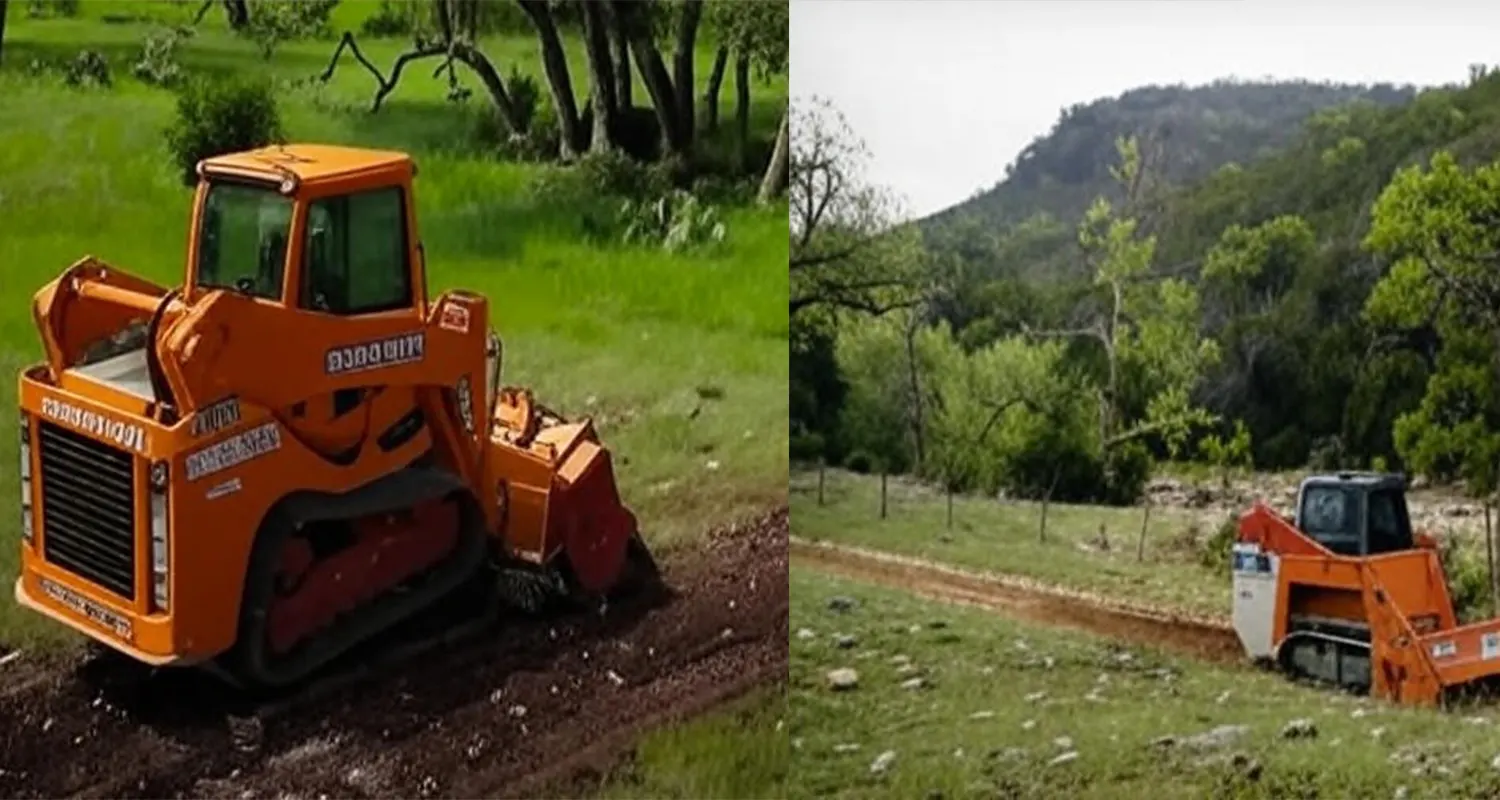
THOR 2.4 石料破碎机 (180 HP, 2.4 m, Kit Drawbar) processes embedded boulders the rake cannot handle → CT-2100 picks all fragments. Plan 3–5 days for crusher + picker on a 15 ha field at heavy stone density.
初耕——PSW-3200旋耕机
Timing: Immediately after stone clearance; confirm soil moisture before starting

The PSW-3200 rotavator (140 HP minimum, 3.0–3.6 m adjustable width) converts the cleared field into the uniform, fine-tilth seedbed that furrowing and planting require. At 1000 RPM PTO setting, the higher blade tip speed produces the fine particle size that supports consistent ridge formation and uniform planting depth. Working speed: 2–4 km/h at 1000 RPM on Gangwon-do granite-derived highland soil.
⚠ Wet soil warning — the most common spring mistake
Rotavating wet soil creates a compacted smear layer that is difficult to break up even with additional passes. Field test before engaging the rotavator: take a handful of soil at 15 cm depth, squeeze, drop from 1 m. If the ball crumbles — soil is ready. If it holds shape — wait 2–3 more days. In Gangwon-do highland spring, the temptation to start early when the calendar is tight is real; the agronomic cost of tillage in wet conditions consistently exceeds the cost of waiting for correct moisture.
PSW-3200 width setting reminder: Confirm the working width is set to match your furrower row spacing before the first rotavator pass of the season. The rotavator width determines the tilled bed width, which must match the furrower row spacing, which must match the planter row spacing, which must match the cultivator arm spacing, which must match the digger share spacing. All five are locked in by the rotavator width decision at this step.
Furrowing — EP-R-380 / EP-R-580
Timing: Same day or 1 day after rotavator pass, before soil settles
The furrower opens the planting ridges in the tilled soil. In the Watanabe system, the furrower (EP-R-380 for 3-row operations, EP-R-580 for 5-row) should follow the rotavator within hours to days — running the furrower on freshly tilled soil before the loosened structure re-settles under gravity and light rainfall produces better ridge geometry than returning to a field that has had 3–5 days to partially re-compact after tillage.
On Gangwon-do highland fields, ridge height of 20–25 cm above the inter-row base level provides the drainage separation that highland granite soils need during the early season wet period. Too-low ridges increase the risk of waterlogging at the seed piece level during heavy spring rain events that periodically occur in April–May at higher altitudes.
Base Fertilizer Application — EP-ADB-380 / EP-ADB-480
Timing: Immediately before or combined with furrowing (PSW-3200 B model combines Steps 2+4)
The EP-ADB fertilizer applicator distributes granular base fertilizer into the furrowed row zone. In Gangwon-do highland potato production, base fertilizer (typically composed NPK with specific ratios for potato) is applied at this step — not broadcast pre-tillage — to place the nutrient in the zone where root development will occur rather than uniformly across the surface. Operators using the PSW-3200 Model B (with integrated 2,000 Kg fertilizer bunker) combine Steps 2 and 4 into a single rotavator pass, eliminating the separate fertilizer applicator operation and reducing total field passes before planting.
种植——EP-PAI-2100 / EP-PANTHER / EP-PAI-480-AR
Timing: After last frost risk has passed at your field’s altitude (confirm with local forecasts)
Planting begins only after last frost risk has passed. At 600 m altitude in Gangwon-do, this is typically around April 20–25 in a standard year. Planting into furrowed ridges where overnight temperatures will drop below 0°C risks emergence damage — emerging shoots are more frost-sensitive than seed pieces, so the risk extends 2–3 weeks past planting into the emergence period. Consult KMA (Korea Meteorological Administration) 10-day highland forecasts before committing to the planting start date, and monitor the daily overnight forecast throughout the planting period.
The EP-PAI-2100 (2-row, 75 HP, 16-gear seed spacing 25–40 cm) is the dominant Gangwon-do highland planting machine. Seed spacing should be confirmed for your target variety and market: Atlantic at 28–30 cm for processing; Superior and Dejima at 25–28 cm for fresh market; seed potato production at 33–40 cm for vigorous single-stem development.
季中耕作——EP-ERA旋转耕耘机
Timing: 3–4 weeks after planting, before canopy closure (repeat as needed)
The EP-ERA rotary cultivator operates between the planted rows at 3–4 weeks after planting — when the shoots are emerging but canopy has not yet closed — performing simultaneous hilling (building ridge height around the emerging plants), inter-row weed control, and nitrogen top-dressing if a side-dress fertilizer hopper is attached. In Gangwon-do highland conditions, 1–2 cultivation passes before canopy closure are standard. The cultivator must be set to exactly the row spacing established at Step 2 (rotavator) — otherwise the rotary tines can contact and damage the emerging shoots.
Harvest — EP-AWB-1600 马铃薯挖掘机
Timing: 80–100 days after emergence (variety-dependent); before first autumn frost

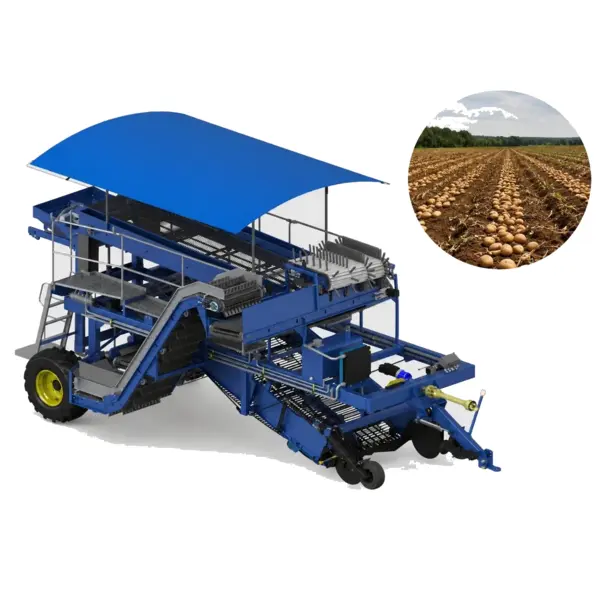
这 EP-AWB-1600 马铃薯挖掘机 (2-row mounted, 75 HP, vibrating web separator) is the standard harvest machine for Gangwon-do highland operations up to approximately 15 ha. It lifts and separates tubers in one pass — the vibrating web removes soil while the tractor advances, with tubers discharged to a following collection cart via the rear elevator (Kit B configuration). At 0.8–1.2 ha/hour of productive harvest rate, a 15-hectare field requires approximately 12–18 productive hours — achievable in 2–3 good-weather days when the late-August / early-September harvest window is clear.
In Gangwon-do highland conditions, harvest timing must be planned around the autumn frost calendar just as planting timing is planned around the spring frost calendar. First autumn frosts at 600+ m altitude typically arrive in late September to early October. Harvesting before overnight temperatures consistently approach 0°C avoids the risk of frost damage to un-harvested tubers in the ridge — frost-damaged tubers discolour rapidly and are rejected by processing plants and fresh market buyers alike.
The Master Calendar — Visualised for 600 m Altitude
| 时期 | 活动 | Machine / Task | HP Required |
|---|---|---|---|
| 一月至二月 | Pre-season planning | Book machines, order seed, confirm subsidies, arrange bedding material | — |
| 三月(晚) | Soil thaw monitoring | Check field access; probe soil temperature at 15 cm daily; prepare seed for chitting | — |
| Apr 1–15 | Stone Clearance | EP-EW-4000 rock rake + CT-2100 (light stone) or THOR 2.4 + CT-2100 (heavy stone) |
75–180 HP |
| 4月10日至20日 | Primary Tillage | PSW-3200 rotavator — 1000 RPM; 2–4 km/h; confirm soil is workable before start | 140 HP+ |
| Apr 12–22 | Furrowing + Fertilizer | EP-R-380/R-580 furrower; EP-ADB applicator (or PSW-3200 B combined) | 75–100马力 |
| Apr 20–May 10 | ⚠ Planting Window | EP-PAI-2100 / EP-PANTHER / EP-PAI-480-AR — begin after last frost risk clears | 75–100马力 |
| May (late)–Jun | Mid-season cultivation | EP-ERA rotary cultivator — hilling + weed control; 1–2 passes before canopy closure | 75马力 |
| 7月至8月 | Tuber bulking phase | Irrigation management; disease monitoring; no machinery in the field | — |
| 8月至9月 | 收成 | EP-AWB-1600 / EP-AWB-3200 — before first autumn frost; 80–100 days post-emergence | 75–110 HP |
What to Do in January and February — The Pre-Season Planning Window

The most important spring preparation decisions happen in January and February — not in April when the ground thaws. Korean highland potato farmers who struggle with the spring calendar almost always trace the problem to a January or February decision that was delayed until March or April, when options had already closed:
🕑
🌿
💰
📋
Managing Weather Risk in the Gangwon-do Spring Window
The Gangwon-do highland spring calendar is not under the farmer’s control — frost dates, rain events, and soil moisture conditions are determined by weather, not by farming plans. What is under the farmer’s control is how the preparation is sequenced so that weather delays in one step do not cascade into crisis across the whole sequence. Key weather risk management principles for highland potato farmers:
☁ Rain delay buffer
Plan the stone clearance and rotavator sequence with a 3–5 day buffer before the planting window opens. This buffer absorbs one significant rain event without forcing planting into wet soil or delaying planting past the optimal date. If the buffer is consumed by rain, the planting window narrows; if the buffer is intact, planting can begin at the earliest appropriate date.
🌡 Late frost insurance
Korean agricultural crop insurance programs include frost damage coverage for potato crops planted within the certified date range for the region and altitude. Confirm enrollment in the relevant crop insurance program (농작물 재해보험) before the spring planting period — insurance must be purchased before the event, not after. Your local 농협 branch handles enrollment; the cost is subsidized for highland potato producers.
📰 KMA highland alerts
Korea Meteorological Administration (기상청) provides altitude-specific weather data for major highland agricultural zones through its Agro-Meteorological Information System (농업기상정보서비스, www.agmet.kr). Sign up for frost alerts specific to your altitude zone in Pyeongchang-gun or Hoengseong-gun — highland frost alerts for sub-zero overnight temperatures are issued specifically for certified highland agricultural zones.
常见问题解答
Can I skip the stone clearance step if it looks relatively clean this spring?
A “relatively clean” field after a Gangwon-do winter should be confirmed by walking the field systematically, not assessed from the field edge. Frost-heave stones that are flush with the surface or just emerging are easy to miss visually but will damage the PSW-3200 rotavator blades, obstruct the planter’s furrow openers, and in the worst case, cause digger share damage at harvest. The 1–2 days required for a rock rake pass on a lightly stoned field is a small investment against the repair cost and downtime risk of running tillage and planting machinery into un-cleared surface stone. Conduct the rake assessment even if you expect to skip the crusher — the rake pass itself will confirm whether the crusher is needed.
Is it possible to plant potatoes in stages — some plots early, some later — to spread the spring workload?
Yes, and this is the standard approach for larger Gangwon-do operations with field areas at different altitudes or aspects. Lower-altitude fields (400–500 m) can begin preparation 1–2 weeks before the main 600 m zone fields, and planting on those fields can begin earlier. South-facing slopes at the same altitude warm faster than north-facing slopes and can be planted 3–5 days earlier than north-facing fields. Staging planting across field sections with different warming characteristics spreads the machinery demand across a longer preparation period and reduces the peak daily machine-hour requirement. The risk of staging is that late-planted sections of the same operation lose yield relative to early-planted sections if the season is compressed — manage this by prioritising lower-altitude and south-facing fields for early planting and accepting slightly later planting on upper and north-facing fields.
How do I decide between the EP-PAI-2100 and EP-PANTHER for my Gangwon-do operation?
The decision is primarily about planting area and calendar pressure. For operations below 10–12 ha with a 14-day planting window, the EP-PAI-2100 (2-row, 75 HP) is sufficient — at 0.8–1.0 ha/hour, a 10-hectare operation requires approximately 10–12 productive planting hours, achievable in 2–3 good weather days within the window. For operations above 12–15 ha, or where field terrain or seed fill logistics reduce the EP-PAI-2100’s productive hours below the theoretical rate, the EP-PANTHER (4-row option) provides the throughput headroom to complete planting even in a weather-compressed window. Contact Korea Watanabe with your specific planting area, field row lengths, and tractor HP for a calculation of which model keeps you safely within the planting window at your operation scale.
My field has some very stony sections and some relatively clear sections — do I need to do the full stone clearance sequence on the whole field?
No — the rock rake pass on the whole field is appropriate as the first step for all sections (it confirms stone density in each zone and is low-cost at 75 HP). The THOR 2.4 stone crusher pass is applied only to sections where the rake confirms heavy embedded stone — typically 30–50% of the field area on mixed highland granite fields, not the full area. The CT-2100 picker follows the THOR on those heavy-stone sections, and follows the rake directly on the lighter-stone sections. This zone-based approach reduces THOR crusher machine-hours and fuel on the field while ensuring complete stone treatment where it is actually needed. Mark the heavy-stone zones during the rake pass (GPS or flag markers) and brief the THOR operator on which zones require the full crusher treatment before beginning the crusher pass.
Field altitude + area (ha) + stone density + tractor HP . All Watanabe highland potato machines in Korea local stock, Ansan-si, Gyeonggi-do. 1–3 business day delivery across Korea.
编辑:Cxm