De THOR 2.4 versus THOR 3.0 De vraag is welke machine Korea Watanabe het meest behandelt bij de selectie van een model. Beide machines beschikken over een Koreaans certificaat voor landbouwmachines, beide werken met dezelfde aftakas van 1000 tpm en beide verpulveren Koreaans hooglandgraniet tot de landbouwstandaard die vereist is voor de teelt van aardappelen, radijs en ginseng. De verschillen tussen de twee machines zijn reëel en meetbaar, maar het is niet simpelweg "groter is beter". De juiste keuze hangt af van uw tractor, de omvang van uw bedrijf, de steendichtheid en of u de machine uitsluitend op uw eigen land wilt gebruiken of als onderdeel van een loonwerkbedrijf.
Alle specificaties in dit artikel zijn afkomstig uit de officiële productbrochure van Watanabe. Geen schattingen — elk vermeld cijfer voor beide modellen is de door de fabrikant gepubliceerde waarde.
Bevestigde specificaties — Alle verschillen tussen de twee modellen
De oranje gemarkeerde rijen in het onderstaande paneel tonen de specificaties die verschillen tussen de twee modellen. Witte rijen zijn identiek. Alle waarden zijn afkomstig uit de officiële Watanabe-brochure.
Bron: Officiële productbrochure van Watanabe. Alle specificaties bevestigd. Oranje rijen = verschillen tussen de twee modellen.
Wat de verschillen in specificaties in de praktijk betekenen: vier technische onderscheidingen
1. De spleet van 50 mm rotordiameter — Tipsnelheid en steeninslagenergie
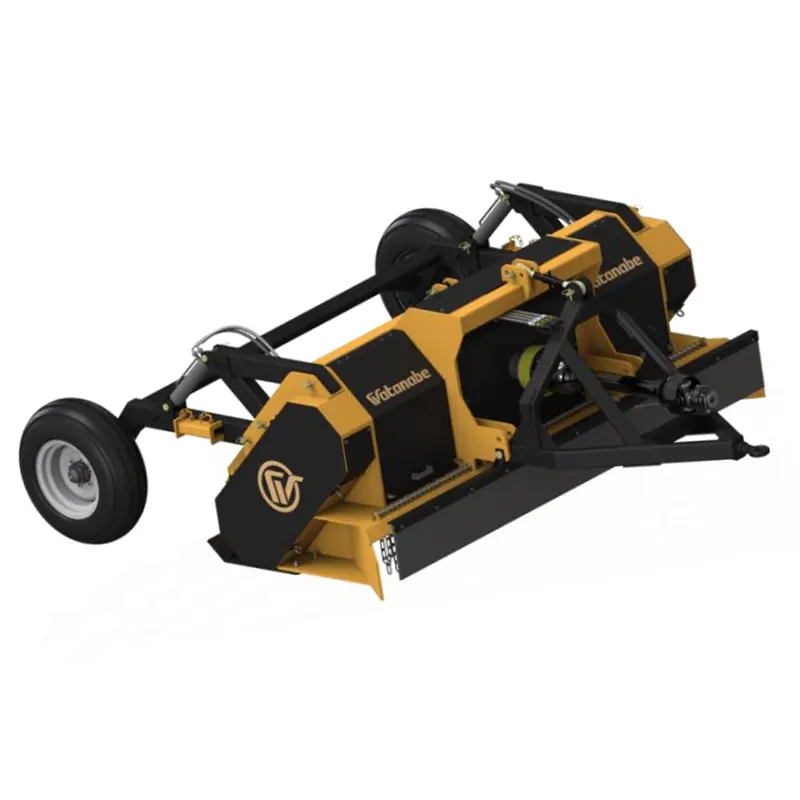
De rotor van de THOR 3.0 heeft een diameter van 600 mm, wat 50 mm groter is dan de rotor van de THOR 2.4 met een diameter van 550 mm. Bij hetzelfde aftakastoerental van 1000 tpm resulteert dit in een tandpuntsnelheid van ongeveer 31,4 m/s bij de 3.0, tegenover 28,8 m/s bij de 2.4 – een 9% hogere tandpuntsnelheid. Omdat de kinetische impactenergie evenredig is met het kwadraat van de snelheid, levert de THOR 3.0 ongeveer 19% meer kinetische energie per tandcontact dan de THOR 2.4 bij hetzelfde aftakastoerental.
Het praktische gevolg: de THOR 3.0 bereikt een schone fragmentatie van stenen van 30-40 cm binnen zijn ontwerpbereik in één doorgang, terwijl stenen van 30-35 cm op de THOR 2.4 mogelijk een diepere doorgang of een lagere rijsnelheid vereisen om dezelfde fragmentatiekwaliteit te bereiken. Voor bedrijven met een bevestigde steenpopulatie die voornamelijk tussen de 25 en 40 cm ligt, is de hogere impactenergie van de THOR 3.0 operationeel significant. Voor bedrijven met stenen die voornamelijk kleiner zijn dan 20 cm – de typische situatie op gevestigde, ontboste velden tijdens hun jaarlijkse onderhoudscyclus – is het verschil in tipsnelheid irrelevant, omdat beide machines ruimschoots aan de fragmentatie-eis voldoen.
2. Het aantal tanden bij 108+8 versus 90+6 — Fragmentverdelingspatroon
De bredere rotor van de THOR 3.0 heeft 108 primaire tanden plus 8 zijtanden, in tegenstelling tot de 90 primaire tanden plus 6 zijtanden van de THOR 2.4. Het grotere aantal tanden op de bredere rotor zorgt ervoor dat de tanddichtheid per vierkante centimeter grondbreedte ongeveer gelijk blijft. Dit betekent dat elke vierkante centimeter grondbreedte een vergelijkbare frequentie van tandcontacten per tijdseenheid ondervindt. Deze ontwerpkeuze garandeert dat de bredere rotor van de THOR 3.0, ondanks het grotere bereik, geen grovere fragmentatie oplevert.
Voor de winning van ginseng in de Koreaanse hooglanden – waar de resterende steen zich op een diepte van 1 tot 40 cm bevindt – bereiken beide tandconfiguraties de vereiste fragmentatienorm bij gebruik van de juiste snelheid en diepte. Het verschil in het aantal tanden tussen de modellen is voor de overgrote meerderheid van de toepassingen in de Koreaanse hooglanden geen doorslaggevende factor.
3. De 2-kleppenvereiste voor de THOR 3.0 — Wat betekent dit voor de tractorselectie?
De THOR 3.0 vereist standaard twee hydraulische ventielen aan de achterzijde: één voor de diepteregeling van de achterklep en één voor de hellingsmodus van de trekhaakset. De THOR 2.4 heeft slechts één ventiel nodig voor normaal gebruik (twee voor de hellingsmodus). Deze hydraulische vereiste is belangrijk bij het combineren van de THOR 3.0 met Koreaanse tractoren: sommige Koreaanse tractoren van 200-230 pk zijn standaard uitgerust met slechts één hydraulisch ventiel aan de achterzijde, waardoor een extra ventiel moet worden geïnstalleerd voordat de THOR 3.0 volledig kan worden gebruikt. Controleer vóór aankoop het aantal ventielen op het specifieke tractormodel van 230 pk dat u overweegt aan te schaffen. Korea Watanabe voert deze controle gratis uit in de compatibiliteitsbeoordeling vóór aankoop.
4. Machinegewicht: 2300 kg versus 2800 kg — Belasting van de achterhefinrichting
De THOR 3.0 weegt 500 kg meer dan de THOR 2.4. Op de driepuntsophanging van een Koreaanse tractor van 230 pk valt dit ruim binnen het maximale hefvermogen van de achteras (doorgaans 8.000-10.000 kg voor tractoren in deze vermogensklasse). Het extra gewicht is echter relevant voor twee scenario's: transport op de openbare weg (zorg ervoor dat de achterasbelasting van de tractor-machinecombinatie binnen de wettelijke gewichtslimieten voor wegvoertuigen blijft) en stabiliteit op hellingen (de zwaardere machine versterkt het achterwaartse effect, waardoor de hellingmodus met trekhaakset belangrijker wordt op steile terrassen in het Koreaanse hoogland).
Rekenmachine voor dekkingsgraad — Hoe de breedte van 2,4 m versus 3,0 m uw seizoen beïnvloedt
Dekkingsgraad bij een voorwaartse snelheid van 1,5 km/u (typische Koreaanse bergpas)
THOR 2.4 — 2,4 m breedte
THOR 3.0 — 3,0 m breedte
Voor eigen landbouwbedrijven op percelen van 10-15 hectare is dit verschil in dekking minder belangrijk, omdat de THOR 2.4 de seizoensgebonden ontginningsbehoefte ruim binnen de beschikbare werkdagen voltooit. Het dekkingsvoordeel wordt commercieel pas doorslaggevend wanneer het jaarlijkse te ontginnen oppervlak de seizoenscapaciteit van de THOR 2.4 overschrijdt – circa 100-120 hectare – of wanneer een loonwerker de opbrengst per machine per seizoen wil maximaliseren.
De BlackBird-combinatie — Exclusief voor THOR 3.0
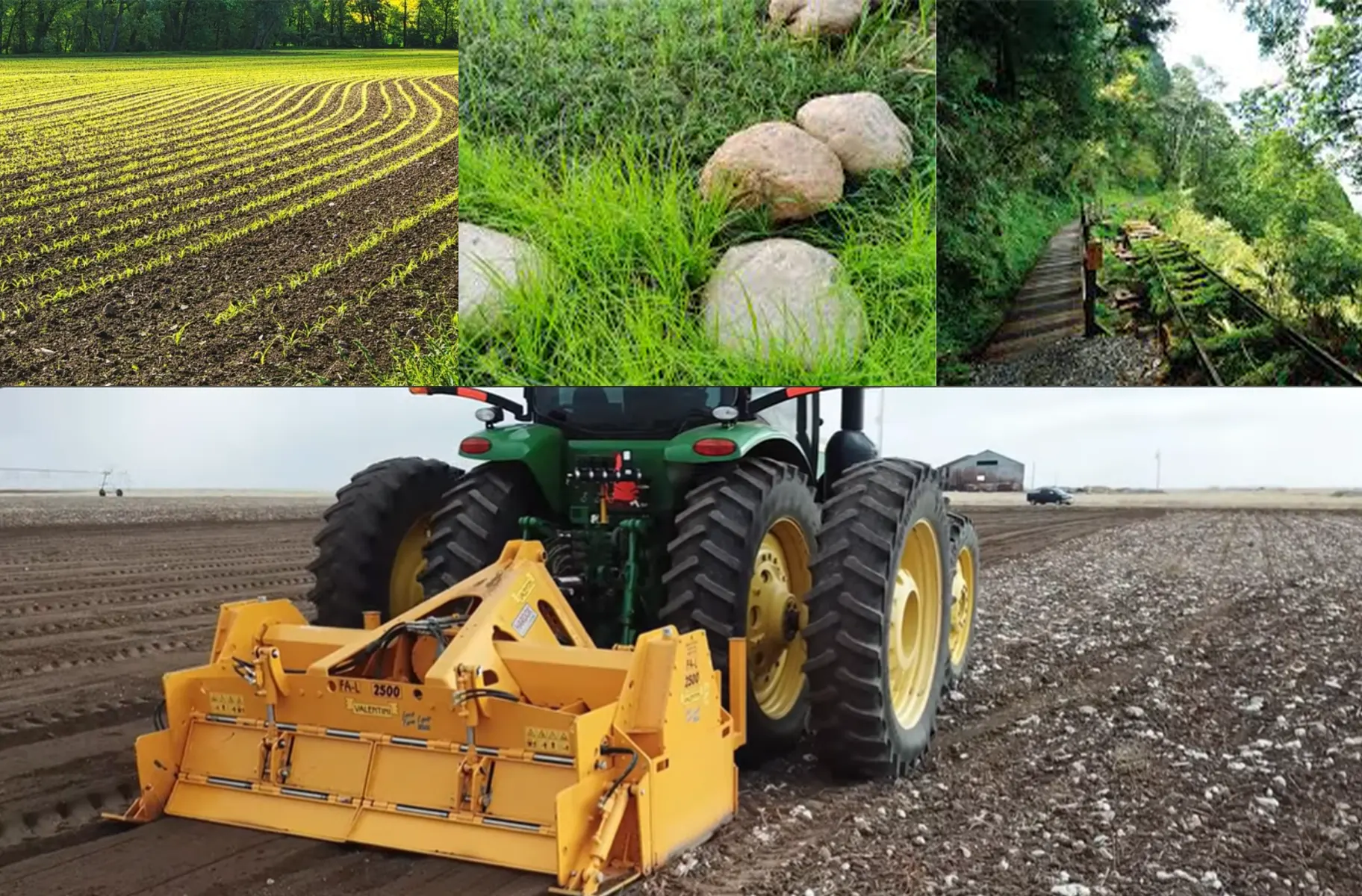
De BlackBird-steenhakker (werkbreedte van 9,5 m, minimaal 300 pk tractorvermogen vereist) is een grootschalige steenverzamelaar die aan de achterkoppeling van de THOR 3.0 wordt gekoppeld. De steenbreker werkt vooraan, terwijl de BlackBird tegelijkertijd een strook van 9,5 m aan gefragmenteerd materiaal achter zich veegt. Deze combinatie is de meest productieve steenverwerkingsconfiguratie in het Watanabe-assortiment. Hij is uitsluitend beschikbaar voor de THOR 3.0, niet voor de THOR 2.4, om twee technische redenen:
Laadvermogen van de achterkoppeling
De BlackBird van 9,5 meter heeft een werkbreedte die meer dan drie keer zo groot is als de 3,0 meter van de THOR 3.0. De structurele belasting op de achterste trekhaak van de THOR 3.0 vereist het zwaardere frame van de THOR 3.0 (2800 kg) als verankeringsgewicht. Het lichtere frame van de THOR 2.4 (2300 kg) biedt onvoldoende structurele verankering voor de dynamische belasting van de BlackBird tijdens gebruik op het Koreaanse hooglandterrein met zijn kenmerkende oneffenheden.
Vereiste hydraulisch vermogen van de tractor
Het opvangmechanisme van de BlackBird vereist een hydraulische uitgang van de achterkoppeling van de THOR 3.0. De hydraulische kleppenconfiguratie van de THOR 3.0 (standaard 2 kleppen) levert deze uitgang. De THOR 2.4 heeft minimaal 1 klep, wat zonder aanpassingen niet het specifieke hydraulische circuit biedt dat de BlackBird nodig heeft. De combinatie THOR 3.0 + BlackBird vereist een tractor met minimaal 300 pk – meer dan de individuele minimumvereisten van beide THOR-modellen – wat bevestigt dat deze configuratie is ontworpen voor de loonwerker en grootschalige commerciële bedrijven, en niet voor het doorsnee familiebedrijf.
De beslissingsmatrix: welk model voor welk bedrijfsprofiel?
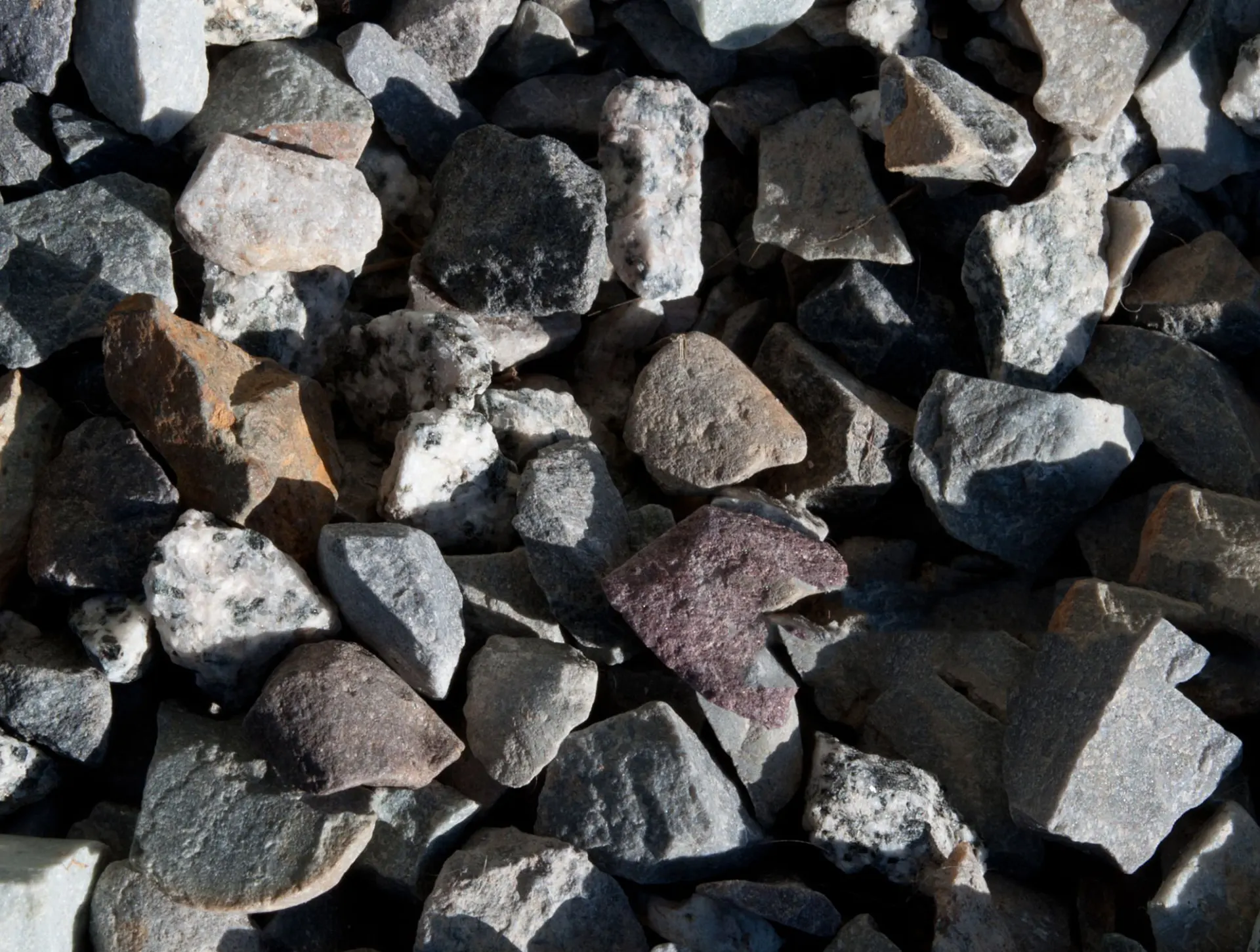
De beslissing tussen THOR 2.4 versus THOR 3.0 Dit levert een duidelijke oplossing op wanneer de drie belangrijkste variabelen – jaarlijks werkgebied, steendichtheid (maximale steendiameter) en bedrijfsbudget – gezamenlijk worden beoordeeld. Gebruik de onderstaande matrix om te bepalen welk modelprofiel het beste bij uw bedrijf past:
| Boerderijprofiel | Jaarlijkse opruimzone | Maximale steendiameter | Aanbevolen model |
|---|---|---|---|
| Familieboerderij, eigen grond | 5–15 ha/jaar | Voornamelijk <25 cm | THOR 2.4 ✓ |
| Familieboerderij, eigen grond + seizoensgebonden hulp van de buren | 15–30 ha/jaar | Voornamelijk <25 cm | THOR 2.4 ✓ |
| Nieuw terrein ontwikkeld, steendichtheid 30–40 cm. | Elk | 25–40 cm bevestigd | THOR 3.0 ✓ |
| Aannemersbedrijf | 50–150+ ha / seizoen | Elk | THOR 3.0 ✓ |
| BlackBird combinatie-operatie | 100+ ha / seizoen | Elk | THOR 3.0 alleen ★ |
| Tractor van 230 pk niet beschikbaar, tractor van 180 pk wel beschikbaar. | Elk | Alles kleiner dan 30 cm | THOR 2.4 — de tractor vormt de beperking |
| Voorbereiding van het ginsengveld (standaarddiepte van 40 cm) | 2–5 ha | Stenen tot 30 cm, diepte tot 40 cm | THOR 2.4 (protocol met twee passes, diepte-instelling 35-40 cm) |
De meest voorkomende fout bij de keuze tussen de THOR 2.4 en de THOR 3.0 is dat men voor de THOR 3.0 kiest omdat dit het "professionele" model is, terwijl het werkelijke bedrijfsprofiel – eigen grond kleiner dan 20 ha, stenen kleiner dan 25 cm, tractor van 180 pk – overeenkomt met de specificaties van de THOR 2.4. De THOR 3.0 vereist een tractor van 230 pk, wat de investering in het systeem met 10.000.000 tot 15.000.000 KRW verhoogt. Als uw bestaande tractor van 180 pk voldoet aan de eisen van de THOR 2.4, is de aanschaf van de THOR 3.0 in combinatie met een nieuwe tractor van 230 pk om toegang te krijgen tot een groter dagelijks werkgebied (25%) doorgaans niet economisch verantwoord voor eigen landbouwbedrijven kleiner dan 20 ha.
Wanneer is de meerprijs voor THOR 3.0 terugverdiend? — De drempel voor aannemersschaal
De THOR 3.0 is duurder dan de THOR 2.4 en vereist een tractor van 230 pk in plaats van 180 pk, wat de totale investering in het systeem verhoogt. Om de extra kosten te rechtvaardigen door middel van extra inkomsten, moet het landbouwbedrijf of de loonwerker een specifieke jaarlijkse werkoppervlaktegrens overschrijden. De berekening is als volgt:
Meerkosten voor de THOR 3.0-upgrade versus jaarlijkse omzetvoordelen — casestudy voor aannemers
Veelgestelde vragen
Wat is het belangrijkste praktische verschil tussen de THOR 2.4 en de THOR 3.0 op Koreaans hooglandgraniet?
Voor het grootste deel van het Koreaanse hooglandterrein en de steendichtheid leveren beide modellen een gelijkwaardige fragmentatiekwaliteit op de landbouwstandaard van minder dan 5 cm, die nodig is voor aardappelen, radijs en ginseng. De THOR 3.0 ruimt 251 TP5T meer oppervlakte per dag op bij dezelfde rijsnelheid, kan stenen tot 40 cm verwerken (versus 30 cm voor de THOR 2.4) en is het enige model dat compatibel is met de BlackBird 9,5 m combinatie. De THOR 2.4 vereist een tractor van 180 pk (ruim verkrijgbaar op de Koreaanse hooglandmarkt tegen een lagere prijs dan modellen van 230 pk) en is de juiste keuze voor bedrijven met een eigen grondoppervlakte van minder dan 20 hectare. Het praktische verschil in dagelijkse output op een eigen grondoppervlakte van 10 hectare is gering: de THOR 2.4 ruimt een perceel van 10 hectare gemakkelijk op binnen de voorbereidingsperiode. De grotere werkbreedte van de 3.0 wordt met name een operationeel voordeel wanneer het totale seizoensoppervlakte meer dan 50-60 hectare bedraagt.
Kan de THOR 2.4 stenen groter dan 30 cm aan, mochten die af en toe in het veld voorkomen?
Af en toe zullen er stenen van meer dan 30 cm voorkomen – geïsoleerde rotsblokken die onder de normale steenlaag uitsteken – die door de rotor van de THOR 2.4 gedeeltelijk verwerkt zullen worden. De beschermingssystemen van de machine (drukontlasting van de achterkap, overbelastingsbeveiliging van de rotor) zorgen ervoor dat de machine grote stenen kan ontwijken zonder catastrofale schade. Dit zijn echter geen omstandigheden waaronder de machine ontworpen is – routinematig werken op velden met een aanzienlijke steendichtheid van 30-40 cm bij normale bedrijfssnelheid met een THOR 2.4 zal leiden tot bovennormale slijtage van de tanden en een verhoogde belasting van de kap. Als uit een veldinspectie blijkt dat er meer dan 15-201 TP5T aan zichtbare oppervlaktestenen met een diameter van meer dan 25 cm aanwezig zijn, dient de THOR 3.0 boven de THOR 2.4 te worden overwogen. Korea Watanabe adviseert een veldinspectie van de steendichtheid vóór de aankoop voor nieuwe projecten, alvorens te bepalen welk model het meest geschikt is.
Vereist de THOR 3.0 een andere CT-2100 steenverzamelaarconfiguratie dan de THOR 2.4?
De CT-2100 steenrapper De CT-2100 functioneert als een extra verzamelmachine achter de THOR 2.4 of de THOR 3.0. Hij vereist minimaal 110 pk en wordt als aparte machinepassage op de tractor gemonteerd, ongeacht welk THOR-model wordt gebruikt. Wanneer de THOR 3.0 echter wordt gebruikt voor zijn primaire toepassing (nieuwbouw met grote steendichtheid, stenen van 30-40 cm), kan het nodig zijn de rijsnelheid en de verzamelroute van de CT-2100 aan te passen, omdat de THOR 3.0 bij de verwerking van grote stenen een groter volume aan gefragmenteerd materiaal per strekkende meter produceert. Korea Watanabe adviseert machinisten die de THOR 3.0 gebruiken voor het ontginnen van zware nieuwe grond om de stortcycli van de CT-2100-bunker vaker in te plannen dan bij reguliere veldonderhoudswerkzaamheden.
Is het de moeite waard om na 3 jaar gebruik te upgraden van THOR 2.4 naar THOR 3.0 als de farm uitbreidt?
De uitbreiding van een landbouwbedrijf van 10 naar meer dan 20 hectare is een veelvoorkomend scenario voor succesvolle Koreaanse hooglandbedrijven, en dit roept de vraag op of een upgrade naar de THOR 3.0 zinvol is. Het antwoord hangt af van de vraag of de bestaande tractor van 180 pk behouden kan blijven of vervangen moet worden. Als het bedrijf extra land verwerft en de aanschaf van een tractor van 230 pk kan rechtvaardigen voor andere productiviteitsverbeteringen in de grondbewerking (grotere PSW-3200-variant, uitgebreidere aardappelmachines), dan is de upgrade naar de THOR 3.0 in combinatie met de nieuwe tractor economisch gezien zinvol bij een oppervlakte van meer dan 20 hectare. Als de tractor van 230 pk uitsluitend wordt aangeschaft om de THOR 3.0 aan te drijven, en het bedrijf slechts 18-20 hectare groot wordt, is het economisch gezien voordeliger om de THOR 2.4 en de bestaande tractor van 180 pk te behouden in plaats van de kosten van de tractorupgrade te dragen. Een tweede THOR 2.4 (indien de seizoensgebonden capaciteit de beperkende factor is) kan kosteneffectiever zijn dan een upgrade naar één THOR 3.0, waarvoor een nieuwe tractor nodig is.
Welk model wordt door Korea Watanabe het meest aanbevolen aan starters op de woningmarkt in de Koreaanse berggebieden?
Korea Watanabe beveelt de THOR 2.4 aan voor de overgrote meerderheid van kopers die voor het eerst een Koreaans hooglandbedrijf aanschaffen, om drie redenen. Ten eerste sluit de vereiste tractor van 180 pk aan bij de meest voorkomende tractorklasse voor hooglandlandbouw in Korea, waardoor de meeste kopers geen extra investering hoeven te doen in een upgrade van hun tractor. Ten tweede dekt de capaciteit van de THOR 2.4 voor stenen van 30 cm de hoeveelheid stenen die op de meeste terraslandbouwpercelen in de Koreaanse hooglanden voorkomen – velden die ooit zijn ontbost of door natuurlijke verwering de hoeveelheid stenen aan de oppervlakte hebben teruggebracht tot onder de 25-30 cm. Ten derde komt de THOR 2.4 in aanmerking voor dezelfde Koreaanse subsidie voor landbouwmachines als de THOR 3.0, waardoor het verschil in nettokosten na subsidie de belangrijkste financiële factor is – en de nettokosten van de THOR 2.4 toegankelijk zijn voor een breder scala aan investeringsbudgetten. Korea Watanabe beveelt de THOR 3.0 aan voor kopers die voor het eerst een dergelijke installatie aanschaffen, met name wanneer uit een veldinspectie blijkt dat de steendichtheid aanzienlijk is (30-40 cm), of wanneer de koper als aannemer actief is of dat vanaf het begin van plan is.
THOR 2.4 of THOR 3.0? Korea Watanabe vertelt het je binnen 24 uur.
Stuur Korea Watanabe uw landbouwgrond, steentype-indicatie, tractormodel en bedrijfsplan. Binnen één werkdag ontvangt u een bevestigd modeladvies, inclusief de onderbouwing, een specificatievergelijking en een subsidieberekening specifiek voor uw bedrijf.
Redacteur: Cxm