Elk gewas in de 48 artikelen tellende E-serie gids vóór nootmuskaat levert één primair commercieel product op vanaf het moment van oogst. Papaja (E-42) introduceerde een opeenvolgende dubbele oogst: papaïne wordt gewonnen uit de groene vrucht, waarna dezelfde vrucht weken later rijpt voor de verse verkoop. De twee producten werden echter op verschillende tijdstippen uit hetzelfde orgaan geproduceerd, en het eerste (papaïne) was een secundaire markt ten opzichte van de primaire (rijpe vrucht). Kruidnagel (E-48), kaneel (E-47) en zwarte peper (E-46) leveren elk één specerijproduct op vanaf hun oogst. Nootmuskaat (Myristica fragrans De nootmuskaat (Houtt.) is het enige commerciële specerijgewas ter wereld waarbij één enkele oogst van één enkele vrucht twee volledig verschillende specerijproducten oplevert die op volledig gescheiden markten worden verhandeld, en waarbij het SECUNDAIRE product – de gedroogde zaadmantel, foelie genaamd, die het zaad in de vrucht omhult – ongeveer twee keer zoveel waard is per kilogram als het PRIMAIRE product (de gedroogde zaadkern, oftewel de nootmuskaat zelf).
Deze structuur met twee producten verandert de berekening van het steenbeheer op een specifieke en commercieel meetbare manier: het effect van steenbeperking op de grootte van de vrucht vermindert zowel de nootmuskaatkern als de foelie-aril tegelijkertijd en proportioneel. Dit betekent dat een vermindering van 20% in de vruchtgrootte door steenbeperking zich vertaalt in een verlies van 20% aan nootmuskaatopbrengsten én een verlies van 20% aan foelieopbrengsten – waarbij het foelieverlies twee keer zo groot is als het nootmuskaatverlies tegen de huidige groothandelsprijzen. De gecombineerde gevoeligheid van de opbrengst voor steenbeperking is daarom drie keer zo groot als bij een gewas met één product en gelijke fysieke afmetingen. Naast dit argument over de dubbele productie introduceert nootmuskaat de meest mineraalafhankelijke kwaliteitsketen in de E-serie fenylpropanoïde specerijen: de myristicinesynthese vereist ijzer in DRIE afzonderlijke enzymstappen — dezelfde dubbele PAL-Fe/4CL-Mg-afhankelijkheid als eugenol (E-48) plus een derde ijzervereiste van het cytochroom P450-enzym dat de karakteristieke methylenedioxyring van myristicine vormt. steenbreker voor nootmuskaat De toepassing in Indonesië, Grenada en India sluit de zesdelige serie over specerijenchemie af, die begon in E-44, met een gewas waarvan het rendement op de investering binnen de herplantingsperiode het hoogst is in de 49 artikelen van de gids.
Foelie en nootmuskaat — Twee hoofdproducten, één beperking.
De nootmuskaatvrucht is een botanische structuur met een ongebruikelijke commerciële architectuur. Uiterlijk lijkt hij op een kleine geelgroene abrikoos (4-6 cm diameter bij commerciële rijpheid). Binnenin: een dunne, sappige buitenste schil (de pericarp, die lokaal in Banda wordt gebruikt voor jam en dranken), waaronder de "pit" ligt – een harde bruine schil die de nootmuskaatkern omsluit. Rond deze schil, op het punt tussen de schil en de pericarp, bevindt zich het aril: een kantachtig, helderrood of karmozijnrood netwerk van vertakkende filamenten dat de schil volledig omhult in een dicht netwerk. Dit rode aril verandert na het oogsten en drogen van karmozijnrood naar amberoranje en wordt foelie – een vlakkere, delicatere specerij met een verfijnder, bloemiger aroma dan het diepere, warmere profiel van nootmuskaat.
Wanneer de vrucht volledig rijp is (ongeveer 6-9 maanden na de bloei), splijt de vruchtwand van de nootmuskaat vanzelf open en komt het zaad – met de rode zaadmantel intact – bloot te liggen en wordt het geoogst. De verwerkingsstap: de vruchtwand wordt verwijderd en weggegooid (of gebruikt voor lokale producten); de zaadmantel wordt zorgvuldig van de schil gepeld, platgedrukt en gedroogd (dit levert 1 foelieblad per noot op, met een droog gewicht van ongeveer 1,5-2,5 g); de schil wordt gebroken en de pit wordt eruit gehaald en apart gedroogd (dit levert één nootmuskaat op, met een droog gewicht van ongeveer 3-6 g per noot). De commerciële prijsstructuur: Indonesische SIAP Grade A nootmuskaat (heel): US$ 6.000-9.000/ton bij export. Foelie: US$ 12.000-18.000/ton bij export (ongeveer 2x de prijs van nootmuskaat van een vergelijkbare kwaliteit). De EU-markt voor speciale nootmuskaat (afkomstig uit Grenada) biedt prijzen tot US$ 1,6 miljard (25.000-35.000) per ton. De gewichtsverhouding is ongeveer 20-30 gram gedroogde nootmuskaat per kilogram gedroogde nootmuskaat van dezelfde oogst. Met een prijs die twee keer zo hoog is en een gewicht van 2-31 miljard, draagt nootmuskaat ongeveer 4-61 miljard bij aan de gecombineerde omzet van nootmuskaat en nootmuskaat – een klein volume, maar een hoge waarde per eenheid. De gecombineerde waarde van één nootmuskaatnoot (gedroogde pit + gedroogde zaadmantel): ongeveer 500-1.200 Indonesische roepia per noot aan de poort van de Indonesische boer.
De grootte van nootmuskaatvruchten wordt bepaald door de aanvoer van water, mineralen en fotosyntheseproducten naar de zich ontwikkelende vrucht gedurende de groeiperiode van 6-9 maanden. Een steen die de wortelzone in de eerste 0-30 cm, waar de voedingswortels van de nootmuskaat zich concentreren, beperkt, vermindert de aanvoer van al deze drie benodigdheden. De zaadmantel en de pit groeien gedurende deze periode samen in dezelfde vrucht – de zaadmantel heeft geen aparte groeiperiode of aparte aanvoer van mineralen. Een vrucht die 20% kleiner is dan het potentieel van het ras, zal een 20% kleinere pit én een 20% kleinere zaadmantel hebben. Deze twee opbrengstverliezen zijn niet onafhankelijk van elkaar – ze zijn gekoppeld door de steen die de wortelzone beperkt. De commerciële berekening: voor een nootmuskaatplantage waar de gemiddelde noot op steenvrije locaties 5 g gedroogde nootmuskaat (waarde: IDR 30/g) en 0,12 g gedroogde foelie (waarde: IDR 60/g) oplevert, leidt een door steenverwijdering veroorzaakte verkleining van de noot tot 4 g nootmuskaat (verlies: IDR 30) en 0,096 g foelie (verlies: IDR 2,88). Het totale verlies per noot bedraagt IDR 32,88, vergeleken met IDR 24 als alleen nootmuskaat in aanmerking zou worden genomen. De structuur met twee producten versterkt de commerciële gevolgen van steenverwijdering met ongeveer 371 TP5T ten opzichte van een berekening met één product.
De nationale vlag van Grenada – aangenomen bij de onafhankelijkheid in 1974 – toont een gestileerde nootmuskaat in de linkerbovenhoek: een geel omlijnd symbool met een nootmuskaatpit en foeliezaadhuls. Grenada is het enige land ter wereld waarvan de nationale vlag een specerij afbeeldt. Dit weerspiegelt de absolute centrale rol van nootmuskaat in de Grenadiaanse nationale identiteit: nootmuskaat werd in 1843 door het Britse koloniale bestuur vanuit Banda (Indonesië) in Grenada geïntroduceerd en werd het belangrijkste landbouwexportproduct van het eiland, waardoor Grenada de bijnaam "Eiland van Specerijen" kreeg. Tegen het einde van de 20e eeuw produceerde Grenada, naast de Indonesische productie uit Banda, ongeveer 201 ton van de wereldwijde nootmuskaatproductie. Het verhaal van orkaan Ivan verbindt de symboliek van de vlag met het debat over het beheer van de steengroeve: een gewas dat zo centraal staat in de nationale identiteit dat het op de vlag staat, zag 901.500 ton aan bomen verwoest worden door één enkele storm in 2004. De herbeplantingsbeslissingen die tussen 2004 en 2008 zijn genomen, zullen de inkomsten uit nootmuskaat in Grenada de komende 45 tot 60 jaar bepalen.
Myristicine — De drievoudige ijzerketen die de specerijenreeks afsluit
Eugenol (E-48) heeft de dubbele afhankelijkheid van ijzer en magnesium in de fenylpropanoïde route naar fenylpropanoïde verbindingen vastgesteld: ijzer via fenylalanine-ammoniaklyase (PAL) en magnesium via 4-coumaraat:CoA-ligase (4CL). Myristicine deelt deze twee afhankelijkheden, maar introduceert een derde: het cytochroom P450-enzym dat de methylenedioxybrug vormt (het structurele kenmerk dat myristicine van eugenol onderscheidt) vereist heemijzer als katalytisch centrum. Deze ijzerbehoefte van drie enzymen maakt myristicine de meest ijzerafhankelijke kwaliteitsverbinding in de E-serie fenylpropanoïde specerijprogressie.
Myristicine (1-allyl-5-methoxy-3,4-methylenedioxybenzeen, C₁₁H₁₂O₃) is de belangrijkste vluchtige stof in nootmuskaat etherische olie (35–45% van de totale vluchtige stoffen) en is structureel verwant aan eugenol (beide zijn allylbenzeenverbindingen uit de fenylpropanoïde route), maar met de toevoeging van een methylenedioxybrug (een ring gevormd tussen twee aangrenzende zuurstofatomen op de aromatische ring, gekatalyseerd door een cytochroom P450-enzym). De minerale route: (1) PAL-stap: fenylalanine → trans-kaneelzuur, vereist non-heem Fe²⁺ als structurele cofactor op de actieve PAL-plaats — de universele afhankelijkheid van het instappunt beschreven over E-45 tot en met E-48. (2) 4CL-stap: 4-coumarinezuur → 4-coumaroyl-CoA, vereist Mg²⁺ voor ATP-hydrolyse — voor het eerst beschreven in E-48 kruidnagel, maar aanwezig in alle voorgaande fenylpropanoïde specerijstappen. (3) CYP719A-stap: de vorming van de methylenedioxybrug vanuit een aangrenzende catecholgroep wordt gekatalyseerd door een lid van de CYP719A-subfamilie van cytochroom P450-enzymen. Dit zijn heembevattende monooxygenasen: het ijzeratoom in de heem-prosthetische groep circuleert tussen Fe²⁺ en Fe³⁺ tijdens elke katalytische cyclus, waarbij het Fe⁴⁺-oxo-tussenproduct de zuurstofinsertiereactie uitvoert. Drie enzymstappen, drie mineraalafhankelijkheden (Fe²⁺ non-heem, Mg²⁺, Fe heem), alle gereduceerd door steenbeperking van de minerale fractie van de wortelzone.
De zesdelige serie over de chemie van specerijen (E-44 kardemom tot en met E-49 nootmuskaat) heeft stapsgewijs de minerale afhankelijkheden onthuld die ten grondslag liggen aan de commercieel waardevolle verbindingen van 's werelds meest waardevolle specerijen. Elk artikel introduceert een nieuwe chemische verbindingsklasse of een nieuwe minerale afhankelijkheid, voortbouwend op de PAL-ijzerbasis die ze allemaal verbindt. E-44 kardemom: 1,8-cineol via de MEP-terpeenroute, ijzerafhankelijk (één ijzerafhankelijkheid). E-45 kurkuma: curcumine via fenylpropanoïde, PAL-Fe (één ijzer). E-46 zwarte peper: piperine, PAL-Fe + Cu-DAO (ijzer + koper). E-47 kaneel: cinnamaldehyde, alleen PAL-Fe. E-48 kruidnagel: eugenol, PAL-Fe + 4CL-Mg (ijzer + magnesium). E-49 nootmuskaat: myristicine, PAL-Fe + 4CL-Mg + CYP719A-Fe(heem) (twee ijzer + één magnesium). De progressie laat zien: elke kwaliteitscomponent van de specerij in de reeks is afhankelijk van ijzer, en hoe complexer de structuur van de verbinding, hoe meer minerale afhankelijkheden deze accumuleert. De universele werking van steenbeperking – het verminderen van het wortelcontact met de minerale fractie die Fe, Mg, Cu en Mn levert – is het enige mechanisme dat tegelijkertijd alle zes deze kwaliteitsketens aantast. De reeks als geheel laat zien dat steenbeheer in specerijgewassen geen verzameling van onafhankelijke argumenten is, maar een enkel onderliggend principe (toegang tot mineralen via het wortelcontactoppervlak) dat op verschillende manieren tot uiting komt in verschillende chemische structuren.
Orkaan Ivan, de vlag en het hoogste rendement op investering (ROI) tijdens de herbeplantingsperiode in deze gids.
Op 7 september 2004 bereikte orkaan Ivan Grenada als een categorie 3-storm met aanhoudende winden van ongeveer 225 km/u. De nootmuskaatindustrie – die er 161 jaar over had gedaan sinds de introductie in 1843 om uit te groeien tot een van de twee belangrijkste producerende regio's ter wereld – werd binnen 24 uur grotendeels verwoest. Ongeveer 901 ton aan nootmuskaatbomen op Grenada werd ontworteld, gebroken of van zijn bladerdak ontdaan. Bomen die al 30-40 jaar in productie waren en die nog 15-25 jaar commercieel zouden kunnen produceren, gingen verloren. De Grenada Cooperative Nutmeg Association (GCNA), de centrale marketingorganisatie voor Grenadiaanse nootmuskaat, berekende dat de industrie 5-7 jaar nodig zou hebben voordat de eerste nieuwe aanplantingen vrucht zouden dragen en 10-15 jaar om het productieniveau van vóór Ivan te benaderen.
Eenmaal gevestigd, is het lastig om stenen rondom nootmuskaatbomen te verwijderen zonder de volwassen wortels te beschadigen. Het optimale moment om stenen te verwijderen – de enige periode waarin de volledige THOR-diepte kan worden bereikt over de gehele geplande wortelzone zonder dat bestaande boomwortels de boom belemmeren – is vóór het planten. Een nootmuskaatboom die op vrijgemaakte grond wordt geplant, profiteert gedurende zijn HELE productieve levensduur (45-60 jaar) van steenvrije grond. Een nootmuskaatboom die op onbewerkte, stenige grond wordt geplant, blijft gedurende zijn hele levensduur met stenen te maken hebben. Geen enkele latere verwijdering kan de voorbereiding van de wortelzone vóór het planten volledig nabootsen, omdat het volwassen wortelstelsel de zone waar anders zou worden verwijderd, volledig vult en in beslag neemt.
Voor een herbeplantingsinvestering in 2005 (na orkaan Ivan) op 1 hectare ontbost Grenada-nootmuskaatland: de ontbossingskosten worden eenmalig gemaakt. De voordelen – verbeterde vruchtgrootte, dubbele opbrengst en myristicinekwaliteit – stapelen zich op gedurende de productieve levensduur van de boom van 45-60 jaar (geschatte laatste productiejaar: 2050-2065). Geen enkel ander gewas in de E-serie heeft deze combinatie van eenmalige ontbossing en ononderbroken cumulatieve opbrengsten over meerdere decennia. De jaarlijkse kosten van de ontbossingsinvestering, afgeschreven over 50 jaar, zijn de laagste van alle gewassen in de gids – waardoor nootmuskaat de sterkste kandidaat is voor een ontbossingsinvestering in de herbeplantingsfase.
De oorspronkelijke bron van nootmuskaat: de Banda-eilanden in de Molukken (dezelfde "Specerijeneilanden" die ook in E-48 kruidnagels voorkomen). De vulkanische basaltgeologie van Banda (Gunung Api, een actieve stratovulkaan, domineert het centrale deel van de Banda-archipel) zorgt voor basaltgesteente op een diepte van 12-22 cm in alle commerciële nootmuskaatplantages – hetzelfde vulkanische basaltargument als voor Indonesische kruidnagels en Vietnamese peper. Grenada's vulkanische oorsprong (een keten van uitgedoofde vulkanische kraters met Mount St. Catherine op 840 m) zorgt voor andesiet en basaltgesteente op een diepte van 10-20 cm. De productie in Kerala, India, vindt plaats op dezelfde charnockiet-lateriet als de kardemom, peper en kaneel uit Kerala. Alle drie de markten delen vulkanische of metamorfe gesteentegeologieën – die allemaal onder hetzelfde THOR-ontginningsprotocol vallen met de juiste dieptespecificatie.
Drie markten: Indonesië, Grenada en India.
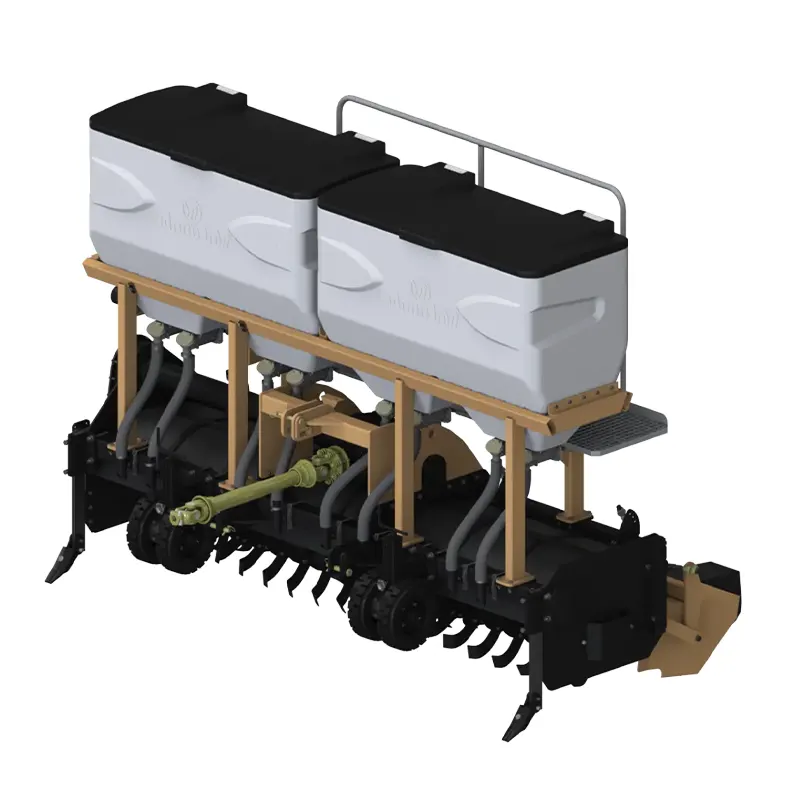
Machinesysteem — Investering in herbeplantingsperiode en protocol voor dubbele productie van ijzer en magnesium
Veelgestelde vragen
Steenbreker voor nootmuskaat — ontstaat het dubbele product van nootmuskaat en foelie uit één enkele vrucht echt gelijktijdig, of is er een bepaalde volgorde bij betrokken?
De oogst van nootmuskaat en foelie is gelijktijdig in die zin dat beide producten afkomstig zijn van dezelfde vrucht tijdens dezelfde oogst: de vruchtwand opent zich, de noot (met zaadmantel) wordt verzameld en de twee worden op dezelfde dag handmatig gescheiden. De verwerking verschilt vervolgens: de zaadmantel (foelie) wordt van de schil gepeld en plat te drogen gelegd (3-5 dagen in de zon), terwijl de schil (met de nootmuskaatpit erin) in zijn geheel 6-8 weken wordt gedroogd totdat de pit in de schil rammelt en vervolgens wordt opengebroken om de nootmuskaatpit vrij te maken voor verdere droging. In die zin duurt de verwerking verschillend, maar de oogst is gelijktijdig en het commerciële verlies als gevolg van eventuele pitgerelateerde vermindering van de vruchtgrootte wordt direct bij de oogst op beide producten toegepast. Dit verschilt van papaja (E-42), waar papaïne weken voordat de vrucht rijp is voor de commerciële verkoop, uit de groene vrucht wordt geoogst. Bij papaja zijn de beperkingen van de pit voor de papaïnewinning en de rijping van de vrucht opeenvolgend en vereisen ze aandacht op twee verschillende commerciële momenten. Bij nootmuskaat is het verlies van beide producten direct en gelijktijdig op het enige oogstmoment.
Is de afhankelijkheid van heemijzer van het cytochroom P450-enzym CYP719A voor de myristicinesynthese specifiek gedocumenteerd in Myristica fragrans?
CYP719A-enzymen (de cytochroom P450-subfamilie die verantwoordelijk is voor de vorming van methylenedioxybruggen in het fenylpropanoïdemetabolisme) zijn gedocumenteerd in meerdere plantensoorten met methylenedioxyverbindingen: berberinesynthese in Coptis japonica (CYP719A1), papaverinesynthese in Papaver somniferum (CYP719A3), en het metabolisme van safrole/apiole in bredere zin. In Myristica fragrans In het bijzonder is de CYP450-gemedieerde vorming van de methylenedioxybrug in myristicine voorgesteld als de biosynthetische route (zoals beschreven in Frkuska et al., 2014, overzicht van de biosynthese van fenylpropanoïden; en in Anwar et al., 2016, biosynthetische studie van nootmuskaat essentiële olie), maar een volledig gekarakteriseerd nootmuskaatspecifiek CYP719A-enzym is ten tijde van de voorbereiding van dit artikel nog niet gepubliceerd. De exacte enzymen die verantwoordelijk zijn voor de vorming van de methylenedioxybrug in nootmuskaatmyristicine zijn biochemisch gedocumenteerd, maar nog niet volledig gekarakteriseerd op eiwitniveau specifiek voor nootmuskaat. De afhankelijkheid van heemijzer van CYP450-enzymen als klasse is een universeel aanvaard biochemisch gegeven. Het argument dat de methylenedioxybrug van myristicine heemijzer vereist (via een CYP450-enzym van een of ander type) is mechanistisch correct; de specifieke genidentiteit van dat enzym in M. fragrans Dit is een lacune in het onderzoek. Deze stap is meer speculatief dan de afhankelijkheden van PAL-Fe en 4CL-Mg en wordt gepresenteerd als een goed onderbouwde biochemische conclusie in plaats van een gewasspecifiek, bevestigd experimenteel resultaat.
Verandert de verwoesting door de orkaan van 2004 in de periode na orkaan Ivan iets aan het praktische argument voor het verwijderen van stenen van landbouwgrond voor boeren die al op stenige grond hebben herbeplant?
Voor Grenadiaanse nootmuskaatplantages die in de periode 2005-2010 herplantten zonder de stenen te verwijderen, is de huidige situatie als volgt: de bomen zijn 15-20 jaar oud (en naderen hun vroege piekproductie) en groeien in wortelzones die beperkt worden door stenen. Deze beperkingen zullen gedurende de resterende 25-40 jaar van hun productieve levensduur aanhouden. Volledige verwijdering van de wortelzone (THOR) is niet langer praktisch zonder de wortels van de bomen te beschadigen – de voedingswortels van de bomen bevinden zich nu in dezelfde zone die met THOR zou worden aangepakt. De beschikbare interventies voor deze reeds gevestigde bomen van na orkaan Ivan zijn: (1) Verwijdering van de ruimte tussen de bomen met BlackBird + CT-2100 (3-4 m vanaf de voet van elke boom in de open ruimte tussen de bomen) – bereikt niet de wortelzone met de hoogste dichtheid, maar verbetert de drainage en de toegang tot mineralen in de buitenste wortelzone; (2) Inbreng van organisch materiaal met PSW-3200 in de ruimte tussen de bomen – verbetert de chelatie van ijzer en magnesium in de toegankelijke zone. (3) Bladbespuiting met ijzer en magnesium (geen steenbestrijdingsmaatregel, maar pakt het mineraaltekortsymptoom aan dat wordt veroorzaakt door steenbeperking). Het BELANGRIJKSTE gebruik van deze informatie voor Grenada is toekomstgericht: nootmuskaatbomen die nu worden geplant (op nieuw ontwikkeld land of na het verwijderen van bomen voor herbeplanting) moeten volledig worden ontdaan van THOR + CT-2100 + PSW-3200 voordat ze worden geplant, omdat die bomen tot 2070-2085 vruchten zullen dragen. Het argument van de herbeplantingsperiode is daarom relevanter voor nieuwe plantbeslissingen in 2025-2035 dan voor het herstel van aanplantingen uit 2005-2010.
Hoe verhoudt de nootmuskaatproductie in India zich tot het systeem van meerdere specerijen op boerderijen in Kerala, en kan één enkele investering in het ontginnen van een stuk grond meerdere specerijengewassen ten goede komen?
Het traditionele Kerala-systeem voor het verbouwen van meerdere specerijen per huishouden (lokaal: "gemengd huishouden" of "huistuin") omvat het samen verbouwen van peper (Piper nigrum), kardemom (Elettaria kardemomum), nootmuskaat (Myristica fragrans), kaneel (Cinnamomum verum), arecannoot (Areca catechu), en kokosnoot (Cocos nucifera) op dezelfde percelen van 0,5–3 ha. Al deze gewassen delen het geologische steenprofiel van charnockiet/khondaliet uit Kerala (Mohs 6–7 op een diepte van 12–25 cm) en hebben allemaal hun primaire voedingswortelzones in dezelfde zone van 0–25 cm. Een enkele bewerking met THOR 2.4 op een diepte van 18–24 cm over het erf, gevolgd door CT-2100-opvang en PSW-3200-organische inwerking, pakt tegelijkertijd de steenbeperking aan voor: peper (argument voor de zone na de basis, E-46), kardemom (wortelstok en schaduwboomzone, E-44), nootmuskaat (volledige boomwortelzone), kaneel (wortelzone + stronkbasiszone, E-47) en betelnoot/kokosnoot. De kosten per gewas voor het verwijderen van stenen op een boerderij met meerdere specerijen, afgeschreven over een periode van meerdere gewassen, zijn daarom aanzienlijk lager dan de kosten per gewas op een boerderij met monocultuur van specerijen. Het onderzoek van ICAR-IISR naar het verwijderen van stenen op boerderijen in Kerala voor de teelt van meerdere specerijen is commercieel aantrekkelijker dan elk argument voor het verwijderen van stenen op boerderijen met slechts één gewas. Het programma van Korea Watanabe voor het verwijderen van stenen op boerderijen in Kerala voor de teelt van meerdere specerijen kan worden gezien als één investering die het probleem van stenen op vijf of meer E-serie specerijen tegelijkertijd aanpakt.
Wat is het rendement op investering (ROI) over 50 jaar voor het verwijderen van nootmuskaatpitten in Grenada – waarbij rekening wordt gehouden met zowel productverbetering als myristicinegehalte gedurende de volledige productieve levensduur van een na orkaan Ivan herplante boom?
Voor een herbeplanting van 1 ha in de Grenada Saint Andrew Parish na orkaan Ivan (100 bomen/ha op 10 m × 10 m, herplant in 2025 op vulkanisch andesiet met een plantdichtheid van 20% 10–18 cm): Investering (THOR 3.0 + CT-2100 + PSW-3200 met ruime organische incorporatie voor 1 ha): circa XCD 35.000–55.000 (US$ 13.000–20.000). Jaarlijks onderhoud BlackBird: XCD 3.000–5.000/jaar. Totale investering over 50 jaar: US$ 28.000–45.000. Voordelen over een productieve levensduur van 50 jaar (eerste vruchten in jaar 6-8, piek in jaar 15-30, afnemend tot jaar 50-60): (1) Dubbele productgrootteverbetering: 100 bomen × 2.000 noten/boom/jaar (piek) × 20% grootteverbetering op ontgonnen grond × (0,005 kg nootmuskaat × US$7/kg + 0,00015 kg foelie × US$14/kg) verschil per noot = US$1.750/ha/jaar op piek × 35 productieve jaren (verrekend voor opbouw en afname) = ongeveer US$40.000 over 50 jaar. (2) Verbetering van myristicine van klasse 1: 15% extra kwalificatie van klasse 1 tegen farmaceutische premie (US$2.500/ton) × 200 kg/ha/jaar nootmuskaatopbrengst × 0,15 × US$2.500 = US$75/ha/jaar × 40 jaar = US$3.000. (3) Dubbele productopbrengst van foelie van klasse 1: vergelijkbare verbetering, US$2.200 over 50 jaar. Totaal voordeel over 50 jaar: circa US$45.200. Tegen een investering van US$28.000–45.000: ROI 1,0:1 tot 1,6:1 over 50 jaar — bescheiden volgens deze conservatieve schatting, maar een reëel positief rendement op de langste tijdshorizon van alle E-serie artikelen. Het rendement op de investering (ROI) van nootmuskaat is niet het hoogste in de reeks, maar wel het hoogste rendement PER JAAR AAN INVESTERINGSKOSTEN, omdat de eenmalige investering in het kappen van bomen verdeeld is over de langste productieve levensduur van alle boomgewassen in de gids.
Steenbreker voor nootmuskaat — Dubbel product: wortelzone, drievoudig ijzerhoudende myristicine en herplantingsperiode
Steensoort + boomleeftijd + herbeplanting versus gevestigde bomen + basislijn voor dubbel product + myristicinegehalte + herbeplantingsstatus na orkaan Grenada → Korea Watanabe levert de juiste informatie steenbreker voor nootmuskaat Volledige specificatie van de wortelzone, organisch programma met Fe+Mg+Fe(heem) en berekening van het rendement op investering (ROI) van het gecombineerde product over 50 jaar.
Korea Watanabe Rock Crusher Tractor Co., Ltd. — Ansan-si, Gyeonggi-do
Redacteur: Cxm