THOR 2.4 Tooth Wear Monitoring — Practical Field Inspection Guide and Replacement Decision Framework for Korean Highland Operators

Most THOR 2.4 tooth sets fail gradually — not all at once. The operator who inspects correctly can replace the worn teeth before output quality degrades, rather than discovering the problem when the spring preparation window has already closed.

THOR 2.4 Parts and Maintenance Enquiry

THOR 2.4 stone crusher’s output quality — its ability to fragment stones to the residual size standard required for Korean highland potato, radish, and ginseng — is determined by the cutting geometry of its tungsten carbide teeth. As teeth wear, this geometry degrades progressively, changing the machine’s fragmentation performance in ways that are not visible from the tractor cab until the degradation has reached a stage where field results are measurably worse.

The field inspection protocol covered in this guide gives Korean highland THOR 2.4 operators the practical measurement methods, the visual recognition criteria for wear stages, and the decision framework for determining exactly when replacement is needed — not too early (wasting residual tooth life) and not too late (accepting degraded fragmentation quality during the critical spring preparation window). This is a companion to the replacement overview in the THOR tooth replacement article — it covers the how-to of each inspection step rather than the organisational calendar of replacement procurement.

What Teeth Do and Why Geometry Determines Fragmentation Quality

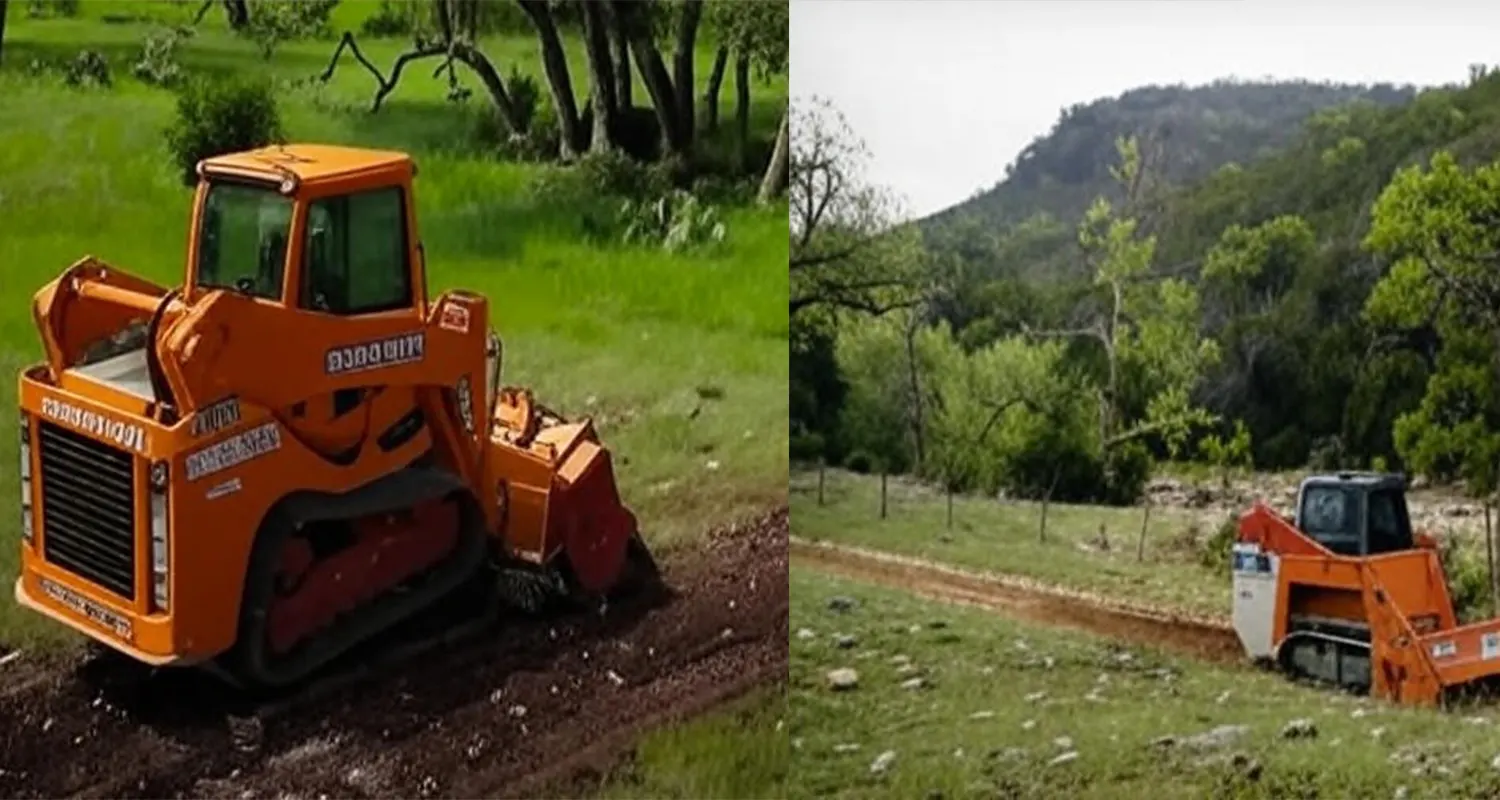
THOR 2.4 stone crusher in Korean highland field — tooth geometry determines whether granite stones are fragmented to the 5cm residual standard required for potato and radish zero-tolerance clearance

Each THOR 2.4 tungsten carbide tooth performs two functions simultaneously: it delivers concentrated kinetic energy to the stone contact point (fracturing the stone), and it provides a defined cutting geometry that controls the size range of the fragments produced. Both functions depend on the tooth tip geometry being within its designed profile:

New tooth — optimal geometry

Sharp tungsten carbide tip concentrates impact force over a small contact area, producing high contact stress that exceeds the tensile strength of Korean granite at the contact point. The stone fractures along its weakest plane. Fragment size is controlled by the hood clearance setting — the space between the rotor circumference and the rear hood determines the maximum fragment size that can exit the crushing chamber.

70% remaining — early wear stage

The tungsten carbide tip is shorter but still retains adequate geometry for effective fragmentation. Contact area is slightly larger than new, requiring marginally more impact events per stone to achieve equivalent fragmentation. Output quality at 70% remaining is marginally below new tooth performance but meets the clearance standard for most Korean highland applications. This is the inspection boundary — teeth reaching 70% should be scheduled for replacement before the next major operating session.

Below 60% — critical degradation zone

Below 60%, the tungsten carbide tip is substantially shorter and the carbide-steel interface zone may be approaching or entering the steel body. The tooth contact area is now large enough that it functions more as a blunt impact tool than a concentrated cutter — requiring 3–5 times as many impacts to achieve equivalent fragmentation as a new tooth. Large stones that would be fragmented in 1–2 rotor contacts with new teeth are now being rolled and scraped across the rotor path rather than fractured. Residual stone size in the output increases above the target standard.

The Field Measurement Protocol — How to Inspect Teeth Accurately

Accurate tooth wear assessment requires three items: a vernier calliper or digital calliper (0–150 mm range, 0.1 mm resolution), a reference measurement card or table with the new tooth dimensions for the specific THOR 2.4 tooth specification in use, and adequate lighting (the rotor pit is dark when the machine is shut down). The inspection procedure:

Step 1 — Safe shutdown

Disengage PTO, shut down tractor engine, engage parking brake, and wait a minimum of 3 minutes for the rotor to completely stop rotating. The THOR 2.4 rotor has significant flywheel inertia — it continues rotating after PTO disengagement. Never reach into the rotor chamber until full stop is confirmed visually. Block the rotor with a wooden wedge if working alone to prevent any accidental rotation during inspection.

Step 2 — Open access

Open the rear hood to access the full circumference of the rotor. Remove any accumulated soil or stone fragment debris from the tooth surfaces before measuring — a packed soil deposit on the tooth body can cause the calliper to read the soil surface rather than the actual metal surface, giving a falsely high measurement. Brush clean each tooth before measuring.

Step 3 — Measure tip height

Measure the remaining carbide tip height — the distance from the top of the tungsten carbide tip to the steel body shoulder where the carbide insert meets the steel tooth body. This is the critical measurement: compare it to the new tooth tip height from the reference card. Express as a percentage: (measured tip height / new tooth tip height) × 100 = remaining tip percentage. Record for each tooth position across the full rotor circumference. A THOR 2.4 with 90+6 teeth has 96 tooth positions — inspect a representative sample of 20–30 teeth spread across the rotor, noting position on the rotor (front zone, mid zone, rear zone) for wear pattern analysis.

Step 4 — Assess flank condition

After measuring tip height, visually inspect the tooth flanks (the side surfaces of the tungsten carbide insert). Flank wear that has consumed more than 40% of the carbide width on either face indicates that the carbide-steel interface is approaching the contact zone — a tooth at this flank wear stage requires replacement even if the tip height measurement appears above the 60% threshold. Jeju basalt and hard schist operations are most likely to show accelerated flank wear compared to tip wear.

Step 5 — Document and decide

Record the percentage of teeth at each wear stage: above 70% (continue), 60–70% (schedule replacement), below 60% (replace before next operation). Any single tooth below 60% surrounded by teeth above 70% is a sign of local stone hardness variation or a single high-impact event — replace the individual tooth rather than the full set.

Reading Wear Patterns — What Uneven Wear Tells You About Field Conditions

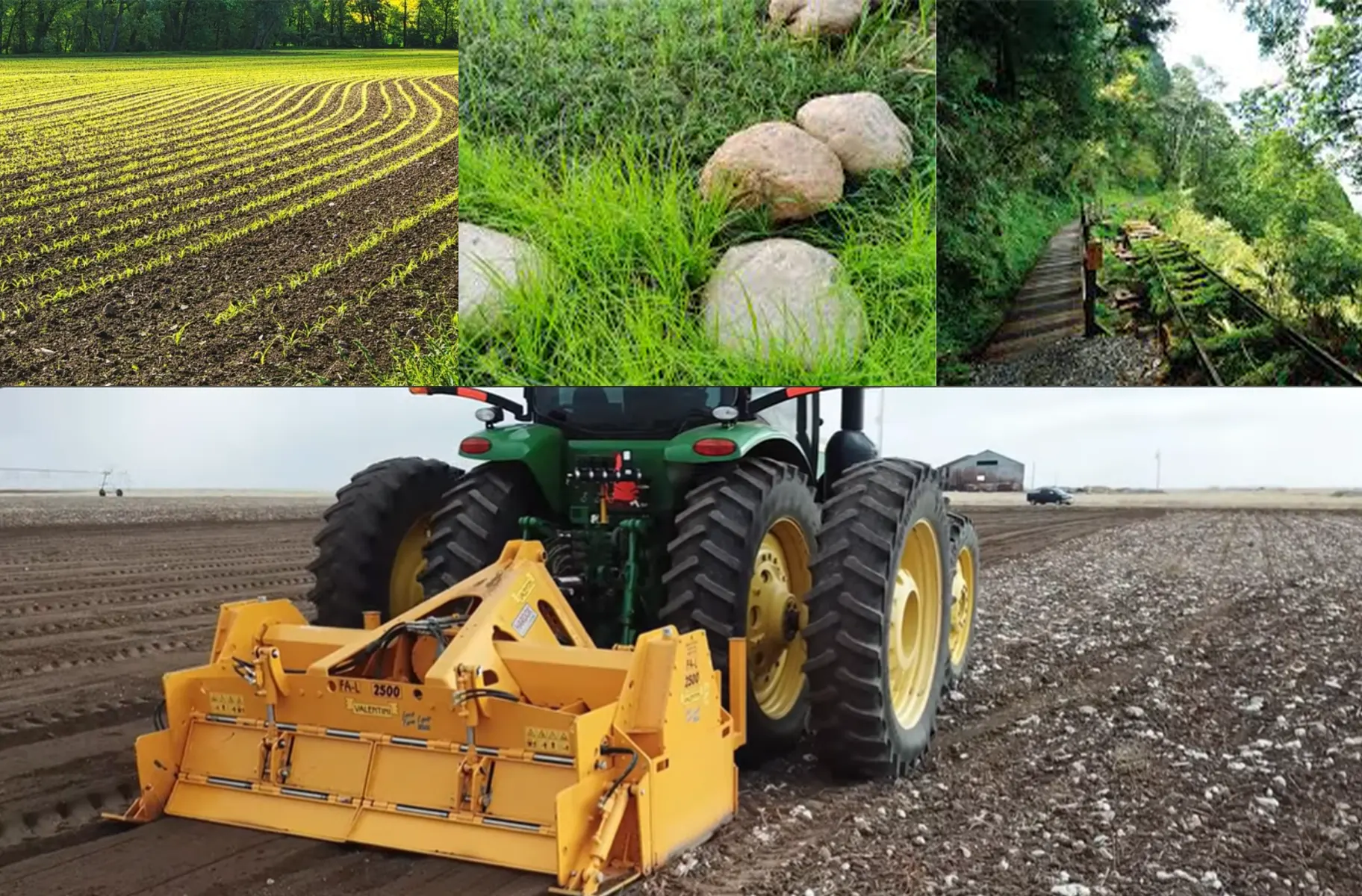
THOR 3.0 stone crusher — the same wear pattern diagnostic principles apply to both THOR 2.4 and THOR 3.0; uneven wear across the rotor width indicates specific field conditions that the operator can correct

Tooth wear patterns across the THOR 2.4 rotor are diagnostic — they reveal information about operating conditions that the operator may not be aware of. When inspecting a used tooth set, systematically record wear levels at the left edge, centre, and right edge of the rotor to detect patterns:

Wear pattern observed Most likely cause Corrective action
Uniform wear across full rotor width Consistent stone distribution at operating depth — good condition. Normal outcome on well-cleared field with uniform stone density. No corrective action needed. Replace as a set when threshold reached.
Centre teeth worn faster than edges Crown-shaped stone concentration below the centreline — common where the field has a legacy central stone band or where previous cultivation has concentrated stones to the centre. On the next THOR pass, offset the working line by half a working width to expose edge teeth to the denser stone zone, balancing wear across the rotor.
One edge worn faster than the other The THOR 2.4 is working with one side consistently deeper than the other — typically from operating on cross-slope terrain where the downhill side of the machine penetrates deeper, or from a tractor hydraulic levelling issue. Check tractor three-point linkage levelling adjustment. On slope terrain, confirm Kit Drawbar operation is being used correctly for the gradient.
Individual scattered very worn teeth among mostly fresh teeth Impact with extremely hard stones (quartzite, flint inclusions) or bedrock fragments — single high-energy contact event consuming the carbide rapidly at the impact point. Replace the severely worn individual teeth. If the field has a known hard-stone zone, reduce forward speed for that zone on the next pass.
Heavy flank wear, moderate tip wear High-abrasion stone material — vesicular basalt (Jeju) or quartzitic schist producing repeated side-face abrasion rather than frontal impact events. Shorten inspection interval to 5–6 hours rather than 8 hours on these material types. Budget for higher annual tooth consumption rate.

The 60% and 70% Thresholds — What They Mean in Field Practice

The 60% and 70% remaining tip height thresholds appear in the THOR 2.4 maintenance guidance — but many Korean highland operators have never seen what these thresholds look like on an actual tooth in hand. Bridging the gap between the percentage figure and the physical appearance of the tooth at each threshold:

Above 70%:

The tungsten carbide tip projects clearly above the steel shoulder — you can see a distinct bright silver-grey carbide protrusion. The tip feels sharp to a careful touch (do not drag fingers across the tip). Fragmentation quality is at or near new. Continue operating; schedule next inspection at 6–8 operating hours.

60–70%:

The carbide tip is visibly shorter — compare it to a new tooth held side by side and you can see the height difference clearly with the naked eye. The tip is slightly more rounded than a new tooth but the carbide is still the primary contact material. Fragmentation quality is 85–95% of new. This is the schedule replacement window — order replacement teeth now (if not already stocked) and plan the replacement for the end of the current operating session or the beginning of the next, not the middle of a field.

Below 60%:

The carbide tip is barely visible above the steel shoulder — the tooth body is now the primary contact surface in many orientations. The steel body will wear much faster than the carbide did — accelerating from this point rapidly toward the steel holder being damaged. Stop operating immediately. Using the machine further with teeth at this stage risks damaging the steel tooth holder (the precision-machined holder seat on the rotor body) — a holder seat repair is far more expensive than a tooth set replacement. Replace before any further field operation.

How Many Worn Teeth Before Output Quality Degrades — The Threshold Curve

The THOR 2.4 carries 90+6 = 96 teeth across the rotor. Not all 96 teeth contact stones equally in every pass — the teeth in the active engagement zone (typically the bottom 120° of rotor arc in normal field operation) do the majority of the cutting work. The relationship between the proportion of teeth worn below threshold and the observable output quality change:

0–10% worn below 60%:

Output quality essentially unchanged. The proportion of encounters handled by worn teeth is too low to affect the average fragmentation. Individual tooth replacement recommended but not urgent within the current session.

10–25% worn below 60%:

Output quality begins to show measurable degradation. The post-THOR stone residual size increases slightly — field verification (walk behind the THOR and check residual fragment size) confirms whether the residual is still below the target threshold for the current application. Replace worn teeth at end of current operating day.

Above 25% worn below 60%:

Output quality is significantly compromised. A THOR pass with more than 25% of teeth below the 60% threshold will leave residual stones above the target size specification for potato and radish fields. Do not continue the clearance pass — the effort spent operating does not achieve the intended clearance standard. Replace the worn teeth and repeat the affected field section if necessary.


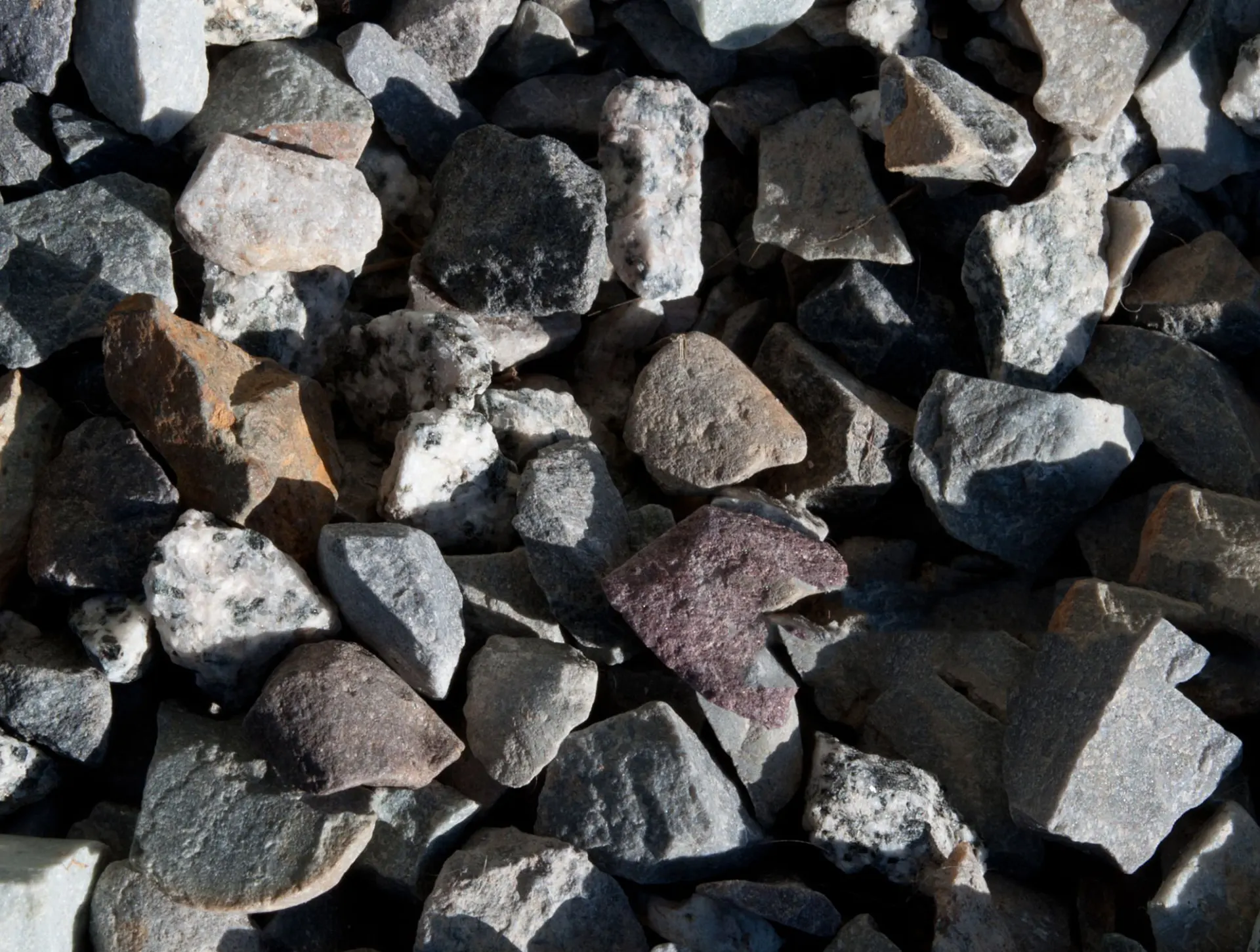
Korean highland farm — THOR 2.4 tooth sets should be ordered and stocked in Korea before the spring operating season begins; last-minute ordering during the clearance window risks mid-season machine downtime

The THOR 2.4 Seasonal Inspection Schedule for Korean Highland Operations

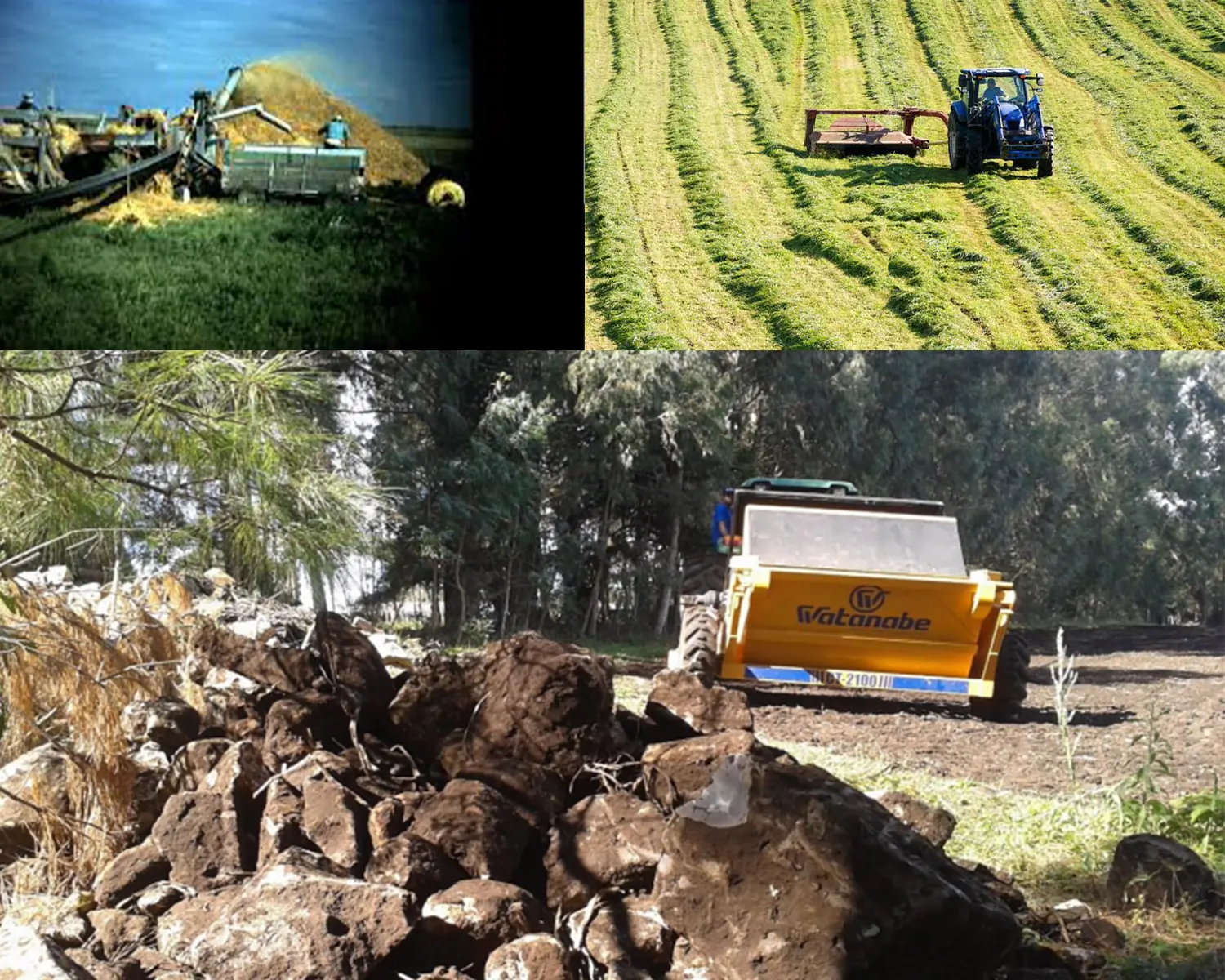
CT-2100 rock picker following THOR 2.4 — if the THOR 2.4 teeth are worn and failing to fragment stones adequately, the CT-2100 fills up rapidly with oversized fragments that should have been crushed, signalling a tooth inspection is needed

Inspection event タイミング Action threshold
Pre-season full inspection February — before any spring field operation Replace all teeth below 70% threshold. Order complete replacement set if more than 30% of teeth are below 70% from the previous season.
Scheduled mid-operation inspection Every 8 operating hours (granite fields) / Every 6 operating hours (basalt or hard schist) Replace any individual tooth below 60%. If more than 15% of inspected teeth are in the 60–70% range, plan full set replacement within 2–4 more operating hours.
Post-impact inspection Immediately after any confirmed bedrock contact event (sudden loud impact, machine deceleration) Inspect all teeth within 30 cm of the estimated impact location on the rotor. Any tooth with visible chipping, cracking of the carbide, or holder seat deformation: replace before resuming.
CT-2100 fill rate diagnostic During operation — if CT-2100 bunker fills 20–30% faster than normal for the same field section type Walk behind the THOR and check residual fragment size. If average fragment size has increased (more fragments above 3–4 cm than normal), teeth are likely worn beyond threshold. Stop and inspect.
Post-season storage inspection After last field operation of the season (June for most Korean highland farms) Record final wear measurements for all inspected teeth. If more than 20% are at or below 70%, order replacement set in November to ensure January stock for pre-season service.

Using the CT-2100 Fill Rate as an Indirect Tooth Wear Diagnostic

CT-2100 rock picker’s bunker fill rate during the THOR collection pass provides an indirect real-time indicator of THOR 2.4 tooth wear condition. The relationship works because worn THOR teeth produce larger stone fragments (inadequate fragmentation) — and larger fragments have more volume per stone, filling the CT-2100 bunker faster per unit of field area covered:

Normal teeth — normal fill rate baseline

Track the CT-2100 bunker fill rate (approximate ha per bunker fill) at the beginning of the season with new or known-good teeth. This baseline — say, one bunker fill per 0.8 ha — becomes the reference for subsequent sessions. Record it in the machine log.

Worn teeth — accelerated fill rate signal

If, on a comparable field section with similar stone density, the CT-2100 fill rate increases significantly (say, one bunker per 0.5 ha instead of 0.8 ha — a 60% faster fill on the same stone density), this strongly suggests the THOR 2.4 is producing coarser fragments from worn teeth. This is a field-day diagnostic that does not require stopping for a tooth measurement — but confirms that a measurement inspection is needed at the next opportunity.

よくある質問

Should I replace all 96 teeth at once or only the worn ones?

The correct approach depends on wear distribution. If the inspection shows all teeth worn uniformly (all in the 60–70% range), replace the full set at once — a mix of new and old teeth produces uneven impact distribution where the new teeth absorb disproportionate contact load because their sharper geometry draws stones preferentially, wearing them down faster than if all teeth were at the same age. If wear is localised (a zone of heavily worn teeth surrounded by teeth still above 70%), individual zone replacement is more economical than full-set replacement. Korea Watanabe supplies teeth in sets sized for the THOR 2.4’s 90+6 configuration — both full sets and partial zone sets are available for the different replacement scenarios. Contact Korea Watanabe to confirm stock and lead time before beginning the season to avoid mid-season unavailability.

How do I know if a tooth has been lost entirely from its holder during field operation?

Missing teeth are identifiable during the post-shutdown inspection by the empty holder seat — a recessed socket in the rotor body that is visible without a tooth in it. Missing teeth also produce a characteristic change in the THOR’s operating sound during the session — the rotor becomes slightly unbalanced when a tooth is lost, producing a subtle rhythmic vibration or pulsing sound at rotor frequency that differs from the normal uniform rotor noise. Experienced THOR 2.4 operators learn to detect this acoustic signature from the tractor cab and use it as a prompt to stop and inspect at the next headland. A missing tooth that is not replaced leaves the holder seat exposed to direct stone impact, risking damage to the precision-machined seat surface — the most expensive repair scenario on the THOR 2.4 rotor.

Does the THOR 3.0 use the same tooth specification as the THOR 2.4?

THOR 3.0 石破砕機 uses a different tooth configuration from the THOR 2.4 — the THOR 3.0 carries 108+8 teeth (versus 90+6 on the THOR 2.4) and has a larger rotor diameter (600 mm versus 550 mm). The tooth dimensions and holder seat geometry are not interchangeable between the two models. THOR 2.4 teeth must never be installed in THOR 3.0 holders and vice versa — the dimensional mismatch produces insecure seating that can cause teeth to eject during operation. Always confirm the specific THOR model (2.4 or 3.0) and generation when ordering replacement teeth through Korea Watanabe. Korea Watanabe maintains model-specific tooth inventory for both the THOR 2.4 and THOR 3.0 in Korean local stock.

Can I use aftermarket non-Watanabe teeth to reduce cost?

Non-genuine aftermarket teeth for the THOR 2.4 are available from third-party Korean agricultural supply sources at prices typically 30–50% below genuine Watanabe teeth. However, the carbide grade, binder content, and hardness-to-toughness balance of generic aftermarket carbide teeth is not optimised for the Korean highland granite stone hardness profile and the THOR 2.4’s specific impact energy and rotor speed parameters. The consequence is typically either premature wear (if the aftermarket carbide is too soft) or premature chipping (if the carbide is too hard and brittle for impact resistance). Both failure modes increase cost per effective operating hour beyond the genuine tooth’s cost, negating the per-tooth price saving. Korea Watanabe recommends only genuine Watanabe replacement teeth for THOR 2.4 and THOR 3.0 operations and can confirm current stock availability and pricing at any time of year.

What is the correct torque specification for installing replacement teeth?

THOR 2.4 tooth bolts require installation at the torque specification listed in the THOR 2.4 operator manual for the specific bolt size used in the relevant production generation of the machine. Over-torquing tooth bolts can crack the carbide insert or damage the holder seat thread; under-torquing produces loose tooth seating that allows micro-movement under impact loading, accelerating both the bolt thread wear and the holder seat surface wear. The correct torque value varies by THOR 2.4 production generation — Korea Watanabe confirms the correct torque value for your specific machine’s serial number at the time of tooth set supply. A calibrated torque wrench (not an impact wrench) is the required tool for tooth installation — impact wrench installation cannot reliably achieve the specified torque value and risks over-torquing.

THOR 2.4 Tooth Sets — Korean Local Stock, Correct Specification, Fast Delivery

THOR model (2.4 or 3.0) + machine serial number + number of teeth requiring replacement → genuine Watanabe tooth set availability confirmation and lead time. Korea Watanabe, Ansan-si, Gyeonggi-do.

今すぐお問い合わせください

編集者: Cxm

タグ: