The Korean agricultural machinery purchase support program (nongop gigye gupip jiwoonseopye) is one of the most significant financial instruments available to Korean highland farmers investing in stone clearing, tillage, and potato machinery. The program funds 30–50% of the eligible purchase price of certified agricultural machines — meaning a THOR 2.4 stone crusher purchased through the subsidy program has an effective acquisition cost 30–50% lower than list price, after the government contribution is applied.
Despite this significant financial benefit, a substantial proportion of Korean highland farmers who would qualify for subsidy do not apply — either because they are unaware of the program details, believe the application process is too complex, assume their specific machine is not eligible, or miss the January application window and conclude the subsidy is unavailable that year. This guide demystifies the process: what the program covers, who qualifies, what documents are needed, how the January timeline works, and how Korea Watanabe prepares all required documentation for buyers at no additional charge.
What the Program Covers — Eligible Machines and Subsidy Rates

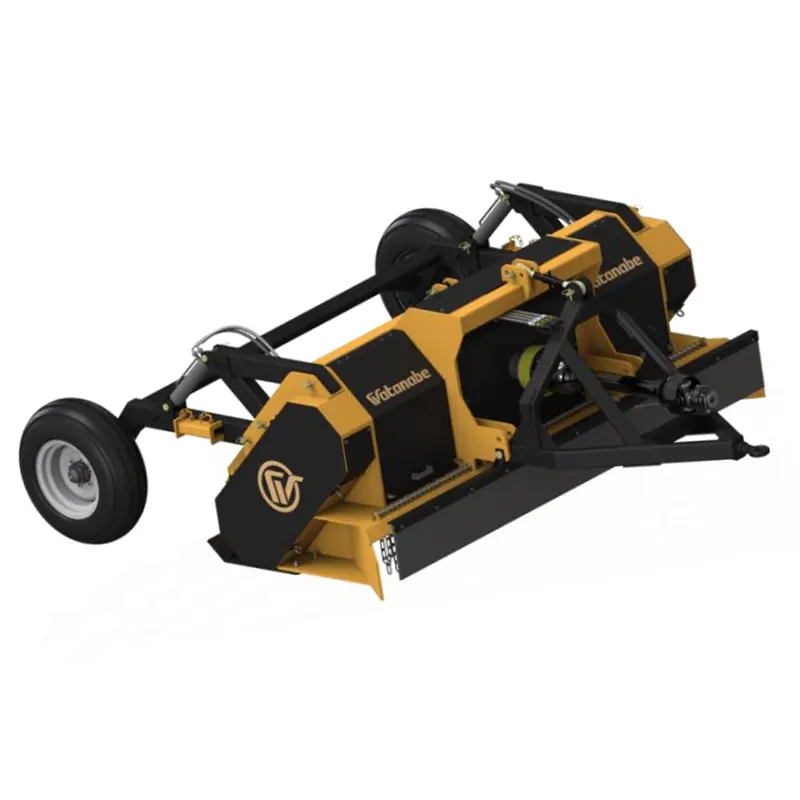
The agricultural machinery purchase support program covers a broad range of categories, with stone clearing and land improvement machinery (which includes all Watanabe stone crushers, rock pickers, rock rakes, and rotavators) receiving consistent support across multiple budget years. The following Korea Watanabe machines are certified for subsidy eligibility:
Stone crusher category (nongji jeongbi gigye). Both models carry Korean certification. Subsidy rate: 30–50% depending on applicant category (individual farmer vs cooperative member) and annual budget allocation at county level.
Stone picker/collection category. Korean certified. Typically submitted alongside the THOR 2.4 in a combined land improvement machinery application — both machines qualify as a system rather than requiring separate applications.
Tillage machinery category. Korean certified. Both Standard and Model B versions eligible. Often in the same annual application as stone clearing machines for farms building a complete highland system in one year.
EP-PAI-2100 planter, EP-AWB-1600 digger, EP-ERA cultivator, and other Watanabe potato machinery. Agricultural specialty machinery category. Confirm current year certification status with Korea Watanabe at time of application.
Farmland improvement machinery category. Korean certified. Typically lower purchase price than THOR/CT-2100 — subsidy value is proportionally smaller but the application process is identical and the subsidy percentage is the same.
Subsidy Rate Structure — What Percentage Applies to Your Situation

The Korean agricultural machinery subsidy is not a flat rate — it varies by applicant category, machine type, and annual budget allocation at the county (gun) level. The general structure applicable to most Korean highland farmers purchasing Watanabe stone management machinery:
| Applicant category | Typical national subsidy rate | 注記 |
|---|---|---|
| Individual registered farmer | 30–40% | National baseline rate; actual rate confirmed at county office at time of application |
| Agricultural cooperative member | 40–50% | Cooperative members typically access higher subsidy rates through the cooperative’s collective application |
| Young farmer (age below 40) | Up to 50% | Young farmer support programs provide additional rate uplift — confirm eligibility with county agricultural office |
| Designated disadvantaged area (nongeo chon) | Up to 60% | Some highland farming zones in Gangwon-do carry additional area-specific subsidy supplements — confirm whether your county qualifies |
| Agricultural corporation (nongup beoppin) | 30% | Standard rate applicable to registered agricultural corporations; same process as individual farmer application |
Important: rates change annually
The subsidy rate percentages shown above are representative of the national program structure applicable in recent years. Actual rates for a specific machine in a specific county in the current year are confirmed when the county-level budget is published — typically December of the preceding year. Korea Watanabe provides current-year rate confirmation for each machine at the time of enquiry, drawing on the annually updated county-level program specifications. Never assume the previous year’s rate applies in the current year without confirmation.
The January Timeline — Why the First Two Weeks of January Are Critical
The agricultural machinery subsidy program operates on a first-come, first-served budget allocation at the county level. County budgets for the program year are published in late December and open for applications from January 2. Budget depletion — when all allocated funds for the year are committed — typically occurs within 4–8 weeks for popular machine categories in highland farming counties with high application rates.
Required Documents — What Korea Watanabe Prepares for You

The Korean agricultural machinery subsidy application requires the following documents. Korea Watanabe prepares the machine-specific documents (items 1–3) within 2–3 business days of enquiry, at no charge to the buyer:
5-Year Mandatory Use Period — Compliance Requirements After Subsidy
All machines purchased under the Korean agricultural machinery subsidy program are subject to a mandatory use period during which the machine must remain in active agricultural use by the subsidy recipient. The mandatory use period is 5 years from the date of purchase. During this period:
Prohibited during mandatory use period
Transfer or sale of the machine to another party; abandonment or scrapping of the machine; transfer of the machine to a different registered farm operation under a different farmer registration number. Any of these prohibited actions during the 5-year period requires repayment of the full subsidy amount received.
Permitted during mandatory use period
Continued use on the registered farm operation; lending to neighbouring farmers for occasional use (not commercial contracting); normal maintenance, repair, and parts replacement; transfer between field parcels belonging to the same registered farm operation. The machine must be available for inspection by county agricultural office inspectors on request during the 5-year period.
The 5-year mandatory use period is an important planning consideration for Korean highland farmers who are considering upgrading to a larger machine (THOR 3.0 from THOR 2.4) or selling part of their farm operation. The subsidy amount must be repaid if the machine is sold within 5 years — a financial consideration that should be factored into the machine configuration decision at purchase time. Korea Watanabe advises buyers on configuration decisions (THOR 2.4 vs THOR 3.0, PSW-3200 Standard vs Model B) with the 5-year commitment in mind, to ensure the purchased machine remains the correct specification for the farm’s needs throughout the mandatory use period.
Multi-Machine Application Strategy — Maximising Subsidy Across the Complete System

Korean highland farmers building a complete system (THOR 2.4 + CT-2100 + PSW-3200 + potato machinery) can approach the subsidy application strategically to maximise total subsidy access across all machines. The strategy depends on the per-farmer annual subsidy cap and the specific machine priority:
A
Single-year maximum. If the total purchase price of all planned machines fits within the county’s annual per-farmer subsidy cap, apply for all machines in a single January application. This is the simplest approach and captures the full subsidy in one year. Korea Watanabe prepares documentation for all machines simultaneously — one application packet to the county office covering the complete system.
B
Phased 2-year approach. If the total purchase price exceeds the per-farmer annual cap, split the purchase over two consecutive January applications. Priority in Year 1: the highest-cost machines (THOR 2.4 + CT-2100, which together generate the largest per-machine subsidy value). Year 2: PSW-3200 and potato machinery. This approach maximises subsidy across both years while spreading the total investment over two budget cycles — important for smaller farms where the complete system represents a significant single-year capital commitment.
C
Cooperative application. Agricultural cooperative members can in some counties access higher subsidy rates (40–50%) and higher annual caps through collective applications submitted by the cooperative on behalf of members. If you are a cooperative member, discuss with your cooperative whether collective application for machinery purchases is available in your county — the higher rate and cap can substantially increase total subsidy received compared to individual application.
Korea Watanabe subsidy support service — what is included
- ✓Certification document (geomjeong-seo) for all eligible Watanabe machines — current year validity confirmed
- ✓Specification sheet (gyugyeok-seo) formatted for the applicant’s specific county office requirements
- ✓Price quotation (gyeonjeok-seo) including pre-subsidy price, applicable subsidy rate, and net farmer payment
- ✓Guidance on county-specific submission format and office contact details
- ✓Multi-machine application structuring advice for maximum subsidy access
- ✓All prepared within 2–3 business days of enquiry — at no charge
よくある質問
I missed the January window. Can I still apply later in the year?
Applications submitted after the January window can still be approved if the county’s annual budget for the relevant machine category has not been fully committed. Budget depletion timelines vary significantly by county and machine category — some counties in lower-demand areas retain budget for THOR category machines into March or April. Check with your county agricultural office in February to confirm whether budget remains available before concluding the opportunity has passed. However, the January window represents the highest probability of budget availability and the longest time between approval and the spring machinery season start date — later applications risk budget depletion and compressed delivery timelines. For subsequent years, Korea Watanabe recommends initiating the documentation preparation in December so the application is ready to submit on January 2.
Can I buy the machine first and claim the subsidy retroactively?
No — the Korean agricultural machinery subsidy program requires application and approval before purchase. The subsidy approval specifies the eligible machine, the applicable subsidy amount, and the purchase deadline. A machine purchased before subsidy approval cannot retroactively receive subsidy for that purchase. This is one of the most common mistakes Korean highland farmers make when approaching machinery purchase — buying urgently in late March without realising the subsidy window for that year has already passed, and forfeiting the subsidy entirely. Planning the purchase timeline starting in December, with documentation preparation through Korea Watanabe in early January and application submission in mid-January, ensures the approval is received before the required purchase date.
Does Korea Watanabe charge for preparing the subsidy documentation?
No — Korea Watanabe prepares the certification document, specification sheet, and price quotation at no additional charge for all buyers purchasing Watanabe machines through the official Korea Watanabe supply channel. Documentation preparation is part of the standard Korea Watanabe purchase service and is completed within 2–3 business days of enquiry. Korea Watanabe also provides guidance on the county-specific application format requirements and advises on which county office to submit to for farms spanning multiple county boundaries. The only costs involved are those inherent in the machine purchase itself — no documentation fees, no consultancy charges.
What happens to the subsidy if the machine breaks down during the 5-year mandatory use period?
Machine breakdown and repair do not affect subsidy compliance — the machine remains registered to the farm operation throughout the repair period. The mandatory use period compliance is based on registered ownership and agricultural use status, not on continuous operational status. A machine in for bearing replacement or gearbox service is still compliant with mandatory use requirements. Document all major repairs (invoice from service provider, dated) to provide clear evidence that the machine was being actively maintained for agricultural use throughout the mandatory period if an inspection is requested. Machine destruction from fire, flood, or irreparable accident (documented and reported to the county office) is treated as a force majeure event and does not normally trigger mandatory subsidy repayment — confirm with your county agricultural office for the specific procedure applicable to your situation.
Is there a minimum farm size requirement to apply for the machinery subsidy?
The Korean agricultural machinery subsidy program does not specify a fixed minimum farm area requirement as an absolute eligibility criterion — the primary requirement is registration as a farmer (nongop gyeongyeong-che deungnon) with at least 1,000 m² of registered agricultural land. In practice, county offices may give preference to applications from larger farm operations when budget is limited and multiple applications are competing — but small highland farms meeting the minimum registration requirement are eligible in principle. If you are farming less than 1 ha and are unsure whether your farm size meets the practical eligibility threshold in your county, contact Korea Watanabe — we can advise based on the typical application outcomes in your specific county and machine category.
Start Your Subsidy Application — Korea Watanabe Prepares All Documentation
County of registration + planned machines + applicant category (individual / cooperative / young farmer) → documentation package prepared within 2–3 business days, ready for January submission. Korea Watanabe, Ansan-si, Gyeonggi-do.
編集者: Cxm