Korean highland potato production at 400–800 m altitude in Gangwon-do operates within one of the most compressed agricultural calendars in Korean farming. The planting window opens around April 20 (at 600 m) and the harvest window closes at first frost (late September to early October at the same altitude). Everything — stone clearing, tillage, furrowing, fertilizer application, planting, hilling, and harvest — must be sequenced, timed, and executed within this 5–6 month window.
Farmers who treat this calendar as flexible — starting stone clearing in late April because “there’s still time” — consistently find themselves compressing downstream operations, pushing planting past the optimal window, or rushing harvest before the frost. Farmers who treat January through March as preparation months — planning, equipment ordering, subsidy applications, seed ordering, and soil work — arrive at the April planting window with every operation ready to execute on schedule.
This master calendar covers every significant operation and decision in the Gangwon-do highland potato production year, from January planning through the following autumn’s post-harvest management. Altitude-specific timing adjustments are provided throughout — because the same operation must be timed 7–14 days earlier at 400 m than at 700 m.
Altitude Timing Reference — Use This Throughout the Calendar
| Operation | 400 m altitude | 600 m altitude | 800 m altitude |
|---|---|---|---|
| Soil thaw confirmed | Mar 10–18 | Mar 20–28 | Apr 1–10 |
| 石の除去 | Mar 12–22 | Mar 22–Apr 3 | Apr 3–14 |
| PSW-3200 tillage | Mar 20–28 | Apr 1–10 | Apr 10–20 |
| Furrowing + fertilizer | Mar 28–Apr 5 | Apr 8–15 | Apr 17–22 |
| Planting window | Apr 10–25 | Apr 20–May 5 | May 1–15 |
| Hilling (EP-ERA) | May 5–20 | May 15–Jun 1 | May 25–Jun 10 |
| Harvest window | Aug 1–Sep 15 | Aug 10–Sep 25 | Aug 15–Oct 5 |
| First frost risk | Sep 20–Oct 5 | Sep 25–Oct 5 | Sep 20–Oct 1 |
January — The Month That Determines the Season
January is the most important planning month of the Korean highland farming year — even though no field work can be done. The decisions made in January determine whether the spring sequence runs smoothly or becomes a compressed scramble in March and April. January checklist:
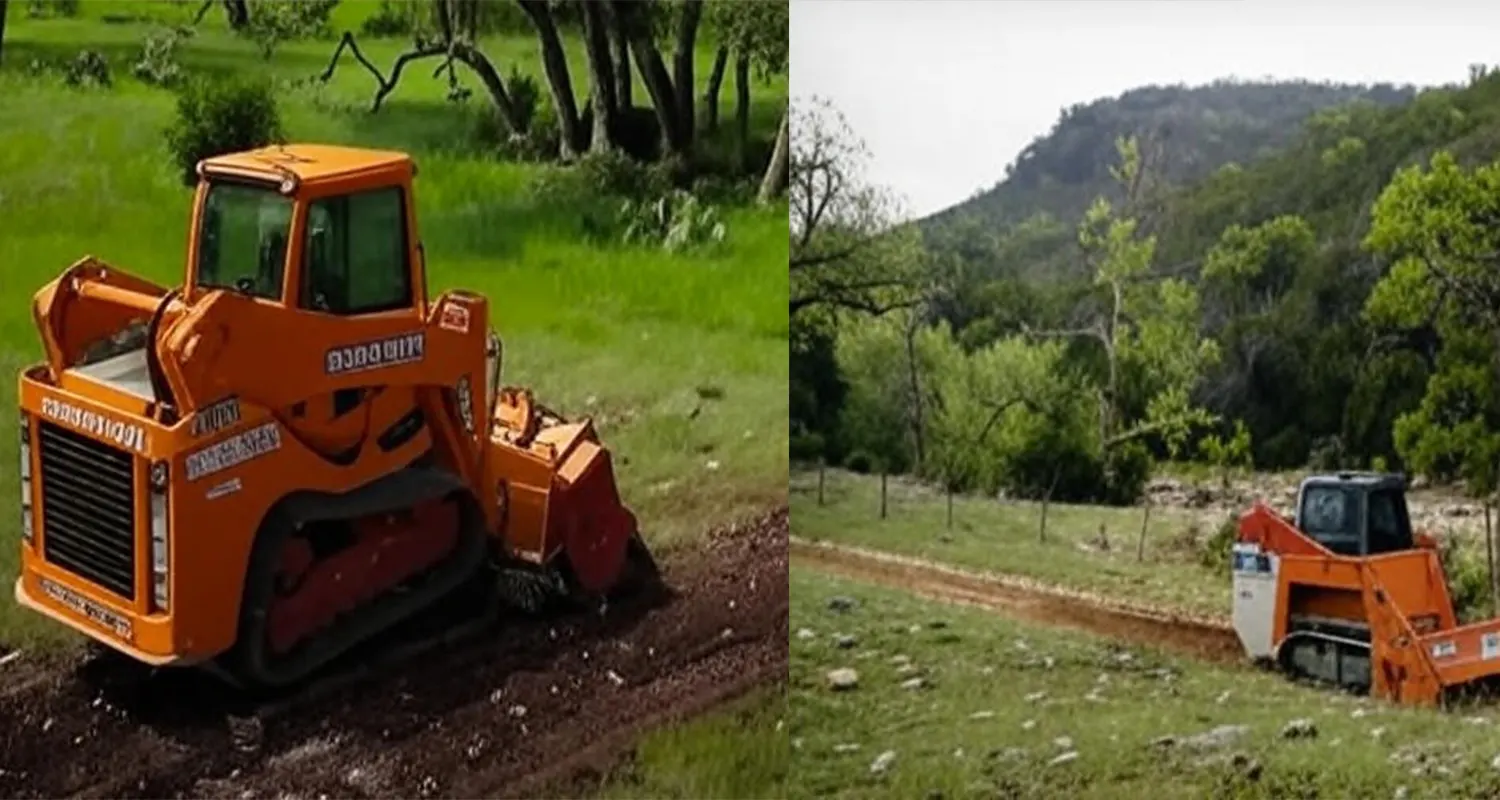
Confirm stone clearing machine readiness or contractor booking. If you own the トール 2.4: inspect teeth, confirm gearbox oil, check Kit Drawbar components. If hiring a contractor: book now — popular contractors are fully committed by February in Gangwon-do highland areas.
Order certified seed potato () now. Popular certified varieties (Atlantic, , , ) are allocated on application. Seed supply is limited — delayed ordering means no seed available for your preferred variety in your farm’s production zone. Coordinate with your cooperative or direct buyer if the seed variety is contract-specified.
Submit agricultural machinery subsidy application (if applicable). County budgets open January 2. Applications submitted in January have the highest success rate before budget depletes.
Review soil test results from autumn (Year 0). Confirm lime and amendment requirement based on soil test. Order lime if pH correction is needed — autumn lime application is ideal, but February application with early PSW-3200 incorporation is still valuable before first planting.
Confirm supply chain and contract terms. Fresh market cooperative delivery schedule, processing plant intake schedule, or seed potato delivery terms — confirm all contract terms and delivery dates before the season starts so harvest logistics can be planned accordingly.
February–March — Equipment and Soil Readiness
February and early March are for equipment preparation and any remaining pre-season soil work that can be done before the soil is suitable for full cultivation operations. Key activities:
February — Equipment Pre-Season Service
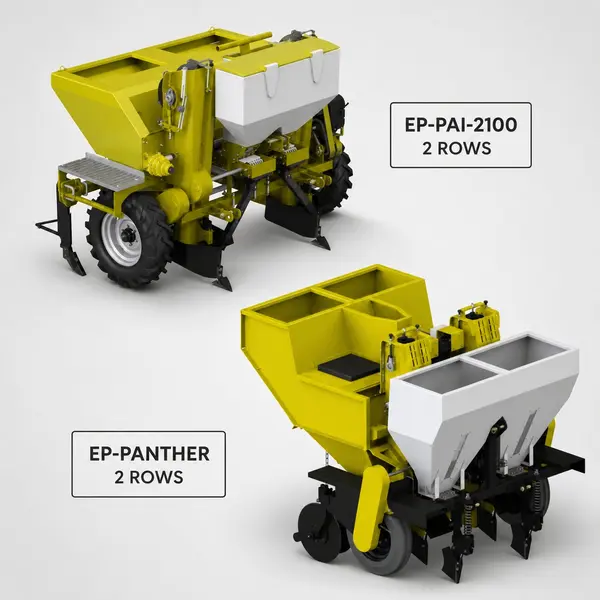
Full pre-season service on all machinery — THOR 2.4 (tooth check, gearbox oil), PSW-3200 (blade wear, gearbox oil), EP-R-380 furrower (shin condition), EP-PAI-2100 planter (seed cup inspection, gear selection confirmation), EP-ERA cultivator (arm spacing verification), EP-AWB-1600 digger (share condition). Order replacement parts for worn items now — not when they fail during the season.
Early March — Lime Application (if soil still frozen or partially)
For fields where autumn lime was not applied, broadcast lime as soon as fields are accessible (even partial freeze). Early March lime on partially thawed soil will dissolve and begin reacting before full thaw — providing 4–6 weeks of reaction time before the first PSW-3200 tillage pass incorporates it.
Late March — Soil Thaw Assessment
Walk each field after thaw and assess: (1) soil moisture status — use the squeeze test (soil at 10 cm depth squeezed into a ball; if it crumbles, it is ready for tillage; if it remains plastic and sticky, it is too wet and tillage will cause structural damage). (2) Stone emergence — assess frost-heave density to determine whether THOR crusher or EP-EW-4000 rake is appropriate for each field section.
Late March — The Stone Clearing Window (The Gate That Opens the Season)
Stone clearance is the first field operation of the season — the gate that must open before everything else can proceed. Starting stone clearing as early as the soil allows (typically late March after thaw confirmation at 600 m) is the single most important action in the spring preparation sequence. For each day stone clearing is delayed, everything downstream is compressed by one day toward the planting window deadline.
Day 1–3: EP-EW-4000 assessment and light-stone rake pass. For established fields, the EP-EW-4000 rake at 4–6 km/h covers the field quickly and collects light frost-heave stones below 40 Kg. This pass simultaneously identifies heavy-stone zones where the THOR 2.4 is needed. CT-2100 follows for collection.
Day 2–5: THOR 2.4 on heavy-stone zones. Deploy the THOR 2.4 (180 HP, Kit Drawbar on slope sections) on field zones where rake assessment revealed stones above 40 Kg. CT-2100 collection follows the THOR pass. On new land or after severe frost winters, the full THOR 2.4 pass across the complete field is appropriate without rake pre-assessment.
Day 3–6: Post-crusher rake and final collection. EP-EW-4000 rake pass over THOR-crushed zones windrows the crushed aggregate. CT-2100 final collection pass. Field surface should now be clear of all stones above 3–5 cm.
April — From Cleared Field to Planting-Ready Ridge

April is the most operationally intensive month — five sequential operations must be completed before the April 20 planting window opens at 600 m altitude:
May Through September — Growing Season and Harvest
| 期間 | Key activity | Critical decision / trigger |
|---|---|---|
| Late May | EP-ERA hilling (Step 6) | Must be done before canopy closure — monitor shoot height from day 18 post-planting |
| 6月~7月 | Blight monitoring + spraying | Preventive fungicide from 3 weeks post-planting; intensify during wet periods |
| 7月~8月 | Typhoon/rainfall monitoring | Post-typhoon drainage check; late blight risk assessment after heavy rainfall |
| Aug (early) | Haulm destruction | 2–3 weeks before harvest start — critical for skin set development |
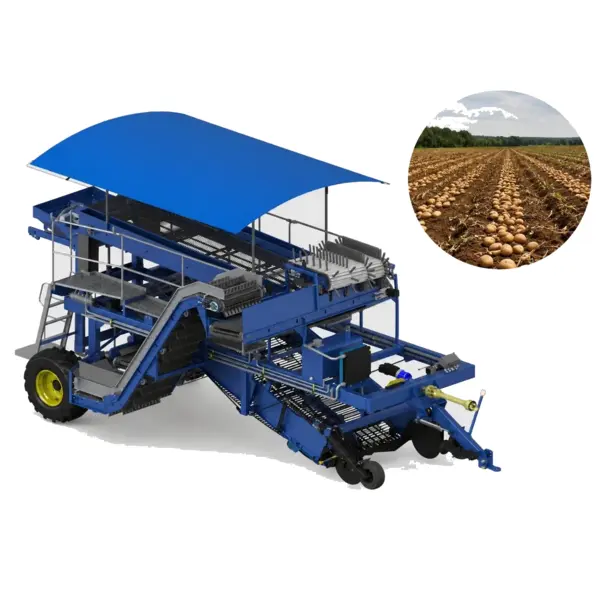
| Aug 10–Sep 25 | Harvest — EP-AWB-1600 | Skin set confirmed; digger share depth set; collection logistics ready |
| Watch from Sep 15 | First frost watch | ⚠ Hard frost ends harvest window — accelerate harvest on frost forecast |
| 10月~11月 | Post-harvest preparation | Stone clearance (autumn), lime if needed, green manure, soil test |
The 14-Day Buffer Rule — How to Build Weather Resilience Into the Calendar
The most experienced Korean highland farmers build a 14-day buffer between stone clearance completion and the planting window open date. This buffer protects against weather delays (3 days of rain stopping fieldwork) and equipment downtime (1–2 days for unexpected machine repair). Without a buffer, any disruption to the spring preparation sequence cascades forward and pushes planting past the optimal window. With a 14-day buffer, a 3–5 day disruption is absorbed without penalty.
How to build the buffer: start stone clearance 14 days before it is strictly necessary. At 600 m altitude, if the planting window opens April 20 and preparation requires 12 days of fieldwork, start stone clearance on March 25 — giving 14 days of margin before the April 20 deadline assuming daily fieldwork. This means stone clearing begins as soon as soil thaw is confirmed at this altitude, typically March 20–25 — matching the timing in the altitude reference table at the beginning of this guide.
The three actions that maximise the buffer at no additional cost: (1) autumn stone clearance in October–November of the previous year eliminates the most time-consuming stone clearing from the spring calendar entirely; (2) PSW-3200 Model B (combined tillage + fertilizer) reduces spring field passes by one; (3) all equipment pre-serviced in February so no service-related downtime occurs during the preparation sequence.
The spring calendar described in this guide applies to Gangwon-do highland potato as the primary crop. For operations also growing highland radish or Chinese cabbage on the same land, the same calendar framework applies — stone clearance and tillage timing identical, with seeding or transplanting dates adjusted to each crop’s optimal window at the relevant altitude. Korea Watanabe provides season-specific guidance on request.
Post-Harvest Autumn Work — Locking in Next Year’s Spring Buffer
The actions taken in October and November directly determine how smoothly the following spring’s preparation calendar runs. Korean highland farmers who use the post-harvest window productively reduce their spring workload by 30–50% — creating the buffer that protects against weather and equipment disruptions.
Equipment and Machinery Planning — What to Order and When
Korea Watanabe machines for the following spring season should be ordered in January–February at the latest, with earlier ordering (November–December) recommended for first-time purchases that require a new tractor compatibility check. Key lead times that affect spring preparation planning:
THOR 2.4 (in Korean stock)
Korea Watanabe holds Korean local stock — standard delivery 5–10 business days after order confirmation and tractor compatibility check.
PSW-3200, potato machinery
Confirm availability in January. All major potato machinery models held in Korean stock. Allow 10–15 business days for delivery and installation setup.
Subsidy approval timing
Subsidy applications submitted January 2–15 typically receive approval by late January or February — allowing purchase and delivery before late March stone clearing begins.
Weather Risk Management — Protecting the Calendar from Korean Highland Climate
Three specific Korean highland weather events can derail the spring preparation calendar. Understanding each risk and its mitigation is as important as understanding the calendar itself:
Late Spring Rainfall — March to April
Persistent rainfall in late March or April delays soil thaw confirmation and prevents field access for stone clearing and tillage. In years with late wet springs (historically occurring every 3–5 years in Gangwon-do), the stone clearing window can be compressed to 5–7 days rather than 12–14 days. The mitigation is autumn stone clearing the previous October — removing stone clearing entirely from the spring calendar so rainfall delays affect only tillage and planting preparation rather than the longer stone clearing operation.
Cold Snap After Planting — Late April to May
The Korean spring cold snap (typically late April) can damage emerged shoots at 600 m altitude. Mitigation: confirm the 10-day forecast before committing to the planting date. If a below-freezing night is forecast within 12 days of expected emergence (estimated as 10–14 days after planting), delay planting of remaining sections. A correctly managed 14-day calendar buffer absorbs a 3–5 day planting delay without pushing the completion date past the May 10 window closure at 600 m.
Early Autumn Frost — September
At 700–800 m altitude, the first killing frost can arrive as early as late September — potentially before harvest is complete on late-planted sections. Monitoring the 10-day forecast from September 15 and accelerating harvest on frost warnings is the primary mitigation. Late-planted sections (from a compressed spring calendar) are disproportionately at risk of frost damage at harvest — the operational cost of late planting is ultimately expressed at the end of the season in frost-affected yield loss.
Equipment Pre-Season Checklist — February Service
A complete February pre-season equipment service prevents the mid-season breakdown scenarios that are most damaging to the compressed highland calendar. The following checklist covers every machine in the 7-step system:
□
THOR 2.4: Tooth height measurement on all 90 teeth; counter-tooth inspection; gearbox oil level and condition; PTO shaft universal joints; Kit Drawbar pivot lubrication and pin condition.
□
CT-2100 Rock Picker: Bunker discharge mechanism function; pick-up reel tine condition; hydraulic hose inspection; bunker seals for stone retention.
□
PSW-3200 Rotavator: Blade wear measurement (replace if below 60% of new length); gearbox oil change (annual); rotor bearing lubrication; PTO shaft condition.
□
EP-PAI-2100 Planter: Seed cup inspection (replace cracked or worn cups); gear selector mechanism; hopper seals; planting depth adjustment mechanism function.
□
EP-AWB-1600 Digger: Share condition (replace if worn or cracked); web conveyor chain tension; discharge elevator chain; depth control mechanism.
□
All machines: Confirm spare part inventory for high-wear items — tooth set for THOR, share set for digger, blade pack for rotavator. Order replacements in February so they arrive before the March–April season start.
よくある質問
What happens if we get a cold snap after planting — can late April snow or frost damage emerged shoots?
Korean highland potato shoots that have emerged above the ridge surface are damaged by air temperatures below -2°C for more than a few hours — the emerged shoot tissue is frost-sensitive. Late April cold snaps (known as , spring cold snap, in Korean) are not uncommon in Gangwon-do highland areas. Risk mitigation: (1) plant when the soil thermometer at 8–10 cm depth reads consistently above 8°C — soil temperature is a better planting readiness indicator than air temperature for Korean highland conditions; (2) if a frost forecast is issued within 5 days of expected emergence, delay planting of remaining un-planted sections until the frost risk period passes. Damaged shoots from frost typically recover from the axillary buds at the seed piece node — but recovery loses 5–10 days of growing time from the compressed season.
My farm has fields at both 400 m and 700 m altitude — how do I sequence operations across two different timing zones?
Multi-altitude farms have a natural scheduling advantage: lower-altitude fields (400 m) thaw earlier and can begin stone clearing and tillage 10–14 days before upper-altitude fields (700 m). This staggered start allows the farm’s tractor and machine resources to work sequentially — complete lower-altitude stone clearing (March 15–22), move to lower-altitude tillage and furrowing (March 22–April 1), then begin upper-altitude stone clearing (March 28–April 5) while lower-altitude fields are being planted (April 10–20). This altitude-staggered approach distributes the compressed spring preparation workload over a longer calendar window, reducing the per-day machine intensity and providing natural redundancy against weather disruptions affecting a single altitude zone.
Can I prepare my fields in autumn and skip the spring stone clearing pass?
Yes — for established highland fields (3+ years of THOR+CT-2100 management history), autumn stone clearing in October–November substantially reduces or eliminates the spring stone clearing requirement. If autumn clearance is thorough, spring pre-planting assessment typically shows only the light frost-heave from the intervening winter — manageable with the EP-EW-4000 rake rather than requiring the THOR crusher. Farmers who complete thorough autumn clearance save 3–7 days from the spring preparation sequence — creating the 14-day buffer discussed above without any additional spring machine investment. For new land or severe frost-heave winters, the spring THOR pass remains necessary regardless of autumn clearing history.
How do I confirm that soil thaw is complete enough to begin stone clearing?
Two tests confirm adequate soil thaw for stone clearing and tillage operations. First, the squeeze test: take a handful of soil from 15 cm depth and squeeze firmly — if the soil forms a ball that crumbles when released with light pressure, the moisture content and temperature are correct for field operations. If it remains plastic and sticky, the soil is still too wet from thaw and field operations will cause structural damage. Second, the penetration test: push a steel rod (8–10 mm diameter) to 30 cm depth by hand pressure — if it penetrates without significant resistance, the soil is thawed to cultivation depth. If resistance is felt at 10–15 cm, frost is still present at depth and THOR operation will encounter frozen soil that increases tooth stress and reduces fragmentation quality.
What is the consequence of late planting at Gangwon-do highland altitudes?
Each day of planting delay past the optimal window at a given altitude reduces final yield by a measurable amount — the primary mechanism is reduced days to first frost from the later planting date. At 600 m altitude, planting on May 10 rather than April 25 reduces the growing season by 15 days — equivalent to losing 10–15% of the total yield accumulation period for the potato crop. Varieties with 90-day maturity periods planted 15 days late are harvested 15 days later — but first frost may arrive before the full maturity period has elapsed, resulting in immature tubers with lower dry matter content and reduced Grade 1 proportion. The compressed spring preparation calendar described in this guide exists entirely to protect the April 20–May 5 planting window at 600 m altitude — every day of preparation compression is a day of growing season protected.
Spring Calendar Consultation — Altitude + Area + Equipment Status
Farm altitude (m) + area (ha) + current machinery ownership + target planting date → customised spring preparation calendar with machine scheduling and buffer analysis. Korea Watanabe, Ansan-si, Gyeonggi-do.
編集者: Cxm