The Watanabe THOR 2.4 and THOR 3.0 are the two tractor-mounted stone crusher mulchers available from Korea Watanabe’s local stock in Ansan-si. They share the same core engineering: PTO-driven high-speed rotor with carbide-tipped teeth, oil-cooled dual transmission, hydraulic rear hood with adjustable output grid, and the Kit Drawbar / Drawbar Kit pull-mode system for slope operation. The differences between them are deliberate design choices for different scales and field types — not a simple “bigger is better” relationship.
68% of Korean THOR purchases in recent seasons have been the THOR 2.4. The THOR 3.0 accounts for the remaining 32%. Understanding why this split exists — and which side of it your operation falls on — is the purpose of this guide.
Side-by-Side Specifications — THOR 2.4 vs THOR 3.0
सभी विशिष्टताएं वातानाबे के आधिकारिक उत्पाद विवरणिका से ली गई हैं।
| विनिर्देश | थोर 2.4 | थोर 3.0 |
|---|---|---|
| कार्यशील चौड़ाई | 2.4 मीटर | 3.0 मीटर |
| न्यूनतम ट्रैक्टर शक्ति | 180 एचपी | 230 एचपी |
| वज़न | 2,300 किलोग्राम | 2,800 किलोग्राम |
| Length (body) | 1,546 mm | 1,732 mm |
| ऊंचाई | 1,212 mm | 1,212 mm |
| रोटर व्यास (उपकरणों के साथ) | 550 मिमी | 600 मिमी |
| कार्बाइड के दांत | 90 मुख्य + 6 पार्श्व | 108 मुख्य + 8 सहायक |
| पत्थर का अधिकतम व्यास | 30 सेमी | 40 सेमी |
| अधिकतम पेराई गहराई | 250–300 मिमी | 300 मिमी |
| पीटीओ गति | 1000 आरपीएम | 1000 आरपीएम |
| लिंकेज श्रेणी | श्रेणी 2 | श्रेणी 2 |
| आवश्यक हाइड्रोलिक वाल्व | 1 | 2 |
ⓘ All data from the Watanabe official product brochure. The THOR 3.0 requires 2 hydraulic remote valves (rear hood + Drawbar Kit); the THOR 2.4 requires 1. Verify your tractor’s rear hydraulic valve count before ordering the THOR 3.0.
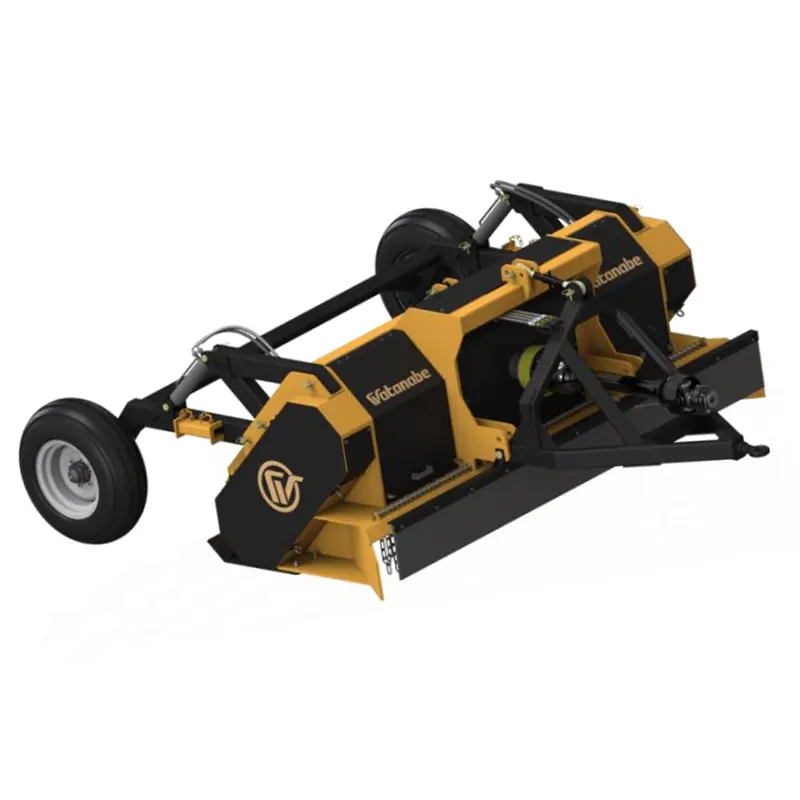
THOR 2.4 — 180 HP · 2.4 m · Kit Drawbar
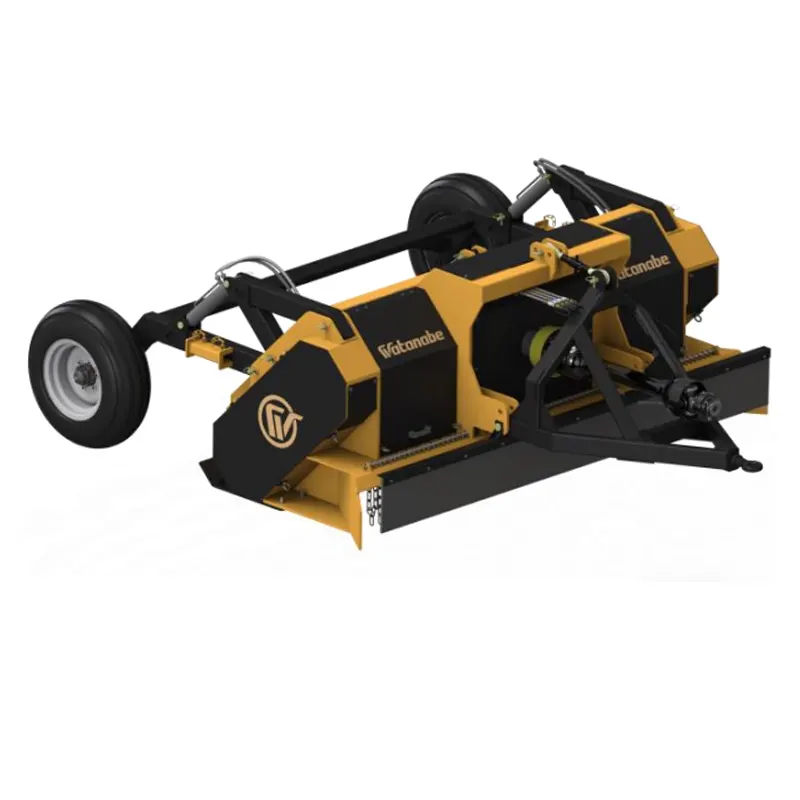
THOR 3.0 — 230 HP · 3.0 m · Drawbar Kit
The One Question That Determines Which Model You Need
Before comparing every specification, answer this one question: Are you primarily working in orchards, narrow terraced fields, or on slopes above 20%? Or are you primarily working on large open flat fields?
If your answer is the first — orchards, narrow rows, mountain slopes — the THOR 2.4 is almost certainly the right model, regardless of your tractor’s HP headroom above 180. The 2.4 m working width fits between orchard rows that the 3.0 m machine cannot enter. The Kit Drawbar pull-mode was specifically designed for Korean mountain orchard conditions. The lower weight (2,300 Kg vs 2,800 Kg) is more manageable on uneven slope terrain.
If your answer is the second — large open farms, land development contracts, government projects — the THOR 3.0 delivers 25% higher daily coverage per pass and handles stones up to 40 cm (vs 30 cm on the THOR 2.4). The investment in the additional 50 HP tractor requirement and higher purchase cost pays back in project completion speed on open-field operations above 100+ hectares per season.
Choose the थोर 2.4 स्टोन क्रशर when:
- Working in apple, pear, citrus, or persimmon orchards with row spacing under 4.5 m
- Fields slope regularly above 20% — Kit Drawbar pull-mode is essential
- Ginseng fields, highland herb plots, or narrow mountain terraced farmland
- Tractor is in the 180–220 HP range
- Annual clearing area under 250 ha
- Brush mulching and rock crushing both required from one machine
Choose the थोर 3.0 स्टोन क्रशर when:
- Large open fields — no row spacing or width constraints
- Stones regularly exceed 30 cm diameter
- Tractor is 230 HP or above
- Annual clearing area above 300 ha — throughput is the key metric
- Government 농지 개량 contracts or large commercial land development projects
- BlackBird Rock Rake coupling planned for combined rake-and-crush workflow
Three Differences That Matter Most in Korean Field Conditions
1. Working Width — 2.4 m vs 3.0 m
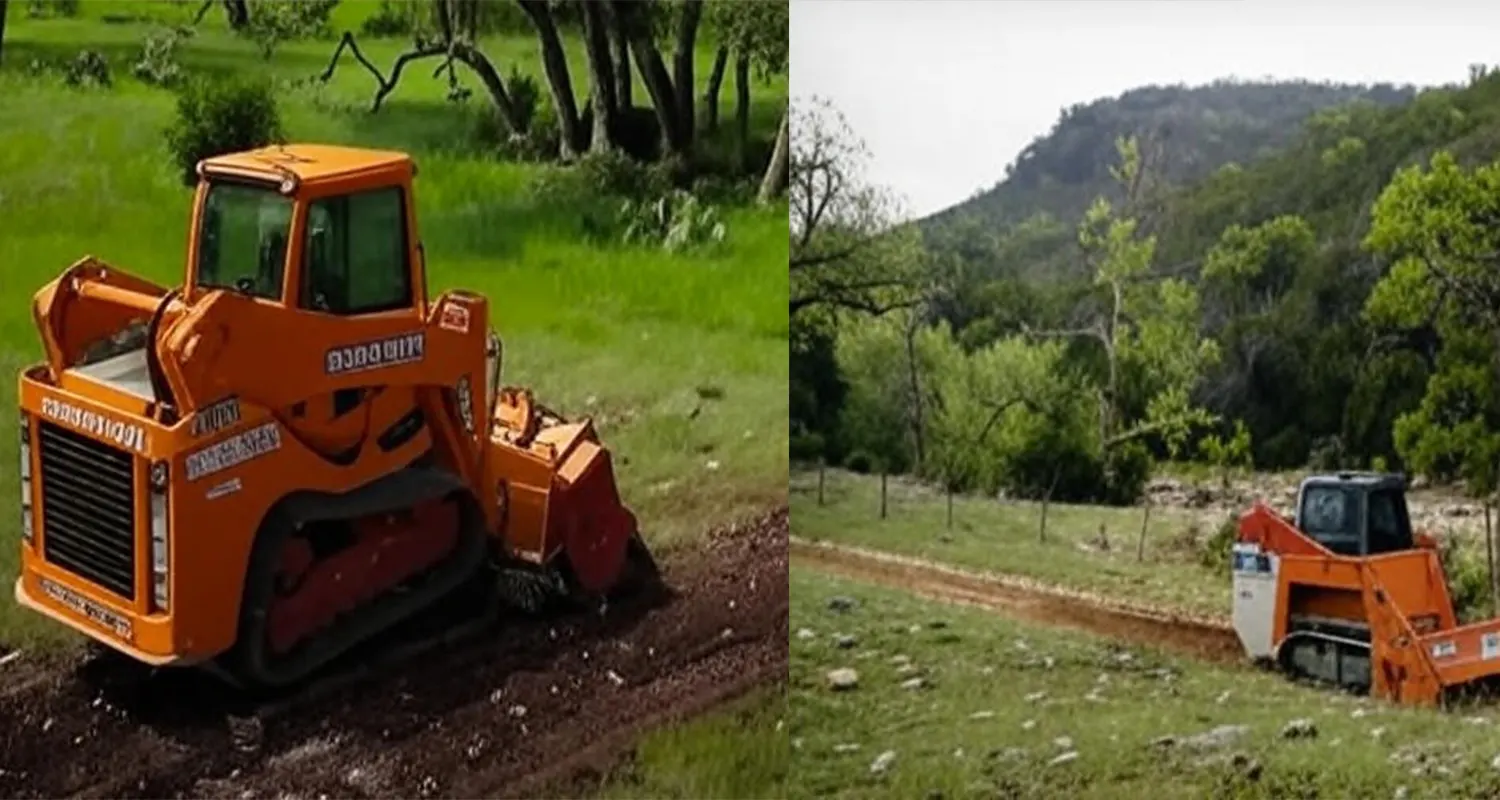
The working width difference is not just a coverage speed issue — it is often a physical clearance issue. Korean mountain apple orchards in Cheongdo-gun and Yeongcheon, and ginseng plots in Geumsan-gun, are frequently laid out with row spacings of 3.0–4.0 m. A 3.0 m machine working in a 3.5 m row spacing leaves only 25 cm of clearance per side. On sloped terrain where the machine tracks slightly in either direction, contact with the tree stem or ginseng canopy structure becomes a real risk. The THOR 2.4’s 2.4 m width provides comfortable working clearance in these conditions. The THOR 3.0 simply cannot enter many Korean orchard and ginseng field configurations without risk of contact damage.
On open flat farmland — large-scale potato fields in Pyeongchang-gun, reclamation zones in Jeollabuk-do, or government land development sites — row spacing is not a constraint. The THOR 3.0’s 3.0 m width covers 25% more ground per forward pass than the THOR 2.4 at the same forward speed. On a 300-hectare annual clearing contract, this difference accumulates to approximately 3–4 fewer full working days per season.
2. Maximum Stone Size — 30 cm vs 40 cm
The THOR 2.4 handles stones up to 30 cm diameter in a single pass. The THOR 3.0 handles up to 40 cm. This 10 cm difference reflects the combination of the larger rotor diameter (600 mm vs 550 mm) and the higher tooth count (108 vs 90 main teeth) that the 230 HP power budget allows the THOR 3.0 to carry.
In practical Korean field terms: granite boulders above 30 cm are common in the heavily stoned reclamation zones of Chungcheongnam-do and the highland granite exposures of Gangwon-do’s upper valleys. For operations where the existing stone population is predominantly above 30 cm — and where a second pass is operationally problematic — the THOR 3.0’s 40 cm capability eliminates the need for pre-treatment by excavator or manual breaking. The THOR 2.4 handles the 20–30 cm range that constitutes the majority of Korean highland granite surface exposure; stones above 30 cm are present but not dominant in most orchard and ginseng preparation sites.
3. Tractor HP Requirement — 180 HP vs 230 HP
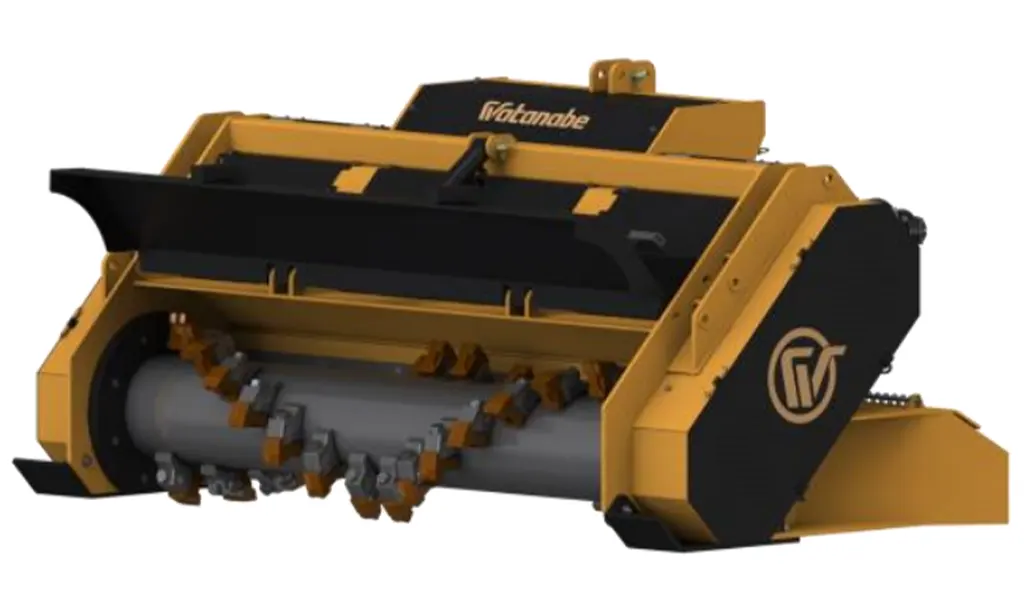
The 230 HP minimum requirement of the THOR 3.0 is a genuine constraint in the Korean tractor fleet. Domestic Korean tractor brands (Daedong, LS, TYM) reach 180+ HP in their upper models, but the 230+ HP class is predominantly served by imported European and North American tractors — John Deere 7R/8R, New Holland T7/T8, Fendt 700/800, CLAAS AXION. These machines are present in Korea’s commercial farm and land development sector, but not across the general-scale family farming fleet.
For operations with a tractor in the 180–220 HP range, the THOR 2.4 is the natural match — it runs at full rated power without under-driving the machine or overloading a smaller tractor. The THOR 3.0 at 180 HP would be under-powered: the machine’s transmission is sized for 230 HP sustained input, and running it at 180 HP reduces the rotor speed stability under load and limits effective crushing depth on hard rock.
What Both Models Share — The THOR Engineering Core
Despite the size and power differences, the THOR 2.4 and THOR 3.0 share the core engineering features that define the THOR product line’s performance in Korean conditions:
■ तेल-शीतित दोहरी ट्रांसमिशन
Both models use a dedicated oil cooler and radiator circuit separate from the main gearbox splash lubrication. This is the feature that enables full-day operation at 35°C+ ambient temperatures in Korean summer clearing conditions — both Jeju basalt and Gangwon granite operations require it.
■ Kit Drawbar / Drawbar Kit
Both models include the pull-mode drawbar system in the standard price. The THOR 2.4 Kit Drawbar is particularly valued for orchard and ginseng slope work; the THOR 3.0 Drawbar Kit is used for road construction gradients. Switch time is under 10 minutes with no tools required.
■ Carbide Teeth — Bolt-Mounted
All teeth on both models are individually bolt-mounted — replaceable in the field with a standard wrench without rotor removal. Replacement carbide teeth for both models are stocked locally in Ansan-si for next-day dispatch during the clearing season.
■ Hydraulic Output Grid
Both models allow the operator to adjust the output fragment size from the tractor cab via hydraulic rear hood control — fine for seedbed preparation, coarser for road base aggregate. The output grid is wear-resistant steel with bolt-on replacement.
Using Either THOR Model with the CT-2100 Rock Picker
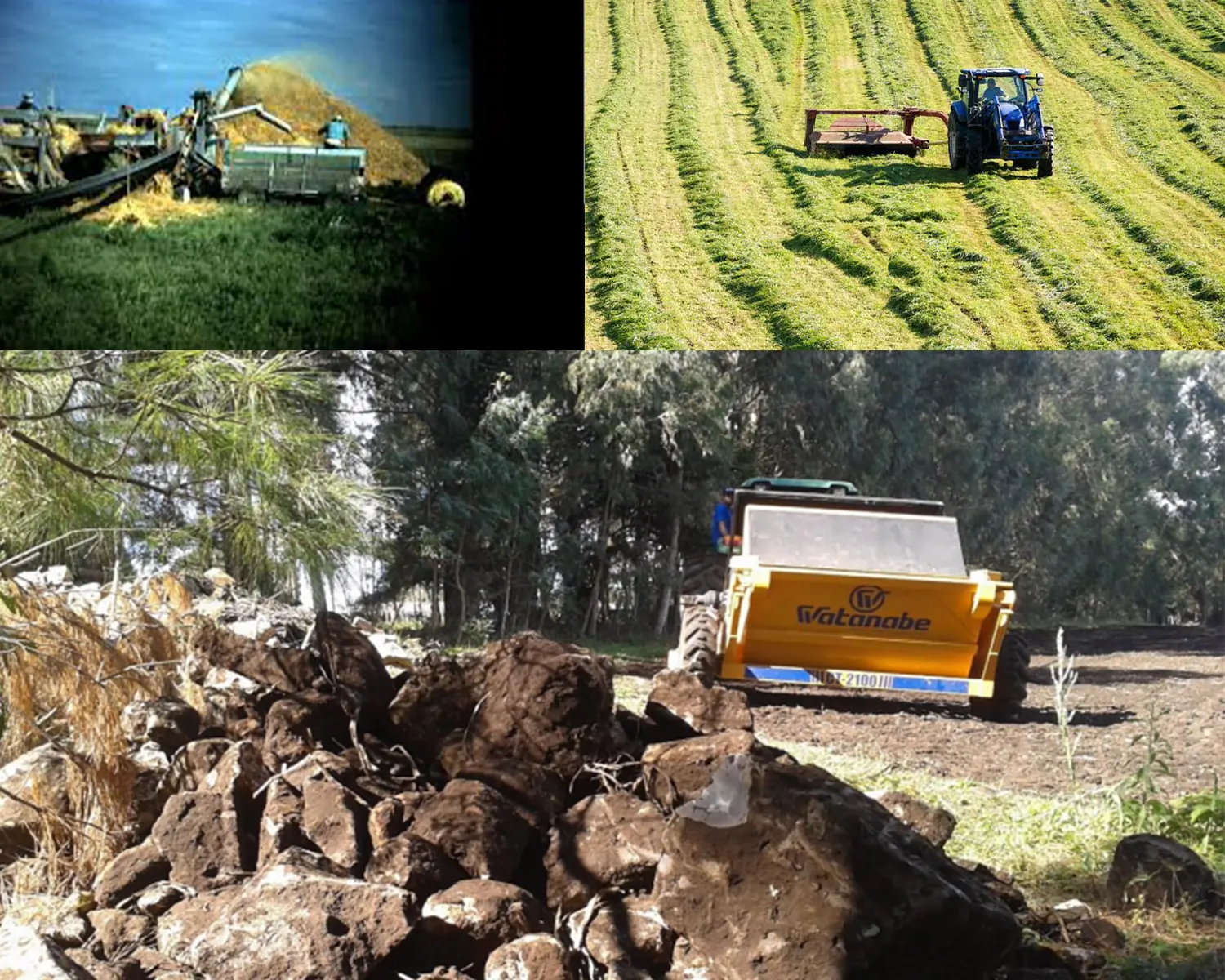
Whether you choose the THOR 2.4 or THOR 3.0, the downstream system options are identical. For applications requiring complete stone removal — ginseng, potato seedbed, orchard planting, and precision vegetable production — the सीटी-2100 रॉक पिकर (110 HP, 2.5 m³ hydraulic bunker) follows the THOR pass to collect crushed stone fragments. The THOR crushes all stones — including those above the CT-2100’s 80 Kg picking limit — to collectable fragment size; the CT-2100 then removes every fragment completely from the field.
The THOR 3.0 can additionally be coupled to the BlackBird Rock Rake (9.5 m, 300 HP) via the BlackBird’s rear hitch, creating a combined rake-and-crush single-pass system for maximum large-area throughput. This coupling configuration is specific to the THOR 3.0 with Drawbar Kit and requires a 300+ HP tractor.
अक्सर पूछे जाने वाले प्रश्नों
Can I use the THOR 2.4 with a 230 HP tractor — or is the THOR 3.0 automatically required?
Yes, absolutely. The THOR 2.4 runs well on any tractor from 180 HP upward. Running a 230 HP tractor on the THOR 2.4 does not waste power or cause any technical issue — the machine simply draws the power it needs from the PTO at the load the operating conditions impose. If your field and row spacing suit the THOR 2.4 but your tractor is 230 HP+, choose the THOR 2.4. Never choose a model wider than your field allows simply because your tractor has headroom — the working width must be appropriate for the field, not matched to the tractor’s maximum capacity.
My field has a mix of orchard rows and open sections — which model handles both?
The THOR 2.4 can always work in the open sections where the THOR 3.0 would also work — a narrower machine covering open ground makes more passes but produces the same result. The THOR 3.0 cannot enter the orchard rows if they are narrower than approximately 3.5 m. For mixed-terrain operations, the THOR 2.4 is the model that covers both sections; the THOR 3.0 only covers the open sections. If the orchard section represents more than 30% of your total area, the THOR 2.4 is the practical choice.
How does carbide tooth wear compare between the two models on Jeju basalt?
Tooth wear rate in Jeju Island basalt is higher than in most Korean mainland granite types due to basalt’s abrasive silica content. Both models use the same carbide tooth specification and the wear rate per tooth is comparable between them. The THOR 3.0 has more teeth (116 total vs 96 for the THOR 2.4), so a full tooth set replacement on the THOR 3.0 represents a proportionally larger parts cost. For Jeju operations, shorten tooth inspection intervals compared to mainland field schedules, and carry replacement teeth on site during multi-day clearing projects with either model.
Is the THOR 3.0 eligible for Korean agricultural machinery subsidies?
Agricultural machinery purchase subsidies (농업기계화 촉진 지원사업) are administered annually by the Ministry of Agriculture, Food and Rural Affairs through provincial agricultural technology centers (농업기술센터). Eligible equipment categories and subsidy rates change annually. Both THOR models are technically classifiable under agricultural land preparation equipment categories, but specific eligibility for a given year’s program must be confirmed with your regional agricultural technology center before purchase. We can provide the technical specification documentation required for subsidy applications for either model.
Both models are in Korea local stock — what is the delivery timeline?
Both the THOR 2.4 and THOR 3.0 are maintained in local inventory in Ansan-si, Gyeonggi-do. Delivery within Korea is typically 1–3 business days after order confirmation, depending on your location and whether pre-delivery inspection and PTO configuration is required. For the spring clearing season — when order volume peaks — we recommend confirming your order at least 4–6 weeks in advance to ensure delivery before your target start date. Contact us with your tractor model and intended delivery address for a specific timeline estimate.
Three Common Mistakes When Choosing Between THOR 2.4 and THOR 3.0
Based on consultation requests received before Korean purchasers finalize their THOR selection, these are the three most frequent misunderstandings that lead to the wrong model being ordered:
Mistake 1: Choosing by Tractor HP Rather Than Field Width
The single most common error is selecting the THOR 3.0 because the buyer has a 230 HP tractor and assumes the larger machine is always the better investment for a higher-powered machine. Working width — not tractor HP — is the primary selection criterion. A 230 HP tractor running the THOR 2.4 performs perfectly; a 230 HP tractor running the THOR 3.0 in a 3.5 m orchard row risks contact damage every pass. Always determine required working width before considering tractor HP compatibility.
Mistake 2: Assuming the THOR 3.0 Is Always Faster
On open flat farmland, the THOR 3.0 covers 25% more ground per pass than the THOR 2.4 at the same forward speed. On orchard and ginseng sites with tight row spacing, the THOR 2.4 making tight headland turns at the row ends may achieve higher productive daily coverage than the THOR 3.0 making wider turns on the same field — because the THOR 3.0’s additional 0.6 m of width means a larger turning radius and more ground lost at each headland. Productivity depends on field geometry, not just working width.
Mistake 3: Ordering Without Confirming the Tractor’s Rear Hydraulic Valve Count
The THOR 3.0 requires 2 hydraulic remote valve outlets (one for the rear hood actuator, one for the Drawbar Kit). Most Korean and international tractors at 230+ HP have 3–4 rear remote valves — this is rarely a limiting factor in this power class. However, some specialized orchard and vineyard tractors in the 200–250 HP range have fewer rear valves as a chassis design choice. Before ordering the THOR 3.0, verify your tractor’s rear remote valve count in its specification documentation. The THOR 2.4 requires only 1 rear remote valve, which is present on virtually all Korean tractors above 100 HP.
How Korean Operators Made the Choice — Three Real Farm Stories
Apple Orchard Contractor, Cheongdo-gun, Gyeongsangbuk-do (THOR 2.4)
Operating on mountain orchard slopes averaging 22–28% gradient across the Cheongdo apple belt, this contractor needed a machine that could work safely between rows spaced at 3.5–4.0 m centres on terrain where rear-hitch implement instability had caused two near-tip incidents with previous equipment. The THOR 2.4 in Kit Drawbar pull-mode resolved both problems simultaneously: the 2.4 m width provided 75 cm of clearance per side in 3.5 m rows, and the pull-mode configuration maintained tractor stability on the slopes that had been problematic. The THOR 3.0 was considered but rejected on row spacing grounds alone — the tractor was 210 HP, and the extra 20 HP headroom was not a factor in the selection.
Land Development Contractor, Jeonju, Jeollabuk-do (THOR 3.0)
Contracting land clearing for rice and vegetable farms across North Jeolla — typical projects of 50–150 hectares of granite-heavy former orchard land being converted to flat-field vegetable production. Open terrain, no row spacing constraints, John Deere 7R 230 (230 HP, 2 rear remote valves confirmed). The decision was straightforward: at 1.3–2.0 ha/h effective coverage on the THOR 3.0 vs 0.8–1.4 ha/h on the THOR 2.4, the larger model completes contracts 40–50% faster on open ground. For a contractor pricing by the hectare, the THOR 3.0’s daily throughput advantage directly improves project margin. The THOR 3.0 + BlackBird Rock Rake coupling was added in the second season for large-scale combined rake-and-crush workflow on the heaviest stone sites.
Ginseng Farm, Geumsan-gun, South Chungcheong (THOR 2.4)
A 35-hectare ginseng operation preparing new plots every spring for the 6-year rotation cycle. Narrow highland plots with irregular geometry — row spacing varies from 1.8 m to 3.0 m across different sections of the operation. The CT-2100 rock picker was already in operation for the collection pass; the question was whether to add a THOR 2.4 or THOR 3.0 for the preceding crushing pass. The 1.8 m minimum row spacing in the tightest ginseng plots made the THOR 2.4 the only viable option — the THOR 3.0 at 3.0 m simply cannot enter these plots. For the wider plot sections, the THOR 2.4 at 2.4 m requires two passes for full 3.0 m coverage, which is acceptable given the precision seedbed standard that ginseng production requires regardless of speed.
Tell Us Your Tractor Model and Field Type — We Confirm the Right THOR
Tractor model and HP + field type (orchard / open / slope %) + annual clearing area + typical stone size → THOR 2.4 or THOR 3.0 recommendation with the reasoning in one business day. Both models in Korea local stock, Ansan-si, Gyeonggi-do.
संपादक: सीएक्सएम