
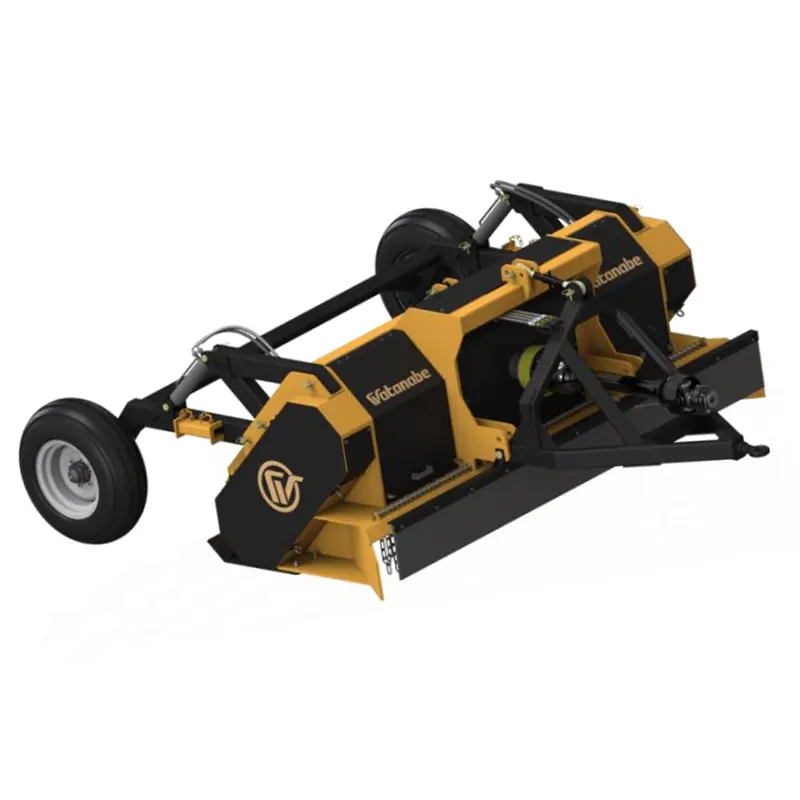
De THOR 2.4 De rotor heeft 90 werkende tanden (plus 6 tegentanden). THOR 3.0 Het heeft 108 werkende tanden (plus 8 tegentanden). Elke verpulverde steen verwijdert een kleine hoeveelheid materiaal van de punt van de wolfraamcarbide tand. De vraag is niet óf de tanden slijten – dat zullen ze. De vraag is: wanneer is de slijtage zo groot dat de prestaties afnemen en de tanden vervangen moeten worden?
De meeste THOR-machinisten in de Koreaanse hooglanden vervangen de tanden te laat. De twee zichtbare symptomen – verminderde fragmentatiekwaliteit (grotere achtergebleven steenfragmenten) en een verhoogde tractorbelasting bij dezelfde werkdiepte – treden geleidelijk op en machinisten stellen hun verwachtingen naar beneden bij zonder te beseffen dat de oorzaak ligt in het afsmelten van de tandpunten. Tegen de tijd dat een tand duidelijk versleten is, heeft deze al enkele uren onder zijn optimale prestatie gewerkt. Inzicht in het slijtagepatroon, de inspectiemetingen en de vervangingsdrempel is de praktische kennis die ervoor zorgt dat de THOR meerdere seizoenen lang op het nominale rendement blijft presteren.
Hoe slijten de tanden van THOR? — Het slijtagepatroon van Koreaans graniet en basalt.
De tanden van de THOR-boor bestaan uit een gehard stalen lichaam (de houder of schacht) en een punt van wolfraamcarbide (TC) die aan het stalen lichaam is gesoldeerd. De TC-punt – een samengeperst wolfraamcarbidepoeder gebonden met kobalt – is het impact- en slijtageoppervlak dat in contact komt met de steen. Koreaans graniet (Gangwon-do) en Jeju-basalt bevatten beide vrij siliciumdioxide (SiO₂) als primair mineraal. Siliciumdioxide is een van de meest schurende natuurlijke materialen voor wolfraamcarbide, met een Vickers-hardheid (HV 2000+) die de hardheid van de carbidepunt zelf benadert.
Dit betekent dat Koreaans graniet en basalt tot de meest schurende materialen behoren waarop THOR-tanden wereldwijd werken. De slijtage op Koreaans gesteente is doorgaans 20–35% per bedrijfsuur hoger dan op Europees kalksteen en alluviaal grind, waarvoor de standaard onderhoudsintervallen van de Watanabe THOR oorspronkelijk waren gekalibreerd. Koreaanse operators die de Europese of Zuid-Amerikaanse vervangingsintervallen voor tanden zonder aanpassing hanteren, zullen de versleten tanden consequent langer gebruiken dan optimaal is.
Normale slijtage — TC-tipverkorting
De punt van de TC slijt door het impact- en slijtageoppervlak, waardoor de projectiehoogte boven de stalen behuizing afneemt. Dit is normale slijtage. Naarmate de punt korter wordt, neemt de effectieve impactenergie per steencontact af (kortere punt = lagere puntsnelheid ten opzichte van het midden van de trommel). De prestatievermindering is geleidelijk – niet direct merkbaar, maar meetbaar na 20-30 bedrijfsuren in Koreaans graniet.
Versnelde slijtage — falen van de soldeerverbinding
Wanneer een TC-tip een impactbelasting te verduren krijgt die de sterkte van de soldeerverbinding overschrijdt (meestal door het raken van een rotsrichel onder het oppervlak of een rotsblok dat groter is dan de nominale afmeting), breekt de tip of scheidt deze zich van het stalen lichaam. Het resterende stalen lichaam komt dan direct in contact met de steen, waardoor deze zeer snel slijt en mogelijk de aangrenzende tanden beschadigt door de weggeslingerde staalfragmenten. Dit is abnormale slijtage die onmiddellijke inspectie vereist.
Jeju basalt extra slijtage
De vesiculaire oppervlaktestructuur (gasbellen) van het vulkanische basalt van Jeju zorgt voor een sterkere schurende werking dan glad graniet – de randen van de blaasjes fungeren als micro-snijvlakken tegen de punt van de TC-frees. De slijtage van de tanden van Jeju-basalt is 20–30% hoger per ton verwerkt materiaal dan die van Gangwon-do-graniet met een vergelijkbare veldhardheid.
Inspectieprocedure — Hoe meet je tandslijtage correct?
De tandinspectie moet worden uitgevoerd met de THOR-trommel stil (motor uit, aftakas ontkoppeld, sleutel verwijderd) en de trommel vergrendeld zodat deze niet kan draaien. De meting betreft de hoogte van de punt van de tand boven het stalen tandoppervlak – de afmeting die de effectieve slagradius bepaalt.
Koreaanse inspectie-intervallen
| Bedrijfsomstandigheden | Aanbevolen inspectie-interval | Vervangen wanneer |
|---|---|---|
| Gangwon-do graniet (gevestigd veld) | Elke 30-40 bedrijfsuren | TC-tip op ≤50% van nieuwe hoogte |
| Gangwon-do graniet (nieuw/zwaar gesteente) | Elke 20-25 uur | TC-tip op ≤60% nieuwe hoogte (eerder vervangen op nieuw terrein) |
| Jeju-basalt | Elke 20-30 uur | TC-tip bij ≤50% — vervang de gehele ring bij het eerste gedeelte dat de drempelwaarde bereikt |
| Gemengde grond (alluviale afzettingen + ingebed graniet) | Elke 35-45 uur | TC-tip bij ≤50% |
| Verplichte eindcontrole (alle omstandigheden) | Na elk seizoen — niet onderhandelbaar | Elke tand met nummer ≤60%: vervang deze vóór opslag, zodat de machine klaar is voor het volgende seizoen. |
Waarom de inspectie aan het einde van het seizoen de belangrijkste inspectie is
Koreaanse bergboeren die de eindcontrole van de tanden van hun THOR-machine overslaan, slaan deze machine met versleten tanden op voor de winter. Het volgende voorjaar beginnen ze dan met een machine die al niet meer optimaal presteert. De eerste steenbreker in het voorjaar (na de winterstalling) komt verse, natte, zeer sterke graniet tegen die is ontstaan door de nieuwe vorstophoging. Een THOR met tanden van 40% aan het einde van het seizoen levert 30–40% minder impactenergie per steencontact dan een machine met nieuwe tanden. Dit resulteert in een tragere doorvoer, slechtere fragmentatie, een hoger brandstofverbruik en een hogere belasting van de aftakas van de tractor gedurende het hele seizoen. Het vervangen van tanden die aan vervanging toe zijn in de herfst, vóór de stalling, kost evenveel als het vervangen ervan eind maart tijdens de voorbereidingsperiode in het voorjaar. Het verschil is dat vervanging eind maart ook 1–2 dagen van de verkorte voorbereidingskalender in beslag neemt.
Tandvervanging — Op de boerderij versus in de werkplaats
De tanden van de THOR zijn vervangbare onderdelen die met bouten worden bevestigd. De TC-tandassemblage (punt + houder) is met een borgbout aan de trommel bevestigd. Voor vervanging is geen speciaal gereedschap nodig, behalve een momentsleutel, de juiste tandbout en het juiste aanhaalmoment uit de THOR-gebruikershandleiding, en een geschikte werkruimte om de trommel veilig te kunnen bereiken terwijl de machine stilstaat. De meeste THOR-gebruikers in de Koreaanse hooglanden voeren de tandvervanging zelf uit op de boerderij, in de werkplaats of machineschuur. Belangrijkste procedurepunten:
Vervang de ringen rondom, niet afzonderlijk. Wanneer één tand in een ring de vervangingsdrempel bereikt, moeten alle tanden in die ring tegelijkertijd worden vervangen. Het combineren van nieuwe en versleten tanden in dezelfde ring zorgt voor een ongelijke impactbelasting: de nieuwe (langere) tanden absorberen meer belasting en slijten daardoor sneller dan zou moeten; de versleten (kortere) tanden worden in feite overbodig wat betreft impactprestaties. Volledige vervanging van de ringen zorgt voor een uniforme trommelbalans en impactverdeling.
Gebruik het juiste aanhaalmoment voor de bouten waarmee de tanden zijn bevestigd. Onderaangedraaide bevestigingsbouten zorgen voor microbewegingen van de tanden onder impactbelasting, waardoor de bouten sneller slijten en mogelijk tanden in het veld verloren gaan. Te strak aangedraaide bouten kunnen de houder beschadigen. Raadpleeg de aanhaalmomenten uit de THOR 2.4 of THOR 3.0 handleiding voor de specifieke boutmaat die op uw machine wordt gebruikt. Controleer het aanhaalmoment opnieuw na de eerste 2-3 bedrijfsuren na vervanging; nieuwe bouten zetten zich iets in onder de eerste impactbelasting.
Bestel reserveonderdelen voor uw tanden ruim van tevoren. Korea Watanabe heeft vervangende tandwielsets voor de THOR 2.4 en THOR 3.0 op voorraad in Korea. De standaard levertijd bedraagt 3-5 werkdagen na orderbevestiging. Gebruikers die tijdens de inspectie halverwege het seizoen constateren dat de tandwielen aan vervanging toe zijn, dienen de bestelling direct te plaatsen. Wachten tot de tandwielen volledig versleten zijn voordat er besteld wordt, leidt tot 3-5 dagen stilstand van de machine gedurende het seizoen. Zorg ervoor dat er tijdens het werkseizoen minimaal één complete reserve-tandwielset op het bedrijf aanwezig is.
Tegentanden ( ) — Vaak over het hoofd gezien, cruciaal voor de prestaties
De THOR 2.4 heeft 6 tegentanden (vaste slagvlakken) die in de rotorbehuizing zijn gemonteerd. De THOR 3.0 heeft er 8. De tegentanden draaien niet mee met de trommel; het zijn vaste aambeeldoppervlakken waartegen de roterende rotortanden botsen en het steenmateriaal versplinteren. De tegentanden slijten door wrijving met het steenmateriaal dat ertussen en de roterende tanden passeert. Ze slijten langzamer dan de roterende tanden, maar zodra ze onder hun effectieve lengte zijn afgesleten, neemt de kwaliteit van de versplintering sterk af, omdat de impactafstand tussen de roterende en de tegentanden groter wordt, waardoor steenfragmenten erdoorheen kunnen zonder effectieve secundaire versplintering.
Controleer de tegentanden met dezelfde tussenpozen als de roterende tanden. Korea Watanabe adviseert om de tegentanden te vervangen wanneer het slijtageoppervlak met 40% van de nieuwe afmeting is afgenomen. Tegentanden worden minder vaak vervangen dan roterende tanden – doorgaans elke 2-3 vervangingscycli van de roterende tanden in de granietomstandigheden van Gangwon-do – maar hun impact op de fragmentatiekwaliteit is onevenredig groot in verhouding tot de vervangingskosten.
Seizoensgebonden onderhoudsschema — Volledig jaarlijks THOR-serviceprogramma
Tandvervanging is de meest voorkomende onderhoudstaak, maar niet het enige geplande onderhoud dat de THOR vereist. Het complete jaarlijkse onderhoudsprogramma voor THOR-gebruikers in de Koreaanse hooglanden:
| Interval | Taak | Waarom het belangrijk is |
|---|---|---|
| Voor elk gebruik | Visuele controle van de tanden; smering van de aftakasverbinding; inspectie van de rotorbehuizing op steenvorming. | Voorkomt onverwachte storingen halverwege het veld; steenophoping in de behuizing vermindert de speling en verhoogt de warmteontwikkeling. |
| Elke 8 uur | Smering van rotorlagers (smeernippels); smering van aandrijfasverbindingen; steekproefcontrole van het aanhaalmoment van tandbouten (10%-monster) | Lagers die droog werken in een omgeving met steenstof slijten snel; aandrijflijnverbindingen zijn zwakke punten die zwaar belast worden. |
| Elke 30-40 uur | Volledige tandinspectie (TC-tiphoogtemeting op alle tanden); inspectie van de tegentand; controle van het versnellingsbakoliepeil. | Belangrijkste slijtage-interval van Koreaans graniet — zie bovenstaande inspectietabel |
| Bij 200 uur of jaarlijks | Versnellingsbakolie verversen; beoordeling van vervanging rotorlagers; inspectie van de aandrijfas op slijtage en speling | Versnellingsbakolie degradeert bij gebruik van de aftakas onder hoge belasting; lagers hebben een beperkte levensduur, ongeacht de smering. |
| Einde van het seizoen (verplicht) | Volledige vervanging van tandwielen en tegentandwielen indien de hoogte ≤60% is; olie verversen in de versnellingsbak; volledig schoon en droog opslaan; bescherming van de aftakas. | Machine direct klaar voor de lente — geen onderhoudsvertraging in de kalender voor gecomprimeerde veren |
Opslag tussen de seizoenen — Bescherm uw investering gedurende de winter
De machinisten van de THOR-machine in de Koreaanse hooglanden gebruiken de machine doorgaans intensief gedurende 3-8 weken per voorjaarsseizoen (eind maart tot begin mei) en slaan deze vervolgens 10-11 maanden op tot het volgende seizoen. De kwaliteit van de winteropslag heeft direct invloed op de conditie van de machine aan het begin van het volgende voorjaarsseizoen. Belangrijke acties voor winteropslag:
Hogedrukreiniging en drogen
Verwijder alle aarde uit de rotorbehuizing, de tandbevestigingsvlakken en de aandrijfasverbindingen. Natte aarde die gedurende de winter achterblijft, versnelt de corrosie van de schroefdraad van de tandbevestigingsbouten, waardoor het vervangen van de tanden in het voorjaar moeilijker wordt. Droog alles volledig af voordat u het opbergt.
Smeer alle smeerpunten.
Breng voor opslag vers vet aan op alle lagernippels, cardankoppelingen en de draaipunten van de trekhaak. Dit verdringt eventueel water dat tijdens het gebruik in de lagerschalen is gekomen en biedt corrosiebescherming tijdens de opslagperiode.
PTO-asbescherming
Verwijder de aftakas van de THOR en bewaar deze apart op een droge plaats. Of bescherm de kruiskoppelingen en de binnenste delen van de as met een lichte smeerspray. Corrosie van de kruiskoppelingen van de aftakas gedurende de winter is een van de meest voorkomende problemen aan het begin van het Koreaanse voorjaar.
Samenvatting over tandvervanging: wat u tijdens het seizoen op de boerderij moet bewaren
- ▸Minimaal één volledige ring van vervangende tanden (op voorraad in Korea via Korea Watanabe).
- ▸Bevestigingsbouten en -ringen met de juiste specificaties voor uw THOR-model.
- ▸Gekalibreerde momentsleutel voor het vastdraaien van tandbouten volgens specificatie
- ▸Stalen liniaal of schuifmaat voor het meten van de hoogte van de TC-tip.
- ▸Contactgegevens van Korea Watanabe voor spoedbestellingen van tandheelkundige producten tijdens het seizoen.
Neem in januari, vóór elk voorjaarsseizoen, contact op met Korea Watanabe om de beschikbaarheid van de tanden en de levertijd voor uw specifieke THOR-model te bevestigen. Door de strakke voorjaarskalender kunnen tekorten aan tanden halverwege het seizoen niet wachten op de standaard levertijden.
Afstelling van de kap (uitgangsraster) — De vaak verwaarloosde prestatievariabele
De THOR 2.4 en THOR 3.0 zijn voorzien van een hydraulisch verstelbare achterklep (uitvoerrooster) waarmee de maximale fragmentgrootte die de machine verlaat, kan worden geregeld. De klep wordt vanuit de tractorcabine bediend via het hydraulische circuit aan de achterzijde. Door de klep te openen (grotere opening) kunnen grotere fragmenten de breekkamer verlaten, wat resulteert in grovere fragmenten die geschikt zijn voor funderingsmateriaal voor wegen of voor de eerste bewerkingen van land waarbij volledige verkleining niet vereist is. Door de klep te sluiten (kleinere opening) blijft het materiaal langer in de breekkamer voor extra rotorinslagen voordat het de machine verlaat, wat resulteert in fijnere, meer uniforme fragmenten die geschikt zijn voor de voorbereiding van zaaibedden in de landbouw.
Koreaanse bergboeren gebruiken de THOR vaak het hele seizoen met dezelfde kapinstelling, zonder deze aan te passen aan verschillende werkzaamheden. De optimale kapinstelling verschilt per toepassing:
| Sollicitatie | Afzuigkapinstelling | Uitvoerdoel |
|---|---|---|
| Eerste ontginning — nieuw terrein, grote rotsblokken | Meer open | Grovere fragmenten zijn acceptabel; snelheid heeft prioriteit boven grootte. |
| Landbouwgrond vrijmaken voor zaailingen — aardappelen, radijs | Meer gesloten | Fijne fragmenten (<5 cm) voor een zaaibed zonder restmateriaal. |
| Productie van wegfunderingmaterialen | Open | Gesorteerd aggregaat voor onderlaag; grotere fragmenten zijn acceptabel. |
| Voorbereiding van het zaaibed voor ginseng | Volledig gesloten | Maximale volumeverkleining — de ginseng zero-stone standaard vereist het allerbeste resultaat. |
Door de kap aan te passen aan de toepassing wordt onnodig rotorwerk verminderd bij werkzaamheden waarbij een grovere korrelgrootte acceptabel is. Dit bespaart slijtage aan de tandwielen en brandstofkosten bij de eerste bewerkingen waarbij fijne fragmentatie niet vereist is. Door de kap te sluiten voor de laatste bewerking van het zaaibed op landbouwgrond wordt de gewenste fijne korrelgrootte bereikt zonder dat extra bewerkingen op dezelfde werkdiepte nodig zijn.
Kostenplanning voor tandheelkundige zorg — Budgettering van jaarlijks onderhoud
Het vervangen van tanden in THOR-systemen is een voorspelbare, terugkerende kostenpost die nauwkeurig kan worden gepland en begroot zodra operators hun jaarlijkse bedrijfsuren en de slijtagesnelheid van Koreaans graniet kennen. Een praktisch kostenplanningskader voor THOR-werkzaamheden in de Koreaanse hooglanden:
Geschatte jaarlijkse kosten voor een THOR 2.4-tand op Koreaans hooglandgraniet (illustratief raamwerk):
Veelgestelde vragen
Kan ik de levensduur van een tand verlengen door de bewerkingsdiepte te verminderen?
Het verkleinen van de werkdiepte vermindert het aantal stenen dat per bedrijfsuur wordt aangetroffen – dus ja, de slijtage per uur neemt af bij een kleinere werkdiepte. De stenen die echter volledig moeten worden verpulverd (ingebedde rotsblokken in de wortelzone) zijn niet bereikbaar bij een kleinere werkdiepte. Het verkleinen van de werkdiepte om de levensduur van de tanden te verlengen, betekent dat de stenen die de THOR juist zou moeten verwijderen, niet worden verwijderd. Deze afweging is economisch gezien niet rendabel voor het verwijderen van stenen in de landbouw: de kosten voor het vervangen van de tanden zijn laag in verhouding tot de schade aan de gewassen door achtergebleven stenen in de wortelzone als gevolg van een onvoldoende werkdiepte. Stel de werkdiepte in op basis van de veldvereisten, niet op basis van de optimale levensduur van de tanden.
Hoeveel bedrijfsuren kan ik verwachten van een complete THOR 2.4 tandenset van Koreaans graniet?
De levensduur van de tanden in Koreaans graniet varieert aanzienlijk, afhankelijk van de steenhardheid, de dichtheid van de steen in het veld, de werkdiepte en de rijsnelheid. Als algemene richtlijn voor de granietvelden in de hooglanden van Gangwon-do: de roterende tanden bereiken de 50%-projectiedrempel na ongeveer 60-100 bedrijfsuren in gevestigde hooglandvelden met een gemiddelde steendichtheid. Op nieuw land met een hoge steendichtheid of blootliggende rotsrichels kan de levensduur van de tanden tot dezelfde drempel 30-50 uur bedragen. In jaren met lichte steensoorten (voornamelijk vorstschade, lagere steendichtheid) kan de levensduur van de tanden oplopen tot 100-130 uur. De inspectie aan het einde van het seizoen biedt de meest betrouwbare informatie: registreer de projectiehoogte van de tanden aan het einde van elk seizoen en houd de jaarlijkse slijtagesnelheid voor uw specifieke velden bij om uw vervangingsplanning te kalibreren.
Biedt Korea Watanabe ter plaatse ondersteuning bij het vervangen en onderhouden van tanden?
Korea Watanabe levert vervangende tandwielsets, tegentanden en bevestigingsmateriaal voor de THOR 2.4 en THOR 3.0 uit lokale Koreaanse voorraad. Het vervangen van de tanden is een handeling die de machinist zelf kan uitvoeren en waarvoor geen bezoek van Korea Watanabe op het veld nodig is. Het ontwerp met bouten en de procedure in de handleiding zijn hiervoor bedoeld. Bij de eerste vervanging biedt Korea Watanabe telefonische of video-instructies om de juiste procedure voor uw specifieke machine te bevestigen. Voor mechanische storingen die verder gaan dan het vervangen van de tanden (defecte trommellagers, onderhoud aan de versnellingsbak, schade aan de aftakas) werkt Korea Watanabe samen met geautoriseerde servicepartners. Neem contact op met Korea Watanabe om de actuele voorraad en levertijd van tandwielsets voor uw THOR-model te controleren voordat het seizoen begint.
Hoe kan ik vaststellen of afgesleten tanden een slechte fragmentatie veroorzaken voordat ik ze opmeet?
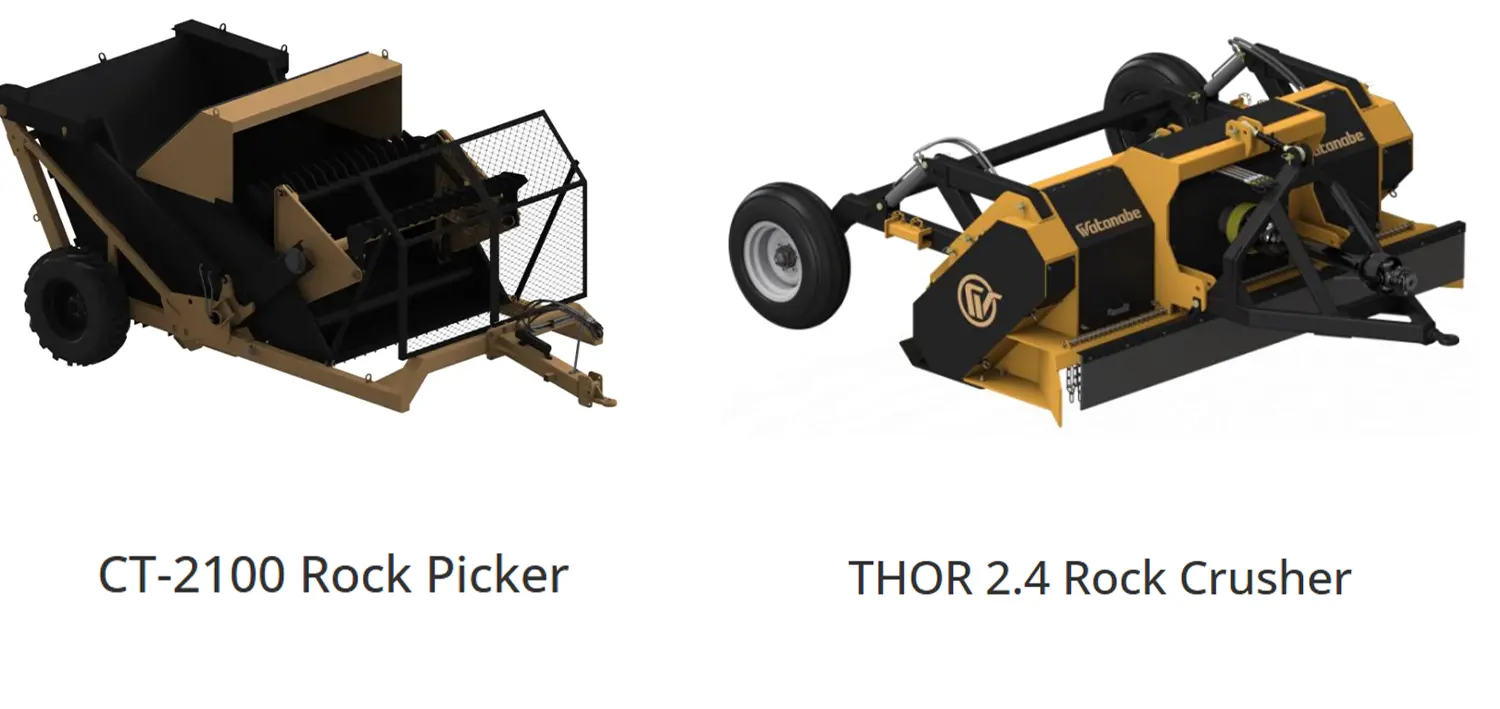
Drie symptomen in het veld wijzen erop dat de tanden niet meer optimaal presteren voordat een formele inspectie plaatsvindt: (1) Grotere achtergebleven steenfragmenten — stenen die de THOR voorheen volledig zou hebben verpulverd, verschijnen nu als afgebogen of gedeeltelijk gebroken stukken van meer dan 5 cm in het verpulverde materiaal. (2) Verhoogd motorgeluid van de tractor en een lagere rijsnelheid bij dezelfde gashendelstand — kortere tanden leveren minder impactenergie per steencontact, waardoor de rotor meer afremt bij elke steen, wat de aftakas van de tractor zwaarder belast om de snelheid te herstellen. (3) Zichtbare toename van het aantal stenen van meer dan 3 cm dat de verpulveringsgang verlaat en door de CT-2100 moet worden opgevangen — wanneer er meer grote fragmenten in de bunker van de CT-2100 verschijnen dan verwacht op basis van de werkdiepte, is slijtage van de tanden een waarschijnlijke oorzaak. Elk van deze symptomen in het veld moet aanleiding geven tot een formele inspectie van de tandhoogte bij de eerstvolgende gelegenheid.
Moet ik alle tanden in één keer vervangen of alleen de meest versleten gedeeltes?
De aanbevolen werkwijze hangt af van het slijtagepatroon. Als de slijtage gelijkmatig over de trommel verdeeld is (alle tanden hebben ongeveer dezelfde afmeting), vervang dan alle tanden tegelijk. Dit is de meest economische aanpak en zorgt voor de meest consistente trommelbalans en een gelijkmatige slijtage. Als de slijtage ongelijkmatig is (sommige omtrekringen zijn aanzienlijk meer versleten dan andere, bijvoorbeeld door gebieden met een hogere steenconcentratie of blootstelling aan rotsgesteente), vervang dan alleen de ringen die de vervangingsdrempel hebben bereikt, en vervang telkens een volledige ring. Vervang nooit individuele tanden binnen een ring terwijl andere tanden op verschillende hoogtes blijven. De resulterende ongelijke impactbelasting versnelt de slijtage van de langere, nieuwe tanden en veroorzaakt trillingen in de trommel. Het kostenverschil tussen gedeeltelijke en volledige vervanging is relatief klein zodra een ring is geïdentificeerd voor vervanging; wanneer meer dan 40% aan ringen vervangen moeten worden, is een volledige vervanging doorgaans economischer en levert betere prestaties op dan een gedeeltelijke vervanging.
Informatie over voorraad, levertijd en procedure voor tandvervanging — Bevestig vóór het seizoen.
THOR-model + jaarlijkse bedrijfsuren + steensoort (graniet/basalt) → aanbeveling voor vervangingsschema van tanden met actuele voorraadbeschikbaarheid in Korea en bevestiging van levertijd. Korea Watanabe, Ansan-si, Gyeonggi-do.
Redacteur: Cxm