Ginseng Field Preparation (인삼밭 돌 제거): Why Zero Stones Is Non-Negotiable

One stone contact over six years causes root bifurcation that degrades grade at inspection. This guide explains the agronomic science, the correct machine sequence, and how Geumsan-gun farmers prepare ginseng seedbeds professionally.

Discuss Ginseng Field Preparation Equipment

Korean ginseng (고려인삼, Panax ginseng C.A. Meyer) is one of Korea’s highest-value agricultural crops — and one of the most demanding in terms of soil preparation requirements. A commercial ginseng operation requires 6 years of continuous root development before harvest. Every management decision made at the time of bed preparation — seedbed stone content, soil tilth, bed geometry, drainage — influences the quality of the roots dug at year six. A problem introduced at planting cannot be corrected during the growing period; it manifests as grade loss at harvest six years later.

The stone standard for Korean ginseng seedbeds is the strictest of any Korean agricultural crop: zero residual stones above approximately 2 cm in the top 30 cm of the soil profile are tolerable. Not “minimal stones.” Not “mostly cleared.” Zero. The economic justification for this standard is straightforward — Korean ginseng is graded at harvest inspection by root shape, skin integrity, and weight. Grade 1 (천삼/지삼) roots command premium prices 3–5 times higher than Grade 3–4 roots. Any stone that the developing root contacts over the 6-year period causes bifurcation, branching, deformity, or skin irregularity that reduces the root to a lower grade at inspection.

This guide explains the agronomic mechanism behind the zero-stone requirement, the professional machine sequence that Korean commercial ginseng farmers use to achieve it, and how this sequence applies specifically in the Geumsan-gun and Yesan-gun production zones of South Chungcheong Province.

The Agronomic Basis for Zero-Stone Standard — What Stones Do to Ginseng Roots

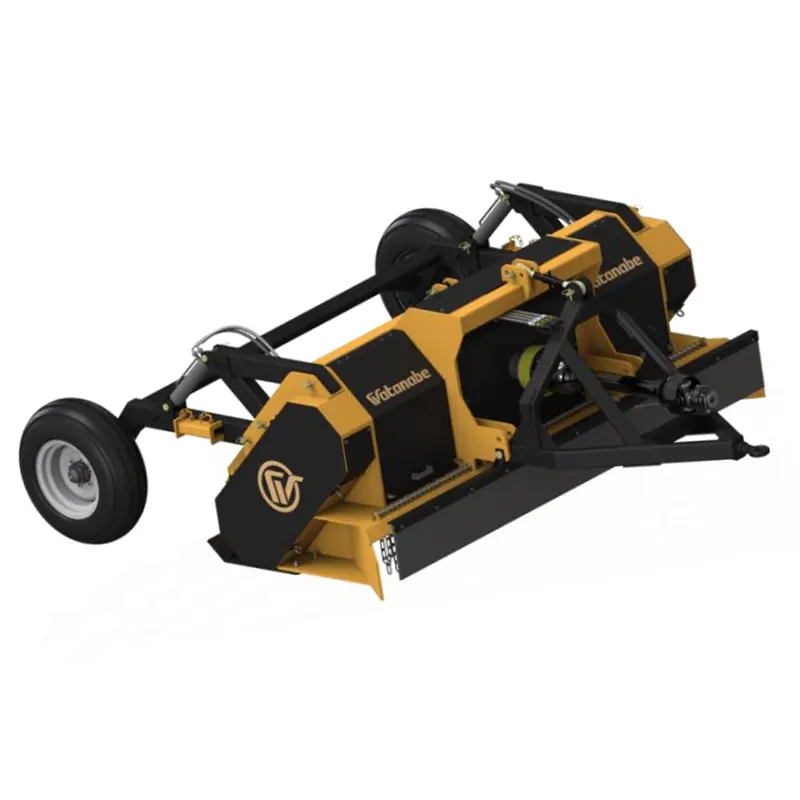
THOR 2.4 stone crusher — preparing ginseng seedbed by crushing embedded granite before CT-2100 picking for zero-stone profile

How Ginseng Roots Grow — and Why Obstacles Cause Permanent Damage

The Korean ginseng root — the “main root” or 주근 that constitutes the commercially valuable component — develops from the seed’s primary taproot by apical elongation: a zone of actively dividing cells at the tip of the primary root pushes progressively deeper into the soil profile, with the root body thickening by secondary growth above the elongating tip. In a stone-free, uniformly loose soil profile, this downward elongation proceeds in a straight, cylindrical path — producing the thick, smooth, unbranched root that grades as premium at inspection.

When the elongating root tip encounters a stone in the soil profile, the actively dividing cells at the tip cannot penetrate the stone. They deflect around it. The root branches at the point of contact — creating two or more secondary branches that continue growing around the obstacle. The resulting root at harvest has a forked, bifurcated, or multi-branched structure at the point of deflection. This structural departure from the ideal straight cylinder does not affect the root’s pharmacological properties — bifurcated ginseng roots contain the same ginsenoside compounds as straight roots. But it dramatically affects their grade classification:

Korean ginseng grading standards (국내 인삼 등급 기준) classify roots primarily by shape. First-grade (1등급) roots are straight, cylindrical, with a clean main root and minimal lateral branch development. Bifurcated or multi-branched roots — regardless of their size or condition — are classified into lower grades based on the degree of branching. The market price differential between first and fourth grade Korean ginseng roots is large enough that a crop with 30% of its roots bifurcated by stone contact produces significantly less revenue than a crop with 5% bifurcation, even at identical total yield weight.

The 6-Year Time Lag — Why Preparation Is Irreversible

The 6-year growth period between planting and harvest creates a uniquely high cost of preparation errors that distinguishes ginseng from all other Korean agricultural crops. In potato or garlic production, a poor preparation decision in spring results in a poor harvest in autumn of the same year — visible within 6–8 months, correctable in the next planting. In ginseng production, a stone in the seedbed at planting causes a grade-reduced root at harvest six years later — the full 6 years of land occupation, production inputs (fertilizer, pesticide, shade structure), and management cost are sunk before the preparation error becomes visible at inspection.

This extended time lag is the reason that commercial ginseng farmers apply preparation standards that would appear excessive for any other Korean crop. The cost of thorough stone removal at seedbed preparation — even the two-machine THOR + CT-2100 sequence — is small relative to the 6-year revenue potential of a high-grade ginseng crop on the same land area. The cost of inadequate stone removal is 6 years of full production cost, delivering a crop with a materially lower grade-average at harvest.

Stone Size That Causes Root Damage

Research from the Korea Ginseng Corporation (한국인삼공사) and academic studies on ginseng root development consistently indicate that stones above approximately 1–2 cm diameter in the root development zone cause measurable bifurcation. This threshold is significantly smaller than the fragment sizes that remain in the field after stone crusher processing — the THOR’s output grid, even on the finest setting, produces fragments that can include pieces up to 3–5 cm. This is why the CT-2100 rock picker — which collects fragments from approximately 5 cm and above — is a necessary second step after THOR crushing for ginseng seedbed preparation: the picker removes the crushed fragments that the crusher leaves but that are still large enough to cause root damage over a 6-year development cycle.

After CT-2100 picking, the remaining material on the field surface is below approximately 5 cm — small enough to be incorporated into the soil profile by PSW-3200 rotavator tillage, and at sizes where root deflection on contact is minimal due to the root’s ability to grow around very small obstacles without the significant branching that larger obstacles cause. Complete removal of all stones above 5 cm, combined with rotavator incorporation of sub-5 cm material, is the professional Geumsan-gun standard for commercial ginseng seedbed preparation.

The Geumsan-gun Ginseng Zone — Soil Conditions and Stone Challenge

Geumsan-gun (금산군), South Chungcheong Province, is Korea’s largest and most concentrated commercial ginseng production area, producing approximately 80% of Korean domestically grown ginseng (the remainder primarily from Punggi-eup in North Gyeongsang and smaller production zones in Gyeonggi-do and Gangwon-do). The Geumsan basin is surrounded by the ridges of the Sobaek mountain range, and the agricultural land is primarily granite-derived highland soil at elevations of 200–500 m.

Geumsan granite varies in its surface expression across the production zone. In the lower valley positions, alluvial soils with mixed granite gravel and sand provide relatively manageable stone content. On the terrace slopes — the preferred positions for ginseng cultivation due to superior air drainage and reduced late-spring frost risk — granite bedrock is closer to the surface and individual boulders of 30–80 Kg occur with sufficient frequency to make the CT-2100 rock picker the necessary second step rather than an optional upgrade.

Geumsan commercial ginseng farms operate on 6-year rotation cycles, returning to previously cultivated plots only after the required fallow period. New plot preparation is therefore a recurring annual requirement for each operation as the rotation cycle advances — typically 15–25% of the total operation area is prepared as new plots each year. The annual new-plot preparation represents the key stone clearance window: the one opportunity before planting to achieve the zero-stone standard that cannot be revisited for 6 years.

The Professional Machine Sequence for Ginseng Seedbed Preparation

The machine sequence used by commercial Geumsan-gun ginseng operations follows a consistent 4-step pattern. The first two steps achieve the zero-stone standard; the final two steps produce the seedbed quality required for uniform germination and establishment:

STEP 1 — CRUSH

THOR 2.4 Stone Crusher — 180 HP, 2.4 m

Processes all embedded and surface stones including those above the CT-2100’s 80 Kg weight limit. Simultaneously mulches any remaining crop residue, root systems, and surface vegetation. Output grid set to coarse to maximize fragment size above the CT-2100’s 5 cm picking threshold — coarser output is easier for the picker to collect efficiently. Kit Drawbar pull-mode for slope sections above 20%. One pass covers the full new plot area.

STEP 2 — PICK

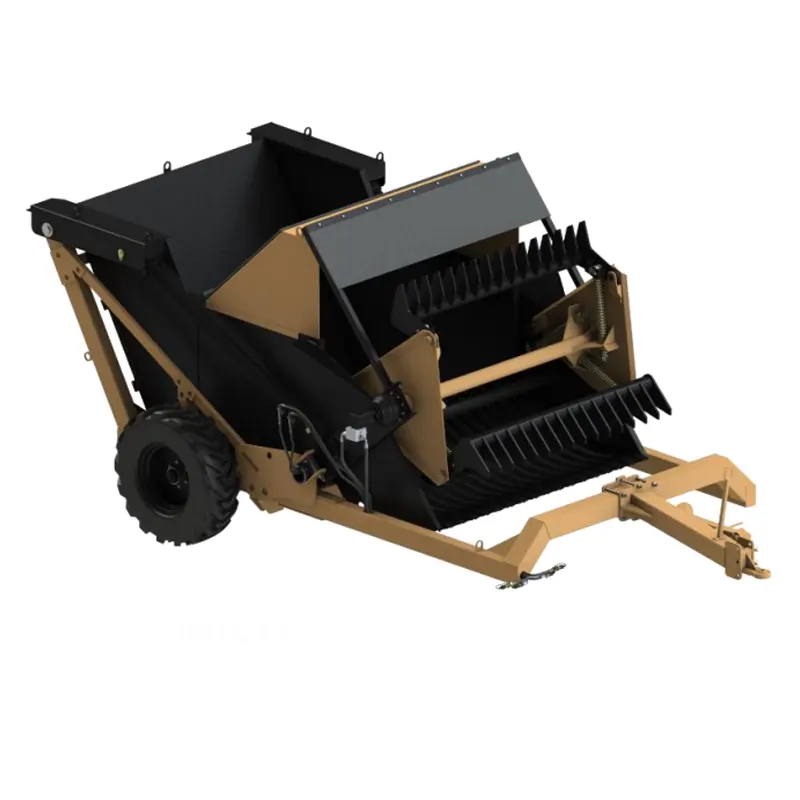
CT-2100 Rock Picker — 110 HP, 2.5 m³ Bunker

Collects all crushed stone fragments from 5 cm to 80 Kg from the field surface and loads into the hydraulic bunker for truck discharge. After this pass, all pickable stone — every piece from the THOR crushing pass that is above the 5 cm collection threshold — is physically removed from the plot. Working speed: 3–5 km/h. Bunker capacity 2.5 m³; on Geumsan granite fields, the bunker typically fills every 20–30 minutes of active picking, requiring multiple truck trips per day on heavy-stone plots.

STEP 3 — TILL

PSW-3200 Rotavator — 140 HP, 3.0–3.6 m

Primary tillage to 25–30 cm depth incorporates sub-5 cm stone fragments into the soil profile and creates the uniformly loose, aerated soil structure that ginseng bed formation requires. 1000 RPM PTO setting for fine tilth. Sand or organic matter amendment can be incorporated during this pass if soil structure improvement is planned. Working speed: 2–4 km/h.

STEP 4 — BED

Ginseng Bed Former

Raised beds (이랑) 1.2–1.5 m wide and 20–25 cm above the surrounding drainage paths are formed by the ginseng bed former. The raised bed geometry promotes drainage — critical for ginseng, which is highly susceptible to root rot in waterlogged conditions — and provides the soil depth above the underlying stone-free zone needed for root elongation without lateral constraint.

Where the EP-EW-4000 Rock Rake Fits in Ginseng Preparation

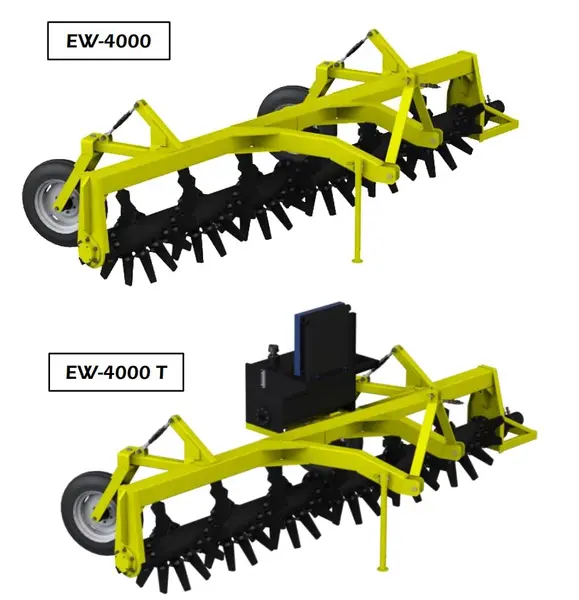
EP-EW-4000 rock rake — 75 HP, 3.6 m, can precede THOR on lighter-stone ginseng plots or collect windrows for CT-2100 picking

The EP-EW-4000 암석 갈퀴 (75 HP, 3.6 m) has a specific but limited role in ginseng preparation. On plots where the stone population consists primarily of lighter surface stones (below 40–50 Kg) with few or no large embedded boulders — typically lower valley positions in the Geumsan basin where alluvial sorting has produced more uniformly sized gravel rather than large angular granite boulders — the rock rake as Step 0 before the THOR pass organizes surface material into windrows that make the subsequent THOR pass more efficient.

However, on the terrace slope positions that Geumsan ginseng farms prefer for drainage and frost protection — where embedded granite boulders above 80 Kg are common — the rock rake’s spring tines cannot move these large stones and the rake provides limited benefit before the THOR pass. In these conditions, the THOR 2.4 directly (without a preceding rake pass) is the more efficient approach.

A more consistent role for the EP-EW-4000 in the ginseng preparation cycle is the maintenance pass on plots that have already been cleared once and are approaching replanting after the mandatory fallow period. After 6 years of fallow, the stone population returning to the surface from frost-heave is predominantly small fragments — lighter, more manageable, more suitable for the rake’s spring-tine mechanism — rather than the large embedded boulders of an initial clearance. Using the rake for fallow-period returned stones reduces the THOR operating time needed on re-cleared plots versus initial clearance plots.

Seasonal Timing — When to Prepare Ginseng Plots in Geumsan-gun

CT-2100 rock picker — 110 HP, 2.5 m³ bunker, essential for zero-stone ginseng seedbed preparation after THOR crushing

Geumsan-gun ginseng planting takes place in spring (direct seeding: February–March; transplanting: March–April) and occasionally in autumn for some varieties. The stone clearance and bed preparation window preceding spring planting typically spans November through February — the period when the ginseng shade structures are removed from harvested plots, before the next planting cycle, and when the soil moisture from autumn rain is adequate for tillage without excessive compaction.

The preparation timeline for a commercial Geumsan ginseng operation with 1 hectare of new plots per season:

November–December: Initial assessment of new plots. THOR 2.4 stone crushing of plots with heavy embedded stone. This pass can be conducted in late autumn when soil moisture is adequate — avoiding the very wet conditions of early winter that can cause excessive compaction under heavy machine traffic.

January–February: CT-2100 rock picker collection of the THOR-crushed material. PSW-3200 rotavator primary tillage to create the seedbed depth and soil structure for bed forming. Sand or organic amendment incorporation if soil structure improvement is planned — this is also the appropriate time for deep liming if soil pH correction is indicated by autumn soil testing.

Late February–March: Ginseng bed forming (이랑 만들기), shade structure installation, and direct seeding or transplanting. The preparation sequence must be complete before this window — pressure on the preparation calendar from delayed earlier steps directly compresses the bed formation and structure installation time that precedes the planting date.

For Geumsan operations with more than 1 hectare of new plots annually, parallel machine operation — THOR crushing on new plots while CT-2100 picks on plots crushed in a previous pass — is the standard scheduling approach that maintains preparation pace through the limited autumn–winter window.

The Economic Case for Thorough Stone Clearance

Korean commercial ginseng production is among the highest-value uses of agricultural land in Korea. At current Geumsan-gun market reference prices, Grade 1 (1등급) dried ginseng root commands prices 3–5 times higher per kilogram than Grade 4 (4등급) roots from the same field. The grade distribution of a ginseng harvest — what percentage of roots fall into each grade — is the key determinant of total revenue for a fixed yield.

Stone clearance investment directly affects grade distribution. Field experience from Geumsan-gun commercial ginseng operations that have transitioned from manual stone picking to the THOR 2.4 + CT-2100 machine sequence shows consistent grade improvement: operations that previously reported 30–40% of their harvest in Grade 3–4 categories due to root deformity from stone contact have achieved Grade 1–2 proportions of 70–80% after adopting the machine clearance sequence. The revenue improvement from this grade-distribution shift — even on the same total yield weight — is several times the annualized cost of the THOR and CT-2100 machine investment.

The calculation is straightforward: amortize the combined machine investment over a 10-year operating life; compare the annual amortization cost to the annual revenue improvement from grade distribution improvement; the payback period in Geumsan-gun conditions is consistently below 3 years for operations above 1.5 hectares of new ginseng plot preparation per season. Below 1.5 hectares annually, contract machine service (hiring a THOR operator per hectare basis) may be more economical than machine ownership — Korea Watanabe can provide recommendations for ginseng preparation service contractors in the Geumsan-gun area.

Frequently Asked Questions — Ginseng Stone Clearance

Can I use manual stone picking instead of machines on small ginseng plots?

Manual stone picking on ginseng plots below approximately 0.3–0.5 hectares is practiced by smaller Geumsan-gun family operations and remains viable at that scale — the labor time per hectare for thorough manual picking, while high (typically 15–30 person-hours per hectare depending on stone density), is manageable for the smallest farm units. Above 0.5 hectares of new plot preparation per year, the labor cost of thorough manual picking begins to exceed the machine operating cost of the THOR 2.4 + CT-2100 sequence in Korean rural labor market conditions — particularly given the ongoing decline in seasonal agricultural labor availability in South Chungcheong highlands. The transition from manual to machine clearing on ginseng plots above 0.5–1.0 hectare annually is economic as well as agronomic.

The CT-2100 picks stones down to 5 cm — is there a risk that smaller fragments cause ginseng root damage?

Research on ginseng root development suggests that stones below approximately 1–2 cm rarely cause significant bifurcation because the root tip can grow around very small obstacles with minimal directional deviation. The zone of meaningful root deformity risk is stones between 2 cm and 10 cm — small enough that the root contacts them but too large for the root to easily bypass without significant branching. After CT-2100 picking (which removes from 5 cm upward) and PSW-3200 rotavator tillage (which incorporates and further breaks down sub-5 cm fragments), the remaining stone content in the seedbed profile is predominantly below the 2 cm root-deflection threshold. This is the practical basis for the CT-2100 + rotavator sequence being the professional standard — it addresses the full range of root-damaging stone sizes.

Do Punggi-eup (North Gyeongsang) ginseng farms have different stone management needs than Geumsan?

Punggi-eup (풍기읍), Yeongju-si, North Gyeongsang, is Korea’s other major ginseng production concentration. The soil geology differs from Geumsan — Punggi-eup sits on granite and gneiss-derived highland soils at 250–450 m elevation, with more uniform stone distribution than the highly variable Geumsan granite exposures. The machine clearance sequence is identical (THOR 2.4 + CT-2100 + rotavator), but Punggi-eup operators typically report fewer very large embedded boulder occurrences than Geumsan slope-position plots — the THOR’s 30 cm maximum stone size limit is more consistently adequate on Punggi-eup soils without the occasional need for excavator pre-treatment of very large outcrops that Geumsan slope operations sometimes encounter.

How does the ginseng rotation cycle affect stone management planning?

The 6-year ginseng rotation followed by a mandatory fallow period (typically 10–15 years before ginseng replanting on the same plot, required to avoid soil-borne pathogen accumulation) means that each plot receives thorough stone clearance treatment only once per generation in the rotation cycle. This infrequent treatment cycle justifies a higher investment per preparation event than annual crops — the thorough two-machine clearance of a ginseng plot needs to achieve a standard that remains adequate for 6 years of root development, not just for one season. It also means that stone management planning for a ginseng operation should account for the fixed proportion of the farm area in new plot preparation each year, and ensure that THOR and CT-2100 capacity is available for that area each autumn–winter preparation window.

Is stone clearance sufficient to achieve Grade 1 ginseng, or are there other soil preparation factors?

Stone clearance is necessary but not sufficient for consistently high-grade ginseng. Other preparation factors that influence root grade at harvest include: soil pH (ginseng requires 5.5–6.0; lime treatment if below this range is recommended based on autumn soil testing); organic matter content (ginseng requires well-drained, moderate organic matter — excessive clay without sand amendment produces waterlogging and root rot; sandy soils without organic matter produce poor root development); bed geometry (raised beds at 1.2–1.5 m width and 20–25 cm height above drainage channels ensure the drainage ginseng requires throughout the 6-year period); and shade structure management (light interception of 65–75% of full sunlight is the agronomic standard for Geumsan outdoor cultivation). Stone clearance is the foundational physical preparation — without it, every other preparation step is compromised by root contact damage. But stone clearance alone does not guarantee Grade 1 production if other factors are deficient.

Preparing New Ginseng Plots? Let’s Confirm the Right Machine Sequence.

Tell us your new plot area per season (ha), stone density (light / medium / heavy with typical boulder sizes), and your tractor HP — we confirm the THOR 2.4 + CT-2100 configuration for your Geumsan or Punggi-eup operation, and estimate machine time per hectare for your preparation window planning. Both machines in Korea local stock, Ansan-si, Gyeonggi-do.

지금 바로 연락주세요

Editor: Cxm

TAGs: