Sandy soils are produced by geological conditions that deposited fine-to-medium quartz particles in sufficient density to dominate the soil’s texture profile — glacial outwash plains, aeolian (wind-deposited) sand sheets, coastal dune formations, and fluvioglacial deposits all produce soils with low clay fraction and consequently low cohesion between particles. From an agricultural machinery perspective, this low cohesion is simultaneously the sandy soil’s greatest advantage and the source of its specific challenges. The advantage: soil moves freely, falls through elevator rods without bridging, requires less tractor power to move, and rarely creates the blockage events that characterise clay soil harvesting. The challenge: the same free-moving character makes the soil susceptible to wind erosion after tillage, allows it to dry out rapidly at the ridge surface, and makes ridge stability after formation dependent on plant canopy closure rather than soil cohesion.
This guide covers the complete sandy soil potato machinery specification — from seedbed preparation through to harvest and post-harvest — with specific emphasis on the adjustments that extract the full performance advantage of sandy soil while managing its specific risks.
Sandy Soil Physical Properties and Their Machinery Implications
| Soil Property | Machinery Implication | Setting Adjustment |
|---|---|---|
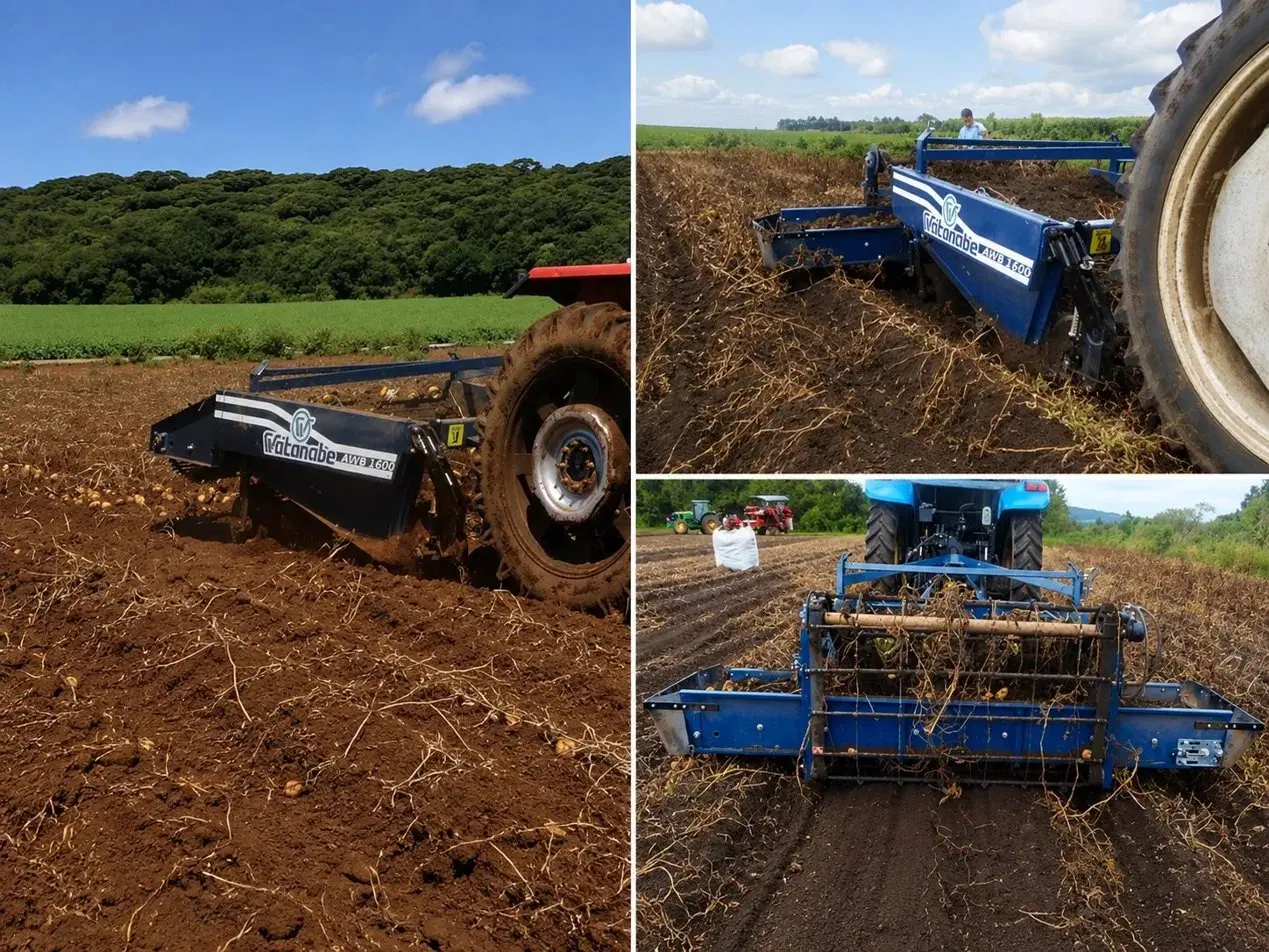
| Low clay fraction (<15%) | Soil falls freely through elevator rods; no bridging; no clay adhesion to steel | Riddle frame separator ideal; fewer agitation bars needed (2–3 in elevator); no star wheel required |
| Low draft resistance | Share penetrates with minimal tractor effort; no compaction under share | Lower HP tractor may be adequate; depth wheel is more sensitive — check chain every hour for tension |
| Low stone content (typical) | No stone damage risk to share or chain; no stone bruising of tubers | Standard steel shares adequate; no TC tip premium required; focus bruise management on temperature not stone |
| Wind erosion susceptibility | Freshly tilled sandy soil is easily mobilised by wind | Form ridges immediately after cultivating; do not leave bare cultivated surface overnight if windy; orient ridges across prevailing wind if possible |
| Rapid drying / low moisture retention | Soil at the ridge surface dries to powder after a few dry days; clods do not form | Harvest timing less constrained by soil moisture (no clay blockage risk); temperature-driven harvest decision (see P-26) |
Digger Settings for Sandy Soil — Reduced Agitation and Low-Bruise Protocol
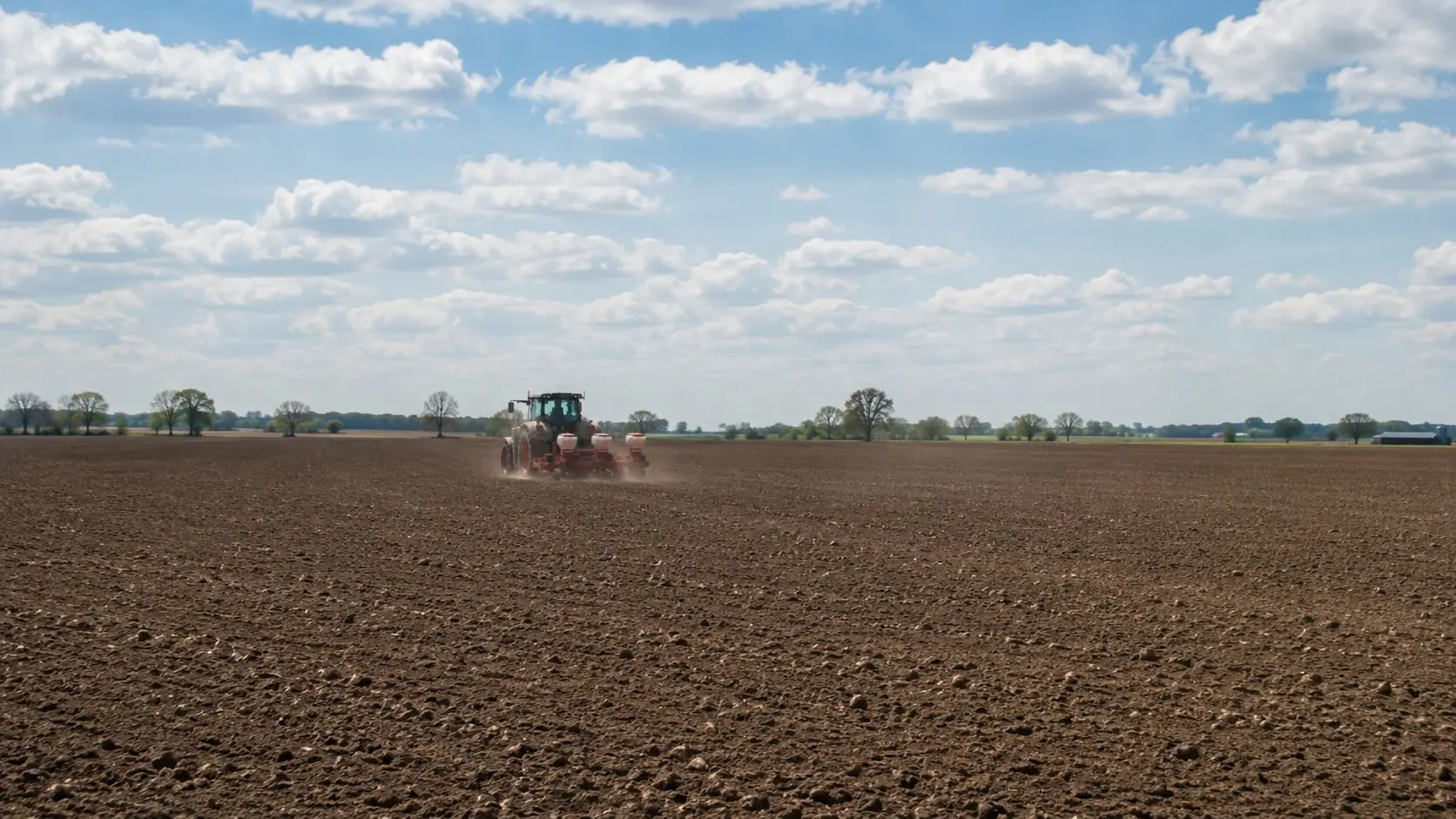
Sandy soil’s free-falling character means the digger’s separation challenge is almost entirely eliminated compared to clay. The elevator chain is working to move soil that falls through the rods as fast as it arrives — blockage is not a realistic risk. This shifts the calibration focus entirely toward tuber quality: on sandy soil, the primary harvest quality risks are bruising (from chain speed, drop height, and temperature — identical mechanisms to any other soil, but without the clay soil’s partial cushioning effect on tubers) and skinning (if the potato is harvested before the periderm has fully set).
On sandy soil, the specific digger settings that differ from clay or loam operation:
Rotary Cultivator on Sandy Soil — Over-Tillage Risk and Correct Settings
Sandy soil is easily over-tilled. Where a clay soil requires several cultivation passes to break down clods to seedbed tilth, a sandy soil at the correct moisture typically reaches adequate tilth in a single rotary cultivator pass. Additional passes on sandy soil do not improve seedbed quality — they reduce clod size further into a fine dust that: (a) caps after irrigation or rain, creating a surface crust that impedes emergence; (b) is highly susceptible to wind erosion in the days between cultivation and crop canopy establishment; and (c) has reduced structural integrity that increases compaction risk from subsequent traffic.
The specific rotary cultivator settings for sandy soil:
Number of passes: One pass only, except in exceptional circumstances (unusually cloddy surface after dry ploughing). Two passes on sandy loam creates fine-dust surface. If the first pass leaves the soil too coarse, reduce forward speed on a second pass — do not attempt a third.
Working depth: 15–20 cm for potato seedbed (below seed tuber planting depth, not deeper). Sandy soil does not need deep mechanical loosening for potato root access — roots penetrate freely to 40–50 cm without mechanical assistance on stone-free sandy loam.
Rotor speed: Set to the lower-to-mid working range for the forward speed. Slow rotor speed on sandy soil produces a rougher aggregate surface (slightly larger clods) that is more resistant to wind erosion and capping than a fast-rotor-produced fine surface. Accept a slightly coarser seedbed surface in exchange for better post-cultivation structural stability.
Tempistiche: Cultivate when the soil is at or slightly below field capacity — not too dry (powder risk) and not too wet (structural damage). Do not cultivate in strong wind conditions on sandy soil regardless of moisture — dry sand can be blown off the field surface during the rotor’s soil-throwing action.
Key Sandy Soil Potato Regions — Global Market Context
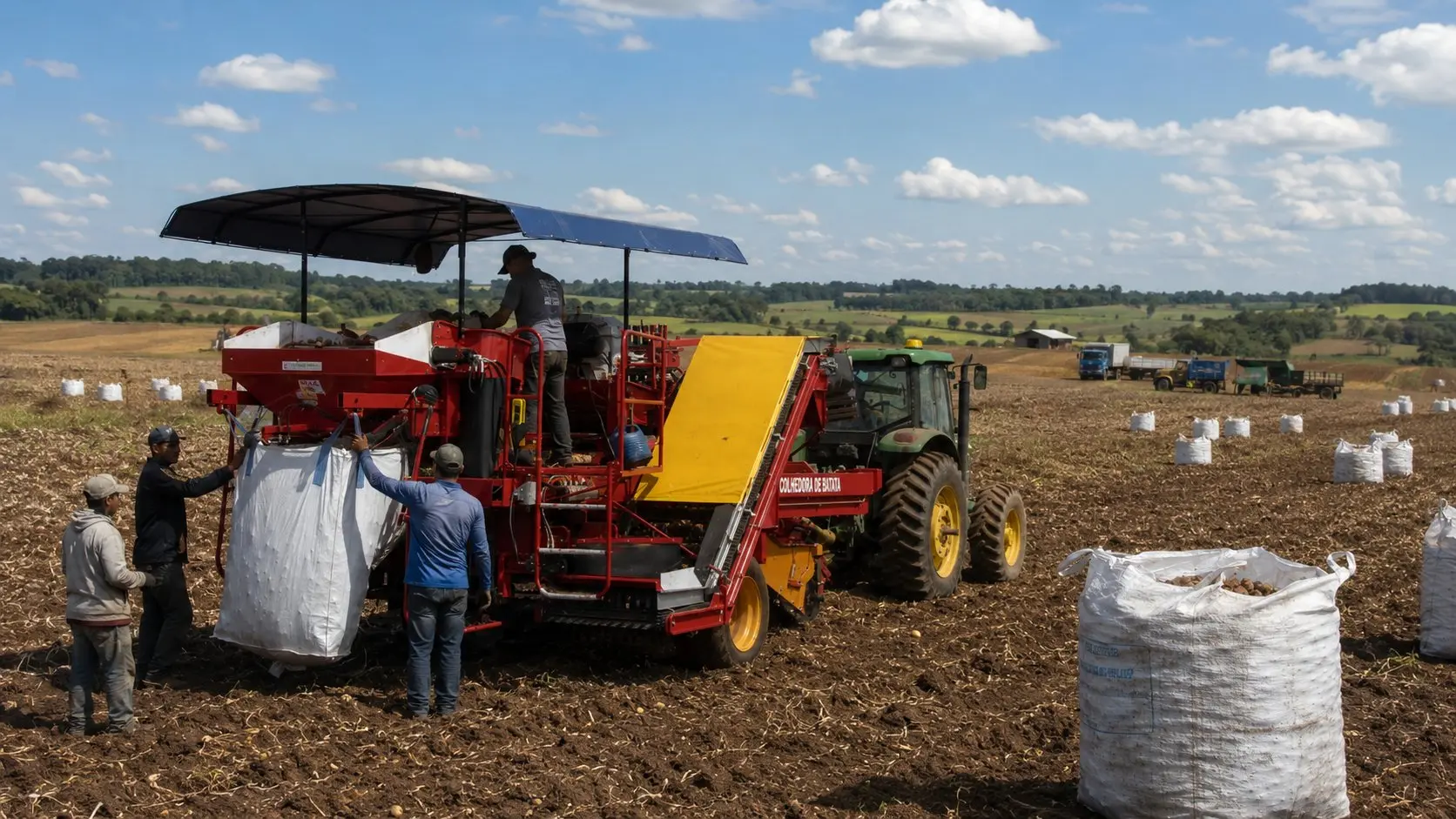
Sandy soil potato production zones are found across all major potato-producing countries, and the machinery specifications described in this guide apply universally to them. The specific regional variants are worth noting for any supplier entering these markets:
Netherlands — Veluwe and Noord-Brabant dekzand: The Netherlands’ primary sandy soil potato zone is the glacial outwash plain (dekzand) of the central and southern provinces. These soils — fine to medium quartz sand, very low stone, and high organic matter content from centuries of intensive management — are among the world’s most productive potato soils. Dutch commercial potato farms on dekzand run riddle frame separators as standard; star wheels are used only in the heavier clay-loam polders of the northern provinces. All major Dutch potato machinery configurations sold into this zone are 75 cm row spacing, 1000 RPM PTO, and riddle frame separator specification.
UK — East Anglia and Lincolnshire light land: The light sandy loams of Norfolk, Suffolk, and Lincolnshire are the UK’s most intensive potato-growing zones for processing supply. Many of these soils are fen peat over sand — high in organic matter, very free-draining, essentially stone-free. Riddle frame separator is standard; the primary harvest constraint is temperature (early autumn morning frosts raise bruise risk) rather than soil condition.
Canada — Prince Edward Island: PEI’s distinctive red sandy loam (iron-stained aeolian sand over sandstone parent material) is one of North America’s most famous potato soils. Low clay, low stone, high productivity, 75 cm row spacing is increasingly standard as processing contracts from McCain (headquartered in Florenceville-Bristol, NB) align PEI growers to the EU processing specification. Riddle frame separator is the standard for PEI conditions.
Per informazioni su potato machinery configured for sandy soil conditions, Korea Watanabe can confirm riddle frame separator availability, reduced agitation bar configuration, and row spacing specification for each market region.
Domande frequenti
▶Does the lack of clay bridging on sandy soil mean I can run the digger at a faster forward speed than on clay?
In theory, the absence of clay bridging risk removes one of the primary constraints on forward speed for clay soils — allowing faster operation. In practice, the maximum useful forward speed on sandy soil is still constrained by two factors: tuber bruise and miss rate. As forward speed increases on any soil, the chain-to-forward-speed ratio must be maintained in the 1.5–2.5× range — at higher speeds, the chain must also speed up to maintain this ratio, and at high chain speeds the bruise risk increases regardless of soil type. Additionally, the share’s inclined-plane lift geometry becomes less effective at very high forward speeds — tubers at the leading face of the ridge are deflected sideways rather than lifted at speeds above approximately 5–6 km/h for most digger designs. Sandy soil’s low draft resistance does allow a slightly higher operating speed before tuber quality loss begins — perhaps 4.5–5.5 km/h versus 3.5–4.5 km/h on clay at equivalent chain speed and quality outcome. But the difference is not as large as the absence of blockage risk might suggest, because the quality constraints (bruise, miss) still exist and are governed by the same physical laws regardless of soil type.
▶Sandy soil in my region has occasional pockets of gravel and flint — does this change the machinery specification?
Yes, substantially. A soil classified as sandy loam (low clay) can still carry a high stone or gravel density — particularly in glacial outwash zones where the sand was deposited alongside gravel and cobble material. If the sandy soil has gravel pockets, the machinery specification shifts toward the stone-present configuration: TC-tipped share rather than standard steel; heavier chain rod specification; more robust elevator frame design; and pre-harvest stone survey to determine whether stone separation equipment is needed in the potato zone. The separator type remains riddle frame (clay fraction is still low and soil still falls freely) but all stone-contact components need appropriate specification. Before placing any order for sandy soil machinery, confirm the stone density through soil survey or penetrometer data — “sandy soil” and “stone-free soil” are not synonymous and should be established independently before specification decisions are made.
▶Is irrigation equipment coordinated with potato machinery on sandy soil farms, and does irrigation before harvest help?
Most commercial sandy soil potato farms in the Netherlands, Belgium, UK, and North America operate drip or overhead irrigation as standard — sandy soil’s low water retention makes rain-fed production high-risk for yield in dry seasons. Irrigation and machinery are coordinated through the growing calendar: final irrigation is timed to produce an optimal soil moisture at harvest — moist enough that the soil separates cleanly from the tubers and the ridge holds its shape as the digger passes, but not so moist that the elevated soil moisture increases blackspot bruise risk in susceptible conditions. A post-rain harvest on sandy soil the day after significant rainfall is generally fine — the water drains rapidly and the soil returns to a harvestable moisture within 12–24 hours, compared to 3–5 days on clay. A final targeted irrigation 5–7 days before harvest can improve separation quality by maintaining tuber turgor (firm tubers sustain less bruise from a given impact than dehydrated ones) and preventing the fine-dust surface that forms when very dry sandy soil is picked up on the elevator — the fine dust carries over onto the tubers and is harder to grade out than slightly moist sand clumps that fall away cleanly.
▶Wind erosion of the sand is a problem at my farm — what machinery management steps most effectively reduce this?
Wind erosion risk for potato production on sandy soil is highest in the window between primary tillage and canopy closure — typically 6–10 weeks from cultivation to when the potato crop’s leaf canopy provides enough ground cover to protect the soil surface. Three machinery management steps most effectively reduce erosion in this period. First: time tillage and ridge formation to occur as close together as possible — ideally the same day. Every additional day between primary cultivation and ridge formation is a day the bare, freshly-tilled sandy surface is exposed to wind. Form ridges immediately after the final rotary pass. Second: orient ridges across the prevailing wind direction where field geometry permits. Ridges perpendicular to the prevailing wind act as natural wind breaks for the furrow between them, dramatically reducing sand mobilisation compared to ridges running parallel to the wind. Third: avoid tilling in wind speeds above 5–6 m/s (moderate breeze) — at these wind speeds, freshly-tilled sandy soil begins to move during the tillage operation itself, and the losses can be significant before planting is complete. Schedule tillage for calm, high-pressure weather windows.
▶Are there varieties particularly suited to sandy soil that also affect the machinery specification?
Yes — variety choice and machinery specification interact on sandy soil primarily through tuber skin sensitivity and harvest timing. Several high-yielding processing varieties suited to sandy soil (Saturna and Fontane for crisps; Lady Rosetta and Innovator for processing) have thin skins during the mid-season growth phase that become more robust only after vine kill and adequate skin-set time (12–21 days post-kill). On sandy soil, where the harvest timing decision is temperature-driven rather than soil-moisture-driven, there is no soil moisture constraint to force a delayed harvest — but allowing adequate skin-set time is equally important. For varieties with known skin sensitivity on sandy soil, removing separator-zone agitation bars and operating at the lower chain speed range (as described in this guide) provides meaningful protection against skinning that the soil type alone does not provide. Varieties like Maris Piper (a thin-skin quality variety grown extensively on UK light land) specifically benefit from sandy soil’s gentle chain handling at correct settings, producing very low skinning rates that would be impossible to achieve on the same variety in clay conditions with any settings adjustment.
Sandy Soil Potato Machinery Enquiry?
Share your soil type, row spacing, and target market (ware, processing, or seed). Korea Watanabe will confirm the riddle frame separator availability and agitation bar configuration for the correct macchinari per la patata for your sandy soil conditions.
Corea Watanabe Rock Crusher Tractor Co., Ltd. — Ansan-si, Gyeonggi-do
Redattore: Cxm