
El Excavadora de patatas EP-AWB-1600 La máquina del paso 7 del sistema de cultivo de patatas de altura coreano Watanabe de 7 pasos es una excavadora de patatas montada de dos hileras que levanta los tubérculos del surco de cosecha, los separa de la tierra mediante un separador de malla vibratoria y los deposita para su recolección. La cosecha es el punto en el que la inversión realizada durante la temporada en la limpieza de piedras, labranza, siembra, aporcado y cultivo se convierte en un producto comercializable, o se daña si la preparación y el momento de la cosecha son incorrectos.
Esta guía abarca la configuración operativa completa del EP-AWB-1600 en las condiciones de las tierras altas coreanas, desde las comprobaciones previas a la cosecha hasta el ajuste de la profundidad de corte, la selección del sistema de recolección (Kit A, B o C), la velocidad de trabajo y la gestión del reducido período de cosecha en las tierras altas coreanas antes de la primera helada.
Especificaciones confirmadas del EP-AWB-1600
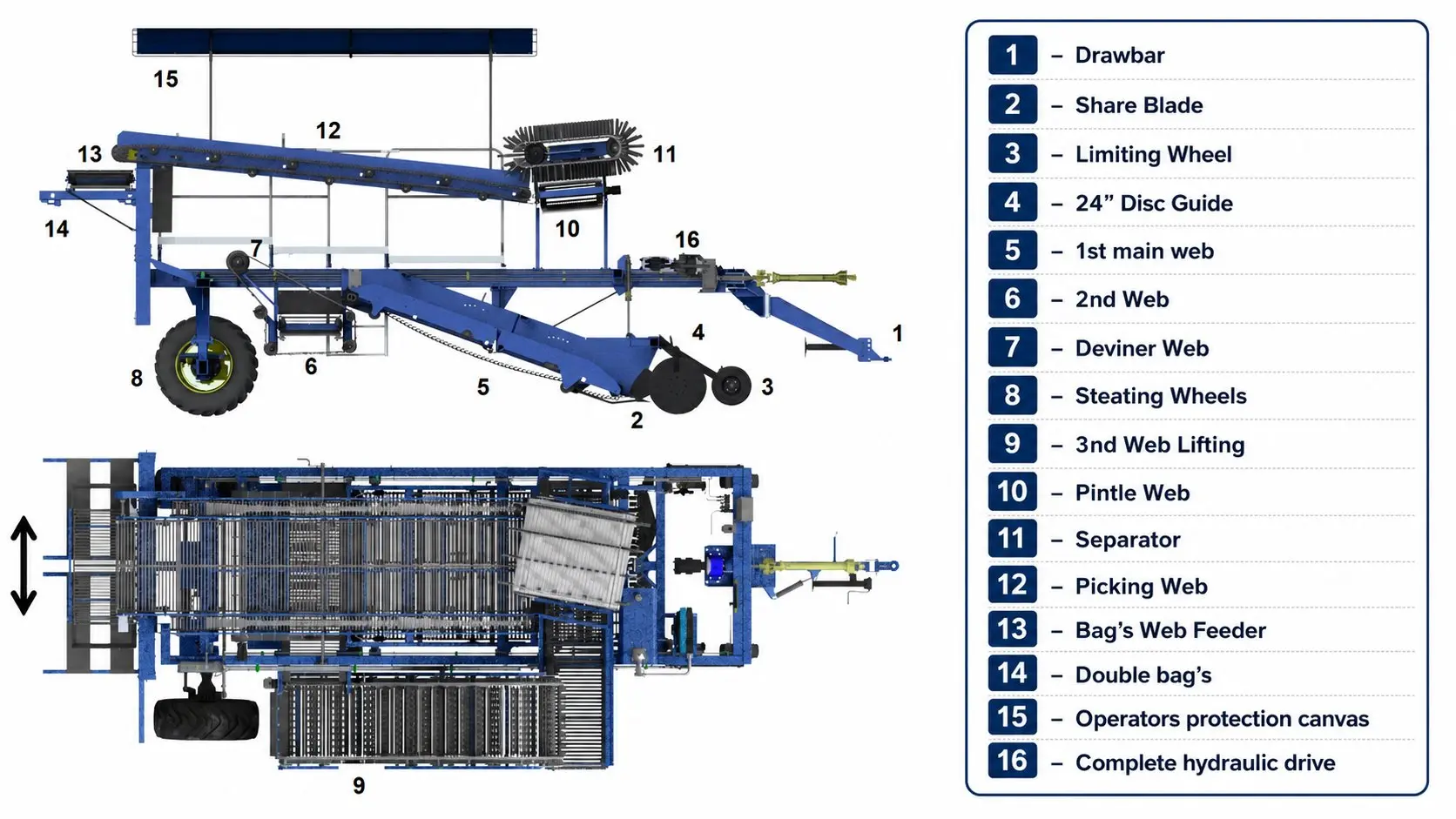
Todas las especificaciones provienen del folleto oficial del producto Watanabe.
Kits A, B y C: Selección del sistema de recolección adecuado
Las opciones del kit del EP-AWB-1600 determinan cómo se recogen los tubérculos cosechados después del separador de banda vibratoria; esta es la selección que adapta la máquina a la cadena de suministro del mercado:
Kit A
Depósito lateral — Hilera de campo
Los tubérculos se depositan junto a la máquina en una hilera para su posterior recolección manual, con tractor cargador o con equipo de recolección adicional. Configuración más sencilla, menor inversión inicial. Ideal para pequeñas explotaciones donde la recolección se realiza manualmente desde la hilera, o para granjas que utilizan un vehículo de recolección independiente para realizar una segunda pasada tras la cosechadora. En campos despejados de piedras, la hilera queda limpia; en campos sin despejar, la contaminación de la hilera de tubérculos por piedras desviadas por la reja supone un coste adicional significativo en la mano de obra de clasificación.
Kit B
Elevador trasero: hacia el remolque o carro de recogida.
Los tubérculos se elevan mediante una cinta transportadora transversal desde la banda vibratoria hasta un elevador de descarga trasero que los deposita en un carro o remolque remolcado por la EP-AWB-1600. Este sistema de flujo continuo permite una cosecha ininterrumpida en todo el campo sin necesidad de detenerse para recoger los tubérculos en hileras. El carro se cambia cuando está lleno (normalmente cada 300-500 m de longitud de campo). El kit B es la configuración estándar para el mercado de productos frescos de las tierras altas de Corea y las operaciones de suministro cooperativo, donde la recolección con tractor-remolque es el modelo logístico.
Kit C
Ascensor extendido: para una mayor capacidad de recogida.
El kit C proporciona un elevador trasero extendido con mayor altura de descarga, adecuado para cargar directamente en plataformas de camiones o contenedores a granel más grandes. Reduce los pasos de manipulación entre el campo y el almacenamiento al permitir la carga directa desde la excavadora al vehículo de transporte. En las granjas de las tierras altas de Corea, donde los camiones acceden a la cabecera del campo, el kit C permite la cadena logística de cosecha a almacenamiento más eficiente, combinada con la CT-2100 para el manejo de campo posterior a la cosecha en otoño con una manipulación intermedia mínima que podría causar magulladuras en los tubérculos.
Preparación previa a la cosecha: las tres confirmaciones antes de comenzar.
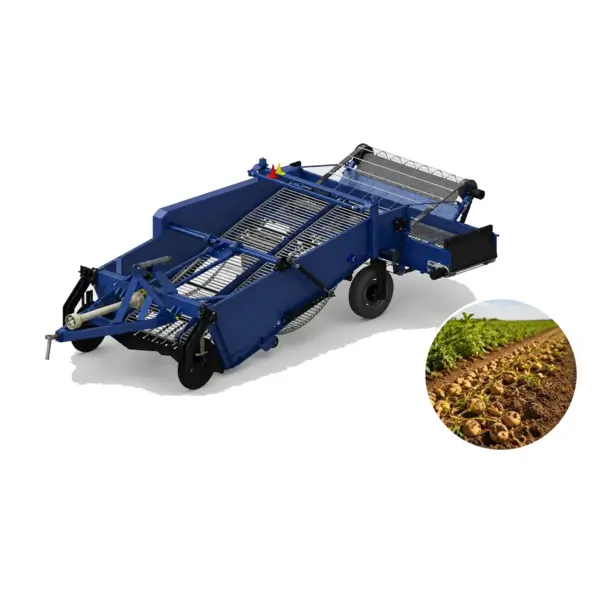
Se deben completar tres comprobaciones de preparación antes de que el EP-AWB-1600 inicie su primera pasada de cosecha; omitir cualquiera de ellas produce problemas corregibles o irreversibles que reducen la calidad de la cosecha o requieren una intervención a mitad de la misma:
Velocidad de trabajo y daño a los tubérculos: la disyuntiva
La velocidad de trabajo es la variable que determina más directamente la tasa de magulladuras en los tubérculos. Cada aumento en la velocidad de avance de la EP-AWB-1600 incrementa la velocidad a la que los tubérculos cosechados entran en contacto con la red vibratoria, los eslabones de la cadena y entre sí durante el proceso de separación. Mayor velocidad de contacto = mayor tasa de magulladuras. La velocidad de trabajo óptima equilibra el área de cobertura diaria con la magulladura aceptable para el mercado objetivo.
| Velocidad de trabajo | Cobertura diaria | Riesgo de hematomas |
|---|---|---|
| 1,5–2,0 km/h (lento) | 2–3 hectáreas/día | Lo más bajo: recomendado para mercado en fresco Grado 1, patata de siembra |
| 2,0–3,0 km/h (estándar) | 3–5 hectáreas/día | Moderado: aceptable para el suministro cooperativo del mercado de productos frescos. |
| Por encima de 3,5 km/h (rápido) | 5–7 hectáreas/día | Más alto: apto solo para el procesamiento de suministros donde los golpes son menos críticos que en el mercado de productos frescos. |
La proximidad de las heladas genera presión para cosechar más rápido de lo que permite el óptimo de resistencia a los golpes en los tubérculos. La estrategia de manejo consiste en cosechar primero los campos de menor altitud (maduran antes y el riesgo de heladas es menor) a la velocidad más lenta que permite la resistencia a los golpes, y luego acelerar la cosecha en los campos de mayor altitud a medida que se acerca el riesgo de heladas, aceptando un mayor grado de daño en esos lotes. Al destinar los lotes cosechados más rápido y con mayor riesgo de golpes a la industria procesadora y los lotes cosechados más lentamente y con menor riesgo de golpes al mercado de productos frescos, se logra una segmentación de la calidad según la velocidad de cosecha.
Separador de banda vibratorio: configuración y ajustes según las condiciones del suelo.
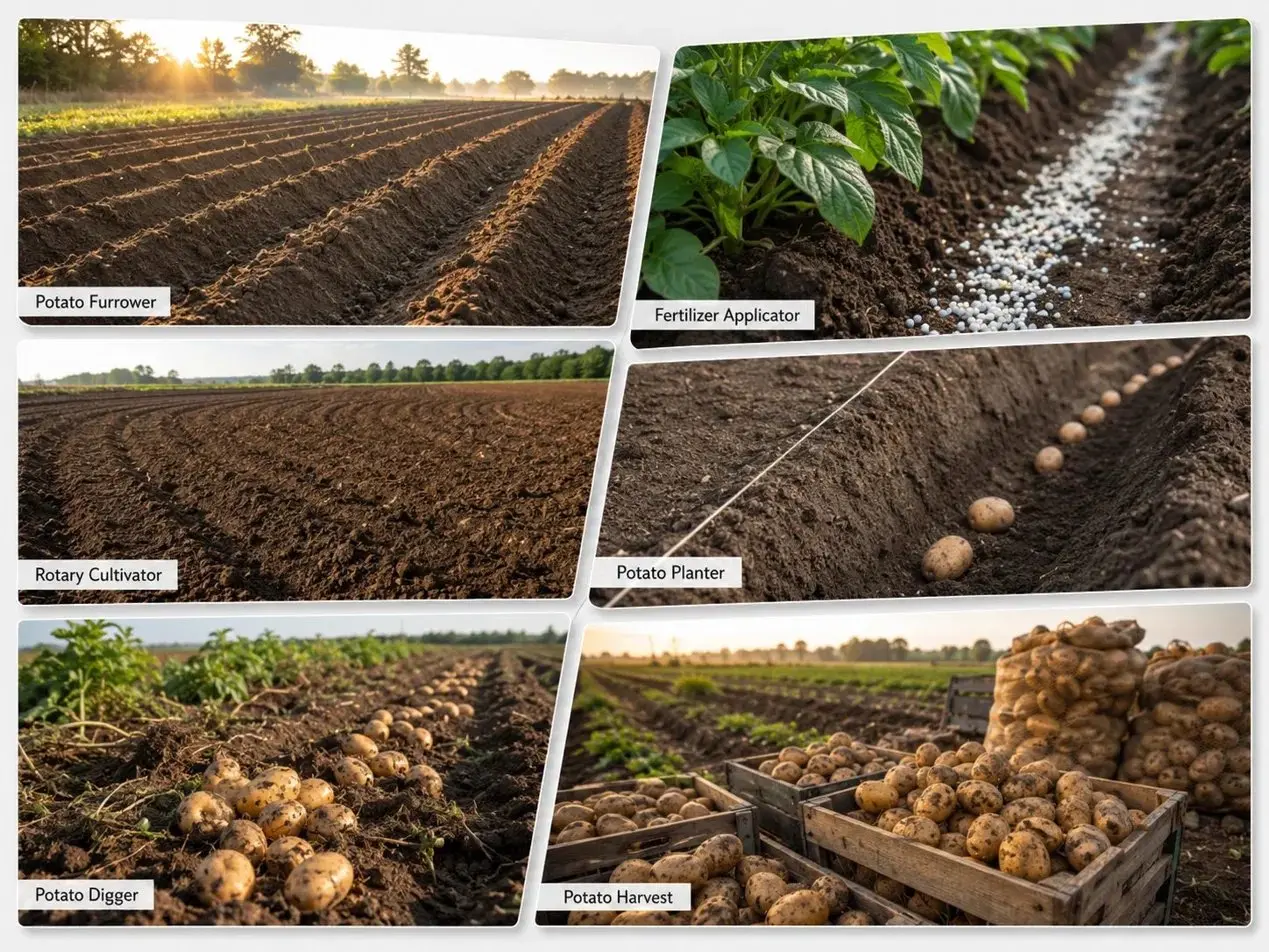
El separador de banda vibratoria es el componente que separa la tierra de los tubérculos a medida que el material de la cresta elevada pasa sobre él. La frecuencia y amplitud de la vibración de la banda, junto con la velocidad de avance, determinan la eficiencia con la que la tierra cae a través de la banda mientras los tubérculos se retienen. La configuración de la banda debe ajustarse a las condiciones específicas del suelo en el momento de la cosecha.
Suelo seco y friable (ideal)
Vibración estándar de la cinta transportadora. La tierra se separa rápidamente de los tubérculos con una mínima carga en la cinta. La velocidad de trabajo puede alcanzar el límite superior del rango objetivo. No hay riesgo de obstrucción de la cinta. La tierra de campo, libre de piedras y con la humedad adecuada para la cosecha, pasa limpiamente a través de la cinta, dejando los tubérculos bien separados para su recolección.
Suelo húmedo o rico en arcilla
Reduzca la velocidad de avance: los terrones de tierra húmeda son más pesados y cargan la cinta más lentamente. Aumente la amplitud de vibración de la cinta donde sea ajustable. En campos despejados de piedras, la separación de la tierra húmeda es manejable. En campos sin despejar, los terrones de tierra húmeda mezclados con fragmentos de piedra crean cargas pesadas combinadas que sobrecargan progresivamente la cinta y reducen la eficiencia de separación.
Cosecha húmeda o posterior a la lluvia
Reduzca la velocidad al mínimo (1,5 km/h). El suelo húmedo es la condición más difícil para la cinta vibratoria: los terrones pesados y pegajosos obstruyen las cadenas. Si la cinta comienza a obstruirse (acumulación visible de tierra entre pasadas), deténgala y límpiela manualmente antes de que la obstrucción dañe las cadenas. La cosecha posterior a la lluvia debe posponerse al menos 24 a 48 horas después de una lluvia significativa para permitir el secado de la superficie.
¿Cuándo elegir el EP-CWB-2L? — Big Bag frente a cosecha convencional
El Cosechadora de sacos grandes EP-CWB-2L El sistema de clasificación y embalaje en campo de 500 kg para contenedores flexibles de dos filas (FIBC) es la alternativa al EP-AWB-1600 para cadenas de suministro de mercado específicas. Para saber cuándo elegir el EP-CWB-2L en lugar del EP-AWB-1600, es necesario comprender la cadena de suministro del mercado.
| Cadena de suministro | EP-AWB-1600 | EP-CWB-2L |
|---|---|---|
| Mercado de productos frescos (consignación cooperativa) | ✅ Opción estándar | Se puede utilizar |
| Suministro para procesamiento (del Atlántico al fabricante de patatas fritas) | Se puede utilizar | ✅ Preferido: trazabilidad del lote por bolsa |
| Patata de siembra certificada (trazabilidad NAAS) | Puede utilizarse con segregación manual de lotes. | ✅ Preferido: ID de campo y lote por bolsa |
| Venta directa clasificada (mercado premium) | Requiere una instalación de clasificación posterior a la cosecha. | ✅ Sistema de clasificación integrado en el campo |
| Pequeña explotación agrícola (<5 ha) | ✅ Menor costo de capital | Mayor coste de capital en comparación con el EP-AWB-1600. |
Gestión de campo posterior a la cosecha: ¿Qué sucede después de que finaliza el EP-AWB-1600?
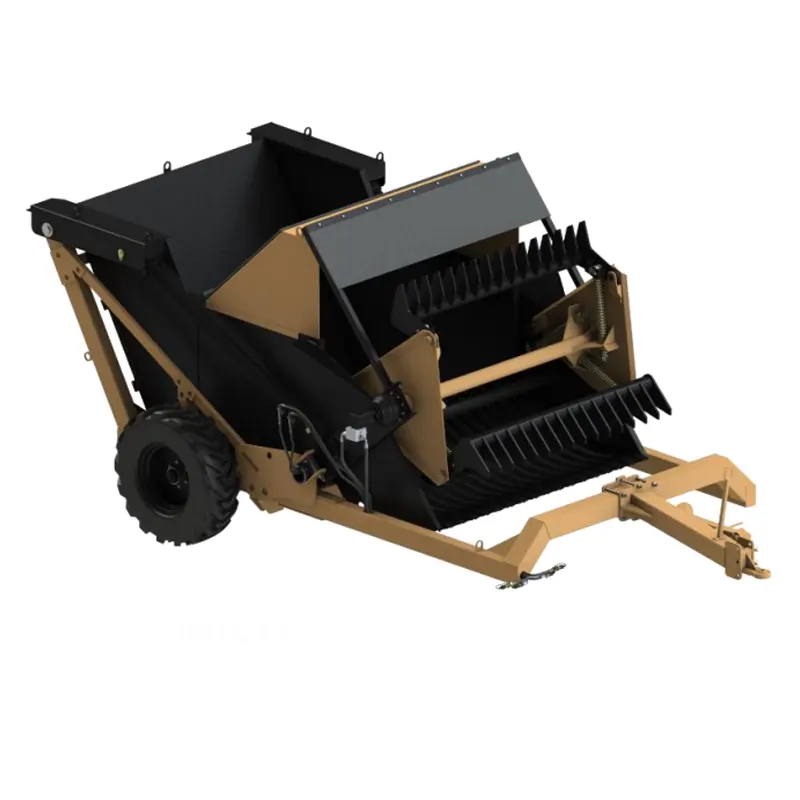
La última pasada de la EP-AWB-1600 completa la temporada de cosecha, pero la gestión del campo no termina con la cosecha. El estado del campo después de la cosecha afecta significativamente el calendario de limpieza de piedras y preparación de primavera de la próxima temporada:
①
Comprobación de la superficie de las piedras después de la cosecha: La reja EP-AWB-1600 a veces desvía pequeñas piedras que antes estaban incrustadas. Recorra el campo después de la cosecha y compruebe si alguna piedra recién salida de la superficie supera el límite de recogida del rastrillo. Si es así, una pasada rápida con el rastrillo EP-EW-4000 antes de la labranza de otoño con el PSW-3200 las elimina antes de que se conviertan en un problema para la primavera siguiente.
②
Plazos de incorporación de Haulm: Los restos de la planta de patata que quedan tras la cosecha mecánica contienen materia orgánica y nutrientes. Incorpórelos al laboreo de otoño con la motoazada PSW-3200 entre 2 y 4 semanas después de la cosecha, antes de que se sequen por completo y resulte difícil cortarlos con las cuchillas. La incorporación temprana inicia la descomposición antes del invierno, liberando nutrientes para la cosecha de la primavera siguiente.
③
Período de liquidación de piedra de otoño: El periodo comprendido entre la finalización de la cosecha (septiembre-octubre) y la congelación del suelo (noviembre-diciembre) es el momento óptimo para la limpieza de piedras THOR en otoño, lo que elimina la necesidad de limpieza completa del calendario primaveral comprimido. Los campos donde el EP-AWB-1600 ha indicado condiciones de piedras más pesadas en la cosecha (debido a eventos de desviación de la reja o profundidad de cosecha irregular) son candidatos prioritarios para la limpieza THOR en otoño antes de que comience el siguiente ciclo de rotación.
El EP-AWB-1600 Por lo tanto, no se trata solo de una cosechadora, sino de un sistema de monitoreo anual del estado del suelo. La experiencia del operador en cada temporada de cosecha (dónde se produjeron contactos con piedras, dónde la profundidad fue inconsistente, qué secciones del campo presentaron la mayor acumulación de material) proporciona la guía más precisa para el programa de limpieza de piedras del año siguiente. Los agricultores coreanos de papa de tierras altas con experiencia consideran la pasada de cosecha como una evaluación anual del campo que influye directamente en el plan de manejo THOR de otoño.
Sistema completo de cosecha de patatas — Corea Watanabe Existencias locales coreanas: La excavadora de patatas EP-AWB-1600 (configuración Kit A, B o C), la cosechadora de sacos grandes EP-CWB-2L y todos sus accesorios están disponibles en Korea Watanabe, en Ansan-si, Gyeonggi-do, con un plazo de entrega estándar de 5 a 10 días hábiles. Ambas máquinas cuentan con la certificación vigente de maquinaria agrícola coreana, lo que les permite optar a la subvención gubernamental 30-50%. Korea Watanabe se encarga de toda la documentación necesaria para la solicitud. Contáctenos en enero para confirmar la configuración e iniciar el proceso de solicitud de la subvención antes de la siembra de primavera y la temporada de cultivo de verano, que precede a la cosecha de agosto.
Planificación logística de la cosecha: el sistema de tres vehículos para una cobertura diaria eficiente.
La tasa de cosecha de 3 a 5 ha/día de la EP-AWB-1600 genera un volumen de recolección diario significativo, generalmente de 90 a 150 toneladas de papas en un campo con un rendimiento de 30 t/ha. Planificar la logística de recolección para que coincida con esta tasa evita la ineficiencia más común en la cosecha en las tierras altas de Corea: la excavadora detenida, esperando la recolección. Un enfoque estructurado de tres vehículos maximiza el tiempo productivo de campo de la EP-AWB-1600.
Este sistema de tres vehículos mantiene al EP-AWB-1600 en movimiento continuo; su factor limitante es la velocidad de avance y la tolerancia a los daños en los tubérculos, no la capacidad de recolección. Los agricultores de las tierras altas coreanas que han implementado este sistema logístico reportan una mejora de 25 a 401 TP5T en el área cosechada diariamente en comparación con operar la excavadora con un solo vehículo recolector y esperar a que regrese después de cada carga.
Protección de la calidad de los tubérculos: cómo la eliminación de piedras reduce los daños durante la cosecha.
La relación entre la calidad de la limpieza de piedras y la tasa de magulladuras en los tubérculos después de la cosecha es directa y cuantificable. Las magulladuras se producen cuando los tubérculos individuales reciben un impacto mecánico que supera el límite elástico de la pared celular de la papa; este es el punto en el que se produce el daño celular, lo que genera la decoloración marrón debajo de la piel que reduce la clasificación de Grado 1 y acelera el deterioro durante el almacenamiento. Los campos libres de piedras reducen las magulladuras mediante tres mecanismos:
Mecanismo 1: Sin contacto entre la piedra y el tubérculo
En campos despejados de piedras, la cosechadora EP-AWB-1600 levanta la tierra y los tubérculos sin que fragmentos de piedra entren en el flujo de tierra. La ausencia de superficies de piedra dura en el material levantado significa que no hay impactos de alta energía entre tubérculos y piedras en la zona del separador de malla. Esto elimina la categoría de magulladura más severa: la magulladura por impacto directo por contacto con piedras que produce grandes áreas de color marrón oscuro que afectan una proporción significativa de la superficie del tubérculo.
Mecanismo 2: Viajes compartidos consistentes
La desviación de la reja al chocar con las piedras en campos sin limpiar produce cambios bruscos de profundidad y breves desaceleraciones que lanzan los tubérculos contra la malla a una velocidad superior a la prevista. El desplazamiento constante de la reja sobre suelos limpios de piedras mantiene los tubérculos en un flujo constante y predecible a través del separador de malla, lo que reduce la variabilidad de velocidad que produce magulladuras incluso sin contacto con las piedras.
Mecanismo 3: Flujo libre del separador de banda
Un flujo de tierra limpio y libre de piedras permite que la cinta vibratoria funcione con una eficiencia de separación óptima: los tubérculos fluyen suavemente a través de la cinta sin obstrucciones. La acumulación de piedras en la cinta (proveniente de campos sin limpiar) crea zonas de congestión localizadas donde los tubérculos se amontonan y entran en contacto entre sí a alta velocidad, lo que produce magulladuras entre tubérculos, además de las causadas por el contacto con las piedras.
Estudios realizados en las tierras altas de Corea demuestran consistentemente que la cosecha de papa en campos despejados de piedras produce tasas de magulladuras entre 15 y 301 TP5T menores que la cosecha en campos sin despejar, a la misma velocidad de trabajo y condiciones de humedad del suelo. Para la papa de mercado fresco, donde las magulladuras son un criterio de descalificación de Grado 1, esta diferencia se traduce directamente en que entre 15 y 301 TP5T más de tubérculos de Grado 1 llegan al mercado por cada hectárea cosechada, lo que representa una mejora en los ingresos que complementa los beneficios en rendimiento y grado de la limpieza de piedras descritos en el artículo sobre el retorno de la inversión en la limpieza de piedras.
EP-AWB-1600 Mantenimiento entre temporadas: cómo mantener la preparación para la cosecha
A diferencia de los modelos THOR 2.4 y PSW-3200, que se utilizan intensivamente en primavera, el EP-AWB-1600 opera durante un período de cosecha concentrado entre agosto y septiembre, tras 5 o 6 meses de almacenamiento desde la temporada anterior. El mantenimiento previo a la cosecha, y no solo antes de la primavera, es fundamental, ya que una máquina con un rodamiento defectuoso o una cuchilla desgastada, detectada al inicio de la cosecha, genera un retraso en la reparación durante el período de cosecha, que es más corto que durante el período de almacenamiento invernal, que es menos crítico.
Servicio previo a la cosecha en julio:
Un mes antes de la cosecha: servicio completo de todos los cojinetes (engrasar todos los niples); inspeccionar y reemplazar la reja si está en o por debajo de 60% del nuevo perfil de punta; probar el mecanismo de vibración de la banda; verificar la tensión y el desgaste de la cadena; confirmar el estado de la manguera hidráulica en el elevador Kit B/C.
Durante la cosecha (cada 8 horas):
Engrasar los cojinetes; comprobar si hay daños por impacto de piedras después de cualquier evento de contacto con piedras confirmado; inspeccionar la tensión de la cadena del elevador en el kit B/C.
Preparación para el almacenamiento posterior a la cosecha (octubre):
Lave a presión toda la suciedad de las zonas de la rejilla, la cadena y las rejas; engrase todos los puntos de apoyo; aplique un spray anticorrosión a las rejas; guárdelas en un cobertizo seco. Reemplace cualquier sección de la rejilla o la cadena que presente desgaste durante la cosecha; no comience la siguiente temporada de cosecha sin reemplazar las piezas que mostraron un desgaste excesivo durante la temporada actual.
Preguntas frecuentes
¿En qué se diferencia el rendimiento del EP-AWB-1600 entre terrenos despejados de piedras y terrenos sin despejar?
La diferencia de rendimiento es significativa y medible. En campos despejados de piedras: las rejas se desplazan a través del suelo libre de piedras con resistencia constante, manteniendo una profundidad constante y la integridad de la punta de la reja. Los tubérculos llegan a la cinta vibratoria con una mínima contaminación por piedras en el flujo de suelo; la cinta los separa limpiamente y los tubérculos se acumulan sin daños en el elevador de recolección. En campos sin despejar: las piedras incrustadas desvían la reja intermitentemente, produciendo una profundidad de cosecha variable y contacto entre piedras y tubérculos en la trayectoria de la reja. La cinta vibratoria maneja cargas mixtas de piedras y suelo; los fragmentos de piedra no pueden caer a través de la cinta como las partículas de suelo, acumulándose en ella y reduciendo progresivamente la separación efectiva del suelo. Se requieren paradas manuales periódicas para eliminar la acumulación de piedras de la cinta en campos sin despejar, lo que reduce la cobertura de cosecha diaria en 20–35% en comparación con la operación en campos despejados de piedras.
¿Cuál es el momento recomendado para la destrucción de la maleza antes de la cosecha de EP-AWB-1600?
La destrucción del follaje (eliminación de la vid) debe realizarse 2-3 semanas antes de la fecha de cosecha prevista para permitir el desarrollo de la piel. Métodos de destrucción del follaje: químico (aplicación de herbicida desecante) o mecánico (desbroce con mayales). La desecación química es más rápida y completa: la vid entera muere simultáneamente, lo que desencadena un desarrollo uniforme de la piel en todas las plantas del campo. El desbroce mecánico deja algo de tejido residual que puede retrasar la formación de la piel en algunas conexiones radiculares. Para la papa de siembra certificada de tierras altas coreanas (donde la formación completa de la piel es fundamental), se prefiere encarecidamente la desecación química 2-3 semanas antes de la cosecha. Confirme el momento de la destrucción del follaje con respecto al pronóstico de heladas de 10 días: si se pronostican heladas dentro de los 10 días posteriores a la fecha prevista de destrucción de la vid, acelere el cronograma de destrucción de la vid para que la formación de la piel esté completa antes de posibles daños por heladas.
¿Qué provoca que la red vibratoria se obstruya en los suelos graníticos de las tierras altas de Corea?
La obstrucción de la red en los campos de las tierras altas coreanas se debe a tres factores: (1) fragmentos de piedra residuales de campos sin limpiar: los fragmentos de granito de más de 2-3 cm se alojan entre los eslabones de la red y no caen como las partículas de tierra, bloqueando progresivamente la red. (2) Suelo arcilloso-limoso húmedo durante condiciones de cosecha húmedas: los suelos ricos en limo de las tierras altas coreanas se vuelven pegajosos cuando están húmedos, adhiriéndose a las cadenas de la red en lugar de caer. (3) Grandes trozos de materia orgánica de abono verde incorporado o residuos de cultivos en el suelo: el material vegetal parcialmente descompuesto forma tapetes en la superficie de la red. Prevención: limpieza de piedras para eliminar (1); retrasar la cosecha 24-48 horas después de la lluvia para reducir (2); incorporar completamente el abono verde 6+ semanas antes de la cosecha para permitir la descomposición y reducir (3).
¿Puede la EP-AWB-1600 cosechar en pendientes superiores a 10%? ¿Cuáles son las limitaciones operativas?
El EP-AWB-1600 puede cosechar en pendientes de terrazas de tierras altas coreanas de hasta aproximadamente 15%. Por encima de esta pendiente, el ángulo de corte de la reja con respecto a la horizontal cambia lo suficiente como para afectar la extracción completa de los tubérculos; en pasadas de cosecha cuesta arriba pronunciadas, el ángulo de la reja puede dejar tubérculos más profundos en el suelo. Además, el ángulo de descarga del elevador de recolección y la geometría del elevador Kit B/C están diseñados para operar en terreno llano; una pendiente excesiva puede afectar la suavidad del flujo de tubérculos a través del sistema de recolección. Para cosechar en pendientes superiores a 12–15%, coseche a lo largo del contorno de la pendiente (a través en lugar de arriba y abajo) donde la pendiente lateral presenta desafíos de ángulo de cosecha más bajos, al tiempo que confirma que la estabilidad de la pendiente lateral del tractor permite una operación transversal segura con el peso combinado del EP-AWB-1600.
¿Cuál es el programa de mantenimiento para las acciones EP-AWB-1600 entre temporadas?
Las rejas EP-AWB-1600 son piezas de alto desgaste que deben inspeccionarse antes de cada sesión de cosecha y reemplazarse al final de cada temporada si el desgaste es significativo. Los indicadores de desgaste de las rejas son: reducción del filo de la punta de corte (mayor fuerza de tracción en el mismo suelo), redondeo o astillamiento visible de la punta, o cualquier grieta en el cuerpo de la reja por impacto de piedras. En campos despejados de piedras, el desgaste de las rejas se debe principalmente a la abrasión del suelo, lo que generalmente requiere su reemplazo cada 1-2 temporadas a una escala de 5-15 ha/temporada. En campos sin despejar, los impactos de piedras aceleran significativamente el desgaste de las rejas; puede ser necesario reemplazarlas a mitad de temporada en campos sin despejar con mucha piedra. Korea Watanabe dispone de juegos de rejas de repuesto para la EP-AWB-1600 en stock local coreano. Solicite las rejas de repuesto en enero antes de la temporada para garantizar la entrega antes del período de cosecha de agosto-septiembre.
Sistema de cosecha de patatas: EP-AWB-1600 o EP-CWB-2L para su cadena de suministro.
Mercado objetivo (mercado de productos frescos / procesamiento / semillas) + superficie agrícola (ha) + potencia del tractor existente → Recomendación de selección de kits con orientación para la planificación de la logística de recolección. Corea Watanabe, Ansan-si, Gyeonggi-do.
Editor: Cxm