Koreanische Bergobstplantagen – Apfel- und Birnenbäume in Gyeongsangbuk-do, Zitrusfrüchte und Hallabong auf der Insel Jeju, Kakibäume in Süd-Gyeongsang – weisen eine Gemeinsamkeit auf: Hanglage. Die terrassierten, hügeligen und talwandartigen Lagen, die für optimale Luftzirkulation, Lichteinfall und Temperaturregulierung und damit für den Anbau von Premiumfrüchten günstige Bedingungen schaffen, stellen gleichzeitig eine große Herausforderung für den Einsatz von Traktoranbaugeräten dar. Bei Steigungen von 15–30 m – dem typischen Gefälle in weiten Teilen der koreanischen Obstbaugebiete – stoßen die Standard-Dreipunktaufhängung für Anbaugeräte an ihre Grenzen und werden gefährlich.
Die Kit-Zugstange, die standardmäßig im Lieferumfang enthalten ist THOR 2.4 SteinbrecherDiese Umrüstung der Maschine von Heckanbau auf Frontanbau (Zugvorrichtung) verändert die Fahrphysik am Hang und verbessert so Sicherheit, Traktion und Arbeitsqualität. Dieser Leitfaden erklärt genau, was diese Umrüstung bewirkt – die Mechanik, die praktischen Voraussetzungen und die korrekte Einrichtung.
Die Physik der Anbaugerätemontage mit Heckaufhängung an Hängen
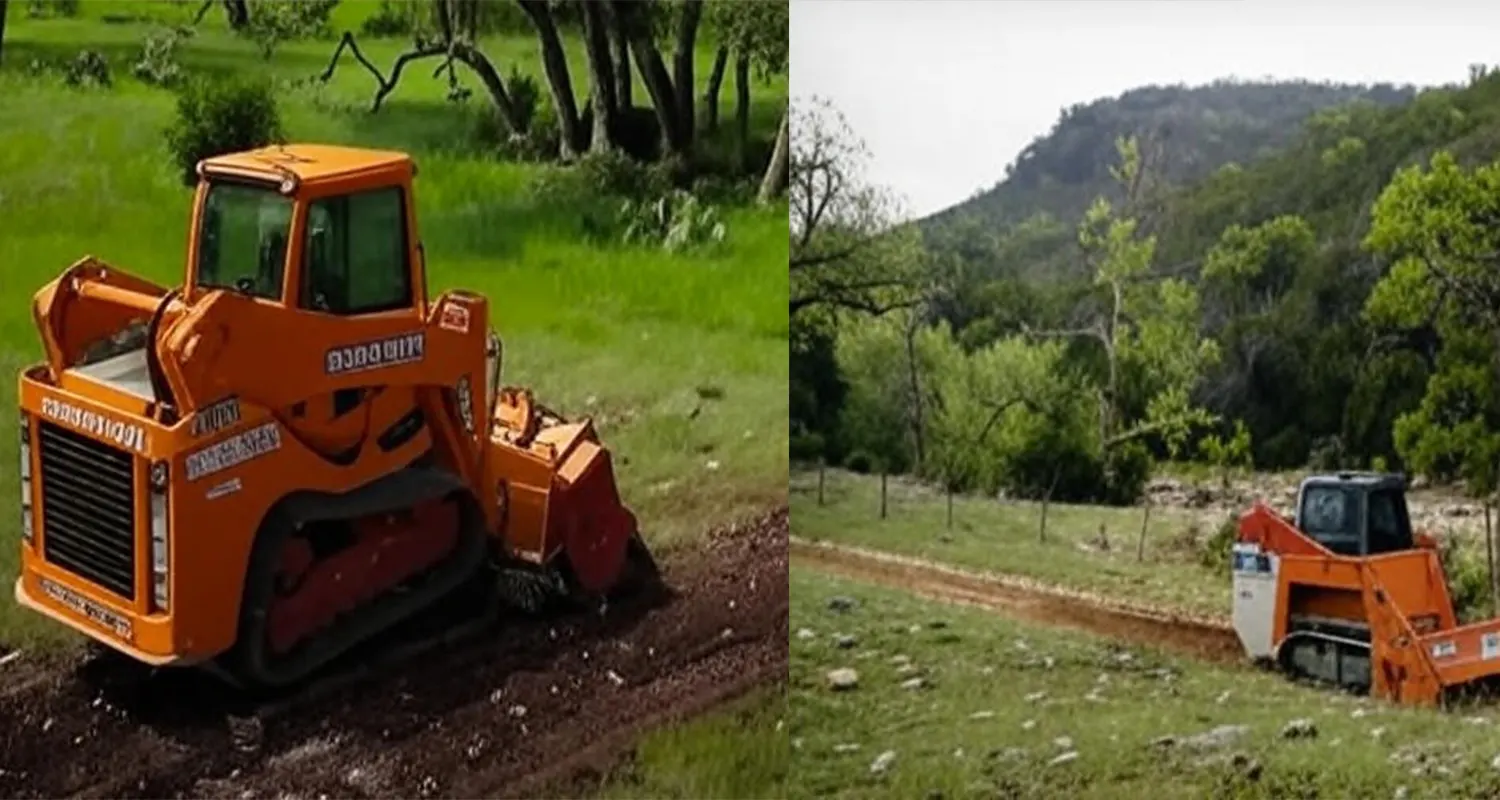
Um zu verstehen, was die Kit-Zugstange bewirkt und warum sie wichtig ist, muss man zunächst das Problem verstehen, das sie löst: die mechanische Instabilität, die durch die Montage von Anbaugeräten an der Heckkupplung an steilen Hängen entsteht.
Der Hebeleffekt der Heckkupplung an Hängen
Ein Traktor ist eine vierrädrige Maschine, die ihre Stabilität durch einen Schwerpunkt innerhalb der Aufstandsfläche ihrer vier Räder gewährleistet. Auf ebener Fläche erhöht das Gewicht eines Heckanbaugeräts die Hinterachslast – dies steigert zwar die Traktion der Hinterräder (im Allgemeinen vorteilhaft), erzeugt aber auch ein Drehmoment um die Hinterachse, das die Vorderräder anheben kann. Moderne Traktoren gleichen dies durch eine Frontballastierung aus, und die Geometrie sorgt dafür, dass der Schwerpunkt innerhalb der Stabilitätsfläche bleibt.
An einem Hang – insbesondere bei Steigungen – verändert sich die Geometrie so, dass dieses Problem noch verstärkt wird. Man stelle sich einen Traktor mit einem 2.300 kg schweren Steinbrecher an der hinteren Dreipunktaufhängung vor, der einen 251 TP5T Hang hinauffährt:
Der Neigungswinkel bewirkt, dass die gesamte Traktor-Maschinen-Kombination nach hinten kippt. Das Gewicht der Maschine, das von ihrem Schwerpunkt nach unten wirkt, hat nun im Vergleich zu ebener Fläche eine größere horizontale Komponente relativ zur Hinterachse des Traktors. Der Hebelarm dieser Kraft – der Abstand vom Gewichtsschwerpunkt der Maschine zum Drehpunkt der Hinterachse – vergrößert sich effektiv mit dem Neigungswinkel.
Die Vorderachse wird zunehmend entlastet. Das Gewicht des Heckanbaugeräts, verstärkt durch die Hanggeometrie, verlagert die Last von der Vorderachse auf die Hinterachse und hebt die Vorderräder mit zunehmendem Hangwinkel immer weiter vom Boden ab. Ab einem bestimmten Hangwinkel – bestimmt durch das Gewicht der Maschine, ihre Position hinter der Hinterachse, den Radstand und die Gewichtsverteilung des Traktors sowie die Frontballastierung – verlieren die Vorderräder den Bodenkontakt.
Lenken wird unmöglich. Ein Traktor, dessen Vorderräder den Bodenkontakt verloren haben, lässt sich nicht lenken – die Lenkung steuert die Vorderräder, die keinen Bodenkontakt mehr haben und somit keine Richtungssteuerung mehr ermöglichen. Der Traktor folgt der Hangrichtung und der Schwerkraft, nicht den Eingaben des Fahrers.
An einem 251 TP5T steilen Hang in einer Obstplantage mit einem 2.300 kg schweren Steinbrecher an der Heckkrafthebevorrichtung kann dieser Verlust des Vorderradkontakts bereits bei Steigungen auftreten, die im normalen Betriebsbereich koreanischer Bergobstplantagen liegen. Koreanische Bergobstbauern hatten genau dieses Problem vor der Einführung der Kit Drawbar-Lösung: Traktoren, die zwischen den Obstbaumreihen an Hängen mit über 201 TP5T steil arbeiteten und schwere Anbaugeräte an der Heckkrafthebevorrichtung trugen, litten unter dem Abheben der Vorderachse, Traktionsverlust und Richtungsverlust. Genau dieses Problem wurde mit der Kit Drawbar-Lösung behoben.
Wie die Zugstange des Bausatzes die Gewichtsverteilung verändert
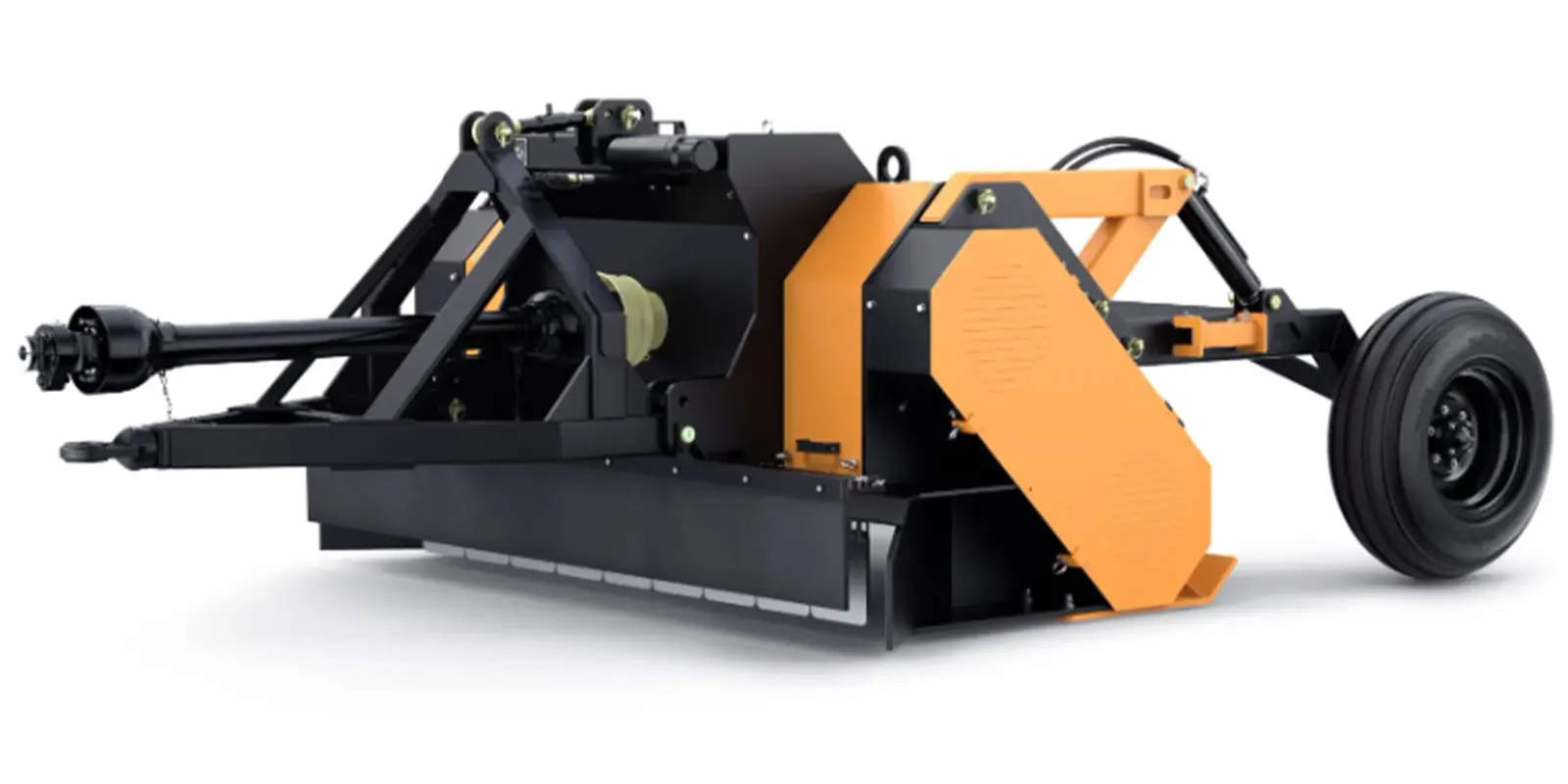
Das Zugstangen-Kit rüstet den THOR 2.4 von der Heckdreipunktaufhängung auf Frontzug (mit Zugstange) um. Dabei ragt eine Zugstange vom vorderen Rahmen des THOR 2.4 hervor und verbindet sich mit dem hinteren Zugstangenhaken des Traktors – dem festen Befestigungspunkt, der sich etwa auf Höhe der Hinterachse befindet. Der Steinbrecher wird nun in Fahrtrichtung vor (und nicht mehr dahinter und darüber) der Hinterachse gezogen.
Der mechanische Wandel und seine Folgen
Bei der standardmäßigen Dreipunktaufhängung hinten ist die Maschine über die Aufhängung oberhalb und hinter der Hinterachse aufgehängt. Das Gewicht der Maschine erzeugt ein Drehmoment um die Hinterachse, das die Vorderachse anhebt.
In der Zugkonfiguration mit Zugvorrichtung ist die Maschine etwa auf Höhe der Hinterachse mit dem hinteren Zughaken verbunden. Das Gewicht der Maschine wirkt nun vertikal nach unten, und zwar von einem Punkt etwa auf Höhe der Hinterachse – nicht dahinter. Der Hebelarm des Maschinengewichts relativ zur Hinterachse wird dadurch deutlich reduziert. Anstelle eines großen nach hinten gerichteten Hubmoments wirkt das Maschinengewicht nun überwiegend als vertikale Last auf die Hinterachse und drückt die Hinterreifen in den Boden, ohne dass es zu einem Anhebungseffekt an der Vorderachse kommt.
Das Maschinengewicht von 2.300 kg, das in der Heckkupplungskonfiguration die Vorderachse anhob, drückt nun in der Zugkonfiguration beide Hinterreifen fester nach unten, während der Bodenkontakt der Vorderachse erhalten bleibt. Die praktischen Auswirkungen dieser Gewichtsverlagerung an Steigungen über 201 TP5T:
Vorderachse bleibt auf dem Boden
Der Traktor behält seine volle Lenkkontrolle bei allen Arbeitsneigungen bis zur maximalen Steigungsgrenze der Zugvorrichtung. Der Fahrer kann die Maschine präzise zwischen den Obstbaumreihen, entlang der Feldgrenzen und um Hindernisse herum steuern, ohne den durch die Vorderachs-Liftung bedingten Richtungsverlust in Kauf nehmen zu müssen.
Traktion der Hinterreifen erhalten
Die Hinterreifen bleiben fest am Hang angepresst. An steilen Hängen in koreanischen Bergobstplantagen, wo bei Heckkrafthebern Schlupf an den Hinterrädern droht (weil ein Teil der Achslast zum Anheben der Vorderachse anstatt zum Drücken der Hinterachse verwendet wird), sorgt der Zugmodus für eine gleichmäßige Traktion der Hinterräder und damit für kontinuierliches Vorankommen.
Reduziertes Gesamtrollrisiko
Die Seitenstabilität (Widerstand gegen seitliches Umkippen auf quer geneigten Abschnitten) wird ebenfalls verbessert, da der kombinierte Schwerpunkt des Traktor-Maschinen-Systems im Zugbetrieb niedriger ist als im Heckkupplungsbetrieb – das Gewicht der Maschine wirkt in der Nähe der Hinterachse anstatt hoch und dahinter, wodurch der effektive Schwerpunkt des kombinierten Systems gesenkt wird.
Aufbau der Zugstange des Kits – Was der Umbau beinhaltet
Die Zugstange ist bei jedem THOR 2.4 ohne Aufpreis enthalten – sie gehört zur Standardausstattung und ist keine optionale Aufrüstung. Laut Watanabe dauert der Umbau von der standardmäßigen Dreipunktaufhängung hinten auf den Zugmodus weniger als 10 Minuten und erfordert kein Werkzeug. Der Umbau umfasst Folgendes:
Trennen der Dreipunktaufhängung: Die unteren Lenkerarme der Dreipunktaufhängung des Traktors sind von den Befestigungspunkten der Dreipunktaufhängung des THOR 2.4 getrennt. Der Oberlenker (Positionssteuerung) ist ebenfalls getrennt.
Anbringen der Zugstangenverbindung des Kits: Die Zugstange des Kits – ein struktureller Zugstangenrahmen, der sich von der Vorderseite des Hauptrahmens des THOR 2.4 erstreckt – ist über eine Bolzenverbindung mit dem hinteren Zughaken des Traktors verbunden. Der Steinbrecher hängt nun hinter dem Traktor, etwa auf Höhe der Hinterachse, anstatt an den oberen Anhängepunkten aufgehängt zu sein.
Bodenstützeneinstellung: Im Zugbetrieb fährt der THOR 2.4 auf seinen eigenen Stützkufen und den Hinterrädern der Maschine (sofern vorhanden), anstatt durch die Dreipunktaufhängung vom Boden angehoben zu werden. Der Bodendruck der Maschine verteilt sich auf diese Auflagepunkte – die Überprüfung des korrekten Bodenkontakts vor Arbeitsbeginn ist Teil der Einrichtungsprüfung im Zugbetrieb.
Überprüfung des Zapfwellenwinkels: Im Zugbetrieb ändert sich die Geometrie der Zapfwelle zwischen Traktor und Maschine im Vergleich zum Heckanbau. Vergewissern Sie sich vor dem Einschalten der Zapfwelle, dass die Winkel der Kreuzgelenke der Zapfwelle im zulässigen Bereich (typischerweise ±15° von der Parallelstellung) in der aktuellen Zugbetriebsposition liegen. Ein zu großer Wellenwinkel verursacht Vibrationen und beschleunigten Verschleiß der Kreuzgelenke.
Betrieb im Pull-Modus – Praktische Unterschiede
Beim Übergang vom Heckkupplungs- zum Zugmodus ändern sich einige Betriebsmerkmale:
Wendekreis: Im Heckkupplungsmodus dreht der Steinbrecher zusammen mit dem Traktor auf einem relativ engen Radius. Im Zugbetrieb wird die Maschine gezogen – sie folgt der Traktorspur, benötigt aber einen größeren effektiven Wendekreis, da sie bei engen Kurven weit ausholt (ähnlich einem Anhänger). Koreanische Obstbauern in Bergplantagen berücksichtigen diesen größeren Wendekreis beim Ziehen am Vorgewende, um ausreichend Abstand zu den Bäumen und Begrenzungsanlagen zu gewährleisten.
Umkehren: Anhängegeräte können nicht geradlinig rückwärts gefahren werden – die Maschine würde beim Rückwärtsfahren zum Traktor hin einknicken. Koreanische Fahrer von Anhängegeräten planen ihre Arbeitsabläufe daher so, dass Rückwärtsfahren möglichst selten nötig ist. Typischerweise nutzen sie weite Wendemanöver am Vorgewende, um ohne Rückwärtsfahren zum nächsten Arbeitsgang zurückzukehren. Bei Obstbaumreihen, die für eine weite Wende zu kurz sind, kann ein kurzes Umschalten auf Dreipunktaufhängung für die Wende erforderlich sein.
Tiefensteuerung: Im Heckkraftbetrieb steuert die Hydraulik des Traktors die Arbeitstiefe der Maschine relativ zum Boden. Im Zugbetrieb fährt die Maschine auf ihren eigenen Bodenauflagen – die Arbeitstiefe wird hier durch die Höhenverstellung der Auflagekufen und nicht durch die Hydraulik des Traktors geregelt. Die korrekte Einstellung der Arbeitstiefe ist Teil der Einrichtung im Zugbetrieb.
Wann man die Anhängerkupplung im Zugmodus und wann die Standard-Heckkupplung verwendet – Leitfaden für die Feldentscheidung
Die Zugstange des Kits ist nicht für jede Anwendung erforderlich – sie ist die Lösung für bestimmte Hangverhältnisse, bei denen der Betrieb mit einer herkömmlichen Heckkupplung unsicher oder unpraktisch ist. Nutzen Sie diese Anleitung, um die für Ihre spezifischen Arbeitsbedingungen geeignete Konfiguration zu ermitteln:
| Feldbedingungen | Heckkupplungsmodus | Zugmodus (Kit-Zugstange) |
|---|---|---|
| Flache bis leichte Steigung (0–10%) | Bevorzugt – einfache, enge Kurven | Nicht erforderlich |
| Mäßige Steigung (10–20%) | Akzeptabel bei ausreichender Ballastierung | Optional – verwenden, wenn eine Fronthebung beobachtet wurde |
| Steilhang (20–30%) — typische koreanische Bergobstgärten | Nicht empfohlen – Risiko durch Frontlift | Für einen sicheren Betrieb erforderlich |
| Sehr steiler Hang (oberhalb von 30%) | Gefährlich – nicht verwenden | Mit Vorsicht verwenden; Traktorspezifikationen prüfen. |
| Enge Reihenabstände (2–4 m Achsabstand) | Bevorzugt – enge Wendekreise am Vorgewende | Möglich, aber größerer Wendekreis erforderlich |
| Lange gerade Abschnitte, Feldwege | Bei leichten Benotungen entweder akzeptabel. | Bevorzugt auf Pisten – weniger Kurven |
Bedingungen in koreanischen Obstplantagen und Bergbauernhöfen, die den Zugmodus erfordern
Apfel- und Birnenplantagen — Gyeongsangbuk-do
Die wichtigsten Apfel- und Birnenanbaugebiete von Gyeongsangbuk-do – Cheongdo-gun, Yeongcheon-si, Gunwi-gun und Uiseong-gun – erstrecken sich über die unteren Hänge und Talwände der Gebirgszüge Taebaek und Sobaek. Kommerzielle Apfelplantagen in Cheongdo-gun werden typischerweise an Hängen mit einer Neigung von 15–30 m angelegt und sind für maximale Sonneneinstrahlung nach Süden oder Südosten ausgerichtet. Der Reihenabstand von 3,5–4,5 m ermöglicht die Entwicklung der Baumkronen und den Einsatz von Geräten zur Plantagenpflege, lässt jedoch an steileren Abschnitten nur wenig Platz für Räumgeräte.
Obstbauern in dieser Region, die den THOR 2.4 zur Steinräumung und zur Pflege der Baumreihenvegetation einsetzen, berichten übereinstimmend, dass Hänge über 201 TP5T den Zugbetrieb mit Heckkupplung sowohl für die Sicherheit als auch für eine optimale Arbeitsqualität erfordern. Unterhalb von 201 TP5T ist der Heckkupplungsbetrieb mit entsprechender Frontballastierung machbar. Oberhalb von 201 TP5T ist der Zugbetrieb zwingend erforderlich – die durch den Heckkupplungsbetrieb verursachte Anhebung der Vorderachse an steileren Abschnitten reduziert die Lenkpräzision in engen Reihen auf ein inakzeptables Maß.
Zitrus- und Hallabong-Farmen – Insel Jeju
Die Topographie der Insel Jeju wird vom Vulkankegel des Hallasan und den umliegenden, aus Basalt entstandenen landwirtschaftlichen Ebenen und unteren Hängen geprägt. Der Zitrusanbau auf Jeju konzentriert sich hauptsächlich auf die sanften bis mäßig steilen Hänge der unteren Inselflanken – typischerweise mit einem Gefälle von 5–201°T und 5°C – und weniger auf die steileren oberen Hänge. Für die meisten Zitrusbetriebe auf Jeju ist der Einsatz eines Heckanbau-Steinbrechers mit ausreichender Frontballastierung in Abschnitten unterhalb von 201°T und 5°C geeignet.
Die Basaltoberfläche selbst stellt jedoch eine zusätzliche Herausforderung auf Jeju dar. Jeju-Basalt ist deutlich härter und abrasiver als Granit vom koreanischen Festland – die anhaltende Gesteinszerkleinerung unter den Bedingungen des Jeju-Basalts erzeugt eine höhere thermische Belastung für das ölgekühlte Getriebe des THOR als im weicheren Granit des Festlandes. Für die Betreiber auf Jeju, die im Juli und August (der heißen Jahreszeit, die mit dem jährlichen Basalt-Räumungszyklus zusammenfällt) lange Räumungsarbeiten durchführen, bietet das Ölkühlsystem des THOR die Betriebskontinuität, die Konkurrenzmaschinen ohne eigene Kühlung in dieser anspruchsvollen Kombination aus hartem Gestein und hohen Umgebungstemperaturen nicht erreichen können.
Zufahrtsstraßen zu Bergfarmen — Gangwon-do
Der Bau und die Instandhaltung von Zufahrtsstraßen zu landwirtschaftlichen Betrieben im Hochland von Gangwon-do – die die Apfel-, Birnen- und Kartoffelfarmen der Bezirke Pyeongchang-gun, Hoengseong-gun und Inje-gun versorgen – ist der dritte große Anwendungsbereich, in dem die Zugkraft des Kit Drawbar-Systems echte operative Vorteile bietet. Die Bergzufahrtsstraßen in diesen Gebieten weisen regelmäßig Steigungen von 15–251 t/5 t auf, mit gelegentlich steileren Serpentinenabschnitten bis zu 301 t/5 t.
Im Zugbetrieb beim Bau von Bergstraßen fungiert der THOR 2.4 als Anhängegerät: Der Traktor zieht ihn den Hang hinauf, während der Rotor die Straßenoberfläche bearbeitet. Da das Maschinengewicht über die Zugstange nahe der Hinterachse und nicht über die Dreipunktaufhängung getragen wird, kann der Traktor seine volle Achskraft für den Vortrieb am Hang nutzen, anstatt das Gewicht des Heckanbaugeräts zu tragen. Koreanische Straßenbauunternehmen, die im Hochland-Ackerbau tätig sind, berichten von durchweg besseren und gleichmäßigeren Fortschritten auf steilen Steigungsabschnitten im Zugbetrieb im Vergleich zum Heckanbaubetrieb bei gleichem Gefälle.
Wie sieht es mit dem THOR 3.0 an Hängen aus?
Der THOR 3.0 Steinbrecher Der THOR 3.0 verfügt über das gleiche Zugstangensystem und kann wie der THOR 2.4 im Zugbetrieb an Hängen eingesetzt werden. Aufgrund seiner Arbeitsbreite von 3,0 m ist er jedoch für viele Anwendungen in koreanischen Bergobstplantagen zwischen den Reihen ungeeignet, da der Reihenabstand dort 3,5–4,0 m beträgt – unabhängig von der Hangneigung. Die Hangtauglichkeit des THOR 3.0 ist vor allem für den Bau von Wegen auf Bergbauernhöfen und für großflächige Rodungsarbeiten an offenen Hängen relevant, wo die Arbeitsbreite von 3,0 m nicht durch den Reihenabstand eingeschränkt ist. Für Arbeiten zwischen den Reihen in Obstplantagen und auf schmalen Bergterrassen ist der THOR 2.4 unabhängig vom Hanggefälle das geeignete Modell.
Für leichtere Steinlasten – Der Steinharken EP-EW-4000 als Alternative
Nicht jede Hanglage in koreanischen Bergobstplantagen erfordert die volle Brechkraft des THOR 2.4. Auf etablierten Obstplantagen, wo jährliche Frosthebungen hauptsächlich kleine Oberflächensteine unter 30–40 kg erzeugen und keine großen eingebetteten Felsblöcke vorhanden sind, ist der THOR 2.4 ausreichend. EP-EW-4000 Steinrechen (Mindestleistung 75 PS, 3,6 m Arbeitsbreite, Kat. 2 Anhängevorrichtung, 540 U/min Zapfwelle) bietet eine effektive und kostengünstige Lösung für das Steinmanagement. Der Steinrechen kehrt Oberflächensteine zu Haufen zusammen, ohne sie zu zerkleinern. So können die Steine direkt am Haufen mit einem Steinsammler oder von Hand eingesammelt werden, anstatt sie vor Ort zu verarbeiten.
Der Steinrechen arbeitet mit 75 PS – etwa so viel wie der Traktor für Kartoffelfurchenzieher und -pflanzmaschine des Betriebs – und kann daher mit dem vorhandenen Traktor genutzt werden, anstatt eine Maschine mit über 180 PS zu benötigen. Bei den jährlichen Wartungsdurchfahrten in bestehenden Obstplantagen, in denen die grobe Steinentfernung bereits vom THOR 2.4 erledigt wurde, ist der Steinrechen ein kostengünstiges Gerät für die jährliche Pflege. Der THOR 2.4 dient der groben Steinentfernung; der Steinrechen wird für die jährliche Pflege eingesetzt, sobald die großen Steine entfernt sind.
Häufig gestellte Fragen – Zugstangen- und Schrägenbetrieb
Ist die Zugstange im Lieferumfang des THOR 2.4 enthalten oder muss sie separat erworben werden?
Die Zugvorrichtung ist bei jedem THOR 2.4, der bei Korea Watanabe gekauft wird, serienmäßig enthalten – sie ist weder optional noch als Zubehörset erhältlich und kostet keinen Aufpreis. Jeder THOR 2.4, der ab Lager Korea Watanabe ausgeliefert wird, verfügt serienmäßig über die Zugvorrichtung. Ob Sie den Zugmodus oder den Standard-Heckantrieb nutzen, hängt von den Gegebenheiten auf Ihrem Feld ab – beide Optionen stehen Ihnen bei jedem THOR 2.4 von Anfang an zur Verfügung.
Welche maximale Steigfähigkeit hat der THOR 2.4 im Zugmodus?
Der Zugmodus des Kits ist für Steigungen bis ca. 35° (entspricht ca. 70% Steigung) ausgelegt. Im Standard-Heckkupplungsmodus liegt die für die meisten koreanischen Fahrer sichere Steigung bei 25–30°. Bei Steigungen über 35° erhöhen sich in beiden Konfigurationen die Stabilität des Traktors und das Risiko von Bodenerosion deutlich. Beachten Sie die Angaben in der Bedienungsanleitung Ihres Traktors zur zulässigen Steigfähigkeit und die Richtlinien des Traktorherstellers zur maximalen Steigung für optimale Stabilität. Die Stabilität des Traktors an steilen Hängen hängt vom gesamten Traktor-Maschinen-System und den Bodenverhältnissen ab – ein fester, trockener Untergrund bietet andere Stabilitätseigenschaften als ein nasser Untergrund bei gleichem Gefälle.
Ist die Umstellung auf Zugmodus für eine einzelne Bedienperson sicher durchführbar?
Ja – Watanabe beschreibt den Umbau der Zugstange als „praktische und schnelle Arbeit“, die weniger als 10 Minuten dauert. Der Umbau ist so konzipiert, dass er von einem einzelnen Traktorfahrer direkt auf dem Feld ohne Spezialwerkzeug durchgeführt werden kann. Die Bolzenverbindungen zwischen der Zugstange und dem hinteren Zughaken des Traktors sind Standardverbindungen für landwirtschaftliche Anbaugeräte, die Traktorfahrer in Korea routinemäßig mit allen Arten von Anbaugeräten handhaben. Die wichtigsten Prüfungen bei jedem Aufbau: Sicherstellen, dass der Zugstangenbolzen vollständig eingerastet und verriegelt ist; überprüfen, ob der Zapfwellenwinkel im Zugbetrieb innerhalb des zulässigen Bereichs liegt; und prüfen, ob die Bodenstützkufen der Maschine vor dem Einschalten der Zapfwelle korrekt auf die Arbeitstiefe eingestellt sind.
Kann der THOR 2.4 im Zugmodus an einer Steigung rückwärts gefahren werden?
Das Rückwärtsfahren mit einem gezogenen Anbaugerät erfordert Vorsicht. Beim Rückwärtsfahren mit einem gezogenen Anbaugerät besteht die Gefahr, dass das Gerät seitlich ausknickt (Klappmesser), es sei denn, Traktor und Anbaugerät sind perfekt ausgerichtet und die Rückwärtsgeschwindigkeit ist sehr gering. Am Hang ist das Rückwärtsfahren mit dem THOR 2.4 im Zugmodus besonders unratsam. Das Gewicht der Maschine und die Hangneigung erzeugen Kräfte, die selbst bei langsamer Rückwärtsfahrt ein seitliches Ausschwingen der Maschine verursachen können. Koreanische Traktorfahrer planen ihre Arbeitsabläufe im Zugmodus so, dass Rückwärtsfahren vermieden wird: Sie fahren in der Regel eine volle Vorwärtsfahrt und wenden dann am Vorgewende weit vorwärts, um zur nächsten Reihe zurückzukehren, anstatt am Reihenende rückwärts zu fahren. Sollte ein Rückwärtsfahren dennoch erforderlich sein, schalten Sie die Maschine nach Möglichkeit vorher wieder in den Dreipunktaufhängungsmodus.
Bieten andere Hersteller von Steinbrechern ein vergleichbares Zugsystem an?
Einige konkurrierende Hersteller von Steinbrechern bieten separate, optionale Zugstangensätze als Zubehör an – im Gegensatz zur Zugstange des THOR 2.4, die zur Standardausstattung gehört. Das mechanische Prinzip ist dasselbe: Die Umstellung von Heckaufhängung auf Zugstangenantrieb verändert die Gewichtsverteilung und verbessert so die Hangstabilität. Für koreanische Käufer liegt der praktische Unterschied in der Kostenstruktur (Standardausstattung vs. optionaler Kauf) und der Verfügbarkeit von lokalem technischem Support für die jeweilige Anwendung. Vergleichen Sie bei Steinbrechern verschiedene Modelle und prüfen Sie, ob das Zugstangensystem des Mitbewerbers zur Standardausstattung gehört oder als optionales Zubehör erhältlich ist. Stellen Sie außerdem sicher, dass lokaler technischer Support für die Einrichtung und bei eventuellen Problemen mit der Zugstangenkonfiguration vor Ort verfügbar ist.
Woran erkenne ich, ob der Hang in meiner Obstplantage den Anhängerbetrieb erfordert oder im Heckkupplungsbetrieb bewältigt werden kann?
Der direkte Test: Beobachten Sie im Heckanbaumodus auf dem steilsten Abschnitt Ihrer Obstplantage den Bodenkontakt der Vorderräder. Wenn Sie ein sichtbares Abheben der Vorderachse feststellen – die Vorderreifen verlieren also den festen Bodenkontakt –, ist der Zugmodus erforderlich. Falls Sie ein Smartphone mit Neigungsmesser-App besitzen, messen Sie die Steigung Ihrer Arbeitsabschnitte: Unter 151 TP5T ist der Heckanbaumodus mit ausreichender Frontballastierung in der Regel sicher; bei 15–201 TP5T ist eine Frontballastierung wichtig und der Zugmodus sollte in Betracht gezogen werden; über 201 TP5T wird der Zugmodus für Hangstabilität und optimale Arbeitsqualität empfohlen. Bei neuen Arbeiten an Hängen, die Sie bisher nicht mit einem Heckanbaugerät bearbeitet haben, empfehlen wir, die Beurteilung im Zugmodus zu beginnen und den Heckanbaumodus nur auf Abschnitten einzusetzen, auf denen Sie sichergestellt haben, dass die Vorderräder während der gesamten Arbeitsfahrt festen Bodenkontakt behalten.
Nennen Sie uns die Hangneigung und den Reihenabstand Ihrer Obstplantage – wir bestätigen die richtige Konfiguration.
Typische Hangneigung + Reihenabstand + Traktorleistung → Konfigurationsempfehlung für den THOR 2.4 mit Zug- oder Heckkraftaufhängung, speziell abgestimmt auf die Bedingungen Ihrer koreanischen Obstplantage oder Ihres Bergbauernhofs. THOR 2.4 mit Zugdeichsel-Kit, ab Lager in Ansan-si, Gyeonggi-do, Korea.
Herausgeber: Cxm