Kiwifruit (Actinidia deliciosa Ve Actinidia chinensis) is commercially cultivated as a woody climbing vine — a liana — rather than a tree or shrub. This botanical classification sets kiwifruit apart from every other crop in this E-series guide and creates a stone management requirement that is structurally unlike any prior application. Where asparagus (E-9) has one stone-sensitive zone, where avocado (E-12) has one drainage argument, where strawberry (E-18) has one depth level, kiwifruit has two independent stone problems operating simultaneously on the same farm, at different depths, through different biological mechanisms, with different commercial consequences.
The first problem is above-ground: surface stone on the orchard floor creates abrasion wounds on kiwifruit canes — the thin-barked, wound-susceptible green wood through which Pseudomonas syringae pv. actinidiae (PSA), the most destructive kiwifruit pathogen in commercial history, enters the vine. The second problem is below-ground: sub-surface stone at 15–35 cm restricts the dense, shallow feeder root mat that determines fruit Dry Matter (DM%) percentage — the primary criterion by which Zespri International, the world’s dominant kiwifruit marketing organisation, assigns premium panel allocation versus process grade. Both problems are addressed by a single pre-establishment clearing programme. Neither is addressed by cultivation, irrigation, or chemical management alone. This guide covers the rock crusher for kiwifruit farm application through both mechanisms, the markets where each is most critical, and the geological contexts that determine machine specification.
Kiwifruit as Liana — The Root Architecture That Connects Two Stone Problems
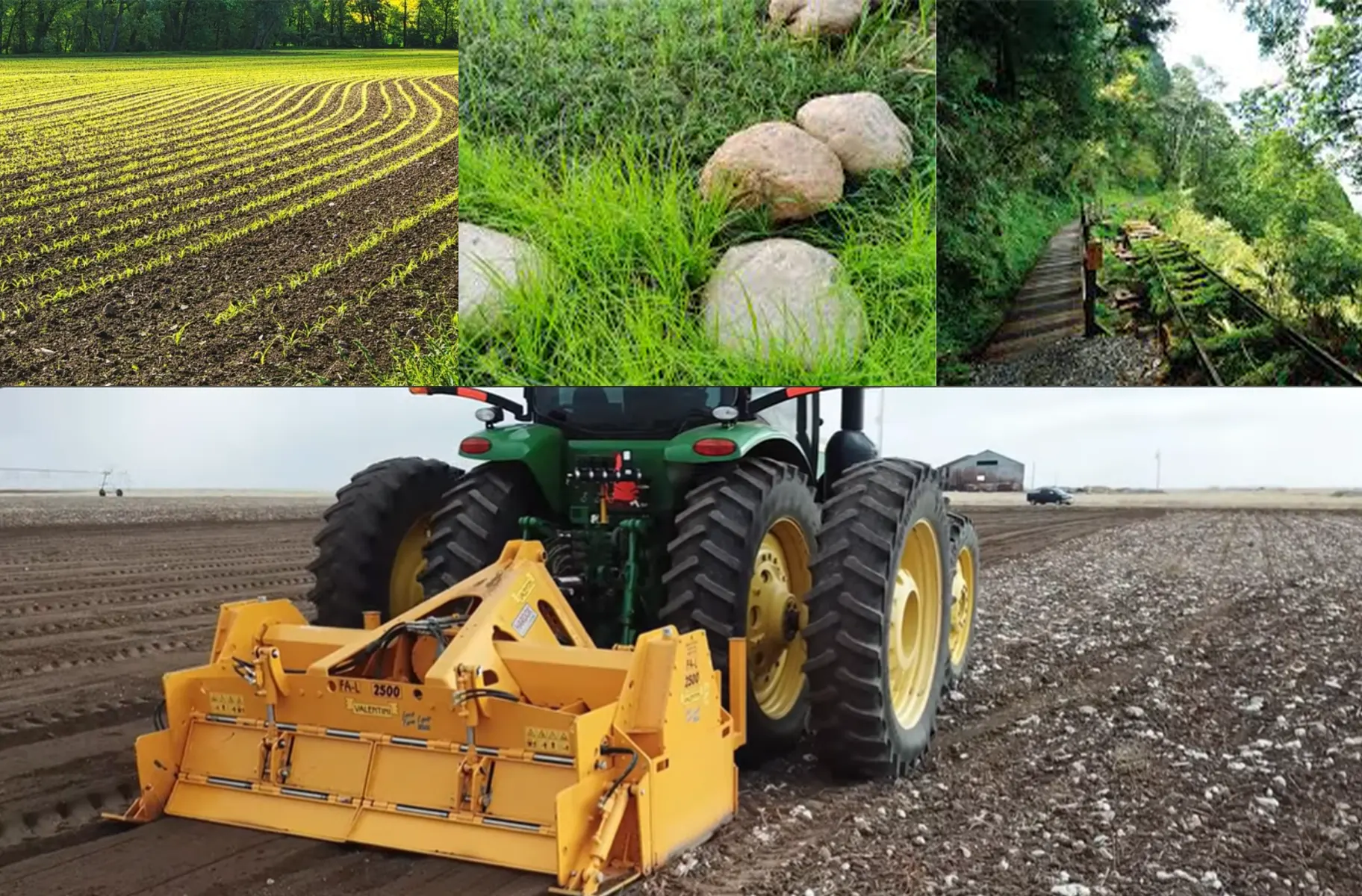
Kiwifruit’s classification as a liana — a woody climbing vine that uses structural support to elevate its canopy — produces a root architecture unlike any tree crop or shrub crop in this series. The kiwifruit vine has neither the deep taproot of walnut (E-15) nor the specialised suckering system of hazelnut (E-14). It has a relatively shallow, extensively branching fibrous root system that superficially resembles avocado (E-12) and blueberry (E-16) in its dependence on the 0–35 cm soil horizon, but differs from both in the specific mechanisms through which stone at this depth affects commercial performance.
The Dual Mechanism — Two Stone Problems, Two Depths, One Clearing Solution
T-Bar and Pergola Trellis — Pole Depth and Stone Obstruction
The trellis system in kiwifruit production creates a third stone management requirement that does not exist for any other crop in this E-series guide — the trellis poles must be driven to 0.6–0.8 m depth, and stone at this depth can deflect or stop pole installation entirely, preventing the trellis construction that is prerequisite to kiwifruit cultivation.
| Trellis system | Yapılandırma | Pole depth | Pole load | Stone risk at pole depth |
|---|---|---|---|---|
| T-bar (double wire) | Central post + cross-arm, two canes per wire | 60–75 cm | Medium — 35–55 Kg/m canopy load | Stone at 60–75 cm stops post driver, requires additional clearing below THOR depth on rocky sites |
| Pergola (overhead) | Full overhead canopy on grid of posts and wires | 70–90 cm | High — 55–80 Kg/m canopy load | Deeper pole requirement + higher canopy load = stone at 70–90 cm critical; Italian pergola standard |
| Tatura (espalier variant) | V-frame with two angled canopy planes | 55–70 cm | Medium — 40–55 Kg/m | Used in some NZ and Australian orchards; pole depth similar to T-bar |
New Zealand — The Pumice Paradox and the Hidden Basalt Below
New Zealand’s Bay of Plenty region — centred on Te Puke, Ōpōtiki, and Tauranga — produces approximately 25% of the world’s premium Zespri-panel kiwifruit and is the origin point of the Zespri brand, the SunGold variety programme, and most of the agronomy research that defines global kiwifruit production standards. It would seem, from first principles, to be a low-stone environment: the Bay of Plenty soils are dominated by Taupo Volcanic Zone pumice — a low-density, highly porous volcanic glass material with very low mechanical strength. Pumice is technically stone, but its extreme porosity and low Mohs hardness (Mohs 5–6) mean that it does not create the hard physical obstruction to roots or drip tape that dense stone types do.
Taupo pumice (Waimihia, Taupo Pumice) at 0–60 cm depth in the Bay of Plenty is essentially non-obstructive to kiwifruit roots and trellis poles alike. Its low bulk density (600–900 Kg/m³ vs 2,600 Kg/m³ for granite) means roots penetrate it freely, poles can be driven through it with a hydraulic post driver, and standard rotary cultivation equipment handles it without issue. NZ Bay of Plenty kiwifruit growers who have never encountered stone in their pumice topsoil may have a false sense of security about their site’s stone profile — the pumice surface conceals the underlying geology.
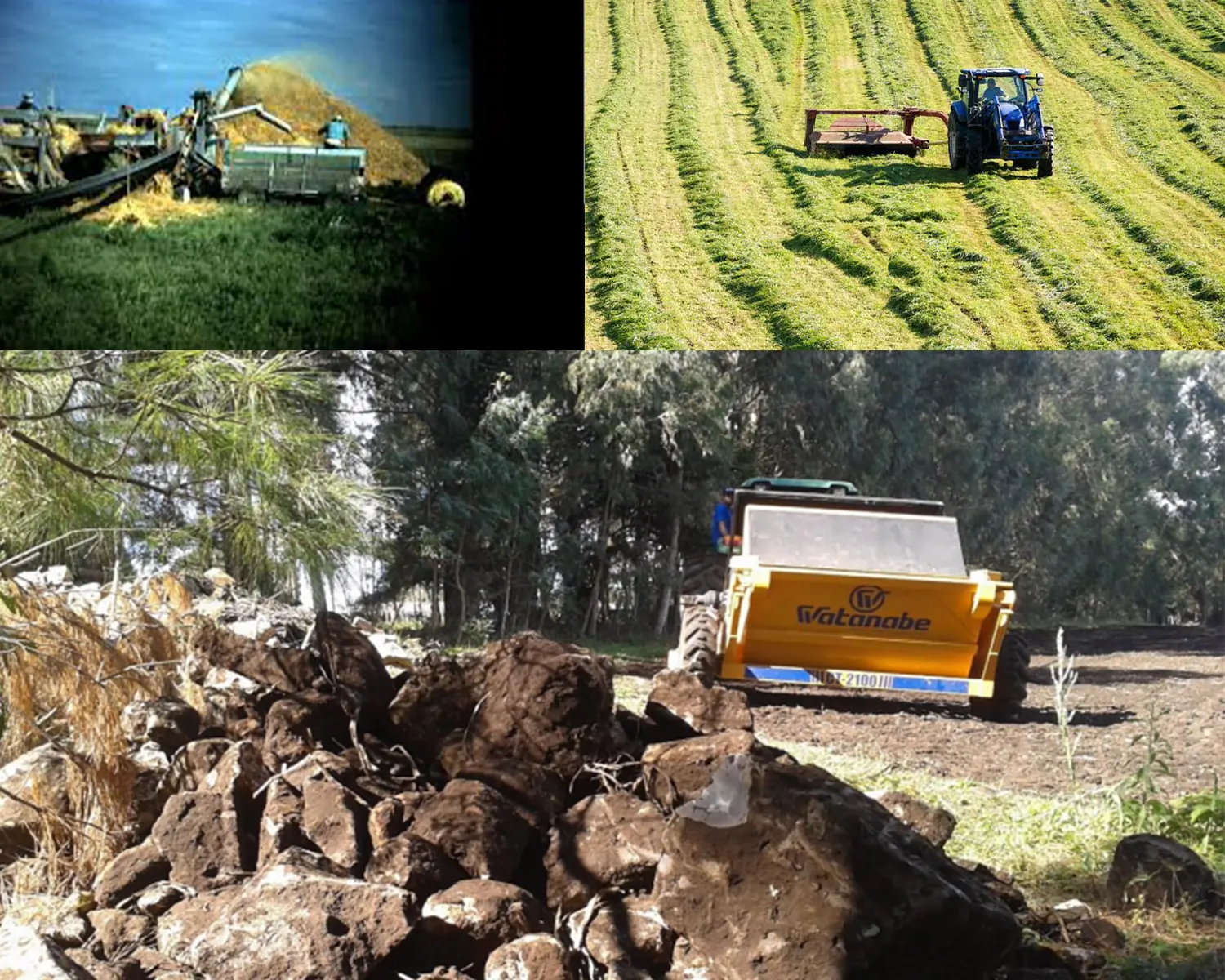
Beneath the pumice cover of the Bay of Plenty, older Coromandel Volcanic Zone basalt and andesite flows and intrusions exist at variable depths — typically encountered at 40–120 cm below the pumice surface. These buried basalt outcrops (Mohs 5–7) are completely invisible from the surface — the pumice provides no indication of what lies beneath. In kiwifruit country, they are discovered in one of three ways: (1) post driver refusal when a pergola post hits buried basalt at 65–80 cm; (2) root probe surveys during orchard due diligence; (3) after establishment, when sections of the orchard show chronically lower DM% than the rest of the block. The buried basalt creates exactly the feeder root restriction problem described in Section 2 — but only in the zones where basalt occurs, creating a non-uniform DM% across what appears to be a homogeneous block.
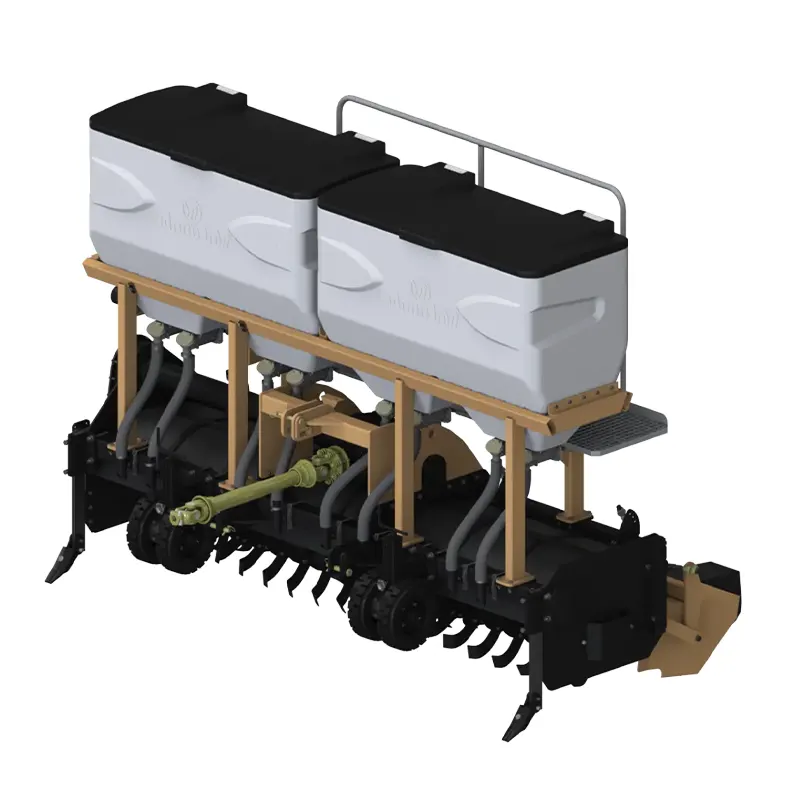
Pre-establishment soil probing at 10 m × 10 m grid to 90 cm is the standard due diligence on NZ Bay of Plenty kiwifruit sites. Where buried basalt is identified at <65 cm: THOR 3.0 (230HP) clearing to the basalt top surface at that zone’s depth, CT-2100 collection, then post driver can proceed. Where basalt is at 65–90 cm: THOR 3.0 at maximum clearing depth (55–60 cm) to fragment accessible basalt; remaining deep basalt addressed by hydraulic rock hammer on post installation sites. Where pumice to 90+ cm (no basalt): standard THOR 2.4 clearing at 35–48 cm for feeder root zone, CT-2100 collection. The BlackBird kaya tırmığı pre-season surface pass removes any pumice surface accumulation and angular material that creates the above-ground PSA wound risk at crown level.
Italy, China and Chile — Three Distinct Geological Profiles
Machine System — Dual-Problem Protocol for Kiwifruit Establishment
Sıkça Sorulan Sorular
Rock crusher for kiwifruit farm — can you verify that PSA genuinely enters through stone abrasion wounds, rather than this being a theoretical connection?
The PSA infection pathway through mechanical wounds is very well established in the scientific literature — the connection to stone abrasion specifically, rather than pruning wounds, is more directly supported by New Zealand and Italian field observations than by peer-reviewed controlled trials. What is established without question: PSA requires a wound entry point in kiwifruit tissue. It cannot penetrate intact bark or leaf epidermis in normal conditions. Any wound — pruning cut, frost crack, insect damage, mechanical abrasion — creates an entry point. NZ Plant and Food Research and the Italian CREA Frutticoltura have both documented that reducing wound density across all categories (not just pruning) measurably reduces PSA establishment rate in orchards under active disease pressure. The stone-abrasion wound category is legitimate within this framework. More directly: NZ Bay of Plenty growers who manage stone-cleared orchards consistently report lower crown wound incidence, and PSA diagnosis rates on cleared sections of their blocks are observationally lower than on adjacent uncleared sections — though a formal randomised controlled trial specifically attributing the difference to stone clearing has not been published at time of writing. The PSA case for stone clearing is therefore grounded in sound wound-biology reasoning backed by field observation, not yet confirmed by double-blind trial.
Does Zespri’s DM% panel allocation system genuinely respond to stone clearing — or do other management factors dominate the DM% outcome?
DM% is a multi-factor outcome — variety choice, vine vigour management, irrigation timing, harvest date, and canopy management all contribute significantly to whether fruit reaches panel DM%. Stone clearing is one contributing factor, not the dominant one. The Italian Bologna University trials that documented 0.9–1.6 DM% improvement on cleared Veneto plots were conducted on matched pairs that controlled for variety, vine age, irrigation, and harvest date — isolating stone clearing as the variable. The 0.9–1.6 DM% improvement translated to a meaningfully different Zespri panel allocation outcome on high-stone sites: on Veneto sites where average DM% was 5.4–5.8% (below the 6.2% Hayward minimum) without clearing, the 0.9–1.6% improvement from clearing moved the block to 6.3–7.4% — consistently above the panel threshold. For orchards already at 6.8–7.2% DM% without clearing, the same stone clearing improvement would move to 7.7–8.8% — above the threshold already, so the improvement is commercial quality within the panel rather than the panel threshold crossing. The stone clearing return is highest for orchards chronically below or near the panel DM% threshold — exactly the high-stone-density sites where clearing is most clearly needed.
Is NZ pumice a stone management concern — or can NZ Bay of Plenty growers skip stone clearing entirely in their naturally low-stone volcanic soils?
For orchards in the Bay of Plenty main zone (Te Puke, Ōpōtiki) where soil survey confirms continuous pumice to at least 80 cm depth with no buried basalt outcrops identified, standard stone clearing is not necessary — the pumice’s low density and porosity means it does not create meaningful root restriction or trellis pole obstruction. The critical qualification is the soil survey requirement: buried basalt outcrops are common enough in the Bay of Plenty volcanic landscape that skipping a pre-establishment probe survey introduces a real risk of discovering basalt at pergola post installation — which then requires hydraulic hammer or specialist rock-drilling equipment at a significantly higher per-post cost than pre-establishment THOR clearing would have been. The pumice surface still warrants annual BlackBird surface pass for the above-ground PSA wound argument — pumice particles are angular when fresh-surfaced (from frost heave or cultivation) and do provide abrasive wound surfaces at crown level. The full THOR clearing investment on confirmed pumice-to-depth sites is optional; the soil survey to confirm pumice depth is mandatory; and the annual BlackBird surface pass for PSA wound reduction is recommended regardless of sub-surface geology.
How does kiwifruit stone clearing interact with the SunGold (G3/G9) replanting programme that NZ and Italian growers are undertaking following Psa-related Hayward losses?
The SunGold (A. chinensis) replanting programme — the industry’s primary response to PSA vulnerability in Hayward — creates an additional stone management consideration because SunGold’s shallower root architecture (primary feeder mat at 6–25 cm vs Hayward’s 8–30 cm) means it encounters stone restriction at shallower depth than Hayward does. A Hayward orchard that managed with moderate stone content at 20–30 cm may have had acceptable DM% outcomes because the Hayward feeder mat at 8–30 cm partly penetrated the stone zone. The same stone density in a replanted SunGold orchard directly restricts the shallower 6–25 cm feeder zone, producing a worse DM% penalty per unit of stone than the prior Hayward planting experienced. This means that NZ and Italian growers converting Hayward blocks to SunGold after PSA losses should assess stone clearing requirements anew — a block that was managed without clearing under Hayward may need clearing under SunGold. The clearing depth for SunGold (30–42 cm) is shallower and less expensive than for Hayward (35–48 cm), but the tolerance for residual stone in the feeder zone is lower — zero-tolerance on stone above 3 cm in the 6–25 cm zone is the appropriate standard for SunGold establishment.
What is the combined financial benefit of addressing both the DM% and PSA stone management problems on a 4-hectare Bay of Plenty kiwifruit block?
For a 4-hectare Hayward orchard in the Bay of Plenty on a site with buried basalt patches affecting 40% of the block and surface stone creating moderate crown wound incidence: Stone clearing investment (THOR 3.0 deep pass on basalt zones + THOR 2.4 general pass + CT-2100 collection + BlackBird annual pass): approximately NZ$12,000–18,000 establishment + NZ$2,000–3,500 annual maintenance. DM% benefit on 40% of block moving from non-panel to panel (10,000 trays total production × 40% = 4,000 trays): 4,000 trays × NZ$1.80 panel premium differential = NZ$7,200 annual DM% benefit. PSA-related vine replacement avoidance: on a 4 ha block with moderate PSA pressure, wound reduction from stone clearing may prevent 2–5% vine losses in any one 5-year window. At NZ$8,000–15,000 per replanted vine (crown + training + lost production): 2–5% of 800 vines = 16–40 vines × NZ$10,000 average = NZ$160,000–400,000 exposure reduction over 10 years. Combined annual equivalent benefit: DM% premium NZ$7,200 + PSA vine loss prevention (NZ$16,000–40,000 per 10 years, annualised) = NZ$8,800–11,200 annual. Against annual programme cost of NZ$2,000–3,500: ROI 2.5:1 to 5.6:1 annually. One-off establishment clearing (NZ$12,000–18,000) against 5-year cumulative benefit: NZ$44,000–56,000. ROI: 2.4:1 to 4.7:1 on the 5-year horizon.
Rock Crusher for Kiwifruit Farm — PSA Wound Reduction and DM% Root Zone Protocol
Kiwifruit variety (Hayward/SunGold) + trellis system (T-bar/pergola) + soil survey results (pumice depth / buried basalt / limestone) + regional geology → Korea Watanabe provides the correct rock crusher for kiwifruit farm dual-mechanism specification, Zespri DM% ROI calculation and PSA wound reduction protocol.
Editör: Cxm