Kiwi (Actinidia deliciosa e Actinidia chinensisO kiwi (E-9) é cultivado comercialmente como uma trepadeira lenhosa — uma liana — em vez de uma árvore ou arbusto. Essa classificação botânica diferencia o kiwi de todas as outras culturas neste guia da série E e cria uma exigência de manejo de caroços estruturalmente diferente de qualquer aplicação anterior. Enquanto o aspargo (E-9) tem uma zona sensível a caroços, o abacate (E-12) tem um problema de drenagem e o morango (E-18) tem um nível de profundidade, o kiwi apresenta dois problemas independentes de caroços operando simultaneamente na mesma propriedade, em diferentes profundidades, por meio de diferentes mecanismos biológicos, com diferentes consequências comerciais.
O primeiro problema está acima do solo: as pedras na superfície do pomar causam abrasões nos ramos do kiwi — a madeira verde de casca fina e suscetível a ferimentos, através da qual Pseudomonas syringae pv. actinídios A PSA (Pseudomonas aeruginosa), o patógeno mais destrutivo da história comercial do kiwi, ataca a videira. O segundo problema está no subsolo: pedras a 15–35 cm de profundidade restringem a densa e superficial rede de raízes alimentadoras que determina a porcentagem de matéria seca (MS) da fruta — o principal critério pelo qual a Zespri International, a principal organização de marketing de kiwi do mundo, define a classificação da fruta como premium ou para processamento. Ambos os problemas são resolvidos por um único programa de limpeza pré-plantio. Nenhum deles é resolvido apenas pelo cultivo, irrigação ou manejo químico. Este guia aborda o britador de pedras para fazenda de kiwis aplicação por meio de ambos os mecanismos, os mercados onde cada um é mais crítico e os contextos geológicos que determinam a especificação da máquina.
Kiwi como liana — A arquitetura radicular que conecta dois problemas de pedra
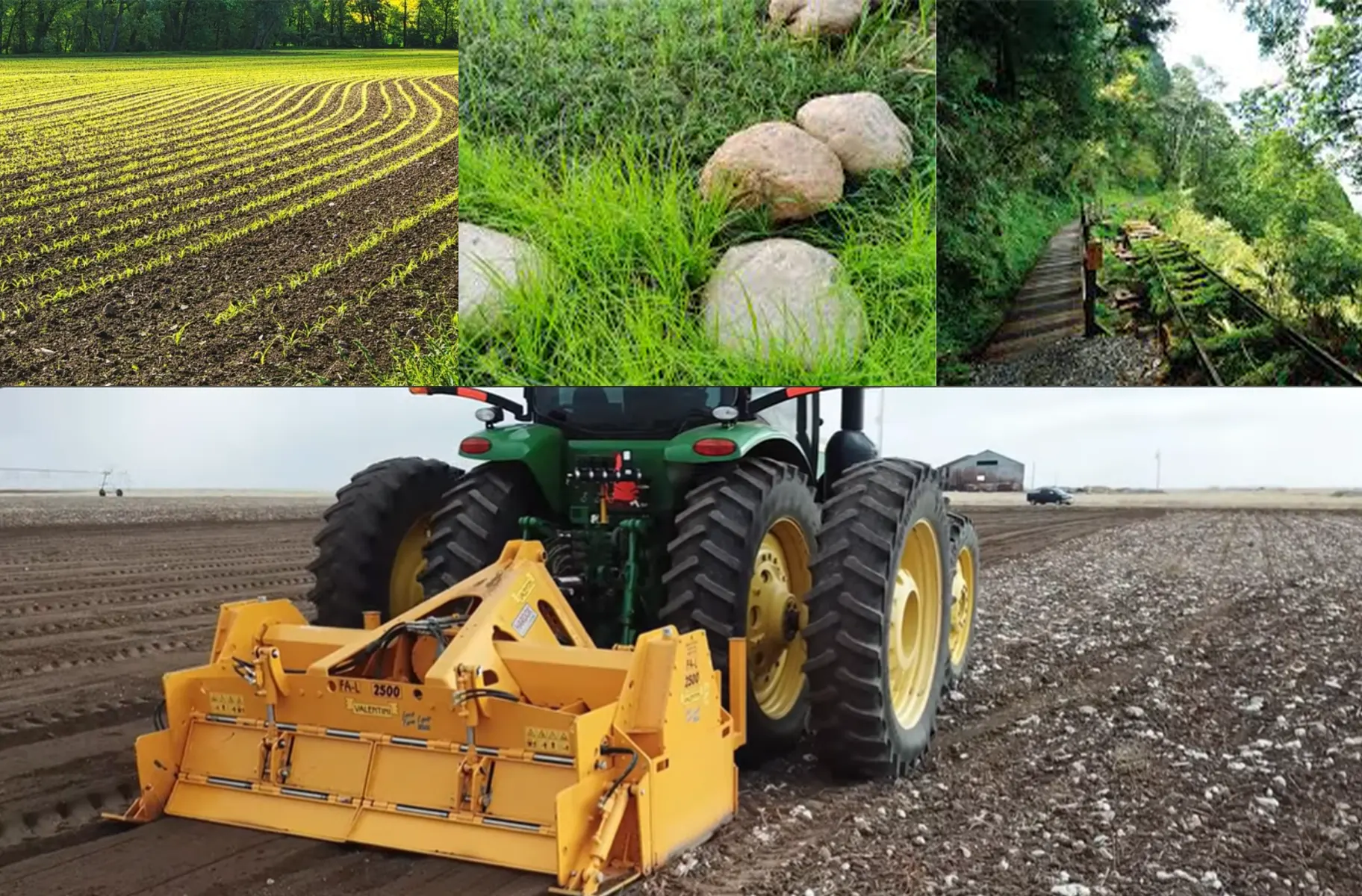
A classificação do kiwi como liana — uma trepadeira lenhosa que utiliza suporte estrutural para elevar sua copa — resulta em uma arquitetura radicular diferente de qualquer outra árvore ou arbusto desta série. A trepadeira do kiwi não possui a raiz pivotante profunda da nogueira (E-15) nem o sistema especializado de brotação da avelã (E-14). Ela apresenta um sistema radicular fibroso relativamente superficial e extensamente ramificado, que se assemelha superficialmente ao abacateiro (E-12) e ao mirtilo (E-16) em sua dependência do horizonte de solo de 0–35 cm, mas difere de ambos nos mecanismos específicos pelos quais a presença de pedras nessa profundidade afeta o desempenho comercial.
O Mecanismo Duplo — Dois Problemas com Pedras, Duas Profundidades, Uma Solução de Limpeza
Pérgola com estrutura em T — Profundidade dos postes e obstrução por pedras
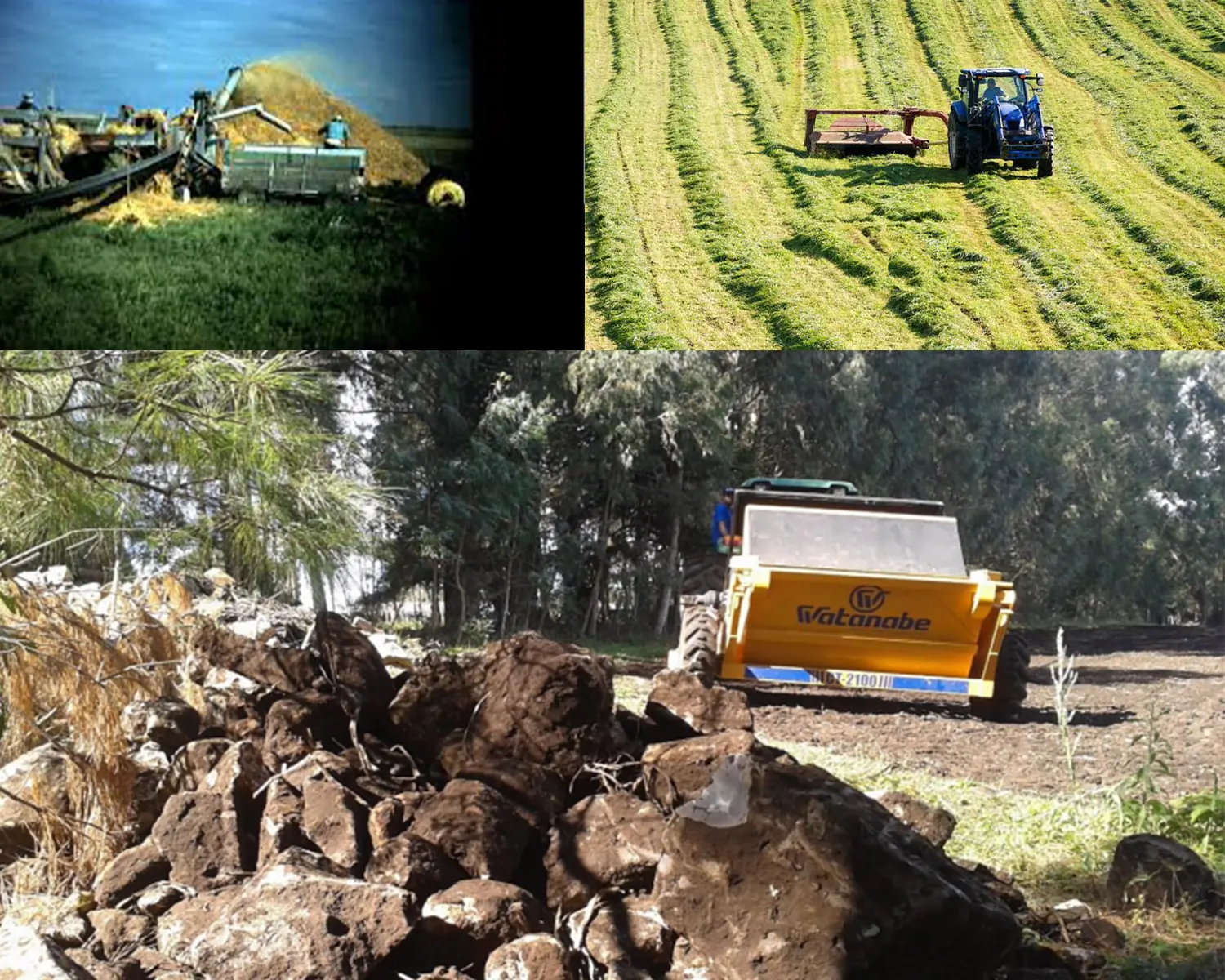
O sistema de treliças na produção de kiwis cria um terceiro requisito de manejo de pedras que não existe para nenhuma outra cultura neste guia da Série E — os postes da treliça devem ser cravados a uma profundidade de 0,6 a 0,8 m, e pedras nessa profundidade podem desviar ou impedir completamente a instalação dos postes, impossibilitando a construção da treliça, que é um pré-requisito para o cultivo de kiwis.
| Sistema de treliça | Configuração | Profundidade do poste | Carga do poste | Risco de pedras na profundidade do poste |
|---|---|---|---|---|
| Barra em T (fio duplo) | Poste central + travessa, duas hastes por fio | 60–75 cm | Médio — Carga da copa de 35 a 55 kg/m² | A pedra a 60-75 cm de profundidade impede a passagem do batedor, exigindo limpeza adicional abaixo da profundidade THOR em locais rochosos. |
| Pérgola (suspensa) | Cobertura completa suspensa em estrutura de postes e fios. | 70–90 cm | Alto — carga da copa de 55 a 80 kg/m² | Exigência de postes mais profundos + maior carga da cobertura = pedra a 70–90 cm é crítica; padrão italiano para pérgolas |
| Tatura (variante de espaldeira) | Estrutura em V com dois planos de cobertura angulares | 55–70 cm | Médio — 40–55 Kg/m | Utilizado em alguns pomares da Nova Zelândia e da Austrália; profundidade da estaca semelhante à da barra em T. |
Nova Zelândia — O paradoxo da pedra-pomes e o basalto oculto abaixo
A região da Baía da Abundância (Bay of Plenty) da Nova Zelândia — centrada em Te Puke, Ōpōtiki e Tauranga — produz aproximadamente 251.000 toneladas do kiwi premium Zespri-panel do mundo e é o ponto de origem da marca Zespri, do programa de variedades SunGold e da maior parte da pesquisa agronômica que define os padrões globais de produção de kiwi. A princípio, parece ser um ambiente com baixa presença de pedras: os solos da Baía da Abundância são dominados por pedra-pomes da Zona Vulcânica de Taupo — um material vítreo vulcânico de baixa densidade e alta porosidade, com baixíssima resistência mecânica. A pedra-pomes é tecnicamente uma pedra, mas sua extrema porosidade e baixa dureza na escala de Mohs (5-6) significam que ela não cria a obstrução física rígida às raízes ou à fita de irrigação por gotejamento que pedras densas costumam criar.
A pedra-pomes de Taupo (Waimihia, Taupo Pumice), a uma profundidade de 0 a 60 cm na Baía de Plenty, não representa qualquer obstáculo para as raízes do kiwi nem para as estacas de suporte. Sua baixa densidade aparente (600–900 kg/m³ contra 2.600 kg/m³ do granito) permite que as raízes a penetrem livremente, que as estacas sejam cravadas com um bate-estacas hidráulico e que equipamentos de cultivo rotativo padrão a processem sem problemas. Os produtores de kiwi da Baía de Plenty, na Nova Zelândia, que nunca encontraram pedras em sua camada superficial de pedra-pomes podem ter uma falsa sensação de segurança quanto ao perfil pedregoso de seu terreno — a superfície de pedra-pomes oculta a geologia subjacente.
Sob a camada de pedra-pomes da Baía de Plenty, existem fluxos e intrusões de basalto e andesito mais antigos da Zona Vulcânica de Coromandel em profundidades variáveis — tipicamente encontrados entre 40 e 120 cm abaixo da superfície da pedra-pomes. Esses afloramentos de basalto enterrados (durabilidade de Mohs 5 a 7) são completamente invisíveis da superfície — a pedra-pomes não fornece nenhuma indicação do que se encontra abaixo. Em regiões produtoras de kiwi, eles são descobertos de três maneiras: (1) quando um poste da pérgola encontra basalto enterrado a 65–80 cm de profundidade; (2) durante levantamentos com sondas radiculares na avaliação prévia do pomar; (3) após o estabelecimento, quando seções do pomar apresentam valores de DM% cronicamente mais baixos do que o restante do bloco. O basalto enterrado cria exatamente o problema de restrição das raízes alimentadoras descrito na Seção 2 — mas apenas nas zonas onde o basalto ocorre, criando um DM% não uniforme em um bloco aparentemente homogêneo.
A sondagem prévia do solo em uma grade de 10 m × 10 m até 90 cm é o procedimento padrão de diligência prévia em áreas de cultivo de kiwi na Baía de Plenty, Nova Zelândia. Quando o basalto enterrado for identificado a menos de 65 cm: limpeza com THOR 3.0 (230 HP) até a superfície do basalto na profundidade dessa zona, coleta com CT-2100 e, em seguida, a instalação da estaca pode prosseguir. Quando o basalto estiver entre 65 e 90 cm: limpeza com THOR 3.0 na profundidade máxima (55 a 60 cm) para fragmentar o basalto acessível; o basalto profundo restante será tratado com martelo hidráulico de rocha nos locais de instalação da estaca. Onde houver pedra-pomes até 90 cm ou mais (sem basalto): limpeza padrão com THOR 2.4 entre 35 e 48 cm para a zona radicular, coleta com CT-2100. Ancinho de pedra BlackBird A passagem da pá na superfície antes da temporada remove qualquer acúmulo de pedra-pomes e material angular que crie o risco de lesões por PSA acima do solo, ao nível da coroa.
Itália, China e Chile — Três perfis geológicos distintos
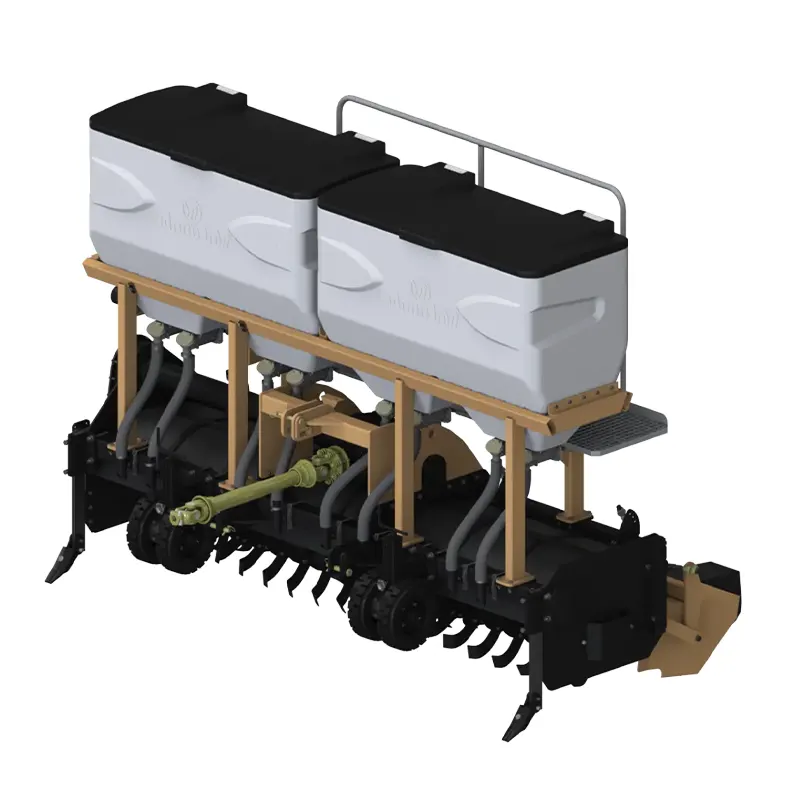
Sistema Mecanizado — Protocolo de Problema Duplo para o Estabelecimento do Kiwi
Perguntas frequentes
Britador de pedras para plantação de kiwis — você pode confirmar se o PSA realmente entra através de ferimentos por abrasão causados por pedras, e não se trata apenas de uma conexão teórica?
A via de infecção do PSA por meio de ferimentos mecânicos está muito bem estabelecida na literatura científica — a ligação específica à abrasão por pedras, em vez de ferimentos de poda, é mais diretamente apoiada por observações de campo na Nova Zelândia e na Itália do que por ensaios controlados revisados por pares. O que está estabelecido sem dúvida é que o PSA requer um ponto de entrada no tecido do kiwi. Ele não consegue penetrar a casca intacta ou a epiderme da folha em condições normais. Qualquer ferimento — corte de poda, rachadura por geada, dano por insetos, abrasão mecânica — cria um ponto de entrada. O NZ Plant and Food Research e o CREA Frutticoltura italiano documentaram que a redução da densidade de ferimentos em todas as categorias (não apenas poda) reduz consideravelmente a taxa de estabelecimento do PSA em pomares sob pressão ativa da doença. A categoria de ferimento por abrasão por pedras é legítima dentro desse contexto. De forma mais direta: os produtores da Baía de Plenty, na Nova Zelândia, que manejam pomares com remoção de pedras relatam consistentemente menor incidência de ferimentos na copa, e as taxas de diagnóstico de PSA (Pseudomonas aeruginosa) em seções limpas de seus pomares são observacionalmente menores do que em seções adjacentes não limpas — embora um ensaio clínico randomizado formal que atribua especificamente a diferença à remoção de pedras não tenha sido publicado até o momento da redação deste texto. Portanto, a justificativa para a remoção de pedras em relação à PSA baseia-se em um raciocínio sólido sobre a biologia de feridas, respaldado por observações de campo, ainda não confirmadas por um ensaio duplo-cego.
O sistema de alocação de painéis DM% da Zespri responde realmente à remoção de pedras — ou outros fatores de gestão dominam o resultado do DM%?
O DM% é um resultado multifatorial — a escolha da variedade, o manejo do vigor da videira, o momento da irrigação, a data da colheita e o manejo da copa contribuem significativamente para que a fruta atinja o DM% ideal para avaliação pelo painel. A remoção de pedras é um fator contribuinte, mas não o dominante. Os ensaios da Universidade de Bolonha, na Itália, que documentaram uma melhoria de 0,9 a 1,6 no DM% em parcelas limpas no Vêneto, foram conduzidos em pares correspondentes, controlando-se a variedade, a idade da videira, a irrigação e a data da colheita — isolando a remoção de pedras como a variável. A melhoria de 0,9 a 1,6 no DM% se traduziu em um resultado de alocação do painel Zespri significativamente diferente em locais com alta concentração de pedras: em locais no Vêneto onde o DM% médio era de 5,4 a 5,8% (abaixo do mínimo de 6,2% de Hayward) sem remoção de pedras, a melhoria de 0,9 a 1,6% resultante da remoção de pedras elevou o bloco para 6,3 a 7,4% — consistentemente acima do limiar do painel. Para pomares que já apresentam densidade de pedras entre 6,8 e 7,2% DM% sem a necessidade de remoção de pedras, a mesma melhoria obtida com a remoção de pedras elevaria a densidade para 7,7 a 8,8% — acima do limite estabelecido, portanto, a melhoria representa qualidade comercial dentro do painel, e não a ultrapassagem do limite estabelecido. O retorno do investimento em remoção de pedras é maior para pomares que apresentam densidade de pedras cronicamente abaixo ou próxima ao limite DM% do painel — exatamente os locais de alta densidade de pedras onde a remoção é mais claramente necessária.
A pedra-pomes na Nova Zelândia representa um problema de gestão de rochas, ou os produtores da região de Bay of Plenty podem simplesmente evitar a remoção de pedras em seus solos vulcânicos naturalmente pobres em rochas?
Para pomares na zona principal da Baía da Abundância (Te Puke, Ōpōtiki), onde o levantamento do solo confirma a presença contínua de pedra-pomes a pelo menos 80 cm de profundidade, sem afloramentos de basalto enterrados identificados, a remoção padrão de pedras não é necessária — a baixa densidade e porosidade da pedra-pomes significam que ela não cria restrição significativa ao crescimento das raízes nem obstrução para os postes de sustentação. A ressalva crucial é a exigência do levantamento do solo: afloramentos de basalto enterrados são comuns o suficiente na paisagem vulcânica da Baía da Abundância, de modo que omitir um levantamento prévio com sondagem introduz um risco real de descobrir basalto após a instalação da pérgola — o que exigiria martelo hidráulico ou equipamento especializado de perfuração de rochas, a um custo significativamente maior por poste do que a remoção prévia com THOR. A superfície de pedra-pomes ainda justifica a inspeção anual com o BlackBird para o argumento de feridas PSA acima do solo — as partículas de pedra-pomes são angulares quando recém-expostas (devido ao congelamento e descongelamento do solo ou ao cultivo) e proporcionam superfícies abrasivas para feridas ao nível da copa. O investimento total na limpeza do solo com o sistema THOR em locais com presença confirmada de pedra-pomes em profundidade é opcional; o levantamento do solo para confirmar a profundidade da pedra-pomes é obrigatório; e a passagem anual do BlackBird na superfície para redução de feridas por PSA é recomendada, independentemente da geologia do subsolo.
Como a remoção de caroços de kiwi interage com o programa de replantio da variedade SunGold (G3/G9) que os produtores da Nova Zelândia e da Itália estão realizando após as perdas em Hayward relacionadas à Psa?
O SunGold (A. chinensisO programa de replantio — a principal resposta da indústria à vulnerabilidade à PSA em Hayward — cria uma consideração adicional no manejo de pedras, pois a arquitetura radicular mais superficial da SunGold (tecido de absorção primário a 6–25 cm, em comparação com 8–30 cm em Hayward) significa que ela encontra restrição por pedras em uma profundidade menor do que Hayward. Um pomar em Hayward manejado com teor moderado de pedras a 20–30 cm pode ter apresentado resultados aceitáveis de DM% porque o tecido de absorção de Hayward a 8–30 cm penetrava parcialmente a zona de pedras. A mesma densidade de pedras em um pomar replantado com SunGold restringe diretamente a zona de absorção mais superficial de 6–25 cm, produzindo uma penalidade de DM% pior por unidade de pedra do que a experimentada no plantio anterior em Hayward. Isso significa que os produtores da Nova Zelândia e da Itália que convertem blocos de Hayward para SunGold após perdas por PSA devem reavaliar os requisitos de remoção de pedras — um bloco que foi manejado sem remoção de pedras em Hayward pode precisar de remoção em SunGold. A profundidade de desmatamento para SunGold (30–42 cm) é menor e menos dispendiosa do que para Hayward (35–48 cm), mas a tolerância para pedras residuais na zona de alimentação é menor — tolerância zero para pedras acima de 3 cm na zona de 6–25 cm é o padrão apropriado para o estabelecimento de SunGold.
Qual é o benefício financeiro combinado de abordar os problemas de manejo de pedras causados pelas cepas DM% e PSA em um bloco de kiwi de 4 hectares na Baía de Plenty?
Para um pomar Hayward de 4 hectares na Baía de Plenty, em um local com manchas de basalto enterradas afetando o 40% do bloco e pedras superficiais, criando uma incidência moderada de ferimentos na copa: Investimento em remoção de pedras (passagem profunda THOR 3.0 nas zonas de basalto + passagem geral THOR 2.4 + coleta CT-2100 + passagem anual BlackBird): aproximadamente NZ$12.000–18.000 para o estabelecimento + NZ$2.000–3.500 para a manutenção anual. Benefício DM% no 40% do bloco passando de não-painel para painel (produção total de 10.000 bandejas × 40% = 4.000 bandejas): 4.000 bandejas × diferencial de prêmio NZ$1,80 para painel = benefício anual DM% de NZ$7.200. Prevenção da substituição de videiras relacionada à PSA: em um bloco de 4 hectares com pressão moderada de PSA, a redução de ferimentos por meio da remoção de pedras pode prevenir perdas de videiras de 2 a 5% em qualquer período de 5 anos. Com um custo de NZ$8.000 a 15.000 por videira replantada (copa + condução + perda de produção): 2 a 5% de 800 videiras = 16 a 40 videiras × NZ$10.000 em média = redução da exposição de NZ$160.000 a 400.000 ao longo de 10 anos. Benefício anual equivalente combinado: prêmio DM% NZ$7.200 + prevenção de perda de videiras por PSA (NZ$16.000 a 40.000 por 10 anos, anualizado) = NZ$8.800 a 11.200 anualmente. Considerando o custo anual do programa de NZ$2.000–3.500: ROI de 2,5:1 a 5,6:1 anualmente. Compensação única de estabelecimento (NZ$12.000–18.000) em relação ao benefício cumulativo de 5 anos: NZ$44.000–56.000. ROI: 2,4:1 a 4,7:1 no horizonte de 5 anos.
Triturador de rochas para plantação de kiwis — Redução de feridas por PSA e protocolo de zona radicular DM%
Variedade de kiwi (Hayward/SunGold) + sistema de treliça (barra em T/pérgola) + resultados da análise do solo (profundidade da pedra-pomes / basalto enterrado / calcário) + geologia regional → Coreia Watanabe fornece as informações corretas britador de pedras para fazenda de kiwis Especificação de mecanismo duplo, cálculo da ROI (região de interesse) do Zespri DM% e protocolo de redução de feridas por PSA.
Editor: Cxm