Coffee is cultivated on volcanic mountain slopes across three continents specifically because those slopes provide what no flat, stone-free agricultural land can: altitude-driven temperature variation, mineral richness from volcanic parent material, and the drainage gradient that prevents root-zone waterlogging. The geology that creates these conditions also, inevitably, produces the sub-surface stone problem that this guide addresses — because the same basalt and andesite formations that define Colombian terroir and give Ethiopian coffee its complexity are the formations that produce the 15–40 cm stone nodules that restrict the coffee taproot’s access to the deep soil moisture it needs during the critical ripening period.
This is the only article in this E-series guide where the stone you are removing comes from the same geological formation that justifies planting the crop there in the first place. Every other crop’s stone problem is an incidental geological obstacle. For coffee, clearing the stone from the root zone and retaining the soil matrix — the mineral-rich, well-drained volcanic earth that the stone came from — is the fundamental management act that separates a $3-per-pound commodity harvest from an $80-per-pound specialty micro-lot on the same farm. This guide covers the rock crusher for coffee farm application through the root biology, the quality chain it affects, and the four primary global markets where this paradox plays out in different volcanic geological contexts.
Coffee’s Dual Root System — Taproot Depth and the Feeder Mat
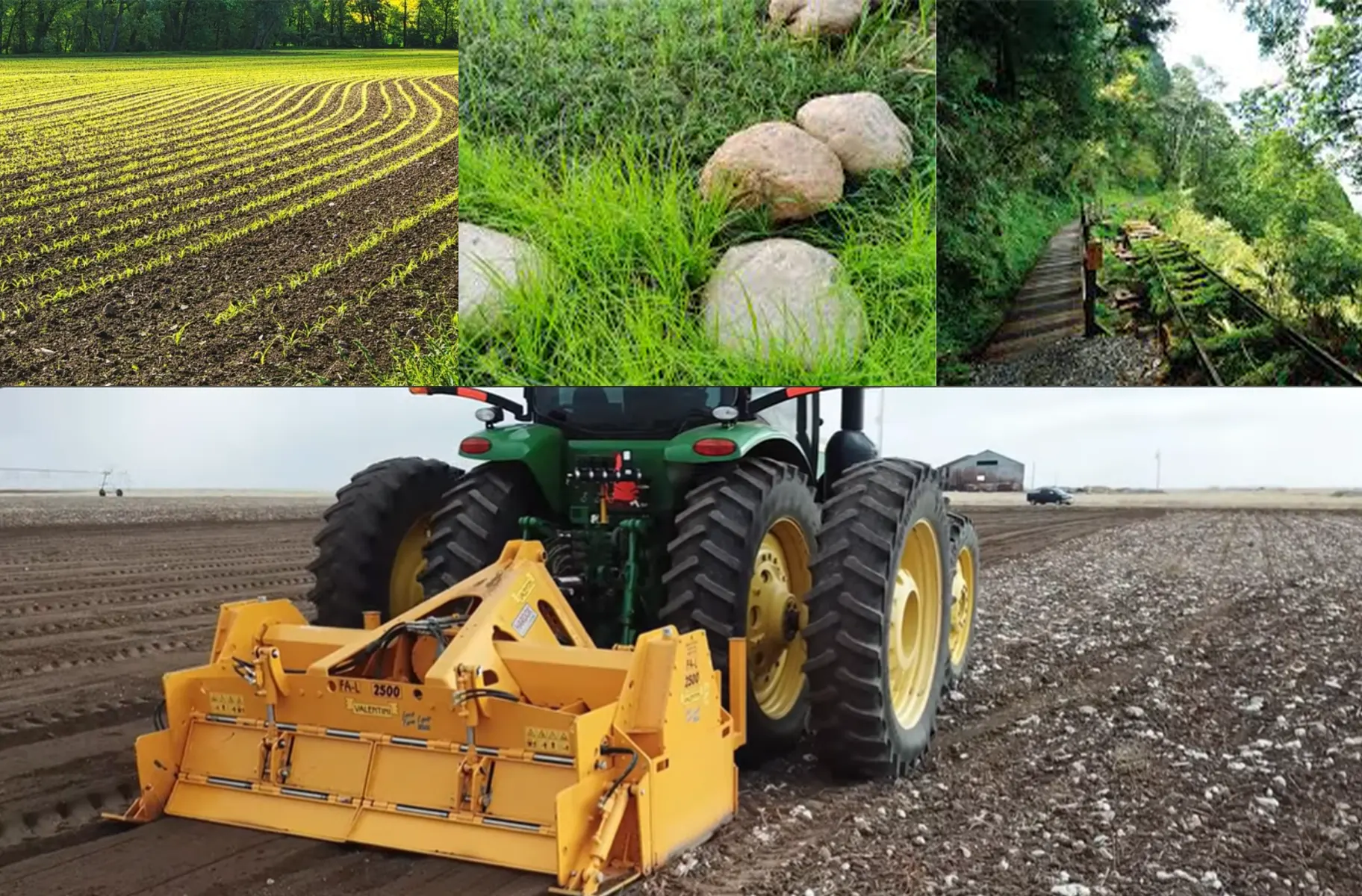
Commercial coffee (Coffea arabica Ve Coffea canephora) has a root architecture designed for the permanently moist but freely draining volcanic mountain soils of its East African origin — a dual system combining a primary taproot with a shallow dense feeder mat, each serving a distinct function in the plant’s physiology.
Stone at 35–60 cm = taproot blocked = drought stress at ripening.
Less drought-sensitive but feeder zone stone reduces yield density.
The 26× Quality Chain — How Stone Clearing Connects to the Specialty Premium
No other crop in this E-series guide has a price differential of 26× between the commodity and premium quality tiers on the same farm. In E-1 (vineyard), the differential between regional wine and Premier Cru is approximately 8–15×. In E-9 (asparagus), Grade 1 versus processing grade is 2–3×. In E-10 (hops), AA% contract penalty affects approximately 15–30% of value. Coffee’s 5–26× range — from ICO commodity floor to specialty micro-lot auction pricing — is uniquely large, and uniquely connected to the root-zone conditions that stone management determines.
| Seviye | SCA Score | Price (US$/lb) | Root condition | Taş temizleme gereksinimi |
|---|---|---|---|---|
| Commodity / C-market | <80 | $2.80–3.50 | Taproot blocked at 30–45 cm. Drought stress in August. Low sugar accumulation. | Un-cleared stone ground. Taproot never reaches 60+ cm moisture reserve. |
| Commercial specialty | 80–84 | $4.50–8.00 | Taproot reaches 50–65 cm. Partial moisture access. Moderate sugar accumulation. | Partial clearing or light-stone sites. Improving but not fully freed root. |
| Fine specialty | 85–89 | $8.00–20.00 | Taproot reaches 70–90 cm. Good moisture reserve. High sugar accumulation. | Full THOR clearing to 45–55 cm. Root reaches designed depth on volcanic slope. |
| Micro-lot / auction | 90–100 | $18.00–80.00+ | Taproot reaches 100+ cm. Full moisture independence. Maximum sugar at ripening. | Stone-free volcanic soil to 50+ cm. Root accesses deep mineral-rich volcanic subsoil. |
The Volcanic Stone Paradox — Removing What Creates the Terroir
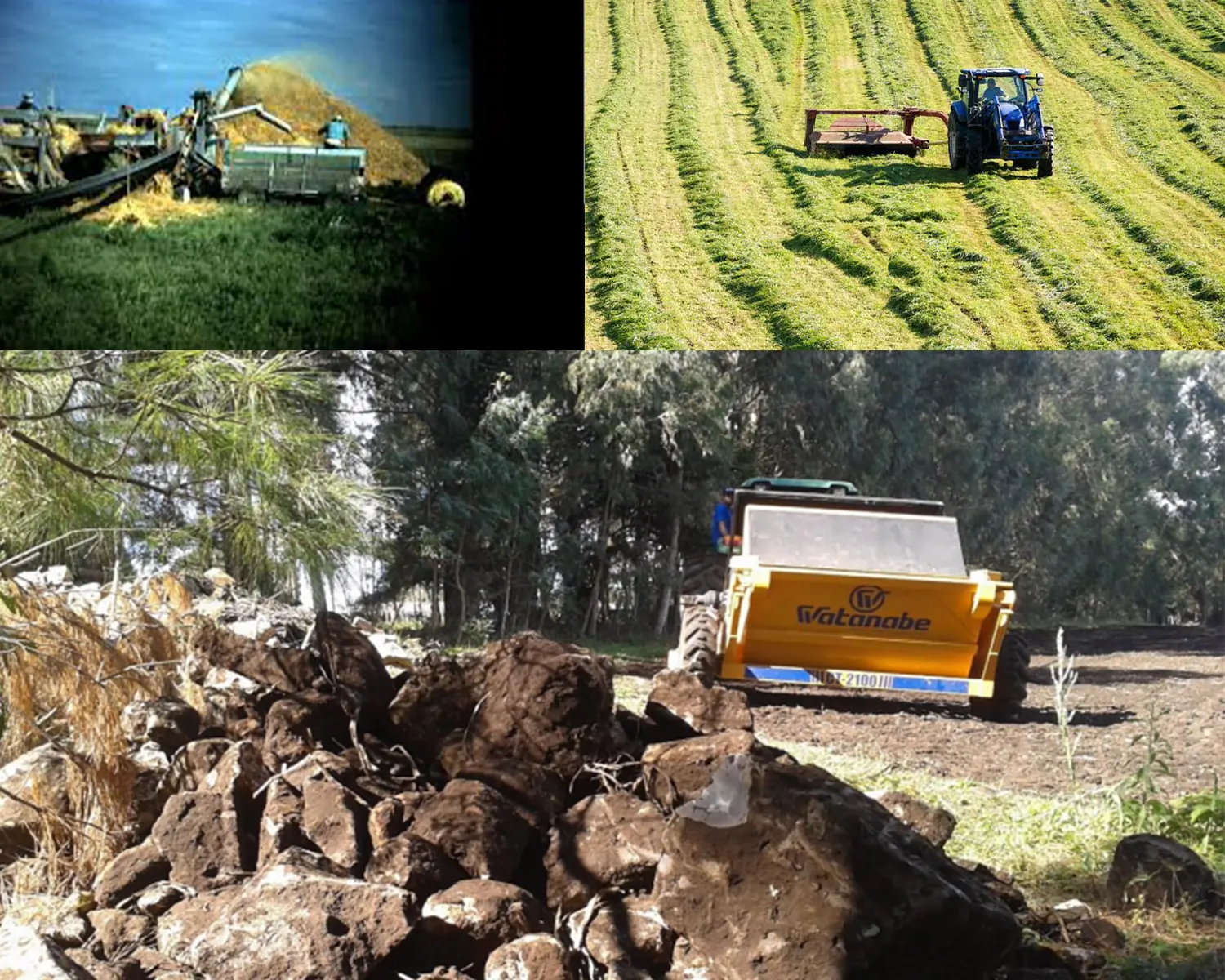
The standard stone management argument in this guide is straightforward: stone obstructs roots, remove stone to free roots. For coffee, this argument contains a paradox that every coffee-growing agronomist understands but that machinery guidance literature has never addressed: the volcanic parent material that makes Colombian Huila, Ethiopian Yirgacheffe, and Guatemalan Antigua coffees among the most prized in the world — the basalt and andesite that weathered over millennia to produce mineral-rich, free-draining soil — is the same geological formation that produces the 5–25 cm diameter stone nodules that block coffee taproots.
Weathered basalt and andesite soils release magnesium, potassium, calcium, iron, and a suite of trace minerals at the specific ratios that coffee chemistry research associates with complexity, sweetness, and the “volcanic” tasting notes that command premium prices at Cup of Excellence auctions. This mineral profile is inherent to the volcanic parent material — it cannot be replicated with fertiliser on a non-volcanic site. Colombian Nariño, Ethiopian Sidama, and Guatemalan Huehuetenango coffees fetch 3–8× their equivalent growing-condition prices from non-volcanic comparable regions because buyers specifically seek the mineral character that volcanic geology delivers.
Volcanic parent rock does not weather uniformly. Differential weathering produces a soil matrix of fine volcanic earth (the terroir carrier) interspersed with resistant basalt or andesite nodules that weather more slowly — remaining as hard stone inclusions at 15–50 cm depth for thousands of years after the surrounding matrix has become productive soil. These nodules are chemically identical in origin to the surrounding soil matrix. They do not harm the soil’s mineral composition. They simply obstruct root penetration physically, preventing the coffee taproot from reaching the 60–100+ cm depth where the remaining deep moisture is available in the July–September dry period.
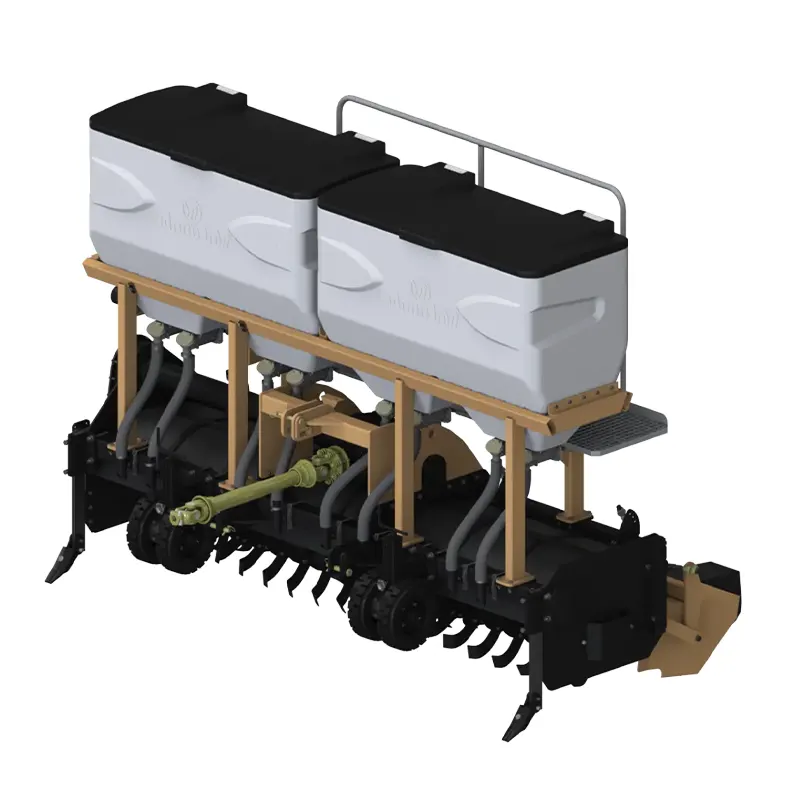
The THOR rock crusher fragments the nodules. The CT-2100 rock picker removes the fragments permanently. What remains in the field is the volcanic soil matrix — the mineral-rich, free-draining earth that generates the terroir — without the structural nodules that obstruct root access. The coffee taproot, freed from physical obstruction at 35–55 cm, continues into the deep volcanic subsoil where mineral access is highest and moisture reserve is greatest. The paradox is resolved: stone removal enables the full expression of the same volcanic geology that the stone came from.
Slope Clearance — Operating the THOR on 25–40° Volcanic Coffee Terraces
Coffee is almost exclusively grown on slopes — the altitude and drainage gradient that define quality Arabica production require terrain that is, by definition, not flat. The practical consequence for rock crusher operations is that THOR operating protocols for coffee are more slope-specific than for any other crop in this guide, with the exception of avocado terrace work (E-12). Two principles govern all coffee slope clearing operations.
The THOR must always travel horizontally across the slope (along contour lines), never upslope or downslope. Operating downslope on a steep volcanic coffee terrace creates two problems: (1) machine stability — the THOR’s additional weight (2,800 Kg for THOR 3.0) shifts the tractor’s centre of gravity forward on a downslope run, increasing rollover risk above 25°; (2) erosion — downslope THOR passes create linear drainage channels that concentrate rainfall runoff, causing gully erosion on the fine volcanic soil between coffee rows. Contour operation eliminates both risks and mirrors the standard practice for terrace construction, chemical application, and harvesting on steep coffee farms.
Colombian and Ethiopian coffee terraces (andenes) typically have bench widths of 2.5–4.5 m on slopes above 20°. The THOR 2.4 (2,400 mm working width) fits most terrace benches above 20° on traditional Colombian finca-scale plantations. The THOR 3.0 (3,000 mm) requires terrace widths of at least 3.5 m — appropriate for the larger industrial-scale Arabica plantations in Colombia’s Tolima and Huila departments, and for Vietnamese Robusta on the Dak Lak plateau which uses wider terrace layouts. On slopes above 35°, stone clearing is limited to the terrace bench surfaces only — the raw slope faces between terraces receive no THOR treatment.
Slopes of 15–25°: THOR 2.4 or 3.0, standard contour pass. Slopes of 25–35°: THOR 2.4 preferred (lower machine weight = better stability); reduce forward speed 20–30% for terrace bench work. Slopes above 35°: THOR operation on terrace benches only; wider terrace renovation programme required before THOR clearing on newly converted slopes above this angle. For all slopes: disable THOR downforce spring on uphill passes to prevent front-tractor weight imbalance.
Processing Stone Contamination — Natural and Honey Process Coffee
The stone contamination problem described for hazelnut (E-14) and blueberry (E-16) applies to coffee processing in a specific and commercially consequential way: natural-process (dry-process) and honey-process coffee. In both methods, coffee cherries are dried on raised beds or cement patios with the fruit pulp intact — and on farms where surface stones are present on the drying terrace, stone fragments enter the dried cherry batch at the sorting and de-pulping stage.
Cherries harvested from stone-laden terrace slopes carry attached stone fragments (stuck in the mucilage) to the drying bed. During the 2–6 week drying period, the stone fragments become embedded in the dried cherry mass. At the hulling (de-pulping) stage, stone fragments enter the hulling drum alongside dried cherries. Basalt fragments (Mohs 5–7) are harder than the steel alloys used in most small-farm hulling drums — causing drum abrasion, blade damage, and in severe cases, structural drum damage requiring replacement at US$800–2,500 per drum. Surface stone clearing with BlackBird kaya tırmığı Ve CT-2100 taş toplayıcı before harvest season eliminates stone entry into the processing stream at the source.
Premium specialty roasters (third-wave coffee companies sourcing micro-lots at US$15–80+/lb) routinely conduct green bean sorting at intake. Stone fragments in green bean lots are a rejection criterion at all Cup of Excellence and specialty auction buyers. A 50-Kg bag of natural-process Colombian micro-lot coffee containing even 3–5 stone fragments detectable by the intake optical sorter can result in rejection of the full bag — loss of US$750–4,000 in a single transaction. For farms producing 200–500 bags of natural-process per season, maintaining a stone-free harvesting and processing terrace surface is a quality assurance requirement, not a preference.
Four Major Coffee Markets — Volcanic Geology and Clearing Specification
Machine System — Coffee Farm Clearing Protocol by Region and Slope
| Bölge | Stone type (Mohs) | Derinlik | Slope | Makine | Coverage |
|---|---|---|---|---|---|
| Colombia Nariño/Cauca | Andesite/basalt 5–7 | 40–52 cm | 25–40° | THOR 2.4 | 0.5–0.9 ha/day contour |
| Colombia Huila/Tolima | Volcanic gravel 5–6 | 38–48 cm | 15–25° | THOR 2.4/3.0 | 0.8–1.5 ha/day contour |
| Ethiopia Yirgacheffe | Gneiss + basalt 6–7 | 35–48 cm | 20–35° | THOR 3.0 | 0.7–1.1 ha/day contour |
| Vietnam Dak Lak (Robusta) | Basalt plateau 5–6 | 32–44 cm | 5–15° | THOR 3.0 | 1.5–2.0 ha/day |
| Hawaii Kona / Korea Jeju | Holocene basalt 6–7 | 38–52 cm | 15–20° | THOR 3.0 | 0,8–1,2 ha/gün |
Sıkça Sorulan Sorular
Rock crusher for coffee farm — does removing the volcanic stone genuinely reduce the terroir character of the coffee, or is that a myth?
This is the central question of the volcanic stone paradox, and the answer from soil science is clear: removing the stone nodules does not reduce the terroir character of the coffee. The mineral profile that defines Colombian or Ethiopian coffee terroir (the specific ratios of calcium, magnesium, potassium, iron, manganese, and trace minerals) is carried in the soil matrix — the fine volcanic earth that results from millennia of basalt and andesite weathering. The stone nodules that the THOR fragments and the CT-2100 collects are chemically identical in elemental composition to the soil matrix, but they are physically impenetrable to root tissue — they are not delivering their minerals to the plant because roots cannot enter them. By removing the nodules and retaining the surrounding volcanic soil matrix, the clearing operation actually improves the plant’s mineral access (deeper root penetration into the intact volcanic subsoil) rather than reducing it. Specialty coffee importers and Cup of Excellence evaluators who work with farms in Colombia and Ethiopia consistently find that well-managed stone-cleared volcanic plots produce higher SCA scores than equivalent un-cleared plots on the same farm — the volcanic terroir is enhanced by stone removal, not compromised by it.
Can the THOR rock crusher operate safely on the steep 25–35° slopes where the best Arabica coffee is grown?
Yes, with appropriate operational protocols. The key requirements for THOR operation on steep coffee slopes are: (1) always operate along contour lines, never up or downslope; (2) use THOR 2.4 (2,300 Kg) rather than THOR 3.0 (2,800 Kg) on slopes above 25° where the heavier machine creates stability concerns; (3) reduce forward speed 20–30% on wet volcanic soil to prevent sudden traction loss; (4) fit the tractor with aggressive volcanic soil tyres and, on slopes above 28°, consider a front ballast counterweight to prevent front tractor lift during THOR operation. The THOR 2.4 has been successfully operated on Colombian Nariño coffee terraces at 28–32° slope angle by Colombian contractors familiar with the terrain — the machine’s three-point linkage geometry actually assists stability on cross-slope passes. For slopes above 35°, THOR clearing is restricted to the terrace bench surfaces, which are essentially flat (1–3° bench angle) regardless of the hillside slope. The terrace bench is the cleared zone, and the steep face between terraces is left uncleared — this is standard practice on all steep coffee terrace farms.
Is the SCA cup score improvement from root-zone stone clearing measurable in controlled farm trials — or is this a theoretical argument?
Direct controlled trial data specifically comparing stone-cleared versus un-cleared coffee plots is limited in published literature — coffee agronomy research has focused more on variety selection, processing method, and fertilisation than on soil physical preparation. However, the causal chain from root depth to cup score is well-supported by three bodies of evidence. First, the root physiology: coffee drought stress during the ripening period producing lower cherry Brix is documented in controlled irrigation experiments from CENICAFÉ (Colombian coffee research centre) and EIAR (Ethiopian Institute for Agricultural Research). Second, the sugar-to-cup-score connection: specialty cupping protocols consistently show that higher cherry Brix correlates with higher sweetness scores in SCA assessment, and sweetness is typically the highest-weighted descriptor in Colombian Huila and Ethiopian Yirgacheffe coffees. Third, farmer observation: Colombian coffee farmers in Nariño and Huila who have cleared stone from their finca plots using either mechanical methods or hand labour consistently report Cup of Excellence submission scores 2–4 SCA points higher from cleared sections than from equivalent un-cleared sections of the same farm. Given that 2 SCA points can move a lot from fine specialty ($15/lb) to exceptional specialty ($35/lb), the economic case is clear even without a formal peer-reviewed trial. Korea Watanabe is working with coffee research institutions in Colombia and Ethiopia to document this clearing-to-quality connection in properly controlled field trials.
How does the coffee farm application relate to Korea Watanabe’s domestic market — is there a relevant Korean application?
Korea has two relevant connections to the coffee farm application. First, Korea is one of the world’s top specialty coffee consumption markets per capita — Koreans spend more per person on specialty coffee than any other East Asian population, and Korean specialty coffee importers and roasters are among the most active buyers at Cup of Excellence Colombia and Ethiopia auctions. The quality chain from volcanic stone management to cup score to Korean specialty price premium is commercially relevant to Korean coffee buyers who source from Colombian and Ethiopian farms. Second, Jeju Island has begun commercial coffee cultivation — both protected greenhouse production and experimental outdoor plantings on Jeju’s Mauna Loa-equivalent basalt geology. Jeju’s volcanic basalt presents the same stone management challenge as Hawaii Kona (the closest geological analogue), and Korea Watanabe’s THOR 3.0 specification for Kona applies directly to Jeju coffee establishment. The Korean Agricultural Rural Community Corporation (aT) has supported Jeju specialty crop development — stone clearing machinery for Jeju coffee establishment may be eligible under the current rural development support programme cycle. Confirm current eligibility with the relevant Jeju Special Self-Governing Province agricultural authority.
What is the financial ROI of stone clearing for a Colombian specialty coffee producer aiming for Cup of Excellence qualification?
For a 3-hectare Colombian Arabica farm in Nariño at 1,800 m altitude, producing 30 bags (60 Kg each) of natural-process per year: Stone clearing cost (THOR 2.4 on 3 ha, contour pass, Colombian contractor rates): approximately COP 4,500,000–7,000,000 (approximately US$1,100–1,700 at current exchange). Annual production at current prices: current commodity Nariño = US$3.20/lb = US$4,224 for 30 bags × 130 lb/bag. Same production at fine specialty (85+ SCA): US$10/lb = US$13,200. Same production at Cup of Excellence level (88+ SCA): US$18–35/lb = US$23,400–45,500. The clearing investment (US$1,100–1,700 one-time) compared against even the commodity-to-fine-specialty price improvement (US$8,976 annual) gives a payback period of less than 2 months in the first year. Against the commodity-to-Cup of Excellence improvement scenario, the clearing investment represents approximately 1.5–3% of the first year’s incremental revenue. No other capital investment on a Colombian specialty coffee farm has a comparable ROI — not processing equipment (fermentation tanks, raised drying beds), not variety replanting (3-year payback minimum), not certification (organic premium typically 15–25%). The stone clearing investment for specialty coffee quality qualification is the highest single-year ROI improvement action available on a stone-restricted Colombian or Ethiopian volcanic slope farm.
Rock Crusher for Coffee Farm — Volcanic Slope Specification and Specialty Quality ROI
Farm location + slope angle + stone type (basalt/andesite/gneiss) + Arabica or Robusta + target quality grade → Korea Watanabe provides the correct rock crusher for coffee farm contour clearing specification, depth protocol and specialty cup score quality ROI calculation.
Editör: Cxm