O café é cultivado em encostas de montanhas vulcânicas em três continentes justamente porque essas encostas oferecem o que nenhuma terra agrícola plana e sem pedras pode proporcionar: variação de temperatura impulsionada pela altitude, riqueza mineral proveniente do material vulcânico original e o gradiente de drenagem que impede o alagamento da zona radicular. A geologia que cria essas condições também produz, inevitavelmente, o problema das pedras no subsolo que este guia aborda — porque as mesmas formações de basalto e andesito que definem o café colombiano terroir O que confere ao café etíope sua complexidade são as formações que produzem os nódulos pétreos de 15 a 40 cm, os quais restringem o acesso da raiz principal do café à umidade profunda do solo, necessária durante o período crítico de maturação.
Este é o único artigo desta série de guias em que a pedra que você está removendo provém da mesma formação geológica que justifica o plantio da cultura naquele local. O problema de pedras em todas as outras culturas é um obstáculo geológico incidental. No caso do café, remover as pedras da zona radicular e preservar a matriz do solo — a terra vulcânica rica em minerais e bem drenada de onde as pedras se originaram — é a prática fundamental de manejo que diferencia uma colheita comercial de $3 por libra de um microlote especial de $80 por libra na mesma fazenda. Este guia aborda o assunto. Triturador de pedras para fazenda de café aplicação através da biologia da raiz, a cadeia de qualidade que ela afeta e os quatro principais mercados globais onde esse paradoxo se manifesta em diferentes contextos geológicos vulcânicos.
Sistema radicular duplo do café — Profundidade da raiz principal e a camada de raízes alimentadoras
Café comercial (Coffea arábica e Coffea canephora) possui uma arquitetura radicular projetada para os solos vulcânicos permanentemente úmidos, mas com boa drenagem, das montanhas de sua origem na África Oriental — um sistema duplo que combina uma raiz principal pivotante com uma densa camada superficial de raízes alimentadoras, cada uma desempenhando uma função distinta na fisiologia da planta.
Pedúnculo entre 35 e 60 cm = raiz principal bloqueada = estresse hídrico na maturação.
Menos sensível à seca, mas com pedras na zona de alimentação, reduz a densidade de produção.
A Cadeia de Qualidade 26× — Como a Remoção de Pedras se Conecta ao Preço Premium Especializado
Nenhuma outra cultura neste guia da série E apresenta uma diferença de preço de 26 vezes entre os níveis de qualidade commodity e premium na mesma fazenda. Em E-1 (vinhedo), a diferença entre vinho regional e Premier Cru é de aproximadamente 8 a 15 vezes. Em E-9 (aspargos), a diferença entre o Grau 1 e o Grau de Processamento é de 2 a 3 vezes. Em E-10 (lúpulo), a penalidade contratual AA% afeta aproximadamente 15 a 30% em valor. A variação de 5 a 26 vezes no preço do café — do preço mínimo da commodity na ICO ao preço de leilão de microlotes especiais — é excepcionalmente grande e está diretamente relacionada às condições da zona radicular determinadas pelo manejo de pedras.
| Nota | Pontuação SCA | Preço (US$/lb) | Condição da raiz | Requisito de remoção de pedras |
|---|---|---|---|---|
| Mercado de commodities / Mercado C | <80 | $2,80–3,50 | Raiz principal bloqueada a 30–45 cm. Estresse hídrico em agosto. Baixa acumulação de açúcar. | Terreno pedregoso não limpo. A raiz principal nunca atinge uma reserva de umidade superior a 60 cm. |
| Especialidade comercial | 80–84 | $4.50–8.00 | A raiz principal atinge 50–65 cm. Acesso parcial à umidade. Acúmulo moderado de açúcar. | Áreas com desmatamento parcial ou com pedras leves. Melhorando, mas sem liberação completa das raízes. |
| Especialidade refinada | 85–89 | $8.00–20.00 | A raiz principal atinge 70–90 cm. Boa reserva de umidade. Alto acúmulo de açúcar. | Limpeza completa do THOR até 45–55 cm. A raiz atinge a profundidade projetada na encosta vulcânica. |
| Microlote / leilão | 90–100 | $18.00–80.00+ | A raiz principal atinge mais de 100 cm. Totalmente independente da umidade. Açúcar máximo na maturação. | Solo vulcânico sem pedras, com mais de 50 cm de profundidade. As raízes alcançam o subsolo vulcânico profundo e rico em minerais. |
O paradoxo da pedra vulcânica — Removendo o que cria o terroir
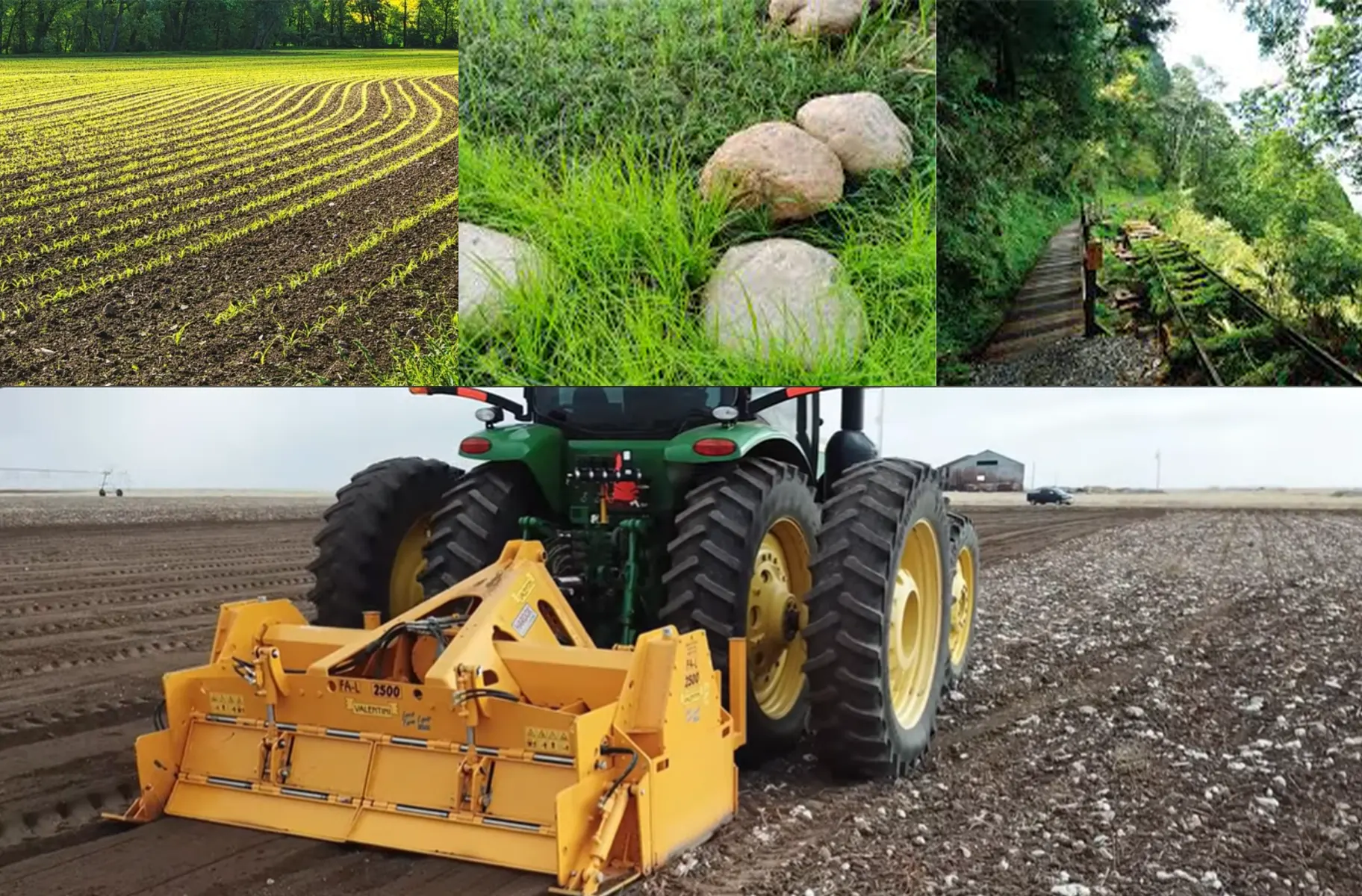
O argumento padrão para o manejo de pedras neste guia é simples: pedras obstruem as raízes, remova-as para liberar as raízes. Para o café, esse argumento contém um paradoxo que todo agrônomo cafeicultor entende, mas que a literatura sobre máquinas agrícolas nunca abordou: o material vulcânico que torna os cafés colombianos Huila, etíopes Yirgacheffe e guatemaltecos Antigua alguns dos mais apreciados do mundo — o basalto e o andesito que sofreram erosão ao longo de milênios para produzir um solo rico em minerais e com boa drenagem — é a mesma formação geológica que produz os nódulos de pedra de 5 a 25 cm de diâmetro que bloqueiam as raízes pivotantes do café.
Solos basálticos e andesíticos intemperizados liberam magnésio, potássio, cálcio, ferro e uma série de oligoelementos em proporções específicas que pesquisas em química do café associam à complexidade, doçura e às notas de sabor "vulcânicas" que conferem preços premium nos leilões da Cup of Excellence. Esse perfil mineral é inerente ao material vulcânico original — não pode ser replicado com fertilizantes em um local não vulcânico. Cafés colombianos de Nariño, etíopes de Sidama e guatemaltecos de Huehuetenango alcançam preços de 3 a 8 vezes maiores do que os equivalentes em condições de cultivo semelhantes em regiões não vulcânicas, porque os compradores buscam especificamente o caráter mineral que a geologia vulcânica proporciona.
A rocha matriz vulcânica não sofre intemperismo de forma uniforme. O intemperismo diferencial produz uma matriz de solo composta por terra vulcânica fina (o portador do terroir) intercalada com nódulos resistentes de basalto ou andesito que sofrem intemperismo mais lentamente — permanecendo como inclusões de pedra dura a uma profundidade de 15 a 50 cm por milhares de anos após a matriz circundante se tornar solo produtivo. Esses nódulos são quimicamente idênticos em origem à matriz do solo circundante. Eles não prejudicam a composição mineral do solo. Simplesmente obstruem fisicamente a penetração das raízes, impedindo que a raiz principal do cafeeiro alcance a profundidade de 60 a 100+ cm, onde a umidade profunda remanescente está disponível durante o período seco de julho a setembro.
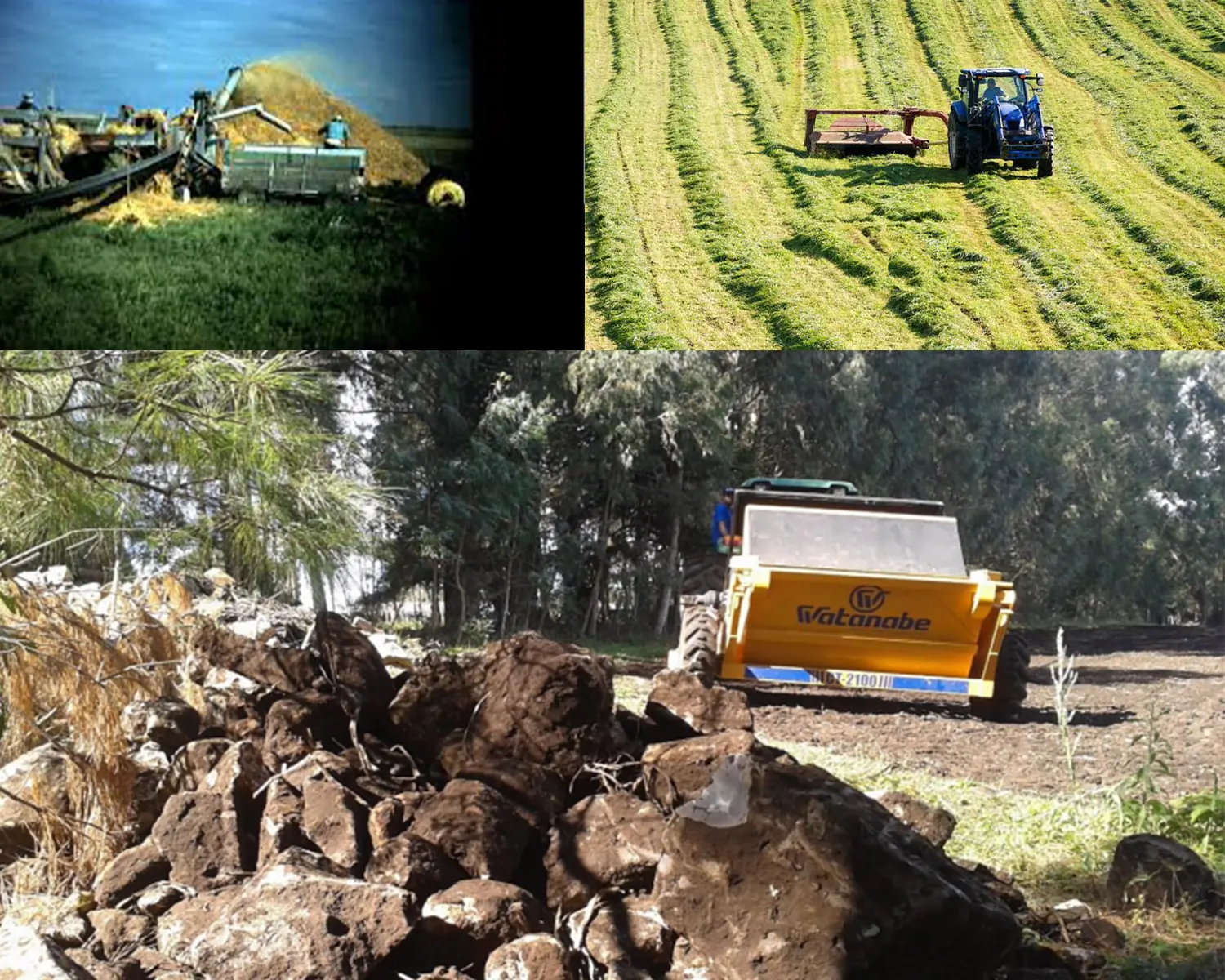
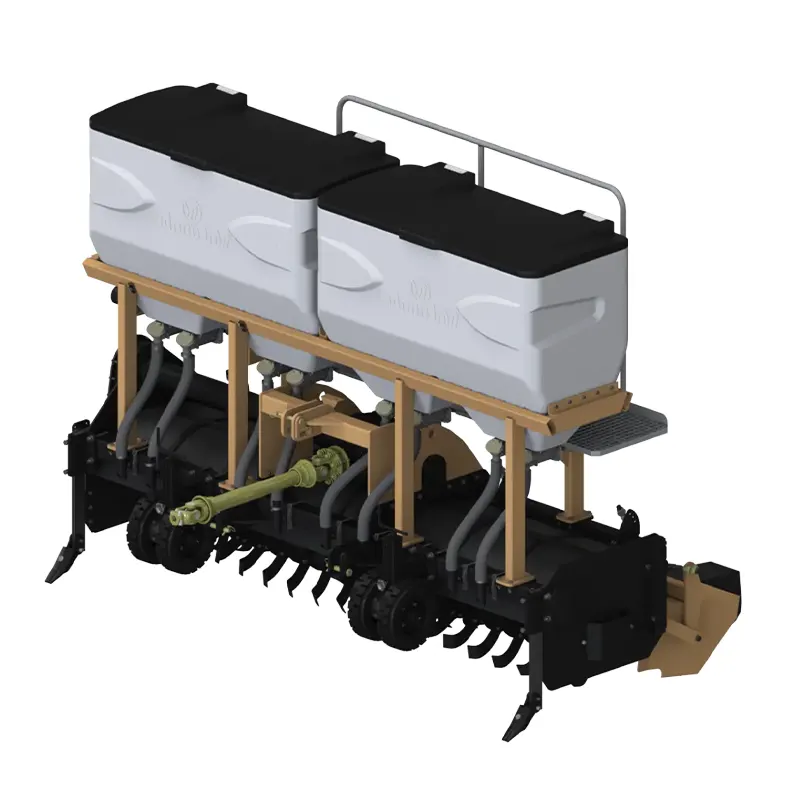
O britador de rochas THOR fragmenta os nódulos. O coletor de rochas CT-2100 remove os fragmentos permanentemente. O que resta no campo é a matriz do solo vulcânico — a terra rica em minerais e com boa drenagem que gera o terroir — sem os nódulos estruturais que obstruem o acesso das raízes. A raiz principal do cafeeiro, livre da obstrução física a 35–55 cm de profundidade, continua no subsolo vulcânico profundo, onde o acesso a minerais é maior e a reserva de umidade é mais elevada. O paradoxo é resolvido: a remoção das pedras permite a plena expressão da mesma geologia vulcânica da qual as pedras se originaram.
Deslizamento de encosta — Operação do THOR em terraços vulcânicos de café com inclinação de 25 a 40°
O café é cultivado quase exclusivamente em encostas — a altitude e o gradiente de drenagem que definem a produção de Arábica de qualidade exigem um terreno que, por definição, não é plano. A consequência prática para as operações de britagem de rochas é que os protocolos operacionais da THOR para o cultivo de café são mais específicos para diferentes tipos de declive do que para qualquer outra cultura neste guia, com exceção do trabalho em terraços de abacate (E-12). Dois princípios regem todas as operações de limpeza de encostas para o cultivo de café.
O THOR deve sempre se deslocar horizontalmente ao longo da encosta (seguindo as curvas de nível), nunca subindo ou descendo. Operar em declive em um terraço vulcânico íngreme de cultivo de café cria dois problemas: (1) estabilidade da máquina — o peso adicional do THOR (2.800 kg para o THOR 3.0) desloca o centro de gravidade do trator para a frente em declives, aumentando o risco de capotamento acima de 25°; (2) erosão — as passagens do THOR em declive criam canais de drenagem lineares que concentram o escoamento da água da chuva, causando erosão em ravinas no solo vulcânico fino entre as fileiras de café. A operação em curvas de nível elimina ambos os riscos e reflete a prática padrão para construção de terraços, aplicação de produtos químicos e colheita em fazendas de café íngremes.
Os terraços de café colombianos e etíopes (andenes) geralmente têm larguras de bancada de 2,5 a 4,5 m em declives acima de 20°. O THOR 2.4 (largura de trabalho de 2.400 mm) é adequado para a maioria das bancadas de terraço acima de 20° em plantações tradicionais colombianas de pequena escala. O THOR 3.0 (3.000 mm) requer larguras de bancada de pelo menos 3,5 m — apropriado para as grandes plantações industriais de Arábica nos departamentos de Tolima e Huila, na Colômbia, e para a Robusta vietnamita no planalto de Dak Lak, que utiliza terraços mais largos. Em declives acima de 35°, a remoção de pedras se limita às superfícies das bancadas dos terraços — as faces da encosta entre os terraços não recebem o tratamento THOR.
Declives de 15–25°: THOR 2.4 ou 3.0, passagem de contorno padrão. Declives de 25–35°: THOR 2.4 preferencial (menor peso da máquina = melhor estabilidade); reduzir a velocidade de avanço para trabalhos em terraços. Declives acima de 35°: operação do THOR apenas em terraços; um programa de renovação de terraços mais amplo é necessário antes da limpeza com THOR em declives recém-convertidos acima desse ângulo. Para todos os declives: desativar a mola de pressão descendente do THOR em subidas para evitar desequilíbrio de peso no trator dianteiro.
Contaminação por pedras de processamento — Café processado naturalmente e com mel
O problema de contaminação por pedras descrito para a avelã (E-14) e o mirtilo (E-16) aplica-se ao processamento do café de uma forma específica e comercialmente relevante: o café processado naturalmente (processo a seco) e o café processado com mel. Em ambos os métodos, os grãos de café são secos em camas elevadas ou pátios de cimento com a polpa intacta — e nas fazendas onde há pedras na superfície do terraço de secagem, fragmentos de pedras entram no lote de grãos secos na etapa de seleção e despolpa.
Cerejas colhidas em encostas de terraços pedregosos carregam fragmentos de pedra aderidos (presos na mucilagem) até o leito de secagem. Durante o período de secagem de 2 a 6 semanas, os fragmentos de pedra ficam incrustados na massa de cereja seca. Na etapa de descascamento (despolpamento), os fragmentos de pedra entram no tambor de descascamento junto com as cerejas secas. Fragmentos de basalto (Mohs 5-7) são mais duros do que as ligas de aço usadas na maioria dos tambores de descascamento de pequenas propriedades rurais, causando abrasão no tambor, danos às lâminas e, em casos graves, danos estruturais que exigem a substituição do tambor, a um custo de US$ 800 a US$ 2.500 por tambor. A limpeza da superfície das pedras com Ancinho de pedra BlackBird e coletor de rochas CT-2100 Antes da época da colheita, elimina-se a entrada de pedras no fluxo de processamento na origem.
Torrefadores de cafés especiais premium (empresas de café da terceira onda que adquirem microlotes a preços entre US$ 15 e US$ 80+/lb) realizam rotineiramente a seleção de grãos verdes na entrada. Fragmentos de pedra nos lotes de grãos verdes são um critério de rejeição para todos os compradores da Cup of Excellence e de leilões de cafés especiais. Um saco de 50 kg de café colombiano de microlote processado naturalmente, contendo de 3 a 5 fragmentos de pedra detectáveis pelo selecionador óptico de entrada, pode resultar na rejeição de todo o saco — uma perda de US$ 750 a US$ 4.000 em uma única transação. Para fazendas que produzem de 200 a 500 sacos de café processado naturalmente por safra, manter a superfície dos terraços de colheita e processamento livre de pedras é um requisito de garantia de qualidade, não uma preferência.
Quatro grandes mercados de café — Geologia vulcânica e especificações de desmatamento
Sistema de Mecanização — Protocolo de Desmatamento de Fazendas de Café por Região e Inclinação
| Região | Tipo de pedra (Mohs) | Profundidade | Declive | Máquina | Cobertura |
|---|---|---|---|---|---|
| Colômbia Nariño/Cauca | Andesito/basalto 5–7 | 40–52 cm | 25–40° | THOR 2.4 | Contorno de 0,5–0,9 ha/dia |
| Colômbia Huila/Tolima | Cascalho vulcânico 5–6 | 38–48 cm | 15–25° | THOR 2.4/3.0 | Contorno de 0,8–1,5 ha/dia |
| Etiópia Yirgacheffe | Gnaisse + basalto 6–7 | 35–48 cm | 20–35° | THOR 3.0 | Contorno de 0,7–1,1 ha/dia |
| Vietnam Dak Lak (Robusta) | Planalto basáltico 5–6 | 32–44 cm | 5–15° | THOR 3.0 | 1,5–2,0 ha/dia |
| Havaí Kona / Coreia Jeju | Basalto holocênico 6–7 | 38–52 cm | 15–20° | THOR 3.0 | 0,8–1,2 ha/dia |
Perguntas frequentes
Triturador de rochas para fazendas de café — a remoção das pedras vulcânicas realmente reduz o terroir do café, ou isso é um mito?
Essa é a questão central do paradoxo da pedra vulcânica, e a resposta da ciência do solo é clara: remover os nódulos de pedra não reduz o caráter terroir do café. O perfil mineral que define o terroir do café colombiano ou etíope (as proporções específicas de cálcio, magnésio, potássio, ferro, manganês e oligoelementos) está presente na matriz do solo — a fina terra vulcânica resultante de milênios de intemperismo de basalto e andesito. Os nódulos de pedra que o THOR fragmenta e o CT-2100 coletam são quimicamente idênticos em composição elementar à matriz do solo, mas são fisicamente impenetráveis ao tecido radicular — eles não fornecem seus minerais à planta porque as raízes não conseguem penetrá-los. Ao remover os nódulos e preservar a matriz vulcânica do solo circundante, a operação de limpeza, na verdade, melhora o acesso da planta aos minerais (penetração mais profunda das raízes no subsolo vulcânico intacto), em vez de reduzi-lo. Importadores de cafés especiais e avaliadores da Cup of Excellence que trabalham com fazendas na Colômbia e na Etiópia constatam consistentemente que parcelas vulcânicas bem manejadas e com solo desprovido de pedras produzem pontuações SCA mais altas do que parcelas equivalentes não desprovidas de solo desprovido de pedras na mesma fazenda — o terroir vulcânico é aprimorado pela remoção das pedras, e não comprometido por ela.
O britador de rochas THOR pode operar com segurança em declives acentuados de 25 a 35° onde se cultiva o melhor café Arábica?
Sim, com os protocolos operacionais adequados. Os principais requisitos para a operação do THOR em encostas íngremes de cafezais são: (1) operar sempre ao longo das curvas de nível, nunca subindo ou descendo a encosta; (2) usar o THOR 2.4 (2.300 kg) em vez do THOR 3.0 (2.800 kg) em declives acima de 25°, onde o peso maior da máquina pode gerar problemas de estabilidade; (3) reduzir a velocidade de avanço em solos vulcânicos úmidos para evitar perda repentina de tração; (4) equipar o trator com pneus agressivos para solos vulcânicos e, em declives acima de 28°, considerar um contrapeso dianteiro para evitar o levantamento da frente do trator durante a operação do THOR. O THOR 2.4 tem sido operado com sucesso em terraços de café de Nariño, na Colômbia, com inclinação de 28 a 32°, por empreiteiros colombianos familiarizados com o terreno — a geometria do engate de três pontos da máquina, na verdade, auxilia na estabilidade em passagens transversais à encosta. Para declives superiores a 35°, o desmatamento THOR restringe-se às superfícies dos terraços, que são essencialmente planas (ângulo de inclinação de 1 a 3°) independentemente da inclinação da encosta. O terraço é a zona desmatada, e a face íngreme entre os terraços permanece sem desmatamento — esta é uma prática padrão em todas as fazendas de café com terraços íngremes.
A melhoria na pontuação da SCA (Sports Club of America) resultante da remoção de pedras na zona radicular é mensurável em ensaios controlados em fazendas — ou trata-se apenas de um argumento teórico?
Dados diretos de ensaios controlados comparando especificamente parcelas de café com e sem remoção de pedras são limitados na literatura publicada — a pesquisa agronômica do café tem se concentrado mais na seleção de variedades, métodos de processamento e fertilização do que no preparo físico do solo. No entanto, a relação causal entre a profundidade da raiz e a pontuação na xícara é bem fundamentada por três conjuntos de evidências. Primeiro, a fisiologia da raiz: o estresse hídrico do café durante o período de maturação, que produz menor teor de açúcar nos grãos, é documentado em experimentos de irrigação controlada realizados pelo CENICAFÉ (Centro de Pesquisa de Café da Colômbia) e pelo EIAR (Instituto Etíope de Pesquisa Agrícola). Segundo, a relação entre açúcar e pontuação na xícara: protocolos de degustação de cafés especiais mostram consistentemente que um maior teor de açúcar nos grãos se correlaciona com maiores pontuações de doçura na avaliação da SCA (Avaliação de Degustação de Café), e a doçura é tipicamente o descritor de maior peso nos cafés colombianos Huila e etíopes Yirgacheffe. Em terceiro lugar, a observação dos produtores: os cafeicultores colombianos de Nariño e Huila que removeram pedras de suas parcelas de cultivo, seja por métodos mecânicos ou trabalho manual, relatam consistentemente pontuações de 2 a 4 pontos SCA mais altas nas seções limpas do que nas seções equivalentes não limpas da mesma fazenda. Dado que 2 pontos SCA podem representar uma grande diferença entre um café especial fino ($15/lb) e um café especial excepcional ($35/lb), o argumento econômico é claro mesmo sem um ensaio formal revisado por pares. Korea Watanabe está trabalhando com instituições de pesquisa de café na Colômbia e na Etiópia para documentar essa relação entre a limpeza do terreno e a qualidade em ensaios de campo devidamente controlados.
Como o pedido de licenciamento para fazendas de café se relaciona com o mercado interno coreano da Korea Watanabe? Existe algum pedido de licenciamento semelhante na Coreia?
A Coreia possui duas conexões relevantes com o pedido de licenciamento para fazendas de café. Primeiro, a Coreia é um dos maiores mercados consumidores de café especial per capita do mundo — os coreanos gastam mais por pessoa com café especial do que qualquer outra população do Leste Asiático, e os importadores e torrefadores coreanos de café especial estão entre os compradores mais ativos nos leilões da Cup of Excellence Colômbia e Etiópia. A cadeia de qualidade, desde o manejo de pedras vulcânicas até a pontuação na xícara e o prêmio de preço para o café especial coreano, é comercialmente relevante para os compradores de café coreanos que adquirem seus grãos de fazendas colombianas e etíopes. Segundo, a Ilha de Jeju iniciou o cultivo comercial de café — tanto em estufas protegidas quanto em plantios experimentais a céu aberto na geologia basáltica de Jeju, equivalente à do Mauna Loa. O basalto vulcânico de Jeju apresenta o mesmo desafio de manejo de pedras que o Kona do Havaí (o análogo geológico mais próximo), e a especificação THOR 3.0 da Korea Watanabe para Kona se aplica diretamente ao cultivo de café em Jeju. A Corporação Agrícola Rural Comunitária Coreana (aT) tem apoiado o desenvolvimento de culturas especiais em Jeju — máquinas para remoção de pedras para o cultivo de café em Jeju podem ser elegíveis no âmbito do atual ciclo do programa de apoio ao desenvolvimento rural. Confirme sua elegibilidade atual junto à autoridade agrícola competente da Província Autônoma Especial de Jeju.
Qual é o retorno financeiro do investimento (ROI) na remoção de pedras para um produtor colombiano de cafés especiais que busca a qualificação para a Cup of Excellence?
Para uma fazenda de Arábica colombiana de 3 hectares em Nariño, a 1.800 m de altitude, produzindo 30 sacas (60 kg cada) de processo natural por ano: Custo de remoção de pedras (THOR 2,4 em 3 ha, curvas de nível, taxas de empreiteiros colombianos): aproximadamente COP 4.500.000–7.000.000 (aproximadamente US$ 1.100–1.700 na cotação atual). Produção anual a preços atuais: preço atual do café Nariño = US$ 1.200/lb = US$ 1.224 para 30 sacas × 130 lb/saco. Mesma produção de café especial fino (85+ SCA): US$ 1.000/lb = US$ 1.320. A mesma produção no nível Cup of Excellence (88+ SCA): US$ 18–35/lb = US$ 23.400–45.500. O investimento inicial (US$ 1.100–1.700, pago uma única vez), comparado até mesmo com a melhoria de preço de commodity para café especial fino (US$ 8.976 anuais), resulta em um período de retorno de investimento inferior a 2 meses no primeiro ano. Em comparação com o cenário de melhoria de commodity para Cup of Excellence, o investimento inicial representa aproximadamente 1,5–3% da receita incremental do primeiro ano. Nenhum outro investimento de capital em uma fazenda de café especial colombiana apresenta um ROI comparável — nem equipamentos de processamento (tanques de fermentação, camas de secagem elevadas), nem replantio de variedades (retorno de investimento mínimo de 3 anos), nem certificação (prêmio orgânico tipicamente de 15–25%). O investimento na remoção de pedras para qualificação da qualidade do café especial é a ação de melhoria com o maior retorno sobre o investimento (ROI) em um único ano disponível em uma fazenda de encosta vulcânica na Colômbia ou Etiópia, onde a presença de pedras é um fator limitante.
Britador de rochas para fazenda de café — Especificação de encostas vulcânicas e retorno do investimento em qualidade especial
Localização da fazenda + ângulo de inclinação + tipo de pedra (basalto/andesito/gnaisse) + Arábica ou Robusta + grau de qualidade desejado → A Korea Watanabe fornece a solução correta. Triturador de pedras para fazenda de café Especificação de contorno limpo, protocolo de profundidade e cálculo da ROI (região de interesse) da qualidade da pontuação da cavidade especializada.
Editor: Cxm