Organic potato farming is one of the most technically demanding organic arable enterprises. Potato is a high-input conventional crop — it relies on synthetic fertilisers for nitrogen and potassium, herbicides for weed control, fungicides for blight management, and chemical desiccants for haulm destruction before harvest. Converting each of these inputs to an organic alternative requires machinery solutions that the conventional potato farm does not need. Inter-row cultivators, finger weeders, haulm toppers, and green manure incorporation attachments all become part of the equipment system. At the same time, the harvest machinery itself — digger, planter, furrower — remains unchanged. Understanding which parts of the system change and which remain constant is the starting point for specifying a complete organic potato machinery system.
Organic Certification — What EU 848/2018 Requires from Potato Growers
EU Regulation 848/2018 (the current EU Organic Regulation, replacing the previous 834/2007) governs organic potato production across the EU and sets the framework that most export markets recognise as equivalent. Its key prohibitions for potato growers are: no synthetic fertilisers (all plant nutrients must come from organic sources — compost, manure, green manures, approved mineral amendments); no synthetic herbicides (weed control must be mechanical or thermal); no synthetic fungicides (only approved substances including copper-based compounds within defined annual limits); no synthetic insecticides; and no chemical desiccants for haulm destruction. The regulation does not specifically restrict any machinery type — there is no list of “prohibited machines.” The restrictions are entirely on inputs, and the machinery implications flow from those restrictions.
UK organic standards post-Brexit are maintained through Soil Association Organic Standard and Organic Farmers and Growers (OF&G) certification — both broadly equivalent to EU 848/2018 in their prohibitions, though with some UK-specific guidance notes. USDA NOP (National Organic Program) applies the same principles for US market sales. A potato operation certified under EU 848/2018 is generally accepted as equivalent for UK export without re-certification under the trade cooperation framework in force since 2021.
Mechanical Weed Control — The Machine Set That Replaces Herbicide
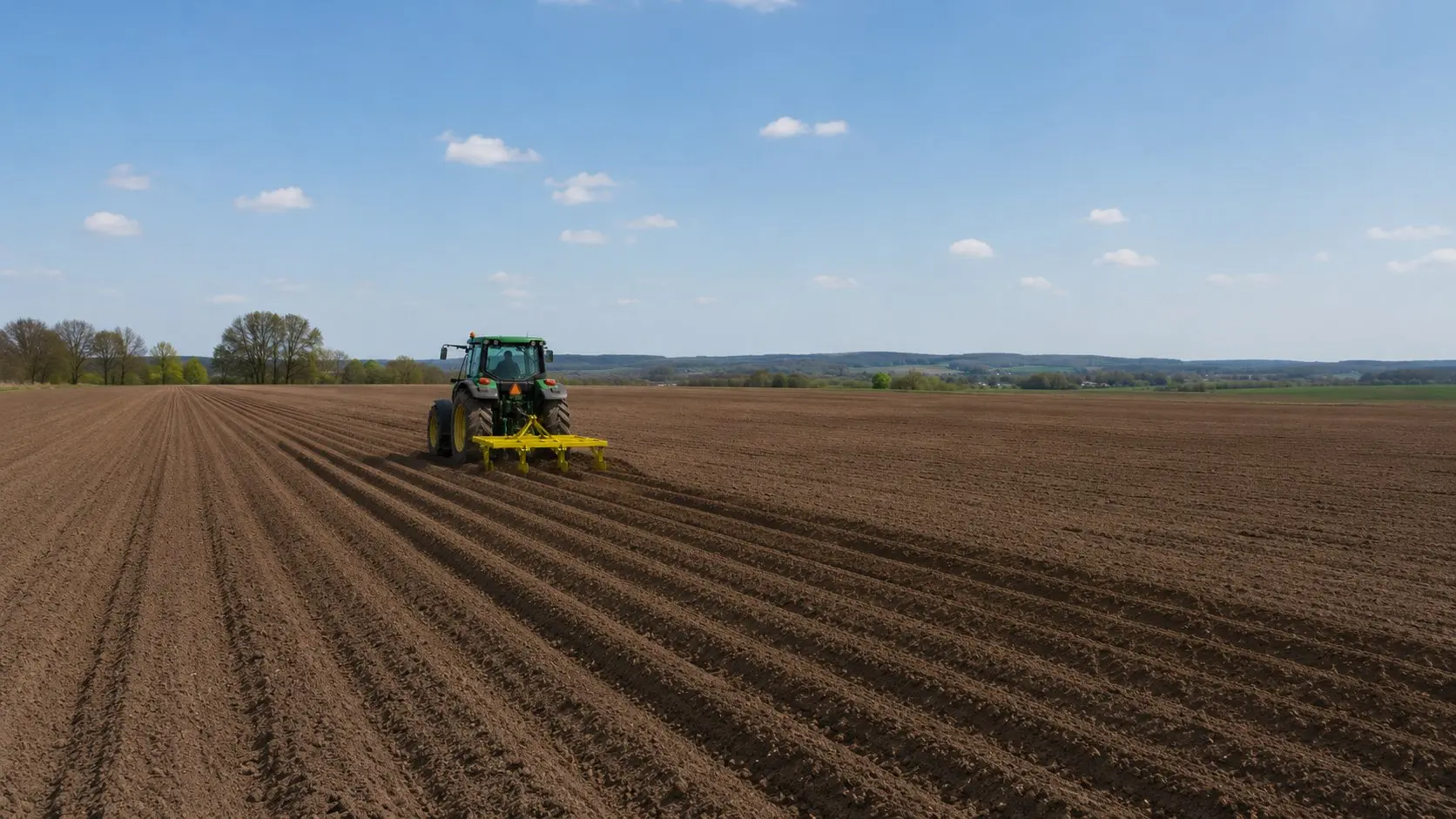
In a conventional potato system, pre-emergence and post-emergence herbicides eliminate most weed competition before the crop canopy closes at 6–8 weeks. In an organic system, the same weed suppression must be achieved entirely mechanically — a more labour- and pass-intensive approach that requires a specific set of implements and a precise timing window.
The additional cultivation passes required for organic weed control (typically 3–5 more tractor passes per season than conventional) significantly increase the compaction accumulation risk in organic potato fields. This makes CTF (controlled traffic farming) more valuable in organic systems than in conventional — keeping all tractor passes in permanent fixed tracks and protecting the growing zone from compaction is particularly important when the rotation includes many cultivation passes for weed control.
Haulm Destruction — The Mechanical Flail as the Only Organic Option
Potato haulm must be killed and removed from the ridge surface before harvest to allow tuber skin to set, prevent blight spread to developing tubers during the digging process, and ensure the digger can operate without vine interference. In conventional systems, this is typically achieved by chemical desiccation — until 2020, this was done in the EU with miquat chloride (diquat); after the diquat ban, alternatives include sodium chlorate (still permitted in some jurisdictions) and carfentrazone. All chemical desiccants are prohibited in organic production.
The organic haulm destruction method is mechanical flailing — a power-take-off-driven rotary flail mower that shreds the potato haulm into fragments at the soil surface. The flail must cut the haulm at or below the ridge surface to prevent the cut stems from regrowing; most haulm toppers operate with the flail blades running at ridge crown height. The flail residue — chopped haulm fragments — remains on the ridge and in the furrow for 2–3 weeks while decomposition occurs. This decomposition period coincides with the tuber skin-setting period (the haulm is no longer carbohydrate-supplying to the tubers, so both skin-set and haulm decomposition proceed simultaneously). Harvest should not begin until the haulm residue has decomposed sufficiently that the digger’s elevator chain can pass without capturing large haulm fragments that could block the chain or contaminate the tuber load.
- Flail 2–3 weeks before intended harvest date
- Allow flail residue to decompose at ridge surface
- Check blight status: if blight present on haulm at flail time, use permitted copper spray on the stubble after flailing to reduce sporulation on remaining stem material
- At 2 weeks post-flail: assess tuber skin set by rubbing a tuber’s surface — fully set skin does not rub off under moderate finger pressure
- Assess haulm residue: if large stem fragments remain that could interfere with the elevator chain, a second lighter flail pass may be needed
- Proceed to harvest when both skin set and residue decomposition are acceptable
Voor vragen over potato machinery systems compatible with organic certification requirements, Korea Watanabe can advise on which machines in the range have no input-prohibited components and which are certified-clean for use on organic-certified potato production.
Soil Fertility Building and Shared Equipment Certification Protocol
In organic potato production, soil fertility is built through the rotation rather than applied as a seasonal input. The rotary cultivator plays a primary role in this fertility building: green manure cover crops (clover/grass mixes, mustard, phacelia) grown between potato crops are incorporated by the rotary cultivator 4–6 weeks before planting. These high-biomass green manures must be worked into the top 20–25 cm of soil to decompose before the potato seed is placed — an additional cultivation pass beyond what the conventional system requires. For high-volume green manure crops (red clover at 8–12 tonnes/ha fresh weight), a first incorporation pass with a plough or heavy tine cultivator is needed to handle the bulk material before the rotary cultivator’s second fine-tilth pass is effective.
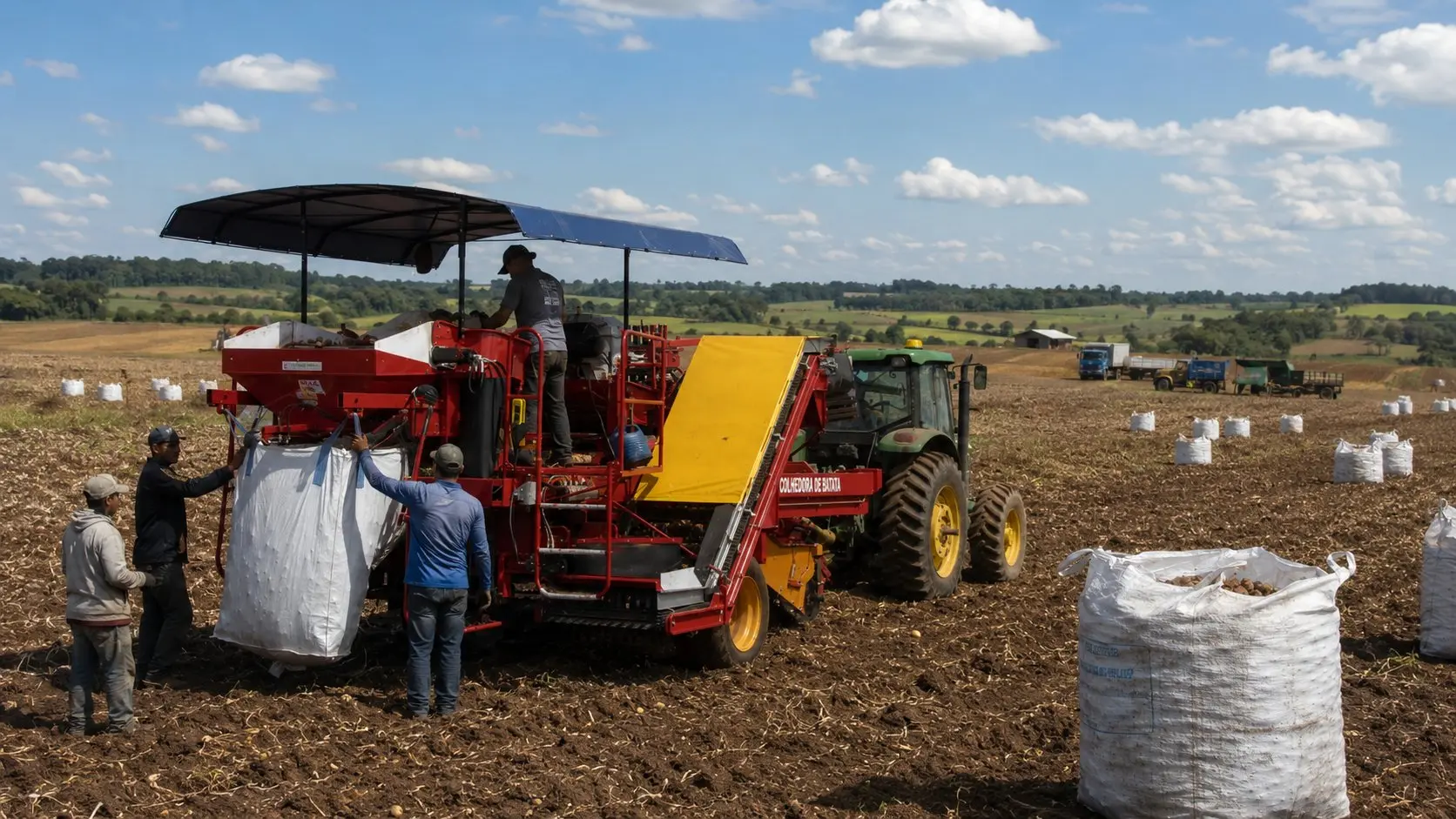
Shared equipment certification is an important and frequently overlooked aspect of organic compliance. Many farms share machinery with neighbours or use contractor equipment that also operates on conventional farms. Contamination from synthetic pesticide residues in harvesting equipment that has previously been used on a conventionally treated crop is a certification risk — most organic certification bodies require that shared equipment be cleaned and inspected before use on certified organic fields. The cleaning requirement is typically documented: the farmer records the equipment used, from where, and what cleaning steps were taken. For harvest equipment (diggers, trailers), this means removing all soil, plant material, and chemical residue from the previous operation before the machine enters the organic field. For planting equipment, any seed dressing chemicals from the previous seed lot must be confirmed absent before the organic seed is loaded.
Veelgestelde vragen
▶Is organic potato production economically viable given the additional machinery and operations required?
Organic potato is economically viable in markets with established organic premiums — typically a 60–120% price premium over conventional market price for certified organic ware potato in the UK and EU. This premium is necessary to compensate for several organic production cost increases: yields on organic potato are typically 20–40% lower than equivalent conventional yields (blight pressure, nutrient availability limitations, and weed competition before canopy closure all reduce yield); the additional cultivation and spray passes increase field operation costs by 15–25%; and organic seed is more expensive than conventional seed. The net economics depend on the specific market premium achievable, which varies by variety, market, and season. Organic processing potato is a specialist market with fewer buyers than conventional; organic fresh market potato achieves the most consistent premium in retail supply chains. Before converting to organic potato production, confirm a buyer and premium before the first converted season — the 2-year conversion period (minimum required before EU 848/2018 organic certification is granted) means the additional costs begin before the premium is achievable.
▶How does blight management affect the sprayer specification for organic potato — specifically the tractor and sprayer width?
Late blight (Phytophthora infestans) is the primary disease challenge in organic potato production, and copper-based sprays must be applied frequently (every 7–10 days in blight-risk conditions) and in all cases before blight sporulation begins. This frequency requires a sprayer tractor that can enter the crop repeatedly without damaging the ridges — a standard agricultural sprayer at 4.5–5.5 m boom width with wide wheel centres may be too wide to operate in 75 cm rows without running wheels on the ridges. Organic potato spray tractors are often narrow-track units (wheel centres adjusted to fit between rows) or high-clearance sprayers with wheels in the furrows rather than on the ridges. The sprayer boom must provide full canopy coverage at the narrower wheel-track configuration. For smaller organic potato operations, a standard tractor-mounted 300–600 litre sprayer at 12 m boom with wheel centres adjusted to walk in the furrows is the most common arrangement. The copper spray volume (to deposit 3 kg Cu/ha/year maximum across the season’s total applications) must be tracked — a formal application record is required by the certification body for audit purposes.
▶Are there potato varieties specifically suited to organic production that also affect the machinery specification?
Yes — variety selection for organic potato significantly affects the intensity of blight management operations and therefore the required number of spray tractor passes per season. Varieties with strong field blight resistance (Sarpo Mira, Carolus, Setanta, Vitabella) can reduce the required copper spray frequency from weekly to fortnightly in moderate blight-pressure years — halving the number of spray passes and conserving the annual copper budget. For machinery, this translates to lower spray tractor hours and reduced soil compaction from spray passes during the critical mid-season growth period. In contrast, high-yielding mainstream varieties (Maris Piper, Markies, Innovator) with low blight resistance require intensive spray coverage that can exhaust the 3 kg Cu/ha/year allowance before the season is complete in high-pressure years — forcing early harvest or accepting blight risk. Blight-resistant variety selection is therefore the most direct way to reduce the machinery burden of organic blight management, and should be the first agronomic decision in organic potato system design, ahead of machinery specification.
▶Can a potato digger be used on an organic potato crop immediately after use on a conventional field, or is cleaning required first?
Most EU 848/2018 certification bodies require that shared equipment (diggers, planters, trailers) be cleaned before use on an organic field if it has most recently been used on a conventional crop. The practical cleaning standard is removal of all soil, plant material, and visible residues — not a chemical sterilisation or laboratory analysis, but a thorough physical clean that eliminates the risk of carrying soil containing synthetic pesticide residues into the certified organic field. For a potato digger, this means: pressure-washing the elevator chain, the share, the separator, and all frame components; cleaning the inside of any collection hopper or bunker; and documenting the cleaning with date, equipment, and previous field use. The certification body’s standard documentation form typically covers this requirement. In practice, if the digger is owned by the organic farm and has only been used on its own organic fields, no cleaning requirement applies — the restriction is specifically on equipment previously used on inputs-prohibited conventional production entering the organic field. Contractors providing digger services to organic farms need to maintain the same documentation as the farmer would.
▶How does the conversion period to organic affect the machinery purchase decision — should I buy organic-system machinery before certification?
The EU 848/2018 two-year conversion period (during which the farm is managed to organic standards but cannot yet label produce as organic) is the most financially challenging phase of conversion, because the additional costs of organic management begin immediately while the premium price is not yet available. From a machinery perspective, the conversion period decision is: invest in the additional organic-specific machinery (inter-row cultivator, haulm topper, potentially a narrow-track spray tractor) at the start of conversion, or operate without specialist organic machinery during conversion and purchase after certification? The practical answer depends on the scale of the enterprise. For farms of 5 hectares or more, investing in the inter-row cultivator and haulm topper before or at the start of conversion is justified — the weed pressure in the first organic season is typically high (the weed seed bank from previous conventional management is still large), and mechanical control without the right equipment produces poor weed suppression and low yields during conversion. For very small enterprises (below 3 hectares), contractor services for haulm topping and inter-row cultivation may bridge the conversion period before owned-equipment investment is justified by scale.
Organic Potato System Enquiry?
Share your organic certification body, farm scale, and intended potato market. Korea Watanabe will advise on which aardappelmachines is compatible with your certification requirements and whether any equipment cleaning documentation is available.
Korea Watanabe Rock Crusher Tractor Co., Ltd. — Ansan-si, Gyeonggi-do
Redacteur: Cxm