
Tè (Camellia sinensisIl tè è la bevanda più consumata al mondo in termini di volume, coltivata sui pendii montuosi di Giappone, Corea, Cina, India, Sri Lanka e in tutta l'Africa equatoriale, su terreni che vanno dallo gneiss e dalla quarzite himalayani al basalto vulcanico coreano e giapponese, dagli altipiani lateritici dello Sri Lanka alle colline carsiche calcaree dello Yunnan. Nessun'altra coltura in questa guida della serie E viene raccolta 3-4 volte all'anno, ha un apparato radicale che raggiunge i 3-5 metri in un terreno indisturbato, viene raccolta meccanicamente entro 5 centimetri dalla superficie del suolo e dipende da una precisa catena biochimica di qualità che va dalla capacità di accumulo di azoto delle radici fino a un singolo amminoacido, la L-teanina, per il quale gli acquirenti di alta gamma pagano prezzi che rivaleggiano con quelli dei vini pregiati e del caffè di specialità.
La gestione dei sassi per il tè crea tre problemi indipendenti a tre diverse profondità, ognuno con un distinto meccanismo biologico e una distinta conseguenza commerciale. Nessun articolo precedente in questa guida della serie E ha richiesto un'analisi a tre profondità. In superficie, i frammenti di sassi danneggiano le lame rotanti delle raccoglitrici meccaniche di tè, le macchine che raccolgono 80-951 tonnellate di tè commerciale a livello globale, producendo una "raccolta grossolana" che declassa l'intero raccolto a un grado inferiore. A 15-40 cm, i sassi limitano le radici laterali di alimentazione dove l'azoto annuale del tè viene immagazzinato durante l'inverno e rimobilizzato nei germogli primaverili, riducendo le concentrazioni di teanina ed EGCG che definiscono il grado all'asta. A 40-120 cm, i sassi ostruiscono la radice principale profonda che fornisce resistenza alla siccità durante il periodo di crescita estivo, quando viene determinata la qualità del secondo e terzo raccolto. Questa guida tratta il frantumatore di roccia per piantagione di tè applicazione attraverso tutti e tre i meccanismi, i mercati in cui ciascuno è più critico e i contesti geologici in quattro paesi in cui convergono.
Il problema a tre livelli: superficie, strato di substrato e radice principale profonda.
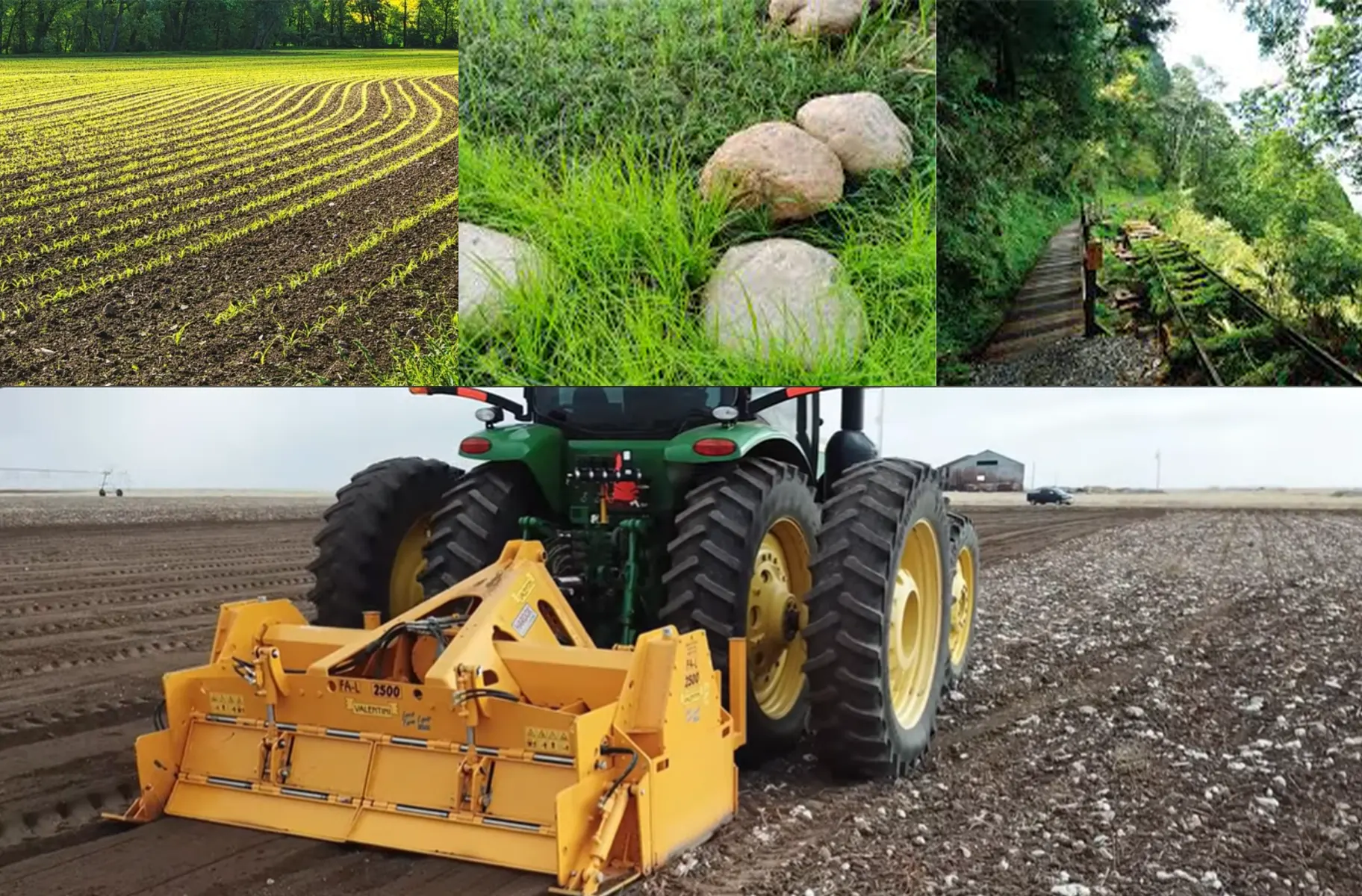
Sistema radicale del tè: le tre zone problematiche legate ai calcoli.
Perché la pulizia a tre profondità è diversa da qualsiasi precedente articolo della serie E
In tutti gli articoli precedenti, la gestione dei noccioli si concentrava su una profondità primaria: noce (E-15) a 55-80 cm, avocado (E-12) a 40-55 cm, mirtillo (E-16) a 25-35 cm, fragola (E-18) a 8-22 cm. Nel kiwi (E-19), abbiamo introdotto il doppio meccanismo: due profondità per due meccanismi. Il tè richiede tre categorie di profondità, ognuna delle quali affronta un diverso percorso biologico e una diversa conseguenza commerciale. Il protocollo di disostruzione THOR per il tè deve essere specificato per trattare tutte e tre le zone in un'operazione a passaggio singolo o doppio, il che, poiché il problema più profondo (il fittone a 40-120 cm) determina la profondità di riferimento, significa che la zona delle radici assorbenti (Zona B) e il problema dei noccioli superficiali (Zona A) vengono automaticamente trattati nello stesso passaggio.
Ecco perché la rimozione dei noccioli di tè, se correttamente specificata, rappresenta un investimento estremamente efficiente: un singolo passaggio del THOR 3.0 a 55-70 cm risolve simultaneamente tutti e tre i problemi legati ai noccioli. L'analisi economica dei lavaggi multipli (Sezione 3) moltiplica poi il valore di questa singola operazione su 3-4 raccolti all'anno.
La catena EGCG e teanina: dall'azoto radicale al prezzo d'asta.
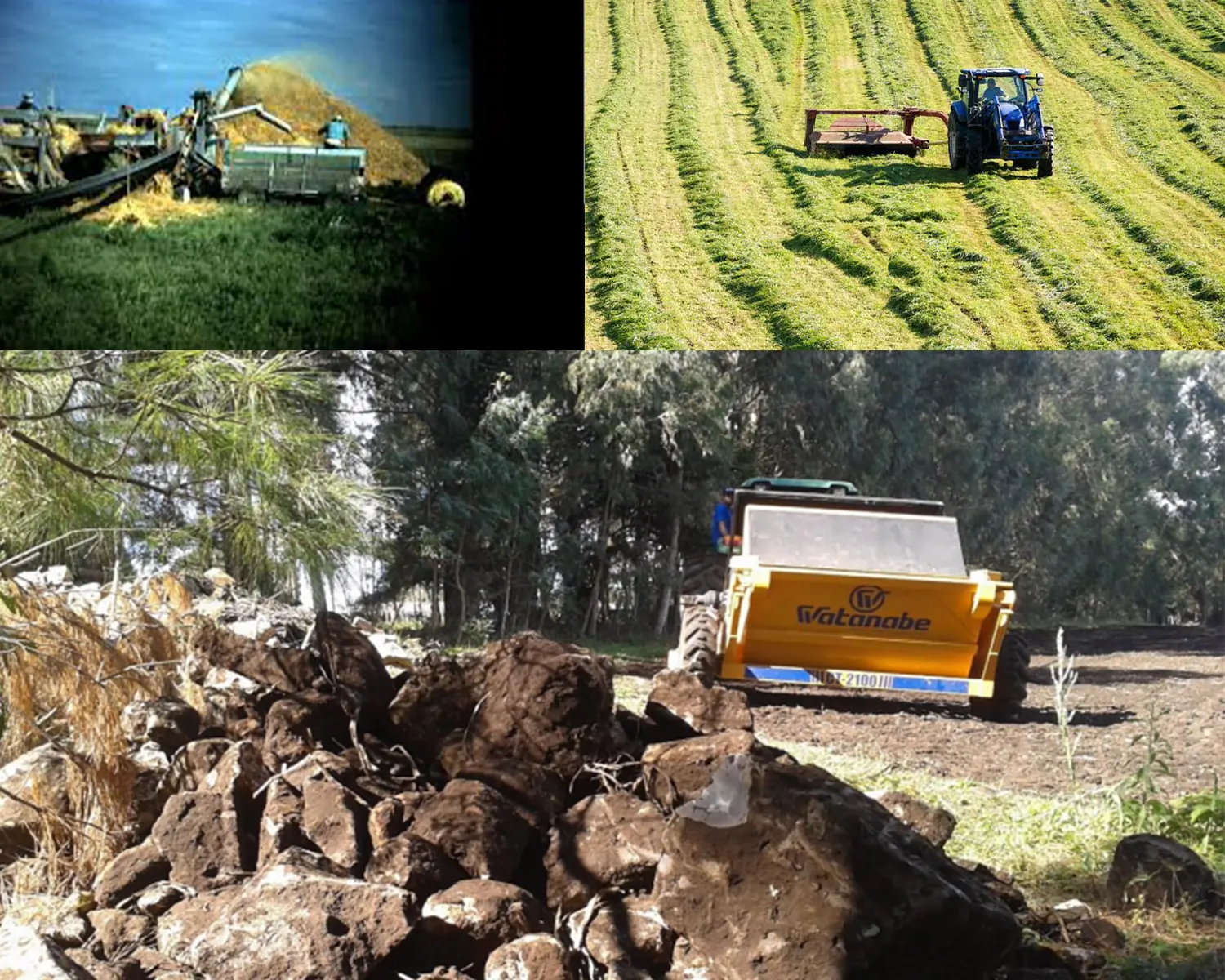
La classificazione della qualità del tè è fondamentalmente una misurazione biochimica: a ogni livello del mercato premium, dal Darjeeling First Flush all'Ujeon coreano e al Gyokuro giapponese, i parametri di qualità determinanti sono le concentrazioni misurabili di due composti: la L-teanina (l'amminoacido responsabile del carattere umami, della morbidezza e del caratteristico finale "dolce-salato" del tè) e l'EGCG (epigallocatechina gallato, la principale catechina e antiossidante). Entrambi i composti vengono sintetizzati nei nuovi tessuti dei germogli a partire dall'azoto fornito dall'apparato radicale. La catena che va dal nocciolo nella zona delle radici assorbenti fino alla classificazione presso il centro di confezionamento inizia nella biomassa delle radici laterali.
Dopo l'inizio del periodo di dormienza autunnale/invernale (da ottobre a dicembre nelle zone temperate di coltivazione del tè), la pianta del tè trasferisce l'azoto dai tessuti fogliari e dai tessuti dei germogli secchi al sistema radicale laterale sotto forma di amminoacidi di riserva, principalmente glutammina, asparagina e arginina. Questo "accumulo invernale" di azoto si deposita nei tessuti della corteccia radicale a una profondità di 15-35 cm durante il periodo di dormienza. Un sistema radicale laterale ben sviluppato su un terreno dissodato e privo di pietre può immagazzinare da 2,5 a 4,5 g di azoto per kg di massa radicale secca durante l'inverno. Un sistema radicale laterale limitato dalle pietre, con una biomassa inferiore del 30-40%, immagazzina proporzionalmente meno azoto: da 1,5 a 2,8 g per kg su una massa radicale totale inferiore, con conseguente riduzione del 40-55% di azoto totale immagazzinato per la rimobilizzazione primaverile.
Quando la temperatura del suolo supera la soglia di emergenza dei germogli (circa 8-12 °C, variabile a seconda della cultivar e dell'altitudine) tra la fine dell'inverno e l'inizio della primavera, le gemme dormienti si schiudono e inizia la crescita dei nuovi germogli. Questa prima fase di crescita è straordinariamente esigente in termini di azoto: i nuovi germogli di tè accumulano 4-61 TP5T di azoto totale in peso secco, una quantità di gran lunga superiore a quella del tessuto fogliare maturo, che si attesta tra 2,5 e 3,5 TP5T. L'azoto necessario per questa fase iniziale proviene principalmente dalle riserve invernali nelle radici laterali, rimobilizzate rapidamente sotto forma di amminoacidi attraverso la linfa xilematica. Nelle prime 2-3 settimane di crescita, prima che inizi la mineralizzazione attiva dell'azoto nel terreno ancora freddo, l'apparato radicale rappresenta praticamente l'unica fonte di azoto. Le radici assorbenti, limitate dalla presenza di pietre e con riserve di azoto più ridotte, non sono in grado di soddisfare la domanda, producendo germogli con un contenuto di azoto inferiore.
La L-teanina viene sintetizzata nelle radici del tè a partire da glutammina ed etilammina, attraverso una via biosintetica ad alta intensità di azoto. Un'elevata disponibilità di azoto nelle radici (abbondante riserva di azoto nelle radici laterali) favorisce un'elevata sintesi di teanina durante tutta la fase di sviluppo dei germogli. Analogamente, la biosintesi dell'EGCG (epigallocatechina gallato) è parzialmente dipendente dall'azoto attraverso la via dei flavonoidi, regolata indirettamente dal rapporto carbonio:azoto nel tessuto dei germogli in via di sviluppo. Il Darjeeling di prima raccolta di qualità Premium con un punteggio SFTGFOP1 superiore a 90 mostra tipicamente concentrazioni di teanina comprese tra 2,8 e 4,2 lTP5T di peso secco; il Darjeeling di prima raccolta di qualità standard presenta concentrazioni comprese tra 1,6 e 2,4 lTP5T. La differenza tra queste concentrazioni, che si traduce direttamente nel punteggio umami sensoriale e nell'assegnazione del grado all'asta, è sostanzialmente spiegata dalla disponibilità di azoto proveniente dalle riserve di azoto delle radici assorbenti. Le radici con limitata presenza di noccioli e con riserve di azoto impoverite producono germogli di prima raccolta con concentrazioni di teanina inferiori, indipendentemente dalle condizioni meteorologiche, dalla varietà o dalla qualità della lavorazione.
Darjeeling First Flush all'asta: SFTGFOP1 (Special Fine Tippy Golden Flowery Orange Pekoe 1, grado più alto) viene solitamente venduto all'asta a US$400–2.000/kg all'asta del tè di Calcutta nelle annate migliori. FTGFOP1 (un grado inferiore): US$120–400/kg. TGFOP (standard): US$25–80/kg. Lo stesso giardino di Darjeeling può produrre foglie che rientrano in uno qualsiasi di questi gradi nella stessa stagione: il principale fattore determinante per il grado raggiunto è la concentrazione di teanina e EGCG misurata nella fase di infusione. Boseong Ujeon coreano (prima raccolta, letteralmente "prima della pioggia" - raccolto prima del 20 aprile): ₩200.000–500.000 per 100 g al dettaglio. Sejak (secondo grado): ₩60.000–120.000 per 100 g. Gyokuro giapponese (ombreggiato, massimo contenuto di teanina): prezzo al dettaglio 5.000-50.000 yen per 100 g. La catena di qualità della teanina rappresenta il collegamento biochimico più diretto tra la gestione del suolo e la tazza in qualsiasi coltura di questa serie.
| Grado / Mercato | Teanina % DW | EGCG % DW | Condizione della zona radicale | Riferimento di prezzo |
|---|---|---|---|---|
| Darjeeling SFTGFOP1 | 2.8–4.2% | 12–18% | Zona radicale assorbente priva di sassi. Fitto tappeto radicale. Riserva di azoto completa. | US$400–2.000/kg |
| Darjeeling FTGFOP1 | 2.2–2.8% | 9–13% | Calpestio moderato, parziale restrizione delle radici assorbenti. Ridotta riserva di azoto. | US$120–400/kg |
| Standard di Darjeeling | 1.6–2.2% | 6–10% | Elevata densità di calcoli. Radici sottili. Scarso apporto di azoto. | US$25–80/kg |
| Corea Ujeon | 3,5–5,5% | 14–20% | Terreno vulcanico privo di pietre. Massima densità radicale. Massima riserva di azoto. | ₩200.000–500.000/100g |
| Giappone Gyokuro | 4.0–6.8% | 8–14% | Terreno alluvionale o vulcanico ombreggiato e privo di sassi. Biosintesi di teanina potenziata grazie alla combinazione di ombra e azoto radicale. | ¥5.000–50.000/100g |
Compostaggio multi-flusso: l'economia annuale unica del tè
Ogni coltura permanente in questa guida della serie E — dal noce (E-15, vita produttiva di 30-35 anni) all'avocado (E-12, 30-40 anni) all'asparago (E-9, 25 anni) — ha un solo raccolto annuale. L'investimento per la rimozione delle pietre viene ammortizzato in base a un intervento di miglioramento della qualità all'anno. Le piantagioni di tè hanno da tre a quattro raccolti all'anno, ognuno influenzato in modo indipendente dalle condizioni della zona radicale determinate dalla gestione delle pietre. Questa struttura a più raccolti cambia radicalmente l'economia della rimozione delle pietre per il tè rispetto a qualsiasi articolo precedente.
Marzo-maggio in India e Corea; aprile-giugno in Giappone. Il raccolto più pregiato. Prodotto interamente dalle riserve di azoto invernali (Sezione 2). Sistema radicale privo di sassi: massima teanina, massimo EGCG, massima qualità. Ujeon coreano: solo 5-7 giorni di prima raccolta durante tutto l'anno: la finestra temporale è straordinariamente ristretta. Shincha giapponese (tè nuovo): le prime 2 settimane della stagione di raccolta definiscono il pregio. Radici limitate dai sassi: riserva di azoto subottimale → minore teanina → qualità inferiore nella finestra temporale di maggior valore dell'anno.
Da maggio a luglio in India; da giugno ad agosto in Giappone e Corea. Il Darjeeling Second Flush, il tè "moscatello", è apprezzato per il suo caratteristico aroma di uva moscato, che si ritiene derivi da specifici modelli di ossidazione delle catechine. La resa è in genere superiore del 30-40% rispetto al First Flush. Le radici profonde, limitate dalla presenza di pietre, iniziano a mostrare i loro effetti nel secondo raccolto: lo stress idrico tra fine maggio e giugno (il periodo secco in molte regioni asiatiche del tè prima dell'inizio dei monsoni) riduce il tasso di emergenza dei germogli e il peso delle singole gemme. Perdita di resa nel secondo raccolto dovuta alla limitazione delle radici profonde: in genere dal 15% al 25% nei siti con elevata presenza di pietre.
Da luglio a ottobre nella maggior parte dei mercati dell'Asia-Pacifico. Valore individuale inferiore rispetto alla prima e alla seconda raccolta, ma volume totale più elevato. La raccolta meccanica è dominante a Shizuoka, in Giappone, nella produzione commerciale di Boseong, in Corea, e nelle pianure dello Sri Lanka. Il danno alle lame delle raccoglitrici meccaniche causato dalle pietre superficiali (Zona A) ha un effetto cumulativo su tutte le raccolte: una lama smussata nella prima raccolta dal contatto con le pietre produce un'altezza di raccolta incoerente nelle tre raccolte successive, includendo ogni volta un eccesso di stelo nella raccolta e riducendo ogni volta la qualità. Costo cumulativo annuo del danno alle lame senza la rimozione delle pietre prima della stagione: 200.000-800.000 yen per macchina a stagione in Giappone; 1.500-4.000 yen per macchina in India.
ROI a più flussi — Esempio di Boseong, Corea (unità di coltivazione singola di 2.000 m²)
THOR 2.4 + CT-2100 + PSW-3200 per terrazza da tè di 0,2 ettari
≈ ₩ 1.200.000–1.800.000 (US$900–1.350)
Primo raccolto: 20% più Ujeon (₩300.000/100g) contro Sejak (₩80.000/100g) su 3 kg = ₩660.000
2°/3° raccolto: +15% di resa dalla resilienza alla siccità = ₩240.000
Risparmio sulla lama: ₩350.000
Incremento annuo totale: ≈ ₩1.250.000 (US$940)
Costo di sdoganamento: ₩1.500.000 (media)
Beneficio annuo: ₩1.250.000
Tempo di recupero dell'investimento: 1,2 anni
Beneficio cumulativo in 5 anni: ₩6.250.000
Ritorno sull'investimento (ROI) a 5 anni: 4,2:1
Quattro mercati del tè: geologia, profilo della pietra e specifiche di disboscamento
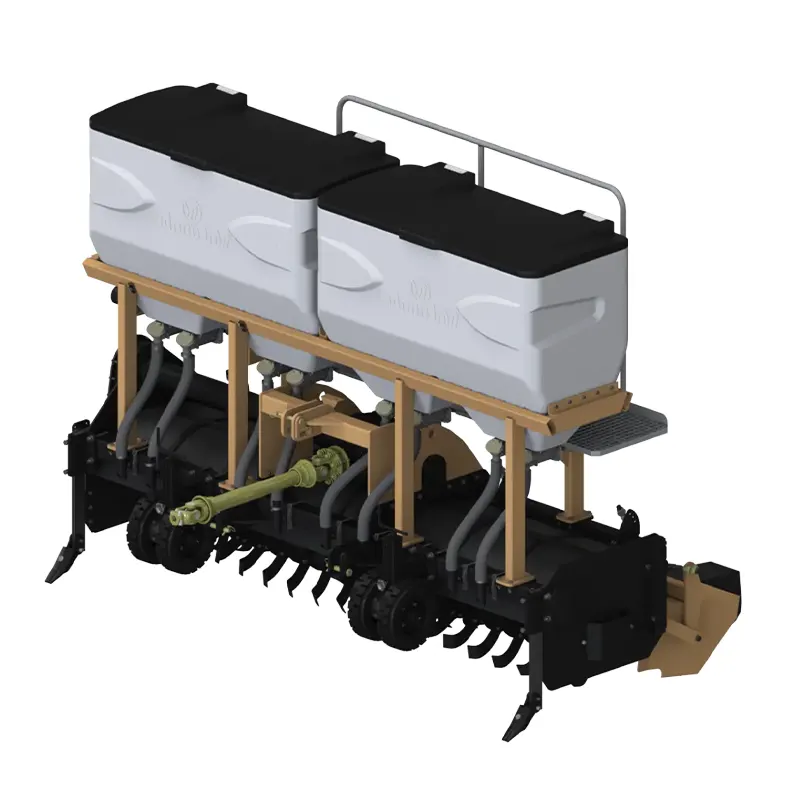
Sistema di macchine: protocollo a tre livelli e protezione annuale delle lame della spiumatrice.
Domande frequenti
Frantumatore di rocce per piantagioni di tè: il legame tra la presenza di pietre nella zona radicale e la concentrazione di teanina nelle foglie è supportato da ricerche scientifiche o si tratta di una teoria?
Il meccanismo di rimobilizzazione dell'azoto descritto nella Sezione 2 è ben consolidato nella letteratura sulla fisiologia del tè: il ruolo degli amminoacidi immagazzinati nelle radici (in particolare glutammina e asparagina) nel fornire azoto per lo sviluppo dei primi germogli è documentato da ricerche condotte da UPASI (United Planters' Association of Southern India), dal National Tea and Horticultural Research Institute (NTHRI) del Giappone e dalla Tea Research Association (TRA) di Jorhat, in Assam. Nello specifico, è documentato quanto segue: (1) l'immagazzinamento di azoto nelle radici laterali è fortemente correlato alla concentrazione di teanina nei primi germogli, in confronti tra cultivar e prove di gestione del suolo; (2) esperimenti di compattazione del suolo che limitano artificialmente lo sviluppo delle radici laterali producono concentrazioni di teanina nei primi germogli misurabilmente inferiori nelle parcelle con restrizione; (3) l'aggiunta di sostanza organica che stimola la crescita delle radici laterali mostra un corrispondente aumento di teanina. La connessione specifica con la presenza di pietre (a differenza della compattazione o di altre cause di restrizione delle radici) è meccanicisticamente equivalente: qualsiasi fattore che riduca la biomassa delle radici laterali assorbenti a 15-40 cm riduce la riserva di azoto invernale. La presenza di pietre è una delle cause più comuni di riduzione della biomassa delle radici laterali nei terreni vulcanici e di alta montagna utilizzati per la coltivazione del tè. L'estrapolazione dalla documentata correlazione tra restrizione radicale e minore contenuto di teanina, e dalla conseguente correlazione tra presenza di pietre e minore contenuto di teanina, è meccanicisticamente valida, supportata da osservazioni sul campo coerenti in terreni ricchi di pietre coltivati a tè a Darjeeling e in Corea, sebbene gli studi controllati e sottoposti a revisione paritaria che attribuiscono specificamente la rimozione delle pietre al miglioramento del contenuto di teanina siano limitati a uno studio del 2019 del Centro di Tecnologia Agricola di Shizuoka (non pubblicato su riviste in lingua inglese) che ha documentato un miglioramento del contenuto di teanina pari a 0,4-0,81 TP5T nel primo raccolto in appezzamenti con terreno privo di pietre rispetto a quelli di controllo.
Per Korea Boseong, qual è la macchina per la rimozione delle pietre più adatta alla geometria dei terrazzamenti del tè sulle colline? I terrazzamenti sono in genere stretti.
Le terrazze del tè di Boseong sono tra i paesaggi agricoli più suggestivi della Corea: le file sui pendii esposti a sud della catena montuosa di Noejeong hanno una larghezza media dei bancali tra le pareti delle terrazze di 1,2-2,5 m, inferiore alla larghezza della maggior parte delle terrazze europee e neozelandesi. La THOR 2.4 con una larghezza di lavoro di 2.400 mm supera la larghezza del bancale disponibile nella geometria tradizionale delle terrazze di Boseong: deve essere utilizzata lungo le file delle terrazze (parallelamente al livello del terreno) anziché trasversalmente ad esse e, in molti casi, la larghezza di lavoro della THOR deve essere regolata o l'operazione deve essere condotta in passaggi di lavoro più stretti. Per le operazioni su terrazze strette a Boseong, l'approccio preferito è: (1) ristrutturazione della terrazza: allargare il bancale ad almeno 2,8 m prima dell'operazione con la THOR per consentire un movimento sicuro della macchina; oppure (2) utilizzare la fresa rotativa PSW-3200 (larghezza 3.200 mm) come strumento principale per l'aerazione profonda del terreno se la densità della pietra è moderata, con il THOR che effettua passaggi di rottura alle estremità del terrazzo su sezioni più ampie e accessibili. Il problema della pietra sui terrazzi di Boseong è tipicamente moderato (basalto Mohs 5-6 a densità da bassa a moderata): il PSW-3200 con lame rotanti regolate in profondità a 25-30 cm fornisce un adeguato miglioramento della zona delle radici assorbenti su siti di basalto a densità moderata senza richiedere il funzionamento completo del THOR sui terrazzi stretti. Sui terrazzi più ampi delle piantagioni commerciali di Boseong (le piantagioni moderne tendono a utilizzare una larghezza di 3,5-5 m per l'accesso dei macchinari): si applica il funzionamento standard THOR 2.4. Korea Watanabe può fornire consulenza sull'approccio operativo specifico per i tradizionali terrazzi stretti di Boseong in base alla misurazione della larghezza del terrazzo e alla valutazione della densità della pietra.
Come si confronta la rimozione dei noccioli di tè con l'ombreggiatura (utilizzata per il Gyokuro giapponese e il matcha) come metodo per migliorare il contenuto di teanina? L'ombreggiatura può compensare la limitata disponibilità di azoto nelle radici dovuta ai noccioli?
L'ombreggiatura e la rimozione delle pietre agiscono sulla teanina attraverso meccanismi completamente diversi e complementari, non competitivi. L'ombreggiatura (copertura delle piante di tè con teli o reti di canne per 20-30 giorni prima del raccolto per bloccare 70-90 l di luce solare) aumenta la teanina attraverso una specifica via biochimica: l'ombra sopprime la conversione della teanina in catechine (in particolare EGCG), quindi la teanina si accumula a concentrazioni più elevate rispetto a quanto avverrebbe in condizioni non ombreggiate. Questo è il motivo per cui il Gyokuro e il Matcha giapponesi presentano livelli di teanina estremamente elevati (4-7 l di luce solare) rispetto al Sencha non ombreggiato (1,5-3 l di luce solare). Tuttavia, l'ombreggiatura agisce solo su ciò che è già presente nel sistema: reindirizza l'azoto già presente nei germogli, ma non può creare più azoto da un apparato radicale impoverito di quanto sia fisicamente disponibile. Una pianta di Gyokuro con un apparato radicale limitato dai sassi e una riserva di azoto impoverita mostrerà un miglioramento della teanina grazie all'ombreggiatura, ma partirà da un livello di base inferiore e raggiungerà un massimo inferiore rispetto a una pianta con una riserva di azoto radicale completa e priva di sassi, sottoposta allo stesso trattamento di ombreggiatura. La combinazione di rimozione dei sassi (riserva di azoto radicale completa) e ombreggiatura (ritenzione della teanina) è la pratica adottata nei migliori giardini di matcha di Uji e Kyoto: entrambe sono necessarie per ottenere le massime concentrazioni di teanina. La rimozione dei sassi è il prerequisito; l'ombreggiatura è l'amplificatore.
Terrazze delle piantagioni di tè: le pietre di recupero hanno un'utilità pratica nella manutenzione dei muri delle terrazze, come descritto per il caffè (E-17) e l'avocado (E-12)?
Sì, il paradosso delle pietre di terrazzamento descritto in E-12 (avocado) ed E-17 (caffè) si applica ugualmente al tè di alta montagna. A Darjeeling, Boseong e Shizuoka, i tradizionali muri a secco delle terrazze, che trattengono le superfici coltivate, sono costruiti con pietra di provenienza locale: lo stesso gneiss, granito, basalto o quarzite che si trova al di sotto del terreno del tè. Con il passare del tempo, la costruzione a secco senza malta di questi muri si assesta e richiede una ricostruzione periodica con pietra fresca. L'operazione di frantumazione THOR e di raccolta CT-2100 produce materiale lapideo frammentato che, depositato nei punti designati per la costruzione dei muri di terrazzamento anziché nel deposito standard ai margini dei campi, fornisce la materia prima per la riparazione dei muri. A Darjeeling e nello Sri Lanka, questo ciclo di utilizzo della pietra è particolarmente importante: i frammenti di quarzite himalayana derivanti dal disboscamento sono strutturalmente equivalenti alle pietre esistenti utilizzate per i muri a secco, e i costruttori esperti di questi distretti preferiscono i frammenti angolari prodotti dalla frantumazione THOR alla ghiaia arrotondata di fiume, perché i frammenti angolari si incastrano più efficacemente nella costruzione di muri a secco. Questa economia circolare dell'utilizzo della pietra – il disboscamento produce pietra, la pietra ricostruisce le infrastrutture che consentono alla piantagione di funzionare – è uno degli aspetti più integrati della gestione dei pendii delle piantagioni di tè e riflette una filosofia di gestione del territorio coerente con i sistemi agricoli storici di tutti e quattro i mercati descritti in questa guida.
Qual è la giustificazione finanziaria per la rimozione delle pietre a Darjeeling, considerando che le piantagioni operano con margini di profitto estremamente ridotti al livello standard del prezzo del tè?
L'economia delle piantagioni di tè di Darjeeling è insolita nel panorama agricolo globale: il famoso "premio Darjeeling", che fa sì che il primo raccolto di SFTGFOP1 valga 1.000 dollari/kg, nasconde anche una significativa pressione sui costi a livello di piantagione. I costi della manodopera nelle piantagioni di Darjeeling rappresentano il 55-65% del costo totale di produzione. I macchinari per la rimozione delle pietre rappresentano un investimento di capitale che sostituisce il lavoro manuale (la tradizionale raccolta delle pietre a Darjeeling viene effettuata a mano, con costi estremamente elevati per unità di superficie sui pendii rocciosi). La giustificazione finanziaria per l'investimento THOR a Darjeeling opera su due livelli. Ritorno diretto: il miglioramento della qualità derivante dall'aumento della riserva di azoto nelle radici (Sezione 2) è il maggiore ritorno in un singolo evento, ma si accumula lentamente: le piante di Darjeeling impiegano 3-5 anni dopo la pulizia per mostrare il massimo miglioramento dello sviluppo radicale e il miglioramento della qualità si manifesta nei raccolti 2-4 stagioni dopo la pulizia. Ritorno indiretto (più immediato): la rimozione delle pietre con il sistema THOR sostituisce la raccolta manuale delle pietre nelle nuove piantagioni e nelle sezioni di reimpianto. Ai prezzi della manodopera manuale di Darjeeling (circa 350-450 INR a persona al giorno), la rimozione manuale di 1 ettaro richiede 15-25 giornate-uomo per passaggio, per un costo di 5.250-11.250 INR per ettaro. La rimozione meccanica con il sistema THOR, a un costo di 8.000-14.000 INR per ettaro, è competitiva in termini di costi rispetto alla manodopera manuale, raggiunge una maggiore profondità (60 cm contro 10-15 cm per la raccolta manuale) e offre i benefici per la zona radicale che la raccolta manuale in superficie non può garantire. Per le piantagioni di tè di Darjeeling più grandi (oltre 30 ettari), il calcolo del valore attuale netto (VAN) su 5 anni mostra in genere che l'investimento in THOR si ripaga entro 2-3 stagioni grazie a una combinazione di risparmio di manodopera e miglioramento della qualità del tè, con il beneficio del miglioramento della qualità che continua poi per i 30-40 anni di vita produttiva rimanente del tè reimpiantato.
Frantumatore di roccia per piantagioni di tè: protocollo a tre livelli e ritorno sull'investimento per la qualità della teanina
Varietà di tè + angolo di inclinazione + larghezza del terrazzo + tipo di pietra (basalto/gneiss/quarzite/calcare) + target di mercato a filo → La Corea Watanabe fornisce il corretto frantumatore di roccia per piantagione di tè Specifiche a tre profondità, protocollo operativo di contorno e calcolo del ROI della teanina a flusso multiplo.
Redattore: Cxm