
Rotavator — yang disebut 로터리 경운기 atau hanya 로터리 dalam praktik pertanian Korea — adalah alat pengolahan tanah utama dalam produksi kentang di Korea. Alat ini melakukan tugas yang menentukan kualitas lahan tanam lebih dari operasi tunggal lainnya: mengubah permukaan lahan setelah pembersihan batu menjadi profil tanah yang gembur, beraerasi, dan berkedalaman konsisten yang dibutuhkan untuk pembentukan bedengan kentang. Jika pemilihan rotavator tepat, maka alat pembajak alur, penanam, pengolah tanah, dan pemanen selanjutnya dapat melakukan tugasnya masing-masing dengan baik. Jika salah pilih — lebar yang salah, RPM yang salah, varian yang salah — maka setiap mesin selanjutnya akan bekerja melawan lahan tanam yang terganggu yang tidak dapat diperbaiki sepenuhnya dengan koreksi apa pun.
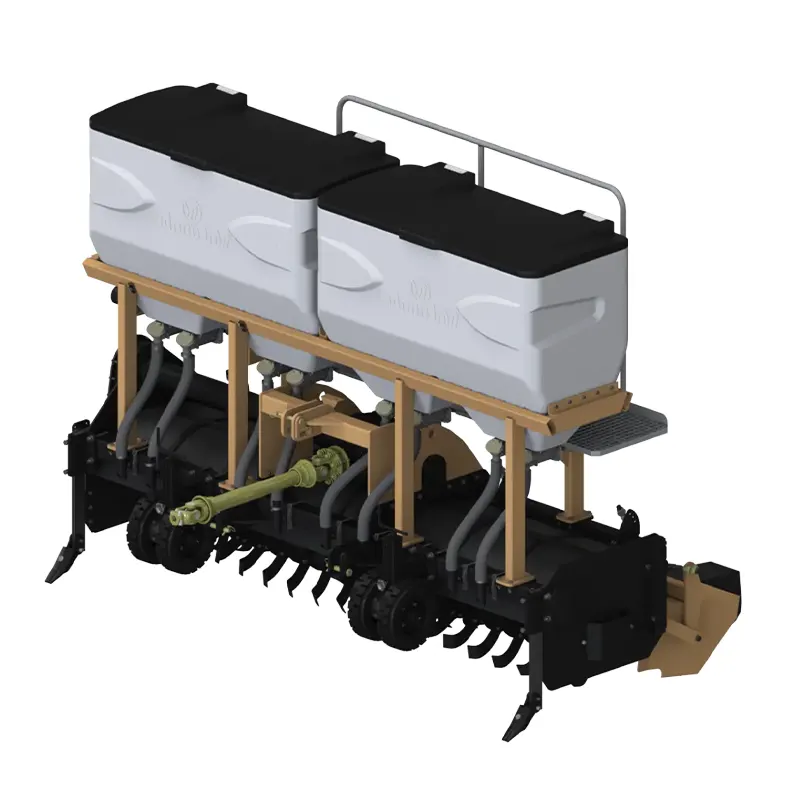
Suku Watanabe Rotavator PSW-3200 Tersedia dalam tiga varian — Standar, A, dan B — masing-masing dengan berat, panjang rangka, dan spesifikasi peralatan opsional yang berbeda. Ketiganya memiliki spesifikasi kerja inti yang sama: minimal 140 HP, lebar kerja yang dapat disesuaikan 3,0–3,6 m, pengait tiga titik Kategori 2, PTO 540 atau 1000 RPM. Pemilihan varian, pengaturan lebar kerja, dan pilihan RPM untuk operasi spesifik Anda adalah keputusan yang dibahas dalam panduan ini.
Mengapa Pemilihan Rotavator Lebih Penting dalam Produksi Kentang Dibandingkan Tanaman Lainnya
Dalam sebagian besar produksi tanaman tahunan di Korea, pemilihan rotavator terutama bergantung pada kesesuaian daya kuda traktor dan lebar kerja — hasil pengolahan tanah di lahan datar dan bebas batu relatif toleran terhadap ketidaksesuaian spesifikasi yang moderat. Produksi kentang di dataran tinggi Korea berbeda dalam tiga hal yang membuat pemilihan rotavator benar-benar penting:
Alasan 1: Kualitas Pembentukan Punggungan Bergantung pada Keseragaman Lahan Tanam
Produksi kentang Korea menggunakan gundukan yang ditinggikan (이랑) untuk pengelolaan drainase dan pengendalian ruang pengembangan umbi. Mesin pengolah tanah (Langkah 3 dalam sistem kentang) membentuk gundukan ini dengan menarik tanah dari zona antar baris ke arah baris benih. Kualitas pembentukan gundukan — tinggi gundukan, simetri gundukan, kepadatan pemadatan gundukan — bergantung pada keseragaman struktur tanah yang dihasilkan oleh rotavator. Pengolahan tanah dengan rotavator yang meninggalkan kedalaman pengolahan yang bervariasi (lebih dalam di zona lunak, lebih dangkal di atas batu di bawah permukaan), gumpalan besar yang tidak terpecah, atau sisa tanaman yang tidak sepenuhnya tercampur menghasilkan struktur tanah yang tidak teratur sehingga mesin pengolah tanah tidak dapat membentuk gundukan yang konsisten dan simetris. Geometri gundukan yang tidak konsisten berarti kedalaman tanam yang tidak konsisten dari alat tanam mekanis — langkah pertama menuju waktu kemunculan yang tidak merata dan variasi kedalaman panen.
Alasan 2: Tanah Dataran Tinggi Gangwon-do Padat, Berbatu, dan Tahan
Zona produksi kentang dataran tinggi utama Korea — Pyeongchang-gun, Hoengseong-gun, Jeongseon-gun, dan Inje-gun di Gangwon-do — terletak di tanah dangkal yang berasal dari granit pada ketinggian 300–800 m. Tanah ini padat: kaya akan partikel mineral, rendah bahan organik dibandingkan dengan tanah aluvial dataran rendah, dan mengalami pemadatan akibat siklus beku-cair tahunan yang memadatkan kembali profil permukaan setiap musim dingin. Daya minimum 140 HP ditentukan untuk PSW-3200 karena tanah dataran tinggi ini memberikan beban penuh pada rotor pada kedalaman kerja — rotavator yang kurang bertenaga di tanah granit dataran tinggi Gangwon-do akan melewatkan kedalaman kerja atau membutuhkan kecepatan maju yang sangat lambat untuk mempertahankan kualitas pengolahan tanah yang dibutuhkan.
Alasan 3: Lebar Kerja Membatasi Seluruh Sistem Hilir
Lebar kerja rotavator menentukan total lebar bedengan yang dibajak untuk setiap lintasan traktor. Pembuat alur (Langkah 3) membuka alur di dalam lebar yang dibajak ini — jarak antar baris dan jumlah baris pada pembuat alur harus sesuai dengan lebar rotavator. Penanam menanam di dalam alur — jarak antar barisnya harus sesuai dengan pembuat alur. Pengolah tanah membuat gundukan di sekitar baris yang ditanami — jarak antar barisnya harus sesuai dengan penanam. penggali kentang Rotavator mengangkat bagian bawah barisan tanaman — jarak antar mata bajaknya harus sesuai dengan setiap mesin sebelumnya. Jika lebar rotavator diatur salah, setiap mesin selanjutnya akan bekerja dengan ketidakseimbangan yang tidak dapat diperbaiki tanpa mengatur ulang seluruh sistem.
Spesifikasi PSW-3200 — Ketiga Varian
Semua spesifikasi diambil dari brosur produk resmi Watanabe.
| Spesifikasi | Standar | Model A | Model B |
|---|---|---|---|
| Daya traktor minimum | 140 HP | 140 HP | 140 HP |
| Lebar kerja (dapat disesuaikan) | 3,0–3,6 m | 3,0–3,6 m | 3,0–3,6 m |
| Berat mesin | 1.650 Kg | 1.665 Kg | 1.800 Kg |
| Bunker pupuk | TIDAK | TIDAK | Bunker 2.000 Kg ✓ |
| Opsi kecepatan PTO | 540 / 1000 RPM | 540 / 1000 RPM | 540 / 1000 RPM |
| Keterkaitan | Kucing 2 | Kucing 2 | Kucing 2 |
| Paling cocok untuk | Operasi standar, hanya pengolahan tanah. | Keseimbangan lebar, tanpa bunker | Pengolahan tanah gabungan + pemupukan sekali jalan |
ⓘ Semua data diambil dari brosur produk resmi Watanabe. Perbedaan berat antara Model Standar (1.650 Kg) dan Model A (1.665 Kg) relatif kecil — panjang rangka Model A merupakan perbedaan desain, yang meningkatkan distribusi berat pada pengaturan lebar yang lebih besar. Berat Model B sebesar 1.800 Kg sudah termasuk berat sistem bunker pupuk yang terisi penuh.
Memilih Antara Model Standar, Model A, dan Model B

PSW-3200 Standar — Hanya Pengolahan Tanah, Spesifikasi Seimbang
Model Standar dengan berat 1.650 Kg adalah varian dasar: fungsi pengolahan tanah putar murni tanpa sistem terintegrasi tambahan. Ini adalah pilihan yang tepat untuk operasi yang menerapkan pupuk dasar sebagai operasi lapangan terpisah (baik pemupukan khusus sebelum pengolahan tanah, atau menggunakan alat pengaplikasi pupuk yang dipasang pada alur seri EP-ADB pada Langkah 4) dan di mana pengaturan lebar kerja akan tetap sebagian besar pada 3,0 m atau di bawahnya. Distribusi berat model Standar dioptimalkan untuk lebar kerja 3,0 m; pada pengaturan maksimum 3,6 m, ekstensi rotor yang lebih lebar dapat menyebabkan sedikit pengangkatan bagian depan pada beberapa sasis traktor — dapat diatasi dengan pemberat depan yang sesuai tetapi perlu dikonfirmasi pada konfigurasi traktor spesifik Anda.
PSW-3200 A — Keseimbangan Lebih Baik pada Pengaturan Lebar Maksimum
Model A (1.665 Kg) memiliki rangka yang lebih panjang daripada Model Standar — perbedaan utamanya bukan pada berat tambahan 15 Kg; melainkan pada panjang rangka yang diperpanjang. Rangka yang diperpanjang ini menempatkan rakitan rotor lebih jauh dari titik sambungan pengait belakang traktor, sehingga meningkatkan distribusi berat dan stabilitas saat lebar kerja disesuaikan dengan rentang maksimum 3,4–3,6 m. Untuk operasi yang secara rutin bekerja pada atau mendekati lebar kerja maksimum — biasanya operasi penanaman kentang yang lebih besar dengan sistem 4+ baris pada total lebar baris 3,6 m — keseimbangan Model A yang lebih baik pada pengaturan ini menjadikannya pilihan yang lebih disukai daripada Model Standar untuk operasi dengan lebar kerja yang lebih besar.
PSW-3200 B — Pengolahan Tanah dan Pemupukan Gabungan dalam Satu Kali Proses
Model B (1.800 Kg, termasuk bunker pupuk 2.000 Kg) mengintegrasikan sistem pengukuran dan distribusi pupuk dasar ke dalam rotavator. Saat mesin melakukan pengolahan tanah primer, secara bersamaan mesin mengukur dan memasukkan pupuk granular dasar dari hopper 2.000 Kg. Untuk operasi budidaya kentang di Korea di mana urutan standar mencakup Langkah 4 terpisah (aplikasi pupuk dengan aplikator EP-ADB), Model B menghilangkan tahapan terpisah ini: Langkah 2 dan 4 dalam sistem budidaya kentang 7 langkah menjadi satu operasi gabungan.
Pengurangan jumlah lintasan dari pengolahan tanah terpisah + pemupukan menjadi pengolahan tanah gabungan dengan pemupukan memiliki dua manfaat terukur untuk operasi penanaman kentang di dataran tinggi Korea. Pertama, hal ini mengurangi total lalu lintas traktor di lahan tanam yang telah diolah sebanyak satu lintasan — mengurangi pemadatan tanah di zona lahan tanam sebelum pembuatan alur dan penanaman. Kedua, hal ini mempersempit kalender persiapan: jendela tanam yang sempit di zona dataran tinggi Gangwon-do (biasanya 10–14 hari pada pertengahan April hingga awal Mei, ditentukan oleh kalender embun beku) diperluas ketika dua operasi dapat diselesaikan dalam waktu yang sebelumnya dibutuhkan untuk satu operasi. Untuk operasi yang secara konsisten berada di bawah tekanan kalender selama jendela persiapan musim semi, pengurangan jumlah lintasan pada Model B merupakan manfaat operasional yang signifikan.
Pertimbangan praktisnya adalah berat tangki pupuk: kapasitas tangki 2.000 Kg berarti berat mesin dapat mencapai 1.800 Kg saat kosong hingga maksimum sekitar 3.800 Kg saat terisi penuh (mesin + tangki penuh). Konfirmasikan kapasitas angkat pengait tiga titik belakang traktor Anda pada jarak pusat gravitasi terpasang sebelum mengoperasikan Model B pada beban tangki maksimum — tidak semua traktor 140 HP memiliki kapasitas angkat pengait belakang yang memadai untuk Model B yang terisi penuh pada semua ketinggian kerja.
Menentukan Lebar Kerja — Keputusan Paling Penting
Lebar kerja PSW-3200 dapat disesuaikan dari 3,0 m hingga 3,6 m. Penyesuaian ini merupakan keputusan paling penting dalam pengaturan PSW-3200 karena lebar yang ditetapkan di sini menentukan jumlah baris dan jarak antar baris yang harus dipatuhi oleh semua mesin selanjutnya. Berikut cara menentukan pengaturan yang tepat untuk operasi penanaman kentang Korea Anda:
| Lebar PSW-3200 | Jumlah Baris | Jarak Antar Baris | Mesin Pencocokan Diperlukan |
|---|---|---|---|
| 3,0 m | 3 baris | 75–80 cm | EP-R-380 (pembuat alur 3 baris), EP-ADB-380 (aplikator 3 baris), penanam 3 baris, EP-ERA-3100 (pengolah tanah 3 baris), penggali 2–3 baris |
| 3,2 m | 4 baris | 75–80 cm | Konfigurasi pembajak dan penanam 4 baris — konfirmasikan kompatibilitas mesin tertentu |
| 3,6 m | 4–5 baris | 75–80 cm (4 baris) atau 65–70 cm (5 baris) | EP-R-580 (pembuat alur 5 baris), EP-ADB-480 (aplikator 4 baris), penanam PANTHER 4 baris, EP-ERA-5100 (pengolah tanah 5 baris) |
540 RPM vs 1000 RPM — Pengaturan PTO Mana yang Tepat untuk Bibit Kentang Korea

PSW-3200 menerima input PTO 540 RPM dan 1000 RPM, yang dapat dipilih pada traktor. Pilihan di antara keduanya memiliki pengaruh langsung pada kualitas pengolahan tanah yang dihasilkan:
540 RPM — Pengolahan Tanah Lebih Kasar, Biaya Bahan Bakar Lebih Rendah
Pada 540 RPM, kecepatan ujung bilah rotor sekitar 47% lebih rendah daripada pada 1000 RPM (rasio 540:1000). Kecepatan ujung bilah yang lebih rendah menghasilkan interaksi partikel-bilah yang lebih sedikit per satuan volume tanah, sehingga menghasilkan distribusi ukuran partikel yang lebih kasar pada bedengan hasil pengolahan tanah. Gumpalan tanah besar lebih sering bertahan; penggabungan residu kurang sempurna. 540 RPM sesuai untuk pengolahan residu primer (memecah batang dan material permukaan tanaman sebelumnya), di mana pengolahan tanah yang halus bukanlah prioritas dan efisiensi bahan bakar penting. Ini tidak optimal untuk pengolahan bedengan akhir sebelum pembuatan alur dan penanaman.
1000 RPM — Kemiringan Halus, Geometri Punggungan yang Konsisten
Pada kecepatan 1000 RPM, kecepatan ujung mata bajak kira-kira dua kali lipat dari kecepatan 540 RPM. Kecepatan mata bajak yang lebih tinggi menghasilkan fragmentasi tanah yang lebih menyeluruh per satuan volume, penggabungan residu yang lengkap, dan distribusi ukuran partikel yang seragam pada lahan tanam yang telah selesai. Khusus untuk produksi kentang, pengolahan tanah 1000 RPM memberikan tiga keunggulan dibandingkan pengolahan tanah 540 RPM:
Geometri alur tanam kentang yang konsisten. Pembajak alur (Langkah 3) menarik tanah halus dan gembur secara seragam dari zona antar baris ke arah baris benih untuk membentuk gundukan. Pengolahan tanah halus seragam dengan kecepatan 1000 RPM menghasilkan tanah yang bergerak secara teratur di bawah bilah pembajak alur — mengisi profil gundukan secara konsisten di sepanjang seluruh panjang baris. Pengolahan tanah kasar dengan kecepatan 540 RPM dengan gumpalan tanah sisa dan material yang tidak sepenuhnya tercampur menghasilkan pergerakan tanah yang tidak teratur di bilah pembajak alur, menciptakan variasi ketinggian dan kepadatan gundukan di sepanjang baris yang secara langsung menyebabkan ketidakkonsistenan kedalaman tanam.
Kedalaman tanam seragam dari alat tanam mekanis. Mekanisme penabur benih pada mesin penanam kentang menempatkan bibit kentang pada kedalaman yang konsisten relatif terhadap dasar alur. Konsistensi kedalaman dasar alur—yang ditentukan oleh kerataan profil tanah yang diolah—menentukan konsistensi kedalaman tanam. Bedengan tanam dengan kecepatan 1000 RPM dan pengolahan tanah halus menghasilkan kedalaman dasar alur yang lebih konsisten dibandingkan bedengan tanam dengan kecepatan 540 RPM dan pengolahan tanah kasar pada jenis tanah yang sama.
Hasil panen mekanis yang lebih baik. Saat panen, mata pisau penggali kentang harus bergerak di bawah zona umbi — biasanya 15–20 cm di bawah permukaan gundukan. Konsistensi kedalaman baris tanam (ditetapkan saat penanaman) dan konsistensi kedalaman zona umbi di bawah permukaan gundukan (dipengaruhi oleh keseragaman bedengan saat penanaman) menentukan seberapa andal mata pisau penggali dapat diatur untuk mengangkat semua umbi di atas bidang geraknya. Tanaman yang ditanam di bedengan dengan kedalaman yang konsisten dan gembur menghasilkan zona umbi dengan variasi kedalaman panen yang lebih sedikit, sehingga menghasilkan lebih sedikit umbi yang terpotong oleh mata pisau penggali dan tingkat kerusakan mekanis yang lebih rendah saat panen.
Rekomendasi untuk produksi kentang dataran tinggi Korea: Gunakan 540 RPM untuk setiap pengolahan tanah utama yang dilakukan sebelum urutan pembersihan batu atau pada pengolahan tanah kasar di tanah berat. Gunakan 1000 RPM untuk pengolahan tanah persiapan lahan tanam terakhir tepat sebelum pembuatan alur dan penanaman. Jika hanya dilakukan satu kali pengolahan (pada lahan yang telah disiapkan dengan baik dengan sisa tanaman yang sedikit), gunakan 1000 RPM.
Pembersihan Batu Sebelum Rotavator — Melindungi Mata Pisau PSW-3200
Rotavator PSW-3200 dirancang untuk pengolahan tanah pertanian primer — bukan untuk memproses permukaan yang mengandung batu. Menjalankan rotavator melalui batu permukaan dengan diameter lebih dari sekitar 10 cm menyebabkan keausan bilah rotor yang dipercepat, pembengkokan bilah akibat kontak dengan batu besar, dan dalam kasus terburuk, kerusakan poros rotor akibat energi benturan dari benturan batu besar yang ditransmisikan melalui dudukan bilah. Di ladang kentang dataran tinggi Gangwon-do di mana pengangkatan tanah akibat embun beku tahunan membawa batu permukaan ke atas selama musim dingin, batu-batu ini harus ditangani sebelum rotavator PSW-3200 lewat — bukan setelahnya.
Urutan hulu yang benar adalah: penggaruk batu atau penghancur batu untuk menghilangkan atau memproses batu permukaan (Langkah 1 dalam sistem kentang), diikuti oleh pengolahan tanah rotavator PSW-3200 pada permukaan yang telah dibersihkan (Langkah 2). Penggaruk batu EP-EW-4000 (75 HP, 3,6 m) menangani pengelolaan batu permukaan akibat pembekuan tanah tahunan secara efisien dan melindungi PSW-3200 dari kerusakan batu dengan menghilangkan populasi batu permukaan sebelum rotavator mengolah tanah. Pada lahan dengan batu yang tertanam lebih besar, proses pra-pengolahan penghancur batu THOR 2.4 mengurangi batu-batu tersebut menjadi fragmen kecil yang dapat diolah oleh PSW-3200 tanpa merusak mata pisau.
Petani kentang Korea yang melewatkan langkah pembersihan batu untuk menghemat waktu dan langsung menjalankan rotavator melalui permukaan batu yang tidak disortir secara konsisten melaporkan biaya penggantian bilah rotor tahunan yang lebih tinggi daripada mereka yang mengikuti urutan yang benar. Biaya pengoperasian alat penggaruk batu EP-EW-4000 per hektar jauh lebih rendah daripada biaya penggantian bilah PSW-3200 yang prematur — urutan yang benar juga merupakan urutan yang ekonomis.
Konfigurasi PSW-3200 berdasarkan Skala Pertanian Kentang Korea
Peternakan Dataran Tinggi Kecil (2–5 ha, Usaha Keluarga Pyeongchang-gun)
PSW-3200 Standar, pengaturan lebar 3,0 m, sistem 3 baris dengan jarak antar baris 75 cm. PTO 1000 RPM untuk pengolahan lahan tanam akhir. Pengelolaan batu di hulu: EP-EW-4000 penggaruk batu untuk pembersihan pengangkatan tanah akibat embun beku tahunan. Mesin di hilir: EP-R-380 pembajak alur, EP-ADB-380 alat penyemprot pupuk, penanam 2 baris, EP-ERA-3100 kultivator, EP-AWB-1600 penggali 2 baris. Semua mesin dikonfirmasi pada sistem 3 baris, jarak 75 cm sebelum pemesanan. Traktor tunggal 140–160 HP menangani PSW-3200; traktor 75–100 HP menangani semua langkah lainnya.
Operasi Komersial Menengah (10–20 ha, Hoengseong-gun)
PSW-3200 B (dengan bunker pupuk 2.000 Kg), pengaturan lebar 3,0 m. Model B menggabungkan Langkah 2 dan 4 (pengolahan tanah + pemupukan dasar) dalam satu kali jalan — sangat penting untuk memenuhi jendela tanam musim semi yang sempit pada lahan seluas 15+ ha. PTO 1000 RPM di seluruh bagian. Hulu: THOR 2.4 pada bagian berbatu berat, EP-EW-4000 untuk pembersihan tahunan umum. Hilir: EP-R-380 (pembuat alur 3 baris), penanam 3 baris PANTHER, EP-ERA-3100, penggali 2 baris EP-AWB yang ditarik dengan elevator belakang Kit B. Dua traktor beroperasi paralel: 140 HP pada PSW-3200 B, 75–100 HP pada pembuatan alur, penanam, dan pengolah tanah.
Operasi Komersial Skala Besar (30+ ha, Pasokan Pengolahan Jeongseon-gun)
Model PSW-3200 A (rangka diperpanjang untuk stabilitas pada pengaturan lebar), lebar 3,6 m, sistem 5 baris. Hulu: penghancur batu THOR 3.0 untuk persiapan lahan awal; BlackBird Rock Rake untuk pembersihan perawatan tahunan area luas. Hilir: EP-R-580 (pembuat alur 5 baris), penanam EP-PANTHER 5 baris, EP-ERA-5100 (pengolah tanah 5 baris), EP-AWB-3200 (penggali tarik 4 baris) atau pemanen kantong besar EP-CWB-2L untuk pasokan pengolahan langsung. Pengoperasian traktor ganda: 230 HP untuk THOR 3.0; 160–180 HP untuk PSW-3200 A; traktor 100 HP untuk pembuatan alur, penanam, dan pengolahan tanah. Semua mesin dikonfirmasi pada lebar 3,6 m / 5 baris / jarak antar baris 72 cm sebelum pembelian.
Pertanyaan yang Sering Diajukan — Pemilihan Rotavator PSW-3200
Bisakah PSW-3200 bekerja di lahan yang belum dibersihkan dari batu?
PSW-3200 adalah alat pengolahan tanah, bukan alat pengolah batu. Mengoperasikannya di lahan yang belum dibersihkan dengan batu permukaan di atas 10 cm menyebabkan keausan bilah rotor yang lebih cepat dan berisiko merusak bilah atau poros rotor akibat benturan batu keras. Urutan pengoperasian yang benar selalu dimulai dengan pengelolaan batu terlebih dahulu (penggaruk batu EP-EW-4000 atau penghancur batu THOR, tergantung pada ukuran dan kepadatan batu), kemudian pengolahan tanah dengan rotavator PSW-3200 pada permukaan yang telah dibersihkan. Urutan ini melindungi bilah rotavator dan menghasilkan kualitas pengolahan tanah yang lebih baik daripada mencoba mengolah permukaan berbatu — rotavator melewatkan kedalaman saat bertemu batu, meninggalkan pengolahan tanah yang tidak merata tepat di zona di mana kedalaman yang konsisten paling penting.
Bisakah saya mengubah pengaturan lebar kerja di tengah musim jika saya salah memilih di awal?
Lebar kerja PSW-3200 dapat disesuaikan secara mekanis — penyesuaian fisik dapat dilakukan di tengah musim. Namun, mengubah lebar kerja di tengah musim berarti mengubah jumlah baris dan jarak tanam di bedengan yang dibajak untuk bagian yang dikerjakan setelah penyesuaian, sehingga menciptakan ketidakkonsistenan di lahan antara bagian yang dibajak dengan lebar yang berbeda. Lebih penting lagi, jika mesin pembajak alur, penanam, dan mesin hilir sudah dikonfigurasi untuk pengaturan lebar awal, mesin-mesin tersebut tidak akan sesuai dengan lebar baru tanpa konfigurasi ulang. Oleh karena itu, perubahan lebar di tengah musim mengganggu operasional dan harus dihindari. Atur lebar dengan benar di awal musim — sebelum pembajakan alur dimulai — dan jangan mengubahnya sampai semua operasi dari pembajakan hingga panen selesai untuk musim tersebut.
Seberapa sering bilah rotor PSW-3200 perlu diganti?
Masa pakai bilah rotor pada PSW-3200 terutama bergantung pada jenis tanah dan kandungan batu pada permukaan yang diolah. Pada tanah dataran tinggi Korea yang telah dibersihkan dengan benar — setelah pra-perawatan dengan alat perata batu dan/atau penghancur — bilah rotor biasanya bertahan 2–4 musim operasi musiman di area penuh sebelum perlu diganti. Pada permukaan berbatu yang belum dibersihkan, masa pakai bilah dapat berkurang menjadi kurang dari satu musim. Keausan bilah paling terlihat sebagai pengurangan kedalaman pengolahan tanah pada kecepatan kerja tertentu (bilah yang aus menembus kurang efektif per putaran) dan sebagai peningkatan kebutuhan daya untuk kedalaman dan kecepatan yang sama — keduanya dapat diamati dari kabin traktor. Inspeksi bilah tahunan sebelum musim semi, dengan penggantian bilah yang aus hingga ketebalan aslinya, adalah protokol perawatan standar.
Apakah PSW-3200 cocok untuk tanaman selain kentang?
Ya — PSW-3200 adalah rotavator tugas berat serbaguna untuk semua tanaman yang membutuhkan pengolahan tanah primer pada kelas daya traktor 140 HP. Dalam konteks pertanian dataran tinggi Korea, alat ini umumnya digunakan untuk pengolahan tanah primer musim semi sebelum penanaman jagung dan sorgum, untuk penggabungan sisa tanaman musim gugur setelah panen kentang atau sayuran, untuk memecah lapisan tanah sebelum penanaman tanaman baru, dan untuk program perbaikan struktur tanah yang melibatkan pengolahan tanah putar dalam yang dikombinasikan dengan aplikasi bahan organik. Panduan khusus kentang dalam artikel ini berfokus pada pengaturan lebar dan keputusan RPM yang paling penting untuk sistem mesin kentang terintegrasi — keputusan ini kurang penting ketika PSW-3200 digunakan sebagai alat pengolahan tanah mandiri untuk tanaman lain di mana pencocokan baris mesin hilir bukanlah kendala.
Apakah PSW-3200 berfungsi di tanah basah musim semi di daerah dataran tinggi Korea?
Pengolahan tanah basah dengan rotavator merupakan risiko agronomi mendasar bagi alat pengolahan tanah putar apa pun: tanah basah akan hancur di bawah aksi bilah rotor daripada terfragmentasi dengan bersih, dan lapisan pengolahan tanah yang dihasilkan adalah zona padat yang lebih keras, kurang beraerasi, dan kurang permeabel daripada tanah kering yang diolah dengan benar. Hal ini berlaku untuk PSW-3200 seperti halnya rotavator lainnya. Pedoman praktis untuk pengolahan tanah kentang di dataran tinggi Korea pada musim semi: tunggu hingga 20 cm lapisan tanah bagian atas cukup kering hingga hancur saat ditekan, bukan hancur. Uji tekan — ambil segenggam tanah pada kedalaman 15 cm, tekan kuat dengan telapak tangan terbuka — jika bola tanah hancur saat dijatuhkan dari ketinggian 1 meter, tanah tersebut dapat diolah; jika tetap plastis dan mempertahankan bentuknya, tanah tersebut terlalu basah. Di dataran tinggi Gangwon-do, kondisi ini biasanya terjadi 2–3 minggu setelah salju mencair pada akhir Maret hingga awal April tergantung pada ketinggian dan orientasi — itulah sebabnya kalender persiapan musim semi harus direncanakan terlebih dahulu daripada diputuskan setiap minggu.
Beri tahu kami luas lahan pertanian dan rencana baris Anda — Kami akan mengkonfirmasi konfigurasi PSW-3200 yang tepat.
Luas lahan pertanian (ha) + jumlah baris tanam yang diinginkan + jarak tanam antar baris yang ditargetkan + daya kuda traktor + apakah Anda memerlukan pengolahan tanah dan pemupukan gabungan → konfirmasi varian PSW-3200 spesifik, pengaturan lebar, dan kompatibilitas mesin hilir. PSW-3200 Standard, A, dan B semuanya tersedia di stok lokal Korea, Ansan-si, Gyeonggi-do.
Editor: Cxm