Koreas ländliches Straßennetz – das sogenannte 농어촌도로-System, das von Kreis- und Provinzregierungen verwaltet wird – umfasst Hunderttausende Kilometer landwirtschaftliche Zufahrtswege, die größtenteils unbefestigt oder in schlechtem Zustand sind. Wenn diese Wege durch saisonalen Frost und starke Belastungen beschädigt werden, stehen Projektmanager vor der Wahl zwischen konventioneller Sanierung und vollständiger Bodensenkung (Full-Depth Reclamation, FDR). Dieser Leitfaden erläutert beide Methoden transparent – ihre technischen Aspekte, ihre jeweiligen Anwendungsbereiche und die damit verbundenen Kosten unter koreanischen Projektbedingungen.
Was jede Methode tatsächlich beinhaltet
Konventionelle Straßenrekonstruktion
Die konventionelle Sanierung umfasst folgende Schritte: Aushub des bestehenden, beschädigten Straßenmaterials; Abtransport zur Deponie; Einbau einer neuen Schottertragschicht und -unterbauschicht; Verdichtung; und Aufbringen einer neuen Deckschicht. Für diese Abfolge werden Aushubgeräte, mehrere Lkw, Zuschlagstoffe aus einem Steinbruch und Oberflächenbearbeitungsmaschinen benötigt. Die Projektdauer beträgt in der Regel mehrere Wochen pro Kilometer, wobei die Straße während der gesamten Bauzeit vollständig gesperrt werden muss. Diese Methode eignet sich, wenn das vorhandene Material kontaminiert oder organisch belastet ist oder wenn der strukturelle Mangel im Untergrund (dem natürlichen Boden unter dem Straßenaufbau) und nicht in der Tragschicht liegt.
Vollständige Tiefensanierung (FDR) / Bodenstabilisierung vor Ort
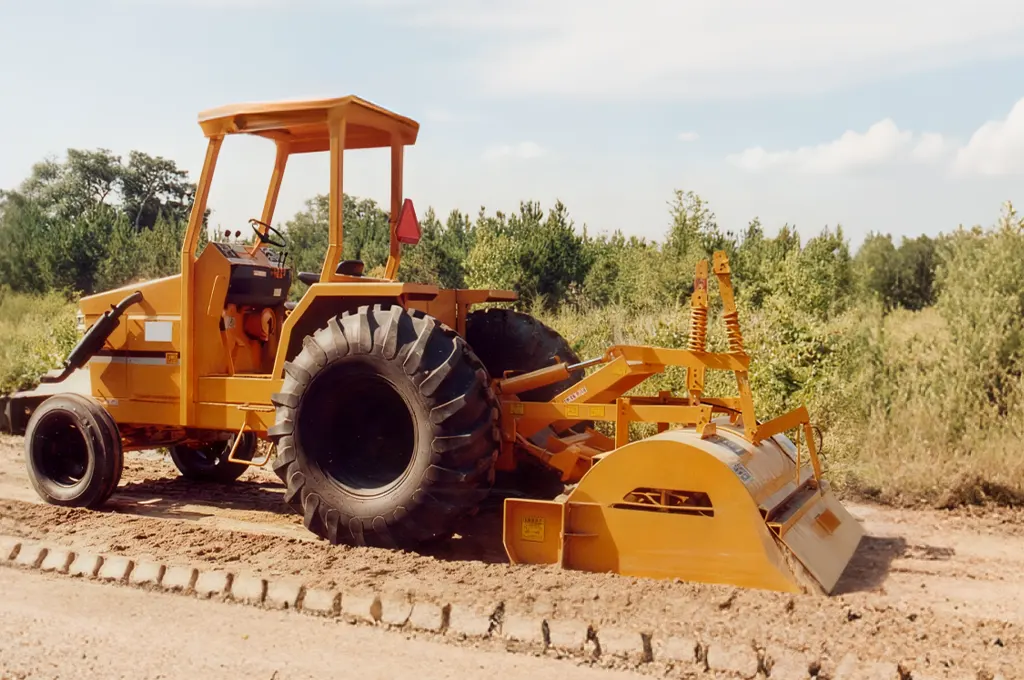
Bei der Volltiefen-Straßensanierung wird das vorhandene Straßenmaterial nicht entfernt – es wird umgewandelt. THOR ST Bodenstabilisator Die bestehende Fahrbahnoberfläche und der Unterbau werden bis zu einer Tiefe von 200 mm abgetragen und gleichzeitig mit Wasser (aus einem angeschlossenen Wassertankwagen) und einem chemischen Bindemittel (Kalk oder Zement) vermischt. Das Bindemittel reagiert mit dem abgetragenen Material und bildet einen stabilisierten Unterbau mit deutlich höherer Tragfähigkeit als die ursprüngliche, beschädigte Straße. Anschließend wird das Gemisch planiert und vor Ort verdichtet.
Keine Ausgrabung, kein Materialabtrag, kein Zuschlagstoffimport. Die bestehende Straße dient als Rohmaterial für das verbesserte Bauwerk. DCW 2.2 Bindemittelverteiler Die Montage erfolgt an der Vorderseite desselben CVT-Traktors wie beim THOR ST. Kalk oder Zement wird unmittelbar vor dem Fräsrotor verteilt – so werden Bindemittel vollständig verteilt und der Boden in einem einzigen Arbeitsgang gefräst. Diese kombinierte Arbeitsmethode in einem Arbeitsgang ist die Grundlage für die Zeiteffizienz und den Kostenvorteil von FDR.
Kostenvergleich – FDR vs. konventionelle Rekonstruktion
| Kostenelement | FDR (In-Place-Stabilisierung) | Konventionelle Rekonstruktion |
|---|---|---|
| Aushub und Abtransport außerhalb des Geländes | Null | Hoch |
| Import von neuem Tragschichtmaterial | Null – vorhandenes Material wiederverwendet | Hoch (insbesondere Transportentfernung im Hochland) |
| Chemisches Bindemittel | Mäßig (4–8% des Bodengewichts) | Keiner |
| Dauer der Straßensperrung | Tage pro Abschnitt | Wochen bis Monate |
| CO₂-Emissionen | Deutlich niedriger | Höher (Transport + Materialproduktion) |
| Typisches Gesamtkostenverhältnis | 40–60% niedriger | Ausgangswert |
ⓘ Die Kostenverhältnisse sind allgemeine Schätzwerte aus der Fachliteratur zur Straßensanierung. Die tatsächlichen Verhältnisse hängen von der gesamten Transportstrecke, den Bindemittelkosten und dem Projektumfang ab. Der Vorteil der FDR-Methode steigt mit zunehmender Transportstrecke – der dominierenden Variable bei Projekten im koreanischen Hochland – deutlich an.
Wann FDR funktioniert – und wann nicht.
FDR ist gut geeignet, wenn:
Das vorhandene Straßenmaterial ist körnig. Zersetzter Granit, Schottertragschichten und Sand-Kies-Gemische reagieren gut mit Kalk und Zement. Koreanische Hochlandstraßen, die auf zersetztem Granit und Schotterunterbau – dem vorherrschenden Straßenunterbau in Gangwon-do und dem Gyeongsang-Hochland – errichtet wurden, eignen sich im Allgemeinen gut für die FDR-Behandlung.
Der Straßenschaden befindet sich in der Tragschicht, nicht im Untergrund. Die FDR-Behandlung behandelt den über dem natürlichen Boden liegenden, künstlich angelegten Straßenunterbau. Liegt der Schaden im Straßenunterbau (die häufigste Schadensursache bei koreanischen Landwirtschaftsstraßen), wird er durch die FDR-Behandlung direkt behoben. Befindet sich der strukturelle Schaden im natürlichen Boden unterhalb des Straßenaufbaus, kann eine alleinige FDR-Behandlung der Tragschicht möglicherweise keine dauerhafte Lösung gewährleisten.
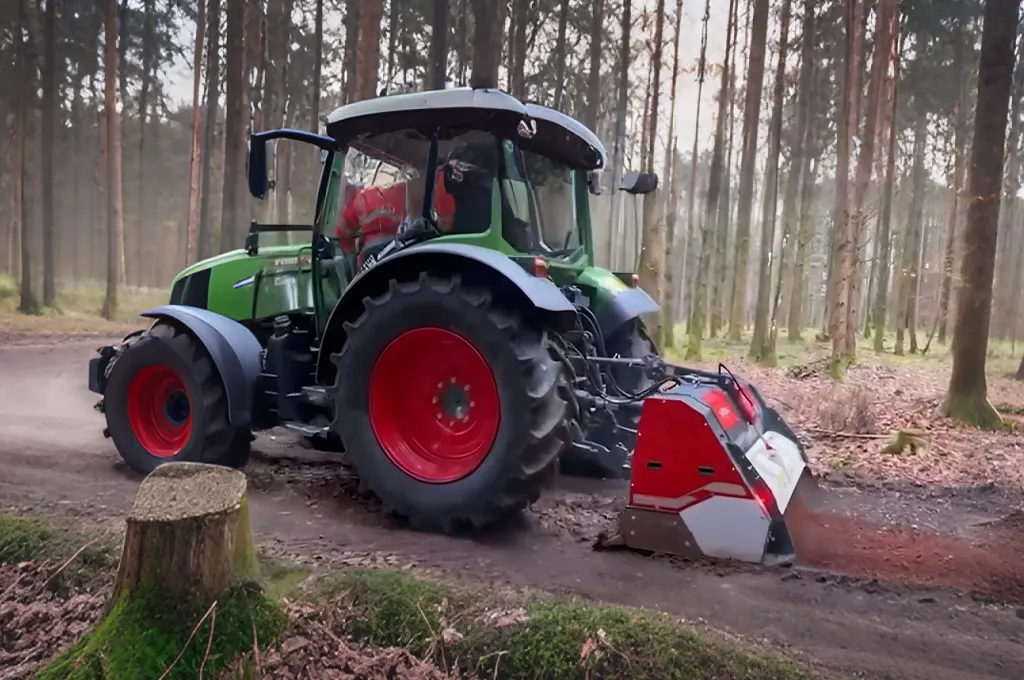
Das Oberflächengestein wurde vorbehandelt. Wenn die Straße signifikante Oberflächenfelsen mit einer Größe von über 5–8 cm aufweist, ist ein Vorbehandlungsdurchgang mit dem THOR 2.4 Steinbrecher Durch die Reduzierung von Felsbrocken an der Fahrbahnoberfläche auf einen Wert unterhalb des optimalen Fräsbereichs des THOR ST wird der Stabilisierungsdurchgang durchgeführt. Diese kombinierte Vorzerkleinerung mit THOR 2.4 und anschließender Stabilisierung mit THOR ST wird für Sanierungsprojekte von landwirtschaftlichen Hochlandstraßen in Korea mit gemischten Fels- und Bodenoberflächen empfohlen.
FDR ist NICHT geeignet, wenn:
Das Straßenmaterial ist reich an organischen Stoffen. Ein hoher Gehalt an organischen Stoffen hemmt die chemische Stabilisierungsreaktion erheblich. Straßen, die durch ehemalige Reisfelder, Feuchtgebiete oder Gebiete mit organischen Bodenablagerungen führen, eignen sich ohne Vorbehandlung nur bedingt für die Straßensanierung.
Der Untergrund besteht aus stark quellfähigem Ton. Hochplastische Tonuntergründe quellen und ziehen sich bei Feuchtigkeit zusammen – wodurch stabilisierte Tragschichten von unten reißen. Unter diesen Bedingungen kann eine Kalkvorbehandlung des Untergrunds vor der FDR-Dichtung der Tragschicht erforderlich sein.
Die Anforderungen an die strukturelle Belastung übersteigen die FDR-Kapazität. Bei Straßen, die dauerhaft sehr stark von Fahrzeugen belastet werden und deren Belastungsintensität über den typischen koreanischen Agrar-Lkw-Verkehr hinausgeht, kann eine 200 mm tiefe FDR-Konstruktion allein die erforderliche Tragfähigkeit möglicherweise nicht erreichen. In diesen Fällen kann die FDR-Konstruktion mit einer gebundenen Deckschicht kombiniert oder eine konventionelle Schwerlastkonstruktion gewählt werden.
Kalk oder Zement – Welches Bindemittel eignet sich für koreanische Straßenböden?
Die Wahl des Bindemittels ist eine technische Entscheidung, die auf Labortests des jeweiligen Straßenbaumaterials vor Projektbeginn basiert – es gibt keine allgemeingültige Antwort. Als allgemeine Richtlinie für die in Korea am häufigsten behandelten Bodentypen gilt Folgendes:
Limette – Bevorzugt für:
- Tonhaltige Straßenböden (Landwirtschaftliche Küstenstraßen in Süd-Chungcheong und Süd-Jeolla)
- Böden mit hohem Plastizitätsindex (PI über 10)
- Tonmineralgehalt über ca. 15%
Zement – Bevorzugt für:
- Zersetzter Granit und körniger Straßenunterbau (Gangwon-do, Nord-/Süd-Gyeongsang-Gebirgsstraßen)
- Sandige Böden mit geringem Tonanteil (PI unter 10)
- Wo ein früher Kraftzuwachs erforderlich ist (Tage bis Wochen)
Die Bindemittelmenge wird vor Projektbeginn durch Laborversuche zur Verdichtung nach Proctor und zur Bestimmung der einachsigen Druckfestigkeit (UCS) von standortspezifischen Boden-Bindemittel-Kombinationen ermittelt. Übliche Werte: 4–81 µT Zement oder 3–61 µT Kalk, bezogen auf das Trockengewicht des behandelten Materials. Korea Watanabe unterstützt Sie gerne bei der Auswahl geeigneter geotechnischer Labore für die Planung der Stabilisierungsmaßnahmen vor Projektbeginn.
Das komplette Watanabe FDR-System
DCW 2.2 Bindemittelstreuer Verteilt Kalk oder Zement mit elektronisch gesteuerter Ausbringmenge (kg/m²). Arbeitsbreite: 2140 mm; umschaltbar auf 1 m/2 m für die Teilbehandlung von Fahrspuren. Anwendungsdaten werden automatisch protokolliert.
THOR ST Bodenstabilisator — Fräsen von Straßenbaumaterial in 0–200 mm Tiefe bei 0,5–1,5 km/h (stufenloses Automatikgetriebe erforderlich, mindestens 250 PS). 92 Kennametal RK4-Fräsmeißel. Wasserzufuhr vom Wassertankwagen über einen Verteilerschlauch. Erzeugt das stabilisierte Mischgut in einem Arbeitsgang.
Wassertransporter + Grader + Verdichter Ein Wassertransporter liefert die für THOR ST erforderliche Feuchtigkeit. Ein Grader profiliert die stabilisierte Oberfläche. Ein Verdichter erzielt die Zieldichte für die Tragfähigkeit des Bauwerks.
Das kombinierte System DCW 2.2 (vorn) + THOR ST (hinten) ermöglicht die vollständige Bodenstabilisierung in einem Arbeitsgang: Bindemittelverteilung und Bodenfräsen in einer einzigen Vorwärtsbewegung. Kein separater Bindemittelauftrag, keine Aushubmaschinen, keine Anlieferung von Zuschlagstoffen erforderlich.
Planung eines FDR-Projekts – Was geschieht, bevor die THOR ST vor Ort eintrifft?
Erfolgreiche FDR-Projekte im koreanischen Landstraßenbau weisen eine Gemeinsamkeit auf: eine gründliche Vorprojektbewertung und -planung. Die folgenden Schritte sind Standardpraxis für professionelle Bodenstabilisierungsprojekte und werden für jedes koreanische Landstraßen-Sanierungsprojekt mit dem THOR ST-System empfohlen:
Schritt 1 – Standortuntersuchung und Bodenprobenahme
Entlang der Straße werden in Abständen von 50–100 m Probegruben bis zu einer Tiefe von 300–400 mm angelegt, um Proben des vorhandenen Straßenmaterials für Laboranalysen zu gewinnen. Die visuelle Stratigraphie (Fahrbahnoberfläche, Tragschicht, Untergrund) wird beurteilt, Anzeichen von Untergrundschäden (federnde Verformung unter Last, feuchte Stellen, organisches Material) werden erfasst und aus jeder sichtbaren Schicht Proben für Laboruntersuchungen entnommen. Die Sichtprüfung identifiziert zudem Abschnitte mit großen Gesteinsbrocken an der Oberfläche, die vor dem Stabilisierungsauftrag mit dem THOR ST-Brecher gegebenenfalls mit dem THOR 2.4-Brecher vorbehandelt werden müssen.
Schritt 2 – Laborstabilisierungsdesign
Bodenproben werden einer Atterberg-Grenzenprüfung (zur Bestimmung des Plastizitätsindex und der Bindemittelauswahl), einer Korngrößenanalyse (zur Bestätigung der Eignung des Kornanteils) und einer Mischungsprüfung zur Stabilisierung mit unterschiedlichen Bindemittelgehalten (typischerweise 3, 5 und 7% Zement oder Kalk, bezogen auf das Trockengewicht) unterzogen. Die angestrebte einachsige Druckfestigkeit (UCS) der stabilisierten Tragschicht wird vom Projektingenieur auf Basis der geplanten Verkehrslast festgelegt. Das Labor ermittelt die erforderliche Bindemittelart und -menge, die die angestrebte UCS erreichen – dieser Wert wird vom DCW 2.2 vor Ort bereitgestellt.
Schritt 3 – Standortlogistikplanung
Vor Baubeginn sind folgende Punkte zu klären: Wasserquelle und Befüllpunkt für Wassertankwagen (idealerweise innerhalb von 1–2 km vom Arbeitsbereich, um Unterbrechungen des Befüllvorgangs zu minimieren); Lager- und Verladepunkt für Bindemittel (Zementsilo oder Kalklieferplan); Verkehrsmanagementplan für die Verkehrsteilnehmer während der Bauarbeiten; sowie die geplante Verdichtungsreihenfolge und die Spezifikationen der Verdichtungsgeräte. Eine mangelhafte Logistik der Wassertankwagen ist die häufigste Ursache für Produktionsverzögerungen bei koreanischen FDR-Projekten – eine ungünstig positionierte Wasserquelle führt zu Unterbrechungen des Befüllvorgangs, wodurch die produktive Arbeitszeit des THOR ST deutlich unter seine Nennkapazität sinkt.
Koreanische Projektbeispiele – FDR in der Praxis
4,2 km Sanierung der Landwirtschaftsstraße, Nord-Chungcheong (2025)
Kreisstraßenprojekt: 4,2 km stark ausgefahrene Rangjongodró in Jecheon-si. Bestehender Zustand: Verdichtete Schottertragschicht mit 60 mm Asphaltdeckschicht, die Tragschicht war auf einer Länge von ca. 701 t/5 t beschädigt. Kostenvoranschlag für konventionelle Sanierung: 451 t/5 t teurer als die FDR-Methode und 8 Wochen Vollsperrung erforderlich. FDR-Verfahren mit THOR ST + DCW 2.2 + Zementstabilisierung (61 t/5 t Gewicht, 160 mm Behandlungstiefe): Das Projekt wurde in 9 Arbeitstagen bei durchgehend einspurigem Verkehr abgeschlossen. Die Verdichtung erfolgte täglich; die Abschnitte wurden innerhalb von 24 Stunden nach der Behandlung für leichten Verkehr freigegeben. Das Kreisstraßenamt nahm die Arbeiten bei der ersten Inspektion ab. Zwei weitere Abschnitte wurden anschließend an denselben Auftragnehmer mit demselben Verfahren vergeben.
11 km langes internes Plantagenstraßennetz, Süd-Jeolla (2024)
Private Plantagenstraße: 11 km verdichtete Erd- und Schotterwege, die ganzjährig von landwirtschaftlichen Fahrzeugen befahren werden. Jährliche Planierkosten und Staubentwicklung stellten wiederkehrende Probleme dar. Stabilisierung der Hauptzufahrtsstraßen mit THOR ST-Kalk (4,51 TP5 t Kalk nach Gewicht, 140 mm Behandlungstiefe) – die schweren Lehmböden in Süd-Jeolla erwiesen sich in Labortests vor Projektbeginn als kalkgeeignet. Behandelte Abschnitte: 14 Monate nach der Behandlung wartungsfrei (keine Nachplanierung erforderlich). Die Staubentwicklung auf den stabilisierten Abschnitten wurde beseitigt. Die Amortisation des Stabilisierungsprojekts im Vergleich zu den jährlichen Planierkosten wurde auf weniger als vier Vegetationsperioden berechnet.
Zufahrtsstraßen des Forstamts, Süd-Gyeongsang (2025)
Auftrag des Forstamts: Bergholztransportwege in Hamyang-gun, die für die höhere Beladung durch Holztransporter statisch verstärkt werden müssen. Straßenoberfläche: Gemisch aus Boden und Gestein. Vorbehandlung mit einem THOR 2.4 Steinbrecher zur Reduzierung des Oberflächengesteins über 8 cm vor dem THOR ST Stabilisierungsauftrag. Zementstabilisierung in 180 mm Tiefe. Zwei vollständige Holzerntesaisons auf den stabilisierten Abschnitten ohne erforderliche Oberflächenpflege. Kostenvergleich: 521 TP5T günstiger als die herkömmliche Alternative mit Schotterdeckschicht, die in den Vorjahren auf angrenzenden Abschnitten verwendet wurde.
Häufig gestellte Fragen
Wie verhält sich FDR im Vergleich zu einer einfachen Überlagerung mit neuem Aggregat?
Eine Deckschicht aus Zuschlagstoffen behebt nicht die strukturellen Schäden der Tragschicht – sie fügt lediglich Masse auf einer bereits beschädigten Struktur hinzu. Unter den Bedingungen des koreanischen Hochlands kommt es bei solchen Deckschichten typischerweise innerhalb von ein bis drei Vegetationsperioden zu erneuter Spurrinnenbildung und weiteren Schäden, da das neue Material in die Hohlräume der beschädigten Tragschicht wandert. Die sogenannte Fugensanierung (FDR) bekämpft die Schäden an der Wurzel, indem sie das Tragschichtmaterial chemisch stabilisiert. Die stabilisierte Schicht widersteht den feuchtigkeitsbedingten Schädigungsmechanismen, die den ursprünglichen Schaden verursacht haben. FDR ist eine strukturelle Instandsetzung; eine Deckschicht aus Zuschlagstoffen ist eine temporäre Instandhaltungsmaßnahme.
Kann FDR auch auf Straßen mit bestehender Asphaltdecke eingesetzt werden?
Ja. Die Kennametal RK4-Fräsmeißel der THOR ST sind für das Fräsen von Asphalt, Recyclingasphalt-Tragschichten, verdichtetem Zuschlagstoff und Boden geeignet. Bei koreanischen Landstraßen mit einer dünnen, bestehenden Asphaltdeckschicht über einer beschädigten Tragschicht – ein häufiges Problem bei Straßen, die im Rahmen früherer staatlicher Sanierungsprogramme verbessert wurden – bearbeitet die THOR ST beide Schichten gleichzeitig in einem Arbeitsgang. Das so entstehende Gemisch aus Recyclingasphalt und Tragschichtmaterial eignet sich für die Stabilisierung mit Kalk oder Zement.
Ab wann kann die Straße nach dem FDR-Unfall wieder befahren werden?
Nach dem Fräsvorgang mit THOR ST wird der behandelte Abschnitt noch am selben Tag planiert und verdichtet. Leichter Verkehr kann die Straße in der Regel innerhalb von 24–48 Stunden nach der Verdichtung befahren. Die volle Tragfähigkeit entwickelt sich je nach Bindemittelart und Aushärtungsbedingungen innerhalb von 7–28 Tagen. Schwere landwirtschaftliche Maschinen sollten auf zementstabilisierten Abschnitten mindestens 7 Tage lang nicht eingesetzt werden. Der zuständige Ingenieur legt die für die Bindemittelart und die Aufwandmenge geltenden Kriterien für die Verkehrsfreigabe fest.
Ist FDR für koreanische Regierungsprogramme (농어촌도로) berechtigt?
Die Bodenstabilisierung vor Ort ist in der koreanischen Straßenbaupraxis ein anerkanntes Verfahren zur Straßensanierung. Ob ein konkreter Projektvertrag die Bodenstabilisierung als Alternative zum konventionellen Wiederaufbau zulässt, hängt von den Vertragsbedingungen, der Eignungsbeurteilung des verantwortlichen Statikers und den Normen der zuständigen Straßenbaubehörde ab. Wir empfehlen Ihnen, sich vor der Anwendung der Bodenstabilisierung bei staatlich geförderten Projekten mit Ihrer regionalen Straßenbaubehörde abzustimmen. Wir stellen Ihnen gerne die technischen Unterlagen und Maschinenspezifikationen zur Verfügung, um den Genehmigungsprozess zu unterstützen.
Ist bei einer felsigen Bergstraße eine Vorbehandlung vor der THOR ST-Stabilisierung erforderlich?
Ja, wenn einzelne Oberflächensteine größer als ca. 5–8 cm sind. Die RK4-Fräsmeißel des THOR ST sind für das Fräsen von Boden und körnigem Straßenunterbau ausgelegt – das Auftreffen auf größere Steine führt zu beschleunigtem Meißelverschleiß und mindert die Fräsqualität. Bei Bergstraßen mit gröberem Oberflächengestein wird ein Vorbearbeitungsgang mit dem THOR 2.4 Steinbrecher (zerkleinert Steine bis zu 30 cm) empfohlen, um das Oberflächengestein auf eine Größe zu bringen, die der THOR ST ohne übermäßigen Meißelverschleiß bearbeiten kann. Die Kombination aus THOR 2.4 Vorzerkleinerung und THOR ST Stabilisierung wird für die Sanierung von Bergstraßen in Korea mit gemischten Gesteins- und Bodenoberflächen empfohlen.
Checkliste vor Projektbeginn — Ist Ihre Straße für FDR geeignet?
Vor der Inbetriebnahme eines THOR ST-Bodenstabilisierungsprojekts auf einer koreanischen Landstraße sollten die folgenden Standortmerkmale bestätigt werden, um sicherzustellen, dass FDR die geeignete Methode ist:
Der Straßenunterbau besteht aus körnigem Material (Kies, verwittertem Granit, Schotter). — nicht organisch, nicht stark mit Ton über 301 µT (Gew.-%) verunreinigt. Laboruntersuchungen bestätigen die Eignung des Bindemittels.
Straßenschäden treten in der Tragschicht auf, nicht im Untergrund. — Die Schürfgruben zeigen einen tragfähigen natürlichen Untergrund unter der beschädigten Tragschicht. Keine federartige Verformung, kein wassergesättigter Untergrund, kein organischer Boden im Untergrundbereich.
Ein CVT-Traktor mit 250 PS oder mehr ist verfügbar — bestätigte CVT-Getriebefähigkeit, 1000 U/min Heckzapfwelle, Frontkupplungskapazität für DCW 2.2 mit 1300 kg obligatorischem Ballastgewicht.
Wasserquelle im Umkreis von 1–2 km um den Arbeitsbereich — Bestätigte Befüllstelle und Füllkapazität des Wassertankwagens, um einen kontinuierlichen THOR ST-Betrieb ohne übermäßige Leerlaufzeiten zu gewährleisten.
Bewertung der Oberflächengesteinsvorbehandlung — Falls die Fahrbahn Oberflächensteine mit einer Korngröße von über 5–8 cm aufweist, ist vor dem Stabilisierungsdurchgang mit dem THOR ST ein Vorbehandlungsdurchgang mit dem Steinbrecher THOR 2.4 geplant.
Das Straßenmaterial ist NICHT reich an organischen Stoffen und NICHT stark verunreinigt. – Sollten bei Sondierungsgruben organische Schichten, Torf oder kontaminiertes Füllmaterial im Straßenunterbau nachgewiesen werden, ist eine Fugensanierung ohne Vorbehandlung oder Materialabtragung nicht angebracht. In diesem Fall ist eine konventionelle Sanierung die richtige Vorgehensweise.
Ergebnisse des koreanischen Projekts – Kosten und Leistung der FDR
Das THOR ST-System von Korea Watanabe wurde bei Sanierungsprojekten ländlicher Straßen in den koreanischen Provinzen Gangwon-do, Nord-Chungcheong, Süd-Chungcheong, Süd-Gyeongsang und Süd-Jeolla eingesetzt. Bei den abgeschlossenen Projekten unter den unterschiedlichen Boden- und Straßenverhältnissen Koreas wurden durchweg folgende Ergebnisse beobachtet:
Kostenreduzierung im Vergleich zu konventioneller Rekonstruktion: Abgeschlossene koreanische Projekte weisen im Vergleich zu den für denselben Streckenabschnitt angebotenen konventionellen Rekonstruktionsalternativen Kosteneinsparungen von 38 bis 581 TP5T auf. Die Spanne spiegelt die unterschiedlichen Transportentfernungen der Zuschlagstoffe wider: Projekte in Gebieten mit großen Transportentfernungen zu den Zuschlagstoffvorkommen (Hochland von Gangwon-do) weisen höhere Kosteneinsparungen auf, Projekte in der Nähe von Zuschlagstoffvorkommen niedrigere.
Baudauer: Bei typischen koreanischen Rahsong-Dorn-Abschnitten mit einer Länge von 500–2.000 m führt das THOR ST-System den Fräs- und Stabilisierungsvorgang je nach Abschnittslänge und Wassertransportlogistik in 1–4 Arbeitstagen durch. Der konventionelle Wiederaufbau desselben Abschnitts benötigt in der Regel 3–8 Wochen, einschließlich Materialbeschaffung, Aushub, Fundamentbau und Oberflächenarbeiten.
Leistung nach der Behandlung: Stabilisierte Straßenabschnitte, die seit 12–24 Monaten in Betrieb sind, weisen im Vergleich zum Zustand vor der Behandlung eine deutlich geringere Spurtiefe, eine geringere Oberflächenverformung unter schwerer Last von landwirtschaftlichen Lkw und praktisch keine Staubentwicklung auf. Straßen, die stark mit Holz und landwirtschaftlichen Gütern beladen sind, blieben in dokumentierten koreanischen Projekten nach der Behandlung 18–24 Monate lang ohne Instandhaltungsmaßnahmen befahrbar.
CO₂-Reduktion: Durch den Wegfall des Transports von Zuschlagstoffen während des Bauprozesses entfällt die größte einzelne CO₂-Quelle beim konventionellen Straßenbau – die zahlreichen Lkw-Lieferungen von Schotter über die gesamte Projektlaufzeit. Koreas nationales Rahmenwerk zur CO₂-Bilanzierung für öffentliche Infrastrukturprojekte erkennt die Emissionsvorteile der Stabilisierung vor Ort zunehmend als Bewertungskriterium an und unterstützt damit die Anwendung des FDR-Verfahrens in öffentlich finanzierten ländlichen Straßenbauprogrammen.
Besprechen Sie Ihr ländliches Straßenbauprojekt – FDR oder konventionell?
Straßenlänge + Bodenart (körnig / lehmig / gemischt) + vorhandene Oberfläche + Verfügbarkeit eines CVT-Traktors → Technische Beratung zur Eignung von FDR und zur Konfiguration des THOR ST + DCW 2.2-Systems. Lagerbestand Korea, Ansan-si, Gyeonggi-do.
Herausgeber: Cxm