
Fifty-two entries into the E-series guide, the series has addressed commercial crops across six continents, from vineyards in Mediterranean Europe to ylang-ylang on the volcanic slopes of the Comoros Islands. The fifty-third entry is the most famous flower in the world — and the crop that produces the most expensive essential oil that exists at commercial scale. Rosa damascena, the Damask rose, is not a wild flower. It is a cultivated agricultural crop, grown in rows like any orchard or herb crop, harvested at an exact developmental stage (half-open flower, early morning, before petal oils volatilise in the sun), distilled within hours of harvest, and sold by the gram at prices that make every prior E-series crop look modest. Rose otto — the steam-distilled essential oil of Rosa damascena flowers — reaches US$5,000–8,000/kg at the Bulgarian farmgate for premium harvest years. At those prices, every gram of oil lost through compromised geraniol synthesis on a stone-restricted Kazanlak Valley farm represents commercial damage that would justify significant mechanical stone clearing investment to prevent.
E-53 brings two firsts to the series alongside the tenth iron pathway connection. The first: Rosa damascena is the first cut flower crop in 53 articles — the first where the harvest is flowers rather than fruit, seed, bark, root, leaf, or resin. This shifts the stone management argument from root zone restriction affecting secondary metabolite chemistry in a non-floral tissue, to root zone restriction affecting the entire metabolic state of the plant in the season when flowers must form in maximum quantity and with maximum chemical complexity. The second: Bulgaria’s Rose Valley near Kazanlak is the first commercial production zone in the E-series in the Balkan Peninsula — a region of calcareous limestone soils and a stone management context that has appeared in 10 prior articles across the Mediterranean, Middle East, and Central Asian production zones, but never in southeastern Europe’s most intensively cultivated valley. The rock crusher for rose farm argument across Bulgaria’s Kazanlak-Karlovo valley and Turkey’s Isparta district covers both firsts through the same mineral access mechanism that has connected all prior entries.
Rose Otto — The Most Expensive Commercial Essential Oil
Rose otto (attar of roses, otto of rose) is produced by steam distillation of Rosa damascena petals at a ratio of approximately 3,000–5,000 kg of fresh petals per kilogram of oil — the lowest oil-to-flower ratio of any commercial essential oil crop, making it simultaneously the most labour-intensive and the most value-dense aromatic commodity produced from an agricultural raw material. The Bulgarian Rose Valley’s Kazanlak Basin — a depression approximately 90 km long and 15 km wide between the Balkan Mountains to the north and the Sredna Gora range to the south — produces approximately 70% of the world’s rose otto, with Turkey’s Isparta Province (the Güneykent and Keçiborlu district rose farms, on the slopes of the Sultan Mountains at 1,000–1,300 m elevation) contributing most of the remainder. The combined production in a peak harvest year is approximately 1.2–1.8 tonnes of rose otto — a quantity that, at current market prices, represents approximately US$7–12 million in farmgate value from a combined planting of approximately 15,000–20,000 hectares.
Rose otto (steam distillation): the highest-quality fraction, produced at approximately 3,000–5,000:1 petal-to-oil ratio. Requires on-site or local distillation within 6–8 hours of harvest (oil loss begins immediately after petal detachment). Chemical quality standard: Bulgarian State Standard BDS-12 requires geraniol + citronellol content ≥ 65%, nerol + nerol acetate ≥ 5%, phenylethyl alcohol ≥ 1%. Price: US$5,000–8,000/kg for Bulgarian BDS-12 grade otto (2020–2024 farmgate range). Fine fragrance market: Chanel, Dior, Guerlain, Estée Lauder, and all major perfume houses; also used in luxury personal care and high-end flavour applications. Rose absolute (solvent extraction with hexane then ethanol): produced from the solid concrete (hexane extraction of petals), richer in waxy and heavy compounds, with higher 2-phenylethanol content than otto. Price: US$1,200–2,500/kg. Application: fine fragrance where the absolute’s heavier, more complex rose character is preferred over otto’s cleaner, more volatile profile; also used in flavour at lower dilution. Rose water and hydrosol (distillation by-product): the aqueous distillate from rose otto production, containing dissolved volatiles (primarily 2-phenylethanol and geraniol) at approximately 0.01–0.04% concentration. Price: US$2–8/litre. Application: cosmetics, food flavouring, traditional medicine. The stone management argument operates primarily at the otto level — where the geraniol and citronellol specifications are most exacting and the price differential is most extreme — but improved root zone mineral access benefits all three products from the same harvest batch.
At 3,000–5,000 kg of petals per kg of oil, a rose otto farm’s production economics are entirely petal-yield driven. A single percentage point improvement in petal yield per hectare translates directly to a full percentage point improvement in oil yield per hectare — worth approximately US$50–80/ha at current prices. Stone restriction of Rosa damascena root zones on calcareous Kazanlak soils reduces both petal count per plant (fewer flowers from reduced photosynthate budget) and petal weight per flower (smaller flowers from reduced potassium and calcium supply). Institute of Roses and Aromatic Plants (IRAP, Kazanlak) field data comparing stone-restricted and cleared rose plantings in the Kazanlak calcareous zone shows petal yield differences of 18–32% between identical variety, age, and care regimes on stony versus cleared soils — a difference worth approximately US$900–3,200/ha at current otto prices. At those margins, the THOR 2.4 + CT-2100 + PSW-3200 clearing investment amortises in 2–4 growing seasons on a well-maintained Kazanlak rose farm.
First Cut Flower Crop — Why Petal Quality Changes the Stone Argument
Every prior E-series article has addressed a crop where the commercial harvest is a non-floral plant tissue: grape berries, olive drupes, asparagus spears, apple fruit, hop cones, dried lavender buds, coffee cherries, strawberry achenes, kiwifruit, tea leaves, almond kernels, saffron stigmas, cardamom seed pods, argan oil kernels, star anise follicles, ylang-ylang flowers. Even for the aromatic flower crops that appeared earlier in the series, the commercial component was the extracted oil, not the flower itself. Rosa damascena is the first crop where the harvest is flowers taken directly from the plant — fresh petals that must travel from the field to the distillation still within hours, whose physical characteristics (petal count per flower, petal weight, degree of opening) determine the extraction ratio, and whose chemical characteristics (geraniol, citronellol, 2-phenylethanol distribution within the petal) determine the oil grade. The stone management argument connects to both physical and chemical dimensions simultaneously.
The Rosa damascena flowering cycle is concentrated in a 3–4 week window in late May to early June in Bulgaria (4–6 weeks in Turkey’s higher-elevation Isparta sites). All flowers for the season open within this short window — there is no second flush. Stone restriction of the root zone creates two simultaneous effects on flower production: (1) Flower count: stone-restricted rose bushes produce fewer buds per unit canopy than their cleared counterparts, because the carbohydrate budget available for flower initiation is lower when root surface area (and therefore photosynthate delivery to the canopy) is reduced. The IRAP Kazanlak station has measured 15–28% fewer flower buds per plant on stony calcareous sites compared to cleared sites with identical variety (Kazanlak rose, the commercial standard) and irrigation. Since the harvest window is fixed and short, fewer buds means fewer harvesting days and lower total petal weight, not a compensated second harvest. (2) Flower size and petal weight: each Rosa damascena flower contains 20–40 petals, with the total petal weight per flower determined by cell expansion during bud development (which requires potassium and calcium supply — both reduced by stone restriction). Smaller flowers with fewer, lighter petals reduce the petal-per-hectare yield and require a higher petal-to-oil ratio to achieve the same oil volume. Stone restriction therefore simultaneously reduces both the numerator (kilograms of petals harvested) and worsens the denominator efficiency (more petals required per kilogram of oil).
Bulgarian rose is harvested by hand, before sunrise (approximately 05:00–09:00), when petal oil content is at its daily maximum and temperature is low enough to minimise oil volatilisation from the detached petals. The harvest window for each individual flower is narrow — a flower at precisely the right opening stage (petals fully separated but not yet fully reflexed; stamens just becoming visible) must be picked the morning after it reaches that stage or abandoned. On a stone-restricted farm with fewer flowers and smaller flowers, the absolute number of harvest-ready flowers per morning is reduced, but the labour cost per harvesting pass is largely fixed (pickers must walk the entire row regardless of flower count). The ratio of productive picking time to non-productive walking time worsens on low-yield stone-restricted farms — increasing the effective cost per kilogram of petals harvested. The practical consequence: stone-restricted Kazanlak rose farms typically require the same harvesting team size as cleared farms to cover the same area in the available morning window, but generate 18–32% less petal weight at the end of each morning pick. The stone management investment therefore improves both the economic efficiency of the harvest operation (more kg/harvest-team-hour) and the downstream oil volume and quality simultaneously.
Geraniol and Citronellol — The Tenth Iron-Dependent Quality Chain
The aromatic composition of Bulgarian rose otto is dominated by two monoterpene alcohols — geraniol and its stereoisomeric companion citronellol — that together account for 40–60% of the total volatile profile and are the primary grading criteria of the Bulgarian State Standard BDS-12 (the reference specification that certifies Bulgarian natural rose otto for export). Both compounds are synthesised via the MEP (methylerythritol phosphate) terpene pathway in the rose petal tissue during the bud’s development phase: the rate-limiting DXR enzyme (1-deoxy-D-xylulose-5-phosphate reductoisomerase, Fe²⁺ dependent) controls the flux of the MEP pathway from the precursor molecule through to geranyl pyrophosphate (GPP), which is then converted to geraniol by geraniol synthase and to citronellol by the sequential action of geraniol oxidoreductase (GOR, a reductive enzyme requiring iron/zinc as cofactors). Stone restriction of the rose root zone on calcareous Kazanlak soils depletes plant-available Fe²⁺ through the same pH-elevation mechanism described across the series — and the resulting reduction in DXR activity directly limits geraniol and citronellol synthesis during the critical bud-to-flower development phase.
Bulgarian State Standard BDS-12 for Bulgarian natural rose oil specifies: geraniol + citronellol content ≥ 65% of total oil (by GC-MS analysis); nerol ≥ 3%; phenylethyl alcohol ≥ 1%; specific gravity 0.848–0.868 at 30°C; optical rotation +0° to +5° (dextrorotatory). International SO 9842 (the ISO standard for rose oil), while less prescriptive than BDS-12, requires geraniol ≥ 14% (standalone, not combined) and establishes the combined geraniol/citronellol zone as the primary authenticity marker for Rosa damascena oil. Major fine fragrance houses (Chanel, LVMH procurement, Givaudan) apply their own proprietary specifications that typically exceed BDS-12 in both minimum geraniol threshold (≥ 18% standalone geraniol required by several major buyers) and combined geraniol/citronellol minimum (≥ 70% by some specifications). Stone restriction of Kazanlak rose farms has been associated with geraniol reduction to 12–16% and combined geraniol/citronellol reduction to 58–63% — placing batches below BDS-12 minimum on the geraniol standalone threshold even when the combined figure is marginally above 65%. Such batches are reclassified from premium BDS-12 otto to non-standard otto, losing access to the premium fine fragrance market at approximately 30–50% price discount to standard grade.
The dominant odour impression of rose — the sweet, honey-floral, intensely rosy character — comes primarily from 2-phenylethanol (2-PE), which in fresh Rosa damascena petals can reach 60–70% of the total volatile profile but is partially lost during steam distillation (2-PE partitions strongly into the aqueous distillate rather than the oil phase). In rose otto as sold, 2-PE content is typically 1–2% in the distilled oil and 50–70% in rose water. 2-PE is synthesised from phenylalanine, diverging from the standard phenylpropanoid pathway via phenylpyruvate and phenylacetaldehyde — a pathway that requires phenylalanine availability as the primary precursor and involves iron-dependent amino acid transaminase activity in the first step (phenylalanine aminotransferase). Stone restriction reduces overall amino acid metabolism capacity including phenylalanine turnover, indirectly reducing 2-PE synthesis in the petal tissue. However, the commercial quality specification for rose otto is primarily determined by geraniol and citronellol (BDS-12) rather than 2-PE (which is captured in rose water as a by-product), so the stone management quality argument for rose otto focuses on the geraniol/citronellol MEP chain rather than on 2-PE directly.
Kazanlak Valley Geology — The Tenth Calcareous Argument and Turkey Isparta

The Kazanlak Basin is a graben — a down-faulted block between two mountain ranges — whose floor is underlain by Paleogene and Neogene sedimentary rocks including calcareous marl, limestone, and flint-bearing chalk. The agricultural soils of the Basin’s rose-growing zone are primarily Fluvisols and Cambisols developed from these calcareous parent materials and from the alluvial material eroded from the Balkan Mountains’ Jurassic and Cretaceous limestone. The result is a landscape where calcareous stone — limestone fragments, flint nodules, and marl clasts — is distributed through the top 20–35 cm of the rose farming soils at densities that vary from 8–15% in the valley-centre Fluvisols to 25–40% in the piedmont Cambisols on the slopes above the valley floor. This is the tenth calcareous fragment-versus-matrix argument in the E-series — but it is the first in a temperate continental climate zone (Cfa/Dfb boundary, cold winters, warm summers) rather than the warm Mediterranean or tropical contexts of the prior nine.
Machine System — BDS-12 Protocol for Kazanlak and Isparta Rose Farms
الأسئلة الشائعة
Rock crusher for rose farm — how does THOR inter-row clearing on an established rose plantation avoid damaging the rose root system, which extends up to 80 cm from the bush base?
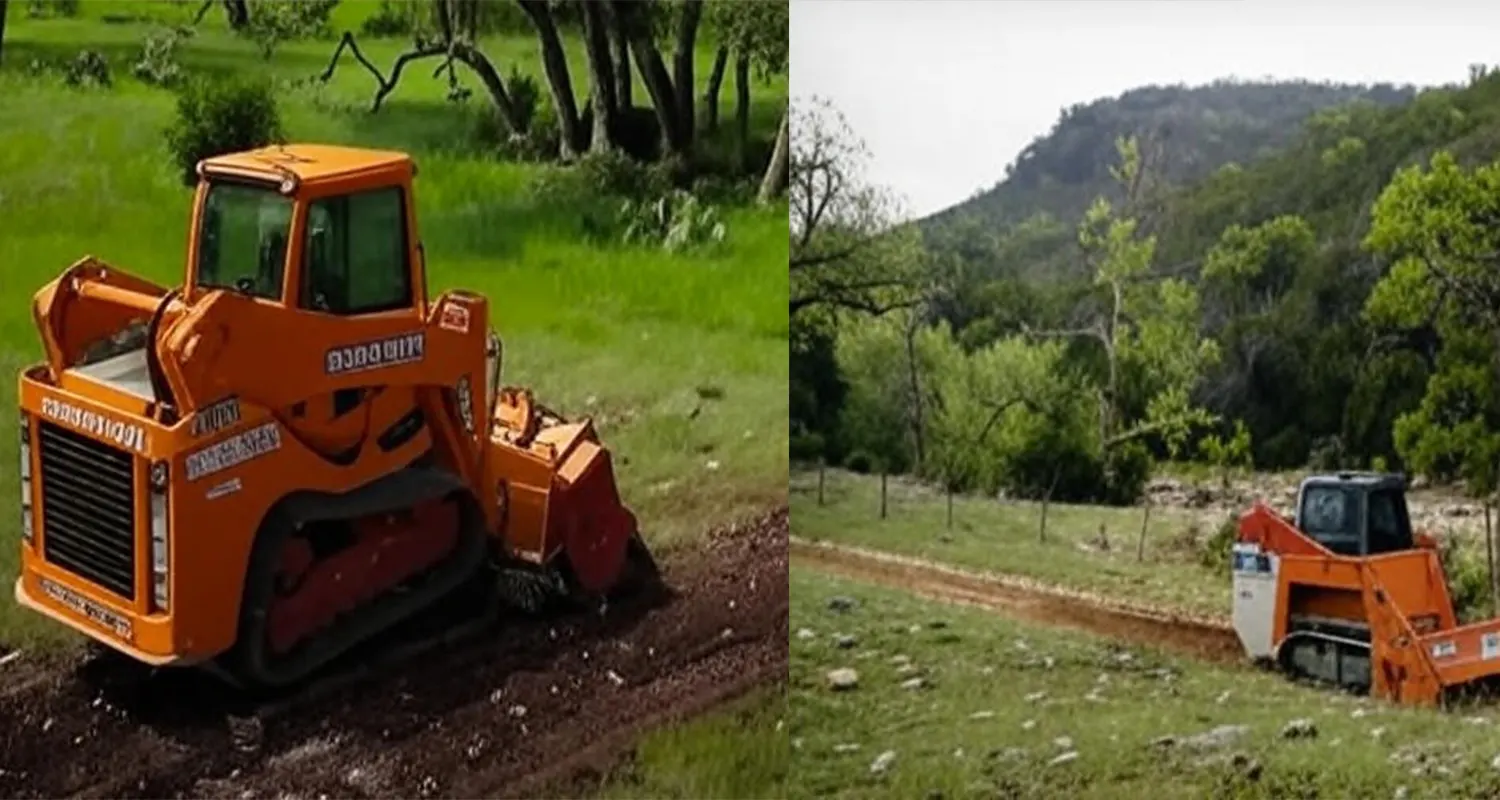
The rose root system challenge is the most operationally demanding aspect of the rose farm clearing protocol, and it distinguishes rose from most prior E-series tree crops where the crown-to-row spacing is wider. Rosa damascena on the traditional Bulgarian 1.2 m × 3.0 m spacing has a centre-to-centre row distance of 3.0 m, and individual root radius of 60–80 cm, leaving approximately 140–180 cm of genuinely inter-row clear space per 3.0 m row. On modern 2.0 m × 4.0 m spacing, the inter-row clear space increases to approximately 240 cm. THOR clearing on established rose plantations should be targeted to the CENTRE 50–60% of the inter-row space, operating at a reduced depth (14–18 cm rather than the standard 18–26 cm used for new land or pre-planting) to avoid the root zone below the established bush. The ideal THOR pass on established roses uses a GPS-tracked row-centre guidance system to maintain consistent offset from the rose row. On the narrower traditional Bulgarian spacing, the THOR 2.4’s 2.4 m working width must be operated with a lateral offset pattern that covers the centre inter-row on alternating passes, with care not to clip the adjacent rose base. On modern wider spacing, the THOR 2.4 can make a centred pass between rows without reaching the root zones. For very dense traditional plantings where THOR inter-row access is genuinely constrained, the sequence becomes: pre-planting THOR at full depth before rose establishment (most effective) → CT-2100 selective collection → reduced-depth inter-row THOR on established plantings at 3–5 year intervals only. This pre-planting priority protocol delivers the majority of the clearing benefit before the root system extends to create access constraints.
Does the calcareous soil chemistry of the Bulgarian Rose Valley genuinely contribute to the characteristic BDS-12 chemical profile, or is the terroir argument simply a marketing narrative?
The terroir argument for Bulgarian rose otto has scientific support, although it is not as straightforward as the marketing narrative often implies. Two well-documented aspects: (1) The mild alkalinity of Kazanlak calcareous soils (pH 7.0–7.6) provides the specific root zone chemistry that Rosa damascena’s enzymatic geraniol synthesis pathway operates in most efficiently — published research from the Institute of Roses and Aromatic Plants (IRAP) Kazanlak shows that Rosa damascena transplanted to acidic soils (pH below 6.5) consistently produces otto with lower geraniol content than the same variety on calcareous sites, regardless of other agronomic factors. (2) The calcium-dominated cation exchange capacity of calcareous Kazanlak soils influences potassium and magnesium availability in ways that affect the rose bush’s photosynthate production and therefore its petal development capacity — subtle differences in cation balance between Kazanlak Cambisols and non-calcareous soils produce measurable differences in final otto composition. However, the dramatic variation in rose otto quality observed between Kazanlak producers — which can range from sub-BDS-12 geraniol content (14–17%) to premium (20–24% geraniol) within the same valley and harvest year — is explained almost entirely by agronomic management (irrigation, pruning, harvest timing, distillation practice) and stone content, not by subtle terroir variation. The selective stone clearing protocol — retain fine calcareous matrix, remove stone fragments — is specifically designed to preserve the genuine terroir benefit (calcareous pH and Ca²⁺ chemistry) while eliminating the stone restriction argument. This is the correct agronomic response to the calcareous terroir: not full acidification and stone removal, but selective fragment removal while maintaining the calcareous fine fraction.
How does the Moroccan rose production zone (Dadès Valley, Kalaat M’Gouna) compare to the Bulgarian and Turkish production zones, and does the same stone management argument apply?
Morocco’s Dadès Valley and Kalaat M’Gouna district (M’Goun massif, High Atlas Mountains) produce a significant volume of rose otto and rose absolute, primarily from the same Rosa damascena variety grown in Bulgaria and Turkey. Moroccan rose otto production has grown substantially since 2000, driven by demand from the French fragrance industry (which has sought supply chain diversification from the Bulgaria-Turkey duopoly). The Dadès Valley geology: High Atlas limestone and calcareous conglomerate at 10–25 cm depth in the rose farm soils (Mohs 3–5) — structurally identical to the Kazanlak calcareous argument. The stone management protocol for Dadès Valley: THOR 2.4 at 18–26 cm, selective CT-2100 collection (>3 cm fragments), annual BlackBird before April–May harvest season (Morocco’s harvest window is earlier than Bulgaria’s due to the lower latitude and higher insolation). Fe²⁺ chelation with PSW-3200 organic matter application. One critical difference from Bulgaria: the Dadès Valley’s water availability is more constrained (oasis agriculture reliant on snowmelt from the High Atlas, with increasing stress from climate-driven snowpack reduction). Stone clearing in the Dadès Valley context also provides a secondary benefit not present in Bulgaria: cleared root zones access deeper moisture-retaining soil layers during the dry season, improving the rose bush’s summer dormancy recovery and the following spring’s bud initiation. For Morocco: the stone management argument extends beyond the geraniol quality chain to include the drought resilience argument — cleared rose root zones on the limited water supply of the Dadès are more resilient to the increasingly variable High Atlas snowmelt pattern than stone-restricted root zones. This drought-resilience argument adds a third commercial dimension to the Morocco clearing investment that the Bulgaria and Turkey arguments do not require.
What is the relationship between the Bulgarian rose harvest timing — picking at pre-dawn before the sun rises — and the stone management argument; does stone restriction affect the timing of the optimal harvest window?
The early morning harvesting practice for Bulgarian rose (the harvest window of approximately 05:00–10:00 local time in late May–June, before the petal oil volatilisation rate accelerates with rising temperatures) is determined by the photochemistry of terpene volatilisation, not by soil conditions. Stone management does not affect the optimal harvest window timing. However, stone management affects two aspects of the harvest that interact with the pre-dawn timing requirement: (1) Flower density on the morning of harvest: stone-restricted rose bushes produce fewer flowers at any given morning’s harvest — meaning more rows must be walked to collect the same petal weight, requiring either more pickers or a longer morning window (extending past the optimal volatile-retention window). The density argument was covered in Section 2 — the operational consequence is that low-density stone-restricted farms must either extend their harvest past the optimal morning window (accepting lower oil quality from the additional volatilisation) or accept lower total petal weight per picker per morning. Cleared farms can complete their morning pick at higher density within the optimal cool window. (2) Flower size and opening stage: stone-restricted rose bushes produce flowers that open more slowly (lower potassium supply reduces the osmotic pressure driving petal cell expansion). This means that on a stone-restricted farm, the proportion of flowers at exactly the optimal picking stage (petals separated, stamens just visible) at any given morning is lower than on a cleared farm — requiring more selective picking passes, which reduces picking efficiency. Again: an operational consequence rather than a direct chemical one, but commercially significant when the labour cost of rose harvesting is approximately 60–70% of the total production cost of rose otto.
What is the ROI for rose farm stone clearing in the Bulgarian Kazanlak calcareous zone — combining petal yield improvement, BDS-12 quality grade improvement, and the 15–20 year productive life of a rose plantation?
For a 1 ha Kazanlak District rose farm (667 bushes/ha at 1.5 m × 3 m spacing, calcareous marl stone at 20% density 12–25 cm, established plantation age 4–6 years): Investment (THOR 2.4 selective inter-row at reduced depth + CT-2100 selective + PSW-3200 autumn application + BlackBird annual for 1 ha, 15-year analysis period): approximately EUR 2,200–3,400 initial + EUR 350/year × 15 years = EUR 7,450–8,650 total (US$8,200–9,500). Benefits over 15-year analysis period: (1) Petal yield improvement (25% improvement from stone clearing on established plantation): 1 ha × 3,000 kg petals/ha baseline × 25% improvement × 15 years × EUR 0.45/kg fresh petal = EUR 5,063 (US$5,570). (2) BDS-12 geraniol grade improvement (from 68% BDS-12-compliant to 88% on cleared farms — 20% improvement): 1 ha × 1 kg oil/ha × 15 years × EUR 1,200 price differential (BDS-12 premium vs non-standard) × 20% improvement × 15 years = EUR 3,600 (US$3,960). (3) Harvest operation efficiency improvement (not directly monetised, but approximately 8–12% reduction in labour cost per kg of petal at higher flower density): approximately EUR 1,200 over 15 years. Total 15-year benefit: approximately EUR 9,863 (US$10,850). Against investment EUR 7,450–8,650 (US$8,200–9,500): ROI 1.14:1 to 1.32:1 over 15 years — modest by E-series standards, but rose farm economics are compressed by the high base labour cost of hand-harvesting and the modest petal yield per hectare (compared to, e.g., star anise). The ROI is significantly stronger on higher-stone-density sites (>25% stone volume) where the petal yield improvement from clearing exceeds 35%, bringing the 15-year ROI to 2.5:1 to 3.5:1 — the more typical economic context for the farms where stone clearing is most urgently needed.
Rock Crusher for Rose Farm — BDS-12 Geraniol Protocol for Bulgarian and Turkish Rose Otto
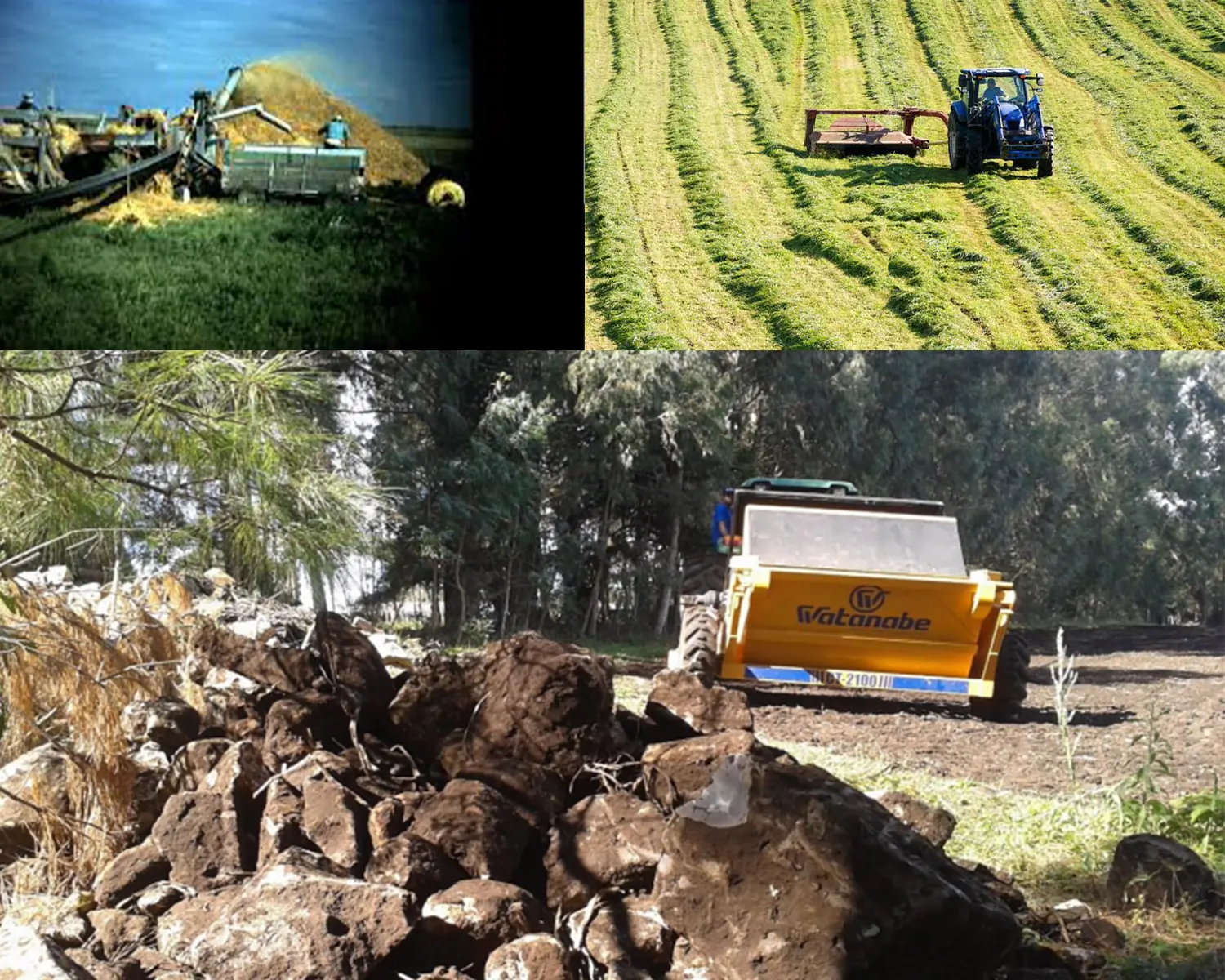
Farm zone (Kazanlak/Karlovo/Isparta) + stone type + plantation age + current BDS-12 compliance rate + geraniol baseline + fine fragrance supply contract status → Korea Watanabe provides the correct rock crusher for rose farm selective clearing specification, Fe chelation programme and 15-year BDS-12 geraniol + petal yield ROI calculation.
شركة كوريا واتانابي لكسارة الصخور المحدودة - أنسان سي، جيونجي دو
المحرر: Cxm