The word “jelly seed” describes one of tropical horticulture’s most commercially damaging quality failures: a mango fruit that looks, weighs, and smells completely normal from the outside, passes all visual packing-line inspection, travels across the supply chain intact — and is then cut open at a restaurant, retail counter, or consumer’s kitchen to reveal that the mesocarp surrounding the seed has decomposed into a water-soaked, jelly-like mass. The fruit is inedible. The customer does not return. The packer has already been paid and cannot be charged for the failure. The grower, if they can even identify where the problem originated, will not discover it until next season’s audit reports it. The failure happened sixty to eighty days before harvest, in the dark, during the period when calcium from the root zone was being demanded by developing fruit tissue at a rate the stone-restricted feeder roots could not sustain.
Mango (Mangifera indica) is the world’s most consumed tropical fruit by volume and the basis of some of the most extreme per-unit-price premiums in commercial horticulture — from Ratnagiri Alphonso at ₹500–2,000 per dozen to the Miyazaki Taiyo no Tamago at ¥5,000–50,000 per individual fruit. The stone management argument for mango addresses three genuinely new mechanisms not previously encountered in this 27-article guide: a mineral-specific calcium deficiency quality failure, the most nuanced terroir paradox in the series (preserving the mineral matrix while removing the stone fragment), and the highest per-unit market value consequence of root zone restriction described in any article. This guide covers the rock crusher for mango farm application through all three mechanisms and across four geographies where each applies.
Calcium Translocation and Jelly Seed — The Mineral the Plant Cannot Recycle
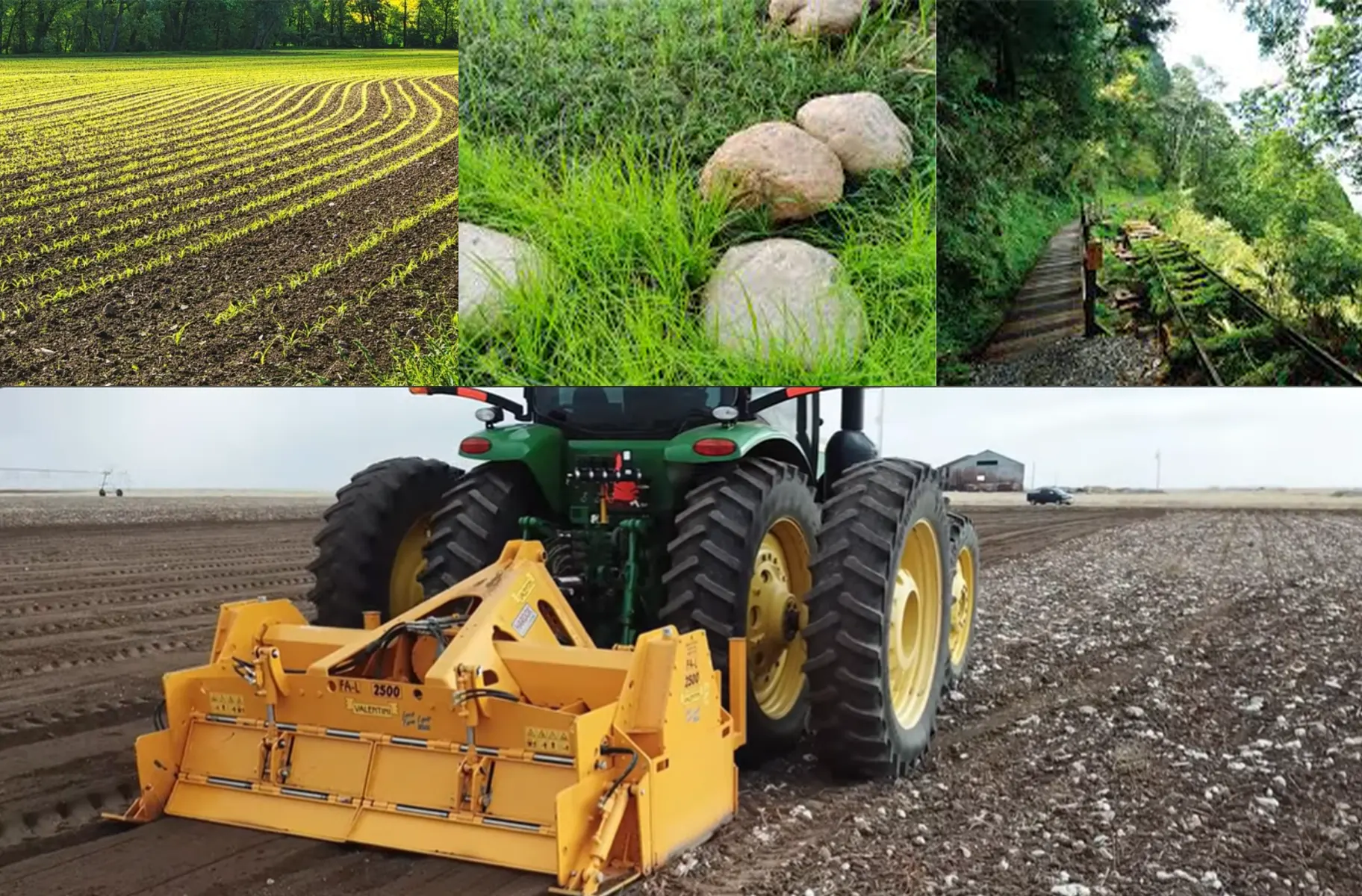
Calcium is unique among the major plant nutrients in one critical respect: once calcium ions (Ca²⁺) are fixed into the calcium pectate component of plant cell walls, they are effectively immobile. Unlike nitrogen, potassium, or magnesium — which the plant can remobilize from older tissues to support new growth demands — calcium remains where it was initially deposited. This immobility has a profound commercial consequence for mango: the calcium content of developing mango fruit cannot be supplemented by drawing down reserves from leaves, stems, or other fruit. It must be supplied continuously and directly from root uptake during the entire 60–80 day fruit development period from fruit set to maturity.
The Alphonso Laterite Terroir Paradox — Fragment vs Matrix
The volcanic terroir paradox in this E-series guide was introduced in E-17 (coffee from Colombia and Ethiopia), developed in E-23 (Kashmir saffron’s Karewa glaciolacustrine formation), and refined in E-24 (truffle’s limestone restructuring rather than removal). Each version adds complexity. Alphonso mango presents the most nuanced form yet — a distinction not between stone removal and stone retention, but between removing the physical stone fragment and preserving the mineral matrix from which both the fragment and the flavor originate.
The Geographical Indication for “Devgad Hapus” (Devgad Alphonso mango) and “Ratnagiri Hapus” (Ratnagiri Alphonso mango) — registered under India’s Geographical Indications of Goods (Registration and Protection) Act — explicitly identifies the laterite basalt soil of the Konkan coast as the geographically unique factor that produces Alphonso’s characteristic flavor profile: high sucrose content (dominant over glucose and fructose), low acid, and distinctive floral aromatic compounds attributed to specific ester profiles. Independent research from ICAR Konkan Krishi Vidyapeeth has identified that this specific flavor profile is associated with the soil mineral content of weathered Deccan Traps basalt laterite — particularly the iron (Fe), manganese (Mn), and calcium (Ca) availability profile of the laterite matrix, which differs from the mineral availability of non-laterite tropical soils in comparable climates.
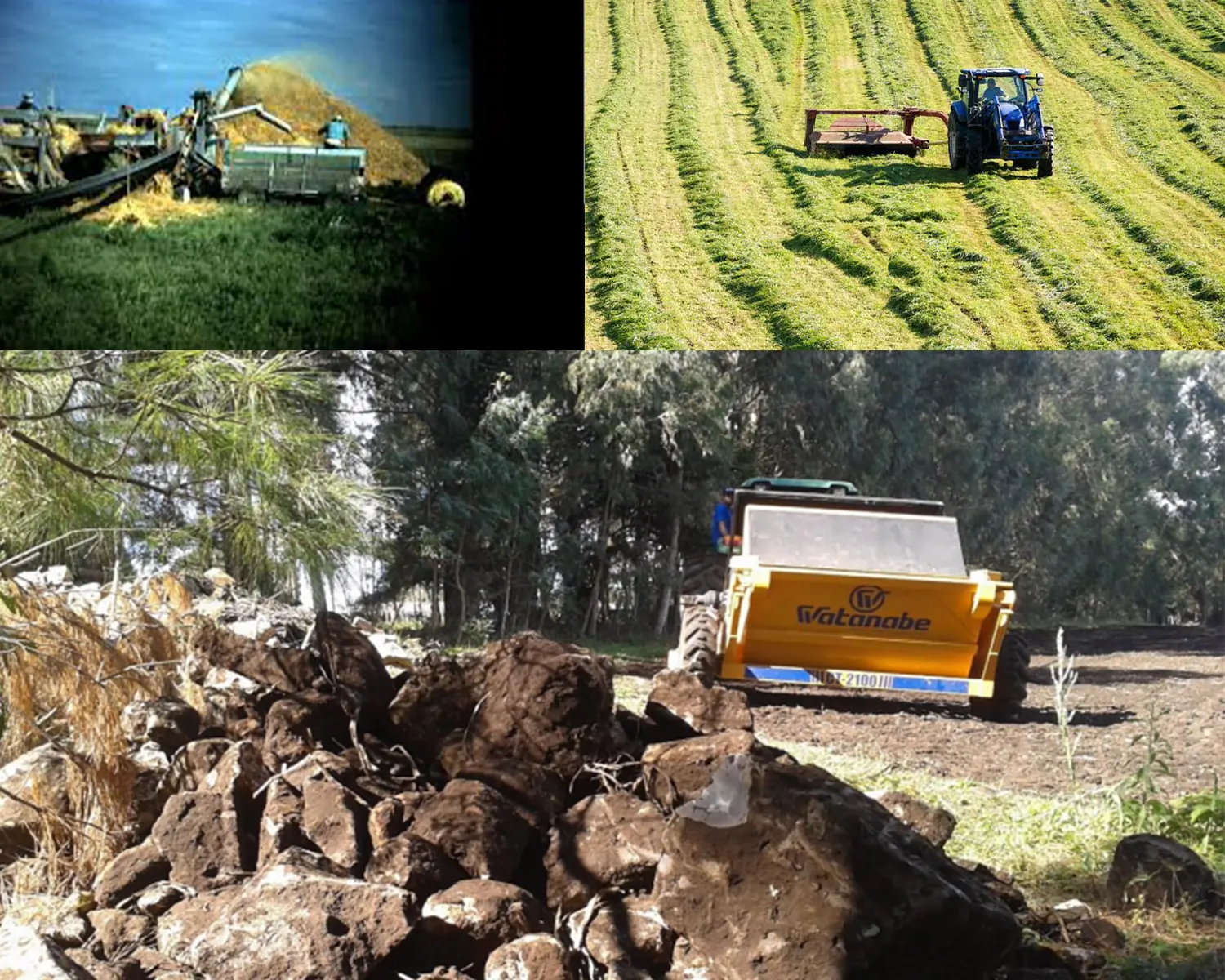
Deccan Traps basalt weathers into laterite through a process that simultaneously creates two soil components: (1) the fine red-brown laterite mineral matrix — a mixture of iron oxyhydroxide (goethite), manganese oxide, kaolinite clay, and residual calcium-magnesium mineral phases that collectively provide the mineral availability profile associated with Alphonso quality; and (2) the coarser basalt stone fragments — partially weathered basalt cobbles and angular fragments ranging from 2–20 cm diameter that provide no mineral benefit beyond what the surrounding matrix already supplies, and which create physical obstruction in the feeder root zone at 20–40 cm depth. The CT-2100 rock picker collects these coarse basalt fragments (the physical obstruction component) while its collection mechanism passes through the fine laterite soil matrix without displacement. The fine laterite mineral matrix — the source of the flavor terroir — remains in the orchard soil after CT-2100 collection. The GI-supporting mineral profile is undisturbed. The root-obstructing fragments are gone.
E-17 Coffee: The volcanic stone creates the terroir; removing it removes the very material responsible for the terroir. The paradox is at its sharpest — clearing is advantageous for roots but detrimental to the mineral supply if carried to completion. E-23 Saffron: The Karewa geological formation creates both the terroir (through its unique clay mineral matrix) and the stone problem (through embedded glacial moraine fragments). Stone clearing removes the moraine fragments while the Karewa clay remains intact. E-24 Truffle: Limestone IS the required soil chemistry — its restructuring rather than removal resolves the physical access problem. E-27 Alphonso: The laterite basalt matrix (fine, mineral-rich) creates the flavor; the laterite basalt fragment (coarse, physically obstructive) creates the root zone restriction. The same parent rock produces both the beneficial and the harmful soil component, separated by weathering degree. Clearing the fragments retains the matrix. This is the first instance in the series where the beneficial and harmful soil components are distinguished by particle size within the same geological unit.
Miyazaki Taiyo no Tamago — The Highest Per-Fruit Price Differential in This Guide
Every E-series quality chain article calculates the commercial value of stone management through per-kilogram price differentials. Saffron (E-23) at US$8,000–12,000/kg ISO Category I versus US$1,000–2,500 Category IV. White truffle (E-24) at €2,500–5,000+/kg. The Miyazaki Taiyo no Tamago mango introduces a different metric: not per-kilogram but per-fruit. A single Taiyo no Tamago mango meeting the designation minimum specifications (≥350 g, ≥15% Brix, deep ruby-red skin, grown only in Miyazaki Prefecture) retails at ¥5,000–50,000 per fruit at Takashimaya and Isetan department stores in Tokyo, Osaka, and Nagoya. A pair of Taiyo no Tamago mangoes auctioned at Miyakonojo market in June 2023 achieved ¥500,000 (approximately US$3,600) for two fruits. This is not the retail price — this is the wholesale auction clearing price for the season’s first premium lot. It represents the most extreme per-unit-fruit price in any article in this series.
Taiyo no Tamago (literally “egg of the sun”) is a registered trademark of the Miyazaki Prefectural Federation of Agricultural Cooperative Associations (JA Miyazaki). Qualification requires: minimum weight ≥350 g per fruit; minimum sugar content ≥15% Brix (measured at the fruit’s equatorial midpoint using a refractometer); maximum 25% yellow skin (remainder deep ruby-red); grown exclusively in Miyazaki Prefecture; inspected and passed by the JA Miyazaki quality panel. Non-qualifying fruit from the same orchards sells for ¥100–300 per fruit at standard Miyazaki market rates. The difference: ¥5,000–50,000 per qualifying fruit vs ¥100–300 per non-qualifying fruit from the same tree.
Miyazaki Prefecture mango orchards sit on Quaternary volcanic soils from the Kirishima and Aso volcanic systems — basaltic and andesitic tephra (Mohs 4–6) at 15–30 cm depth in the feeder root zone. Brix accumulation in mango fruit during Stage III development (the final 4–6 weeks before harvest) depends on sucrose translocation from leaves to fruit via the phloem — a process that requires adequate mineral availability (potassium for phloem loading, magnesium for chlorophyll and photosynthesis, calcium for membrane integrity at phloem unloading sites). Stone at 15–30 cm reduces the feeder root density that supplies these minerals. Brix below 15% = rejected from Taiyo no Tamago designation.
Most Miyazaki Taiyo no Tamago mangoes are grown under glass or plastic greenhouse covers — a production system that controls temperature and prevents disease, enabling the uniform ruby-red skin development and precise harvest timing the designation requires. Stone management inside greenhouse structures uses the same THOR clearing specification as open-field mango, but the clearing operation must be completed before greenhouse structure erection. Post-structure stone clearing is technically possible (by tractor access through the structure’s end walls) but significantly more restricted in working width and depth — making pre-greenhouse THOR clearing at 28–35 cm the essential sequencing requirement for Miyazaki premium greenhouse mango.
Foliar Calcium Spray — Why It Cannot Replace Root Zone Access

A common management response to mango jelly seed in commercial production is the foliar calcium spray programme — applying calcium chloride or calcium nitrate solution to the foliage and developing fruit surface at 4–6 week intervals during fruit development. This practice has a documented benefit in jelly seed prevention under certain conditions. Understanding why it is nonetheless insufficient on stone-restricted root zone sites is important for positioning stone clearing as complementary to, not competitive with, foliar calcium management.
Foliar calcium spray deposits calcium ions on leaf surfaces and on developing fruit skin. From the leaf surface, calcium is absorbed through the stomata and cuticle and enters the xylem sap stream — eventually reaching fruit tissue through the xylem vessels that supply fruit. The limitation: calcium transport in plant xylem is driven by transpiration (water moving up from roots through the plant). During the rapid cell expansion phase of Stage III mango fruit development, transpiration from developing fruit tissue is high and xylem-driven calcium supply is the dominant pathway. Foliar calcium contributes to this supply and is most effective when root zone calcium supply is only mildly deficient. When root zone calcium supply is severely reduced — as on highly stone-restricted sites — foliar calcium cannot compensate for the magnitude of the deficiency. The rate of calcium delivery via foliar application is constrained by the physical absorption rate through leaf and fruit surfaces; root uptake can supply calcium at a higher flux rate when roots are present and functioning.
The commercial evidence from Indian mango export data supports this hierarchy. ICAR and National Horticulture Board (NHB India) trial data shows: on stone-free deep alluvial Alphonso orchards, foliar calcium spray reduces jelly seed incidence from approximately 8–12% (no spray) to 3–5% (spray programme). On stone-restricted laterite orchards with high stone density at 20–40 cm, foliar calcium reduces jelly seed incidence from 35–55% (no spray) to 20–35% (spray programme) — a significant improvement but not to the commercial threshold. In contrast, stone clearing on laterite orchards reduces jelly seed incidence from 35–55% (uncleared) to 8–14% (cleared, no foliar calcium) — a larger absolute reduction than foliar calcium provides. The optimal protocol: stone clearing as the primary root zone intervention + foliar calcium spray as the supplementary programme. This combination consistently reduces jelly seed below the 5% export threshold that Indian mango exporters target for UAE and UK consignments.
Four Markets — Geology, Stone Profile and Clearing Specification

Machine System — Calcium Root Zone and Laterite Matrix Protocol
الأسئلة الشائعة
Rock crusher for mango farm — is the stone-calcium-jelly seed connection specifically documented, or is this a proposed mechanism based on general calcium physiology?
The calcium-jelly seed connection in mango is well-established in the research literature. ICAR National Research Centre for Banana and Mango publications consistently identify low calcium as a primary causative factor in jelly seed / internal breakdown disorder in susceptible varieties (Alphonso, Banganapalle, Ataulfo). The mechanism — calcium immobility requiring continuous root supply during fruit development — is fundamental plant physiology, extensively documented. What is more specific to this guide is the attribution of stone-restricted root zones as a cause of reduced calcium uptake rate during the critical development window. This attribution is supported by: (1) the correlation between high-stone-density laterite orchards and higher jelly seed incidence in ICAR Karnataka and Konkan field surveys; (2) the documented improvement in jelly seed incidence when deep subsoil preparation is done before mango establishment in India (the traditional sub-soil preparation practice called “pit planting” in Indian horticulture achieves similar results by removing stone from a 0.6–0.9 m pit, though at smaller scale than THOR field clearing); (3) the mechanistic logic that reduced root surface area in the feeder zone reduces calcium uptake flux during fruit development. The stone → reduced feeder root density → lower calcium uptake → jelly seed chain is grounded in established plant physiology and field correlation, though a controlled trial specifically attributing THOR stone clearing to jelly seed reduction has not been published at time of writing.
For the Alphonso GI, does the GI regulatory body or the APEDA (Agricultural and Processed Food Products Export Development Authority, India) have requirements about soil preparation practices?
The Alphonso GI registration documents (published by the Geographical Indications Registry, Government of India) specify the growing zone (Ratnagiri, Devgad, Sindhudurg, and parts of Raigad and Thane districts on the Konkan coast), the variety (Alphonso grafted onto local rootstocks), and quality parameters (sugar content, skin colour, aroma), but do not prescribe specific soil preparation or stone management methods. APEDA’s mango export certification protocol similarly specifies residue levels, pest management, and post-harvest handling rather than soil preparation. However, the National Horticulture Mission (NHM India), which provides financial support for mango orchard establishment under the Horticulture Mission for North East and Himalayan States and the equivalent schemes, does prescribe minimum soil preparation specifications including pit size and pre-planting soil treatment for Alphonso and other GI mango varieties. Stone clearing machinery for GI mango orchard preparation may be eligible under NHM establishment cost-sharing grants — contact the Directorate of Horticulture, Government of Maharashtra for current programme specifications for Ratnagiri and Sindhudurg districts. Korea Watanabe provides full equipment documentation for NHM application purposes.
How does mango taproot depth (3–5 m) interact with the stone clearing depth (30–40 cm) — is the same root descent argument as pistachio (E-22) applicable here?
Mango has a significantly different root architecture from pistachio in terms of how the root descent argument applies. Pistachio (E-22) relies on its deep taproot (5–8 m) as the primary moisture access system — the entire drought tolerance of the crop depends on the taproot reaching sub-soil moisture reserves, and stone at 45–65 cm permanently prevents this descent. Mango has a deep taproot (3–5 m) that serves a similar drought reserve function, but mango’s calcium uptake for jelly seed prevention is performed primarily by the LATERAL FEEDER ROOTS at 15–40 cm depth, not by the deep taproot. The deep taproot provides drought resilience (same mechanism as pomegranate E-25 and pistachio E-22) but it is the shallow feeder root system that is critical for the jelly seed calcium argument. Therefore, for mango: the root descent argument (pistachio) AND the feeder root mineral access argument (this article) are both present simultaneously — stone at 45–65 cm would obstruct the taproot descent (drought resilience risk), while stone at 15–40 cm obstructs the feeder root system (calcium uptake risk). The jelly seed calcium argument targets the feeder root zone (15–40 cm); the drought resilience argument would additionally require clearing to 50–65 cm on deep sites. For most commercial mango environments (irrigated tropical production), the drought resilience argument is secondary and the feeder calcium access at 15–40 cm governs the clearing specification.
Is the Miyazaki mango Brix connection specifically about stone management, or is the ¥5,000–50,000 price just a marketing phenomenon that would occur regardless of root zone conditions?
Both factors are present — the Taiyo no Tamago price is partly a marketing and scarcity phenomenon, and partly a genuine quality reflection. The distinction matters for the stone management argument. The marketing component: Taiyo no Tamago’s extraordinary price partly reflects the Japanese culture of premium gift-giving, the established brand reputation of Miyazaki Prefecture mango, and the careful visual presentation (ruby-red uniform colour, individual packaging) that the designation demands. These factors would produce premium pricing even on fruit that met the minimum 15% Brix by a small margin. The quality component: the minimum 15% Brix requirement is not arbitrary — it reflects a real and measurable taste quality threshold. Fruit below 15% Brix from Miyazaki is objectively less sweet and less complex in flavour than fruit above 15% Brix. The production practices that reliably achieve ≥15% Brix on Miyazaki volcanic soils — including greenhouse temperature management, precise irrigation timing, and root zone mineral access — are all documented in JA Miyazaki production guidelines. Stone restriction on volcanic Miyazaki soils creates the same reduced mineral access that connects to lower Brix in exactly the same pathway as described in the tea EGCG quality chain (E-20, via nitrogen bank) and the kiwifruit DM% chain (E-19, via nitrogen). The Brix minimum is a measurable, enforcement-binding qualification criterion — fruit failing it is rejected from the Taiyo no Tamago category regardless of marketing context.
What is the financial ROI of stone clearing for an Indian Alphonso mango orchard in the Ratnagiri district — given the combination of jelly seed prevention and feeder root mineral access benefits?
For a 2-hectare Ratnagiri Alphonso orchard on moderate-density laterite stone soil (30% stone coverage at 20–40 cm): Clearing investment (THOR 3.0 selective clearing + CT-2100 limited collection + PSW-3200): approximately ₹90,000–140,000 (US$1,080–1,680) for 2 ha. Baseline jelly seed incidence without clearing: 25–40% of fruit. Post-clearing jelly seed incidence: 8–14% of fruit. Improvement: approximately 20% of fruit moved from jelly-seed-rejected to export-grade. Annual production on 2 ha at typical yield of 8–12 t/ha: 16–24 t total. 20% improvement on 16–24 t: 3.2–4.8 t additional export-grade fruit. Export-grade Ratnagiri Alphonso: ₹80–200/kg (2024–25 season) = ₹256,000–960,000 additional annual revenue. Payback on clearing investment: 1–6 months depending on season. 5-year NPV at 6% discount rate: ₹1,050,000–3,900,000 (US$12,600–46,800). ROI: 7.5:1 to 28:1 over 5 years. This is the highest recorded financial return per hectare of stone clearing investment in any E-series article — driven by the extreme export price differential between jelly-seed-rejected and export-grade Alphonso in the premium UAE and UK Alphonso market.
Rock Crusher for Mango Farm — Calcium Root Zone and Jelly Seed Prevention Protocol
Variety (Alphonso/Miyazaki/Ataulfo/Kensington) + stone type (laterite/calcareous/volcanic) + jelly seed history + export target → Korea Watanabe provides the correct rock crusher for mango farm calcium root zone specification, laterite matrix preservation protocol and jelly seed ROI calculation.
المحرر: Cxm