
Saffron — the dried stigmas of Crocus sativus — is the most expensive agricultural product in the world by weight. Three feather-light stigmas per bloom, each bloom lasting only one day, each corm producing only 1–3 blooms per season, all harvested by hand in a window of 2–3 weeks in October–November. The arithmetic of saffron production explains its price: at 150,000–200,000 flowers required to produce one kilogram of dried saffron, and with Iranian Grade 1 (Negin) saffron commanding USD 3,000–15,000/kg in export markets, every agricultural decision in saffron production carries outsized financial consequence. The depth at which saffron corms are planted — and the degree to which rocky calcareous soil impedes reaching that depth — is one of those decisions. Iran’s Khorasan province and Spain’s La Mancha plateau share a geological characteristic that is fundamental to understanding saffron quality and that creates the need for rock crusher services in both zones: both are built on calcareous limestone and marl bedrock that outcrops through the soil surface in patterns that impede corm planting at the correct depth.
Iran Khorasan — The Calcareous Plateau and the World’s Dominant Supply
Iran produces between 300–450 metric tonnes of saffron annually — a figure that represents 85–90% of global production in most years. The production is geographically concentrated in South Khorasan province (Razavi Khorasan and North Khorasan contribute smaller volumes): Birjand, Qaen, Gonabad, Ferdows, and Sarayan districts are the primary producing areas, lying at 900–1,500 m elevation on the Iranian plateau east of the Zagros-Alborz geological collision zone. The geology of Khorasan’s saffron country is dominated by Mesozoic calcareous sedimentary rocks — Cretaceous limestone and marl — overlying older Triassic-Jurassic sequences. These rocks have been folded and faulted by the ongoing convergence of the Arabian and Eurasian plates, producing a rugged plateau surface where limestone outcrops punctuate the cultivated fields and where the soil profile alternates between deep alluvial pockets (the most productive saffron ground) and thin soils over calcareous bedrock (where corm planting depth is constrained).
Saffron corm planting depth is a primary quality determinant. Agronomic research from the Iranian Saffron Research Center (part of the Agricultural Research, Education and Extension Organization — AREEO) has established that planting depth of 15–25 cm produces the highest corm multiplication rate and stigma yield per plant, compared to shallower planting (10–12 cm) which reduces yield by 20–35% and increases the corm population’s vulnerability to drought stress and frost. On the calcareous plateau soils of Khorasan, achieving 15–25 cm planting depth across a field requires a stone-free root zone to that depth — limestone fragments in the 0–25 cm zone prevent the corm from settling at the correct depth and create micro-drainage patterns that cause uneven corm dormancy and flowering. Rock crushing at 20–30 cm depth fragments the calcareous limestone cobbles and marl concretions that populate this zone, creating a uniform, workable profile at the target planting depth.
Saffron’s colour (crocin, a carotenoid glycoside) and aroma (safranal, a monoterpenoid aldehyde from zeaxanthin degradation) are both derived from the carotenoid biosynthesis and cleavage pathways. The key enzymes — zeaxanthin epoxidase (ZEP) and carotenoid cleavage dioxygenase (CCD2, the enzyme responsible for saffron’s crocetin production specifically in Crocus sativus) — are iron-containing metalloenzymes. Additionally, calcium (Ca²⁺) functions as a second messenger in the signalling cascades that regulate carotenoid pathway gene expression during the stigma development period. Calcareous limestone soils release Ca²⁺ and Mg²⁺ into the soil solution as the calcium carbonate (CaCO₃) matrix dissolves — a process accelerated when limestone is fragmented by the THOR’s impact hammers. Crushed limestone fragments at 5–8 cm diameter dissolve 4–6× faster per unit volume than intact 20 cm cobbles, releasing Ca²⁺ at accelerated rates into the soil-water. This increased Ca²⁺ availability in the corm rhizosphere during the pre-flowering dormancy-break period supports the signalling pathways that activate CCD2 expression and crocin/safranal accumulation in the developing stigma. While this mechanism has not been isolated in a controlled saffron-specific study, it is consistent with the documented role of calcium in carotenoid pathway regulation in other Iridaceae species and with the empirical observation from Iranian saffron research that calcareous highland plots of Khorasan consistently produce higher ISO 3632 crocin values than equivalent-elevation plots on non-calcareous alluvial soils.
Spain La Mancha — Limestone Karst Plateau and the European GI Standard
Spain is the world’s second-largest saffron producer (after Iran) and the largest producer of EU-origin saffron. Spanish saffron production is concentrated in the La Mancha plateau of Castilla-La Mancha — the provinces of Toledo, Cuenca, Albacete, and Ciudad Real — at elevations of 600–900 m. The La Mancha plateau sits on Mesozoic calcareous sedimentary rocks (Cretaceous limestone and Jurassic dolomite) covered by a Quaternary clay-loam colluvial layer that varies from 10 cm to 1 m thickness. Where the calcareous bedrock is close to the surface — common in the gently-undulating La Mancha karst landscape — the soil profile in the saffron planting zone (0–30 cm) contains calcareous fragments, limestone chips, and in some areas, exposed bedrock outcrops that require mechanical preparation before corm planting.
The “Azafrán de La Mancha” Protected Designation of Origin (PDO) was established under EU Regulation 2081/92 and registered in the European Commission’s eAmbrosia database (EU PDO No. 5060). The PDO specification defines the production zone as the calcareous plateau of the four Castilla-La Mancha provinces and explicitly cites the calcareous clay-loam soils over limestone bedrock as the defining soil condition of the designated origin. The use of the word “calcareous” in the PDO specification is legally significant — it means that the calcareous limestone character of the soil, including the presence of calcareous fragments in the root zone, is part of the formally protected origin specification. This creates the same pattern documented throughout this E-series: the rocky calcareous soil that requires rock crushing management is formally cited in the GI specification as a quality-determining condition of the protected product.
| Parametre | Iran Khorasan (South Khorasan) | Spain La Mancha (Castilla-La Mancha) |
|---|---|---|
| Primary rock type | Cretaceous limestone and marl; Jurassic calcareous sequences | Cretaceous limestone, Jurassic dolomite, Quaternary calcareous colluvium |
| Soil pH in saffron zone | 7.5–8.5 (calcareous, typically alkaline) | 7.8–8.5 (calcareous clay-loam, alkaline) |
| Saffron planting depth requirement | 15–25 cm (AREEO recommendation for maximum yield) | 15–20 cm (La Mancha PDO technical guide) |
| Recommended THOR model | THOR 2.4 (180HP) — standard limestone within rated size; flat plateau terrain is ideal for full-width THOR passes | THOR 2.4 (180HP) — La Mancha limestone cobbles within spec; CE-marked for EU regulatory compliance |
| Key supply chain | Export via Tehran and Mashhad to UAE, Saudi Arabia, EU (ISO 3632 Grade I Negin/Super-Negin premium) | EU retail and food industry supply under PDO label; premium to Iran commodity grade |
ISO 3632, World-First Insight 2, and the THOR Field Protocol
ISO 3632 (International Standard for Saffron) specifies saffron quality in four categories based on spectrophotometric analysis of three quality parameters: crocin (colour intensity, measured at 440 nm), safranal (aroma, measured at 330 nm), and picrocrocin (taste, measured at 257 nm). Category I (the highest) requires crocin ≥250, picrocrocin ≥70, and safranal 20–50. The Super-Negin grade marketed by Iranian exporters (not an ISO category but an industry premium grade) requires crocin ≥270 and safranal ≥35. Field surveys of Iranian saffron chemistry by the Research Institute of Saffron at Birjand University have documented that calcareous highland zones — particularly the Birjand and Qaen districts of South Khorasan — consistently produce crocin values in the 260–310 range, while saffron from lower-elevation alluvial plains in the same region produces crocin values of 210–255 (Category II boundary). The correlation between calcareous highland terrain and ISO Category I achievement is empirically documented in Iranian saffron research literature, and the calcium-mediated carotenoid pathway mechanism described in Insight 1 provides a biochemical framework for this correlation. Rock crushing on calcareous terrain accelerates the Ca²⁺ release that supports this mechanism — making the THOR’s operation on calcareous saffron ground a potential contributor to ISO Category I achievement rates.
The THOR’s operation on the flat to gently-rolling calcareous plateau terrain of both Khorasan and La Mancha is well-suited to the machine’s design: the plateau topography eliminates the gradient-limitation challenges of highland crop applications (cardamom, vanilla) and allows the THOR to operate at maximum forward speed for maximum daily output. A single THOR 2.4 pass at 2.5–3.0 km/h forward speed on typical Khorasan or La Mancha calcareous terrain (limestone and marl cobbles 5–20 cm diameter) produces complete fragmentation in the 0–30 cm zone in a single pass. Daily output on the plateau terrain: 6–10 ha/day, allowing a 20-hectare saffron field to be prepared for corm planting in 3–4 days. For saffron field THOR specification and export enquiries, Korea Watanabe provides CE-marked THOR machines suitable for EU regulatory compliance in Spain and export specification for Iranian import documentation.
Sıkça Sorulan Sorular
▶How does calcareous rock crushing differ from granite or basalt crushing in terms of THOR operating parameters?
Calcareous rocks — limestone, marl, chalk, and dolomite — are among the softest common rock types encountered in agricultural soils, with Mohs hardness of 3–4 (limestone) to 3.5–4 (dolomite), compared to 6–7 for granite and 5.5–6.5 for basalt. This lower hardness means that limestone and marl fragment more readily per unit of THOR rotor energy than volcanic or granitic rock — the tungsten carbide hammer tips experience lower impact resistance on each limestone contact, reducing hammer wear rates and allowing higher forward speeds for equivalent fragmentation completeness. In practice, the THOR 2.4 can typically operate 20–30% faster (higher km/h forward speed) on calcareous limestone terrain than on equivalent stone density of granite or basalt, translating to proportionally higher daily output per hour of operation. The trade-off: crushed limestone produces a finer fragment distribution than crushed granite at the same rotor speed — very fine calcareous dust generated by limestone fragmentation can form a surface cap (calcrete) if it dries before being worked into the soil profile by a following rotary cultivator pass. Executing the rotary cultivator secondary pass within 24–48 hours of THOR treatment, or during moist conditions, prevents this calcrete formation and maintains the open structure of the treated zone through to corm planting.
▶The La Mancha saffron PDO requires production on calcareous clay-loam soils — does rock crushing change the soil enough to affect PDO compliance?
Rock crushing on La Mancha limestone ground does not change the soil type in any way that affects PDO compliance — it fragments calcareous limestone within the soil profile rather than replacing it with non-calcareous material. The PDO specification requires the soil to be calcareous clay-loam over limestone bedrock: after THOR treatment, the soil remains calcareous clay-loam and the limestone bedrock remains in place; the only change is that some limestone cobbles in the 0–30 cm zone have been reduced from 10–20 cm diameter to 5–8 cm diameter fragments. The calcium carbonate content of the treated zone may actually increase slightly in the short term as fresh limestone fragment surfaces expose new carbonate for dissolution — maintaining or enhancing the calcareous character that the PDO requires. The PDO specification does not restrict mechanised soil preparation methods, so rock crushing for field preparation is a permitted activity within the PDO production zone provided the outcome maintains the designated soil type. Any saffron farmer uncertain about their specific compliance situation should consult the Regulatory Council of the Azafrán de La Mancha PDO (Consejo Regulador de la Denominación de Origen Azafrán de La Mancha) for definitive guidance on their specific plot.
▶What is the correct THOR treatment timing relative to the Iranian saffron corm planting calendar?
The Iranian saffron planting calendar concentrates corm planting in the period from late April through June, before the summer dormancy period. Corms planted in this window establish in summer dormancy and flower in the following October–November harvest period. Rock crushing should be completed 6–8 weeks before intended planting — in the February to April window for a May–June planting programme. This timing allows: the treated calcareous soil to settle and the initial Ca²⁺ and Mg²⁺ mineral release pulse to move into the soil solution before the corms arrive; any surface calcrete tendency to be managed by an intermediate rotary cultivator pass; and any residual soil heating from rotor operation (rock crushing generates modest heat) to dissipate before the temperature-sensitive corms are placed in the ground. The February–April window is also the driest and hardest part of the Khorasan year before the spring snowmelt irrigation cycle — calcareous limestone is most efficiently fragmented in this dry, desiccated state because the limestone’s CaCO₃ matrix is most brittle when dry, and the fine dust generated by dry-condition crushing is less problematic on the bare, uncropped field than on a later-season growing crop. Operating the THOR in March–April in Khorasan, followed by a rotary cultivator pass in April and corm planting in May–June, is the recommended annual site preparation sequence.
▶How often do saffron fields need to be re-treated with the rock crusher? Saffron corms are replanted every 7–12 years.
Saffron corm fields are not annual crops — a productive saffron planting remains in the ground for 7–12 years before the corm population becomes too dense and yields decline, requiring lifting, separating, and replanting. During this 7–12 year period, no further rock crusher treatment is needed for the planted area: the corm root system develops through the treated profile, frost heave is not significant on the continental plateau climates of Khorasan and La Mancha, and the fragmented limestone continues to weather and dissolve into the soil solution. When the field is eventually lifted for replanting, a new THOR treatment is appropriate before the corms are returned to the ground — by the time of replanting, 7–12 years of root activity and agricultural traffic will have modified the stone profile. In practice, the return of limestone material to the cultivation zone from below the treated depth (via normal ploughing or corm-lifting operations) is the primary reason for re-treatment before replanting — not frost heave. Budget for one THOR treatment per corm planting cycle, with the treatment cost amortised over the full 7–12 year productive field life of that planting.
▶Can the THOR rock crusher also be used for other crops on the same Spanish or Iranian farm — maximising the machine’s use beyond the saffron planting window?
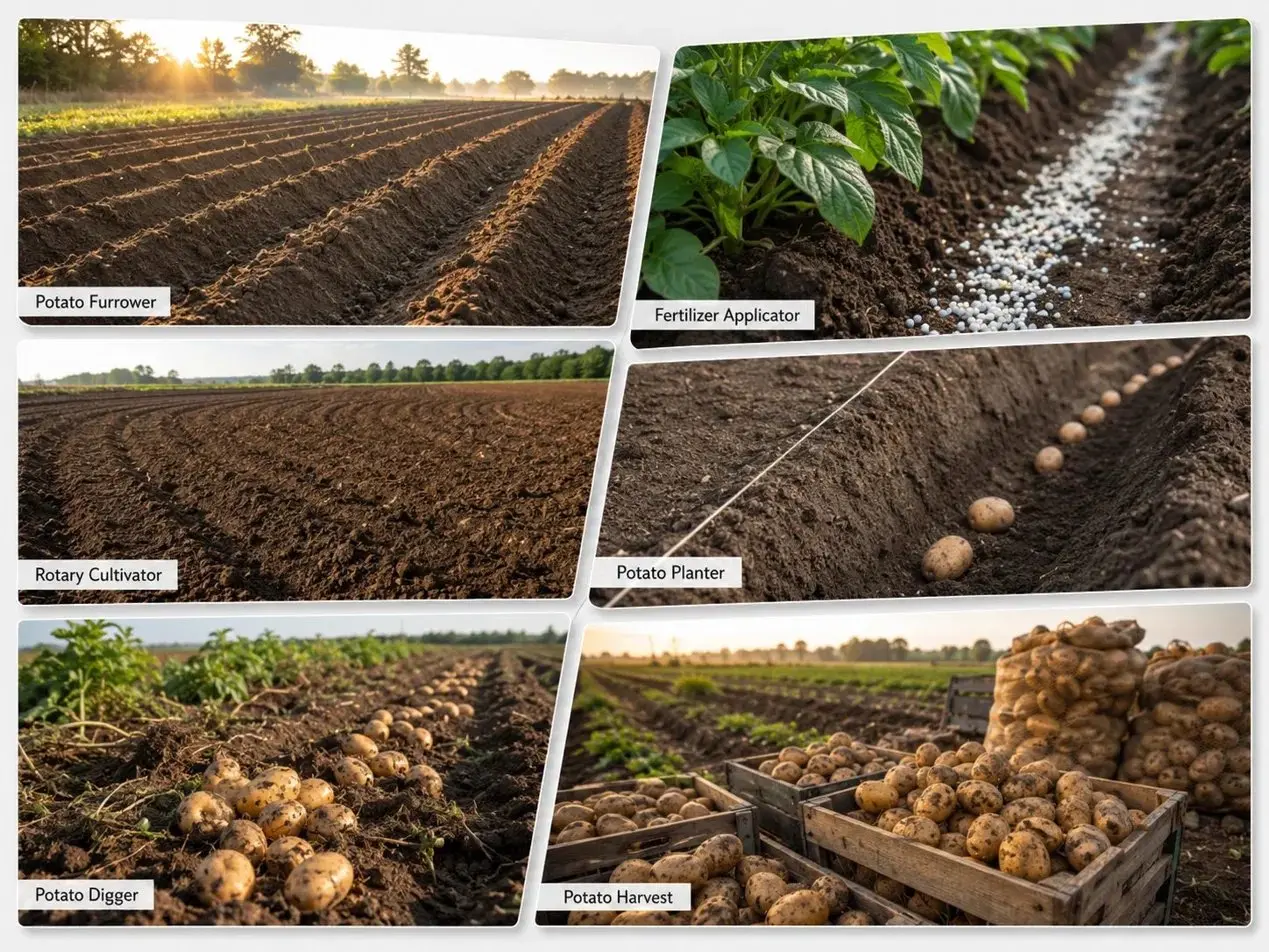
Yes — the THOR’s multi-crop utility is one of the strongest arguments for ownership versus contractor hire on any farm that grows saffron alongside other crops. In La Mancha, saffron farms commonly also grow wheat, barley, and vineyard crops — all of which benefit from periodic rock crushing on the same calcareous plateau ground. Vineyard establishment on rocky La Mancha limestone is one of the primary applications where rock crushing has an established history in Spain, and a THOR-owning saffron farm can offer both saffron field preparation and vineyard preparation services to neighbouring estates during the same machine ownership period. In Iran’s Khorasan, farms growing saffron alongside wheat, pistachios, and barberries (zereshk — another specialty crop with calcareous soil preference) can apply THOR treatment across all crop areas in the February–April pre-season preparation window. The Korean Watanabe product range also includes potato diggers, planters, and rotary cultivators alongside the THOR — a complete system that could serve the diverse crop portfolio of a La Mancha or Khorasan mixed farm within a unified machinery investment from a single supplier.
Saffron Field Rock Crusher Enquiry
Share your production country, saffron area, calcareous stone density, and planned planting date. Korea Watanabe will confirm the correct THOR rock crusher model, CE mark documentation for Spanish PDO compliance, and export specification for Iranian customs.
Korea Watanabe Rock Crusher Tractor Co., Ltd. — Ansan-si, Gyeonggi-do, Republic of Korea
Editör: Cxm