
Nesta série, a discussão sobre o manejo da qualidade da batata cultivada nas terras altas da Coreia abordou a remoção de pedras (Etapas 1–2), a formação de sulcos e o plantio (Etapas 3–4), a amontoa (Etapa 6) e o manejo em câmaras frigoríficas. Existe uma lacuna entre o Escavadeira de batatas EP-AWB-1600 Operação de colheita e o armazenamento a frio — a janela de controle de qualidade durante a própria colheita, quando as decisões tomadas sobre as configurações da colhedora, a velocidade de operação e a logística do campo ao armazenamento determinam a condição em que cada tubérculo entra na câmara de secagem.
Este guia aborda as medidas práticas de controle de qualidade da colheita disponíveis para o operador nas terras altas coreanas durante a passagem de colheita da EP-AWB-1600: ajuste da profundidade de corte, ajuste da velocidade do separador de esteira, controle da altura de queda, considerações sobre a temperatura do campo, o período imediatamente posterior à colheita para o manuseio dos tubérculos e — crucialmente — como a qualidade da remoção de pedras nas etapas 1 e 2 determina a taxa básica de danos à casca que chega à colhedora, independentemente do cuidado com que ela é operada.
Os três tipos de danos na colheita: hematomas, abrasões na pele e esverdeamento.
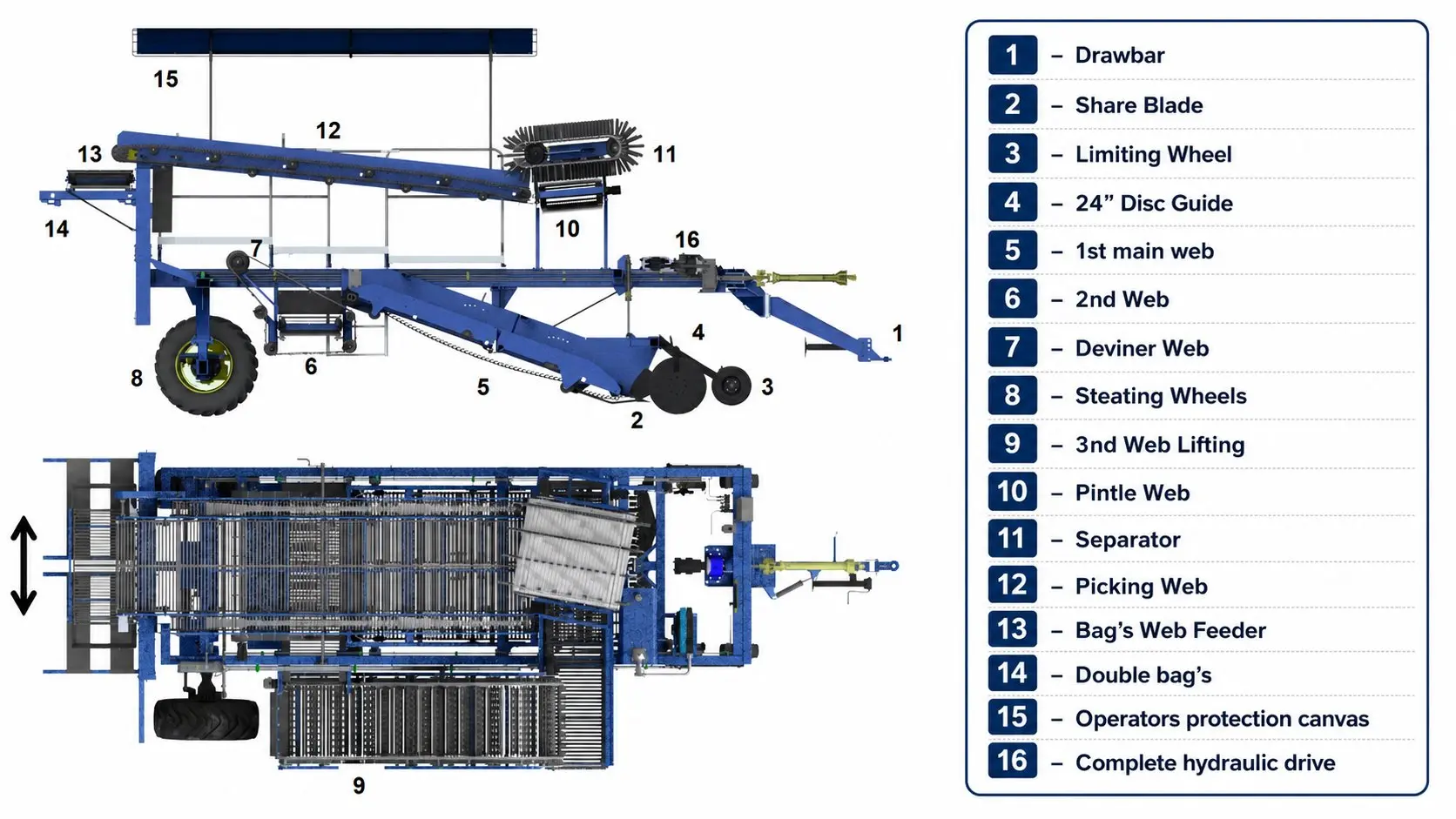
Os três tipos de danos que reduzem a proporção de batata coreana de Grau 1 entre a variedade EP-AWB-1600 e o mercado têm causas distintas, momentos de detecção distintos e estratégias de prevenção distintas:
Invisível na colheita — desenvolve-se durante o armazenamento.
A lesão por impacto ocorre quando os tubérculos colidem uns com os outros, com a peneira ou com superfícies duras durante o processo de colheita. A lesão geralmente é invisível na colheita — o impacto danifica o tecido celular subdérmico sem romper a casca, e a descoloração (lesão preta) se desenvolve ao longo de 24 a 72 horas, à medida que as enzimas celulares oxidam o tecido danificado. Os compradores do mercado de produtos frescos coreanos detectam a lesão preta ao receberem o produto — um tubérculo com lesão interna visível ao ser cortado é classificado abaixo da Categoria 1. A principal prevenção: minimizar a altura de queda e a velocidade de impacto no fluxo do material colhido. Mecanismo primário de prevenção: profundidade correta da peneira e velocidade adequada da peneira para as condições do solo.
Visível na colheita — piora durante o armazenamento.
A abrasão da casca é causada pelo contato da casca do tubérculo com fragmentos de pedra, torrões de solo e a superfície da peneira transportadora durante o processo de colheita e separação. O dano é visível na colheita como perda da casca superficial (áreas descascadas) ou arranhões. Tubérculos frescos de Grau 1 exigem casca intacta e lisa — mesmo pequenas abrasões na superfície visível desvalorizam o tubérculo. A principal causa nas condições das terras altas da Coreia são os fragmentos de pedra no material colhido, que atuam como abrasivos contra a casca do tubérculo, já que ambos são transportados pela peneira transportadora. A qualidade da remoção de pedras nas etapas 1 e 2 determina diretamente a densidade de fragmentos de pedra no material colhido e, portanto, é o fator de maior impacto na redução da taxa de abrasão da casca.
Desenvolve-se durante a colheita e após a exposição à doença.
O esverdeamento é desencadeado pela exposição à luz dos tubérculos colhidos — o mesmo mecanismo de formação de clorofila e solanina que a amontoa previne no campo agora se aplica aos tubérculos colhidos expostos à luz solar durante a colheita. A colheita em agosto nas terras altas da Coreia ocorre frequentemente sob luz solar direta — os tubérculos colhidos, acumulados no reboque de coleta sob o sol direto, podem começar a desenvolver coloração verde nas superfícies expostas dentro de 2 a 4 horas após a colheita. O esverdeamento que se desenvolve durante a colheita é irreversível — é um defeito permanente de qualidade. Prevenção primária: cubra os reboques de coleta com lonas opacas ou coberturas durante a colheita e transporte-os para armazenamento no escuro o mais rápido possível.
Configuração da Profundidade de Compartilhamento — A Primeira Decisão de Controle de Qualidade
A profundidade de corte da EP-AWB-1600 determina dois resultados simultaneamente: a extração completa dos tubérculos (muito rasa → tubérculos deixados no solo) e o risco de danos (muito profunda → volume excessivo de solo e turbulência associada na zona de separação). A profundidade ideal equilibra esses requisitos conflitantes:
Profundidade padrão (colheita comercial):
Ajuste a lâmina para penetrar de 3 a 5 cm abaixo da posição estimada do tubérculo mais profundo no canteiro. Em canteiros de batata nas terras altas da Coreia, a 600 m de altitude, os tubérculos se desenvolvem de 8 a 25 cm abaixo da superfície do canteiro antes da amontoa (os estolões se alongam para baixo a partir da semente plantada). Os tubérculos mais profundos geralmente estão a 18–22 cm de profundidade — uma profundidade de 23–26 cm garante a extração completa sem penetrar mais fundo do que o necessário. Ajustes mais profundos da lâmina (acima de 30 cm) levantam mais solo, aumentando a carga no separador de tela e a turbulência que causa danos aos tubérculos.
Colheita de sementes certificadas (mais profunda, mais lenta):
Para blocos de sementes certificadas: ajuste a profundidade da peneira de 2 a 3 cm em relação à configuração comercial (para maximizar a extração de cada tubérculo-semente, que é mais valioso do que a batata comercial) e reduza a velocidade de avanço para 1,5 km/h. A profundidade maior da peneira, em velocidade mais baixa, mantém a extração completa, ao mesmo tempo que minimiza a turbulência do solo e dos tubérculos na esteira, reduzindo danos. Cada tubérculo-semente certificado que entra no armazenamento sem danos é um ativo de qualidade; cada tubérculo-semente danificado representa um lote de menor valor na inspeção da NAAS.
Verificação de profundidade — a escavação de teste:
Antes da primeira colheita da temporada, confirme a profundidade da colher com uma verificação manual: desenterre 5 tubérculos manualmente da zona de amontoamento colhido e meça a posição mais profunda do tubérculo a partir da superfície do amontoamento. Ajuste a colher para exceder essa medida em 3 cm. Este teste de 15 minutos no início de cada temporada de colheita evita o erro mais comum na extração — ajustar a colher para a mesma profundidade da temporada anterior, quando os amontoamentos podem ter sido formados em uma altura diferente devido às condições do solo na primavera ou à variação na amontoa de terra.
Velocidade do Separador Web — Equilibrando a Separação do Solo e a Delicadeza com os Tubérculos
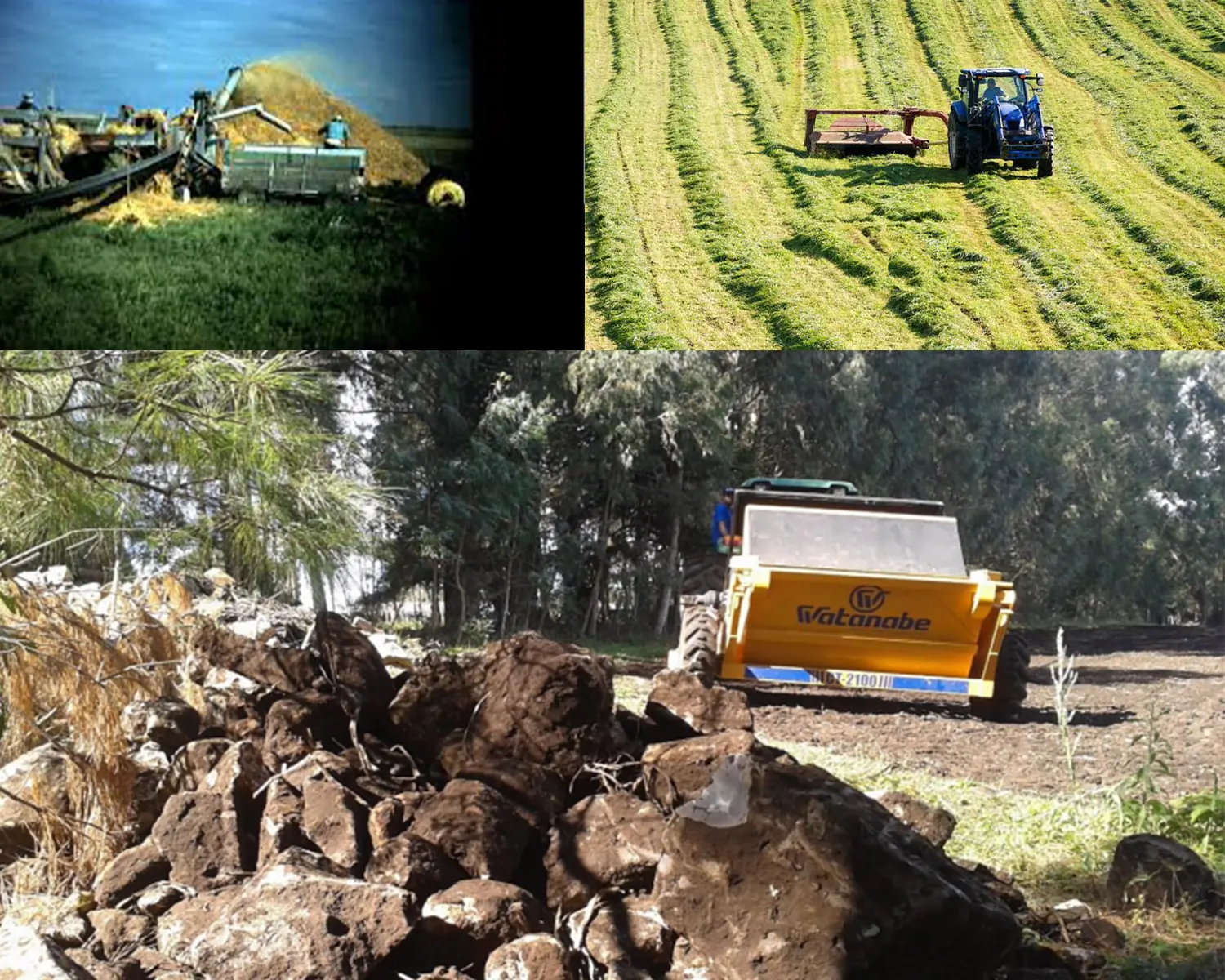
O separador vibratório de correias do EP-AWB-1600 opera em uma velocidade definida (normalmente controlada pela vazão hidráulica ou pela alteração da relação da correia) que determina tanto a eficiência da separação do solo quanto a frequência de impacto nos tubérculos. A relação inversa entre qualidade e produção é real: uma velocidade de separação mais alta remove o solo com mais eficiência (produzindo um material mais limpo para o reboque), mas submete cada tubérculo a mais impactos por metro de percurso da correia — aumentando o risco de manchas pretas.
| Configuração de velocidade da web | Melhor aplicativo | Risco de hematomas |
|---|---|---|
| Baixa velocidade | Solo seco e leve — o solo se separa facilmente sem ação agressiva das teias. Solo fino e bem preparado, com umidade ideal para a colheita. Blocos de sementes certificados. | Menor taxa de hematomas — número mínimo de impactos por tubérculo |
| Velocidade média | Condições típicas de colheita nas terras altas da Coreia — umidade moderada do solo, textura fina de granito proveniente de campo desmatado. Melhor configuração para uso geral. | Moderado — aceitável para o mercado de produtos frescos comerciais. |
| Alta velocidade | Solo úmido e pesado que requer ação de separação agressiva. Use somente quando torrões de solo obstruírem o separador e contaminarem o produto. | Alta taxa de contusão — evite para sementes frescas de Grau 1 ou sementes certificadas. Use somente quando o entupimento do separador for a única alternativa. |
A relação entre a remoção de pedras e a escolha da velocidade da web:
Em campos desmatados onde o Triturador de rochas THOR 2.4 A colhedora PSW-3200 produz um solo fino e uniforme, e o separador de correias lida com um fluxo de solo que se desfaz facilmente em baixa velocidade — partículas minerais finas se separam sem vibração agressiva. A colhedora pode operar em velocidades de separação baixas a médias, minimizando danos ao solo. Em campos não limpos, o fluxo de solo contém torrões unidos por redes de raízes e fragmentos de pedras que exigem alta velocidade de separação para serem quebrados — criando um dilema entre um solo limpo e uma alta taxa de danos que simplesmente não existe em campos limpos.
Controle da altura de queda — Cada ponto de transferência representa um risco de contusão
Cada ponto em que as batatas caem de uma superfície para outra durante a colheita representa um potencial risco de danos. A distância de cada queda (altura da queda) e a dureza da superfície de impacto determinam a gravidade dos danos. Minimizar a altura das quedas ao longo de toda a cadeia de colheita é uma das intervenções de qualidade mais eficazes e de menor custo disponíveis.
Ponto de transferência entre a web e o elevador. A transferência da EP-AWB-1600 do separador de esteira para o elevador Kit B (ou para a calha de descarga lateral) é o ponto de maior impacto na cadeia de colheita. Ajuste a altura do elevador ou da calha para minimizar a queda sobre a primeira camada de batatas no reboque — quanto mais baixo o elevador, menor a queda de cada batata. Se o ângulo do elevador puder ser ajustado hidraulicamente, abaixe-o até o ângulo mínimo que ainda permita a passagem da batata pela lateral do reboque.
Primeira camada no trailer de coleta — técnica de camada de amortecimento. As primeiras batatas a chegarem ao reboque de coleta caem diretamente no piso metálico vazio do reboque — a superfície de impacto mais dura em toda a cadeia. Conforme descrito no guia EP-AWB-3200, a prática padrão é pré-carregar uma camada de base de 5 a 8 cm de batatas colhidas anteriormente antes do início do carregamento em ritmo de colheita total. Essa camada macia de tubérculos absorve a energia da queda das batatas que chegam, reduzindo os danos causados pelo primeiro contato com o reboque vazio.
Transferência de reboque para local de armazenamento. Quando o reboque de coleta é descarregado no armazém, o tombamento sobre a área de recepção de concreto representa o evento isolado de maior risco de danos em toda a cadeia pós-colheita. Se o armazém permitir, a descarga deve ser feita por esteira transportadora ou paletização manual, em vez de tombamento. Quando o tombamento for inevitável, assegure-se de que haja uma camada de espuma ou borracha revestindo a base da área de recepção e minimize o ângulo de inclinação para reduzir a velocidade de queda.
Gestão da temperatura no campo — Por que o horário da colheita afeta a taxa de danos aos grãos
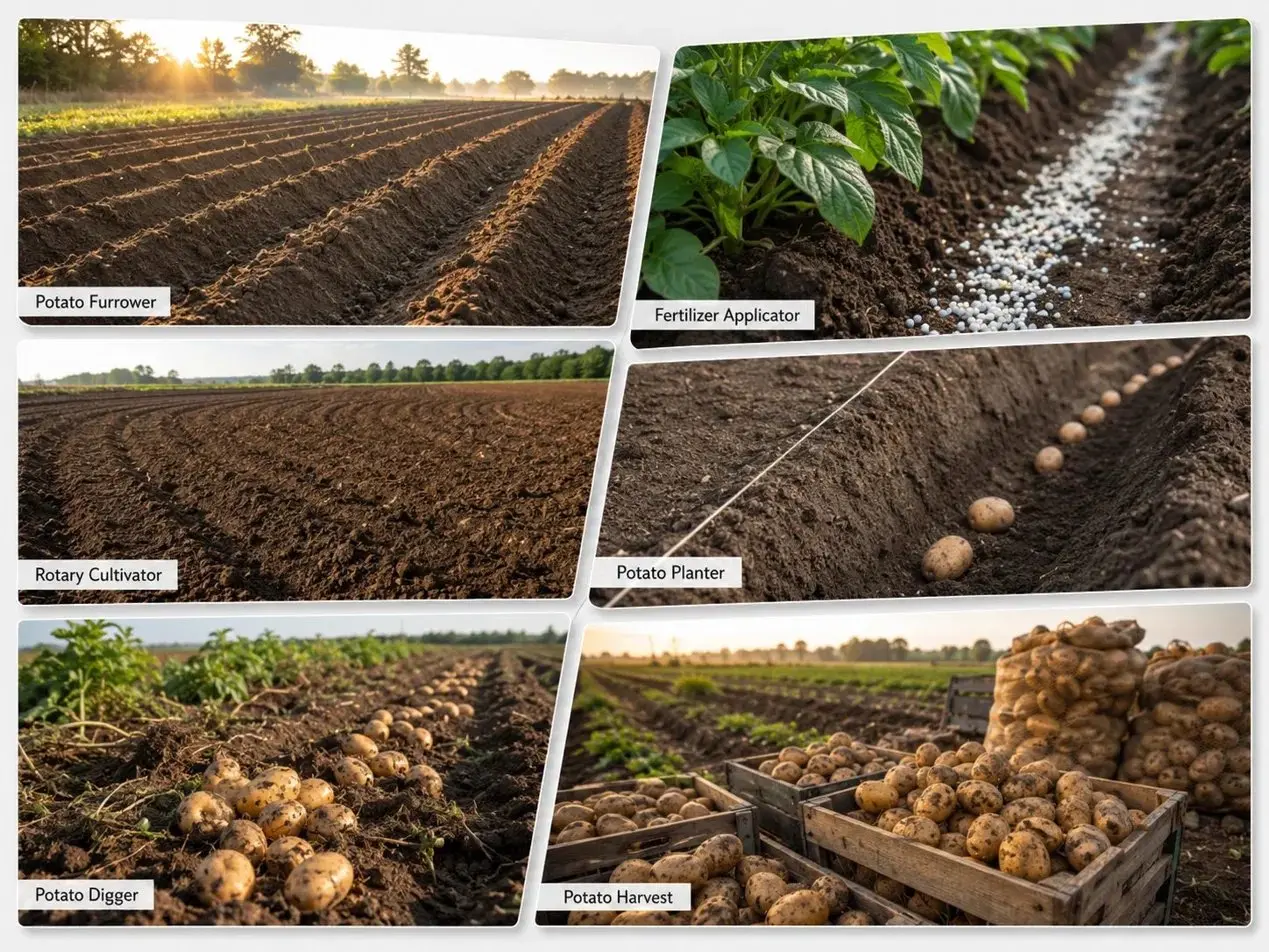
A suscetibilidade dos tubérculos de batata a danos por impacto depende da temperatura — tubérculos mais quentes sofrem danos com mais facilidade do que os mais frios, porque as membranas celulares quentes são mais fluidas e se rompem mais facilmente com o impacto. A colheita em agosto nas terras altas da Coreia, a 600 m de altitude (temperatura ambiente de 20 a 28 °C), normalmente produz tubérculos com temperatura do solo entre 15 e 22 °C, dependendo da hora do dia.
Colheita no início da manhã (6:00–10:00)
A temperatura do solo a 25 cm de profundidade, no início da manhã, a 600 m de altitude, é tipicamente de 13 a 16 °C — próxima da temperatura ideal para armazenamento refrigerado. Os tubérculos colhidos nessa temperatura estão mais firmes e resistentes a danos. A colheita no início da manhã resulta na menor incidência de manchas pretas do dia. Uma vantagem adicional: a temperatura do ar no início da manhã, em agosto, nas terras altas da Coreia, é inferior a 20 °C, reduzindo o risco de estresse térmico imediato após a colheita nos tubérculos que se acumulam no reboque de coleta.
Colheita do meio-dia até às 16:00 (12:00–16:00)
A temperatura do solo a 25 cm de profundidade, à tarde, a 600 m de altitude, pode atingir 20–24 °C após uma manhã quente. Tubérculos colhidos a essa temperatura são 30–50% mais suscetíveis a manchas pretas com o mesmo impacto do que tubérculos equivalentes colhidos pela manhã. Quando o cronograma de colheita permitir, limite as operações de colheita da tarde a lotes de fornecimento a granel de menor prioridade (fornecimento a granel cooperativo, onde a tolerância a manchas é maior) e reserve as primeiras horas da manhã para a colheita de tubérculos de primeira qualidade para o mercado de produtos frescos e para sementes certificadas.
Como a qualidade da remoção de pedras determina a taxa básica de danos à colheita
Todas as medidas de qualidade da colheita descritas acima — profundidade de corte, velocidade da esteira, minimização da altura de queda, programação por horário — atuam sobre os tubérculos à medida que passam pela EP-AWB-1600. No entanto, a taxa de danos que chega à saída da colhedora é a soma das configurações da EP-AWB-1600 mais os danos causados por pedras no material colhido. A qualidade da remoção de pedras determina este último componente — e não pode ser corrigida pelas configurações da colhedora.
Campo limpo de pedras:
O fluxo de solo que entra no EP-AWB-1600, proveniente de um campo limpo de pedras, contém apenas partículas finas de solo e tubérculos — sem fragmentos de pedra. O separador de tela processa esse fluxo em baixa velocidade, sem que os fragmentos de pedra atuem como abrasivos contra a casca do tubérculo. A taxa de abrasão da casca no EP-AWB-1600, em um campo limpo de pedras, reflete apenas o contato mecânico entre o tubérculo e o separador de tela — tipicamente, 2 a 51 tubérculos apresentam abrasão leve na casca, dentro da tolerância do Grau 1.
Campo não limpo:
Fragmentos de pedra no material colhido giram junto com os tubérculos no separador de esteira, atuando como abrasivos contra a casca do tubérculo em todos os pontos de contato. A taxa de abrasão da casca em campos não limpos é de 3 a 8 vezes maior do que em campos limpos equivalentes — tipicamente de 15 a 40 tubérculos apresentando danos por abrasão acima da tolerância do Grau 1. Nenhum ajuste na configuração da colhedora pode reduzir essa taxa de abrasão enquanto houver fragmentos de pedra no fluxo de material — a única correção é remover as pedras do campo antes da colheita.
A janela de 2 horas pós-colheita — do campo ao armazenamento escuro.
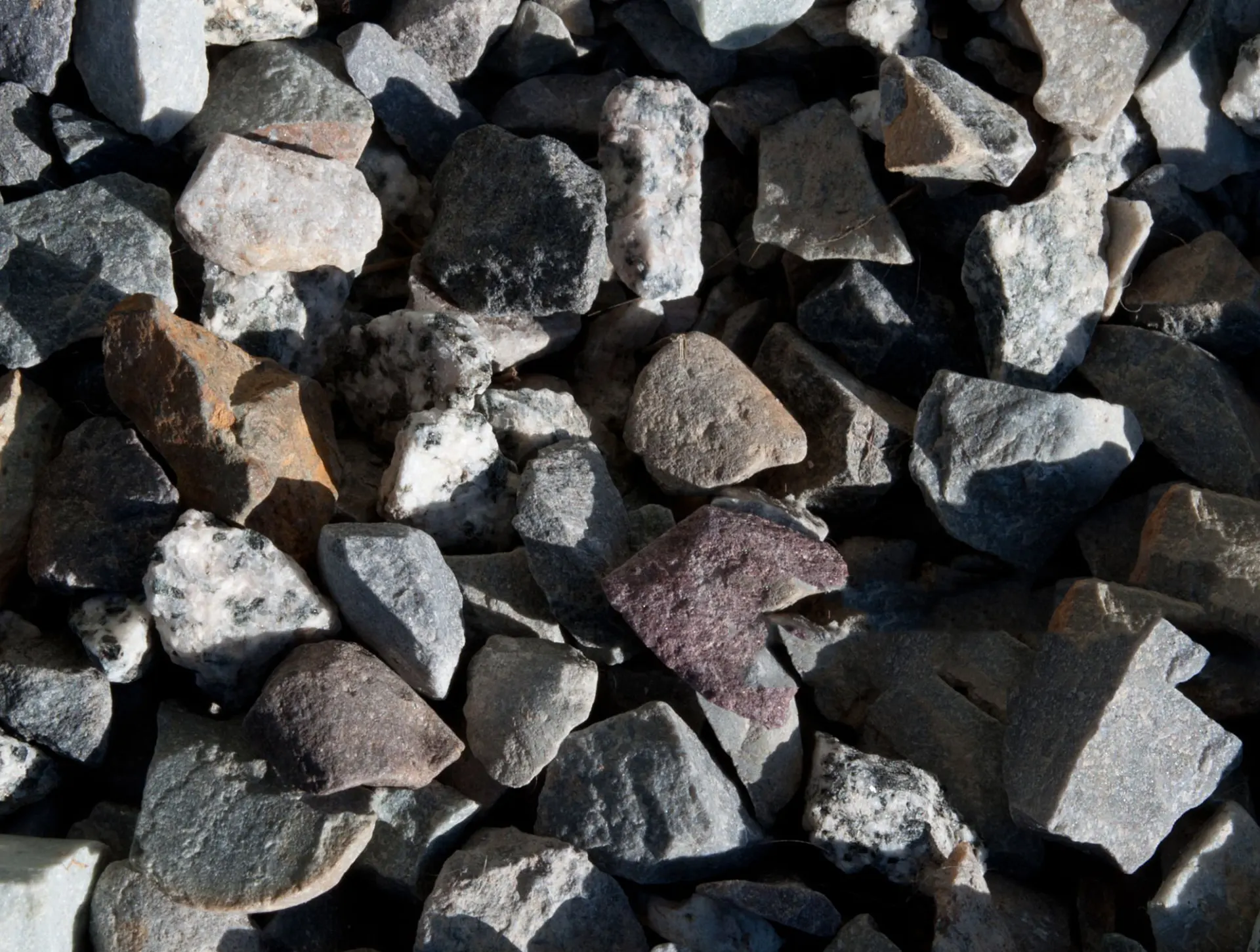
O período entre a retirada do tubérculo pelo equipamento EP-AWB-1600 e sua entrada na câmara de cicatrização escura e ventilada é o mais vulnerável ao esverdeamento induzido pela luz e ao estresse térmico, que aumenta a suscetibilidade a hematomas. As ações de manejo nesse período incluem:
Cubra o trailer imediatamente:
Uma cobertura opaca (lona, tela de sombreamento) sobre o reboque de coleta imediatamente após o carregamento elimina a exposição à luz durante o transporte do campo até o armazenamento. Uma cobertura transparente ou a ausência dela em um dia ensolarado de agosto nas terras altas permite que o esverdeamento comece em até 90 minutos após a colheita — mesmo uma cobertura parcial que permita a entrada de luz filtrada possibilita o esverdeamento localizado em tubérculos expostos. O custo de uma lona é insignificante em comparação com a perda de tubérculos esverdeados de Grau 1 em um reboque.
Transporte para armazenamento em até 2 horas após o carregamento:
Batatas coreanas cultivadas em terras altas, colhidas em um reboque coberto em uma tarde quente de agosto, podem atingir temperaturas de 28 a 32 °C no interior do reboque em até 2 horas, caso não estejam em uma área sombreada. Nessas temperaturas, a taxa respiratória aumenta e qualquer dano por contusão acelera o desenvolvimento de manchas pretas. Transfira o reboque carregado para o local de armazenamento ou para uma área de espera sombreada e ventilada em até 2 horas após o carregamento.
Não adicione mais de 1,2 m de profundidade de pilha na entrada do armazenamento:
Os tubérculos da base de uma pilha suportam o peso de todos os tubérculos acima. Na temperatura de cicatrização (14–18 °C), os tubérculos estão ligeiramente mais quentes e mais suscetíveis a hematomas do que em temperaturas de armazenamento refrigerado. Uma pilha com profundidade superior a 1,2 m durante o período de cicatrização exerce pressão suficiente sobre os tubérculos da base para causar hematomas por pressão nos pontos de contato com a superfície da pele — um mecanismo de hematoma diferente do impacto, mas que produz o mesmo dano visível à pele. Limite a profundidade da pilha na câmara de cicatrização a 1,0–1,2 m e aumente-a somente após o término do período de suberização e quando a refrigeração levar os tubérculos à sua temperatura fria ideal.
Perguntas frequentes
Como posso avaliar o nível de desgaste da minha própria fazenda antes de decidir se devo investir na remoção de pedras?
Método de avaliação padrão: ao final de um dia de colheita, retire uma amostra aleatória de 50 tubérculos do reboque de coleta. Corte cada tubérculo ao meio longitudinalmente, da extremidade do caule à extremidade da flor. Sob luz intensa, inspecione a superfície de corte em busca de descoloração cinza a preta a 3–10 mm abaixo da superfície da casca — trata-se de uma mancha preta visível aos compradores em 24–48 horas. Conte o número de tubérculos com qualquer mancha preta visível. Se mais de 101 tubérculos amostrados apresentarem manchas no teste de corte, a taxa de manchas é comercialmente significativa. Em seguida, da mesma carga do reboque, inspecione a casca externa de 50 tubérculos diferentes em busca de abrasões (superfície descascada ou arranhada). Se mais de 151 tubérculos apresentarem abrasões de Grau 1 (desqualificantes), a taxa de danos na casca é comercialmente significativa. Fazendas nas terras altas da Coreia com taxas de contusão acima de 10% e taxas de danos à pele acima de 15% estão consistentemente perdendo a proporção de Grau 1 devido a danos na colheita — e a investigação principal deve começar com o teor de pedras no material colhido como a causa mais tratável.
A opção de kit EP-AWB-1600 (Kit A/B/C) afeta a taxa de hematomas?
Sim — a configuração de saída afeta a altura final de queda e, portanto, a taxa de danos por esmagamento no ponto de entrada do reboque de coleta. O Kit A (descarga lateral — as batatas caem para o lado da colhedora, formando um monte ou leira para coleta manual) tem a menor altura de queda, mas requer manuseio manual subsequente. O Kit B (elevador traseiro para um reboque subsequente) permite o ajuste da altura do elevador — abaixar o elevador reduz a queda no reboque. O Kit C (coleta frontal em um segundo equipamento) elimina completamente o problema da altura de queda na colheita, já que os tubérculos entram no silo em uma altura controlada. Para batatas frescas de Grau 1, o Kit B com o elevador ajustado à altura mínima acima da superfície do reboque, ou o Kit C quando disponível, produz a menor taxa de danos por esmagamento na etapa de coleta. O Kit A normalmente não é usado para colheitas de batatas frescas premium, pois a etapa subsequente de coleta manual introduz danos adicionais por manuseio.
É possível controlar a umidade do solo no momento da colheita para reduzir os danos aos tecidos?
Sim — a umidade do solo na colheita afeta significativamente tanto o desempenho do separador de tela quanto a suscetibilidade dos tubérculos a danos. O solo muito seco na colheita (abaixo da capacidade de campo de 40%) produz um fluxo fino de pó no separador, que oferece pouco amortecimento entre os tubérculos — o contato tubérculo a tubérculo na tela não tem a proteção do solo. O solo muito úmido (acima da capacidade de campo de 80%) forma torrões que atravessam o separador e causam impactos. A umidade ideal do solo na colheita é de 50 a 70% da capacidade de campo — solo que se esfarela na mão, mas não levanta pó. Em solos graníticos das terras altas coreanas, essa umidade ideal ocorre naturalmente de 2 a 4 dias após uma chuva leve ou de 3 a 5 dias após uma chuva forte (desde que a drenagem permita). Se a fazenda tiver acesso à irrigação, uma irrigação leve pré-colheita, 3 a 4 dias antes da data prevista para a colheita (se o solo estiver mais seco que a capacidade de campo 50%), pode melhorar as condições de colheita e reduzir os danos causados pela interação do solo seco com a separadora. Não irrigue nos 2 dias que antecedem a colheita, pois o solo úmido causa problemas de formação de torrões.
Devo reduzir a velocidade de avanço do EP-AWB-1600 para minimizar danos em veículos do mercado premium?
Sim — a velocidade de avanço afeta diretamente a velocidade de impacto dos tubérculos no separador de esteira e em todos os pontos de transferência de material. A 1,5 km/h (taxa para sementes certificadas e tubérculos premium de Grau 1), o material colhido se move pela EP-AWB-1600 a uma velocidade menor do que a 2,5 km/h (taxa para produção comercial a granel). Cada tubérculo sofre impactos de menor energia na velocidade mais lenta. A contrapartida é a cobertura diária: a 1,5 km/h, a EP-AWB-1600 cobre aproximadamente 40% a menos de área por dia do que a 2,5 km/h. Para fazendas que vendem tubérculos premium de Grau 1 com um prêmio de preço de 30–50% em relação à produção a granel cooperativa, a taxa de colheita reduzida é mais do que compensada pela diferença de preço na produção de maior qualidade. A estratégia de velocidade correta para fazendas com variedades mistas: colher tubérculos frescos de Grau 1 e blocos de sementes certificadas a 1,5 km/h nas primeiras horas da manhã; A colheita dos blocos de abastecimento cooperativo em grande escala ocorre a uma velocidade de 2,0 a 2,5 km/h durante a tarde, quando os blocos do mercado premium estiverem completos.
Qual é o custo comercial de um aumento na proporção de grãos de grau 2 (10%) devido a danos na colheita?
Com base nos preços típicos da batata comercial nas terras altas da Coreia durante a safra premium (dezembro a fevereiro): Grau 1 = 1.800–2.200 KRW/kg; Grau 2 = 600–900 KRW/kg. A diferença de preço entre os graus 1 e 2 é de aproximadamente 1.200–1.500 KRW/kg. Em uma fazenda de 10 hectares com produção de 300 toneladas na colheita, com uma proporção de batatas de Grau 2 induzida por contusões (10%): 30 toneladas rebaixadas do Grau 1 para o Grau 2 = 30.000 kg × 1.200 KRW de diferença média de preço = 36.000.000 KRW (36 milhões de KRW) de receita perdida por safra devido ao rebaixamento para o Grau 2. O investimento na remoção de pedras, que elimina a principal causa de contusões por contato com pedras, justifica-se diante dessa perda anual de receita na maioria das condições de operação nas terras altas da Coreia. Korea Watanabe fornece cálculos de ROI (retorno sobre o investimento) para situações agrícolas específicas mediante solicitação.
Sistema de Qualidade da Colheita — Fundação para Limpeza de Pedras até Preservação de Grau 1
Avaliação da taxa atual de contusões + histórico de remoção de pedras + canal de mercado alvo → plano de melhoria da qualidade da colheita, integrando a remoção de pedras THOR 2.4 às configurações do EP-AWB-1600 e à logística pós-colheita. Coreia do Sul, Watanabe, Ansan-si, Gyeonggi-do.
Editor: Cxm