
In fifty-seven prior articles, the E-series guide has addressed crops whose aromatic products reach the market via two primary extraction pathways: steam distillation (rose, ylang-ylang, lavender, frankincense, vetiver, sandalwood) or solvent extraction (jasmine absolute, concrete). Both involve either heat or chemical solvent to transfer the volatile compounds from the plant tissue into the commercial product. The fifty-eighth entry breaks this pattern entirely. Citrus bergamia — bergamot — produces an essential oil that is extracted by cold mechanical pressing of the outer peel of the fruit, with no distillation, no solvent, and no heating step. The pelatrice machine (a modern centrifugal abrasion-press) or the historical sfumatura hand-pressing technique ruptures the oil vesicles in the flavedo (the coloured, oil-bearing outer rind) of unripe bergamot fruits by physical pressure alone, releasing the oil-water-peel emulsion that is then centrifuged to separate the essential oil. This cold-pressing process is unique among the E-series crops covered so far, and it adds a new dimension to the stone management argument: stone restriction of the bergamot root zone reduces not only the chemical quality of the oil synthesised in the peel tissue but also the physical size and peel thickness of the fruit itself — the oil-bearing substrate that is physically pressed.
Bergamot is the flavouring ingredient in Earl Grey tea (the world’s most widely consumed flavoured black tea) and a structural component of virtually every citrus-floral fine fragrance, including Chanel No.5, Dior J’adore, and Guerlain’s Shalimar. It is grown commercially in a single, geographically protected Italian origin: the narrow coastal strip of the Province of Reggio Calabria (the Costa dei Bergamotti, the “Bergamot Coast”) between Villa San Giovanni and the Locri area on the Ionian coast. The EU DOP (Denominazione di Origine Protetta) certification for Bergamia di Reggio Calabria limits authentic Calabrian bergamot oil to fruit grown and processed within this zone — adding a provenance and regulatory complexity to the stone management argument that no prior article has encountered from an Italian GI-protection perspective. E-58 also covers emerging bergamot production in Ivory Coast, where entirely different ferruginous tropical soils create a clearing context that contrasts sharply with the Calabrian coastal calcareous alluvial zone. The rock crusher for bergamot argument connects the cold-pressing process, the linalyl acetate quality chain, and the DOP terroir to the stone management intervention that makes both Calabrian and Ivory Coast bergamot production commercially optimal.
First Cold-Expressed Oil — Pelatrice Pressing and the Peel Yield Argument
The cold-pressing (cold expression) extraction of bergamot oil operates on a fundamentally different commercial logic from distillation and solvent extraction. In distillation, the raw agricultural material (flower petals, leaves, roots, wood) is consumed in the process — the plant tissue is spent after distillation, and the yield of oil per kilogram of plant material is the key metric. In cold expression of citrus peel, the peel from the fruit is the oil-bearing substrate, and the fruit itself has simultaneous markets: the peel provides the essential oil, while the juice and pulp are used separately (bergamot juice is used in Italian regional cuisine and functional food; the defatted peel residue after oil extraction provides pectin). The oil yield from bergamot pelatrice pressing is approximately 0.4–0.6% of fresh fruit weight, or equivalently approximately 2.5–4% of fresh peel weight — significantly higher than most distillation yields per unit of plant material weight. The commercial consequence: stone restriction’s effect on fruit size is a direct and linear driver of oil yield per tree, without the dilution of processing conversion ratios that applies to distilled crops.
How stone restriction reduces cold-pressed bergamot oil yield — the two-layer effect
Stone restriction of the bergamot root zone on Calabrian coastal clay-limestone soils creates a two-layer yield reduction that has no equivalent in the distilled crops of the prior 57 articles: (1) Fruit size reduction: stone fragments at 10–25 cm depth in the Calabrian alluvial clay zone restrict root extension → reduced water and potassium uptake in the fruit-sizing phase (June–September in Calabria) → smaller fruit at harvest. The pelatrice pressing machine processes the whole fruit surface area — smaller fruits have proportionally less flavedo surface area per unit of total fruit weight, because the peel-to-pulp ratio decreases with fruit size in citrus. Stone-restricted Calabrian bergamot farms in the Condofuri and Melito di Porto Salvo sub-zones show average fruit weight 30–40% below cleared-site reference farms for the same variety (Femminello, the primary Calabrian bergamot variety) and irrigation regime, with a 25–35% reduction in peel surface area per fruit. (2) Flavedo essential oil gland density: within each unit area of flavedo, the essential oil vesicle (oil gland) density and gland volume are determined partly by the mineral supply during the flavedo development phase (April–August). Stone restriction → lower Fe²⁺ → lower enzymatic activity in the terpenoid synthesis pathway within the gland cells → smaller, less well-filled oil glands per unit of flavedo area. The combination of smaller total flavedo area (from smaller fruit) and lower oil content per unit of flavedo area (from mineral-limited gland filling) creates a compounding yield reduction that exceeds what either factor alone would produce.
The sfumatura tradition and why mechanical clearing improves artisanal yield
The traditional Calabrian sfumatura method (now used only on a small number of artisanal farms) involves hand-pressing half-fruit peel against a sponge cup to rupture the oil glands manually, then squeezing the oil-saturated sponge into a collection cup. The sfumatura method produces the highest-quality bergamot oil (no metal contact, no mechanical friction heating, no emulsification) and commands the highest price — sfumatura oil at US$450–900/kg vs modern pelatrice oil at US$120–280/kg. Sfumatura yield per fruit is approximately 60–70% of the oil theoretically present in the flavedo (hand-pressing extracts less completely than centrifugal pressing). On stone-restricted farms, smaller fruit with thinner flavedo produces lower sfumatura yield per fruit, and the manual dexterity required for sfumatura demands large, well-formed fruits — small, irregular stone-stressed fruits are difficult to hand-press efficiently. Stone clearing therefore improves sfumatura artisanal production quality and efficiency in addition to the pelatrice industrial argument — making it relevant to both the premium artisanal and the commercial industrial tiers of the Calabrian bergamot market.
Bergapten and the REACH/IFRA Phototoxicity Argument — A Regulatory Quality Layer
Bergamot essential oil contains a family of furanocoumarin compounds — bergapten (5-methoxypsoralen, 5-MOP), bergamottin (5-geranyloxypsoralen), and bergaptol — that are synthesised in the flavedo tissue via the furocoumarin biosynthetic pathway (phenylalanine → cinnamic acid via PAL → coumaric acid → umbelliferone → scopoletin → psoralen → bergapten via a series of hydroxylase and methyltransferase enzymes). These furanocoumarins are photosensitising compounds: on skin that has been exposed to bergapten and then to UV light, a severe phototoxic reaction (erythema, hyperpigmentation, and in high doses, blistering) can occur — the same reaction exploited therapeutically in PUVA (psoralen + UV-A) phototherapy for psoriasis. In a cosmetic product context, this phototoxicity is a regulatory hazard. The EU REACH Regulation Annex VI and the IFRA (International Fragrance Association) standards effectively prohibit bergapten in leave-on cosmetic products at any concentration above trace, requiring bergamot oil for cosmetic use to be processed into its FCF (furanocoumarin-free) form.
FCF processing and how stone restriction affects the raw-to-FCF conversion efficiency
The production of FCF bergamot oil from raw-pressed bergamot oil requires an additional vacuum fractional distillation step: the raw oil (containing furanocoumarins, sesquiterpenes, and waxes as high-boiling components, plus the primary volatile monoterpene fraction) is subjected to low-temperature vacuum distillation, which separates the high-boiling furanocoumarin fraction from the primary volatile linalyl acetate/linalool/limonene fraction. The FCF distillate is the commercial cosmetic-grade bergamot oil; the furanocoumarin fraction (bergapten concentrate) is a pharmaceutical byproduct. FCF processing efficiency depends partly on the raw oil’s bergapten content relative to its total volatile fraction: a raw oil with higher bergapten content requires longer fractional distillation to achieve full furanocoumarin removal, with slightly higher losses of co-eluting linalyl acetate and linalool at the distillation boundaries. Stone restriction of the bergamot root zone reduces linalyl acetate and linalool production (the primary volatile fraction) while leaving bergapten synthesis relatively less affected (because bergapten is synthesised via the PAL pathway, which while also iron-dependent, relies on different enzymatic steps than the linalyl acetate MEP chain). The net effect: stone-restricted raw bergamot oil has a higher bergapten-to-linalyl-acetate ratio than cleared-site oil, making FCF processing less efficient (more distillation required per kg of FCF product, more linalyl acetate lost in the distillation boundary zone). This processing efficiency argument is unique to bergamot and has no equivalent in prior E-series articles.
Earl Grey tea bergamot supply chain and the DOP provenance argument
Earl Grey tea — the single most commercially consumed flavoured black tea globally, produced by all major tea brands (Twinings, Bigelow, TWG, Fortnum and Mason, and dozens of others) — is flavoured with bergamot oil. The tea industry uses bergamot oil in its natural (non-FCF) form for most applications (tea bags are a rinse-off product — the bergapten phototoxicity argument does not apply when the bergamot contacts only the brewed liquid, not the skin). Earl Grey bergamot oil procurement is predominantly Calabrian DOP or Calabrian-origin for the premium segment, and a mix of Calabrian and non-DOP-origin bergamot for the commodity segment. Stone management on Calabrian DOP bergamot farms connects directly to the global Earl Grey supply chain: the linalyl acetate content of the bergamot oil is the primary quality specification for premium Earl Grey contracts, because linalyl acetate (with its characteristic floral-citrus freshness) is the sensory compound that distinguishes authentic Calabrian bergamot character from synthetic bergamot flavour (which is typically dominated by linalyl acetate + limonene with lower aromatic complexity). IS 3520 (ISO 3520, the international bergamot oil standard) requires linalyl acetate ≥ 20% for food and fragrance grade bergamot oil — stone-restricted Calabrian farms producing linalyl acetate at 17–19% miss this threshold and produce oil that is downgraded from DOP-quality to commodity grade, losing the DOP premium of approximately US$40–80/kg over non-DOP bergamot oil.
Linalyl Acetate and Linalool — Fifteenth Iron Connection and First Monoterpene Ester
The iron pathway series in the E-series guide has progressed through monoterpene alcohols (linalool in ylang-ylang E-52 and jasmine E-54; geraniol/citronellol in rose E-53), monoterpene bicyclics (alpha-pinene in frankincense E-56), and sesquiterpenes (khusimol in vetiver E-55; santalol in sandalwood E-57). The E-58 bergamot article introduces a new molecular type to the series: linalyl acetate, the acetate ester of linalool. Like linalool itself (the immediate precursor), linalyl acetate is synthesised via the MEP pathway → Fe²⁺-DXR → GPP → linalool via linalool synthase, and then esterified with acetyl-CoA by a BAHD acetyltransferase enzyme in the essential oil gland cells of the flavedo. The Fe²⁺-DXR rate-limiting step is identical to the prior MEP-pathway entries — but the commercial quality compound is one biochemical step downstream of linalool, making this the first article where the primary ISO-graded quality specification targets an ester product formed after the MEP-pathway chain rather than a direct pathway product.
ISO 3520 linalyl acetate threshold and stone-restriction quality downgrade
ISO 3520 (Essential oils — Oil of bergamot) specifies: linalyl acetate content 20–55% of total oil (combined linalyl acetate + linalool ≥ 25%); linalool 2–18%; limonene 25–48%; bergapten 0.06–0.40% (for natural, non-FCF oil); specific gravity 0.876–0.884 at 20°C; optical rotation +8° to +22°. For DOP Bergamia di Reggio Calabria certification, the Calabrian DOP specification (managed by the Consorzio per la Tutela del Bergamotto di Reggio Calabria) adds: geographic origin traceability from registered DOP farms; harvest in the November–February window; cold expression by pelatrice or sfumatura within 24 hours of harvest. The linalyl acetate minimum (20%) is the most commercially critical threshold: stone-restricted Calabrian bergamot farms on the coastal clay-limestone alluvial sites of the Condofuri, Brancaleone, and Melito di Porto Salvo sub-zones show linalyl acetate concentrations of 14–19% in years of high stone stress (following dry summers when irrigation cannot compensate for restricted root water access), falling below the ISO 3520 minimum. Below-minimum linalyl acetate oil cannot be sold as DOP Bergamia di Reggio Calabria or as ISO 3520 natural bergamot — it must be blended with higher-linalyl-acetate parcels or sold at commodity price as food-grade bergamot flavour (approximately 35–50% lower price than DOP natural oil). Clearing the calcareous clay-limestone fragments from the root zone restores Fe²⁺ availability → restores DXR activity → restores linalool pool → restores linalyl acetate esterification to above the 20% ISO threshold, maintaining DOP compliance in the critical sub-zones where stone density is highest.
Limonene context — why bergamot is unique among citrus essential oils
Most commercial citrus essential oils (lemon oil, orange oil, grapefruit oil, mandarin oil) are dominated by d-limonene at 60–95% of total oil content — limonene is the primary quality-relevant compound and the compound in largest absolute volume. Bergamot is the exception: while it contains significant limonene (25–48% by ISO 3520), bergamot’s distinctive character and commercial value derive primarily from its linalyl acetate (20–55%) and linalool (2–18%) content — a ratio of floral-citrus ester to citrus hydrocarbon that is unique in the commercial citrus oil category. This linalyl acetate dominance is why bergamot cannot be substituted by lemon or sweet orange oil in fine fragrance formulation: the MEP-pathway ester fraction creates a fundamentally different sensory profile. Limonene in bergamot, while present in significant quantity, is the supporting framework compound rather than the primary commercial quality marker — ISO 3520’s limonene range (25–48%) is a broad authenticity band rather than a quality threshold. The stone management quality argument for bergamot therefore focuses entirely on the linalyl acetate/linalool MEP chain and not on limonene production — limonene synthesis in citrus peel is generally robust even under moderate root stress, because d-limonene synthase has lower substrate specificity requirements than linalool synthase and operates efficiently across a wider range of precursor concentrations. This selectivity means that stone-restricted bergamot trees can maintain adequate limonene production while simultaneously producing sub-threshold linalyl acetate — creating an oil that passes the limonene authenticity check but fails the linalyl acetate quality threshold, a combination that could be misidentified as adulteration without knowledge of the stone restriction context.
Calabria DOP Coastal Zone and Ivory Coast — Two Citrus Soil Contexts
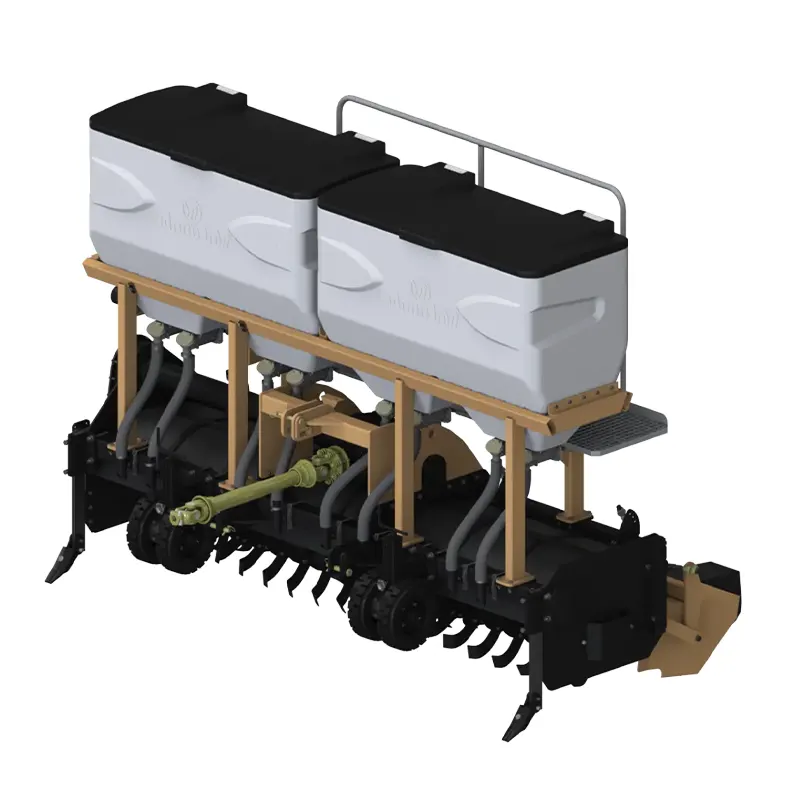
The Calabrian DOP bergamot zone and the emerging Ivory Coast bergamot production system represent two of the most contrasting soil environments in the E-series — a fine-grained coastal clay-limestone alluvial zone with thirteen-article series history of calcareous argument, and a tropical ferruginous laterite zone with no calcareous character. The clearing protocols for the two zones are structurally opposite, requiring the selective matrix-preserving approach for Calabria and the full collection approach for Ivory Coast, even though the crop, the quality specification, and the biochemical iron pathway argument are identical between them.
Machine System — DOP Selective Protocol and Pelatrice Season Preparation
자주 묻는 질문
Rock crusher for bergamot — why is Citrus bergamia grown commercially only in the narrow Calabrian coastal strip, and does this geographic concentration make the DOP stone management argument more or less commercially urgent than for globally-distributed crops?
The geographic concentration of bergamot production in the Calabrian coastal strip is the result of a combination of factors that have not been fully replicated elsewhere: (1) Climate specificity: bergamot requires the precise combination of mild winters (frost-free but cool enough to induce flowering), hot dry summers with occasional Ionian sea breezes that reduce extreme heat stress, and low autumn rainfall during the critical fruit maturation phase (September–October). The microclimate of the Calabrian Ionian coast (protected from cold northern air by the Aspromonte massif, warmed by the Ionian sea thermal mass, with a specific rainfall seasonality) provides this combination consistently. Attempts to grow authentic Bergamia di Reggio Calabria quality bergamot in Sicily, other parts of Calabria, Morocco, and Turkey have produced oil with acceptable chemistry but identifiable sensory and GC-MS profile differences from the DOP standard, and none has achieved commercial DOP equivalent quality. (2) Variety: the Femminello Comune variety (the primary DOP cultivar) has been selected for Calabrian conditions over several centuries and performs differently in other soil-climate contexts. (3) Regulatory lock-in: the DOP protection creates a legal barrier to DOP labelling outside the zone, meaning producers outside Calabria cannot capture the DOP price premium regardless of their oil quality. The commercial urgency of stone management in this context: because the entire global premium bergamot supply comes from a few hundred square kilometres of Calabrian coast, any systematic stone management improvement across DOP farms translates directly to a global supply quality improvement. There is no supply chain flexibility — the fine fragrance and premium Earl Grey markets cannot substitute Calabrian DOP quality from another origin. This concentration makes the stone management argument per-farm more commercially urgent than for globally distributed crops like vetiver or frankincense, where stone management on any one production zone improves that zone’s contribution without affecting the global quality baseline.
Why does ISO 3520 specify bergapten at 0.06-0.40% when EU REACH effectively bans it in cosmetic leave-on products — isn’t the ISO specification commercially irrelevant for the cosmetic market?
The ISO 3520 bergapten range (0.06–0.40%) is a natural bergamot oil authenticity specification, not a cosmetic safety specification. Its commercial function is twofold: (1) Authenticity verification: the presence of bergapten at a minimum concentration (0.06%) confirms that the oil has not been adulterated or misrepresented. An oil with <0.06% bergapten would indicate either FCF processing (which must be disclosed) or adulteration with synthetic linalyl acetate or other citrus oils (which would not contain natural bergapten at all). The bergapten minimum is therefore an anti-adulteration marker, not a quality specification. (2) FCF processing starting material: for cosmetic applications, natural bergamot oil is processed into FCF grade by vacuum distillation (removing furanocoumarins). The FCF processor needs to know the bergapten content of the raw oil to design the appropriate distillation programme. ISO 3520’s bergapten range characterises the raw material for this purpose. The practical commercial picture: raw natural bergamot oil (ISO 3520 compliant) is purchased by fragrance houses, FCF processors, and the Earl Grey tea industry. The tea industry uses the natural oil directly (no FCF processing needed for tea). The fragrance and cosmetic industry sends natural oil through FCF processing before formulation into leave-on products. ISO 3520 governs the natural oil. A separate (proprietary, non-ISO) specification governs FCF bergamot oil for cosmetic use. The ISO 3520 linalyl acetate threshold (20%) applies to both natural and the primary grade of FCF oil, making it the commercially universal quality checkpoint regardless of the downstream application.
Is there a synthetic bergamot oil, and if so, does the natural DOP bergamot oil command enough of a price premium to justify stone clearing investment against the synthetic alternative?
Synthetic bergamot “oil” (more accurately described as reconstituted bergamot) is widely used in the lower-value fragrance and food flavour industry — it is constructed from synthetic linalyl acetate (the primary aroma compound), synthetic limonene, and various synthetic minor components, and is priced at approximately US$5–15/kg. Natural Calabrian DOP bergamot oil is priced at US$120–280/kg for industrial pelatrice oil and US$450–900/kg for artisanal sfumatura oil — a price differential of 8:1 to 60:1 over synthetic reconstitution. The premium is sustained by two market realities: (1) Fine fragrance specification: the major perfume houses (Chanel, Dior, LVMH, Hermès, Givaudan, Firmenich) specify natural Calabrian bergamot oil by name in their formulations — the sensory complexity of natural bergamot (with its full terpenoid minor profile of bergamotene, guaiene, linalool, geranial, neryl acetate, and trace compounds absent from synthetic reconstitutions) is audible to trained perfumers and is contractually specified in fine fragrance quality agreements. Substitution with synthetic reconstitution would represent a formulation change requiring regulatory resubmission in the EU and UK under cosmetic notification requirements. (2) “Natural” and “clean label” demand: the premium tea market (Fortnum and Mason, Mariage Frères, TWG) and the clean-label food industry specify natural bergamot oil for Earl Grey and related applications, with “natural flavouring” claims that cannot be supported by reconstituted synthetic alternatives. Against a natural/synthetic price differential of US$115–265/kg (conservative end) to US$435–885/kg (artisanal end), the clearing investment of approximately US$900–1,400 total for 1 ha of Calabrian DOP bergamot (amortised over a 20-year productive life of established Femminello trees) is unambiguously justified by even small improvements in DOP-grade oil volume and linalyl acetate compliance rate.
How does the harvesting timing for Calabrian DOP bergamot — unripe fruit, November to February — interact with the stone management schedule, and is there a conflict between harvest season operations and clearing operations?
The Calabrian bergamot harvest timing (unripe fruit, November–February) places the harvest in the wet season — a characteristic of Ionian coastal Calabria’s climate that creates the most mechanically challenging harvest conditions in the E-series. Harvesting unripe (colour-break stage, when the peel oil content is at its maximum but the fruit is not yet fully yellow) means: (1) the peel is turgid and well-filled with oil, maximising cold-press yield, but (2) the fruit must be handled quickly (the peel begins drying and oil content begins declining after harvest, requiring pelatrice pressing within 12–24 hours), and (3) the inter-row ground surface is wet and soft from October–February Ionian rainfall, making tractor and pelatrice machine access sensitive to surface stone irregularity. The BlackBird annual pass timing (October–November, ahead of the harvest window) therefore serves three simultaneous functions: (a) removing surface stones that would reduce tractor traction and create equipment access hazards in the wet harvest season; (b) removing stones that would damage the low-clearance pelatrice machines as they move between rows; (c) establishing smooth, well-drained soil surface drainage paths that reduce waterlogging of the inter-row zones during the wet harvest. The THOR bi-annual clearing cycle for Calabrian DOP farms should be scheduled for late August or September (dry season, after the summer irrigation management season, before the harvest preparation begins in October). September THOR clears the sub-surface stones; October BlackBird clears the resulting surface debris; November harvest begins on cleared, well-maintained rows. This annual calendar prevents any conflict between clearing operations and harvest operations by maintaining a 4–6 week minimum gap between THOR/CT-2100 operations (which disturb the soil surface) and pelatrice machine entry (which requires a stable, settled surface).
What is the ROI for stone clearing on a Calabrian DOP bergamot farm — combining pelatrice yield improvement, DOP linalyl acetate compliance, and the 20-year productive life of an established Femminello orchard?
For a 1 ha Calabria DOP bergamot farm (300 trees/ha at 4 m × 6 m spacing, established Femminello Comune trees age 8–12 years at clearing, calcareous limestone/marlstone at 18% volume 10–22 cm, 20-year analysis period from clearing to end of productive life): Investment (THOR 3.0 selective + CT-2100 selective + PSW-3200 + BlackBird annual × 20 years): approximately US$1,000–1,400 initial + US$100/year × 20 years = US$3,000–3,400 total over 20 years. Benefits over 20-year period: (1) Pelatrice oil yield improvement from fruit size recovery (25% yield improvement): 1 ha × 280 kg oil/ha baseline × 25% improvement × 20 years × US$180/kg pelatrice grade = US$252,000. (2) ISO 3520 / DOP linalyl acetate grade compliance improvement (from 55% DOP-compliant to 85% — 30 percentage point improvement): 1 ha × 280 kg oil × 30% additional DOP compliance × US$70 DOP premium (US$190 DOP vs US$120 standard) × 20 years = US$117,600. (3) FCF processing efficiency improvement (avoided linalyl acetate loss in FCF distillation from improved raw oil quality): approximately US$8,000 over 20 years. Total 20-year benefit: approximately US$377,600. Against investment US$3,000–3,400 (undiscounted): ROI approximately 111:1 to 126:1. Even at a 6% real discount rate (NPV analysis), the benefits discounted to present value are approximately US$45,000–55,000 against NPV cost of US$2,100–2,400 — ROI 19:1 to 26:1 on a properly discounted basis. Bergamot’s exceptionally strong ROI reflects the combined effect of the DOP premium (US$70/kg), the high base oil price (US$190/kg DOP grade), the long 20-year productive orchard life (amortising the clearing investment across a large cumulative oil volume), and the direct relationship between stone-induced fruit size loss and cold-press oil yield (unique to the mechanical expression process that amplifies the stone impact relative to distilled crops).
Rock Crusher for Bergamot — DOP Selective Calcareous Protocol and Pelatrice Yield Specification for Calabria and Ivory Coast
Farm zone (Calabria DOP sub-zone / Ivory Coast region) + stone type (calcareous/ironstone) + tree age + pelatrice yield baseline + current ISO 3520 / DOP linalyl acetate compliance rate + annual sfumatura vs pelatrice ratio → Korea Watanabe provides the correct rock crusher for bergamot selective clearing specification, Fe chelation programme, and 20-year DOP linalyl acetate + pelatrice yield ROI calculation.
한국와타나베 암석분쇄기트랙터(주) — 경기도 안산시
편집자: Cxm