Nutmeg — the dried endosperm of Myristica fragrans — is the only crop in the world that simultaneously produces two distinct spice commodities from a single fruit: the nutmeg kernel (the inner seed) and mace (the dried aril, the lacy red membrane that surrounds the kernel). Both the kernel and the mace contain essential oil, but with different compound profiles — the kernel’s oil is dominated by myristicin (10–15% of kernel EO), sabinene (50% of kernel EO), and elemicin, while the mace’s oil is richer in myristicin and contains a higher proportion of the phenylpropanoid compounds that define premium nutmeg’s quality in the pharmaceutical, fragrance, and food flavouring markets.
The Banda Islands of eastern Indonesia have been the world’s primary nutmeg source for over five centuries. Grenada, in the eastern Caribbean, became the world’s second-largest producer after a series of historical transplantations, now producing approximately 20–25% of global nutmeg supply. Both production regions share a critical geological characteristic: young volcanic terrain with basaltic and andesitic parent rock, high in the iron and manganese minerals that underpin the phenylpropanoid biosynthesis pathway behind myristicin and elemicin quality. This geological connection — between volcanic rock composition, soil mineral availability, and nutmeg essential oil quality — is the agricultural science that makes rock crusher treatment of new plantation hillside terrain in both regions a quality investment as much as a land-clearing task.
Indonesia — Banda Islands Nutmeg on Volcanic Basalt and Andesite
The Banda Sea island group — comprising Run, Neira, Banda Besar (Lonthoir), Gunung Api, Ai, and the smaller outlying islands — forms a compact volcanic archipelago in the easternmost part of Indonesia’s Maluku Province. These islands, known to European map-makers for over five centuries as the Banda Islands or the Nutmeg Islands, were for approximately three centuries the world’s only source of nutmeg and mace. The Dutch East India Company’s seventeenth-century monopoly over Banda nutmeg production was one of the most commercially valuable commodity monopolies in pre-industrial global history — and the volcanic geology of the islands is the foundation on which that value rested.
The Volcanic Geology of Banda Nutmeg Quality
The Banda Islands are active and recently active volcanoes of the Banda volcanic arc — a result of the subduction of the Australian Plate beneath the Banda microplate. The parent rock is predominantly basaltic andesite to andesite (the intermediate volcanic composition between iron-rich basalt and silica-rich rhyolite), with some areas of pure basalt on the older island surfaces. The soils derived from weathered Banda andesite are dark Andosols and Inceptisols — highly mineralised, with particularly high concentrations of iron-bearing minerals (pyroxene, amphibole, magnetite) and manganese-bearing phases.
The nutmeg trees of Banda are grown in traditional garden plots on the volcanic hillsides and slopes of each island. These garden plots have been continuously cultivated for nutmeg over 200–400 years in many cases — the trees on Banda are typically old-growth specimens, with productive lifespans exceeding 75 years. The rocky volcanic terrain on which these gardens sit provides the iron and manganese mineralogy that has contributed to Banda nutmeg’s reputation for high essential oil yield and complex aromatic profile. New plantation establishment on previously uncultivated volcanic hillside terrain is now the primary opportunity for expanding Banda nutmeg production — and on this rocky volcanic terrain, embedded basalt and andesite boulders are the primary land preparation obstacle that precedes any productive planting programme.
Essential Oil Quality Metrics for Banda Nutmeg
Premium Banda nutmeg kernel produces 8–15% essential oil by weight (on a dried basis), with the highest quality kernels at the upper end of this range. Within the EO, myristicin content of 10–15% and elemicin content of 2–4% are the quality markers that differentiate premium Banda kernel oil from commodity Indonesian or Indian nutmeg EO. Safrole content (another phenylpropanoid compound, regulated in some markets due to potential health concerns) is typically 0.5–2% in Banda nutmeg EO — lower concentrations are preferred for the pharmaceutical and food-grade markets. The ratio of myristicin to elemicin, and the total phenylpropanoid contribution (myristicin + elemicin + eugenol) relative to the terpene fraction (sabinene, terpinen-4-ol, alpha-pinene), is the quality signature that distinguishes island-grown volcanic-soil nutmeg from plantation-grown non-volcanic nutmeg.
The Dual-Iron Pathway: Fe²⁺ at PAL and Haem-Fe at CYP450 → Myristicin
Myristicin’s biosynthesis involves a more complex mineral dependency than the simpler phenylpropanoid compounds discussed in previous articles in this series. Where cinnamon’s cinnamaldehyde requires Fe²⁺ at a single pathway entry point (PAL enzyme), and clove’s eugenol requires Fe²⁺ at entry plus Mn²⁺ for COMT methylation, nutmeg’s myristicin requires iron at two fundamentally different points in the biosynthetic sequence — and the two iron requirements are chemically distinct from each other.
Dual-Iron and Mn²⁺ Pathway — Volcanic Mineral Fe²⁺ + Mn²⁺ → Nutmeg Myristicin
The haem-iron requirement of the CYP450 methylenedioxy bridge-forming enzyme is the feature that makes myristicin biosynthesis distinctly iron-dependent beyond the PAL step alone. Every molecule of the methylenedioxy-bridge-forming CYP450 enzyme that the nutmeg tree synthesises requires a haem group — and each haem group requires four iron atoms in its porphyrin ring structure. In iron-limited conditions, haem biosynthesis is constrained and CYP450 enzyme production is reduced — limiting the rate of methylenedioxy bridge formation and thus constraining myristicin synthesis regardless of how much of the upstream phenylpropanoid precursor the PAL enzyme has produced. Volcanic basalt soil provides an iron-rich environment in which this constraint is lifted — allowing both PAL (ionic Fe²⁺ cofactor) and CYP450 (haem-Fe for enzyme synthesis) to operate at closer to their maximum potential activity.
Grenada — Caribbean Volcanic Arc Nutmeg Production
Grenada is the southernmost island of the Lesser Antilles volcanic arc, a chain of young volcanic islands formed by the subduction of the Atlantic Plate beneath the Caribbean Plate. The island’s geology — andesitic volcanic rock with basalt intrusions, overlain by young volcanic soils — is mineralogically similar to the Banda Islands at the opposite end of the global spice trade map. This geological similarity is not coincidental in relation to nutmeg quality: both regions produce nutmeg of exceptional essential oil quality, and both regions grow nutmeg on young, iron-rich volcanic terrain.
Grenada — The Isle of Spice
Nutmeg is so central to Grenadian national identity that it appears on the country’s flag and coat of arms — a distinction no other crop holds for any other nation. The nutmeg was introduced to Grenada from Indonesia in 1843 (via a British colonial transplantation from Penang), and the island’s volcanic hillside terrain proved immediately suitable: by the early twentieth century Grenada was the world’s second-largest nutmeg producer, a position it still holds today despite a catastrophic setback in 2004 when Hurricane Ivan destroyed an estimated 90% of Grenada’s nutmeg trees. The industry’s recovery over the following decade — supported by the Grenada Cooperative Nutmeg Association (GCNA), which pools production from over 7,000 smallholder farmers — returned Grenada to significant production by 2015 and continues to expand through new plantation establishment on previously uncultivated volcanic hillside land.
The GCNA operates one of the most rigorous nutmeg quality grading systems outside Indonesia, sorting at its processing stations in St. George’s by kernel size, shell integrity, and oil content. GCNA-graded Grenadian nutmeg commands premium pricing in European, North American, and Middle Eastern spice markets, with the volcanic-soil quality profile (high EO yield, balanced myristicin-elemicin ratio) specifically valued by the pharmaceutical extract and premium food flavouring sectors.
Grenada’s Geology and Soil Mineral Profile
Grenada’s volcanic geology is dominated by Pleistocene to Holocene andesitic lavas and associated pyroclastic deposits, particularly in the southern half of the island where the main nutmeg-growing districts of St. George, St. John, and St. Mark are located. The andesitic parent rock is rich in plagioclase feldspar, pyroxene (augite and hypersthene), and accessory magnetite and ilmenite — providing a soil-forming mineral suite that weathered into the dark, iron-bearing Andosols and Cambisols of Grenada’s hillside farmland. These soils support dense tree crop cultivation (nutmeg, cocoa, banana) at the steep gradients typical of Caribbean volcanic island agriculture, where the hillside terrain itself is both the production advantage (excellent drainage, deep mineral soil) and the land preparation challenge (embedded volcanic boulders that resist conventional mechanised clearing).
Rock Crusher Application — New Nutmeg Plantation Establishment on Volcanic Hillsides
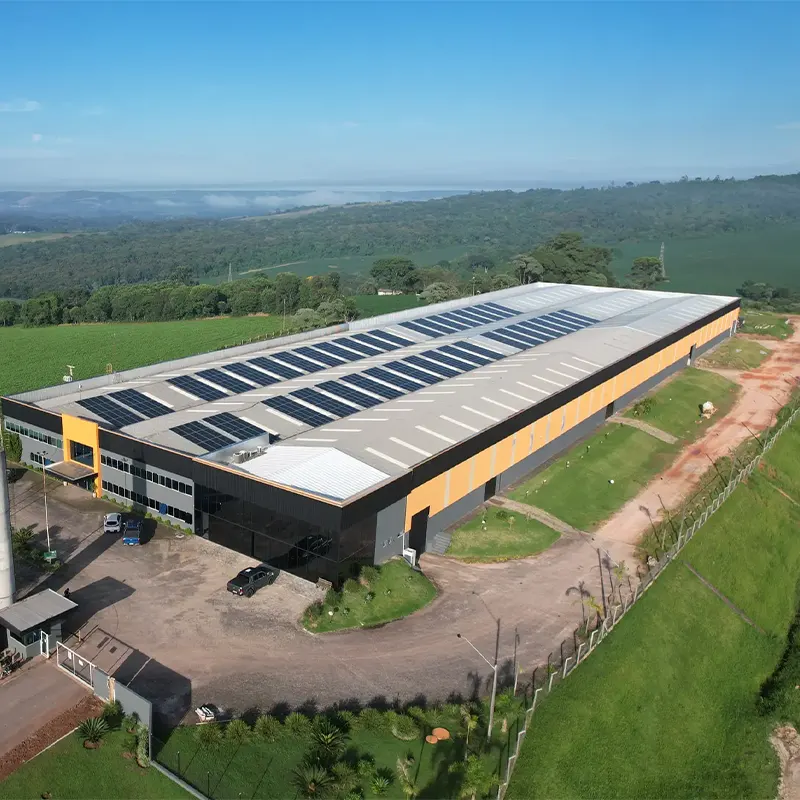
New nutmeg plantation establishment on volcanic hillside terrain in both the Banda Islands and Grenada follows a similar land preparation sequence, adapted to each island’s specific rock size distribution, slope gradient, and available machinery. In both cases, the primary land clearing obstacle after vegetation removal is the population of embedded volcanic boulders that have formed from lava flows and volcanic debris deposits — rock populations that have resisted conventional soil preparation approaches and that require percussive fragmentation for effective clearance.
Banda Islands — Lava Flow Boulder Populations
On the Banda Islands, new plantation expansion sites on the volcanic hillsides of Banda Besar, Neira, and the flanks of Gunung Api typically present lava flow boulder populations of basalt and andesite in the 15–80 cm range — the product of past eruption cycles during which lava cooled in place on the hillside surface and subsequent weathering and erosion broke the cooled lava into discrete blocks. The THOR rock crusher fragments this population in situ, reducing the boulder mass to fragments small enough for subsequent soil preparation and planting hole establishment. The freshly fractured surfaces of the andesite and basalt boulders expose iron-bearing pyroxene and magnetite mineral interiors that were previously sealed by weathering rind — accelerating the mineral weathering rate and initiating the Fe²⁺ and Mn²⁺ release cycle that benefits the nutmeg trees planted above within the subsequent 1–3 years of mineral dissolution.
Grenada — Andesite Volcanic Hillside Boulder Clearance
Grenada’s nutmeg-growing hillsides present andesitic volcanic boulders on slopes of 15–40 degrees — among the steeper terrain profiles encountered in this E-series applications guide. The slopes are generally accessible to wheeled tractors up to approximately 25 degrees but require tracked equipment above this angle. Post-Hurricane Ivan plantation rehabilitation and new-ground expansion have both created demand for efficient mechanical land preparation that can handle the steep volcanic hillside terrain typical of Grenada’s interior districts. The rock crusher’s ability to fragment embedded andesite boulders without requiring excavation or extraction (leaving the mineral material in the soil where it contributes to long-term mineral fertility) is particularly appropriate for the Caribbean island smallholder nutmeg farm scale — where extraction-based rock removal is logistically challenging and where the mineral enrichment benefit of in-situ fragmentation supports the long productive life (75+ years) expected from established nutmeg trees.
Watanabe THOR Range — Specifications for Nutmeg Plantation Deployment
Il Watanabe coreano gamma di frantumatori di roccia provides tractor-mounted percussive boulder fragmentation for tropical plantation land preparation in volcanic and other geological environments. For nutmeg plantation applications in the Banda Islands and Grenada, the THOR 2.4 (180 HP minimum, 2.4-metre working width) is the standard equipment specification for embedded volcanic boulder fragmentation on hillside plantation terrain.
| Parametro | THOR 2.4 Specification |
|---|---|
| Potenza minima del trattore | 180 CV |
| Larghezza di lavoro | 2,4 metri |
| Target rock type | Basalt, andesite, volcanic breccia and pyroclastic rock — embedded boulders and lava flow remnants |
| Allegato | Three-point hitch (Cat.2); PTO-driven |
| Fragmentation principle | Percussive hammer drum — in-situ fragmentation; mineral material remains in soil |
| Island logistics | Export available via Korea Watanabe; enquire regarding containerised shipping to Indonesia/Caribbean island ports |
Tropical island deployment of the THOR for nutmeg plantation use introduces specific operational environment considerations that differ from the temperate or continental contexts in which rock crusher equipment is most commonly deployed. High ambient humidity in both the Banda Sea region and the Eastern Caribbean accelerates surface corrosion on ferrous implement components — regular inspection and protective lubrication of all moving parts (PTO shaft, hammer mounting points, drum bearing assemblies) between working shifts is essential in these environments. Steep volcanic hillside working angles require tractor stability assessment before deployment above 20 degrees slope. Seasonal working windows are constrained by the monsoon pattern in Indonesia (dry season: May–September for Banda) and the Caribbean dry season (January–June for Grenada) — plan land preparation programmes to align with the available dry-season access window for each region.
Frequently Asked Questions — Rock Crusher for Nutmeg Plantations
▶Nutmeg trees take 7–9 years to reach first harvest. How do I know if the rock crusher mineral benefit is reaching the trees during this long establishment phase?
Soil and leaf tissue analysis are the two monitoring tools available during the pre-harvest establishment phase. Soil testing for plant-available Fe²⁺ (ferrous iron in the DTPA extract) and Mn²⁺ at 6-month intervals over the first 3 years after rock crusher treatment directly measures whether the mineral release from fragmented volcanic rock is increasing soil solution iron and manganese to the target range for nutmeg cultivation. Leaf tissue analysis of the young nutmeg trees (sampling 2–3 fully expanded young leaves from second-year trees onwards) measures iron and manganese concentration in dry matter — elevated leaf mineral levels confirm uptake of the soil-released minerals and indicate that the enzyme systems requiring Fe²⁺ (PAL, CYP450 haem-iron synthesis) and Mn²⁺ (COMT) are better supplied than in trees grown on unfragmented volcanic terrain. A third indicator: the total chlorophyll content of young nutmeg leaves correlates with Mg²⁺ and Fe²⁺ status (both are required for haem and chlorophyll biosynthesis) — higher leaf chlorophyll in the first 2 years post-treatment is an early visible indicator that the mineral ecosystem is functioning as intended. These monitoring approaches establish a documented baseline for the connection between rock crusher treatment and mineral quality performance well before the first nutmeg harvest confirms the EO quality outcome.
▶The CYP450 haem-iron requirement is described as structural enzyme iron, not soil-absorbed ionic Fe²⁺. Does this mean soil iron is only partially relevant to myristicin?
The distinction between ionic Fe²⁺ (soil-absorbed, used by PAL as a free cofactor) and haem-Fe (structural, incorporated into the porphyrin ring of CYP450 enzymes) is important — but both forms of iron in the plant tissue ultimately originate from soil-absorbed ferrous iron. When a nutmeg tree synthesises a CYP450 enzyme, the haem group that forms the enzyme’s catalytic centre is assembled inside the plant cell from ferrochelatase-catalysed insertion of Fe²⁺ into a porphyrin ring precursor. The Fe²⁺ used for this haem assembly is the same soil-absorbed Fe²⁺ that the plant takes up through its root ferrous iron transport system (IRT1 and similar transporters). In iron-limited conditions, the plant’s haem biosynthesis rate is constrained by Fe²⁺ availability — meaning fewer CYP450 enzyme molecules are synthesised per unit time, and the methylenedioxy bridge-forming step that produces myristicin is rate-limited by enzyme scarcity rather than substrate availability. More soil Fe²⁺ → more haem synthesis → more CYP450 enzyme → higher rate of myristicin ring closure — regardless of whether we call this structural or catalytic iron. Both requirements converge on soil iron availability as the upstream constraint.
▶Safrole is a compound in nutmeg EO that is restricted in some markets. Does the rock crusher mineral pathway affect safrole content as well as myristicin?
Yes — safrole is also a methylenedioxy-bridge phenylpropanoid compound (specifically 1-allyl-3,4-methylenedioxybenzene), and its biosynthesis involves the same CYP450 methylenedioxy ring-closure step as myristicin. The enzyme responsible for safrole’s methylenedioxy bridge formation is in the same CYP450 family as the myristicin bridge-forming enzyme — meaning that both compounds respond to the same soil Fe²⁺ availability signal through the same haem-iron enzyme biosynthesis pathway. Whether rock crusher treatment preferentially increases myristicin over safrole, or increases both proportionally, depends on the relative expression levels of the specific CYP450 isoforms responsible for each compound in the specific Myristica fragrans cultivar grown. In general, the soil mineral management described here is expected to increase total phenylpropanoid output (all methylenedioxy compounds including myristicin, safrole, and elemicin) rather than selectively targeting any one compound. For markets where safrole limits apply, the total EO composition should be tested from a representative sample harvest before assuming the quality enhancement profile is uniformly positive across all compounds.
▶For Grenada smallholder nutmeg farmers, is the THOR 2.4 practical at the scale of a 1–3 hectare family nutmeg garden?
The THOR 2.4’s commercial case changes at small scale. On a 1–3 hectare nutmeg garden, the boulder clearance requirement is typically completed in 1–3 days of THOR operation — a one-time site preparation task rather than an annually recurring programme. At this scale, individual farm ownership of the THOR is rarely justified — the capital cost of the implement plus the 180 HP tractor required to run it would not be recovered through a single 1–3 hectare application. The appropriate model for Grenada smallholder nutmeg farmers is contractor access — either through the GCNA’s mechanised services programme, through a local agricultural machinery contractor who has invested in the equipment, or through a co-operative purchasing arrangement where the cost of a single THOR deployment is shared across multiple neighbouring farms preparing new nutmeg ground in the same season. At 1–2 hectares per farmer with 5–10 farmers in the same cooperative arrangement, the combined site totals 5–20 hectares — a scale at which THOR deployment generates a viable day rate for a contractor operator and a cost per hectare that is affordable for the individual farmer relative to the long-term productive life of the nutmeg plantation being established.
▶Does the rock crusher need to be used every time new ground is opened for nutmeg, or is a single treatment permanent?
For new plantation establishment on previously uncultivated volcanic hillside terrain, a single THOR treatment at site preparation is typically sufficient to address the original embedded boulder population. The fragmented boulder material remains in the soil and does not reconstitute into new embedded boulders — the in-situ mineral material simply weathers progressively from the freshly exposed fragment surfaces over subsequent years, providing the long-term mineral enrichment benefit without any additional mechanical input. However, in some geological settings (particularly on the flanks of active volcanoes or in areas subject to surface mass wasting), new boulder material can be deposited on the plantation surface over decadal timescales through slope processes, requiring retreatment of affected areas. For the vast majority of Banda Islands and Grenada plantation sites, the THOR treatment at establishment is a one-time investment per planting cycle — with the next treatment (if any) required only when the nutmeg trees reach end of productive life and the plantation is replanted, at which point the sub-surface mineral environment will likely have changed substantially from the original rock crusher treatment and a reassessment of the rock population is warranted before committing to a second treatment pass.
Specify THOR Rock Crusher for Your Nutmeg Plantation Site
Share your site details — region (Banda/Grenada/other), rock type, site area (hectares), slope angle, and tractor HP available. Korea Watanabe confirms the appropriate THOR configuration and export logistics for your nutmeg plantation establishment programme.
Redattore: Cxm