DCW 2.2 Alat Penyebar Bahan Pengikat – Kapur & Semen untuk Pekerjaan Jalan
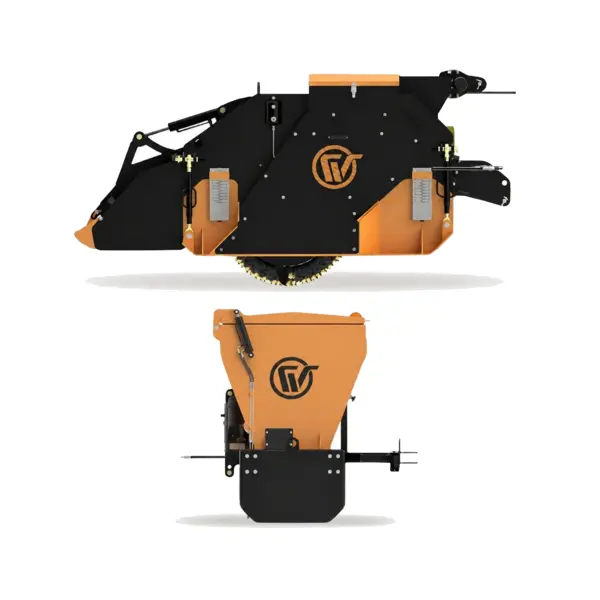
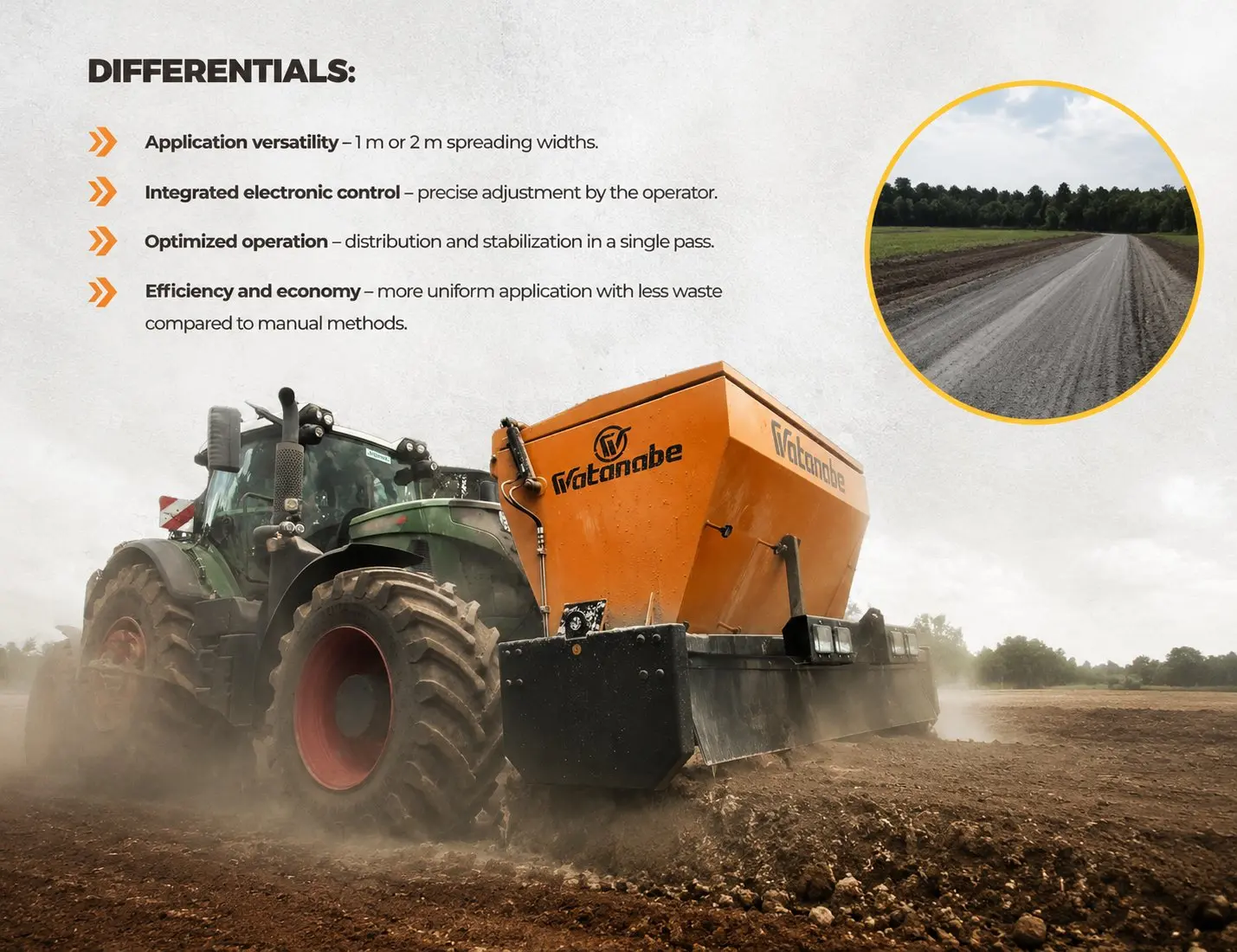
Alat penyebar kapur/pengikat semen yang dipasang di bagian depan traktor untuk stabilisasi tanah. Mendistribusikan pengikat pada Lebar kerja 2.140 mm dengan kontrol kabin elektronik — dapat diubah ke 1 meter atau 2 meter melalui dua rol internal. Bekerja secara simultan dengan penstabil tanah THOR ST untuk rehabilitasi jalan dalam satu kali pengerjaan.
Panjang 1.780 mm · Tinggi 1.740 mm · Pemberat traktor wajib: 1.300 Kg.
DCW 2.2 — Alat Penyebar Kapur/Semen Presisi untuk Stabilisasi Tanah Sekali Lewat
Watanabe DCW 2.2 adalah alat penyebar kapur dan pengikat semen yang dipasang di bagian depan traktor, dirancang untuk bekerja secara langsung bersamaan dengan alat penyebar yang dipasang di bagian belakang. Penstabil tanah THOR ST Untuk stabilisasi tanah satu kali jalan pada jalan pedesaan dan infrastruktur pertanian. Dipasang di bagian depan traktor CVT, DCW 2.2 mendistribusikan kapur atau pengikat semen secara seragam di permukaan jalan dengan laju aplikasi yang dikontrol secara tepat — tepat di depan rotor THOR ST, yang menggiling material yang dilapisi pengikat hingga kedalaman tertentu dan mencampurnya dengan air dalam satu kali lintasan maju.
Keunggulan operasional utama DCW 2.2 dibandingkan metode penyebaran konvensional "dengan kantong" atau truk adalah presisi dan keseragaman. Laju aplikasi pengikat dikontrol secara elektronik dari layar yang terpasang di kabin traktor — operator menyesuaikan laju pengiriman berdasarkan kecepatan maju untuk mempertahankan dosis pengikat kg/m² target terlepas dari variasi kecepatan. Dua rol internal menyediakan lebar distribusi yang dapat dipilih: lebar 2 meter untuk lintasan perawatan jalan standar, atau dua bagian independen 1 meter untuk perawatan sebagian lebar pada jalan di mana satu lajur dapat tetap terbuka selama konstruksi.
Sistem traktor tunggal gabungan DCW 2.2 (depan) + THOR ST (belakang) menghilangkan kebutuhan akan jalur penyebar pengikat terpisah sebelum mesin stabilisasi — mengurangi jumlah total mobilisasi peralatan, total durasi proyek, dan total biaya konstruksi proyek rehabilitasi jalan pedesaan.
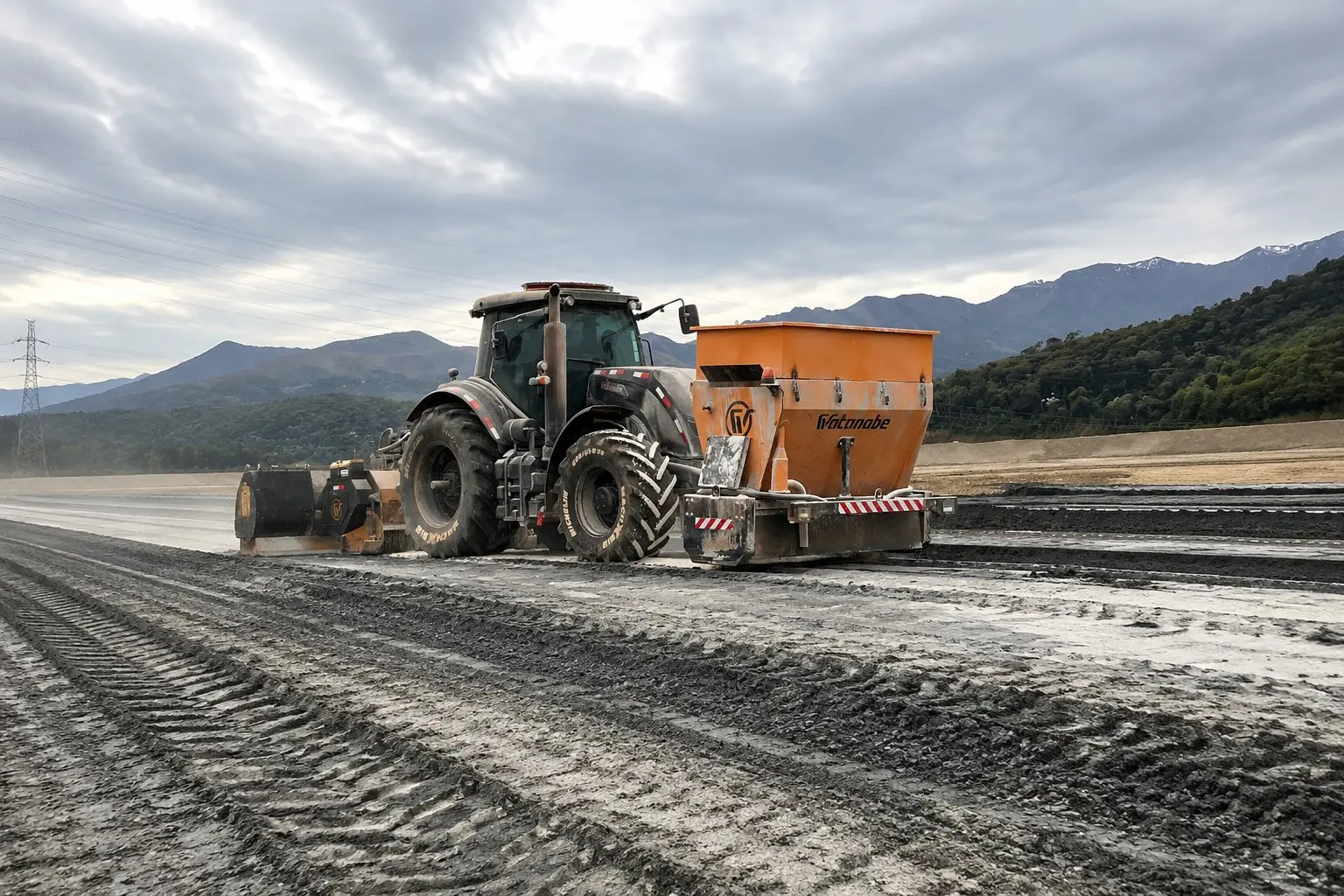
Spesifikasi Teknis — DCW 2.2
Semua data diambil dari brosur produk resmi Watanabe (Desember 2025).
| DCW 2.2 — DATA TEKNIS | |
|---|---|
| UKURAN | |
| Panjang (badan mesin) | 1.780 mm |
| Panjang (dengan sambungan) | 2.680 mm |
| Tinggi | 1.740 mm |
| PERSYARATAN TRAKTOR | |
| Lebar Kerja | 2.140 mm |
| Berat Pemberat Traktor Wajib | 1.300 Kg |
| FITUR UTAMA | |
| Roller Internal | 2 (mandiri) |
| Opsi Lebar Penyebaran | 1 m atau 2 m |
| Jenis Pengikat | Kapur (kapur cepat/kapur hidrat), Semen |
| Sistem Kontrol | Elektronik (layar kabin) |
| Posisi Pemasangan | Bagian depan traktor |
ⓘ Berat wajib 1.300 Kg adalah pemberat depan traktor minimum yang diperlukan untuk membawa DCW 2.2 dengan aman pada halangan depan dengan hopper pengikat yang terisi. Konfirmasikan kapasitas berat halangan depan traktor Anda dan pemberat yang tersedia sebelum beroperasi. Data dari brosur resmi Watanabe Desember 2025.
Cara Kerja DCW 2.2 — Dua Roller Internal dan Kontrol Kecepatan Elektronik
Hopper pengikat DCW 2.2 menampung kapur atau semen bubuk yang akan diaplikasikan ke permukaan jalan. Dua rol berputar internal mendorong pengikat dari hopper melalui mekanisme distribusi dan ke permukaan jalan dengan laju aplikasi yang terkontrol. Keunggulan utama sistem distribusi penggerak rol dibandingkan alternatif pengumpanan gravitasi atau ulir adalah kemampuannya untuk memberikan laju aliran volumetrik yang konsisten — memberikan cakupan permukaan tanah yang seragam terlepas dari variasi kecil dalam ukuran partikel pengikat atau kepadatan curah.
Roller Ganda — Pilihan Lebar 1m atau 2m
Kedua rol internal dikendalikan secara independen. Ketika kedua rol aktif, bahan pengikat didistribusikan di seluruh lebar kerja 2.140 mm — sesuai dengan lebar penggilingan THOR ST untuk cakupan bahan pengikat yang sepenuhnya seragam sebelum proses stabilisasi. Ketika hanya satu rol aktif, bahan pengikat didistribusikan hanya pada bagian sepanjang 1 meter — memungkinkan operator untuk menangani satu lajur sambil membiarkan lajur yang berdekatan tidak terganggu. Ini sangat berguna pada bagian jalan di mana lalu lintas satu lajur harus dipertahankan selama konstruksi, atau di mana perawatan ulang sebagian lebar lajur atau bagian bahu jalan tertentu diperlukan tanpa menangani seluruh lebar jalan.
Sistem Kontrol Elektronik — Tampilan Kabin
DCW 2.2 dilengkapi dengan sistem kontrol elektronik sendiri dengan layar yang terpasang di kabin traktor. Operator memantau dan menyesuaikan laju pengiriman pengikat dari layar kabin tanpa menghentikan mesin — mengkompensasi variasi kecepatan maju untuk mempertahankan dosis pengikat target per meter persegi. Sistem elektronik mencatat data aplikasi aktual, menyediakan catatan proyek tentang kuantitas dan cakupan pengikat untuk dokumentasi jaminan kualitas. Ini merupakan keuntungan signifikan dibandingkan metode penyebaran manual untuk proyek jalan yang didanai pemerintah yang membutuhkan catatan kontrol kualitas yang terdokumentasi.
Pemasangan Depan — Pengoperasian Satu Lintasan Gabungan
DCW 2.2 dipasang pada pengait tiga titik depan traktor — satu-satunya konfigurasi yang memungkinkan bahan pengikat didistribusikan tepat di depan rotor penstabil THOR ST yang dipasang di belakang dalam satu lintasan maju yang sama. Jarak pemisah antara titik aplikasi DCW 2.2 dan rotor THOR ST adalah jarak sumbu roda traktor — biasanya 3–4 meter. Ini memastikan bahan pengikat tersebar secara seragam sebelum rotor mencampurnya, tetapi tidak terpapar gangguan angin atau hujan dalam jangka waktu lama sebelum dicampur. Konfigurasi traktor tunggal, depan plus belakang, adalah pengaturan stabilisasi tanah paling efisien yang tersedia — satu operator, satu lintasan traktor, distribusi bahan pengikat lengkap, dan penggilingan tanah dalam satu operasi terkoordinasi.
DCW 2.2 dalam Alur Kerja Stabilisasi Tanah Lengkap
DCW 2.2 adalah komponen distribusi pengikat dalam sistem stabilisasi tanah empat mesin. Perannya adalah untuk secara akurat mengirimkan agen kimia yang memberikan sifat struktural pada lapisan dasar jalan yang distabilkan — THOR ST kemudian secara fisik mencampur agen kimia tersebut ke dalam material jalan hingga kedalaman yang dibutuhkan.
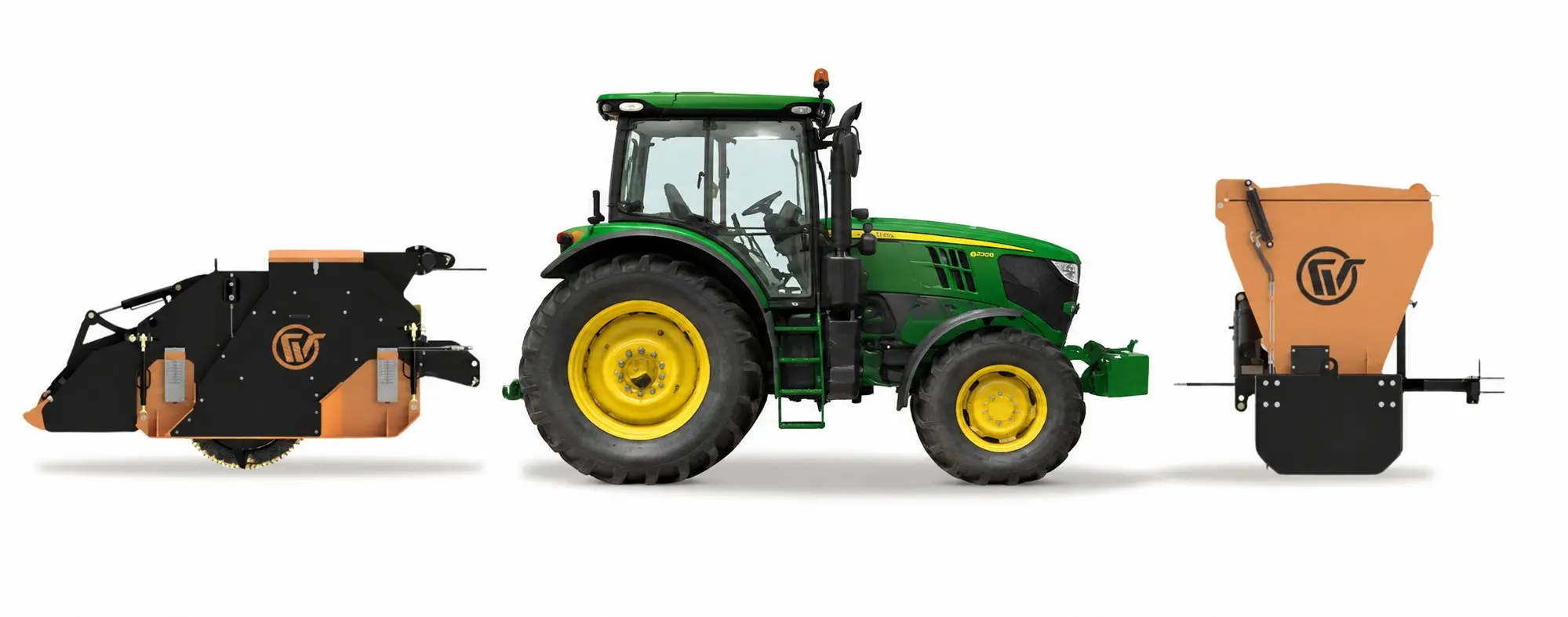
DCW 2.2 Binder Spreader (mesin ini) — Mendistribusikan kapur atau semen secara merata dengan laju kg/m² yang dikontrol secara elektronik. Lebar 2m mencakup seluruh permukaan jalan dalam satu kali lintasan; mode 1m untuk perawatan sebagian lebar jalan.
Penstabil Tanah THOR ST — Tepat di belakang DCW 2.2, material jalan digiling hingga kedalaman 0–200 mm dan dicampur dengan air dari truk air yang terhubung. Bahan pengikat yang telah didistribusikan oleh DCW 2.2 dimasukkan ke dalam campuran tersebut.
Truk Air (terhubung ke Jalan THOR) — Menyediakan air terkontrol untuk kebutuhan kelembapan reaksi stabilisasi. Mengikuti standar THOR ST selama pengoperasian.
Perataan + Pemadatan — Profil jalan diratakan dan campuran yang distabilkan dipadatkan dengan alat pemadat. Kekuatan stabilisasi berkembang selama 7–28 hari.
DCW 2.2 Perbedaan Utama — Mengapa Alat Penyebar Pupuk dengan Kontrol Elektronik Lebih Unggul daripada Metode Manual
■ Fleksibilitas Aplikasi — 1m atau 2m
Dua rol internal independen memungkinkan peralihan instan antara distribusi pengikat 2 meter (lebar kerja penuh) dan 1 meter (jalur tunggal). Untuk ruas jalan pedesaan Korea di mana lalu lintas harus dipertahankan satu arah selama konstruksi, mode 1 meter memungkinkan penanganan satu jalur pada satu waktu tanpa penutupan jalan sepenuhnya — mengurangi gangguan masyarakat dan tanggung jawab kontraktor atas gangguan akses.
■ Kontrol Elektronik Terintegrasi
Sistem kontrol tampilan kabin memungkinkan operator untuk memantau dan menyesuaikan laju pengiriman pengikat secara real-time dari kabin traktor. Laju aplikasi dapat diatur untuk mempertahankan dosis target kg/m² terlepas dari variasi kecepatan maju — tanpa gangguan, tanpa penghentian penyesuaian manual. Sistem ini menyediakan catatan aplikasi aktual untuk dokumentasi kualitas proyek, yang diperlukan untuk proyek rekayasa jalan formal.
■ Pengoperasian Satu Lintasan yang Dioptimalkan
Penyebaran material yang dipasang di bagian depan, diikuti langsung oleh penggilingan THOR ST yang dipasang di bagian belakang dalam satu lintasan maju yang sama, menghilangkan lintasan penyebar pengikat terpisah yang dibutuhkan oleh metode stabilisasi konvensional. Menghilangkan satu lintasan cakupan penuh dari rangkaian proyek mengurangi total jam kerja peralatan, total konsumsi bahan bakar, dan total biaya proyek — terutama signifikan pada bagian jalan yang lebih panjang di mana mobilisasi dan cakupan lintasan merupakan pendorong biaya utama.
■ Efisiensi dan Ekonomi vs. Metode Manual
Metode konvensional "penyebaran karung" — menempatkan karung kapur atau semen secara manual dan menyebarkannya dengan penggaruk — membutuhkan banyak tenaga kerja dan pada dasarnya tidak seragam. Distribusi pengikat yang tidak merata menghasilkan kekuatan stabilisasi yang tidak merata, yang menciptakan zona lemah pada lapisan dasar jalan yang telah selesai dan akan mengalami kegagalan dengan cepat di bawah beban lalu lintas. Distribusi seragam mekanis DCW 2.2 menghilangkan variabilitas ini dan mengurangi kebutuhan tenaga kerja hingga nol untuk langkah distribusi pengikat.
Aplikasi — Proyek Perbaikan Jalan Pedesaan dan Tanah di Korea
Rehabilitasi Jalan Pedesaan dengan Stabilisasi Kapur atau Semen
Aplikasi paling umum dari DCW 2.2 dalam konteks Korea adalah penyebaran kapur atau semen untuk stabilisasi di tempat pada jalan pedesaan yang rusak. Tingkat dosis ditentukan oleh klasifikasi tanah dari material jalan yang ada (pengujian laboratorium sebelum konstruksi) dan target kekuatan tekan tak terbatas (UCS) untuk lapisan dasar yang distabilkan. Dosis semen untuk material granular jalan pedesaan khas Korea berkisar antara sekitar 4–8% berdasarkan berat kering; dosis kapur untuk tanah lempung berkisar antara 3–6%. DCW 2.2 memberikan dosis ini secara seragam dengan kecepatan kerja — kemampuan yang tidak dapat ditiru secara andal oleh penyebaran manual di sepanjang jalan.
Perbaikan Jalan Akses Pertanian Pegunungan
Di jalan akses pertanian pegunungan di Gangwon-do dan dataran tinggi Gyeongsang, stabilisasi kapur atau semen mengubah jalur tanah yang dipadatkan menjadi permukaan struktural segala cuaca yang mampu menopang truk pertanian dan mesin pertanian sepanjang tahun. Fleksibilitas lebar 1m/2m DCW 2.2 sangat berharga di jalan akses pegunungan yang sempit di mana lebar kerja penuh 2.140 mm pada pengaturan 2m mungkin melebihi lebar permukaan jalan yang dapat digunakan pada bagian tersempit.
Jalan Internal Industri dan Perkebunan
Untuk jalan internal perusahaan perkebunan, jalan layanan kawasan industri, dan permukaan halaman pusat logistik di mana material dasar yang ada cocok untuk stabilisasi, kombinasi DCW 2.2 + THOR ST memberikan jalur yang paling hemat biaya dan tercepat dari permukaan yang rusak ke dasar jalan struktural yang stabil. Proyek-proyek ini biasanya tidak memerlukan persetujuan teknik formal untuk metode konstruksi, sehingga menyederhanakan proses pengadaan dan mobilisasi.
Konstruksi Jalan Sementara dan Persiapan Lokasi
Lokasi konstruksi besar, jalan angkut tambang, dan proyek infrastruktur sementara yang membutuhkan permukaan kerja yang stabil dengan cepat dan dengan biaya rendah akan mendapatkan manfaat dari stabilisasi di tempat menggunakan kapur atau semen dengan sistem DCW 2.2 + THOR ST. Permukaan yang distabilkan dapat dilalui kendaraan dalam waktu 24–48 jam setelah perawatan (tergantung pada jenis pengikat dan kondisi pengeringan), sehingga memberikan permukaan kerja praktis untuk segala cuaca tanpa biaya dan waktu impor agregat serta konstruksi lapisan dasar yang dipadatkan.
Watanabe — Peralatan Stabilisasi Jalan Sejak 1970
Mengapa Pengalaman Jalan Pedesaan Brasil Dapat Diterapkan di Korea?
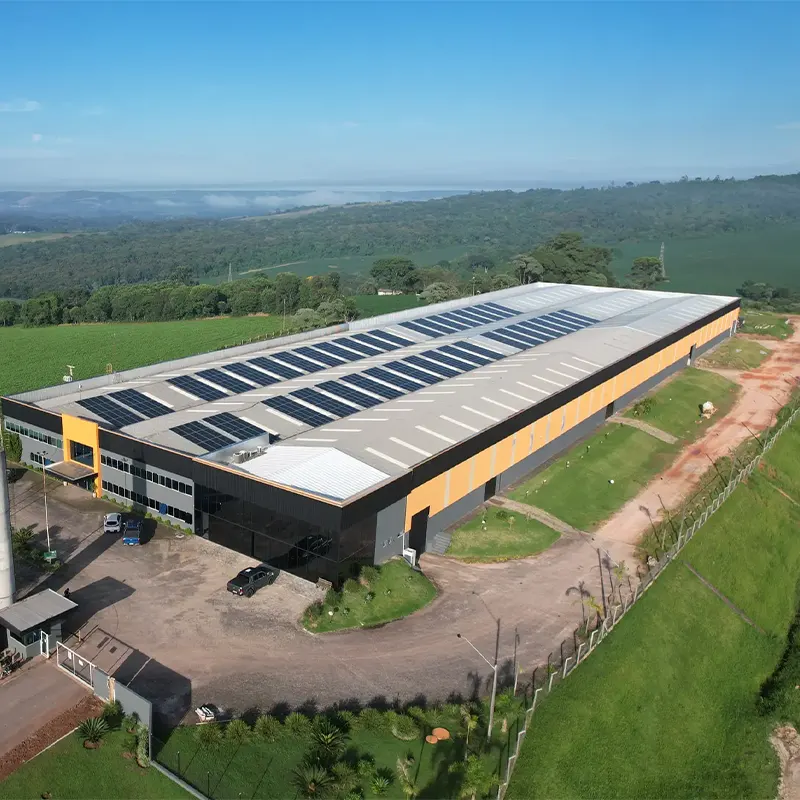
Brasil mengoperasikan salah satu jaringan jalan pedesaan tak beraspal terbesar di dunia — beberapa juta kilometer jalan akses pertanian, jalan penghubung pertanian ke pasar, dan jalan penghubung desa yang melintasi berbagai kondisi mulai dari tanah liat tropis hingga dataran tinggi granit dan tanah berpasir pesisir. DCW 2.2 dirancang dan disempurnakan dalam lingkungan ini — tepatnya kondisi yang dihadapi proyek rehabilitasi jalan pedesaan Korea. Parameter operasional (jenis pengikat, laju aplikasi, lebar kerja), persyaratan ketahanan peralatan, dan kondisi logistik yang membentuk desain DCW 2.2 secara langsung paralel dengan kondisi proyek jalan pedesaan Korea.
Stok Lokal dan Dukungan Teknis Korea
Korea Watanabe menyediakan DCW 2.2 di Ansan-si, Gyeonggi-do, bersama dengan THOR ST untuk pengiriman sistem lengkap. Dukungan teknis berbahasa Korea mencakup konfigurasi sistem (DCW 2.2 + THOR ST pada traktor CVT), panduan laju aplikasi untuk berbagai jenis tanah dan pengikat, serta pengaturan sistem kontrol elektronik. Kami dapat memberikan referensi laju aplikasi pengikat untuk jenis tanah khas Korea sebagai titik awal untuk konfirmasi laboratorium khusus proyek.
Pertanyaan yang Sering Diajukan — DCW 2.2
Bisakah DCW 2.2 digunakan tanpa penstabil tanah THOR ST?
Ya — DCW 2.2 dapat beroperasi sebagai alat penyebar pengikat yang dipasang di depan secara mandiri, terpisah dari THOR ST. Dalam konfigurasi ini, alat ini mendistribusikan kapur atau semen sebagai tahap pra-penyebaran sebelum mesin stabilisasi (merek apa pun) melakukan tahap pencampuran secara terpisah. Namun, efisiensi operasional penuh DCW 2.2 hanya terwujud ketika bekerja secara bersamaan dengan THOR ST yang dipasang di belakang pada traktor yang sama — kombinasi distribusi pengikat satu tahap + penggilingan adalah tujuan desain utama sistem ini. Menggunakan DCW 2.2 secara mandiri menambahkan tahap penyebaran terpisah ke alur kerja proyek, yang lebih efisien daripada penyebaran manual tetapi kurang efisien daripada operasi satu tahap gabungan.
Traktor jenis apa yang dibutuhkan untuk mengangkut DCW 2.2 dan THOR ST secara bersamaan?
Konfigurasi gabungan ini memerlukan: (1) traktor CVT (wajib untuk rentang kecepatan operasi THOR ST); (2) daya minimum 250 CV (persyaratan PTO THOR ST); (3) pengait tiga titik depan dengan kapasitas angkat minimum 1.300 Kg untuk DCW 2.2 di bagian depan; (4) pengait tiga titik belakang atau batang penarik untuk THOR ST di bagian belakang; (5) pemberat traktor yang memadai untuk distribusi berat depan-belakang dengan kedua alat terpasang. Berat total sistem pada traktor cukup signifikan — pastikan dengan pabrikan atau dealer traktor Anda bahwa kapasitas pengait depan dan beban rangka traktor berada dalam spesifikasi yang ditetapkan traktor untuk pemasangan alat gabungan depan dan belakang. Traktor CVT Eropa dalam kisaran 250–350 CV (Fendt, New Holland, CLAAS, John Deere IVT) biasanya mengakomodasi konfigurasi ini.
Berapakah "berat wajib" untuk 1.300 Kg?
Berat wajib 1.300 Kg adalah beban gandar depan minimum yang dibutuhkan ketika DCW 2.2 dipasang di depan dan dimuat dengan pengikat. Berat depan ini diperlukan untuk menjaga kendali kemudi traktor dan mencegah pengangkatan gandar depan ketika THOR ST (5.300 Kg) yang dipasang di belakang juga terpasang dan beroperasi. Pemberat depan 1.300 Kg biasanya dicapai dengan kombinasi berat DCW 2.2 sendiri (berat hopper + berat mesin) dan berat pemberat depan tambahan pada traktor. Konfirmasikan beban gandar depan spesifik traktor dengan kedua alat terpasang sebelum mengoperasikan sistem gabungan.
Bagaimana cara mengkalibrasi laju aplikasi penjilid elektronik?
Sistem kontrol DCW 2.2 dikalibrasi selama pengaturan awal dengan menjalankan alat penyebar pada kecepatan terukur di area uji dan mengumpulkan serta menimbang hasilnya — faktor kalibrasi kemudian dimasukkan ke dalam tampilan kabin. Setelah dikalibrasi, sistem secara otomatis menyesuaikan kecepatan rol untuk mempertahankan laju aplikasi target saat kecepatan maju traktor bervariasi. Pemeriksaan kalibrasi ulang disarankan saat mengganti jenis pengikat (kapur vs. semen, berbagai tingkatan) karena kepadatan partikel dan karakteristik aliran berbeda antara jenis pengikat dan dapat memengaruhi hubungan antara kecepatan rol dan laju pengiriman aktual.
Berapakah tingkat aplikasi bahan pengikat yang umum digunakan untuk stabilisasi jalan pedesaan di Korea?
Tingkat aplikasi pengikat harus ditentukan melalui analisis laboratorium terhadap material jalan spesifik yang akan distabilkan — tidak ada tingkat universal. Sebagai panduan umum saja (bukan pengganti pengujian laboratorium): stabilisasi semen pada material dasar jalan granular yang khas di zona dataran tinggi Korea biasanya membutuhkan 4–8% semen berdasarkan berat kering tanah (sekitar 7–15 kg/m² pada kedalaman 100 mm tergantung pada kepadatan tanah); stabilisasi kapur pada tanah lempung di zona pesisir Korea biasanya membutuhkan 3–6% kapur berdasarkan berat kering. Tingkat aplikasi definitif untuk setiap proyek harus dikonfirmasi dengan pemadatan Proctor dan pengujian UCS campuran tanah + pengikat spesifik lokasi sebelum proyek dimulai. Korea Watanabe dapat merekomendasikan laboratorium geoteknik lokal untuk pengujian desain stabilisasi tanah.
Berapakah kapasitas wadah penampung dan seberapa sering perlu diisi ulang?
Kapasitas hopper DCW 2.2 dan frekuensi pengisian ulang bergantung pada laju aplikasi pengikat dan kecepatan kerja. Hubungi kami dengan parameter proyek Anda (jenis pengikat, laju aplikasi target, lebar jalan, dan kecepatan kerja) dan kami akan memberikan kapasitas hopper spesifik dan perkiraan interval pengisian ulang untuk konfigurasi proyek Anda. Perencanaan logistik pasokan pengikat — jadwal pengiriman massal, penyimpanan di lokasi, dan pengaturan pemuatan — merupakan bagian penting dari persiapan proyek untuk kontrak stabilisasi tanah.
Apakah ada risiko debu kapur/semen yang dapat memengaruhi penduduk atau tanaman di sekitarnya?
Penyebar kapur dan bubuk semen menghasilkan debu di udara selama pengoperasian—suatu hal yang sangat mengkhawatirkan bagi penduduk sekitar, tanaman, dan badan air. DCW 2.2 dirancang untuk meminimalkan debu dengan mendistribusikan pengikat pada ketinggian rendah melalui mekanisme rol, bukan dengan menyebarkannya dari ketinggian. Selain itu, sistem injeksi air THOR ST yang berada tepat di belakang DCW 2.2 memasukkan kelembapan yang menekan debu dari pengikat yang baru disebar dalam hitungan detik setelah aplikasi. Untuk proyek di dekat penerima yang sensitif (perumahan, kebun, badan air), kerjakan saat kondisi angin rendah dan informasikan kepada penduduk sekitar sebelumnya. Pedoman Pengelolaan Kebisingan dan Debu Konstruksi Pemerintah Korea (건설공사 소음·진동 관리기준) menyediakan kerangka peraturan untuk pengelolaan debu pada proyek konstruksi.
Perawatan apa yang dibutuhkan DCW 2.2 setelah setiap proyek?
Setelah setiap proyek: kosongkan sepenuhnya wadah penampung — sisa kapur atau semen menyerap kelembapan dan mengeras, menyumbat mekanisme rol. Bersihkan bagian dalam wadah penampung, rol, dan mekanisme distribusi secara menyeluruh dengan udara bertekanan dan sikat — jangan gunakan air pada komponen bagian dalam (semen + air = reaksi pengerasan). Periksa permukaan rol untuk keausan dan endapan apa pun. Periksa tampilan kontrol elektronik dan sambungan kabel. Lumasi semua titik pelumasan sesuai jadwal perawatan. Masalah perawatan yang paling umum pada peralatan penyebar adalah pengerasan pengikat sisa di mekanisme distribusi akibat pembersihan pasca-penggunaan yang tidak lengkap — hindari hal ini dengan membersihkan secara menyeluruh di akhir setiap hari kerja dan sebelum periode penyimpanan yang lama.
Ulasan Pelanggan
Yoo Sung-jin — Kontraktor Jalan Pedesaan, Jecheon, Chungcheong Utara (2025)
★★★★★
"Mengoperasikan sistem gabungan DCW 2.2 + THOR ST pada kontrak jalan di wilayah Jecheon. Kontrol kabin elektronik pada DCW 2.2 benar-benar bermanfaat — saya dapat mempertahankan laju dosis semen yang ditargetkan secara tepat bahkan ketika saya harus memperlambat kecepatan karena adanya perlengkapan jalan atau bagian jalan yang sempit. Keseragaman distribusi pengikat dibandingkan dengan metode penyebaran menggunakan karung yang biasa kami lakukan terlihat jelas pada hasil kekuatan dasar akhir."
Kim Hyeon-taek — Kontraktor Jalan, Wonju, Gangwon-do (2024–2025)
★★★★★
"Peralihan lebar 1m/2m ini tidak terduga tetapi sangat berharga dalam praktiknya. Di salah satu ruas jalan di Gangwon, kami memiliki saluran drainase di satu sisi yang membatasi lebar jalan yang dapat digunakan. Mode 1m memungkinkan kami untuk mengerjakan seluruh jalan dalam dua kali pengerjaan — setengah kiri, lalu setengah kanan — tanpa penyebaran DCW 2.2 di luar area jalan. THOR ST bekerja dengan lebar penuh di kedua pengerjaan, tetapi cakupan pengikatnya tepat berada di tempat yang dibutuhkan."
Choi Wan-su — Kontraktor Teknik Sipil, Naju, Jeolla Selatan (2025)
★★★★★
"Stabilisasi kapur pada tanah liat Jeolla Selatan — kontrol elektronik DCW 2.2 memungkinkan kami mencapai tingkat dosis kapur 4,5% secara konsisten di sepanjang proyek. Proyek-proyek sebelumnya yang menggunakan metode penyebaran dalam karung memiliki kualitas yang bervariasi karena penyebaran manual pasti menghasilkan cakupan yang tidak merata. Pengujian kontrol kualitas yang diawasi pada proyek ini menerima semua bagian pada percobaan pertama."
Park Dong-su — Kontraktor Kehutanan, Hamyang-gun, Gyeongsang Selatan (2025)
★★★★★
"Stabilisasi jalan kayu — pengoperasian satu kali jalan DCW 2.2 + THOR ST berarti kami menyelesaikan bagian jalan hutan sepanjang 200m per hari dengan satu operator traktor. Alternatifnya dengan penyebar karung akan membutuhkan kru terpisah untuk penyebar dan mesin terpisah untuk proses penggilingan. Penghematan biaya tenaga kerja sangat signifikan pada proyek jalan hutan terpencil di mana mendatangkan pekerja tambahan ke lokasi sulit dilakukan."
Jeong Hyun-jo — Insinyur Jalan Kabupaten, Boryeong-si, Chungcheong Selatan (2025)
★★★★★
"Sebagai insinyur pengawas pada proyek stabilisasi Boryeong, catatan aplikasi elektronik DCW 2.2 adalah yang kami butuhkan untuk dokumentasi jaminan mutu. Log dosis dari sistem kontrol kabin menunjukkan tingkat aplikasi pengikat yang konsisten di sepanjang proyek sepanjang 6 km. Catatan mutu yang dapat diverifikasi seperti ini semakin dibutuhkan dalam kontrak jalan pemerintah dan DCW 2.2 menyediakannya secara otomatis."
Lee Sang-bum — Manajer Perkebunan, Yeongam-gun, Jeolla Selatan (2024)
★★★★★
"Stabilisasi jalan perkebunan internal — sistem DCW 2.2 + THOR ST dari Korea Watanabe adalah pilihan yang tepat untuk jaringan jalan internal kami. Tim Korea Watanabe memberikan panduan tingkat aplikasi sebelum kami memulai berdasarkan jenis tanah kami, yang menghindari penyesuaian dosis coba-coba yang dapat membuang bahan pengikat dan menunda hasil. Saran perawatan setelah proyek pertama juga praktis dan bermanfaat."
Diskusikan Proyek Stabilisasi Tanah Anda
Beri tahu kami panjang jalan Anda, jenis tanah, spesifikasi proyek, dan apakah perawatan yang direncanakan menggunakan kapur atau semen — kami akan memberikan panduan tingkat aplikasi dan rekomendasi konfigurasi sistem lengkap. DCW 2.2 dan THOR ST tersedia dari rock-crusher-tractor.com, Ansan-si, Gyeonggi-do.
Informasi Tambahan
| Editor | Cxm |
|---|