
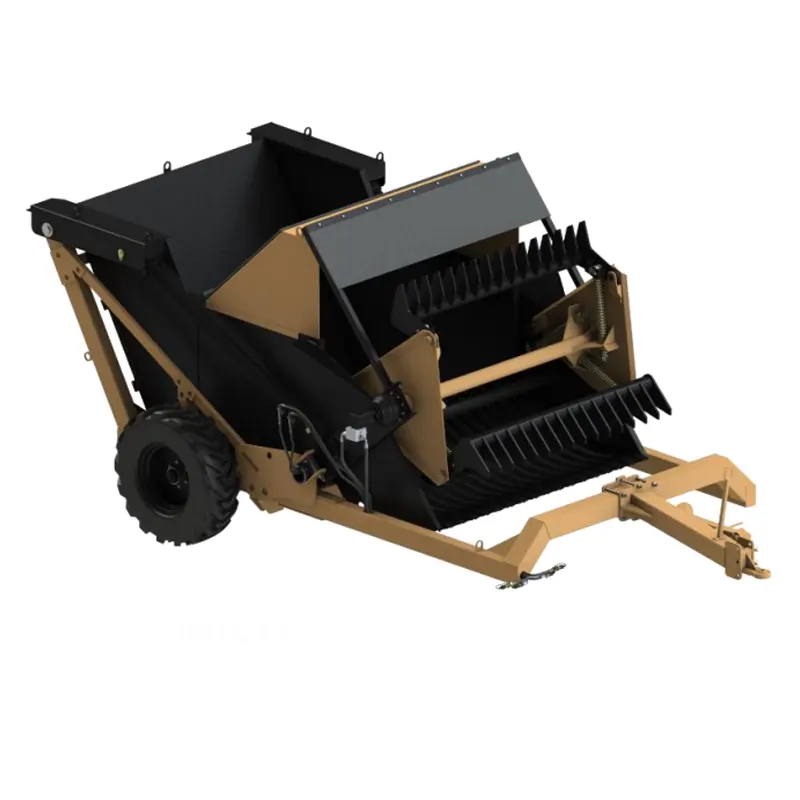
Itu Penggaruk batu EP-EW-4000 EP-EW-4000 adalah mesin dengan pemanfaatan tertinggi dalam sistem pengelolaan batu di dataran tinggi Korea — lebih banyak pertanian dataran tinggi Korea menggunakan EP-EW-4000 selama lebih banyak jam per tahun dibandingkan mesin pengelolaan batu lainnya dalam jajaran produk Watanabe. Kebutuhan traktor 75 HP membuatnya mudah dijangkau oleh traktor pertanian domestik standar Korea; lebar kerjanya 3,6 m memberikan cakupan yang efisien pada skala lahan pertanian; dan kemampuan pengumpulan permukaannya mengatasi tugas pengelolaan batu dataran tinggi Korea yang paling umum — pembuangan batu permukaan akibat pembekuan tanah tahunan dari lahan yang sudah ditanami — dengan lebih efisien daripada pendekatan alternatif lainnya.
Memahami cara menggunakan EP-EW-4000 dengan benar memerlukan pemahaman tentang apa yang dirancang untuk dilakukannya dan, yang sama pentingnya, apa yang tidak dirancang untuk dilakukannya. EP-EW-4000 adalah mesin pengumpul batu permukaan. Mesin ini tidak menghancurkan, tidak menembus profil tanah, dan tidak dapat menangani batu yang tertanam di bawah kedalaman sekitar 8–10 cm. Efektivitasnya mutlak dalam parameter tersebut — dan penggunaannya pada tugas di luar parameter tersebut menghasilkan hasil yang tidak memadai yang menyebabkan operator salah menyimpulkan bahwa mesin tersebut tidak cukup, padahal sebenarnya tugas tersebut membutuhkan penghancur batu THOR 2.4.
Spesifikasi EP-EW-4000 yang Telah Dikonfirmasi
Semua spesifikasi diambil dari brosur produk resmi Watanabe.
Keputusan Inti — EP-EW-4000 Rake atau THOR 2.4 Crusher?
Keputusan terpenting dalam pengelolaan batu di pertanian dataran tinggi Korea dibuat setiap musim semi setelah tanah mencair: mesin apa yang dibutuhkan lahan ini tahun ini? Mengambil keputusan yang tepat akan menghemat biaya operasional secara signifikan di sebagian besar musim di mana penggaruk sudah memadai, sekaligus memastikan THOR digunakan di sebagian kecil musim di mana alat ini benar-benar dibutuhkan. Kerangka kerja pengambilan keputusan:
| Kondisi lahan setelah pencairan salju musim semi | EP-EW-4000 | THOR 2.4 | Dasar pengambilan keputusan |
|---|---|---|---|
| Semua batu permukaan beratnya di bawah 40 Kg, tidak ada yang lebih dari 15 cm. | ✅ Benar | Pengerahan berlebihan | Tahun dengan pembekuan tanah ringan yang standar — penggaruk mampu menangani seluruh tumpukan batu. |
| Batu ginjal sesekali berukuran 40–80 Kg (di bawah 25 cm) | ⚠ Hanya sebagian | ✅ Benar | Garpu penggaruk mengumpulkan batu-batu kecil; THOR menghancurkan batu-batu di atas 40 kg yang tidak dapat dipindahkan oleh garpu penggaruk. |
| Banyak batu dengan berat lebih dari 40 Kg di setiap bagian lapangan. | ❌ Tidak mencukupi | ✅ Benar | Pembekuan tanah yang parah atau lahan baru: Penghancuran THOR diperlukan sebelum pengumpulan dengan garu dapat dilakukan. |
| Pasca-THOR pass — agregat yang dihancurkan untuk dikumpulkan | Tidak biasanya | Sudah lewat | Mesin pemetik CT-2100 menangani pengumpulan pasca-THOR; EP-EW-4000 untuk penyapuan tumpukan tambahan jika diperlukan. |
| Kebun buah, padang rumput, lorong ginseng — hanya permukaannya saja | ✅ Ideal | Kekuasaan yang tidak perlu | Kepadatan batu rendah, pengumpulan dangkal: garu sangat cocok untuk aplikasi perawatan ringan ini. |
Cara Kerja EP-EW-4000 — Drum Garpu, Tumpukan Rumput, dan Pengumpulan
EP-EW-4000 menggunakan drum gigi berputar — serangkaian gigi baja pegas yang dipasang pada drum horizontal yang digerakkan oleh PTO traktor 540 RPM. Saat traktor bergerak maju, gigi berputar menyapu permukaan tanah ke arah yang berlawanan dengan arah maju, melepaskan batu-batu permukaan dan menggulungnya ke belakang menjadi barisan yang terkonsentrasi di belakang mesin. Gigi-gigi tersebut menembus permukaan tanah hingga kedalaman sekitar 5–10 cm (dapat disesuaikan oleh operator melalui pengaturan ketinggian skid belakang), mengumpulkan batu-batu dari zona pengumpulan atas ini sambil membiarkan tanah sebagian besar tidak terganggu di bawah kedalaman penetrasi gigi.
↳ Kedalaman penetrasi gigi
Ditetapkan berdasarkan ketinggian seluncuran belakang — seluncuran yang lebih rendah = penetrasi gigi yang lebih dalam = lebih banyak gangguan tanah tetapi pengumpulan batu kecil yang lebih baik. Naikkan seluncuran pada permukaan jalan dan rumput yang sudah tumbuh untuk mencegah gangguan permukaan yang tidak perlu. Target: gigi seharusnya hanya menembus lapisan tanah tanpa membentuk alur yang terlihat pada tanah yang padat.
↳ Posisi tumpukan
EP-EW-4000 menempatkan tumpukan batu yang telah dikumpulkannya di belakang mesin, tepat di garis tengah jalur kerja. Jalur selanjutnya direncanakan agar kendaraan pengumpul CT-2100 dapat mengikuti di sepanjang jalur tumpukan batu tersebut — menyelaraskan arah jalur dengan lintasan pengumpulan optimal CT-2100 untuk efisiensi pengumpulan maksimum.
↳ Ukuran batu maksimum
Gigi-gigi EP-EW-4000 secara efektif mengumpulkan batu hingga sekitar 40 Kg per batu. Batu yang ukurannya lebih besar dari ini tidak dapat dipindahkan oleh gaya putaran gigi — batu tersebut akan menghentikan drum gigi sesaat atau menggelinding ke samping. Menemukan beberapa batu dengan berat lebih dari 40 Kg di suatu bagian lahan selama penilaian dengan alat penggaruk merupakan pemicu untuk pengerahan THOR di bagian tersebut.
Pengaturan Operasional — Kecepatan, Tinggi Selip, dan Perencanaan Lintasan
Tiga variabel mengontrol kinerja EP-EW-4000: kecepatan maju, tinggi seluncuran (kedalaman penetrasi gigi), dan perencanaan jalur lintasan. Pengaturan yang tepat untuk setiap jenis aplikasi:
Lahan pertanian — pengaturan standar
Kecepatan: 4–6 km/jam. Batas bawah (4 km/jam) memaksimalkan kelengkapan pengumpulan batu kecil pada jalur batu halus. Batas atas (6 km/jam) untuk cakupan area luas yang efisien ketika kepadatan batu rendah dan kelengkapan batu yang sangat kecil kurang kritis.
Tinggi selip: Atur agar mata bajak hanya menyentuh lapisan permukaan tanah tanpa membentuk alur yang terlihat pada tanah musim semi yang padat dan sedikit lembap. Sesuaikan pada lintasan uji 20 m pertama — lihat kembali profil barisan tanah dan permukaan di belakang mata bajak.
Jalan setapak kebun — tata letak lebar sempit
Kecepatan: 4–5 km/jam — traktor kebun biasanya beroperasi lebih lambat daripada traktor ladang; pastikan kecepatan maju traktor sesuai dengan putaran PTO 540 RPM tanpa kecepatan drum yang berlebihan.
Tinggi selip: Angkat sedikit di atas permukaan tanah — rumput atau penutup tanah di lorong kebun tidak boleh diganggu secara tidak perlu. Garpu harus mengumpulkan batu-batu di permukaan tanpa meninggalkan jalur tanah kosong di lorong kebun.
Penayangan tambahan pasca-THOR
Kecepatan: 5–6 km/jam — batu-batu pasca-THOR sudah terfragmentasi dan berada di permukaan. Penggalian dengan alat penggaruk memusatkan batu-batu tersebut menjadi barisan untuk pengumpulan oleh CT-2100 secara lebih efisien daripada pengumpulan langsung oleh CT-2100 dari sebaran permukaan yang tersebar.
Tinggi selip: Pengaturan lapangan standar. Tanah yang dihancurkan dengan THOR sudah dilonggarkan — gigi-gigi penyapu menembus dengan mudah hingga kedalaman pengumpulan tanpa penyesuaian khusus.
Aplikasi Tahunan untuk Kebun Buah, Gang Ginseng, dan Tanaman Legum

Kebutuhan daya 75 HP pada EP-EW-4000 dan aksi permukaan yang relatif lembut (tidak menghancurkan, tidak membalikkan tanah) menjadikannya pilihan standar untuk berbagai aplikasi pertanian Korea di mana daya 180 HP dan aksi penghancuran batu pada THOR 2.4 tidak tersedia atau tidak diperlukan:
Kebun apel, pir, dan kesemek Korea
Lorong kebun di dataran tinggi secara tahunan mengakumulasi batu-batu permukaan akibat pengangkatan tanah beku di tanah granit yang sama dengan tanaman pertanian. Lebar kerja EP-EW-4000 sebesar 3,6 m biasanya lebih lebar daripada lorong kebun standar (2,5–3,5 m) — sehingga memerlukan lintasan yang bergeser. Tinggi gigi diatur untuk menjaga rumput penutup tanah. CT-2100 Pengumpulan dilakukan mengikuti jalur tumpukan hasil panen. Pembersihan lorong kebun tahunan pada bulan Maret mencegah ban bocor akibat peralatan panen selama periode panen kebun pada bulan Agustus–November.
Lorong-lorong ladang ginseng (selama masa budidaya 6 tahun)
Seperti yang dijelaskan dalam panduan pembersihan batu ginseng, peran tahunan EP-EW-4000 selama siklus pertumbuhan ginseng adalah pemeliharaan lorong—bukan pembersihan batu di bedengan. Lebar lorong 60–80 cm membutuhkan pengoperasian dengan lebar sempit: satu roda traktor di setiap lorong, EP-EW-4000 sedikit menjorok ke lorong yang berdekatan di kedua sisinya. Beberapa petani ginseng Gangwon-do menggunakan garpu khusus yang lebih sempit untuk pekerjaan lorong ginseng—konfirmasikan dengan Korea Watanabe apakah lebar EP-EW-4000 kompatibel dengan geometri bedengan ginseng spesifik Anda sebelum digunakan.
Tahun tanaman polong-polongan dalam rotasi 4 tanaman
Tahun penanaman kacang-kacangan (Tahun ke-4 dalam rotasi kentang–lobak–kubis–kacang-kacangan) memiliki persyaratan pengelolaan batu yang minimal. Pengangkatan tanah akibat embun beku tahunan adalah satu-satunya mekanisme kemunculan batu pada lahan yang sudah mapan. EP-EW-4000 menangani perawatan tahunan ringan ini pada tahun penanaman kacang-kacangan — THOR 2.4 tidak diperlukan dan tidak boleh digunakan pada lahan kacang-kacangan yang sudah mapan dan memiliki sedikit batu. Pemilihan mesin yang tepat selama tahun penanaman kacang-kacangan ini mengurangi jam operasi tahunan dan konsumsi gigi THOR 2.4 sekitar 20–25% pada lahan pertanian rotasi 4 blok, memperpanjang interval perawatan THOR dan mengurangi biaya operasional tahunan.
Perawatan Tahunan EP-EW-4000 — Sederhana namun Penting
Persyaratan perawatan EP-EW-4000 jauh lebih ringan daripada THOR 2.4 — kesederhanaan mekanisnya (drum gigi, poros penggerak PTO, penyesuaian seluncuran) berarti lebih sedikit komponen aus dan interval servis yang lebih pendek. Namun, penundaan perawatan pada bantalan drum gigi dan penggantian gigi menghasilkan penurunan kinerja yang nyata yang sering dikaitkan operator dengan "kondisi lapangan" daripada keausan mesin:
| Selang | Tugas | Gejala jika diabaikan |
|---|---|---|
| Sebelum setiap musim (Feb) | Periksa semua gigi — ganti gigi yang bengkok, memendek (di bawah 70% dari panjang baru), atau retak; lumasi bantalan drum gigi; periksa sambungan poros PTO; pastikan mekanisme penyesuaian ketinggian seluncuran bebas hambatan. | Gigi penyaring yang bengkok akan melewatkan batu dan mengurangi kualitas tumpukan; gigi penyaring yang aus mengurangi kelengkapan pengumpulan pada batu-batu yang lebih kecil. |
| Setiap 8 jam operasional | Lumasi bantalan ujung drum gigi; periksa apakah ada kerusakan pada gigi setelah kontak dengan batu besar; pastikan pelindung poros PTO dalam keadaan utuh. | Bantalan drum gigi kering berderit di bawah beban putaran yang berkelanjutan — kegagalan memerlukan pelepasan drum dan penggantian bantalan. |
| Inspeksi pertengahan musim | Jika kelengkapan pengumpulan terlihat menurun: ukur ulang semua gigi dan ganti item yang aus; periksa kembali penyimpangan pengaturan ketinggian seluncuran (baut seluncuran dapat mengendur karena getaran). | Pergeseran ketinggian seluncuran menyebabkan penetrasi gigi yang tidak konsisten — bervariasi dari terlalu dangkal (melewatkan batu-batu kecil) hingga terlalu dalam (gangguan tanah). |
| Akhir musim | Ganti semua mata bajak di bawah ambang batas penggantian; bersihkan tanah dari drum mata bajak dan poros PTO; lumasi semua titik sebelum disimpan; lindungi sambungan poros PTO dari korosi musim dingin. | Mesin yang disimpan dengan gigi pemotong yang hampir aus akan mulai beroperasi dengan kinerja yang berkurang pada musim semi berikutnya — tindakan perawatan berbiaya rendah namun berdampak tinggi. |
EP-EW-4000 dalam Sistem Manajemen Batu Korea Lengkap
EP-EW-4000 bukanlah mesin yang berdiri sendiri — mesin ini beroperasi sebagai bagian dari sistem pengelolaan batu dataran tinggi Korea yang terdiri dari tiga mesin, bersama dengan penghancur batu THOR 2.4 dan pemungut batu CT-2100. Memahami bagaimana ketiga mesin tersebut berinteraksi akan memperjelas kapan masing-masing mesin digunakan dan bagaimana cakupan gabungan mereka mencapai standar tanpa sisa batu di semua jenis lahan dan kondisi batu:
Biaya operasional total sistem tiga mesin didominasi oleh THOR 2.4 (tenaga kuda tertinggi, biaya keausan gigi tertinggi). Mengidentifikasi dengan tepat tahun dan bagian lahan di mana EP-EW-4000 sudah cukup — daripada selalu menggunakan THOR dalam semua situasi — adalah keputusan manajemen yang menjaga sistem tetap ekonomis di sepanjang kalender pertanian dataran tinggi Korea. Di lahan pertanian dataran tinggi seluas 10 ha yang dikelola dengan baik dan menjalankan rotasi 4 tanaman, EP-EW-4000 biasanya beroperasi 30–40 jam/tahun sementara THOR 2.4 beroperasi 15–25 jam/tahun — mesin yang lebih ringan mencakup total jam kerja lebih banyak dengan biaya per jam lebih rendah, sementara mesin yang lebih berat disimpan untuk tugas-tugas yang benar-benar membutuhkan kemampuannya.
Pertanyaan yang Sering Diajukan
Bagaimana saya tahu apakah sebuah batu berada di atas atau di bawah ambang batas 40 Kg di lapangan?
Metode praktis di lapangan: batu granit Korea seberat 40 Kg (densitas sekitar 2.650 Kg/m³) memiliki diameter sekitar 15–18 cm dalam ekuivalen bola. Anda dapat memperkirakan ini: batu yang dapat diangkat dan dibawa oleh satu orang hampir pasti beratnya di bawah 40 Kg. Batu yang membutuhkan dua orang untuk mengangkatnya tetapi masih dapat dipindahkan secara manual beratnya sekitar 40–80 Kg — batas untuk EP-EW-4000, dan menunjukkan penggunaan THOR untuk bagian tersebut jika terdapat beberapa batu dengan ukuran ini. Batu yang tidak dapat dipindahkan oleh dua orang tanpa bantuan mekanis beratnya di atas 80 Kg dan membutuhkan penghancuran THOR 2.4. Selama peninjauan lapangan di musim semi, catat secara sistematis berapa banyak batu yang membutuhkan dua orang untuk dipindahkan — jika lebih dari 3–5 per 100 m² area lapangan, gunakan THOR pada bagian tersebut. Jika semua batu dapat dipindahkan oleh satu orang, EP-EW-4000 adalah mesin yang tepat.
Bisakah EP-EW-4000 bekerja pada tanah basah dataran tinggi Korea yang terbentuk dari mata air tanpa merusak struktur tanah?
EP-EW-4000 kurang merusak struktur tanah pada tanah basah dibandingkan rotavator PSW-3200 karena gigi-giginya tidak membalik atau mengoleskan tanah — gigi-gigi tersebut hanya menyapu permukaan dan mengumpulkan batu. Namun, mengoperasikan EP-EW-4000 pada tanah yang sangat basah dan plastis (di mana permukaan tanah berubah bentuk secara kasat mata di bawah beban traktor) menyebabkan pemadatan roda traktor di jalur roda. Pemadatan jalur roda ini tidak dapat dihindari dalam kondisi basah terlepas dari mesin mana yang digunakan. Rekomendasinya: tunggu hingga permukaan tanah dapat menahan beban traktor tanpa deformasi yang terlihat (kira-kira 3–5 hari setelah hujan deras pada tanah granit dataran tinggi Korea yang khas) sebelum memulai pengoperasian EP-EW-4000. Drum gigi itu sendiri memiliki efek pemadatan tanah minimal di permukaan — risiko pemadatan berasal dari beban roda traktor, bukan dari mekanisme penggaruk.
Berapakah biaya penggantian gigi tahunan untuk EP-EW-4000?
Frekuensi penggantian mata bajak EP-EW-4000 pada tanah granit dataran tinggi Korea bergantung pada jam operasi tahunan dan kekerasan batu. Masa pakai mata bajak biasanya 60–120 jam operasi sebelum mencapai ambang batas penggantian 70%. Pada lahan pertanian seluas 10 ha yang beroperasi 30–40 jam/tahun, penggantian mata bajak biasanya diperlukan setiap 2–3 musim — beberapa mata bajak diganti setiap tahun (yang bersentuhan dengan konsentrasi batu yang lebih keras) dan yang lainnya bertahan 3–4 musim. Korea Watanabe menyimpan set pengganti mata bajak EP-EW-4000 di stok lokal Korea. Hubungi Korea Watanabe untuk harga set mata bajak terkini dan konfirmasi waktu tunggu — pesan pengganti mata bajak pada bulan Januari sebagai bagian dari persiapan servis pra-musim standar bersamaan dengan set gigi THOR dan set mata pisau PSW-3200 untuk mengkonsolidasikan pemesanan suku cadang menjadi satu pengadaan tahunan.
Apakah EP-EW-4000 memenuhi syarat untuk subsidi mesin pertanian Korea?
Ya — EP-EW-4000 memenuhi syarat dalam program dukungan pembelian mesin pertanian Korea dalam kategori mesin peningkatan lahan pertanian, kategori yang sama dengan THOR 2.4 dan CT-2100. Korea Watanabe memegang sertifikasi mesin pertanian Korea untuk EP-EW-4000 dan menyediakan dokumentasi subsidi lengkap tanpa biaya. Untuk pertanian yang membeli beberapa mesin pengelolaan batu (EP-EW-4000 + CT-2100 + THOR 2.4), ketiganya dapat dimasukkan dalam satu aplikasi subsidi tahunan — dengan tunduk pada batasan subsidi tahunan per petani. Korea Watanabe memberikan saran tentang penyusunan aplikasi multi-mesin untuk memaksimalkan akses subsidi di seluruh sistem dalam satu aplikasi atau bertahap.
Berapa kali lintasan yang dibutuhkan EP-EW-4000 untuk menghasilkan lahan yang bersih pada lahan sayuran dataran tinggi seluas 5 ha?
Di lahan dataran tinggi yang sudah mapan dengan pengangkatan tanah akibat embun beku ringan hingga sedang, EP-EW-4000 mencapai pembersihan permukaan yang memadai secara komersial dalam satu kali lintasan per jarak antar baris yang sejajar dengan jalur pengumpulan CT-2100 berikutnya. Satu kali lintasan penggaruk dengan kecepatan 4–5 km/jam di lahan seluas 5 ha (dengan lebar kerja 3,6 m = sekitar 14 kali lintasan di sepanjang lebar lahan + putaran di ujung lahan) membutuhkan waktu sekitar 2–3 jam waktu mesin efektif — biasanya setengah pagi. Pengumpulan CT-2100 setelah barisan penggaruk membutuhkan waktu yang sama, sehingga operasi pembersihan tahunan EP-EW-4000 + CT-2100 seluas 5 ha selesai dalam satu hari kerja. Bandingkan ini dengan lahan 5 ha yang sama dengan THOR 2.4 + CT-2100 (mesin 180 HP, penetrasi lebih dalam, kecepatan maju lebih rendah): sekitar 1,5–2 hari kerja penuh. Keunggulan efisiensi waktu dan biaya EP-EW-4000 pada ladang berbatu ringan merupakan alasan utama keberadaan kedua mesin tersebut dalam sistem dataran tinggi Korea.
Konfigurasi dan Konfirmasi Stok EP-EW-4000
Jenis lahan pertanian (sayuran dataran tinggi / kebun buah / ginseng) + luas (ha) + riwayat batu tahunan → EP-EW-4000 saja atau EP-EW-4000 + rekomendasi THOR 2.4 dengan persiapan dokumentasi subsidi. Korea Watanabe, Ansan-si, Gyeonggi-do.
Editor: Cxm