
Every piece of potato machinery has a power requirement — a minimum engine or PTO horsepower without which the machine will not perform as designed. Specifying a tractor that falls below these minimums is one of the most expensive mistakes a potato farmer can make, because it is almost invisible until the season starts: the machine runs, the tractor moves, but performance is compromised in ways that only become apparent as wheel-slip, slow forward speeds, premature component wear, and excessive fuel burn over a full harvest season. Specifying a tractor well above the requirement wastes capital that could serve the farm better elsewhere.
The complication in reading machinery specifications is that tractor power is stated in different ways by different manufacturers and for different purposes, and not all of those numbers are directly comparable. This guide explains which power figure is actually relevant for potato implements, provides minimum and recommended power figures for every machine in a complete potato farming system, and covers the additional factors — three-point hitch category, linkage lift capacity, and front ballast — that determine real-world compatibility beyond raw horsepower.
Engine HP vs PTO HP — The Number That Actually Matters for Driven Implements
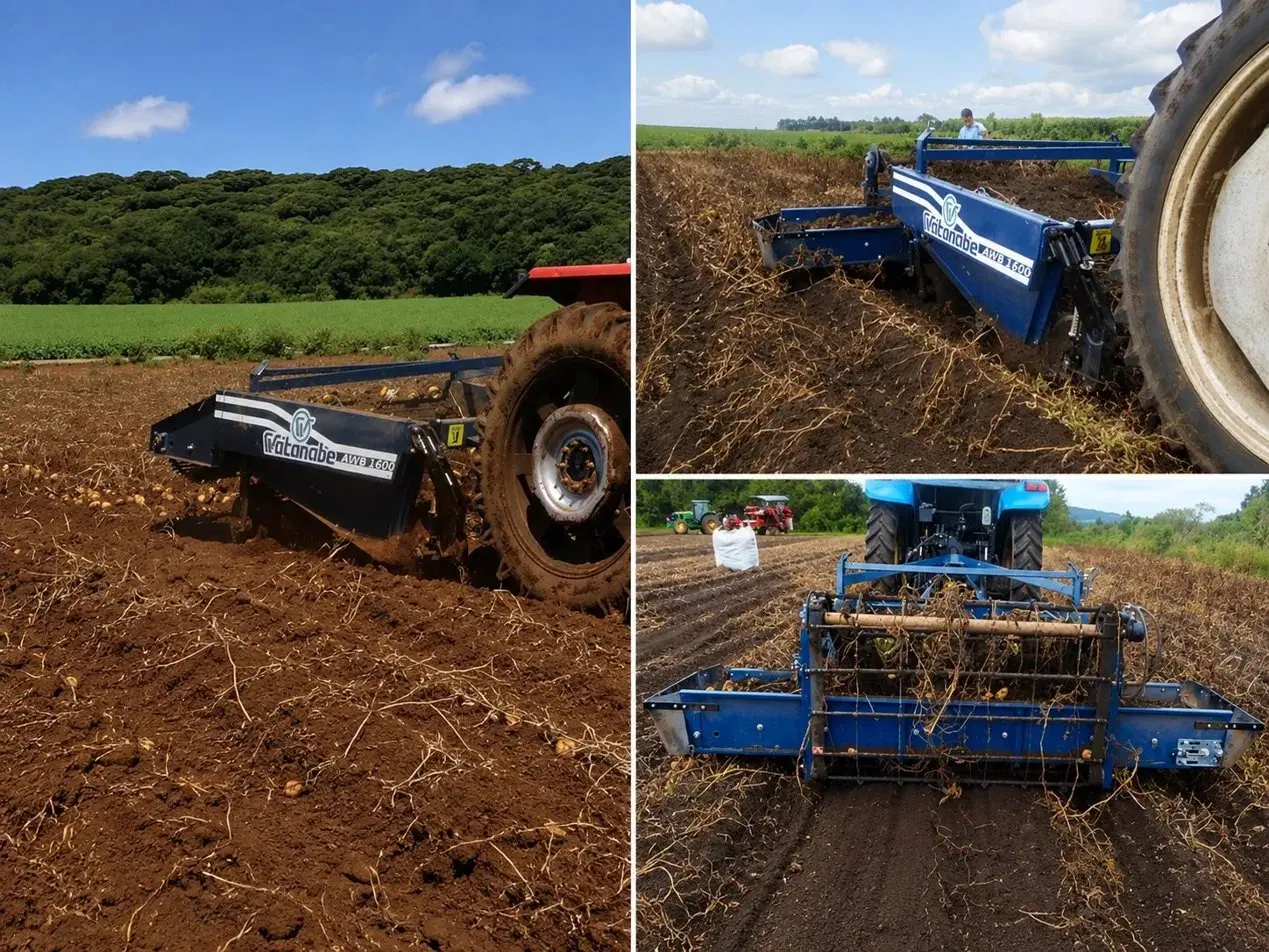
The figure on the front of most tractor brochures — the headline horsepower — is the engine’s gross or net power output, measured at the engine’s crankshaft. This is not the power available at the PTO shaft, which is where potato machinery actually receives its drive. The difference is significant: the tractor’s transmission, hydraulic pump, power steering, air conditioning compressor (where fitted), and other auxiliary systems all consume power between the engine and the PTO stub shaft. The result is that PTO horsepower is typically 80–85% of the engine’s rated power under normal conditions.
A 75HP engine tractor typically delivers 60–64HP at the PTO shaft under normal field conditions. A 100HP engine: 80–85HP PTO. A 130HP engine: 104–110HP PTO. When a potato digger manufacturer specifies “minimum 60HP,” they generally mean engine HP at the tractor specification level — but the actual PTO delivery from a 60HP engine tractor in the field may be only 48–51HP PTO. This is why operating a 60HP minimum implement on a 65HP tractor on heavy soils in hot weather frequently produces poor results: the effective PTO delivery in those conditions is close to or below the machine’s actual requirement.
Practical rule: add 15–20% to the implement manufacturer’s stated minimum HP when selecting a tractor, to ensure adequate PTO delivery in realistic field conditions, not just ideal bench conditions.
There is a second important distinction for mounted implements: the tractor’s power is consumed not only by the PTO drive but also by the hydraulic system maintaining the three-point linkage position under load. On heavy soils where the digger’s share encounters significant resistance, the hydraulic draft control is working continuously, drawing additional power from the engine. The PTO and the three-point linkage hydraulics compete for engine output simultaneously, which is why minimum HP recommendations should always be understood as recommendations for clean soil conditions — add a further 10% for heavy clay or stony soils where hydraulic demand is higher.
Potato Digger HP Requirements — From Single Row to Four Row
The potato digger places the highest PTO power demand of any implement in the potato farming system. The share must penetrate and lift a mass of soil and tubers simultaneously, and the elevator chain must agitate and move this mass continuously at working forward speed. On stony or compacted soils, the power demand spikes during stone encounters and at depth increases — the tractor must have reserve capacity to absorb these peaks without stalling or dropping forward speed to compensate.
| Configuration de la foreuse | Rangées | Min HP (sandy / loam) | Recommended HP (clay / stony) | Attelage |
|---|---|---|---|---|
| Single-row mounted | 1 | 40 HP | 50–60 HP | Cat 1/2 |
| Two-row mounted | 2 | 65 HP | 80–90 HP | Cat 2 |
| Two-row trailed | 2 | 80 CV | 95–110 HP | Barre |
| Four-row trailed | 4 | 100 CV | 120–140 HP | Drawbar + ext. hydraulics |
| Six-row trailed | 6 | 130 HP | 150–175 HP | Rated drawbar |
The gap between minimum and recommended HP is widest for the larger mounted configurations. A two-row mounted digger specified at 65HP minimum will work on sandy loam at that power, but will require the operator to reduce forward speed, reduce share depth, or work only in ideal soil conditions. At 80–90HP on the same digger, the machine runs at its designed forward speed and depth on any soil within its specification — the operator controls the harvest rate, not the tractor. The additional capital cost of a 80HP tractor over a 65HP unit is almost always recovered in the first one to two seasons through improved harvest speed and reduced operator intervention.
Rotary Cultivator, Planter, Furrower, and Fertilizer Applicator — HP by Implement
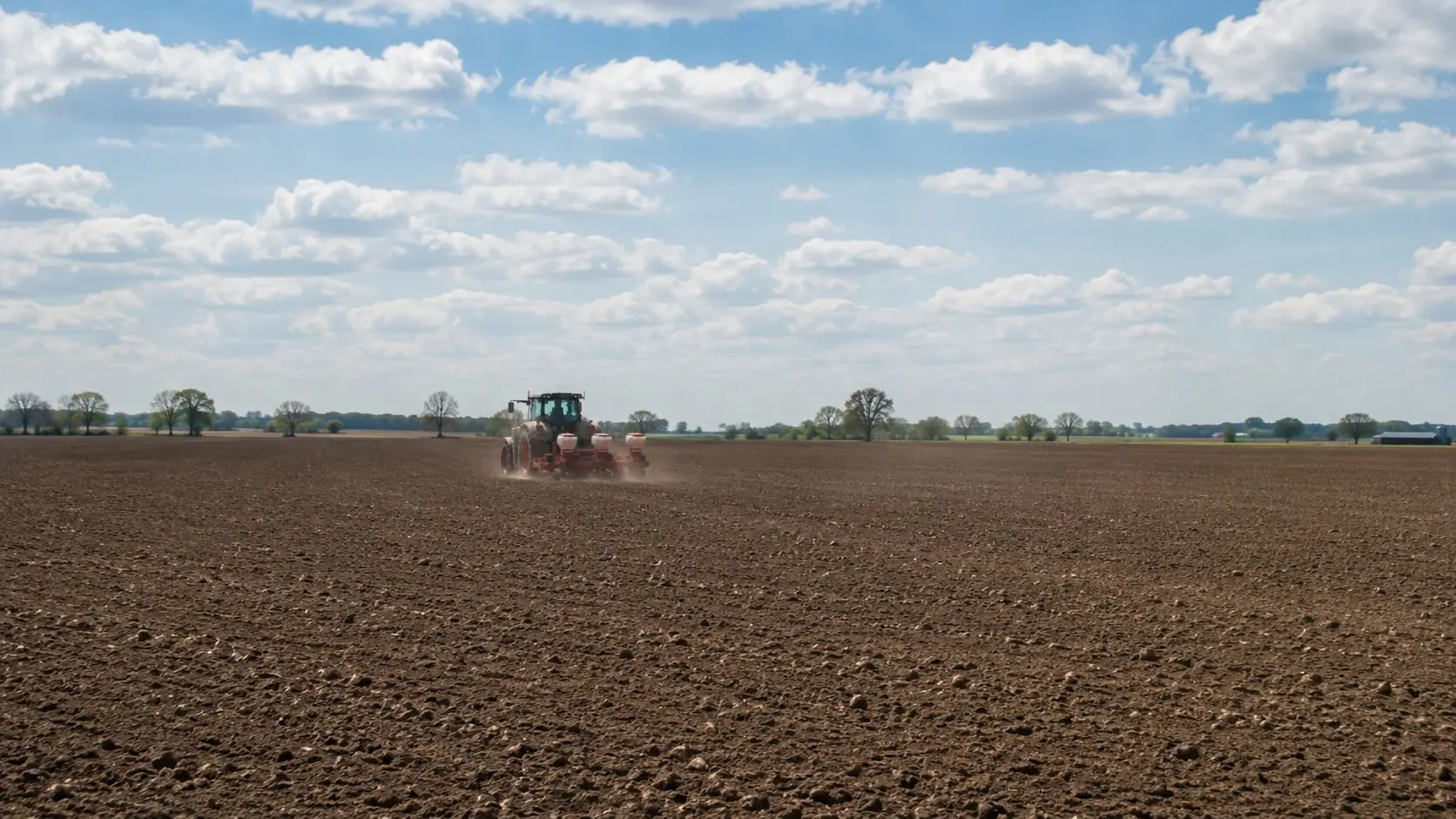
The rotary cultivator is the second-highest power consumer in the potato implement set, after the digger. Rotor blades must cut through and shatter compacted or cloddy soil to a consistent depth — a process that demands sustained PTO power, particularly in the first cultivation pass on uncultivated or winter-consolidated soil. Power demand varies significantly with working width (wider rotors need proportionally more power), with depth (deeper cuts require more torque), and with soil type (clay soils require 25–40% more power than sandy loam for the same width and depth).
| Implement | Configuration | Min HP (sandy / loam) | Recommended HP (clay / heavy) | Vitesse de prise de force |
|---|---|---|---|---|
| SOIL PREPARATION | ||||
| Rotary cultivator (single-row / narrow) | 0.9–1.2 m | 30 HP | 40–50 HP | 540 tr/min |
| Rotary cultivator (2-row / standard) | 1.6–2.1 m | 55 HP | 70–80 HP | 540 tr/min |
| Rotary cultivator (3-row / EP-ERA 2100) | 2.1 m | 75 CV | 90–100 HP | 540 tr/min |
| PLANTING PREPARATION | ||||
| Potato furrower (2-row) | 2 rangées | 35 HP | 45–55 HP | N/A (disc) |
| Fertilizer applicator (band/broadcast) | 2–4 row | 30 HP | 40 HP | 540 RPM (feed) |
| Potato planter (1–2 row semi-auto) | 1–2 rows | 40 HP | 50–60 HP | 540 tr/min |
| Potato planter (2–4 row auto) | 2–4 rows | 55 HP | 70–80 HP | 540 tr/min |
| RÉCOLTE | ||||
| Potato digger single-row mounted | 1 row | 40 HP | 50–60 HP | 540/1000 RPM |
| Potato digger two-row mounted | 2 rangées | 65 HP | 80–90 HP | 540/1000 RPM |
| Potato digger four-row trailed | 4 rangées | 100 CV | 120–140 HP | 1000 tr/min |
| Big bag potato harvester (1–2 row) | 1–2 rows | 60 HP | 75–90 HP | 1000 tr/min |
The table reveals a practical observation worth emphasising: the planting and soil preparation implements — furrower, fertilizer applicator, planter, and single-row cultivator — can all be managed with a tractor in the 30–55HP range. If a farm’s potato enterprise is still establishing itself and the primary machinery question is whether the existing smaller tractor can support a complete planting system, the answer is often yes, with a single-row digger and single-row planter both feasible at 40–50HP. The upgrade requirement to 60HP+ is driven primarily by the harvest machinery: either a big bag harvester or a two-row mounted digger.
Three-Point Hitch Category, Lift Capacity, and Front Ballast
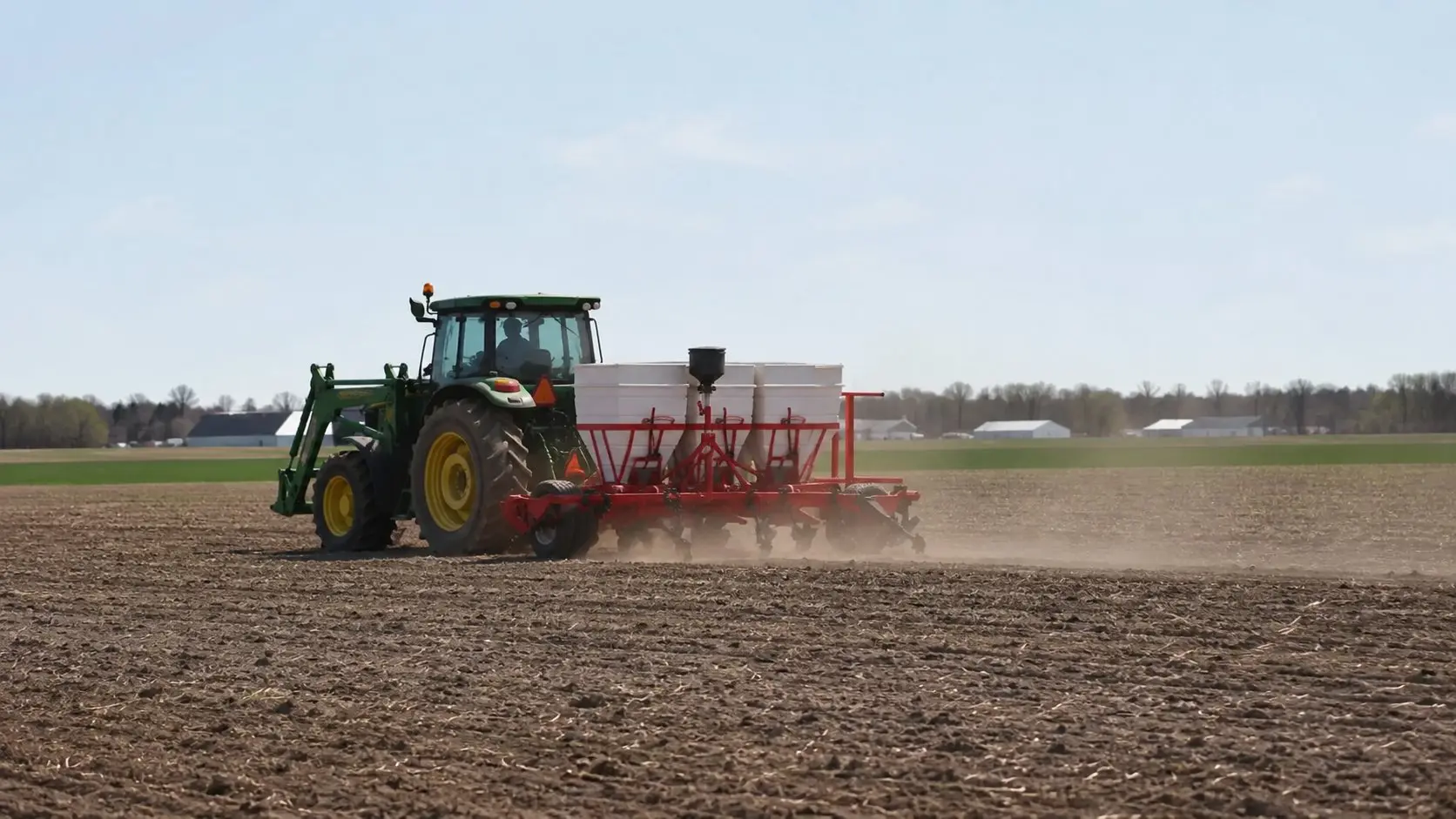
Horsepower is necessary but not sufficient for mounted implement compatibility. The three-point hitch category — the standardised pin diameter and geometry of the lower links and top link — must match between the tractor and implement. ISO 730 defines three categories in common agricultural use, each associated with a range of tractor power and a rated lift capacity.
| Catégorie | Lower Link Pin Ø | Typical Tractor Range | Standard Lift Capacity | Potato Machinery Suitability |
|---|---|---|---|---|
| Cat 1 | 22 mm | 20–45 HP | 700–1,000 kg | Furrower, fertilizer applicator, 1-row planter, light cultivator |
| Cat 2 | 28 mm | 45–100 HP | 1,200–3,000 kg | Single and two-row mounted digger, most potato implements |
| Cat 3 | 36 mm | 90–200 HP | 2,500–6,000 kg+ | Heavy multi-row implements; not required for standard potato machinery |
Category 2 is the relevant standard for the majority of machine à pommes de terre — virtually all single and two-row mounted diggers, planters, furrowers, and cultivators are designed for Cat 2 hitches, and most tractors in the 50–120HP range that serve potato farming have Cat 2 as standard. However, some compact and mid-range tractors at 45–65HP offer only Category 1, or offer a Category 2 hitch with a rated lift capacity at the lower end of the Cat 2 range (1,200–1,500 kg). For a single-row mounted digger weighing 200–280 kg, this is adequate. For a two-row mounted digger at 380–500 kg, a Cat 2 hitch with only 1,200 kg rated lift is marginal in working position — at full linkage extension the effective lift rating drops to approximately 60–70% of the rated figure, meaning the 1,200 kg hitch is effectively 720–840 kg at the working point where the digger is mounted. Verify the tractor’s actual lift capacity at the maximum mounting point, not just the rated figure at the hydraulic cylinders.
A mounted digger at the rear shifts the tractor’s weight distribution toward the back. On a standard agricultural tractor, front-to-rear weight ratio without implements should be approximately 40:60. Adding a rear-mounted digger can shift this to 30:70 or worse, causing front wheel lift on slopes and reduced steering precision on any terrain. Front ballast weights restore the balance and should be calculated as 20–25% of the rear implement weight: a 350 kg digger requires 70–90 kg of front ballast as a minimum. Many tractor manufacturers offer front weight carriers as accessories — specify these when ordering or confirm they are fitted before beginning potato operations with a mounted digger.
Foire aux questions
▶My tractor has 540 RPM PTO only. Can I run a potato digger that specifies 1000 RPM?
A potato digger specified for 1000 RPM PTO should not be run at 540 RPM from the tractor PTO stub. Running a 1000 RPM implement at 540 RPM gives the elevator chain and separator approximately 54% of their designed operating speed — the chain will move too slowly to adequately agitate and disaggregate soil from tubers, particularly on heavier soils, resulting in excessive soil carry-over into the windrow or collection. It will also cause the PTO shaft to operate outside its rated torque range if the forward speed is kept constant, because the same amount of soil must be processed by a slower-moving chain that provides less mechanical work per unit time. If your tractor has only 540 RPM PTO, choose a digger specifically designed for 540 RPM operation — several manufacturers offer both specifications. If upgrading the tractor is not immediately planned, verify with the digger manufacturer whether a reduction gearbox can be fitted to adapt a 1000 RPM machine for 540 RPM input, though this increases cost and complexity.
▶Does soil type actually change the HP requirement significantly enough to matter for tractor selection?
Yes — substantially so. The primary mechanism is soil resistance to the digging share. Sandy loam at field capacity moisture offers relatively low draft resistance — the share cuts through cleanly and the soil fragments readily fall through the elevator chain gaps. Heavy clay at the same moisture level can require 40–60% more draft force for the same share width and depth, because clay’s cohesive properties mean the soil mass does not fragment easily on the elevator chain, the chain must work harder to disaggregate it, and the hydraulic system maintaining share depth works continuously against higher soil resistance. For practical tractor selection: if your soils are sandy loam to sandy clay loam, the minimum HP figures in the table above are realistic. If your soils are clay loam to heavy clay (more than 35% clay by composition), use the recommended HP column. If your soils are both stony and heavy clay — the most demanding combination — add a further 10% to the recommended column as a margin.
▶I have a 75HP tractor. Can I run a complete potato system — soil prep, planting, and harvest — without upgrading?
A 75HP tractor is well-placed for a complete single-farm potato system on loam soils. It can manage: a 1.6–2.1m rotary cultivator for seedbed preparation (though forward speed may need to be reduced on heavy soils in first cultivation pass); a two-row furrower, fertilizer applicator, and planter without any constraint; a single-row mounted digger comfortably on any soil; and — on loam soils — a two-row mounted digger within its design parameters. The upgrade pressure comes if you move to a two-row mounted digger on clay soils (80–90HP is more appropriate) or if you want to step up to a big bag harvester (60–90HP, so 75HP is within range for a one-row unit). For most farms at the 3–10 ha scale harvesting on loam-to-light-clay soils, 75HP supports a complete potato machinery system without compromise at the single-row level and with manageable compromise at the two-row digger level.
▶Does tractor weight (not just HP) affect potato machinery performance?
Yes — tractor weight affects two aspects of potato machinery performance independently of engine HP. First, traction: a heavier tractor generates more wheel-to-soil contact force, which reduces wheel-slip when the PTO is loaded by the elevator chain in wet or heavy soil conditions. A lighter tractor at the same HP may wheel-slip significantly when digging at maximum depth in heavy soil — adding ballast weights (front, rear, or fluid-ballasted tyres) resolves this by increasing the effective tractor weight without increasing its physical size. Second, stability: on side slopes, a heavier tractor is less prone to tipping when carrying a rear-mounted digger. For potato operations on sloped terrain, tractor weight (and specifically its centre of gravity) is as important as HP in determining safe operating angles. Tractor manufacturers publish stability data and maximum safe slope angles — consult these before operating any mounted potato implement on slopes steeper than 12–15% grade.
▶Is it worth specifying a higher-HP tractor than the potato machinery minimum to allow for future implement upgrades?
Future-proofing through tractor over-specification is a reasonable investment when the farm’s growth trajectory is clear and the marginal cost between HP tiers is modest. The most common example: a farm currently operating a single-row mounted digger at 40HP minimum can operate it adequately on a 55HP tractor — but if the farm plans to grow to a scale requiring a two-row mounted digger or a big bag harvester within five years, buying a 75HP tractor at the outset is significantly less expensive than trading in the 55HP tractor after three years. Tractor depreciation and trade-in loss on a mid-range purchase typically exceeds the original price premium between HP tiers when the resale transaction costs are included. Where the future upgrade path is uncertain — the farm may or may not expand the potato enterprise — it is generally better to match the tractor to current needs accurately rather than speculate on growth that may not materialise. A correctly-sized tractor will also fuel more efficiently than one that is significantly oversized for its daily work.
Not Sure If Your Tractor Can Run the Implement?
Share your tractor’s rated HP, PTO speed, hitch category, and lift capacity. Korea Watanabe will confirm compatibility with each piece of machine à pommes de terre in the range and advise on any ballast or configuration changes needed before delivery.
Corée Watanabe Rock Crusher Tractor Co., Ltd.
Éditeur : Cxm