Le choix de la variété de pomme de terre en Corée du Sud est l'une des décisions les plus importantes qu'un agriculteur de cette région puisse prendre avant la saison. Pourtant, ce choix est souvent fait par habitude plutôt que par une adéquation systématique des caractéristiques de la variété aux spécificités de l'exploitation. Les quatre variétés de pommes de terre coréennes dominantes sur le marché – Sumi, Daejima, Dubaek et Atlantic – présentent des profils agronomiques, des exigences de commercialisation, des caractéristiques de conservation et une sensibilité à la présence de pierres très différentes. Cultiver une variété inadaptée au marché visé, à l'altitude ou aux capacités de stockage entraîne systématiquement des revenus inférieurs au potentiel, même pour des parcelles correctement gérées.
Ce guide propose une comparaison systématique des quatre variétés selon les dimensions essentielles à la planification des systèmes de culture de la pomme de terre en altitude en Corée – non seulement l'agronomie, mais aussi l'interaction directe entre le choix de la variété et les décisions relatives au débroussaillage, à la récolte et au stockage, qui déterminent le résultat économique de la saison. système complet de machines à pommes de terre Elle n'atteint son plein potentiel que lorsque la variété plantée correspond au marché, à l'altitude et aux infrastructures de stockage de l'exploitation agricole spécifique.
Pourquoi la diversité est importante au-delà de l'agronomie de base — Les liens systémiques
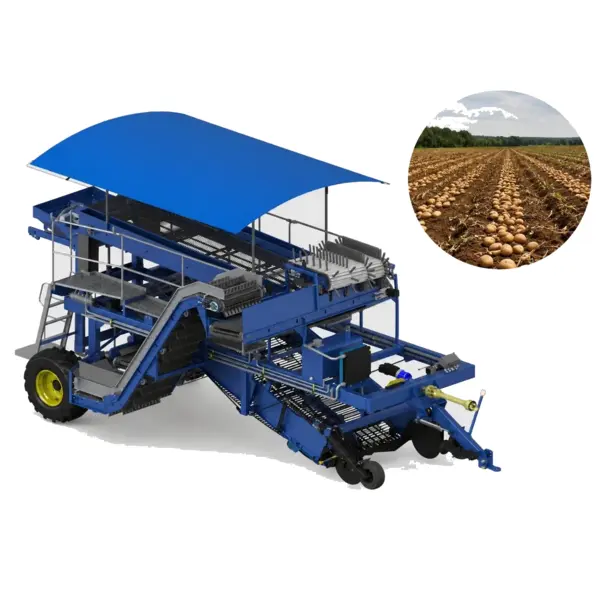
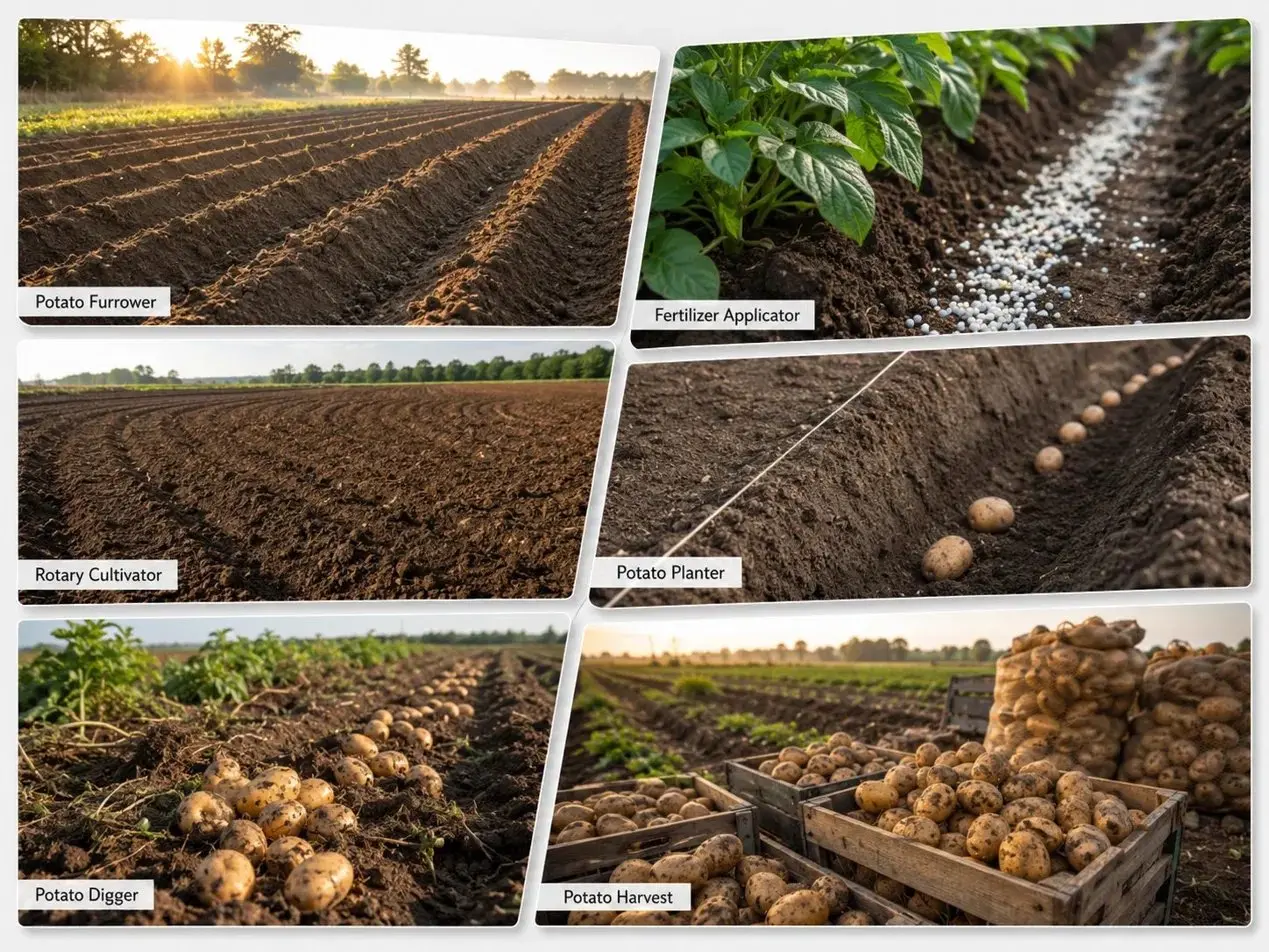
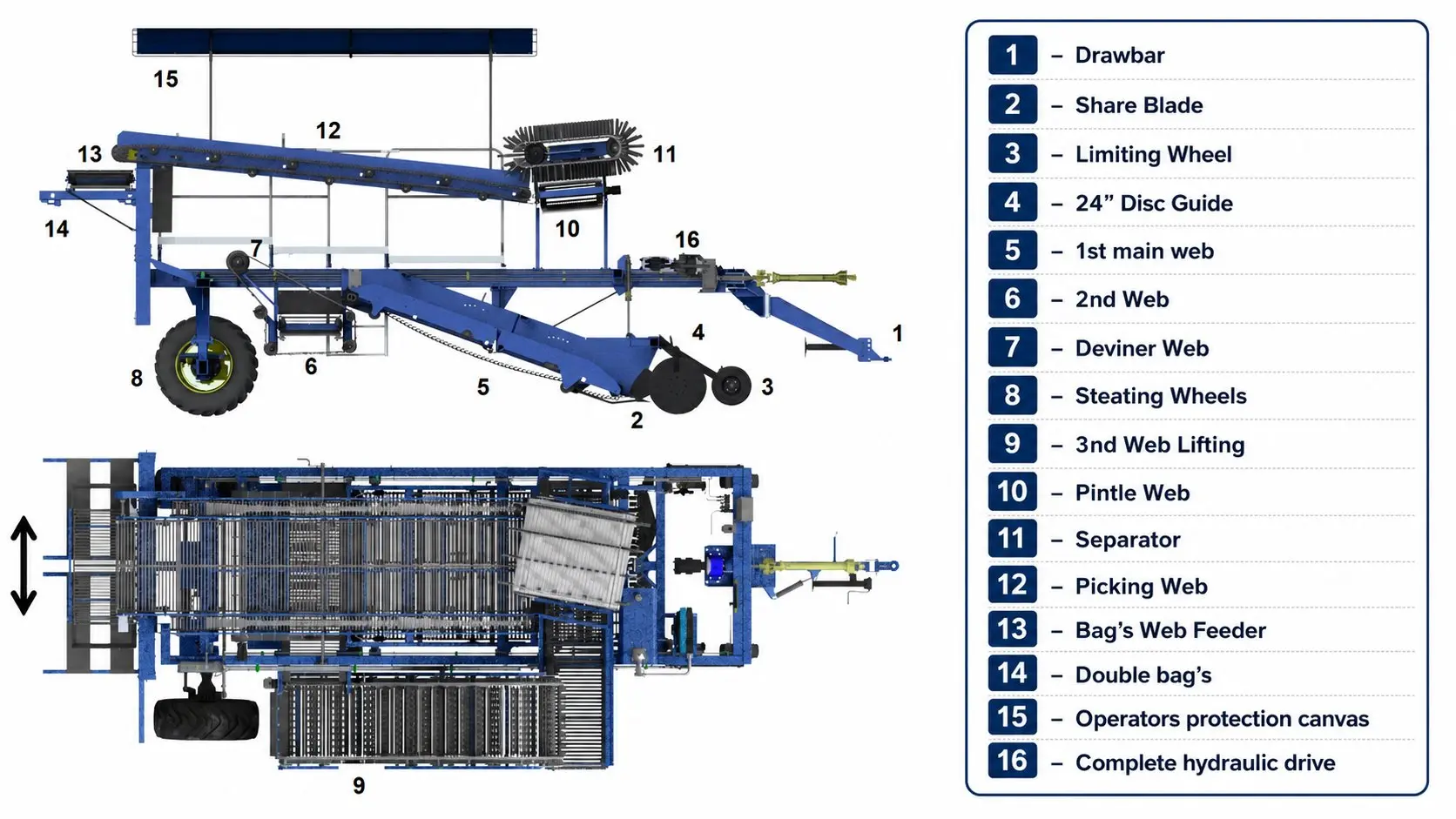
Le lien entre la sélection variétale et le système complet de la pomme de terre Watanabe va au-delà du potentiel de rendement et de la résistance aux maladies : les caractéristiques spécifiques de la variété affectent directement chaque opération en aval, de la récolte au stockage :
Diversité × Déblaiement des pierres :
La pomme de terre Atlantic destinée à la transformation exige une tolérance zéro pour les pierres : tout contact entre une pierre et le tubercule dans la zone de récolte provoque des dommages superficiels (entailles de la peau) qui sont considérés comme un défaut de qualité à la réception par le fabricant de chips, entraînant un rejet ou une pénalité de prix. La pomme de terre Sumi destinée au marché du frais présente la même intolérance mécanique au contact avec les pierres que l’Atlantic, mais pour une raison différente : l’abrasion de la peau des tubercules destinés au marché du frais réduit leur apparence de première catégorie. Les deux variétés nécessitent le même traitement approfondi. Concasseur de roches THOR 2.4 + Norme d'élimination des pierres CT-2100. Le Dubaek, planté pour un stockage prolongé, nécessite également une élimination complète des pierres, mais son écorce est naturellement plus résistante et tolère légèrement mieux les contacts mineurs avec les pierres que celle du Sumi.
Variété × Vitesse EP-AWB-1600 :
Les tubercules d'Atlantic sont plus sensibles aux meurtrissures que ceux de Sumi ou de Dubaek à vitesse de récolte équivalente. Il est donc impératif de toujours récolter l'Atlantic à une vitesse relativement faible (1,5 à 2 km/h) afin de minimiser les meurtrissures dues aux chocs mécaniques, responsables du brunissement de Maillard dans les chips frites et rendant le lot invendable. Le Dubaek, destiné à un stockage prolongé, doit également être récolté avec soin pour préserver l'intégrité de sa peau. Le Daejima, une variété robuste adaptée à la vente en gros coopérative, tolère une vitesse de récolte moyenne (2 à 2,5 km/h) sans perte significative de qualité.
Variété × Température de stockage :
La variété Atlantic doit être conservée entre 8 et 10 °C (au-dessus de la température de conservation habituelle des produits frais, soit 3 à 6 °C) afin d'éviter le sucrage dû au froid qui altère sa couleur croquante. Par conséquent, les variétés Sumi et Atlantic ne peuvent être stockées dans la même chambre froide si l'on souhaite les conserver à leur température optimale. La variété Dubaek, quant à elle, tolère une plage de températures de stockage plus large (2 à 7 °C) sans perte de qualité ; c'est donc la variété la plus adaptée aux exploitations agricoles disposant de capacités de stockage limitées.
Les quatre variétés — Profils agronomiques et commerciaux complets
Sumi () — Norme du marché des produits frais de Corée
Marché de produits frais
Caractéristiques agronomiques
- ▸Période de croissance : 75 à 90 jours
- ▸Forme du tubercule : ronde-ovale, chair jaune-blanche
- ▸Peau : lisse, légèrement mate ; moyennement ferme après prise
- ▸Dormance : moyenne (3 à 5 mois à 3–5 °C)
- ▸Teneur en matière sèche : 18–21%
Notes sur le marché et le système
- ✓Variété de montagne coréenne la plus largement cultivée
- ✓Forte demande coopérative ; prix prévisibles
- ✓Convient pour une commercialisation entre novembre et janvier
- ✗Ne convient pas au traitement (sensibilité CIS modérée)
- ✗Exigences relatives à l'élimination des pierres : tolérance zéro THOR complète
Daejima () — Norme coopérative à haut rendement
Marché de produits frais / Vente en gros
Caractéristiques agronomiques
- ▸Période de croissance : 80 à 95 jours
- ▸Forme du tubercule : ovale allongée ; peau robuste
- ▸Rendement : élevé ; dépasse souvent celui de Sumi de 10 à 15%
- ▸Dormance : moyenne à courte (2 à 4 mois)
- ▸Teneur en matière sèche : 16–19%
Notes sur le marché et le système
- ✓Rendement plus élevé par hectare — contrats de volume avec les coopératives
- ✓Une peau robuste tolère mieux la récolte mécanisée.
- ✓Convient pour les approvisionnements en gros d'octobre à novembre
- ✗Des limites de dormance plus courtes offrent un avantage de stockage prolongé
- ✗Matière sèche faible — ne convient pas à la cuisson haut de gamme
Dubaek () — Variété de stockage étendu de qualité supérieure
Stockage Premium / Étendu
Caractéristiques agronomiques
- ▸Période de croissance : 90 à 110 jours (la plus longue des quatre)
- ▸Forme du tubercule : rond, à chair blanche ; aspect dense
- ▸Dormance : très longue (6 à 8 mois à 3–5 °C)
- ▸Teneur en matière sèche : 20–24% (la plus élevée des quatre)
- ▸Sensibilité CIS : faible — plus sûr pour le stockage frigorifique
Notes sur le marché et le système
- ✓Attendez la période de décembre à février pour bénéficier du prix le plus élevé.
- ✓Qualité culinaire supérieure ; forte notoriété de la marque auprès des consommateurs
- ✓Le meilleur retour sur investissement est obtenu en combinant cette capacité avec celle du stockage frigorifique.
- ✗Longue période de croissance — convient uniquement aux altitudes supérieures à 600 m
- ✗Coût des semences plus élevé ; nécessite des semences certifiées NAAS.
Atlantique — Principale variété de transformation de chips en Corée
Traitement uniquement
Caractéristiques agronomiques
- ▸Période de croissance : 80 à 90 jours
- ▸Tubercule : rond, chair blanche, peau moyenne
- ▸Dormance : courte (3 à 4 mois maximum)
- ▸Teneur en matière sèche : 21–24% (critique pour la qualité croustillante)
- ▸Sensibilité CIS : ÉLEVÉE — ne pas stocker à une température inférieure à 8 °C
Notes sur le marché et le système
- ✓Fourniture sous contrat aux marques Lotte, Orion et Nongshim
- ✓Prix contractuels stables, indépendamment du marché du frais
- ✗À conserver entre 8 et 10 °C — NE PAS conserver dans une chambre froide standard
- ✗Lésions cutanées = rejet à la réception du fabricant
- ✗Norme de zéro pierre absolue — la plus stricte des quatre

Adaptation à l'altitude — Quelles variétés conviennent à quelles zones d'altitude ?
La durée de croissance requise pour chaque variété doit s'inscrire dans la période de croissance sans gel à l'altitude de production prévue. En Corée, la période de plantation des pommes de terre en altitude se réduit considérablement avec l'altitude ; une variété à cycle de 95 jours plantée à 700 m risque de ne pas arriver à maturité avant les premières gelées, fin septembre.
| Zone d'altitude | Saison sans gel disponible | variétés recommandées |
|---|---|---|
| 400–500 m | ~145 à 155 jours | Les quatre variétés sont disponibles, offrant ainsi un choix maximal. Possibilité de double culture avec les variétés précoces Sumi ou Daejima. |
| 500–650 m | ~130 à 145 jours | Sumi, Daejima, Atlantic (toutes conviennent parfaitement). Dubaek marginale : nécessite une plantation très précoce et peut nécessiter une destruction précoce des vignes. |
| 650–800 m | ~115 à 130 jours | Sumi ou Daejima recommandés. Zone limite atlantique : une période de maturation cruciale est nécessaire. Dubaek risqué : risque de gel avant maturité la plupart des années. |
| Au-dessus de 800 m | <115 jours | Seule la variété Sumi présente la période de croissance la plus courte. Toutes les autres variétés sont exposées au risque de gel à maturité. |
Normes de déblaiement des pierres par variété — Exigences de chaque circuit de distribution
Le point de convergence le plus important entre la sélection variétale et le système Korea Watanabe réside dans le respect des normes de dépollution exigées par le circuit de commercialisation de chaque variété. Cultiver l'Atlantic sur un sol insuffisamment dépollué représente la combinaison la plus coûteuse : la récolte arrive à l'inspection d'entrée du fabricant avec des dommages cutanés dus au contact avec les pierres, ce qui entraîne son rejet. L'exigence de dépollution n'est pas seulement agronomique pour chacune des quatre variétés ; il s'agit d'une spécification commerciale.
Sumi / Daejima
Exigence de déblaiement des pierres : Conformité totale à la norme THOR 2.4 + CT-2100 (tolérance zéro). La spécification de catégorie 1 pour le marché du frais exige une peau intacte au moment de la vente ; l’abrasion par les pierres lors de la récolte est la principale cause évitable de déclassement en catégorie 2. La différence de prix entre les catégories 1 et 2 (30–50%) fait du coût du nettoyage des pierres un investissement rentable.
atlantique
Exigence de déblaiement des pierres : La plus stricte des quatre variétés. Même une légère éraflure due au contact avec des pierres, qui correspondrait à un cas limite de catégorie 2 pour la variété Sumi destinée au marché du frais, est systématiquement rejetée à la réception par les fabricants de chips Atlantic, car la zone endommagée crée une tache foncée sur la chips finie. La variété Atlantic cultivée sur des champs non débroussaillés génère un taux de rejet prévisible à la réception, ce qui peut anéantir les revenus de transformation de toute la saison pour les lots concernés.
Dubaek
Exigence de déblaiement des pierres : Norme de tolérance zéro THOR 2.4 + CT-2100 – identique à celle du Sumi pour la même raison d'intégrité cutanée de grade 1. Le Dubaek stocké pendant plus de 6 mois doit arriver sur le marché premium de décembre-février avec un grade 1. Les dommages cutanés mineurs constatés lors de la récolte en septembre deviennent un défaut de grade 2 après 4 mois de stockage, les zones de blessure s'assombrissant.
Approvisionnement en semences certifiées — Planification de l'approvisionnement en variétés avant la saison
Les semences certifiées de pommes de terre des hauts plateaux coréens (semences certifiées NAAS par l'Institut national des sciences des cultures) doivent être commandées au plus tard en janvier. Les variétés les plus demandées dans les zones de production les plus importantes (Atlantic pour la zone de transformation d'Andong, dans le nord du Gyeongsang, Dubaek pour les exploitations haut de gamme des hauts plateaux de Gangwon-do) sont attribuées sur demande et sont rapidement épuisées. Le calendrier d'approvisionnement en semences correspond précisément au calendrier de dépôt des demandes de subventions pour les machines de déblaiement de pierres.
Décembre:
Confirmez le choix de la variété pour la saison à venir. Contactez la coopérative ou l'acheteur direct pour confirmer l'acceptation de la variété et du volume sélectionnés. Déposez votre demande de semences de pommes de terre auprès de la NAAS pour les variétés à allocation limitée (Dubaek, Atlantic) avant l'ouverture officielle des demandes en janvier.
Janvier:
Déposez une demande de semences certifiées NAAS pour la totalité du volume requis. Déposez simultanément une demande de subvention pour l'achat de machines agricoles (THOR 2.4, CT-2100) auprès du bureau du comté. Le dépôt des deux demandes en janvier maximise les chances d'acceptation ; l'attribution des semences et le budget pour les machines agricoles se font selon le principe du premier arrivé, premier servi au niveau du comté.
Février-mars :
Confirmer la réception des semences allouées. Entretien des machines avant la saison. Gestion de la germination des pommes de terre de semence (germination légère pour une vigueur précoce ou inhibition de la germination pour des dates de plantation plus tardives — selon la variété et la date de plantation).
Fin mars :
Le débroussaillage de THOR 2.4 commence. Les plants de pommes de terre sont stockés en attendant la période de plantation du 20 avril au 5 mai, confirmée par le calendrier spécifique à l'altitude.
Référence de sélection rapide des variétés — correspondant aux quatre dimensions
| Si votre situation est… | Choisir… |
|---|---|
| Marché de produits frais, altitude 400–800 m, approvisionnement coopératif, chambres froides standard | Sumi |
| Approvisionnement en gros en volume, contrat groupé coopératif, priorité à haut rendement | Daejima |
| Marché haut de gamme, entrepôt frigorifique disponible, altitude supérieure à 600 m, cible décembre-février | Dubaek |
| Contrat de sous-traitance (Lotte/Orion/Nongshim), stockage possible à 8–10 °C, discipline de qualité rigoureuse | atlantique |
Exigence d'élimination des pierres : les quatre variétés nécessitent la norme de tolérance zéro THOR 2.4 + CT-2100 complète — la norme de tolérance zéro est une exigence indépendante de la variété pour les opérations de pommes de terre des hauts plateaux coréens de qualité commerciale de catégorie 1.
Approvisionnement en semences certifiées via Korea Watanabe
Korea Watanabe ne fournit pas directement de semences de pommes de terre certifiées ; l’approvisionnement se fait par l’intermédiaire de NAAS et de distributeurs régionaux agréés. Cependant, Korea Watanabe vous conseille sur le choix de la variété la mieux adaptée à votre système de machines agricoles, à l’altitude et au circuit de commercialisation de votre exploitation. L’entreprise fournit également la documentation nécessaire à la demande de subvention pour le matériel agricole en janvier (pour les modèles THOR 2.4, EP-AWB-1600 et EP-PAI-2100), en coordination avec le calendrier de commande des semences. Confirmer votre choix de variété avec Korea Watanabe avant de passer votre commande de semences en janvier garantit que l’ensemble du système (norme de déroctage, espacement des semoirs, vitesse de l’arracheuse et protocole de stockage) est adapté à la variété choisie dès le début de la planification de la saison.
Foire aux questions
Puis-je cultiver de l'Atlas sans stockage frigorifique — en la conservant à température ambiante dans la grange ?
Oui, et c'est l'approche courante des exploitations agricoles des hauts plateaux coréens qui fournissent de l'Atlantic aux fabricants de chips selon des calendriers de livraison contractuels. Les fabricants spécifient généralement une livraison d'octobre à décembre, ce qui correspond bien à la période de récolte et ne nécessite pas de stockage frigorifique prolongé. Le risque lié au stockage à température ambiante de l'Atlantic en entrepôt est que, si la livraison est retardée (récolte supérieure au volume contractuel, modifications du planning du fabricant), l'Atlantic stockée après décembre dans un entrepôt non contrôlé subira des variations de température qui accéléreront l'accumulation de sucre, en particulier pendant les nuits froides de novembre et décembre en altitude. Le stockage à température ambiante de l'Atlantic exige une surveillance étroite de la température (idéalement entre 8 et 12 °C de manière constante) et un calendrier de livraison confirmé par le fabricant avant le début de la récolte. Ne plantez pas d'Atlantic sans contrat d'approvisionnement confirmé pour la transformation : cette variété dispose de peu de débouchés alternatifs si le contrat de transformation est annulé, car sa teneur élevée en matière sèche la rend moins adaptée à la consommation fraîche que les variétés Sumi ou Daejima.
Est-ce que arracheuse de pommes de terre EP-AWB-1600 Configuration différente pour la récolte de l'Atlantique et celle de Sumi ?
Oui, deux différences de réglage. Premièrement, la vitesse d'avancement : la variété Atlantic doit être récoltée à une vitesse de 1,5 à 2,0 km/h (la limite inférieure de la plage de vitesses recommandées) car ses tubercules sont plus sensibles aux meurtrissures que ceux de la variété Sumi à vitesse de récolte équivalente. Les meurtrissures entraînent un brunissement de Maillard dans le produit fini, ce qui le rend non conforme aux spécifications de couleur du fabricant. Deuxièmement, la nouaison : la nouaison de la peau de la variété Atlantic doit être soigneusement vérifiée (destruction de la vigne au moins 3 semaines avant la récolte, peau ferme au test de frottement du pouce) avant l'utilisation de l'EP-AWB-1600 sur les lots. La peau immature de la variété Atlantic est particulièrement sensible aux dommages mécaniques lors de la récolte, car sa teneur élevée en matière sèche rend le tubercule moins résistant aux chocs que les variétés à plus faible teneur en matière sèche. Les autres paramètres de réglage de l'EP-AWB-1600 (profondeur de soclage, amplitude de la bande vibrante) sont identiques pour toutes les variétés et pour des conditions de sol données.
Est-il possible de cultiver le Dubaek de manière rentable à 500 m d'altitude si la plantation est effectuée suffisamment tôt ?
Oui, la culture du Dubaek à 500 m est commercialement viable si elle est pratiquée le plus tôt possible pour cette altitude (généralement entre le 10 et le 20 avril à 500 m) et si la destruction des tiges est effectuée 3 semaines avant la date prévue de récolte précoce afin d'accélérer la formation de la peau avant la pleine maturité. Cette méthode de destruction précoce des tiges entraîne une légère perte de rendement (les tubercules n'ont pas atteint leur taille maximale au moment de la destruction), mais permet d'obtenir une récolte de Dubaek exploitable pendant la saison de croissance à cette altitude. Le gain est d'environ 15 à 20 tonnes de rendement en moins par rapport au Dubaek cultivé jusqu'à pleine maturité à 600 m ou plus. Pour les exploitations situées à 500 m et dont l'objectif stratégique est de se positionner sur le marché pour bénéficier de la prime de prix de décembre à février, ce sacrifice de rendement peut s'avérer judicieux. Il est important de vérifier la rentabilité de cette culture par rapport à la prime de prix disponible sur le marché cible avant de s'engager dans la culture du Dubaek à 500 m d'altitude.
Puis-je mélanger les variétés sur le même champ au cours de la même saison ?
Mélanger les variétés sur une même parcelle engendre des conflits de calendrier de récolte difficiles à gérer : semées le même jour, les variétés Sumi (80 jours de maturité) et Dubaek (100 jours de maturité) ne seront pas prêtes à être récoltées simultanément. Il faudra alors soit récolter la Dubaek précocement (au détriment du rendement), soit récolter la Sumi tardivement (au risque accru de gel en altitude). Pour les exploitations souhaitant diversifier leurs variétés, une approche plus simple consiste à semer différentes variétés sur différentes parcelles. Chaque parcelle est associée à une variété spécifique, adaptée à son altitude, à sa période de récolte et à son circuit de commercialisation. Le système de débroussaillage THOR 2.4 et la moissonneuse-batteuse EP-AWB-1600 permettent de traiter plusieurs parcelles de variétés successivement au sein d'une même exploitation, en commençant par la variété la plus précoce sur la parcelle la plus basse et en progressant vers les variétés plus tardives sur les parcelles plus élevées, au fur et à mesure que la période de récolte avance.
Le choix de la variété influe-t-il sur le réglage de l'espacement sur le semoir EP-PAI-2100 ?
Oui, le réglage de l'espacement entre les rangs sur l'EP-PAI-2100 (qui propose 16 espacements réglables entre 25 et 40 cm) doit être adapté à la taille cible des tubercules pour chaque variété et marché. La variété Atlantic, destinée à la transformation, bénéficie d'un espacement plus serré (25-30 cm) qui limite la taille des tubercules à la plage de diamètre de 50 à 80 mm privilégiée par les fabricants de chips coréens. Les tubercules Atlantic trop gros (plus de 90 mm de diamètre) ont une densité réduite et un risque plus élevé de teneur en sucres réducteurs. La variété Sumi, destinée au marché du frais haut de gamme, peut utiliser un espacement plus large (30-35 cm) qui produit moins de tubercules, mais plus gros, par unité de surface – ce qui convient aux marchés qui valorisent les tubercules de catégorie 1 de gros calibre. La variété Dubaek, également destinée au marché du frais haut de gamme, utilise l'espacement le plus large (35-40 cm) pour produire des tubercules gros et bien formés, qui permettent d'obtenir le prix au kilogramme le plus élevé sur le marché de décembre à février. Confirmez les spécifications de taille cible avec votre coopérative ou votre acheteur avant de sélectionner le rapport de transmission de l'EP-PAI-2100 pour la saison.
Variété + Intégration des systèmes — Consultation complète en matière de planification de la culture de la pomme de terre des Highlands
Canal de distribution cible + altitude de l'exploitation + capacité de stockage + machines existantes → recommandation de variété avec configuration de vitesse EP-AWB-1600, protocole de température de stockage et calendrier d'approvisionnement en semences. Korea Watanabe, Ansan-si, Gyeonggi-do.
Éditeur : Cxm