
Le ginseng (E-29) a introduit le concept d'une culture dont le produit commercial n'est pas ce qui pousse à partir de la racine, mais EST la racine elle-même — où la conséquence la plus directe de la gestion des pierres est la déformation de l'organe même dont la forme et l'intégrité déterminent la valeur commerciale. Curcuma (Curcuma longa Le curcuma (L.) partage cette architecture du rhizome en tant que produit, mais son intérêt commercial réside non pas dans la forme ou l'intégrité morphologique du rhizome, mais dans sa composition chimique : la concentration en curcuminoïdes, une famille de pigments polyphénoliques dominée par la curcumine (diferuloylméthane), qui confère au curcuma sa couleur jaune caractéristique et sa position commerciale parmi les composés botaniques anti-inflammatoires les plus étudiés en recherche pharmaceutique. La limitation de la croissance du rhizome de curcuma par la présence de pierres affecte la teneur en curcuminoïdes par un mécanisme que le ginseng n'a pas mis en évidence : la déviation de la voie métabolique des phénylpropanoïdes de la plante, de la synthèse de la curcumine vers la synthèse de la lignine, en réponse au stress mécanique induit par cette limitation.
Au-delà de cette chaîne de qualité, le curcuma introduit, dans cette série de 45 articles, le premier argument en deux étapes concernant les maladies post-récolte. La récolte mécanique du curcuma utilise un décompacteur ou un rotoculteur monté sur tracteur pour extraire les rhizomes du sol. Les pierres présentes à la profondeur de récolte endommagent les lames de la fraise, créant un tranchant émoussé ou ébréché. Un tranchant endommagé produit des surfaces de rhizomes rugueuses et déchirées, au lieu de coupes nettes. Ces surfaces blessées, insignifiantes au moment de la récolte, deviennent des portes d'entrée pour les maladies pendant la période de stockage de 15 à 20 jours précédant le séchage. Pythium aphanidermatum et Fusarium oxysporum f.sp. zingiberi La pourriture des rhizomes pendant le stockage peut en être la cause. La chaîne complète : pierre → dommages aux feuilles → blessures aux rhizomes → maladie de stockage → pertes après récolte – se déroulant sur une période de 15 à 20 jours, soit l’écart entre la rencontre avec la pierre et ses conséquences commerciales. Ce guide aborde les points suivants : concasseur de pierres pour curcuma application à travers ces trois arguments interdépendants en Inde, au Pérou et au Bangladesh.
Suppression des curcuminoïdes — La chaîne de qualité chimique du produit à base de rhizome
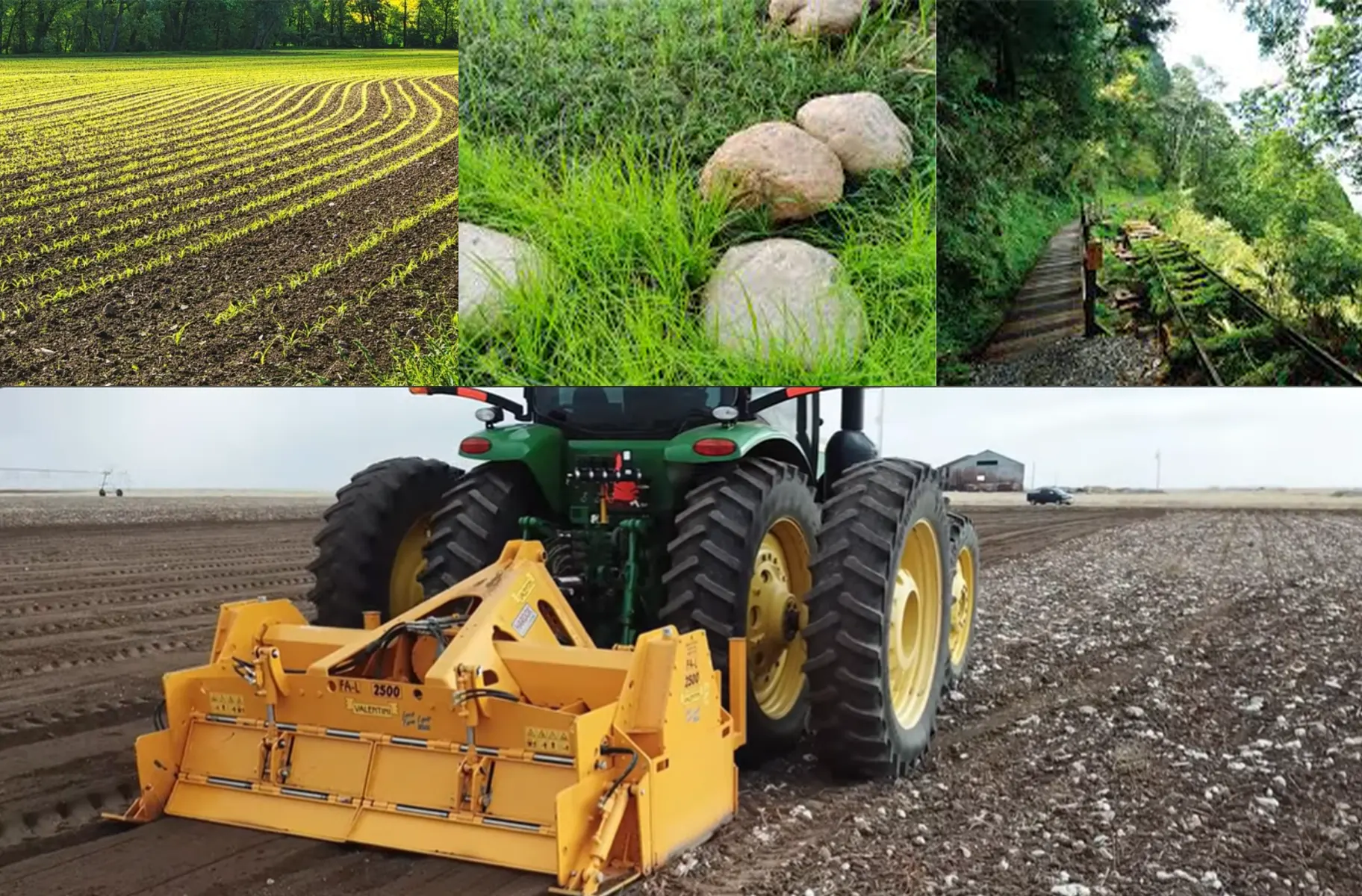
Le rhizome du curcuma se développe sous forme de « doigts » latéraux, des rhizomes secondaires qui poussent à partir du « rhizome mère » (le plant initial) à une profondeur de 10 à 20 cm durant sa période de croissance de 7 à 9 mois. Ce sont ces « doigts » qui constituent la récolte commerciale : ils sont récoltés, bouillis, séchés et réduits en poudre de curcuma, ou bien extraits pour leur teneur en curcuminoïdes, utilisés dans les industries pharmaceutique et alimentaire (colorants). La qualité de ces « doigts » est principalement évaluée par leur teneur en curcuminoïdes, exprimée en pourcentage de leur poids sec ; ce même critère détermine si un lot est éligible à un prix pharmaceutique premium, aux marchés alimentaires standards ou aux marchés de matières premières à moindre valeur.
Les curcuminoïdes comprennent trois composés phénylpropanoïdes : la curcumine (environ 77 % de la masse totale de curcuminoïdes), la déméthoxycurcumine (environ 17 %) et la bisdéméthoxycurcumine (environ 3 à 4 %). La concentration en curcumine est le principal critère d’évaluation de la qualité. Structures des qualités commerciales : Qualité pharmaceutique/d’extraction à haute teneur en curcumine : ≥ 5,0 % de curcuminoïdes (sur matière sèche) – 4 000 à 7 000 unités US²/tonne ; principalement utilisée pour l’extraction de curcumine à des fins nutraceutiques, cosmétiques et de recherche pharmaceutique. Qualité A (alimentation/transformation) : ≥ 3,5 % de curcuminoïdes – 1 200 à 2 000 unités US²/tonne (conventionnel) ; 2 500 à 4 500 unités US²/tonne (biologique certifié). Catégorie B (produit de base) : 2,5 à 3,51 TP5T de curcuminoïdes — US$ 700 à 1 200 $/tonne. Catégorie C : < 2,51 TP5T de curcuminoïdes — marché du curry en poudre bas de gamme, US$ 400 à 700 $/tonne. Le seuil critique pour la commercialisation est de 3,51 TP5T : en dessous de ce seuil, le lot ne répond pas aux critères de la catégorie A et perd l’accès au système de contrats premium, quels que soient les autres paramètres de qualité (couleur, humidité, granulométrie).
La curcumine est synthétisée dans le rhizome du curcuma via la voie des phénylpropanoïdes : phénylalanine → acide trans-cinnamique (via la phénylalanine ammonia-lyase, PAL) → acide 4-coumarique → 4-coumaroyl-CoA → féruloyl-CoA → curcumine (via la curcumine synthase, CURS). La particularité de cette voie est que le féruloyl-CoA, précurseur direct de la curcumine, est également le précurseur principal des monomères de lignine (alcool coniférylique et monolignols apparentés) via un point de ramification de cette même voie. La lignine est le polymère structural que les plantes synthétisent en réponse aux blessures mécaniques, au renforcement de la paroi cellulaire et aux stress physiques ; elle participe à la réponse de défense et de réparation des tissus végétaux face à toute agression mécanique. Les rhizomes de curcuma, dont la croissance est limitée par la présence de pierres, subissent, à une profondeur de 8 à 20 cm, l'équivalent physiologique d'un stress mécanique chronique de faible intensité : l'extrémité de la racine en croissance entre en contact répété avec la pierre, les parois cellulaires de la zone de contact sont comprimées et le système hormonal de réponse aux blessures (cascade de l'acide jasmonique) est constamment actif. Cette cascade d'acide jasmonique stimule l'expression de la PAL et des enzymes de la voie précoce des phénylpropanoïdes, tout en orientant le pool de féruloyl-CoA vers la synthèse de lignine plutôt que vers celle de curcumine. En effet, sous l'effet du stress mécanique, la priorité de la plante est le renforcement structurel de la zone de contact, et non la production de métabolites secondaires. Résultat : les rhizomes de curcuma dont la croissance est limitée par la présence de pierres présentent une lignification accrue (texture plus dure et plus dense) et une teneur en curcuminoïdes réduite, un compromis métabolique entre défense mécanique et valeur pharmacologique.
Le ginseng (E-29) a instauré le paradigme du rhizome comme produit : la racine est le produit commercial, et la présence de pierres réduit directement sa valeur marchande. Pour le ginseng, le mécanisme de qualité était morphologique : les racines bifurquées ou déformées se vendent moins cher aux enchères coréennes, car les acheteurs sont prêts à payer un prix plus élevé pour des racines de forme humanoïde. Le curcuma étend ce paradigme du rhizome à une dimension chimique : le produit est le même organe (le rhizome), et la présence de pierres entraîne la même déformation (développement irrégulier et restreint des tubercules), mais la conséquence commerciale est invisible à l'œil nu – elle ne se mesure que par l'extraction des curcuminoïdes. Un acheteur de curcuma qui sélectionne un lot par simple inspection visuelle (pratique courante sur les marchés indiens comme Nizamabad et Erode) ne peut distinguer un lot à 2,51 TP5T d'un lot à 4,51 TP5T. La différence chimique est imperceptible à l'œil nu, mais déterminante sur le plan commercial lors des contrôles de conformité aux contrats pharmaceutiques ou de certification biologique. Ce « défaut de qualité chimique invisible » se rattache à la série invisible à la récolte qui comprend le cœur noir de l'ananas (E-35), la gelée de graines de mangue (E-27) et le brunissement du péricarpe du litchi (E-36) — mais c'est le premier où le défaut se situe dans le produit du rhizome lui-même plutôt que dans les tissus internes d'un fruit.
Dommages causés aux instruments de récolte — La chaîne de maladies post-récolte en deux étapes
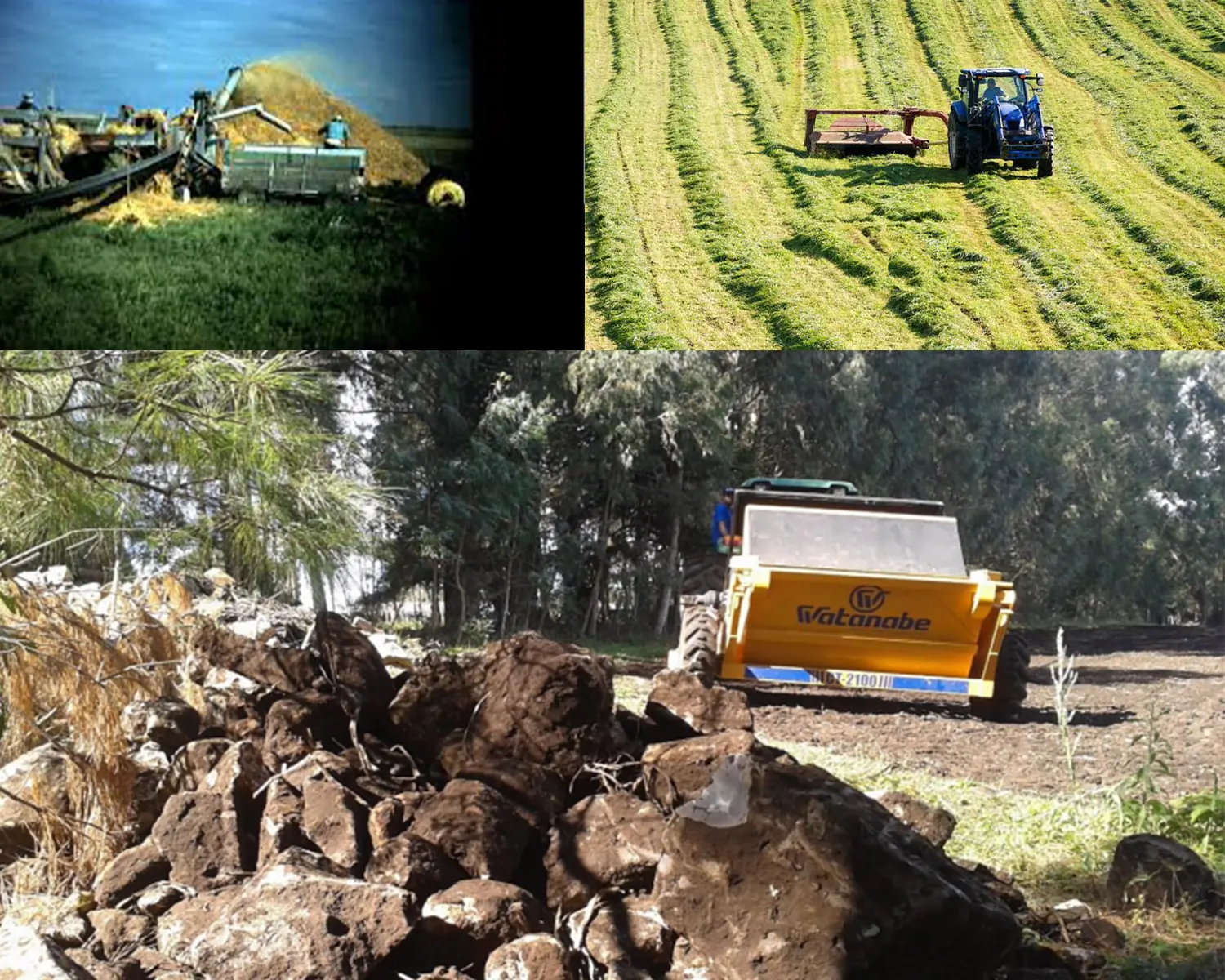
La comparaison avec la canne à sucre (E-31) met en lumière la nouveauté de l'interaction entre les pierres et la récolte du curcuma. Pour la canne à sucre, les pierres heurtent la lame de la moissonneuse-batteuse à pleine vitesse (180–220 tr/min) et provoquent une rupture catastrophique : la moissonneuse-batteuse doit s'arrêter, la lame est remplacée ou réparée, et la perte de revenus est immédiate et totale pendant l'interruption de la production. Le contact pierre-lame est spectaculaire, visible et ses conséquences commerciales sont immédiates. Pour le curcuma, cette interaction est plus discrète, différée et engendre des pertes commerciales dans un contexte totalement différent : la salle de séchage, 15 à 20 jours après la récolte.
La récolte mécanique du curcuma utilise une herse à disques, un déchaumeur ou une fraise rotative (une sorte d'arracheuse de pommes de terre modifiée) pour ameublir et extraire les rhizomes à une profondeur de 20 à 30 cm. Des fragments de pierre, situés entre 8 et 22 cm, entrent en contact avec les dents/lames en acier à la vitesse de fonctionnement – non pas à la vitesse catastrophique d'une récolteuse de canne à sucre, mais avec une force suffisante pour provoquer un écaillage, un émoussement et une déformation progressifs des lames. Un seul impact de pierre n'arrête pas la récolteuse. Le contact progressif avec les pierres émousse l'ensemble des dents au cours d'une seule saison sur un sol à forte densité de pierres. Une dent émoussée déchire plutôt qu'elle ne coupe, créant ainsi des surfaces de séparation irrégulières au niveau du rhizome au lieu de coupes nettes à la jonction rhizome-plante mère.
Après la récolte, les rhizomes de curcuma sont généralement stockés pendant 15 à 20 jours avant d'être bouillis et séchés au soleil (ou transformés immédiatement dans les installations de plus grande envergure). Durant cette période de stockage, l'activité métabolique du rhizome se poursuit à un faible niveau ; toute blessure superficielle, même due à une simple coupure, crée une zone vulnérable. Pythium aphanidermatum et Fusarium oxysporum f.sp. zingiberi peut coloniser. Pourriture des stocks due à PythiumLa plaie s'adoucit, les tissus environnants se gorgent d'eau et, en 3 à 7 jours, la totalité du rhizome adjacent est irrécupérable. Le Centre national indien de recherche sur les épices (IISR, Kozhikode) rapporte une incidence de pourriture de stockage de 12 à 281 cas pour les récoltes issues de champs pierreux, contre 4 à 81 cas pour les récoltes issues de champs déblayés.
Le délai de 15 à 20 jours entre la rencontre avec une pierre et ses conséquences commerciales est crucial : cela signifie que le producteur qui observe une bonne récolte (rhizomes entiers extraits du sol, sans problème visible au moment de la récolte) ignore que le cycle de la maladie de conservation a déjà été déclenché par des rhizomes endommagés par des pierres 20 jours auparavant. Aucun traitement post-récolte ne peut empêcher l’apparition de la blessure. L’élimination des pierres avant la saison de croissance est la SEULE intervention qui interrompt ce processus ; il n’existe aucune solution, ni à la récolte ni pendant le stockage, pour traiter les blessures superficielles des rhizomes causées par les pierres.
Bio Premium — Quand le déblaiement de pierres soutient la valeur de la certification
Toutes les méthodes de débroussaillage présentées dans le guide de la série E (45 articles) sont compatibles avec l'agriculture biologique : THOR, CT-2100 et BlackBird sont des opérations mécaniques sans intrants chimiques. Cette compatibilité a déjà été soulignée dans des articles précédents, mais le curcuma est la première culture pour laquelle la prime liée à la certification biologique est suffisamment importante – et pour laquelle la gestion des pierres contribue de manière suffisamment directe au maintien de cette certification – pour que l'argument en faveur du bio devienne un fondement commercial solide plutôt qu'une simple note de bas de page.
La prime accordée au curcuma biologique est alimentée par deux forces de marché concomitantes. Premièrement, la demande des consommateurs pour des produits sans résidus chimiques sur les marchés haut de gamme des aliments et compléments alimentaires (UE, États-Unis, Japon) : le curcuma biologique destiné aux compléments de curcumine encapsulés doit respecter des limites strictes de résidus de pesticides, contrairement au curcuma indien conventionnel (qui utilise généralement des fongicides de synthèse). Pythium La gestion traditionnelle ne permet pas de satisfaire pleinement les exigences. De plus, le marché de l'extraction de curcumine de qualité pharmaceutique privilégie de plus en plus les matières premières certifiées biologiques pour répondre aux exigences des licences pharmaceutiques dans les contextes réglementaires européens et japonais. Le curcuma des régions de Chanchamayo et de Junín au Pérou est devenu la principale source d'exportation biologique pour ces marchés, précisément pour deux raisons : (a) les sols des forêts tropicales de nuages du Pérou produisent une teneur de base en curcuminoïdes plus élevée (le microclimat et l'altitude de Chanchamayo produisent de manière constante des curcuminoïdes de 3,5 à 51 TP5T dans le curcuma conventionnel non certifié, ce qui rend la certification de catégorie A relativement fiable) ; et (b) la tradition agricole familiale à petite échelle du Pérou permet d'obtenir une certification biologique à moindre coût que si l'on adaptait la production indienne aux mêmes normes. Curcuma biologique du Pérou : 2 500 à 4 500 $US/tonne pour une teneur en curcuminoïdes de 3,5 à 51 TP5T. Positionnement le plus avantageux sur le marché : le curcuma péruvien à haute teneur en curcumine certifié biologique (>5%) pour l'extraction pharmaceutique peut atteindre 6 000 à 9 000 $ US/tonne dans les contrats pharmaceutiques directs.
Un producteur de curcuma souhaitant obtenir le meilleur prix sur le marché doit satisfaire simultanément à deux critères : la certification biologique (absence de pesticides et d’engrais de synthèse) ET une teneur en curcuminoïdes ≥ 3,51 TP5T (catégorie A, les valeurs supérieures permettant d’obtenir des contrats pharmaceutiques). La gestion des pierres contribue à ces deux objectifs : (1) Amélioration de la teneur en curcuminoïdes : comme décrit dans la section 1, l’élimination des pierres supprime les contraintes mécaniques qui orientent le féruloyl-CoA vers la synthèse de la lignine plutôt que vers celle de la curcumine, restaurant ainsi la teneur en curcuminoïdes que le potentiel génétique de la variété permet. Cette amélioration est obtenue sans aucun apport chimique, uniquement par la préparation physique du sol. (2) Prévention des maladies après récolte : comme décrit dans la section 2, l’élimination des pierres prévient les blessures du rhizome qui déclenchent… Pythium et Fusarium Pourriture de stockage. En agriculture biologique, les fongicides disponibles pour lutter contre la pourriture de stockage sont limités (traitements à base de cuivre uniquement, d'une efficacité moindre comparée aux fongicides de synthèse). L'élimination des pierres, en prévenant les points d'entrée des plaies, permet de prévenir la pourriture de stockage. Pythium Ce procédé exige et assure une fonction de prévention des maladies que la certification biologique ne peut garantir par la chimie de synthèse. Dans les exploitations biologiques péruviennes : le débroussaillage avec THOR + CT-2100 + BlackBird avant la plantation élimine le besoin de prétraitement fongicide de synthèse, préservant ainsi la conformité à la certification biologique tout en maîtrisant le risque de pourriture liée au stockage par la seule préparation mécanique du sol.
Trois marchés : l’Inde, le Pérou et le Bangladesh

Système de machines — Zone du rhizome, protection des lames avant récolte et protocole biologique
Foire aux questions
Concasseur de roches pour le curcuma — la compétition du féruloyl-CoA entre la synthèse de la lignine et celle de la curcumine est-elle documentée spécifiquement dans le curcuma, ou s'agit-il d'une déduction à partir des connaissances générales sur la voie des phénylpropanoïdes ?
La compétition entre la voie des phénylpropanoïdes pour la synthèse de la curcumine et celle de la lignine est bien documentée dans la littérature biochimique du curcuma. Parmi les références bibliographiques pertinentes : (1) Les enzymes curcumine synthases du curcuma (CURS1, CURS2, CURS3) et leurs substrats (féruloyl-CoA et 4-coumaroyl-CoA) ont été caractérisés au Japon par Kita et al. (2008) et Morita et al. (2010), établissant ainsi un pool de précurseurs commun avec la voie de biosynthèse des monolignols. (2) La surexpression d’acide jasmonique (AJ) chez les plantes blessées mécaniquement, orientant le flux de phénylpropanoïdes vers la lignification de la paroi cellulaire plutôt que vers la production de métabolites secondaires, est documentée chez de nombreuses espèces cultivées et constitue une réponse de défense végétale bien établie. (3) La diminution de la teneur en curcuminoïdes chez les plants de curcuma soumis à un stress physiologique est documentée indirectement par des observations de terrain menées par l'ICAR-IISR. Ces observations comparent des plants soumis à la sécheresse, à l'engorgement hydrique et à un stress physique ; dans chaque cas, la teneur en curcuminoïdes est systématiquement plus faible chez les plants stressés que chez les plants témoins non stressés. Ce qui n'est PAS documenté dans un essai contrôlé spécifiquement conçu pour le curcuma, comparant la présence et l'absence de pierres, c'est la vérification directe de l'hypothèse selon laquelle le stress mécanique induit par la présence de pierres diminue la teneur en curcuminoïdes via le mécanisme de déviation de la voie métabolique médiée par l'acide jasmonique (JA). Cet essai spécifique représente une lacune importante dans la recherche agronomique sur le curcuma. L'argument est mécanistiquement solide, biochimiquement plausible et indirectement corroboré par des observations de terrain, mais n'a pas été soumis à la rigueur d'une expérience contrôlée ciblée.
Concernant l'argument des dommages causés aux outils de récolte — le risque de pourriture liée au stockage dû aux blessures des rhizomes s'applique-t-il de la même manière à la récolte manuelle (creuser avec une bêche) qu'à la récolte mécanique avec des motoculteurs ?
La récolte, qu'elle soit manuelle ou mécanique, provoque des blessures à la surface des rhizomes par contact avec les pierres, mais avec des profils de gravité différents. Lors de la récolte manuelle à la bêche ou à la fourche, le contact avec la pierre se produit généralement au moment de l'impact, lorsque la pointe de la bêche la heurte ; la pointe dévie alors, pouvant entailler la surface d'un rhizome adjacent. La blessure ainsi créée est généralement plus petite que celle causée par la récolte mécanique (force moindre, surface de contact plus large répartissant l'énergie). Cependant, au Bangladesh et dans les petites exploitations agricoles indiennes, où les bêches sont utilisées de manière répétée pendant des heures dans un champ pierreux, le taux de blessures cumulées peut être important. L'IISR de Kozhikode rapporte une incidence de pourriture de stockage de 8 à 151 TP5T lors de la récolte manuelle dans les champs pierreux, inférieure aux 12 à 281 TP5T documentés pour la récolte mécanique, mais tout de même environ 2 à 3 fois supérieure à celle observée lors de la récolte manuelle dans les champs débarrassés des pierres. Conclusion : les deux méthodes de récolte produisent des blessures aux rhizomes liées au contact avec les pierres ; la récolte mécanique crée des blessures plus graves et plus fréquentes. La récolte manuelle est moins contraignante, mais elle entraîne tout de même une augmentation mesurable de la pourriture liée au stockage due aux pierres. Le débroussaillage préalable avec le système BlackBird, qui élimine les pierres en surface et en subsurface, est bénéfique pour les deux méthodes de récolte : il réduit l’exposition aux pierres à la profondeur de travail de l’outil, qu’il s’agisse d’une bêche ou d’une fraise motorisée.
Comment l'argument de la certification biologique s'applique-t-il spécifiquement à l'Inde — où la majorité du curcuma est produite de manière conventionnelle — et le curcuma biologique indien est-il viable pour le marché haut de gamme ?
Le curcuma bio indien est produit en volumes limités mais croissants, principalement dans le district de Kandhamal, en Orissa (où les communautés agricoles tribales ont conservé des pratiques agricoles peu chimiques) et dans des exploitations agricoles participant à des projets biologiques en Andhra Pradesh, au Maharashtra et au Madhya Pradesh. L'APEDA (Autorité de développement des exportations de produits agricoles et alimentaires transformés) gère la certification bio indienne pour l'exportation, et la reconnaissance de son équivalent bio européen permet au curcuma indien certifié APEDA d'accéder aux circuits de distribution bio de l'UE. Le défi pour les producteurs indiens conventionnels qui se convertissent à l'agriculture biologique : la période de transition de trois ans (obligatoire selon toutes les principales normes bio), durant laquelle l'utilisation d'intrants de synthèse est interdite mais les primes de prix bio ne sont pas encore accessibles, entraîne une baisse des revenus. Le nettoyage des sols pendant cette période de transition permet : (a) d'améliorer la teneur en curcuminoïdes sans intrants de synthèse ; (b) de réduire la pourriture de stockage sans fongicides de synthèse ; (c) d'améliorer la santé de la zone racinaire, favorisant ainsi la gestion biologique des sols essentielle aux systèmes biologiques. Cela fait du débroussaillage pendant la période de conversion un investissement particulièrement avantageux : il génère des bénéfices pour une exploitation en transition précisément au moment où les autres options de gestion sont limitées. Le curcuma biologique d'Andhra Pradesh, de qualité supérieure en curcuminoïdes, pourrait atteindre 2 000 à 3 500 $US/tonne, soit une prime d'environ 60 à 1 200 $US par rapport au curcuma conventionnel à teneur équivalente en curcuminoïdes. Pour les grandes exploitations d'Andhra Pradesh qui investissent dans la conversion à l'agriculture biologique, le débroussaillage pendant l'année de transition représente un investissement à fort effet de levier, indispensable pour répondre aux exigences du marché haut de gamme.
Quel est le lien entre l'argument de la pierre curcuminoïde du curcuma et le gingembre — une culture apparentée cultivée sur des sols similaires — et le même argument de débroussaillage s'appliquerait-il ?
Gingembre (Zingiber officinaleLe gingembre appartient à la même famille que le curcuma (Zingiberaceae) et est souvent cultivé selon les mêmes systèmes agricoles et sur les mêmes types de sols en Inde, au Pérou, au Bangladesh et en Indonésie. Les arguments relatifs à la gestion des pierres s'appliquent également au gingembre en termes de structure, mais diffèrent quant aux critères de qualité. La qualité du gingembre est mesurée par : (1) le poids frais par rhizome (catégorie commerciale = taille) ; (2) la teneur en gingérol (le principal composé piquant, analogue à la curcumine du curcuma) ; (3) la teneur en oléorésine (pour le gingembre transformé). La limitation de la présence de pierres dans les rhizomes de gingembre entraîne : (a) le même problème de déformation que pour le curcuma (rhizomes tordus et plus courts, classés comme ayant une taille commerciale inférieure) ; (b) la même chaîne de dommages causés par les outils de récolte → pourriture au stockage (le gingembre est encore plus sensible à cette chaîne). Pythium et Fusarium (c) La pourriture au stockage est plus importante que pour le curcuma, ce qui rend l'argument de la blessure au tallage tout aussi, voire plus, important sur le plan commercial ; (d) une réduction de la teneur en gingérol (par le même mécanisme de déviation de la voie des phénylpropanoïdes, puisque le gingérol est synthétisé via la même voie phénylpropanoïde-polycétide qui utilise le féruloyl-CoA comme précurseur). Le protocole THOR, CT-2100, PSW-3200 et BlackBird décrit dans cet article s'applique à la production de gingembre sans modification : mêmes machines, mêmes profondeurs (18–28 cm), même calendrier (avant la plantation et avant la récolte) et même logique commerciale (contrôle qualité des curcuminoïdes/gingérols + prévention de la pourriture au stockage + protection des lames de récolte). Un prochain article de la série E sur le gingembre pourrait développer en détail la filière pharmaceutique du gingérol (marché des médicaments antiémétiques et anti-inflammatoires) et l'argument du marché du gingembre haut de gamme au Japon et en Chine.
Quel est le retour sur investissement du nettoyage des noyaux de curcuma en Inde, en combinant l'amélioration de la qualité des curcuminoïdes, la réduction de la pourriture liée au stockage et les coûts d'entretien des lames de fraise sur un cycle de production de 2 ans ?
Pour une exploitation de curcuma de 3 ha à Nizamabad, dans l'Andhra Pradesh (densité de la pierre basaltique du Deccan : 20–261 TP5T à 10–22 cm, production conventionnelle, récolte mécanique) : Investissement (THOR 2.4 + CT-2100 + PSW-3200 pour 3 ha) : environ 70 000 à 105 000 INR (840 à 1 260 USD). Bénéfices sur 2 cycles de culture (2 ans) : (1) Amélioration de la qualité des curcuminoïdes (grade A) : les exploitations pierreuses de Nizamabad atteignent généralement 35 à 451 TP5T de qualité A (≥ 3,51 TP5T de curcuminoïdes) par lot. Les exploitations débarrassées des pierres atteignent une production de 60 à 75 tonnes de curcuma séché de qualité A. 3 ha × 5 t/ha/an de curcuma séché × 2 ans × 25 tonnes d'amélioration de qualité A × (120 INR – 70 INR)/kg (différence entre qualité A et qualité B) = 75 000 INR de revenus supplémentaires. (2) Prévention de la pourriture au stockage : incidence de la pourriture de 12 à 28 tonnes sur les parcelles pierreuses contre 4 à 8 tonnes sur les parcelles débarrassées des pierres. Amélioration moyenne de 14 tonnes × 3 ha × 5 t/ha × 2 ans × 75 INR/kg économisé × 0,14 = 31 500 INR. (3) Réduction des coûts d'entretien des lames de la fraise : le remplacement/la remise en état des lames sur les parcelles pierreuses coûte environ 8 000 à 15 000 INR/ha/an de plus que sur les parcelles débarrassées des pierres. 3 ha × 2 ans × 10 000 INR/ha/an d'économies = 60 000 INR. Bénéfice total sur 2 ans : environ 166 500 INR (2 000 US£). Pour un investissement de 70 000 à 105 000 INR : retour sur investissement de 1,6:1 à 2,4:1 sur 2 ans. Pour une ferme biologique au Pérou (3 ha) : même investissement de 1 100 à 1 600 US£ ; les avantages comprennent la valorisation de la prime bio (1 200 US£/tonne de prime × 3 ha × 2,5 t/ha/an de séchage bio × 25% de certification supplémentaire de catégorie A × 2 ans = 4 500 US£) + la réduction des pertes liées au stockage (2 800 US£ économisés) = 7 300 US£. ROI de 4,6:1 à 6,6:1 sur 2 ans dans une ferme biologique du Pérou — nettement supérieur à celui de l'agriculture conventionnelle indienne, reflétant l'effet multiplicateur de la prime biologique.
Broyeur de pierres pour curcuma — Qualité des curcuminoïdes, lame de récolte et protocole biologique
Type de pierre + méthode de récolte (manuelle/mécanique) + teneur de base en curcuminoïdes + certification biologique + historique de pourriture liée au stockage → Korea Watanabe fournit les informations correctes concasseur de pierres pour curcuma Spécification de la zone du rhizome, protocole de protection des lames avant récolte et calcul du retour sur investissement de l'amélioration des curcuminoïdes de qualité A.
Éditeur : Cxm