Korean highland potato disease management is typically discussed as a chemistry problem — which fungicide, at what interval, in what volume. The chemistry is essential, but the Korean highland farmer who invests only in spray programmes without addressing the soil and field structural factors that determine disease pressure will consistently use more fungicide and achieve worse results than the farmer who addresses both layers of the management system.
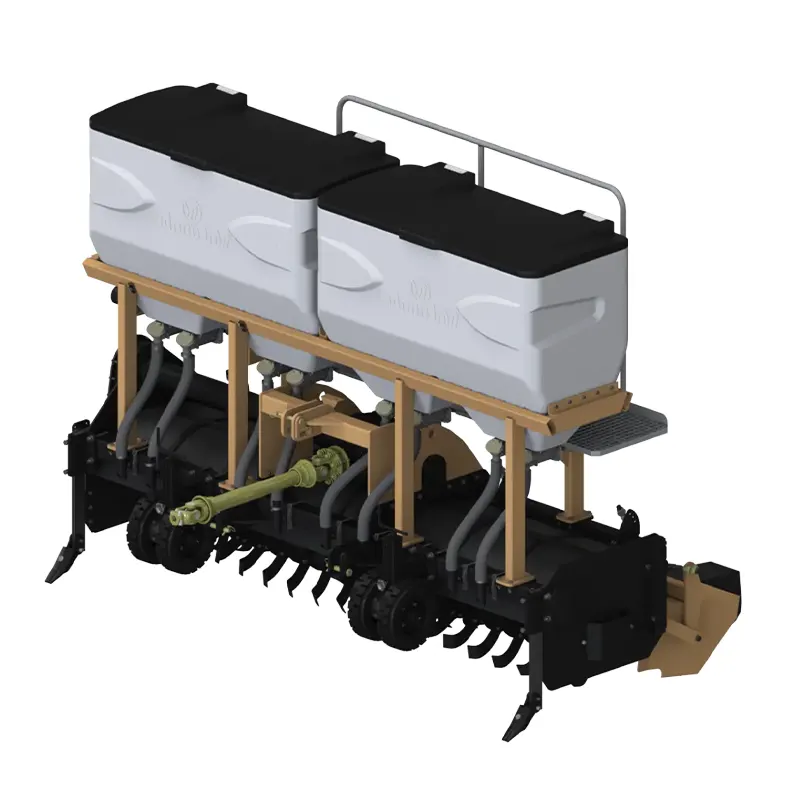
This guide covers the four primary disease and pest challenges in Korean highland potato production — late blight, Rhizoctonia, Fusarium, and aphid vectors — and explicitly maps how soil preparation quality (particularly stone clearing and tillage) interacts with each disease’s biology to either amplify or suppress its impact. The Concasseur de pierres THOR 2.4, rotoculteur PSW-3200et complet système de machines à pommes de terre are disease management tools as well as production tools — and understanding why makes the investment case for them substantially stronger.
Late Blight — Korea’s Primary Highland Potato Threat and Its Soil Connection
Late blight, caused by Phytophthora infestans, is consistently the most economically damaging disease in Korean highland potato production. A severe late blight epidemic can destroy 60–80% of unharvested yield within 2–3 weeks under favourable infection conditions. Understanding its biology is prerequisite to understanding why field preparation quality affects its severity:
Phytophthora infestans infection cycle — the key conditions
(optimum 15–18°C)
required for spore germination
to visible lesion at 15°C
(typhoon + temperature)
How Stone Clearing Reduces Late Blight Pressure
The critical blight infection variable — leaf wetness duration — is directly influenced by ridge drainage quality, which is directly influenced by the clearance and tillage quality from Steps 1 and 2. The mechanism is straightforward but consistently underestimated by Korean highland farmers who treat stone clearing and disease management as separate concerns:
①
Stone-cleared fine tilth → well-formed high ridges. The PSW-3200 operating on stone-cleared soil produces fine, uniform tilth that forms well-shaped ridges with good height and sharp shoulders. After EP-ERA hilling, these ridges stand 20–25 cm above the furrow level — high enough to shed surface water rapidly into the drainage furrows after heavy rainfall.
②
Well-formed ridges → faster post-rain drainage. A sharp-profiled, well-formed ridge sheds typhoon rainfall within 1–2 hours of rainfall cessation. The canopy above this well-drained ridge dries to below the 6-hour minimum leaf wetness threshold before spore germination can establish.
③
Faster drainage → fewer successful infection events per season. On well-drained stone-cleared fields, the number of rainfall events that produce leaf wetness periods exceeding 6–8 hours is measurably lower than on poorly drained, stone-disrupted, flat ridges. Korean highland research at RDA consistently shows that fields with adequate ridge drainage have 30–50% fewer successful blight infection events per season than poorly drained fields at equivalent altitude and spray programme intensity.
✗
Un-cleared fields → flat, poorly drained ridges → extended leaf wetness. Residual stones in un-cleared fields prevent the PSW-3200 from achieving the uniform fine tilth needed to form well-shaped ridges. Stone-disrupted, coarse-tilth ridges are lower, flatter-shouldered, and retain surface water for 4–6 hours longer after rainfall than well-formed ridges. This extended wetness period after every heavy rainfall event creates repeated blight infection opportunities — requiring higher spray frequency and broader spectrum fungicide to compensate for the structural deficiency.
Spray Programme Timing — Korean Highland Altitude Zones
The late blight spray programme timing for Korean highland potato is altitude-specific — because temperature and moisture conditions (the two primary infection drivers) are correlated with altitude. A spray programme designed for 400 m is under-protective at 600 m in terms of timing, and may be over-intensive at 400 m in terms of interval:
| Zone d'altitude | Blight risk period | First preventive spray | Interval in risk period |
|---|---|---|---|
| 400–500 m | Late June – late August | June 20–25 (preventive, before risk window) | 7–10 days in July; extend to 10–14 days in August as temperature rises above 24°C |
| 500–650 m | Mid June – early September | June 10–15 (cooler temperatures extend risk window earlier) | 7 days throughout risk period — highest-risk zone for late blight in Korean highlands |
| 650–800 m | Early June – mid September | June 1–10 | 7 days June–August; 10 days September (crop approaching maturity) |
Rhizoctonia Solani — Soil-Borne Black Scurf and How Rotation Manages It
Rhizoctonia solani produces two distinct symptoms in Korean highland potato: stem canker in young plants (causing underground stem lesion that restricts nutrient flow and reduces emergence uniformity) and black scurf on tuber skin at harvest (the dark, hard, superficial specks of fungal resting bodies that reduce Grade 1 classification for fresh market and cause outright rejection at some processing intakes). Black scurf is the more economically significant symptom for Korean highland commercial growers — it is entirely cosmetic in terms of eating quality but is a Grade 1 appearance disqualifier.
Rotation management (most effective)
R. solani inoculum in the soil is primarily managed through rotation — the pathogen’s inoculum density decreases significantly when potatoes are absent for 3 years in the 4-crop rotation (potato → radish → cabbage → legume). Returning potatoes to the same field every 4 years keeps Rhizoctonia inoculum below the threshold that produces commercially significant black scurf incidence. Continuous potato or 2-year rotation consistently produces increasing scurf severity year-on-year, whereas the 4-year Watanabe rotation keeps inoculum suppressed.
Seed treatment (supplementary)
NAAS-certified seed potato is produced under conditions that minimize Rhizoctonia inoculum on the seed surface — seed treatment with approved fungicide (thiram or fludioxonil-based products registered in Korea) before planting provides an additional protective layer around the seed piece during the vulnerable germination and emergence period. Seed treatment is supplementary to rotation — it reduces stem canker incidence in the emergence phase but does not address tuber scurf if soil inoculum levels are high.
Soil preparation connection
Fine, uniform tilth from PSW-3200 on stone-cleared soil produces uniform ridge temperature and moisture — the conditions that support rapid, uniform emergence. Uniform emergence means the potato seedling spends minimum time in the highest-vulnerability period (pre-emergence, when stem canker infection is most damaging). Slow, non-uniform emergence from coarse tilth on un-cleared soil extends the pre-emergence vulnerability window, increasing cumulative Rhizoctonia exposure time per plant.
Fusarium Dry Rot and Wilt — Seed Quality and Rotation as Primary Controls
Fusarium dry rot (Fusarium solani and related species) affects Korean highland potato through two routes: seed-borne infection causing seed piece decay before emergence, and soil-borne infection causing vascular wilt in growing plants under stress conditions. Both routes are managed primarily through seed quality and rotation, not through spray programmes:
Seed-borne control:
Use only NAAS-certified seed from approved sources — Fusarium dry rot is a certification-exclusion disease, and certified seed is screened before release. Never use saved seed from Korean highland fields that showed dry rot symptoms at harvest — the surface-healed lesion on saved seed pieces carries viable Fusarium inoculum into the following season. If certified seed is not available for all fields in a given year, prioritize certified seed on the fields with the longest potato-free rotation history (lowest soil inoculum).
Soil temperature at planting:
Fusarium seed piece decay is worst when seed is planted into cold, wet soil — the pathogen infects the exposed cut surfaces of the seed piece before skin suberisation seals the wound. On Korean highland granite soils at 600 m, soil temperature at 10 cm depth in late April is typically 8–12°C — below the 14°C threshold for rapid skin suberisation. Delaying planting by 1–2 weeks until soil temperature is consistently above 12°C at planting depth reduces seed piece decay significantly, with the yield benefit of earlier planting offset by the disease pressure reduction from the slightly later date.
Rotation as the long-term suppressor:
Fusarium soil inoculum (chlamydospores) persists in Korean highland soil for 4–6 years. The 4-year rotation does not eliminate Fusarium from the soil but reduces inoculum density at the soil surface and in the upper 15 cm where seed pieces are planted — the critical zone for infection. Consistent 4-year rotation is the most cost-effective long-term Fusarium management strategy available to Korean highland farmers without infrastructure investment.
Aphid Vector Management — Protecting Certified Seed Potato Quality
Aphids are not a direct yield threat in Korean highland potato — they do not cause sufficient direct feeding damage to affect Grade 1 quality. Their significance is entirely as vectors of Potato Virus Y (PVY), specifically the necrotic strain PVYn that causes potato tuber necrotic ringspot disease (PTNRD). PVY management is primarily relevant for Korean highland farms producing NAAS-certified seed potato — the virus transmission from aphid to plant can disqualify an entire certified seed field if confirmed above the allowed threshold at the mandatory inspection.
Altitude as the primary aphid suppressor
Korean highland certified seed production is deliberately located at 600 m and above because aphid flight activity is significantly lower at high altitude — cooler temperatures reduce aphid reproduction rate and flight season duration. Fields above 700 m experience less than 20% of the aphid flight activity recorded at 400 m in the same week during peak flight periods. This natural altitude-based protection is one of the primary reasons Korean highland areas are preferred for certified seed production over lowland sites.
Early vine destruction for certified seed
Certified seed potato fields in Korea require early vine destruction (3 weeks before harvest) partly to force skin set and partly to eliminate the above-ground plant tissue that vectors would use to infect the tubers with late-season PVY. The earlier the vine is destroyed, the shorter the window for late-season aphid-vectored PVY infection of the developing tubers — reducing virus infection rate in the certified lot. Early vine destruction is a regulatory requirement for Korean NAAS certified seed, not optional.
Mineral oil as stylet-borne vector suppressor
PVY is a non-persistent virus — aphids acquire and transmit it during brief probing contacts rather than extended feeding. Insecticides that kill aphids are largely ineffective for non-persistent virus management because the virus is transmitted before the insecticide kills the aphid. Mineral oil spray applied to the foliage (approved for this use in Korea) physically interferes with the aphid stylet during probing, reducing transmission efficiency without requiring aphid kill. Applied weekly during peak aphid flight period (June–July), mineral oil is the most effective chemical tool for PVY management in Korean certified seed fields.
Integrated Disease Management Calendar — Connecting Stone Clearing to the Spray Programme
The complete Korean highland potato disease management calendar runs from March (stone clearing) through to harvest (late August at 600 m). The spray programme is concentrated in June–August, but disease outcomes are determined by operations across the full calendar:
Foire aux questions
Which late blight fungicide groups are registered and effective in Korean highland conditions?
The Korean Ministry of Agriculture (MAFRA) registered fungicides for potato late blight include: protectant products based on chlorothalonil, mancozeb, or copper (applied preventively before infection); systemic and curative products based on mandipropamid, cymoxanil, dimethomorph, and metalaxyl-M (applied curatively within 72 hours of infection event). Resistance management requires rotating between FRAC groups — metalaxyl-M resistance in Korean Phytophthora infestans populations has been documented, making sole reliance on metalaxyl-M products inadvisable. The standard Korean highland programme alternates contact protectants (mancozeb or chlorothalonil-based) with systemic products (mandipropamid or dimethomorph-based) on a 7-day schedule. Do not apply the same active ingredient on consecutive applications — confirmed by your local RDA extension officer for current resistance guidance in your county.
Can I skip one spray interval if there has been no rainfall for 10 days?
During the July–August Korean highland typhoon season, yes — if there has been no rainfall and daily relative humidity has remained below 80% for 10 consecutive days, extending the interval to 10–12 days from the 7-day standard is agronomically defensible. The infection risk during dry periods is genuinely low (no leaf wetness; spore germination impossible without free water). However, the key risk is the resumption of rainfall — the spray residue on the canopy degrades during the dry period, leaving the plant unprotected exactly when the first post-drought rainfall provides the infection event. Apply a spray immediately before any forecast rainy period rather than waiting until the standard interval is reached after dry periods. The typhoon forecast service from the Korea Meteorological Administration is the most reliable tool for planning spray timing around rainfall events in Korean highland conditions.
How does the 4-crop rotation affect Fusarium and Rhizoctonia inoculum levels over time?
The effect is progressive and measurable over multiple rotation cycles. In Year 1 of the 4-year rotation (the potato year on a field transitioning from continuous potato), Rhizoctonia and Fusarium inoculum levels are typically at their highest — accumulated from the previous potato crop. By Year 4 (the legume year), inoculum levels in the upper 15 cm have declined by 50–70% from Year 1 levels, because neither pathogen has a host crop for 3 consecutive years. When potatoes return to this field in Year 5 (the second rotation cycle Year 1), the starting inoculum is substantially lower than the first cycle — and the black scurf and seed decay incidence is measurably reduced. Korean highland farms that have maintained strict 4-year rotation for 3 or more complete cycles consistently report lower Rhizoctonia and Fusarium losses than farms with inconsistent rotation, even when using the same certified seed and seed treatment products. The rotation is the long-term investment in soil health that the spray programme cannot substitute for.
Does stone clearing affect foliar diseases beyond late blight?
The primary mechanism linking stone clearing to foliar disease is through ridge drainage quality — which most directly affects late blight infection events (the most drainage-sensitive foliar pathogen in Korean highland conditions). Early blight (Alternaria solani) and powdery scab (Spongospora subterranea) are less directly affected by drainage quality. However, there is a secondary stone clearing benefit for all foliar diseases: the uniform canopy structure that develops on stone-cleared, well-tilled, well-hilled fields allows more uniform spray coverage than the irregular canopy that develops on un-cleared, coarse-tilth, poorly hilled fields. Uniform spray coverage means the spray programme is delivered consistently to the entire canopy — whereas irregular canopy structure from poor ridge quality creates spray shadow zones where protectant residue is absent, providing local entry points for foliar pathogens even when the spray programme schedule is correctly maintained.
Is common scab (Streptomyces scabies) a concern on Korean highland granite soils?
Common scab caused by Streptomyces scabies is a concern on Korean highland farms where soil pH has been raised too high through over-liming. The pathogen is strongly suppressed at pH below 5.5 and is most aggressive at pH 6.5–7.5. Korean highland granite soils naturally trend to pH 5.0–5.5 without lime addition — this natural acidity is actually protective against common scab. The risk of common scab on Korean highland farms is primarily from over-liming: applying lime to reach pH 6.5–7.0 targets intended for other crops (cabbage, legumes) on soils scheduled for potato in the rotation. In the 4-year rotation, lime application for the cabbage year should be calibrated to return to pH 5.8–6.2 before the potato year, not to maintain the pH 6.5–7.0 target needed for cabbage throughout the full rotation. Soil testing annually and adjusting lime application crop-specifically prevents the inadvertent pH elevation that activates common scab in the following potato year.
Integrated Potato System — From Stone Clearing to Disease-Ready Ridges
Farm altitude + current disease history + existing stone clearing and tillage setup → integrated plan connecting THOR 2.4 stone clearing, PSW-3200 ridge quality, and altitude-specific spray calendar. Korea Watanabe, Ansan-si, Gyeonggi-do.
Éditeur : Cxm