The Korean stone crusher market includes machines from Watanabe (Brazil), FAE (Italy), SEPPI (Italy), and several other European and Asian manufacturers — all available through Korean dealers or direct import. When a Korean highland farmer or land clearing contractor compares these options, the natural starting points are working width, horsepower requirement, and price. These three comparisons are necessary but not sufficient — they do not reveal the information that determines actual service life, operating cost, and suitability for specific Korean rock types and field conditions.
This guide identifies the eight criteria that Korean buyers should evaluate when comparing stone crushers — using the Watanabe THOR as the reference example because its confirmed specifications are available from official documentation. For any other brand under consideration, ask the same questions of the supplier: the quality of the answers you receive is itself a valuable indicator of how well the supplier understands Korean operating conditions.
A note on competitor comparisons in this guide
This article does not state specific specifications for FAE, SEPPI, or other competitor brands — their product ranges change, and we cannot verify current specifications from official documentation. Where competitor brands are referenced, it is to acknowledge their presence in the Korean market and to encourage buyers to ask the same evaluation questions of any supplier. Evaluate all brands against the same 8 criteria. The THOR specifications cited here are from the Watanabe official product brochure.
The 8 Criteria — Overview
Criterion 1 — Thermal Management in Korean Summer Conditions
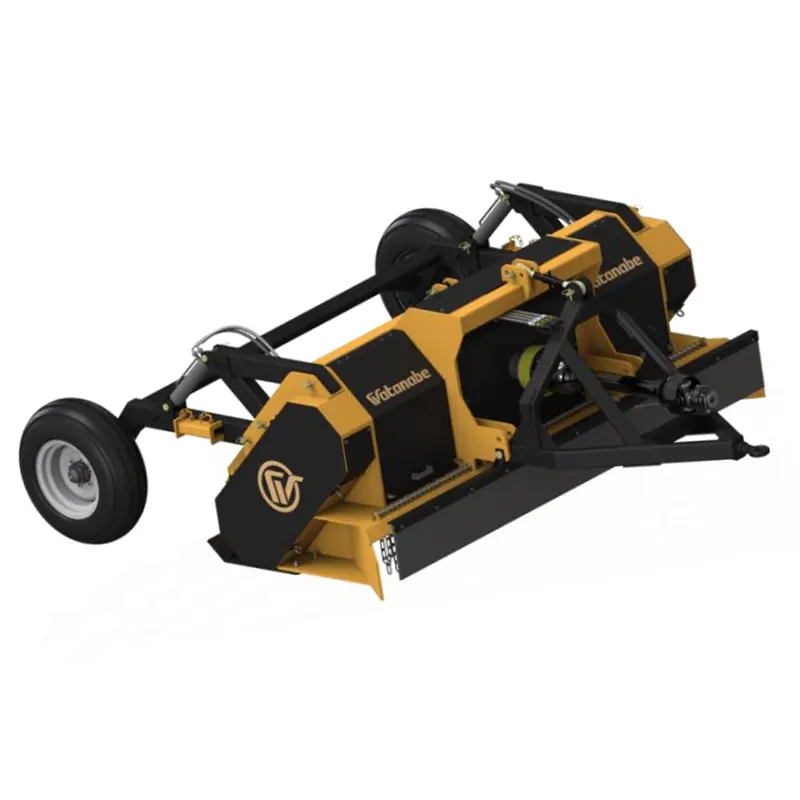
Korean highland clearing seasons in July–August present ambient temperatures of 32–38°C in highland zones, combined with high humidity. Stone crushers operating continuously at 180–230 HP input generate substantial heat in the transmission. A machine without active oil cooling — relying only on splash lubrication for thermal management — will typically reach oil temperature limits within 3–4 hours of continuous operation in Korean summer conditions, requiring periodic thermal recovery stops that reduce daily productivity.
Question to ask every supplier:
“Does this machine have a dedicated oil cooling circuit — not just splash lubrication — for the gearbox? Can it operate continuously for 8 hours at 35°C ambient on Korean granite without thermal recovery stops?”
THOR 2.4 / THOR 3.0 answer: Yes — dedicated oil pump, heat exchanger, and separate cooling circuit. Designed and validated for full-day operation in Brazilian Paraná highland conditions comparable to Korean summer (30–38°C ambient, hard basaltic rock).
Criterion 2 — Validation on Korean Rock Types
Machine performance claims made in European or North American conditions do not automatically transfer to Korean granite and basalt. Korean highland granite (Gangwon-do, Gyeongsang) and Jeju Island basalt are among the most abrasive rock types in agricultural application worldwide. A machine validated on French limestone, German gravel, or American sandstone may perform well there and deliver disappointing tooth life and output quality on Korean basalt.
Question to ask every supplier:
“Does your machine have operational validation specifically on Korean highland granite or Jeju Island basalt? Can you provide Korean operator references in similar rock types?”
THOR 2.4 / THOR 3.0 answer: Validated for over 50 years on Brazilian Paraná Highland basalt — mineralogically and mechanically comparable to Jeju Island basalt and Korean highland granite. Korean operational references available through Korea Watanabe.
Criterion 3 — Field Tooth Replaceability Without Workshop Access
Korean commercial stone clearing operations work in remote highland locations — Gangwon-do mountain farms, Jeju Island coastal fields, Gyeongsang highland orchards. When a carbide tooth reaches the wear threshold or breaks during an operating session, the operator needs to replace it on-site. A machine requiring rotor removal for tooth replacement — or requiring specialist tools not available in the field — creates unacceptable downtime in remote locations where the nearest workshop may be 30–60 minutes away.
Question to ask every supplier:
“Can each tooth be replaced individually in the field without removing the rotor? What tools are needed? Is a replacement set available for local delivery within 24 hours?”
THOR 2.4 / THOR 3.0 answer: Bolt-mounted carbide teeth individually replaceable in the field with a standard wrench. No rotor removal required. Replacement teeth stocked locally in Ansan-si — next-day domestic dispatch available throughout the Korean clearing season.
Criterion 4 — Slope Capability for Korean Mountain Terrain
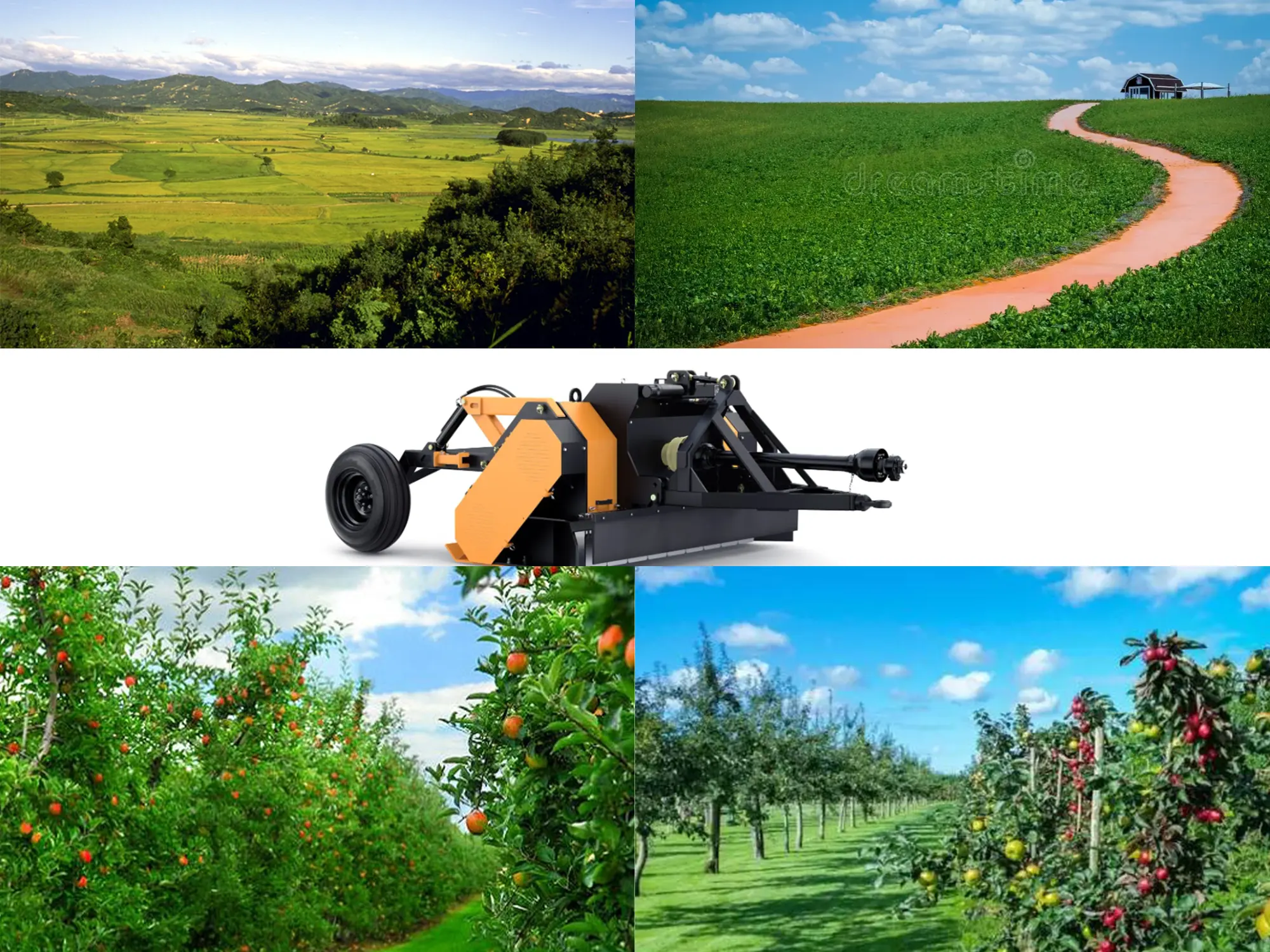
Approximately 40% of Korean agricultural land is on terrain with slope gradients above 15%. Korean mountain orchards, ginseng plots, and highland farm access roads regularly present gradients of 20–30%. Standard rear three-point hitch implement mounting at 2,300–2,800 Kg creates a front-axle lift condition on slopes above approximately 20% that reduces steering control and increases rollover risk. A stone crusher for Korean mountain use without a slope management solution is a machine with a material operational limitation on the terrain where it will commonly be used.
Question to ask every supplier:
“Does your machine offer a pull-mode or drawbar-hitch option for slope operation? Is it included in the standard price or an extra purchase? What gradient has it been validated to?”
THOR 2.4 answer: Kit Drawbar included as standard — not an optional extra. Converts from rear three-point hitch to drawbar pull-mode. Redistributes 2,300 Kg machine weight to tractor rear axle position, maintaining front axle ground contact on slopes above 20%. Standard inclusion for every THOR 2.4 delivered from Korea Watanabe.
Criterion 5 — Local Spare Parts Stock in Korea
Carbide teeth are not a rare annual event — they are a routine seasonal maintenance item on any stone crusher operating in Korean granite and basalt conditions. The teeth need to be available within 1–2 days when they reach the replacement threshold during peak clearing season. A machine whose teeth are imported from Europe or Japan on a 2–4 week lead time creates maintenance logistics that are incompatible with Korean agricultural season calendars.
Question to ask every supplier:
“Where are replacement carbide teeth stocked for this machine in Korea? What is the delivery lead time to my location during the spring clearing season?”
THOR 2.4 / THOR 3.0 answer: Replacement carbide teeth stocked locally in Ansan-si, Gyeonggi-do. Next-day domestic dispatch throughout Korea during the clearing season. Complete tooth sets and individual replacement teeth both available from local stock.
Criterion 6 — Korean-Language Technical Support
Technical questions about stone crusher specification, setup, maintenance, and troubleshooting arise throughout the machine’s operating life. A Korean farmer communicating technical questions through an English-language importer, or through translation intermediaries, inevitably loses precision and speed in the communication that matters most when a machine issue arises during the compressed spring clearing window.
Question to ask every supplier:
“Is Korean-language technical support available directly — not through a translation service? Who handles warranty claims and technical issues for Korean operators?”
THOR 2.4 / THOR 3.0 answer: Korea Watanabe Rock Crusher Tractor Co., Ltd. provides Korean-language technical support directly from Ansan-si, Gyeonggi-do. Warranty terms and after-sales conditions are handled by Korea Watanabe — not routed through a third country.
Criterion 7 — Adjustable Output Fragment Size
A stone crusher used for both agricultural seedbed preparation (where fine fragment size is important for subsequent CT-2100 picking efficiency) and farm road construction (where larger angular aggregate is preferred for road base compaction) needs to deliver different output sizes for different applications. The output grid adjustment mechanism — and whether it is operable from the tractor cab during working operation — determines whether the operator can efficiently transition between these different output requirements.
Question to ask every supplier:
“Can the output fragment size be adjusted from the tractor cab during operation — without stopping, without exiting the cab? What is the adjustment range?”
THOR 2.4 / THOR 3.0 answer: Yes — hydraulic rear hood adjustment from the tractor cab during operation. Fine for agricultural seedbed preparation; coarse for road base aggregate. No machine stop required. Wear-resistant steel output grid is bolt-on replaceable.
Criterion 8 — True System Cost Over 5 Years
Purchase price is the easiest comparison but the least predictive of total cost over the machine’s operating life. The 5-year total cost of a stone crusher in Korean conditions includes: purchase price, annual carbide tooth replacement (the largest variable operating cost), annual inspection and maintenance, any gearbox or transmission repairs, and productivity losses from thermal stops, tooth failures, or breakdowns during the clearing season. A machine with lower purchase price but higher annual tooth replacement frequency, periodic thermal stops, or one significant gearbox repair in year 3 can easily exceed the 5-year cost of a higher initial price machine with better thermal management and longer tooth life.
Question to ask every supplier:
“What is the annual tooth replacement cost at Korean granite/basalt wear rates? What is the cost of a full tooth set replacement for this machine? Has any Korean operator had a gearbox replacement under normal operating conditions — and what was the cost?”
THOR 2.4 / THOR 3.0 answer: Individual tooth replacement as needed (96 teeth for THOR 2.4; 116 for THOR 3.0) — not full set replacement at each inspection. Replacement tooth costs available from Korea Watanabe. Gearbox replacement cost and frequency data available from Korean operator references on request.
Use This Scorecard When Comparing Any Stone Crusher
Use the following scorecard for any machine under consideration. Require clear, specific answers — vague answers (“our machine is built to high quality standards”) are not answers to these questions:
| # | Evaluation Question | THOR 2.4 | Machine Under Review |
|---|---|---|---|
| 1 | Active oil cooling for gearbox (not splash only)? | ✓ Yes | Confirm |
| 2 | Validated on Korean granite or equivalent basalt? | ✓ Yes | Confirm |
| 3 | Individual tooth field replacement without rotor removal? | ✓ Yes | Confirm |
| 4 | Slope capability / drawbar option for 20%+ gradients? | ✓ Included | Option or extra? |
| 5 | Local tooth stock in Korea — next-day delivery? | ✓ Ansan-si | Where stocked? |
| 6 | Korean-language technical support direct? | ✓ Korea Watanabe | Who handles it? |
| 7 | Hydraulic output fragment size adj. from cab? | ✓ Yes | Confirm |
| 8 | 5-year Korean reference operators available? | ✓ Available | Request |
Fill in the “Machine Under Review” column for each machine you are comparing. The answers determine whether the comparison is “similar machines at different prices” or “different levels of specification for different long-term costs.”
When Price Difference Is Justified — and When It Is Not
Not all price differences between stone crushers represent hidden specification gaps. Some genuine price differences reflect:
- ▶
Working width differences — a 3.0 m machine legitimately costs more than a 2.4 m machine. Confirm the working width is appropriate for your field conditions before treating this as a cost-reduction opportunity. - ▶
HP class differences — different HP requirements reflect different transmission and rotor capacity. Don’t select a lower HP-rated machine because it costs less if your field conditions require the higher HP specification. - ▲
Thermal management omission — a machine without active oil cooling is not simply a “less capable” machine; it is a machine with a known operating limitation in Korean summer conditions. The full 5-year cost difference from productivity losses and potential gearbox repair often exceeds the initial price saving. - ▲
No slope solution — a machine without a drawbar/pull-mode option for Korean orchard and mountain terrain is not a “more economical choice” for highland operations; it is a machine with a functional limitation on terrain where it will be regularly used.
Foire aux questions
Can I test drive or trial a stone crusher on my Korean field before purchasing?
Formal trial operation of import stone crushers on Korean farms before purchase is operationally difficult — machines in this weight class (2,300–2,800 Kg) require trailer transport and tractor compatibility confirmation before they can operate in the field. The most practical alternatives to a field trial are: requesting Korean operator references in similar field conditions (available through Korea Watanabe — other operators’ experience in comparable Korean highland granite or basalt conditions is more relevant than a brief trial on your own field); reviewing detailed specification documentation with a Korean technical representative who can explain the machine’s performance characteristics for your specific field conditions; and confirming the warranty terms and return conditions before purchase if the machine does not perform as specified.
I’ve seen stone crushers advertised at significantly lower prices than the THOR. Are they worth considering?
Lower-priced stone crushers available in the Korean market — from Korean domestic manufacturers, Chinese manufacturers, or lower-specification European models — should be evaluated against the same 8 criteria in this guide. Some specifically: confirm whether the transmission has active oil cooling (the most important thermal criterion for Korean summer operation); confirm whether the carbide tooth specification and field-replaceability system meets the requirements described in Criterion 3; confirm whether local parts stock and Korean technical support meet the requirements in Criteria 5 and 6. If a lower-priced machine meets all 8 criteria adequately for your specific field conditions and operating scale, it may represent a legitimate cost saving. If it fails on any of the Korean-climate-critical criteria (thermal management, local parts, slope solution), the long-term cost is not predictable from the purchase price alone.
Is a rock picker (CT-2100) needed alongside a stone crusher, or can the stone crusher alone solve my problem?
The stone crusher alone is sufficient for: farm road construction (crushed aggregate stays as road base), general land clearing for non-sensitive crops, and applications where residual crushed aggregate in the field is acceptable. The ramasse-roches CT-2100 is additionally needed when zero residual stone in the seedbed is required — ginseng (6-year root deformity risk from any fragment above 2 cm), certified potato, precision vegetable production. The two-machine crusher-then-picker sequence delivers results that neither machine alone achieves for these high-value crops.
How long does a stone crusher typically last with proper maintenance in Korean conditions?
A well-maintained stone crusher with correct specification for its operating conditions should deliver 10–15 years of productive operation in Korean highland conditions with scheduled tooth replacement, annual gearbox oil change, seasonal inspection of wear components, and off-season storage per the maintenance guidelines. The machines most likely to fall short of this service life are those run in conditions beyond their specification (consistently operating above the rated maximum stone size, running in Korean summer conditions without active oil cooling, or running without the scheduled tooth replacement) or those purchased with under-specified components that wore out faster than expected. The 8-criteria evaluation in this guide is specifically designed to identify the specification gaps that limit service life before you commit to a purchase.
Compare the THOR Against Any Machine on All 8 Criteria
Tell us which machine you are comparing the THOR against — we will address all 8 criteria from both sides of the comparison so you have the information to make a well-grounded decision. THOR 2.4 and THOR 3.0 in Korea local stock, Ansan-si, Gyeonggi-do.
Éditeur : Cxm