
The potato machinery guides that dominate the agricultural press are almost invariably written with commercial-scale operations in mind — operations with 100HP tractors, 20+ hectare potato fields, and the capital to invest in multi-row trailed equipment. The small farm potato enterprise — the half-hectare market garden, the two-hectare diversifying livestock farm adding potatoes to the rotation, the five-hectare smallholding supplying a local food network — operates in an entirely different machinery universe. The compact utility tractor, the single-row implement, and the question of what can realistically be achieved within a 20–60HP power envelope are the practical reality for a substantial proportion of the world’s potato producers.
This guide addresses that reality directly. It explains what each power band in the 20–60HP range can and cannot support, which potato implements can be built into a complete system at each level, and where the critical thresholds are that determine whether a planned potato enterprise is actually compatible with the tractor already on the farm. It also addresses the most common mistake in small-farm potato machinery planning: buying a tractor that is insufficient for the digger — the one implement in the system where HP is non-negotiable — because the planting equipment looked fine on it at the show.
Defining the Small Farm — Scale, HP, and What the Enterprise Requires
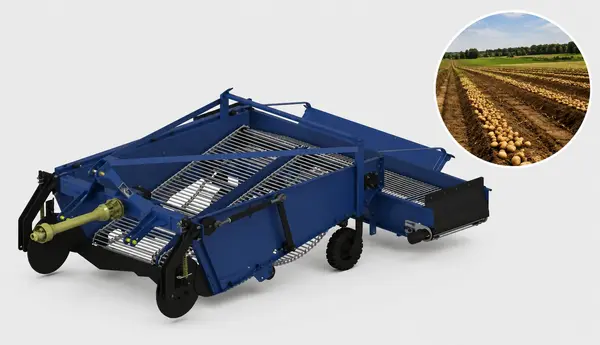
In potato machinery terms, a small farm is best defined not by acreage alone but by the combination of potato enterprise scale (hectares harvested per season), tractor power available (HP), and the operational model (family labour, part-time farming, market garden sales). These three factors together determine which machinery configuration is appropriate far more precisely than any single number.
For this guide, the small farm potato operation is one harvesting between 0.5 and 8 hectares of potato per season, operating with a tractor of 20–60 engine HP, and typically using a combination of family labour and the tractor-powered implement for all seasonal operations. This covers: market gardens selling direct to consumers or restaurants; smallholdings in the UK, Australia, Canada, and Ireland where potato is one of several enterprises; hobby farms where potato production is serious but not the primary farm income; and family farms in South and Southeast Asia where compact two-wheel or four-wheel tractors are the primary power source.
| Farm Scale (ha potato) | Annual Yield (t) at 30 t/ha | Harvest Days Needed (1-row digger) | Appropriate Equipment Tier |
|---|---|---|---|
| 0.1–0.5 ha (hobby / allotment) | 3–15 t | 0.5–1.5 days | Hand tools or walk-behind tiller; single-row compact digger optional |
| 0.5–2 ha (small market garden) | 15–60 t | 1.5–4 days | Single-row mounted digger (40–55HP tractor) — full mechanisation justified |
| 2–5 ha (smallholding / diversified) | 60–150 t | 4–10 days | Single-row digger (50–65HP) + planter + furrower complete system |
| 5–8 ha (serious smallholder / growing) | 150–240 t | 10–18 days | Two-row mounted digger (65–80HP) or small harvester — approaching commercial tier |
The table makes one important point visible: even at five hectares, a single-row digger can complete the harvest in approximately two weeks of good working days — a realistic window for most climates during the maincrop potato harvest season. The pressure to upgrade to a two-row machine or a harvester at this scale comes not from the field rate but from labour availability and weather risk. If the harvest window is reliably dry, labour is available to keep pace with the digger, and there is no competing enterprise demand on the same tractor during harvest fortnight, the single-row digger on a 50–60HP tractor serves a five-hectare operation adequately.
The 20–40HP Tractor — What Potato Machinery It Can Run (and What It Cannot)
The compact utility tractor in the 20–40HP range is the most common tractor on smallholdings and hobby farms worldwide. It is versatile, affordable, easy to operate, and capable of running many PTO-driven implements that the farm needs across its various enterprises. For potato operations, it can run most of the pre-planting and planting-system implements without difficulty. It cannot reliably run a single-row mounted potato digger in anything heavier than sandy loam soil — and this is where many small-farm potato plans run into problems.
Single-row compact furrower (disc type) · Single-row fertilizer applicator (gravity or PTO-driven metering) · Single-row semi-automatic potato planter (PTO-driven cup/belt) · Narrow rotary cultivator (0.9–1.2m) for seedbed preparation on light to medium soils · Rotary hilling attachment for earthing up potato ridges mid-season
Single-row mounted potato digger on clay or loam soil (requires 40HP minimum for light soils, 50HP for loam) · Two-row mounted digger (requires 65HP minimum) · Any trailed digger or harvester · Rotary cultivator wider than 1.2m at adequate depth on loam or clay · Any big bag harvester
The critical dividing line at 40HP is the potato digger. The digging share is the most power-intensive implement in the potato farming sequence — it must penetrate and lift a volume of compacted soil under load while the elevator chain simultaneously processes the lifted mass. On sandy loam at low forward speed, a well-maintained single-row digger can be coaxed through behind a 35–38HP tractor in the best conditions. In practice, the forward speed required to stay above wheel-slip threshold and the PTO load of the elevator chain under heavy soil loading means that anything below 40HP produces an unsatisfactory harvest on real farm soils. A tractor below 35HP should not be specified for a potato digger regardless of soil type.
If the farm currently has a 25–35HP compact tractor and potato growing is the goal, the options are: (1) hire a digger contractor for the harvest while running the planting system with the existing tractor; (2) upgrade the tractor before the first harvest season; or (3) limit the potato enterprise to an area small enough that hand harvesting behind the tractor-operated digger on very light soils is feasible. Option 1 — contracting the harvest — is the most practical path for a first-season enterprise that is testing market viability before committing to full machinery investment.
40–60HP — The Small Farm’s Complete Potato System Tractor
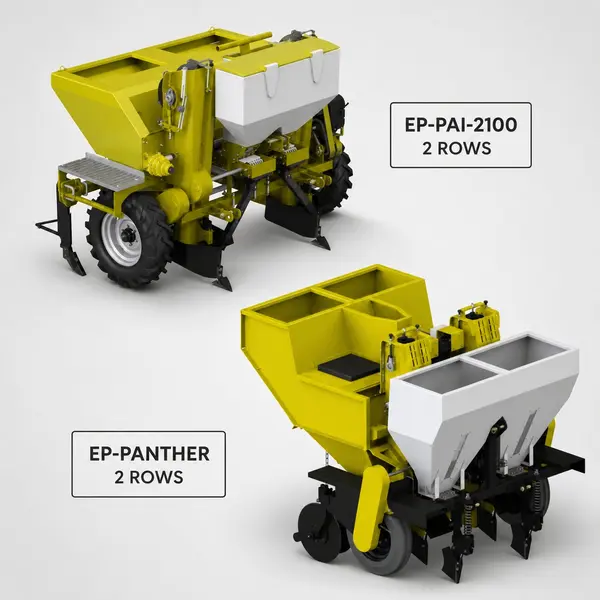
A tractor in the 40–60HP range is the smallest tractor category that supports a genuinely complete, mechanised potato farming system from soil preparation through to harvest. All of the implements needed — rotary cultivator, furrower, fertilizer applicator, planter, and single-row mounted digger — are within its capacity, though the digger on the upper limit of soil difficulty (clay or stony ground) will be at the margin on a 40HP tractor and comfortable on a 55–60HP tractor. Within this power band, the small potato enterprise has no need for the larger, more expensive implements of commercial-scale operations.
| Implement | 40 HP | 50 HP | 60 HP | Notas |
|---|---|---|---|---|
| Rotary cultivator (1.2–1.6m) | ✅ Sandy/loam | ✅ Any soil | ✅ Any soil | Reduce speed on clay in first pass at 40HP |
| Potato furrower (2-row) | ✅ | ✅ | ✅ | Low power demand; Cat 1/2 hitch compatible |
| Fertilizer applicator (band) | ✅ | ✅ | ✅ | No PTO constraint; linkage weight is the only check |
| Potato planter (1–2 row semi-auto) | ✅ | ✅ | ✅ | Check Cat 1/2 pin compatibility; planter PTO demand is low |
| Single-row mounted digger | ⚠️ Sandy/loam only | ✅ Any soil | ✅ Any soil | 50HP+ recommended for clay or stony soils |
| Two-row mounted digger | ❌ | ❌ | ⚠️ Sandy loam only | Two-row mounted requires 65HP minimum (see P-37) |
| Big bag harvester (1-row) | ❌ | ❌ | ⚠️ Marginal | Most 1-row harvesters specify 60HP minimum; 70HP recommended |
The single-row mounted digger on a 50–55HP tractor is the cornerstone implement for the small farm potato system. At this configuration, all other implements in the system are well within the tractor’s capability, the harvest operation is mechanised to the standard that removes the most physically demanding element of potato growing, and the capital investment in machinery is proportionate to a 1–5 hectare potato enterprise. This is the configuration that most small potato farmers should be aiming for as their base system — not a two-row digger, not a harvester, but a well-matched single-row system on a correctly specified tractor.
Building the Small-Farm Potato System — Equipment Sequence and Priority Order
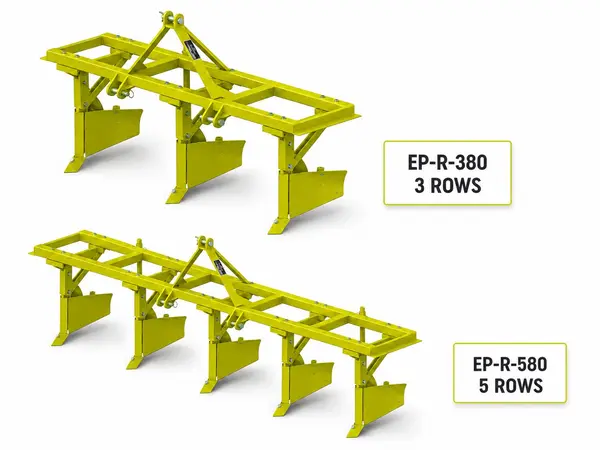
Building a complete potato machinery system progressively — buying implements in the order of their season-relevance and priority rather than all at once — is the most financially sensible approach for a small farm establishing its potato enterprise. The order below reflects both the seasonal sequence and the investment logic: earlier implements represent smaller commitments that can be tested before the larger digger investment is confirmed by a first successful harvest.
| Paso | Implement | Season Role | Potencia mínima del tractor (HP) | Alternative if Delaying Purchase |
|---|---|---|---|---|
| 1 | Rotary cultivator (1.2–1.6m) | Early spring — seedbed | 30 HP | Hire contractor for first-season cultivation |
| 2 | Potato furrower (2-row) | Early spring — ridge formation | 35 HP | Hand-ridging on small areas; buy early (low cost) |
| 3 | Fertilizer applicator (band) | Spring — at or before planting | 30 HP | Hand-spread on small areas; combine with furrower on some units |
| 4 | Potato planter (1–2 row) | Spring — seed placement | 40 HP | Hand-plant first season while testing market demand |
| 5 | Single-row mounted DIGGER | Autumn — harvest | 40–50 HP ⬅ critical | Hire contractor first year if tractor HP is insufficient |
The purchase sequence in the table has a deliberate logic. Steps 1–4 are all achievable within the 30–40HP range — a farmer with an existing compact tractor can run a planting system and test the market for their potato enterprise before committing to the Step 5 digger. The digger represents the largest single implement investment and the one with the most specific HP requirements. For many small farms, running Steps 1–4 with the existing tractor in Season 1, hiring a digger contractor for the Season 1 harvest, and buying the digger in Season 2 once the enterprise is proven, is the lowest-risk and most capital-efficient approach to building the complete system.
The full range of small farm potato machinery — including single-row planter, furrower, and digger configurations sized for compact tractors — is available through Korea Watanabe with specifications for each implement’s minimum tractor requirement.
Five Common Small-Farm Potato Machinery Mistakes and How to Avoid Them
Preguntas frecuentes
▶I have a 35HP compact tractor and 1 hectare of potato. Can I run a small potato digger?
At 35HP, you are in the marginal zone for a single-row mounted digger, and the answer depends heavily on your soil. On light sandy loam at field capacity moisture, a well-maintained, correctly adjusted single-row digger with a relatively light share load (shallow-planted, light crop) can be managed at 35HP with reduced forward speed — typically 2–3 km/h rather than the 4–5 km/h the machine is designed for. On loam or clay soils, 35HP will cause the tractor to labour and wheel-slip, and the harvest experience will be frustrating and inefficient. The practical recommendation for 35HP: hire a digger contractor for this hectare and invest the cost toward a tractor upgrade to 45–50HP before Season 2, at which point a single-row digger is comfortable on any realistic field soil.
▶Is a walk-behind rotary tiller-based potato digger a real option for very small areas?
Walk-behind potato digger attachments for two-wheel tractors (power tillers) are a genuine and widely used option for areas below approximately 0.3 hectares, and are extensively used in South and Southeast Asia on small potato plots. They typically consist of a single oscillating share that undercuts and lifts the potato bed, depositing tubers behind without an elevator chain — the soil separation is less complete than a tractor-mounted chain-elevator digger, and the tubers require some hand-clearing from the lifted soil. For a 0.1–0.3 hectare market garden or household potato plot, a walk-behind tiller with a potato digger attachment is a practical and cost-effective tool. Above 0.3 hectares, the slow working speed of walk-behind equipment makes the four-wheel tractor and mounted digger the more practical investment.
▶Should a small farm buy new or second-hand potato machinery?
For a first-time potato enterprise establishing its market and management system, second-hand implements for the lower-risk items — furrower, fertilizer applicator, and planter — make good financial sense. These are mechanically simple, parts are readily available, and the relatively low purchase price of second-hand units allows the enterprise to test the system before committing to new equipment. For the digger, the calculus is different: a worn digger with stretched elevator chain, damaged share tips, and tired separator wheels can cause significant crop losses through missed tubers, soil carry-over, and quality damage — and repair costs on a worn machine can approach the price difference between used and new. A new or near-new digger on a correctly sized tractor is generally the more reliable investment for the core harvest implement, even if it means buying used elsewhere in the system.
▶Can I share potato machinery with a neighbour to reduce the cost per farm?
Machinery sharing between neighbouring farms is a well-established practice in small-scale agriculture and can be particularly effective for potato implements that are used intensively for short periods — especially the digger, which may be needed for only 5–15 days per season on a small farm. The practical requirements for successful sharing are: clear written agreement on costs (ownership, maintenance, insurance, fuel), a scheduling process that ensures the machine is available for each farm’s optimal harvest timing (sharing across farms whose harvest windows overlap is the most common source of conflict), and agreement on who bears repair costs when a breakdown occurs during the other party’s use period. For the lower-cost implements (furrower, fertilizer applicator), individual ownership is usually more practical than sharing, because the per-implement cost is low enough that the administrative overhead of sharing exceeds the financial saving.
▶At what scale should a small potato farm start thinking about upgrading from digger to harvester?
For small farms in the 20–60HP tractor range, the harvester upgrade question typically becomes relevant at around 5–8 hectares — but it is driven more by labour situation than by farm size alone. If a 5-hectare farm has reliable family labour available for the two-week harvest window to pick behind the single-row digger, the digger system continues to work well at that scale. If the farm has grown to 5 hectares and reliable harvest labour is difficult or expensive to source, the big bag harvester — which requires only one person plus the tractor driver — becomes financially attractive even at that relatively small scale. The limiting factor on the tractor side: most big bag harvesters require 60–70HP minimum, which means a tractor upgrade is a precondition of the harvester purchase at the lower end of the 20–60HP range. Factoring in the tractor upgrade cost alongside the harvester investment changes the payback calculation significantly compared to simply comparing harvester price against labour cost savings.
Tell Us Your Tractor and Potato Scale — We’ll Confirm What Fits
Share your tractor HP, hitch category, planned potato area, and soil type. Korea Watanabe will confirm which small farm potato machinery is compatible and correctly sized for your operation — no over-specification, no under-powering.
Editor: Cxm