Korean highland potato production is not a single market — it is three distinct supply chains that require different varieties, different growing protocols, and in some cases, different machinery settings. A potato farmer producing for the fresh market needs different characteristics from their crop than a farmer supplying a crisp manufacturer, who needs different characteristics again from a certified seed potato operation. Understanding which varieties suit which market, and how those variety choices connect to machinery decisions, is the foundation of planning a commercially successful highland potato season.
This guide covers the major Korean potato varieties commercially grown in Gangwon-do highland production — the varieties that Korean rural agricultural technology centers, the National Institute of Agricultural Sciences (NAAS, 국립농업과학원), and the seed certification system recognise and support for highland production. Variety agronomy data in this guide is drawn from publicly established Korean agricultural research literature. Market price data is not stated — prices change seasonally; confirm current market prices with your local cooperative or buyer before making variety decisions based on price expectations.
Importante: Korean potato variety registration and seed certification status changes over time as new varieties are developed and released by NAAS and the private sector. Confirm the current seed certification status and seed supply availability for any variety before committing it to your planting plan. This guide reflects varieties that were established in Korean highland production as of the guide’s preparation — new commercially significant varieties may have been released subsequently.
The Three Korean Potato Market Channels — Different Varieties for Each
Processing Varieties — High Dry Matter, Specific Gravity Priority
atlántico
Atlantic is the dominant processing variety grown in Korean highland conditions for the crisp (과자) manufacturing industry. Its combination of high dry matter content (typically 21–24% depending on production conditions), high specific gravity (above 1.080 — the standard crisp manufacturer intake specification), and white flesh colour that resists enzymatic browning after cutting makes it well-suited for crisp production. Atlantic was developed in the USA and has been grown in Korea since the 1980s; it is now the most widely contracted processing variety in Gangwon-do highland production.
Atlantic’s primary limitation in Korean highland production is its susceptibility to late blight (감자 역병, Phytophthora infestans) and common scab under humid conditions. The Gangwon-do highland summer rainy season creates exactly the conditions under which Atlantic blight pressure is highest — effective fungicide management program is essential for this variety. Atlantic is also moderately susceptible to hollow heart defect when soil moisture is inconsistent during the tuber bulking period; irrigation or soil moisture management during the bulking phase is important on fields with variable drainage.
Machinery notes: Atlantic’s typical mature tuber size of 80–180g is within the standard EP-AWB-1600 digger share and bunker system’s handling range. The EP-PAI-2100 planter’s 16-gear seed spacing system covers the recommended 28–33 cm Atlantic spacing without modification. Atlantic’s processing supply chain is well-suited to the EP-CWB-2L big bag harvester for direct crisp manufacturer supply.
Russet Burbank (and Russet Types)
Russet Burbank and its Korean-adapted derivatives are grown for the frozen potato sector — French fries, potato wedges, and hash brown supply to fast food and food service distributors. Russet types have elongated tuberous shape (unlike the more rounded Atlantic), russet netted skin, and high dry matter content. Korean Russet cultivation for processing is less extensive than Atlantic but growing alongside the expansion of the Korean fast food and food service potato market.
Russet varieties in Korean highland production require wider in-row seed spacing (33–40 cm) to support their larger final tuber size — the EP-PAI-2100’s 16-gear system accommodates this range. Russet maturation period is typically 100–120 days — longer than Atlantic — which constrains highland growing at altitudes above 600 m where the frost-free season is shorter. Most Korean Russet production is concentrated at lower highland altitudes (400–500 m) where the longer season is available.
Fresh Market Varieties — Skin Quality, Shape, and Consumer Appeal
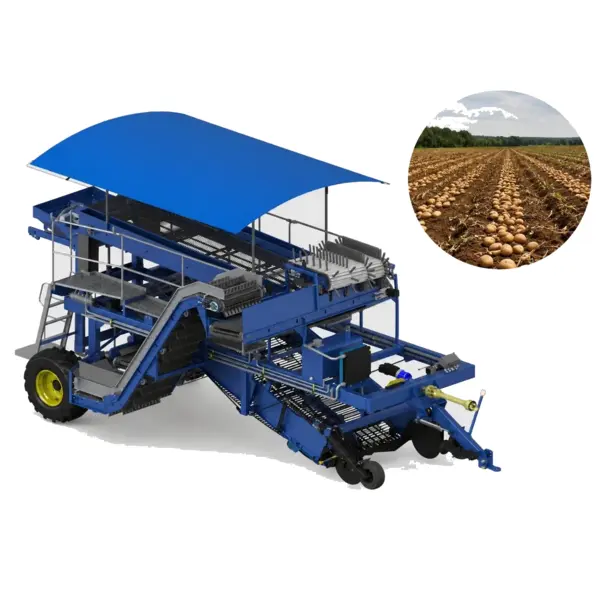
Superior
Superior is one of the most widely grown fresh market varieties in Korean highland production. Developed in the USA and adapted to Korean highland conditions over several decades, Superior produces smooth-skinned, medium-round tubers with white flesh that maintains good cooking quality across multiple preparation methods — boiling, baking, and stir-frying (the dominant Korean kitchen preparations). Its moderate dry matter content (18–21%) produces a texture that Korean consumers associate with quality all-purpose potato.
Superior’s earlier maturation (70–90 days after emergence) compared to Atlantic (80–100 days) makes it better suited to the shortest growing windows at higher altitudes (600–800 m). Korean highland farmers producing for the early-season wholesale market (the first Gangwon-do highland potato reaching the 가락시장 in July commands premium prices before lowland and southern regions reach market volume) often grow Superior specifically for its earlier harvest window.
Dejima (데지마)
Dejima is a Japanese-origin variety that has been widely adopted in Korean highland fresh market production. Its smooth, yellowish-cream skin and yellow-tinged flesh colour — unusual among Korean market varieties which traditionally favoured white flesh — appeals to a premium consumer segment that associates the yellow colour with richer flavour and higher dry matter content. Dejima is grown in Pyeongchang-gun and Hoengseong-gun for both local direct-sale and cooperative market supply.
Dejima’s skin appearance — uniform, smooth, without net russeting — is its primary fresh market differentiation. At the 가락시장 wholesale market, Dejima commands a visible price premium over standard Superior on the same day when skin condition is good. This premium is sensitive to skin damage — bruises and abrasions from stone contact during growing or rough mechanical handling at harvest are more visible on Dejima’s smooth skin than on the netted skin of Russet varieties. The CT-2100 rock picker’s complete stone removal before planting is therefore particularly valuable for Dejima production where skin quality determines market return.
Haryoung (하령) — Domestic Korean Variety
Haryoung (하령, literally “summer spirit”) is a Korean-bred variety developed by NAAS specifically for highland production conditions and domestic fresh market characteristics. It has been bred for late blight resistance superior to most introduced varieties, adapting better to the humid highland summers that challenge Atlantic and Superior management. Haryoung produces large, smooth-skinned tubers with white flesh and uniform shape that meets fresh market specification requirements.
As a domestically-bred NAAS variety, Haryoung certified seed is available through the Korean seed certification system at prices and volumes that may be more stable than imported variety seed lots. Korean highland farmers experiencing persistent blight management challenges with Atlantic or Superior should evaluate Haryoung as an alternative that maintains fresh market quality while reducing fungicide management intensity. NAAS variety performance trial data for Haryoung across multiple Gangwon-do highland locations is available through the RDA (농촌진흥청) research publications network.
Certified Seed Potato Production — The Highest Value Channel
Certified seed potato production — supplying other potato farmers with certified, disease-free seed of specific varieties — is the highest-value channel in Korean potato farming, with seed prices commanding significant premiums over fresh market equivalents. However, it is also the most regulated and demanding production system, requiring strict compliance with Korean seed certification regulations (종자관리법) administered by NAAS and the Korea Seed & Variety Service (KSVS, 국립종자원).
Requirements for Certified Seed Production
Certified source seed: Seed potato for certified seed production must originate from a certified source — typically virus-tested foundation seed (기본종) or pre-basic seed (보급종) supplied through NAAS or approved seed multiplication programs. You cannot produce certified seed from uncertified commercial potato.
Isolation distance: Seed potato fields must be isolated from other potato fields by the minimum distance specified by the certification standard — to prevent cross-contamination of pollen (for varietal purity) and virus spread by aphid vectors (for disease freedom). Minimum isolation distances vary by certification class.
Field inspection: Certified seed fields are inspected by KSVS-appointed inspectors at specific growth stages — emergence, early flowering, and pre-harvest — for varietal purity, disease presence, and overall crop health. Fields that fail inspection do not receive certification regardless of production investment.
Zero-stone seedbed: Certified seed production requires the same zero-stone seedbed standard as ginseng — any stone contact during the growing period that damages tubers causes defects that disqualify those tubers from certification. The THOR 2.4 + CT-2100 clearance sequence is the professional standard for seed potato field preparation in Korean highland production.
Machinery Settings by Variety — The Practical Connection
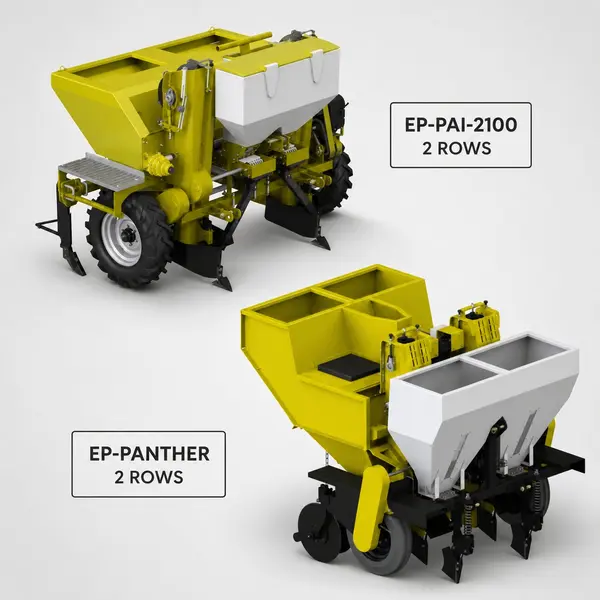
Variety selection connects directly to the machinery settings used throughout the season. The following summary shows how each major variety affects the three most important machinery decisions:
| Variety | Planter spacing | Digger depth | Retirada de piedras | Supply chain |
|---|---|---|---|---|
| atlántico | 28–33 cm | 20–22 cm | THOR + CT-2100 | Crisp mfr, FIBC direct |
| Russet Burbank | 33–40 cm | 22–24 cm | THOR + CT-2100 | Frozen food, food service |
| Superior | 25–30 cm | 18–20 cm | Rake + CT-2100 | Fresh market, cooperative |
| Dejima | 25–30 cm | 18–20 cm | THOR + CT-2100 | Mercado de productos frescos de primera calidad |
| Haryoung (하령) | 28–33 cm | 20–22 cm | THOR + CT-2100 | Fresh market, blight zones |
| Seed potato (any variety) | 33–40 cm | 20–22 cm | THOR + CT-2100 mandatory | Certified seed growers |
Confirm seed spacing settings with your agricultural extension officer or seed supplier
The spacing ranges above are general agronomy guidelines from Korean potato research literature. Your specific target market, expected yield, and local soil conditions may warrant adjustments. Confirm the recommended spacing for your variety and target market with your regional agricultural technology center (농업기술센터) or the variety’s seed supplier before setting the EP-PAI-2100’s gear spacing for the season.
Disease Resistance — Why Variety Choice Affects Management Intensity
Gangwon-do highland summers — warm days, cool nights, and the humidity of the June–August rainy season — create conditions that favor late blight (Phytophthora infestans) development. Disease management is a significant cost in Korean highland potato production, and variety resistance to late blight materially affects both the required fungicide program and the frequency of application:
High susceptibility (intensive management)
Atlantic — susceptible to late blight; requires preventive fungicide program starting before visible symptoms, typically 7–10 day intervals during humid periods. Superior — moderate susceptibility; similar management requirement. These varieties produce higher market prices but require higher protection cost in Gangwon-do highland conditions.
Better resistance (reduced management)
Haryoung (하령) — developed with late blight resistance as a primary breeding target; field performance in Gangwon-do shows significantly lower blight pressure than Atlantic under equivalent conditions, allowing extended fungicide intervals during moderate pressure periods. Other NAAS-developed varieties with documented highland disease resistance should be evaluated from RDA trial data for your specific production zone.
Disease resistance is not the only selection criterion — the market channel must also align. Atlantic’s late blight susceptibility is accepted by Gangwon-do processing farmers because Atlantic’s specific gravity and dry matter content are what crisp manufacturers contract for. A more disease-resistant variety that does not meet the specific gravity specification is not a valid substitute for the processing market, regardless of its blight resistance advantage. Variety selection requires balancing market requirements, agronomic performance, and management cost — not optimising any single criterion in isolation.
Preguntas frecuentes
Can I change varieties mid-season if I find my current variety isn’t meeting market requirements?
No — once seed is planted, variety is committed for that season. The variety decision must be made before ordering seed in winter, not after planting in spring. If you are unhappy with your current variety’s market performance, the change takes effect in the following season. This is why evaluating variety options before the winter seed ordering period — not after the spring planting window opens — is essential. Discuss variety alternatives with your cooperative, processing plant buyer, and regional agricultural extension service in November–December for the following spring’s planting.
Can I save my own potato seed from this year’s harvest for next year’s planting?
Saving potato seed from a commercial crop for replanting is legally permissible in Korea for varieties not protected by plant variety protection (PVP/품종보호) rights, but it carries significant agronomy risk. Saved seed from commercial crops accumulates viral disease through successive seasons — potatoes are propagated vegetatively (not from botanical seed), meaning any virus present in the mother plant is carried into the daughter tubers. By the second or third year of saved seed use, viral disease accumulation can cause significant yield reduction and variety deterioration that certified seed supply prevents. For commercial production — particularly for processing supply where specific gravity specification is important — using certified virus-tested seed from an approved source each season is the professional standard, not the exception.
Are there new Korean-bred varieties worth evaluating that haven’t been established for as long as Atlantic and Superior?
NAAS continuously develops and releases new potato varieties adapted to Korean conditions. In addition to Haryoung, varieties such as Goun (고운), Saebong (새봉), and others have been released in recent NAAS variety development programs with specific characteristics targeting Korean market requirements and highland growing conditions. Performance trial data for new NAAS varieties across multiple highland locations is published through the RDA research publications network (농촌진흥청 연구출판정보서비스). Reviewing this trial data for your specific growing altitude and target market is the evidence-based approach to evaluating whether a newer variety offers advantages over established varieties for your specific production situation.
Does variety choice affect which Watanabe machines I need?
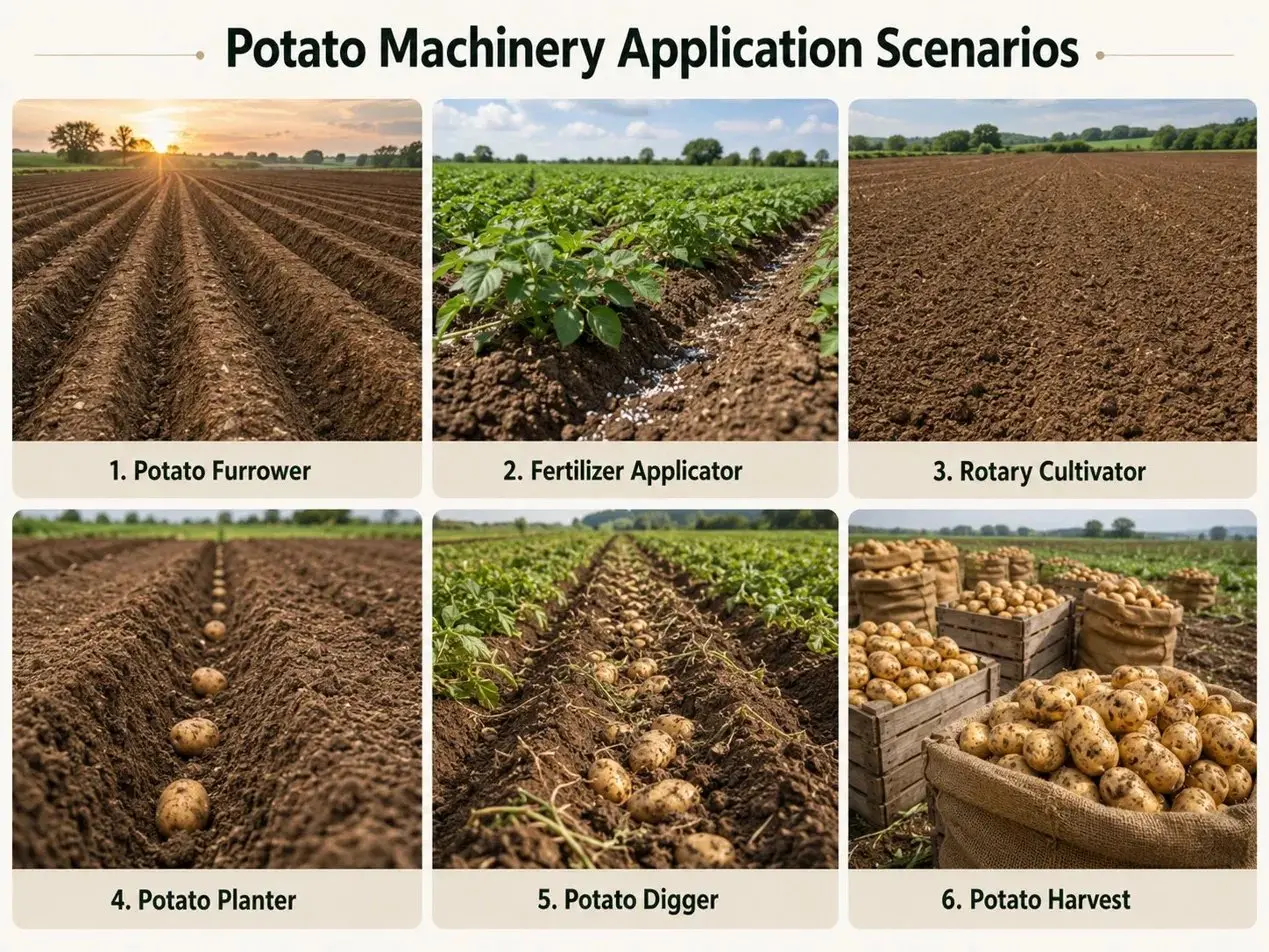
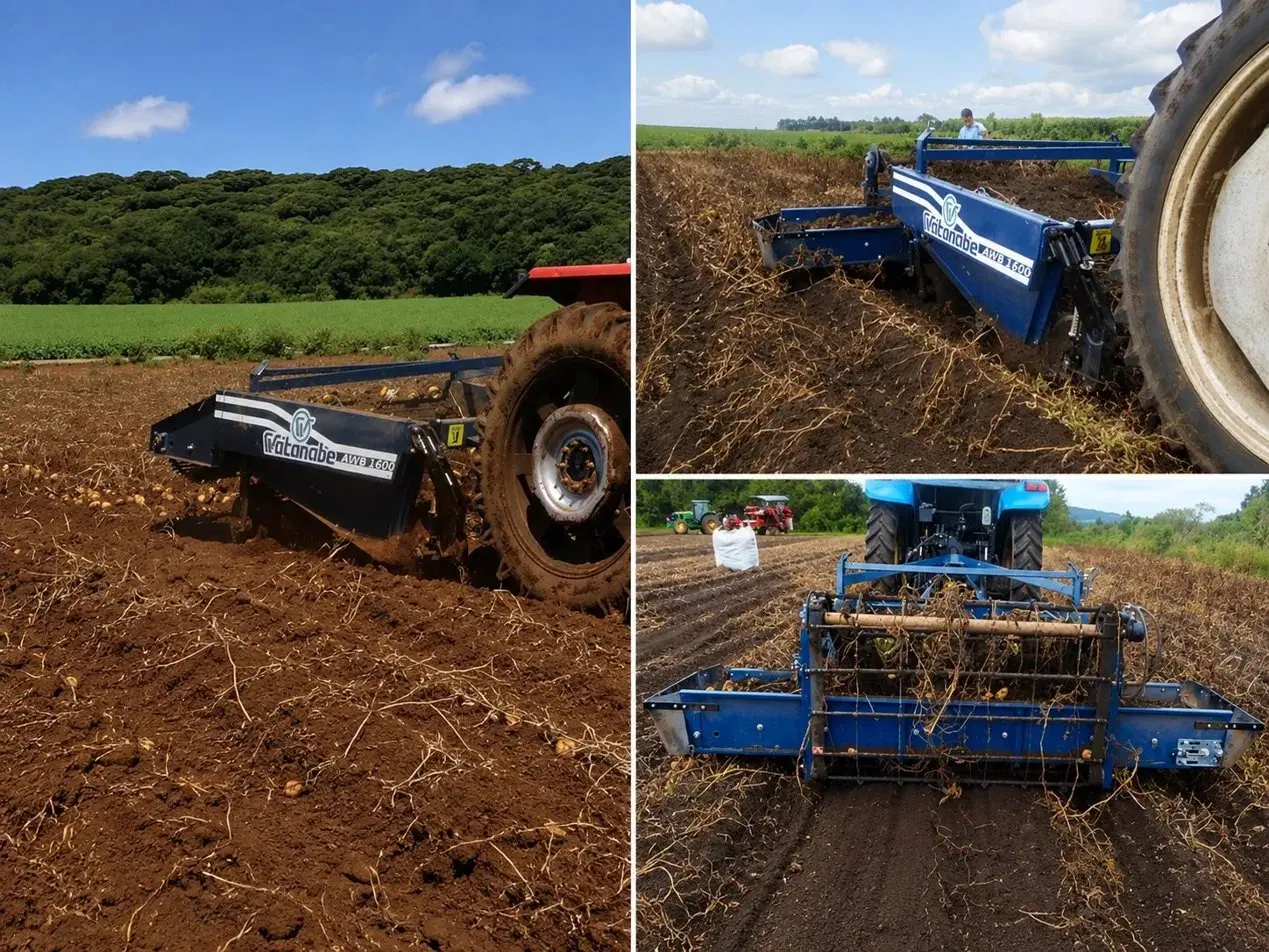
Variety choice affects machine settings but not the machine models required. The same EP-PAI-2100 potato planter with its 16-gear spacing system covers the recommended spacings for all major Korean varieties from 25 cm (Superior, Dejima) to 40 cm (Russet, seed potato). The same Excavadora de patatas EP-AWB-1600 handles all varieties — the share depth is adjusted for the variety’s typical tuber zone depth, but the machine itself is the same. The supply chain choice (fresh market vs processing FIBC) affects whether you use the EP-AWB-1600 Kit B or the EP-CWB-2L big bag harvester — that decision is driven by your market channel, which is closely connected to variety selection.
Planning Next Season’s Potato System? Start With Your Variety and Market Channel.
Variety + target market (fresh / processing / seed) + farm scale + altitude → complete machine system recommendation from rotavator through digger, with seed spacing confirmation for your specific variety. All Watanabe potato machinery in Korea local stock, Ansan-si, Gyeonggi-do.
Editor: Cxm