Korean highland potato farming offers four commercially established varieties — Sumi, Daejima, Dubaek, and Atlantic — each with a distinct market destination, altitude optimum, and interaction with the stone-cleared growing environment that the THOR 2.4 Gesteinsbrecher system produces. This 2025 guide updates the variety decision framework with current market channel realities, altitude-zone matching, and the mixed-variety portfolio allocation strategy that most successful Korean highland farms have adopted.
The guide is structured in three layers: individual Korean potato variety profiles for each of the four main varieties, an altitude and market channel matching matrix, and a practical mixed-variety portfolio recommendation for farms at different scales and development stages. All specifications are from Korean National Institute of Agricultural Sciences (NAAS) variety registration data and current Korean market pricing.
Why Variety Selection Must Come Before Machine Selection — The Market Channel Logic
A common planning error on Korean highland farms is to select machinery first and variety second. The correct sequence is the reverse. Variety selection determines market channel, which determines storage requirements, certification needs, and the quality standard the cleared field must meet. Choosing machinery before variety means the stone clearing system may be optimised for the wrong crop quality standard.
Must have a crisp manufacturer supply contract confirmed before seeding. No alternative premium market if the contract is not in place. Requires a separate CIS cold storage zone at 8–10°C. The entire system must be set up for Atlantic before the first seed is ordered.
Must have cold storage at 3–5°C operational before harvest. The January premium that justifies Dubaek cultivation is only accessible if the crop can be held from August to January. Without cold storage, Dubaek provides no price advantage over Sumi at harvest.
Must have premium large-tuber buyers (restaurants, food service, supermarket large-pack channels) before scaling to commercial area. Daejima’s price premium over Sumi is only captured if the buyer specifically values the large-tuber format — the cooperative bulk channel does not differentiate.
The only variety with full market channel flexibility — cooperative, direct fresh, online, kimchi manufacturer, and certified seed. The appropriate starting choice for any farm before the other channel relationships are established.
The Four Korean Highland Varieties — 2025 Updated Profiles
The following profiles are based on NAAS registration data for each variety and current Korean highland market pricing. Price ranges reflect seasonal variation — peak prices occur in the October–January window; harvest prices are typically 30–50% lower.
Dry Matter Comparison — Why It Determines Market Channel Fit
Altitude × Variety Compatibility — Matching the Variety to Your Farm’s Elevation
Korean highland potato variety performance is altitude-dependent. Each variety has a specific altitude optimum where its quality characteristics peak. Planting outside that range produces suboptimal quality even with excellent field management:
| Höhenzone | Sumi | Daejima | Dubaek | atlantisch |
|---|---|---|---|---|
| 400–500 m (lower highland) | ✅ Good | ✅ Good | ⚠ Acceptable | ✅ Good |
| 500–600 m (mid highland) | ✅✅ Best | ✅✅ Best | ✅ Good | ✅✅ Best |
| 600–750 m (upper highland) | ✅✅ Best | ✅ Good | ✅✅ Best | ✅ Good |
| 750–900 m (high altitude) | ⚠ Season short — early variety recommended | ❌ Nicht empfohlen | ✅✅ Best | ⚠ Borderline season length |
The altitude-Dubaek relationship is the most commercially significant finding in this matrix. At 600 m+, Dubaek produces the thick skin and high dry matter that justify cold storage and the January premium — these quality characteristics are a direct result of the cool night temperatures at altitude and cannot be replicated by varietal management alone at lower altitudes. A Dubaek crop grown at 450 m produces acceptable potato but not the premium Dubaek that the market specifically pays for.
Stone Clearing Interaction — Which Variety Benefits Most from the THOR 2.4 System
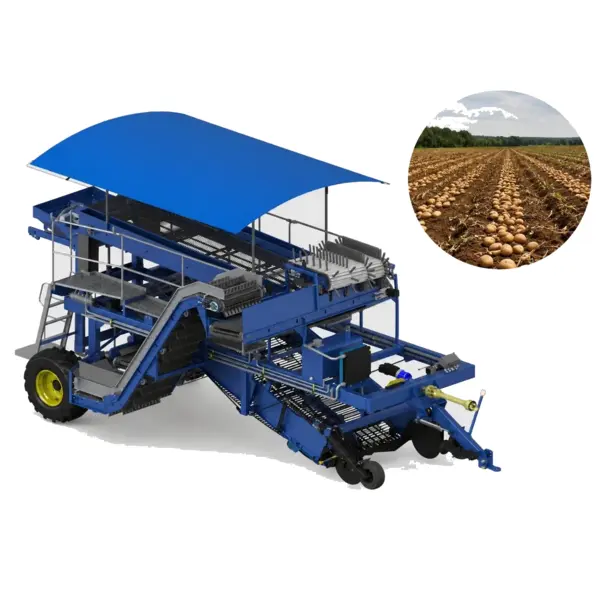
All four Korean highland varieties benefit from the zero-tolerance stone clearing the THOR 2.4 produces, but the benefit is not equally distributed. Understanding which variety benefits most helps prioritise stone clearing investment when whole-farm clearing is being planned in stages:
Hollow heart rate on un-cleared fields: 15–25%. On THOR 2.4-cleared fields: below 3%. The large-tuber format amplifies stone sensitivity because the bigger tuber requires more uniform moisture across a larger development zone. Stone-disrupted ridges create moisture heterogeneity that specifically triggers hollow heart in large tubers. Daejima’s premium depends entirely on stone-free production.
Processing specification requires uniform dry matter (minimum 21%) and smooth skin. Stone contact during bulking disrupts the uniform moisture that builds consistent dry matter. On cleared fields, Atlantic’s dry matter compliance rate improves from borderline to reliable. Processing contracts specify dry matter at intake — a non-compliant lot is rejected regardless of yield.
Grade 1 proportion improvement from 68% (un-cleared) to 90%+ (cleared). On a 10 ha Korean highland farm producing Sumi for the direct fresh market, the transition from 68% to 90% Grade 1 proportion on 270 t total yield (27 t/ha × 10 ha) represents an additional 59,400 Kg reclassified from Grade 2 (380 KRW/Kg) to Grade 1 (1,100 KRW/Kg) — a revenue difference of approximately 42,768,000 KRW on the Sumi area alone. For Dubaek, skin abrasion and bruising reduction enable cold storage success — stone-contacted tubers that would fail the cold store inspection and require immediate fresh sale instead hold through to the January premium window. Skin abrasion and bruising reduction enable cold storage success for Dubaek. Sumi’s improvement is primarily in Grade 1 proportion rather than a specific quality attribute — it is the most stone-tolerant of the four varieties, which is another reason it is the best starting variety for farms in the early clearing stages.
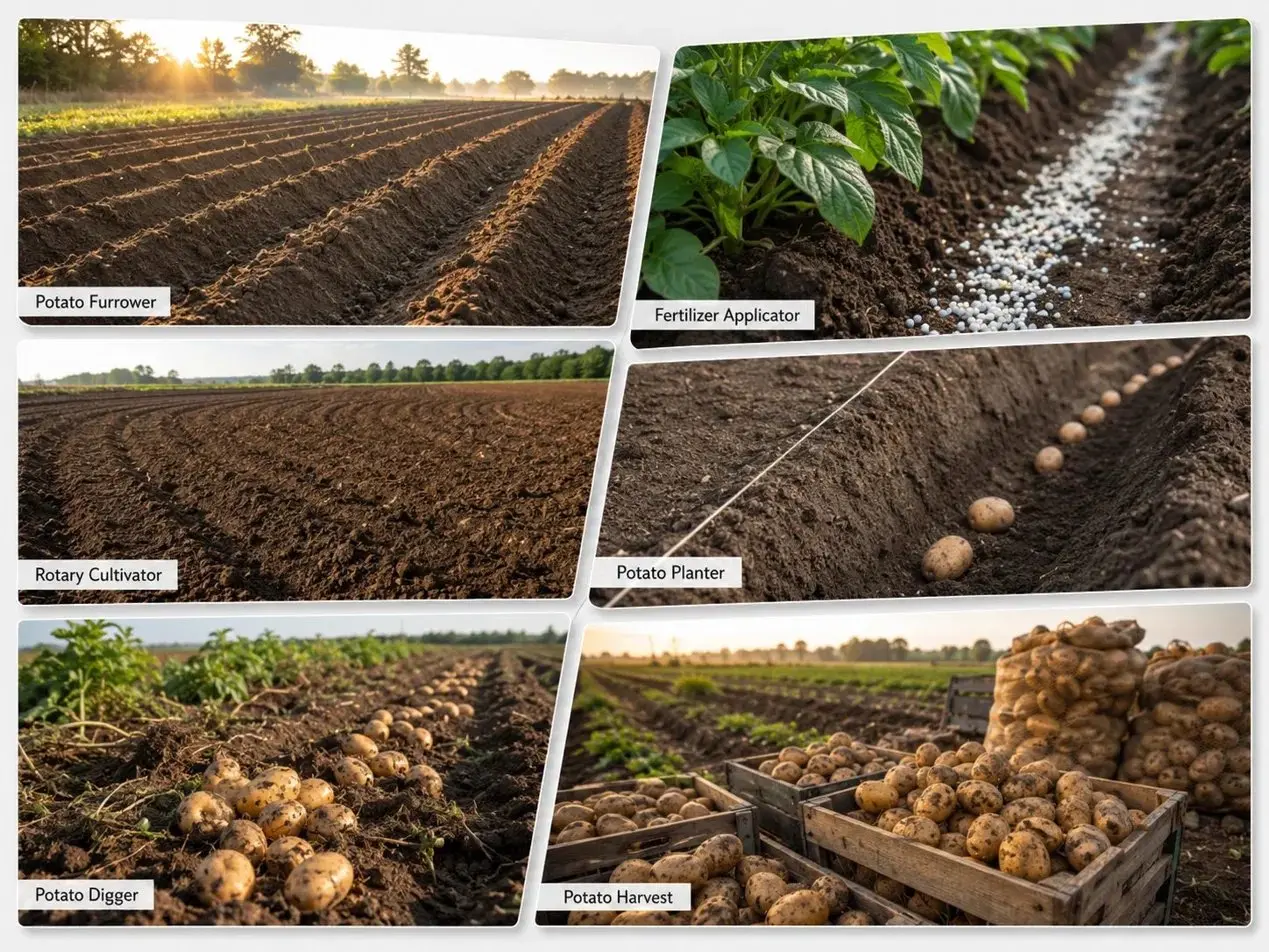
Mixed-Variety Portfolio Strategy — Spreading Market and Price Risk
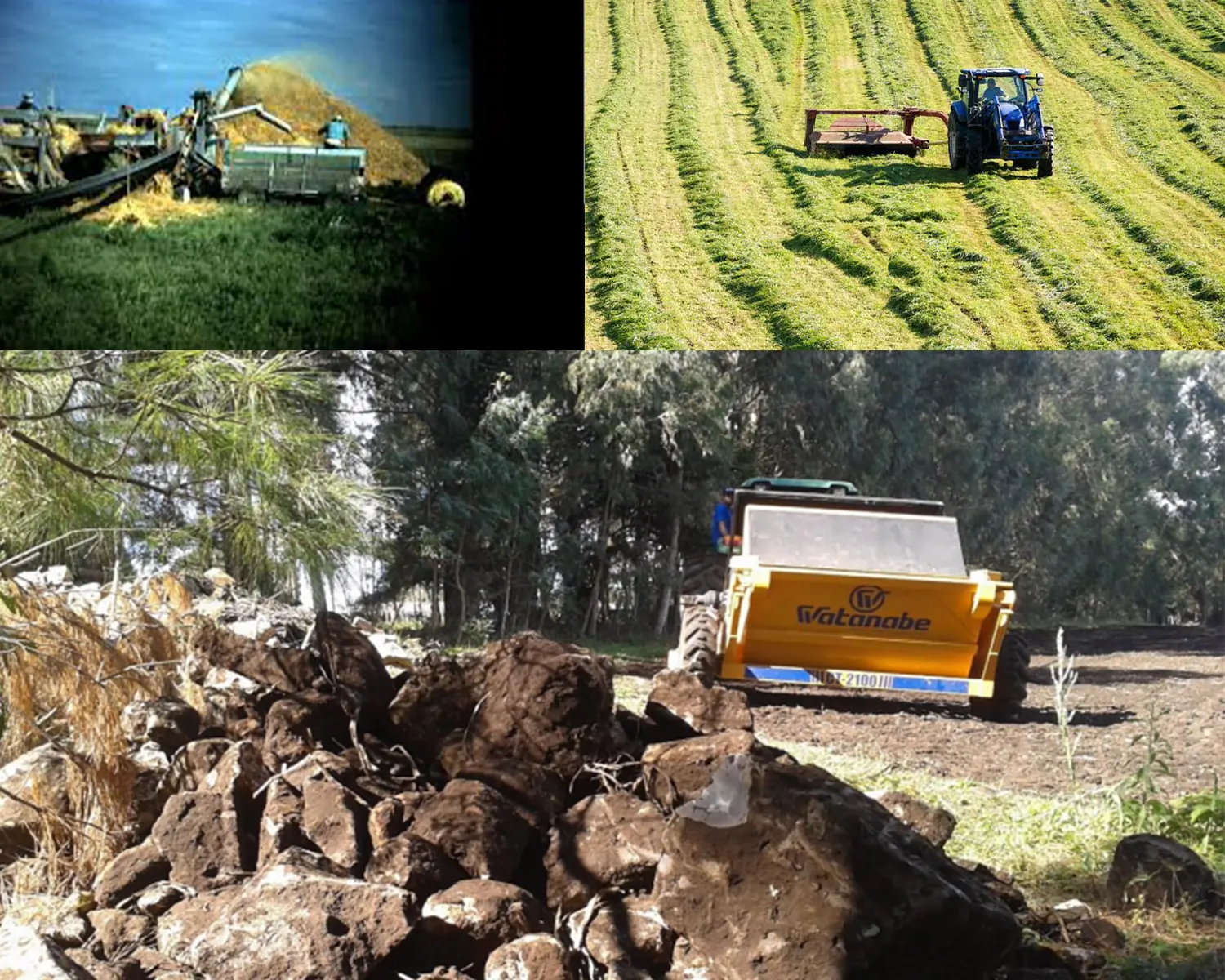
Most successful Korean highland potato farms at 8 ha+ do not grow a single variety. A mixed-variety portfolio reduces the risk that any single market channel disruption eliminates the full season’s revenue. The allocation varies by farm maturity stage. The guiding principle is conservative diversification: each new variety should be added only when the infrastructure, buyer relationship, and management experience that variety requires are already confirmed — not in anticipation of them. Starting with a small test area (0.5–1.0 ha) of a new variety before committing a commercial area is the most reliable way to identify variety-specific management requirements without risking a full season’s revenue on an untested combination of variety, buyer, and infrastructure.
Stage 1 Farm (Year 1–2, clearing just completed)
100% Sumi. No diversification in the first 2 years. Build the cooperative relationship, achieve Grade 1 proportion above 88%, and begin GAP certification documentation. Diversification before the foundation systems are in place adds management complexity without proportional revenue benefit.
Stage 2 Farm (Year 3–4, GAP certified, cold storage available)
60% Sumi / 40% Dubaek (if altitude ≥600 m). The cold storage investment justifies Dubaek only after it is confirmed operational. January Dubaek revenue in Year 3–4 typically funds the Stage 3 potato machinery investment. For farms below 600 m, maintain 100% Sumi or add 20% Daejima if food-service buyer relationships are developing.
Stage 3 Farm (Year 5+, full system, established buyer relationships)
Representative allocation (10 ha at 650 m, cold storage, direct buyers established): 4 ha Sumi (fresh direct + cooperative backstop), 4 ha Dubaek (cold storage January), 2 ha Atlantic (only with confirmed contract). Atlantic limited to 20% maximum regardless of contract terms — managing single-channel exposure. Daejima added only if specific large-tuber buyer relationship warrants a dedicated block (typically 1–2 ha).
First-Time Grower Decision — Three Questions That Resolve the Choice
Question 1: Do you have a confirmed crisp manufacturer supply contract?
YES → Atlantic is appropriate for 20–30% of your potato area. Do not exceed this proportion regardless of the contract terms.
NO → Remove Atlantic from consideration entirely. Do not grow Atlantic speculatively. Move to Question 2.
Question 2: Is your farm at 600 m or above, with cold storage operational or funded?
YES → Dubaek is the priority high-value variety for the cold-storage January peak. Allocate 30–50% of your potato area to Dubaek, remainder to Sumi.
NO (below 600 m, or no cold storage) → Dubaek’s premium is inaccessible without the altitude quality and the cold storage to capture it. Go to Question 3.
Question 3: Do you have an established direct-market buyer who specifically purchases large-format potato?
YES → Add 20–30% Daejima for the large-tuber premium. Requires drip irrigation precision on cleared fields to prevent hollow heart.
NO → Start with 100% Sumi. The broadest channel, lowest risk, most forgiving variety for first-time Korean highland potato growers. Build market relationships and certifications through Sumi before adding variety complexity.
Häufig gestellte Fragen
What is the best potato variety for Korean highlands in 2025?
For the majority of Korean highland farms in 2025, Sumi remains the best starting variety because it has the widest market channel access, the most forgiving altitude range, and the strongest cooperative and direct-market buyer demand. Dubaek is the best variety for farms specifically positioned for the cold-storage January premium — at 600 m+ altitude with cold storage operational, Dubaek’s January price (1,600–2,200 KRW/Kg Grade 1) is approximately 30–80% higher than Sumi’s equivalent period price. Atlantic is only “best” for the specific farm profile that already has a confirmed crisp manufacturer supply contract and a separate CIS cold storage zone — without both of those conditions already in place, Atlantic should not be grown. There is no single “best variety” answer independent of the farm’s altitude, market relationships, and infrastructure — the decision framework in this guide resolves the choice for each specific farm situation.
Is Dubaek vs Sumi a meaningful distinction at harvests below 600m altitude?
Yes — Dubaek is not the same variety at 450 m as it is at 700 m. At 450 m altitude, Dubaek’s skin quality and dry matter both fall below the premium threshold because the night temperatures (typically 15–18°C in July–August at 450 m) are not cool enough to trigger the skin thickening and starch accumulation that characterise premium Dubaek. The variety name on the bag is the same, but the resulting tuber quality does not meet the premium cold-storage Dubaek specification. Korean highland buyers who pay the Dubaek premium are typically sourcing from 600–900 m farms specifically. At 450–550 m, Sumi produces reliably good quality without the altitude dependency, and should be preferred over Dubaek unless the specific farm can demonstrate it consistently achieves Dubaek premium-standard tubers from its altitude.
Can Sumi be grown for certified seed production alongside fresh market production?
Yes — Sumi is the most in-demand variety for the NAAS Korean certified seed potato programme. Many Korean highland farms split their Sumi area into a commercial block (fresh market sale) and a certified seed block (NAAS inspection field, seed sale at 3,000–6,000 KRW/Kg). The certified seed block requires: NAAS field registration (November of the year before seeding), isolation distance from other Sumi plantings and solanaceous crops, and compliance with the vine-killing and harvest timing protocols that certified seed production requires. Korea Watanabe supports customers in the Steinbrecher and certified seed programme with field registration documentation and the stone clearing standard verification (50-position probe test) that the NAAS inspection requires from certified seed fields. The premium for certified seed over fresh market Sumi (approximately 2–5× per kg) makes the addition of a certified seed block to the commercial Sumi area one of the highest-return management decisions available on a well-cleared highland farm.
Are there newer Korean potato varieties beyond Sumi, Daejima, Dubaek, and Atlantic worth considering in 2025?
NAAS releases new variety candidates periodically, and some breeding lines with improved late blight resistance or higher dry matter are progressing toward commercial release. As of 2025, the four varieties covered in this guide represent the varieties with established commercial release status, confirmed supply chain infrastructure, and multi-season commercial-scale performance data across Korean highland altitude zones. Two NAAS breeding lines are reportedly approaching commercial release — including a late blight-resistant Sumi-type variety and a high-dry-matter Dubaek-type candidate — but neither has yet received the commercial market buyer confirmation and certified seed supply infrastructure that would make them recommendable for commercial production planning in the 2025 season and confirmed market channels at scale. Newer NAAS varieties may show improved performance in research trials but have not yet established the buyer network, certified seed supply, and commercial-scale agronomic data that the four established varieties have. Korea Watanabe monitors new variety releases and will advise customers when a newly released variety has achieved the market channel confirmation and commercial-scale field data that warrants incorporation into the farm’s rotation. For farms currently selecting varieties for the next planting season, the four established varieties remain the commercially reliable choices in 2025.
How does the Korean highland potato variety choice affect the specific machinery from the Watanabe system needed?
The core stone clearing system (THOR 2.4 + CT-2100) is identical for all four varieties — the stone clearing standard is driven by the crop’s root development requirements, not the specific market destination. The potato machinery choices depend on variety in two specific ways: (1) Atlantic requires a separate cold storage temperature zone (8–10°C CIS) independent of the fresh variety cold room (3–5°C) — this affects the cold storage infrastructure, not the field machinery; (2) Daejima requires the most precise moisture management during the bulking phase (Day 55–75 after planting) to prevent hollow heart — this makes drip irrigation precision and the uniform ridge formation from the PSW-3200 particularly critical for Daejima, more so than for Sumi or Dubaek. The Kartoffelmaschinen range (EP-PAI planters, EP-ERA hillers, EP-AWB harvesters) is appropriate for all four varieties without modification.
Variety Selection + System Configuration — Before the First Seeding Season
Farm altitude + existing market relationships + cold storage status + area planned → variety selection with allocation percentages, multi-year diversification plan and Korea Watanabe system configuration recommendation.
Herausgeber: Cxm