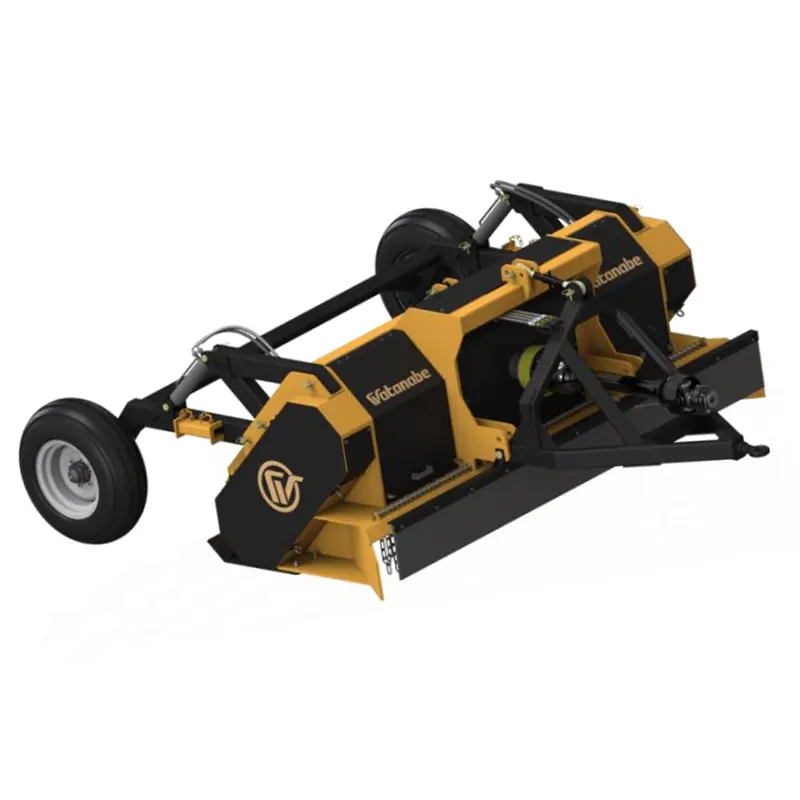
O Triturador de rochas THOR FLM O THOR FLM ocupa a extremidade especializada da gama de britadores de pedra Watanabe — não é uma máquina para o agricultor de batata e vegetais das terras altas coreanas, mas sim para o operador que converte terras florestais ou de plantação em áreas agrícolas ou de pastagem. Na Coreia, esta é uma categoria em crescimento: os programas de reflorestamento das décadas de 1960 a 1980 plantaram espécies de coníferas e folhosas em milhões de hectares de encostas que agora estão atingindo a maturidade ou sendo colhidas, deixando áreas desmatadas repletas de tocos que poderiam ser convertidas para uso agrícola se preparadas corretamente. O THOR FLM é a máquina de preparação para essa conversão.
A distinção crucial entre o THOR FLM e o agrícola Triturador de pedra THOR 2.4 A transmissão CVT (transmissão continuamente variável) é um requisito obrigatório para o FLM — não se trata de uma atualização recomendada, mas sim de uma necessidade técnica imposta pela natureza dos encontros com tocos e raízes, que criam cargas de impacto dramaticamente maiores e mais imprevisíveis do que a britagem de pedras. Compreender por que a CVT é essencial e o que o THOR FLM pode e não pode fazer em comparação com a gama agrícola THOR é o ponto de partida para qualquer operador coreano que esteja considerando o desmatamento de terrenos florestais.
Por que a CVT é obrigatória — A física dos encontros com tocos
Quando o britador de pedra agrícola THOR 2.4 encontra um bloco de granito, os dentes de carboneto de tungstênio do rotor impactam a pedra em alta velocidade, transferindo energia cinética para fraturá-la. A pedra não reage com força — ela fratura ou deflete o dente. A duração do impacto é de milissegundos, e o rotor recupera o momento angular em uma fração de revolução. A carga máxima no eixo da tomada de força (TDF) durante o impacto com a pedra é alta, mas breve, e a embreagem deslizante padrão da TDF do britador agrícola THOR 2.4 lida adequadamente com eventuais sobrecargas.
O contato com tocos é fundamentalmente diferente. Quando o rotor do THOR FLM entra em contato com um toco grande ou uma massa de raízes, o toco não se fratura imediatamente — ele se deforma, oferece resistência, torce e pode engatar vários dentes do rotor simultaneamente em uma grande área de contato. A carga no rotor é sustentada, em vez de instantânea — durando frações de segundo a vários segundos, dependendo do tamanho do toco e da densidade da madeira. Essa carga sustentada e de alta magnitude produz picos de torque no eixo da tomada de força (TDF) que excedem a capacidade de um sistema padrão de caixa de engrenagens e embreagem deslizante em 5 a 10 vezes a carga máxima comparável de trituração de pedras.
Sem CVT — cascata de falhas mecânicas
Uma caixa de engrenagens padrão de relação fixa, ao transmitir cargas de impacto contra tocos, acaba por quebrar o eixo da tomada de força (TDF), danificar os componentes internos da caixa de engrenagens ou acionar a embreagem deslizante com tanta frequência que as superfícies da embreagem superaquecem e falham em uma única sessão de trabalho. A caixa de engrenagens do trator agrícola THOR 2.4 é projetada para cargas de britagem de pedras — utilizá-la em tocos acarreta o risco de falha catastrófica da caixa de engrenagens, não coberta pela garantia (operação fora da faixa de aplicação nominal).
Com CVT — absorção de carga por meio de relação variável
Uma transmissão CVT responde ao aumento da carga no rotor ajustando automaticamente a relação de transmissão — quando o encontro com o toco aumenta a resistência do rotor, a CVT reduz a relação, diminuindo a velocidade de avanço, mas mantendo o torque do rotor dentro dos limites de segurança projetados. A carga do motor do trator aumenta (ele está trabalhando mais), mas o torque máximo entregue ao eixo do rotor THOR FLM permanece dentro da capacidade nominal da máquina. Essencialmente, a CVT converte a resistência contínua do toco em uma redução gradual da velocidade de avanço, em vez de um choque mecânico.
O que o THOR FLM faz — Processamento simultâneo de tocos e pedras
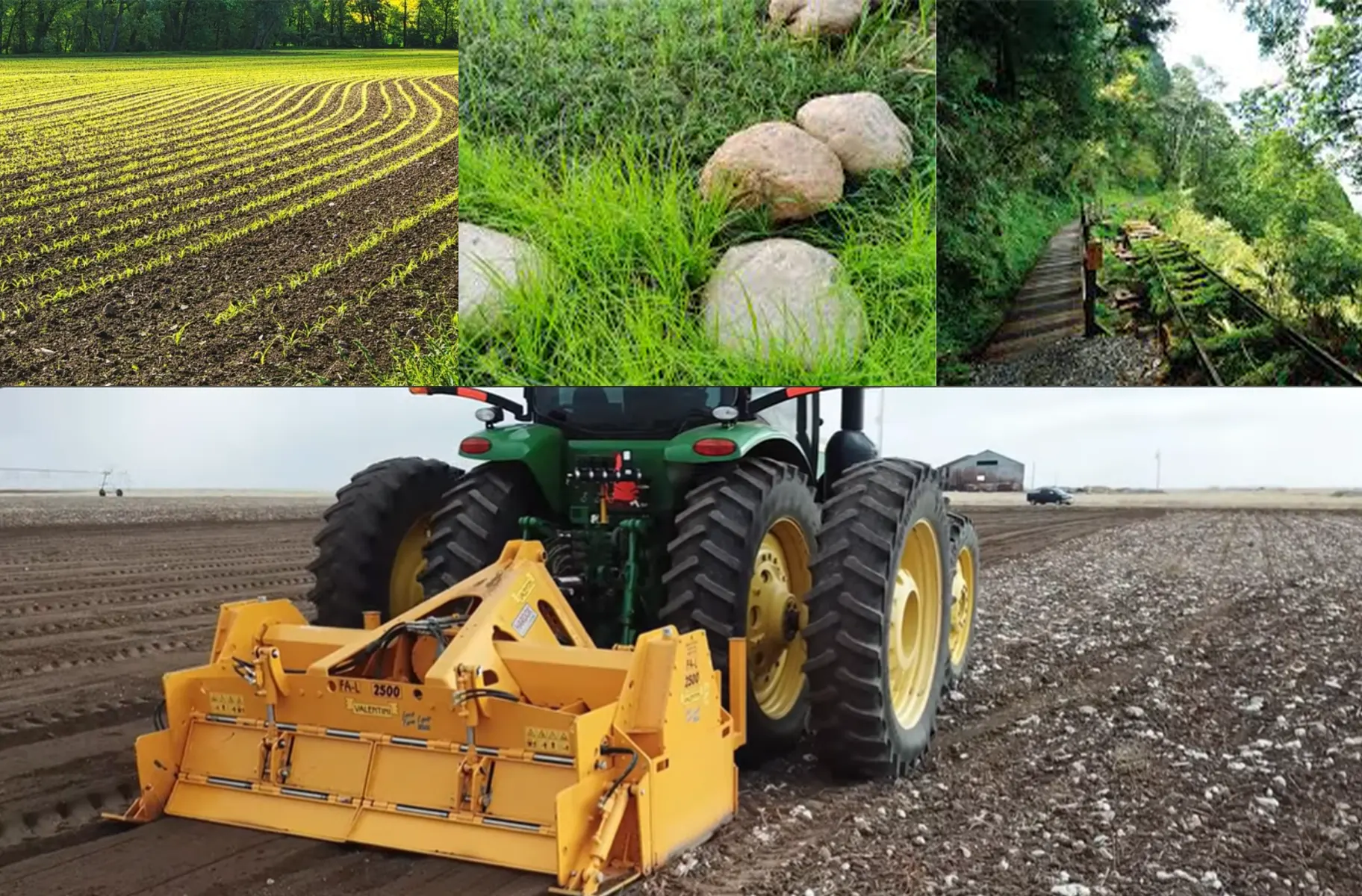
A principal capacidade operacional da THOR FLM é processar material que contém tanto tocos/raízes quanto pedras incrustadas na mesma camada de solo — uma combinação característica das áreas desmatadas em plantações na Coreia. A máquina processa esses dois tipos de material em uma única passada, sem a necessidade de intervenção do operador para alternar entre modos ou alterar configurações.
Processamento de tocos:
Tocos com diâmetro máximo especificado (confirme o diâmetro máximo do toco com a Korea Watanabe para a configuração específica do FLM) são triturados pelos dentes especializados do rotor, transformando-se em fragmentos de lascas de madeira que se decompõem no solo ao longo de 12 a 24 meses. O torrão de raízes do toco é simultaneamente quebrado e incorporado ao perfil do solo, eliminando a obstrução acima do solo e iniciando o processo de decomposição da massa radicular abaixo da superfície.
Britagem de pedras:
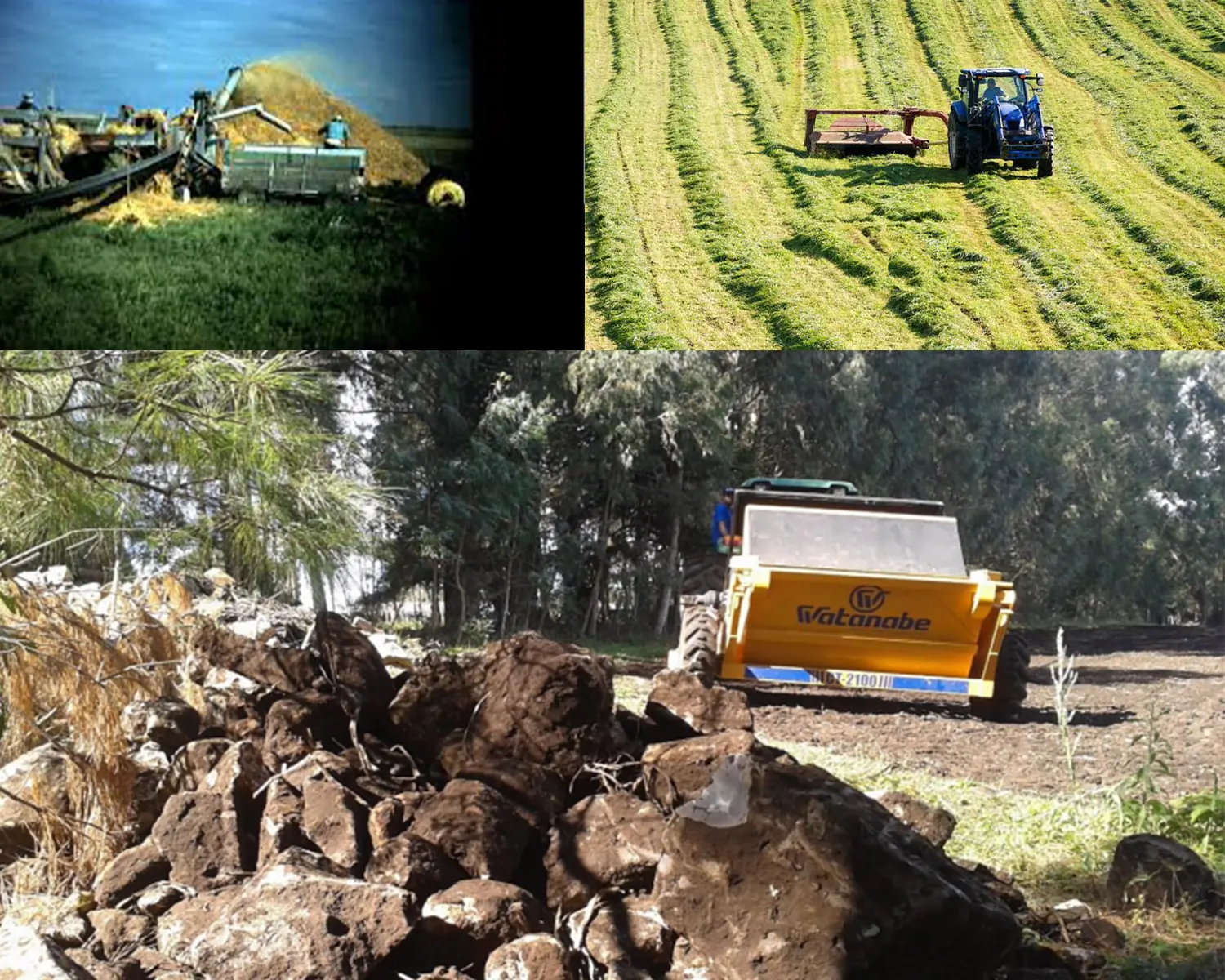
Pedras incrustadas encontradas na mesma passagem que tocos são processadas pela configuração de dentes trituradores de pedra do FLM — a mesma ação funcional do THOR agrícola, mas gerenciada dentro da capacidade de absorção de carga do CVT. Fragmentos de pedra são depositados na superfície para coleta com CT-2100 após a passagem do FLM.
Cobertura morta superficial:
Os resíduos da poda (galhos pequenos, cascas, vegetação rasteira) deixados após o abate das árvores são processados simultaneamente em cobertura vegetal durante a passagem da máquina de trituração de resíduos. Isso elimina a necessidade de uma operação separada de trituração desses resíduos antes da remoção de pedras, reduzindo o número total de passagens necessárias para preparar a área de corte da plantação para uso agrícola.
Aplicações coreanas do THOR FLM — Quem usa e onde
A capacidade especializada do THOR FLM aborda diversos contextos distintos de gestão de terras na Coreia:
1. Conversão de plantação em agricultura
Os programas de reflorestamento do governo coreano (décadas de 1960 a 1980) plantaram espécies de coníferas em encostas que agora atingiram a idade de colheita ou foram danificadas por pragas (doença do murchamento do pinheiro). As áreas de plantio desmatadas — particularmente plantações de coníferas de pequeno diâmetro, onde os tocos permanecem no solo após o corte das árvores — são uma fonte significativa de novas terras agrícolas nas zonas montanhosas da Coreia. O THOR FLM processa essas áreas desmatadas em uma única passagem, preparando-as para a aplicação de calcário, aração com PSW-3200 e posterior plantio de ginseng, hortaliças de altitude ou pomares. Os programas de desenvolvimento de terras agrícolas coreanas (nongji gaeryangsa-eop) incluem cada vez mais o uso do THOR FLM nessa etapa de preparação.
2. Preparação do acostamento da estrada florestal
As estradas florestais coreanas (sanlim-do) exigem acostamentos limpos para acesso de bombeiros, manutenção da drenagem e passagem de equipamentos. A vegetação à beira da estrada, incluindo arbustos lenhosos e pequenos tocos de operações de desmatamento anteriores, acumula-se nos acostamentos ao longo dos anos de regeneração. O THOR FLM limpa os acostamentos de tocos, raízes e pedras superficiais em uma única passada, mantendo o perfil limpo que impede o bloqueio da estrada e a propagação do fogo. A manutenção dos acostamentos de estradas florestais com o THOR FLM é mais completa e rápida do que a limpeza manual com roçadeiras e está sendo cada vez mais especificada nos contratos de manutenção de estradas do Serviço Florestal Coreano.
3. Renovação de pomares e remoção de árvores
Pomares de maçãs, peras e caquis envelhecidos nas zonas montanhosas da Coreia estão sendo progressivamente replantados com porta-enxertos de novas variedades. A remoção das árvores antigas — incluindo a remoção do tronco com motosserra, trituração dos tocos e limpeza da massa radicular — antes do replantio normalmente requer vários equipamentos. O sistema THOR FLM remove os tocos e o sistema radicular superficial em uma única passagem, eliminando simultaneamente as pedras de granito presentes no solo do pomar, que de outra forma limitariam o preparo subsequente do leito de semeadura com a máquina PSW-3200 para o replantio. Esse processamento combinado de tocos e pedras em uma única passagem da máquina reduz o preparo para a renovação do pomar a um número menor de operações do que as abordagens convencionais com múltiplas máquinas.
THOR FLM vs. THOR 2.4 Agrícola / THOR 3.0 — Quando usar cada um
| Critério | THOR FILME | THOR 2.4 | THOR 3.0 |
|---|---|---|---|
| Aplicação principal | Toco + pedra + corte simultâneos | Britagem de pedra, campo agrícola | Pedra pesada, campo maior |
| Transmissão CVT necessária? | Sim — obrigatório | Não (caixa de câmbio padrão) | Não (caixa de câmbio padrão) |
| Processamento de tocos | Sim | Não — risco de danos à caixa de câmbio | Não — risco de danos à caixa de câmbio |
| Kit de barra de tração (inclinação) | Sim | Sim (padrão incluído) | Sim |
| Uso em campos agrícolas | Sim (com CVT) | Aplicação principal | Aplicação principal |
| Caso de investimento | Operadores com necessidades de desmatamento tanto florestal quanto agrícola | Fazendas de batata/vegetais/ginseng das terras altas | desmatamento agrícola em grande escala ou por empreiteiros |
Fornecimento de tratores CVT na Coreia — O desafio prático
Os tratores com transmissão CVT (transmissão continuamente variável) ainda não são amplamente comercializados no mercado agrícola coreano. Os fabricantes coreanos de tratores oferecem transmissões hidrostáticas (HST) em sua linha de tratores menores (até aproximadamente 60 HP) — a HST é uma forma de transmissão continuamente variável, mas é mecanicamente distinta das transmissões CVT de alta potência oferecidas por fabricantes europeus (Fendt Vario, John Deere IVT, CNH Efficient CVT) na faixa de 150 a 300 HP, adequadas para operação com o trator THOR FLM.
Operadores que consideram o THOR FLM para aplicações de desmatamento e limpeza de plantações na Coreia precisam adquirir um trator europeu com transmissão CVT, com potência igual ou superior a 150 HP e capacidade de tomada de força (TDF) de 1000 RPM. Este é um investimento significativo em relação aos tratores agrícolas coreanos padrão, mas é uma especificação padrão para empreiteiros europeus que operam trituradores e máquinas florestais. A Korea Watanabe oferece consultoria sobre os requisitos de especificação de tratores para a operação do THOR FLM e pode confirmar as especificações mínimas da transmissão CVT (faixa de relação, torque máximo sustentado na TDF) para modelos específicos disponíveis por meio de importadores coreanos.
Sequência de Preparo do Solo Pós-FLM — Da Área Cortada ao Solo de Semeadura Agrícola
Após a passagem do THOR FLM para processamento de tocos, pedras e resíduos agrícolas, o terreno ainda não está pronto para o plantio imediato de culturas. A seguinte sequência de preparação transforma a área processada pelo FLM em um leito de semeadura agrícola ao longo dos 6 a 12 meses subsequentes:
Passo 1:
Coleta CT-2100 de fragmentos de pedra produzidos pelo componente de britagem de pedra do FLM — o mesmo procedimento de coleta realizado após uma passagem agrícola do THOR. Podem ser necessárias múltiplas passagens se a densidade de pedras for alta no terreno convertido.
Etapa 2:
Aplicação de calcário e incorporação do PSW-3200 — imediatamente após a coleta de pedras. Os solos de plantio são tipicamente muito ácidos (pH 4,5–5,2 devido ao acúmulo de serapilheira de coníferas). Para atingir o pH ideal para a cultura, é necessária uma aplicação significativa de calcário, e a incorporação precoce permite o máximo tempo de reação antes do primeiro plantio.
Etapa 3:
Semeadura de adubação verde/cultura de cobertura — centeio ou ervilhaca peluda semeados imediatamente após a incorporação de calcário iniciam o acúmulo de matéria orgânica, estabilizam a superfície do solo revolvida contra a erosão e fornecem fixação adicional de nitrogênio (para leguminosas como cultura de cobertura) durante o período de espera antes da primeira cultura agrícola.
Passo 4:
Após 6 a 12 meses (dependendo da cultura alvo), incorpora-se o adubo verde PSW-3200 e realiza-se o preparo final do solo para o plantio da primeira cultura. A análise do solo antes do plantio confirma o pH e o estado nutricional para a aplicação calibrada de fertilizantes.
Perguntas frequentes
O cortador THOR FLM consegue lidar com tocos afetados pela doença do murchamento do pinheiro, que podem ser mais duros e resinosos do que a madeira normal?
Árvores afetadas pela doença do murchamento do pinheiro morrem com a estrutura celular da madeira parcialmente intacta, mas tornam-se resinosas e duras após a secagem. A capacidade de processamento de tocos do THOR FLM lida com tocos de pinheiros afetados pelo murchamento em suas condições típicas de campo — parcialmente secos, de dureza moderada a alta, com sistemas radiculares ativos que se estendem lateralmente. Tocos fortemente calcificados ou petrificados (casos de idade extrema) apresentam maior resistência ao processamento, mas são incomuns em plantações coreanas afetadas pelo murchamento do pinheiro colhidas dentro de 2 a 3 anos após a morte da árvore. A capacidade de absorção de carga do CVT é particularmente valiosa em tocos de pinheiros afetados pelo murchamento, porque a madeira resinosa pode engatar os dentes em uma área de contato maior do que a madeira verde — produzindo exatamente os eventos de alta carga sustentada que o CVT foi projetado para gerenciar. Confirme o diâmetro específico do toco e a condição da madeira com a Korea Watanabe antes de implantar o THOR FLM em tocos incomuns ou em condições extremas.
Quanto tempo leva o preparo do solo de plantação para agricultura usando o THOR FLM em comparação com os métodos convencionais?
Na Coreia, o preparo convencional de áreas desmatadas em plantações envolve: corte manual ou mecânico de tocos com motosserra, operação de triturador de tocos toco por toco, queima ou remoção manual dos resíduos e, por fim, remoção de pedras com uma máquina separada. Para uma área desmatada de 1 hectare com densidade moderada de tocos (100 a 150 tocos/ha), os métodos convencionais geralmente exigem de 3 a 5 dias de trabalho com vários operadores. O preparo em uma única passada com o THOR FLM na mesma área de 1 hectare leva tipicamente de 0,5 a 1 dia — processando tocos, pedras e resíduos simultaneamente a uma taxa de aproximadamente 0,5 a 1 hectare/hora, dependendo da densidade e do tamanho dos tocos. A economia total de tempo é de 2 a 4 dias por hectare. Para um projeto de conversão de plantação de 10 hectares, os métodos convencionais podem exigir de 30 a 50 dias-homem; o preparo com o THOR FLM requer de 5 a 10 horas de operação do THOR, mais o tempo de coleta do CT-2100 — uma redução significativa tanto no tempo quanto no custo da mão de obra.
Após o processamento THOR FLM, a terra pode ser destinada diretamente ao uso agrícola ou é necessário um período de espera?
Após o processamento THOR FLM: os resíduos da britagem de pedras devem ser coletados pelo CT-2100 antes do início do preparo do solo com o PSW-3200. Os fragmentos de madeira provenientes do processamento de tocos devem idealmente decompor-se por 6 a 12 meses antes do plantio de culturas de alto valor (ginseng, batata-doce). A madeira em decomposição consome nitrogênio durante o processo, causando uma deficiência temporária de nitrogênio no solo que afeta as culturas plantadas muito cedo após o processamento. Para o ginseng (a cultura mais sensível), recomenda-se um período mínimo de espera de 12 meses após o processamento FLM antes do plantio, com análise do solo e aplicação direcionada de nitrogênio antes do plantio para corrigir qualquer deficiência de nitrogênio relacionada à decomposição. Para culturas anuais (hortaliças de altitude, batata), 6 meses após o processamento FLM com aplicação suplementar de nitrogênio são geralmente suficientes. A aplicação de calcário imediatamente após o processamento FLM e antes do início do período de espera acelera a decomposição da matéria orgânica e inicia a correção do pH simultaneamente.
O projeto THOR FLM é elegível para financiamento do governo coreano para o desenvolvimento de terras florestais?
O programa THOR FLM abrange dois programas de apoio do governo coreano: (1) o programa de apoio à aquisição de máquinas agrícolas (nongop gigye gupip jiwoonseopye), administrado pelo MAFRA e pelos escritórios agrícolas distritais, que cobre máquinas para melhoramento de terras, incluindo britadores de pedra; e (2) os programas de apoio ao desenvolvimento de terras florestais (sanlim gaebal jiwon), administrados pelo Serviço Florestal da Coreia para projetos de conversão de plantações em terras agrícolas. A elegibilidade para cada programa depende da situação específica da terra (classificação agrícola ou florestal), do uso pretendido após a conversão e se o projeto de conversão está localizado dentro de uma zona de desenvolvimento designada. A Korea Watanabe fornece a documentação necessária para ambas as solicitações de programa e orienta sobre qual canal de financiamento é mais apropriado para o projeto específico de conversão de terras na Coreia. Entre em contato com a Korea Watanabe informando a categoria de registro da terra e o uso pretendido após a conversão para determinar a melhor opção de financiamento. A Korea Watanabe possui documentação atualizada tanto para o programa de subsídio de máquinas agrícolas quanto para os programas de apoio ao desenvolvimento do Serviço Florestal da Coreia e prepara o pacote de inscrição correto em 2 a 3 dias úteis após a consulta. Para projetos de conversão de plantações em terras agrícolas que envolvam classificações tanto de terras florestais quanto agrícolas, a Korea Watanabe coordena com os escritórios distritais relevantes para confirmar qual programa se aplica a cada parcela de terra — garantindo que nenhum subsídio elegível seja perdido devido a ambiguidade na classificação.
Qual a diferença nas especificações dos dentes entre os dentes THOR FLM e os dentes THOR agrícolas?
Os dentes THOR FLM são projetados para o processamento combinado de madeira e pedra — eles devem ser eficazes tanto em granito duro (que exige alta dureza e pequena área de contato para concentração da força de impacto) quanto em tocos lenhosos (que exigem uma geometria de corte mais ampla para fatiar e triturar, em vez de apenas fraturar). A especificação dos dentes FLM representa, portanto, um compromisso de engenharia entre dentes ideais para pedra na agricultura e dentes ideais para madeira na silvicultura. A geometria do inserto de carboneto de tungstênio e a geometria do corpo de aço diferem dos dentes THOR 2.4 agrícolas — usar dentes de reposição THOR 2.4 agrícolas em um FLM (ou vice-versa) resultaria em desempenho abaixo do ideal no tipo de material para o qual o dente incorreto não foi otimizado. A Korea Watanabe mantém em estoque conjuntos de dentes de reposição específicos para FLM e confirma a especificação correta no momento da compra. Assim como os conjuntos de dentes THOR agrícolas, os dentes específicos para FLM devem ser encomendados e estar disponíveis no local antes do início da temporada de operação.
THOR FLM para Conversão de Terras na Coreia — Avaliação do Local e Especificações do Trator CVT
Área do terreno (ha) + tipo de vegetação existente (espécies de plantio, densidade de tocos) + cultura pretendida após a conversão → Plano de implantação do THOR FLM com especificação do trator CVT e recomendação do programa de financiamento. Coreia do Sul, Watanabe, Ansan-si, Gyeonggi-do.
Editor: Cxm