Korea’s highland regions — the mountain valleys and plateau areas of Gangwon-do and northern Gyeonggi-do above 500 metres — produce some of the most commercially valuable potato in the country. The combination of cool night temperatures during tuber bulking, high diurnal temperature variation, and the naturally draining granite-based soils produces tubers with higher dry matter, denser cell structure, and the firm texture that Korean premium buyers consistently pay more for.
The challenge is the same geology that creates the quality: Korean highland granite is heavily stoned. Without systematic stone clearing, Korean highland potato farming is limited to shallow cultivation, hand harvest, low Grade 1 proportions, and the cooperative bulk market. With a properly planned stone clearing and mechanisation system, the same land produces 25–30 t/ha of Grade 1 potato that opens supermarket, kimchi manufacturer, and certified seed channels at 2–3× the cooperative price.
This guide is for the farmer at the beginning of that transition — whether you are assessing a family highland field, considering purchasing highland land, or planning the first machine investment for a farm currently operating with a hand tractor and basic tillage equipment.
Why Korean Highland Altitude Produces Premium Potato — The Science Behind the Price
The quality advantage of Korean highland potato is not marketing — it is measurable chemistry. Three altitude-driven factors combine to produce the superior tuber quality that Korean highland potato commands at market:
The Stone Problem — Why Korean Highland Farming Cannot Scale Without Mechanical Clearing
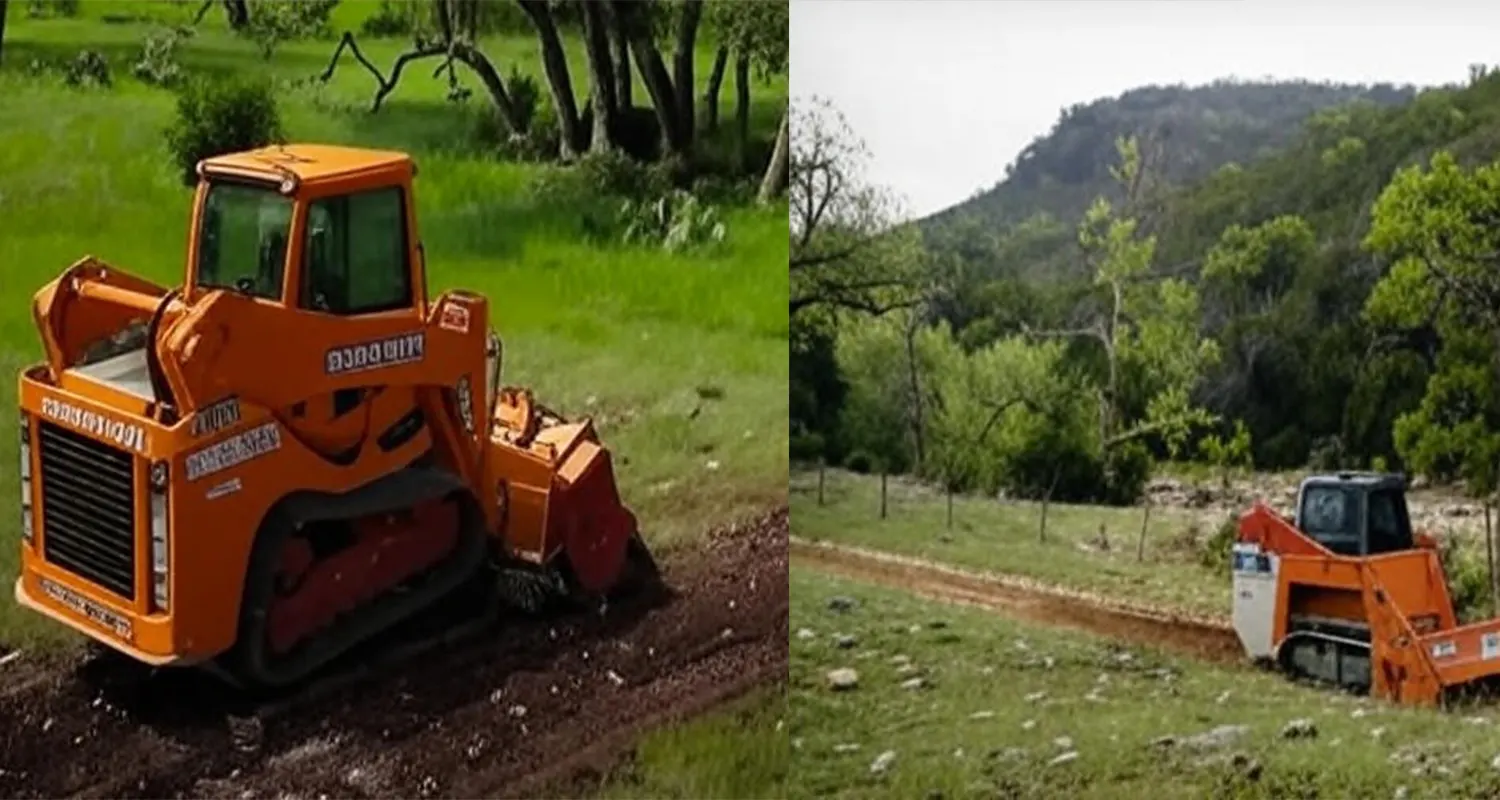
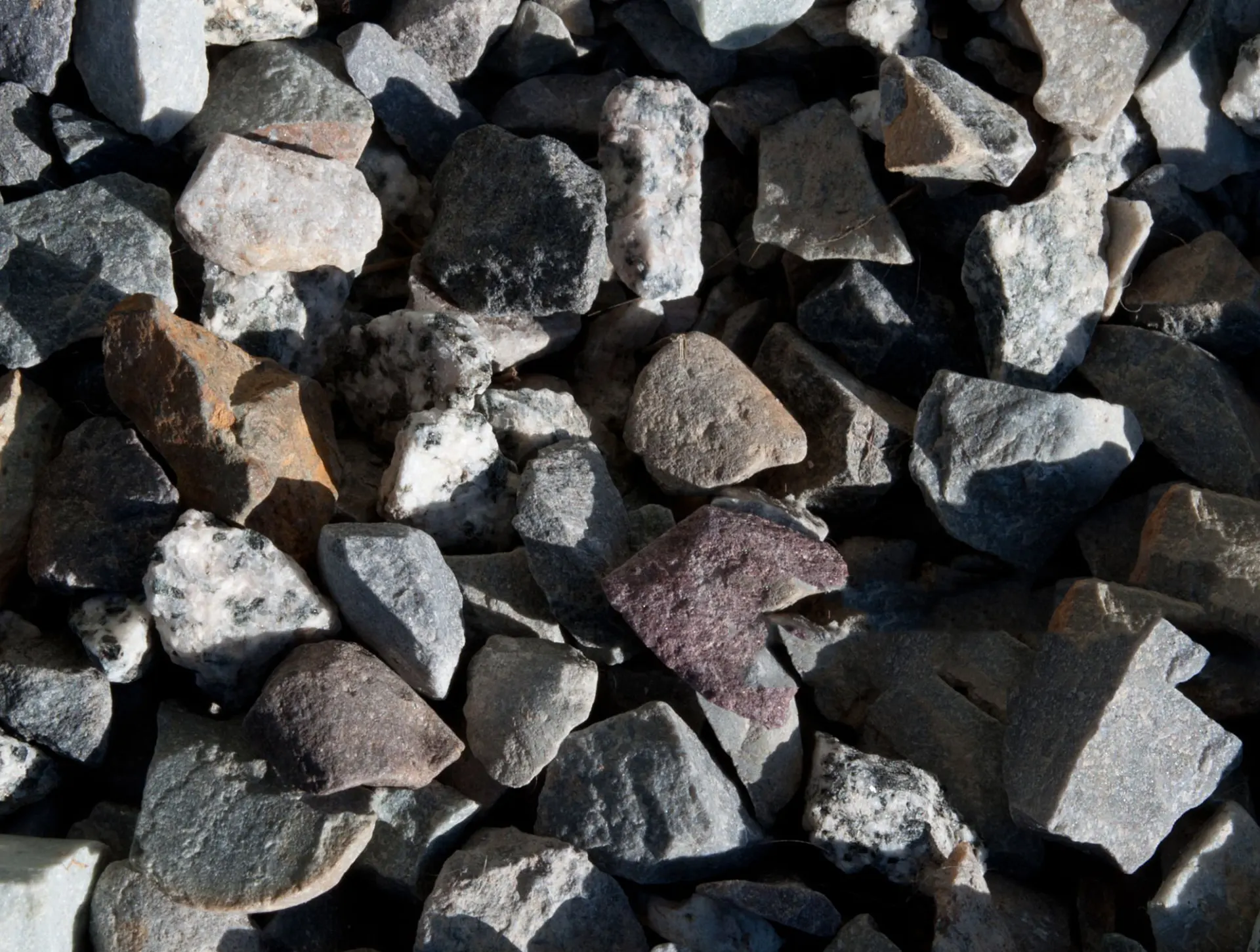
Korean highland granite soil is productive when properly managed — but its natural state includes a stone population that makes mechanical cultivation impossible without systematic management. The typical un-cleared Korean highland field above 500 m has:
Surface stones
15–40 stones per m² larger than 5 cm. Prevents mechanical planting at precise depth and spacing. Hand tractor cultivation limited to 15 cm depth.
Sub-surface stones
Dense stone layer at 10–30 cm depth obstructs tuber development. Tubers grow around stones, producing forked, deformed, or abraded Grade 2 and below produce.
Harvest damage
Stone contact during harvest causes skin abrasion and bruising that opens bacterial entry points. Stone-damaged tubers fail cold storage — soft rot destroys stored lots within 2–3 months.
Grade 1 ceiling
Un-cleared highland fields consistently produce 60–70% Grade 1 at best. Premium market channels (supermarket, kimchi manufacturer) require 85%+ Grade 1 as a non-negotiable supply qualification.
The stone problem is not a management challenge that skill can overcome — it is a physical constraint that only mechanical clearing resolves. Korean highland farms that have invested in the THOR 2.4 석재 분쇄기 and CT-2100 rock picker system consistently report Grade 1 proportion improvements from the 60–70% range to 88–92% within the first cleared-field season — and the improvement compounds each year as the sub-surface stone population decreases.
The 7-Step Production System — March Stone Clearing to September Harvest
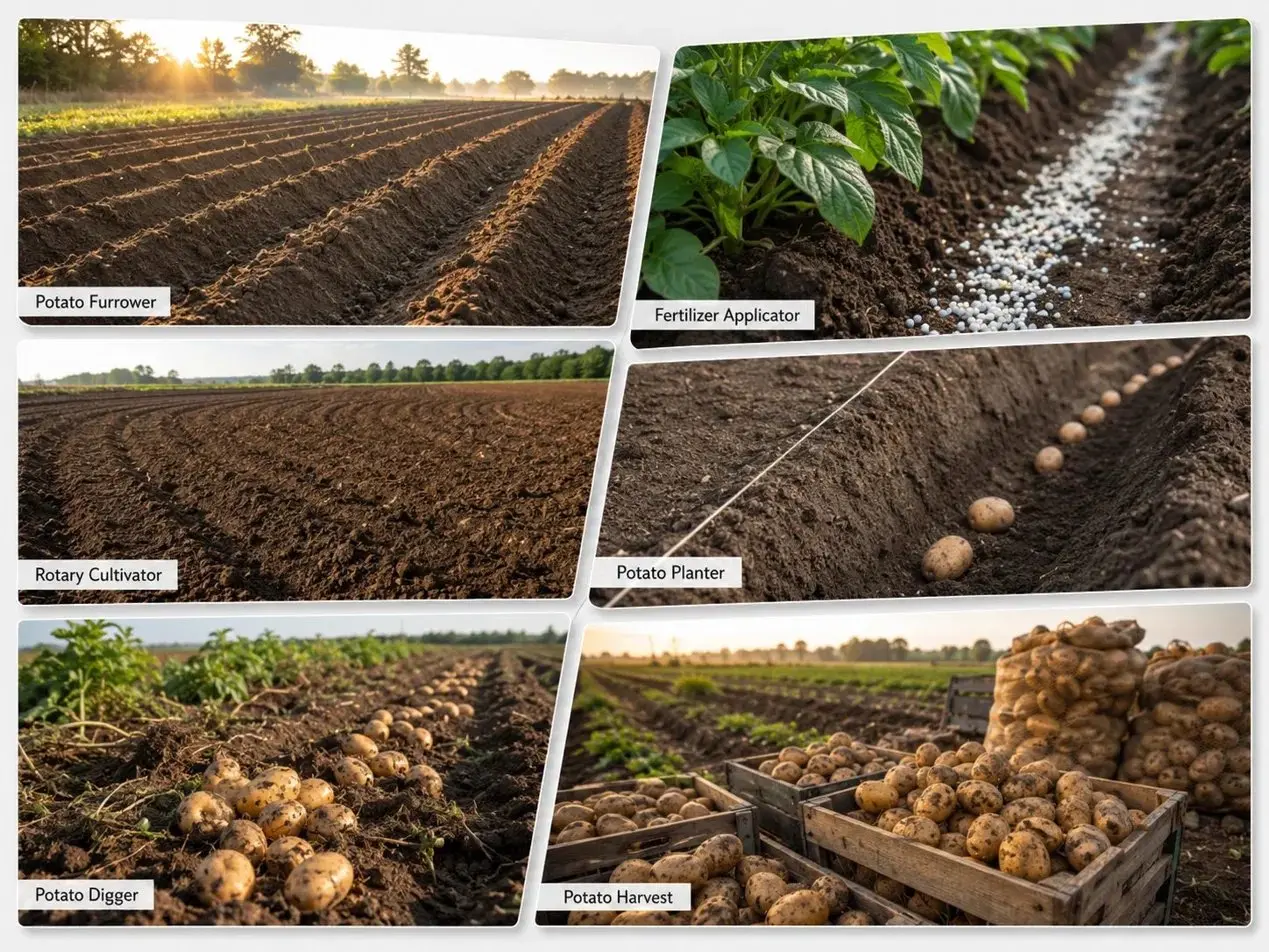
Korean highland potato farming at 600 m altitude operates within a 90–110 day frost-free window, typically from late April (last frost) to early September (first autumn frost). The preparation and harvest work extends from March and through late September. Every step in the sequence depends on the previous one being completed to standard — the quality of the final Grade 1 harvest at Step 7 was determined by the quality of the stone clearing at Step 1.
The timeline above covers the main crop sequence. Two additional operations fall outside this window: the October lime and PSW-3200 incorporation pass (soil pH maintenance for the following year) and the November–December farm record and subsidy application preparation (January deadline). A complete annual operations calendar covering all twelve months is essential by Year 2 — Korea Watanabe provides a highland farm calendar template as part of the new system consultation.
Minimum vs Full Machinery System — What You Actually Need to Start
One of the most common mistakes beginners make is assuming they need the complete Watanabe system on Day 1 before they can start. The correct approach is a staged investment: acquire the machines that unlock the most revenue first, add the remaining machines as the revenue from the cleared field funds them.
Stage 1 — Minimum System
Subsidy net cost approx. 24,000,000 KRW
Stage 2 — Tillage Addition
Additional subsidy net cost approx. 15,000,000 KRW
Stage 3 — Full Potato System
Additional subsidy net cost approx. 18,000,000 KRW
3-Year Investment Roadmap — Using Year 1 Revenue to Fund Year 2 Machinery
The staging logic works because each stage’s revenue improvement funds the next stage’s machine investment. Year 1 pays for itself within the season; Year 2 machine purchases are funded by Year 1’s additional revenue above the pre-clearing baseline:
January Year 1
Apply for THOR 2.4 + CT-2100 subsidy
24,000,000 KRW net after 40% subsidy. March–April: first clearing pass. August: first cleared-field harvest. Year 1 additional revenue: 57–62M KRW.
January Year 2
Apply for PSW-3200 + EP-EW-4000 subsidy
~14,950,000 KRW net. Funded from Year 1 revenue surplus above pre-clearing baseline. GAP certification application submitted in November.
January Year 3
Apply for full potato machinery subsidy
EP-PAI + EP-ERA + EP-AWB: ~18,000,000 KRW net. Direct market channel established (GAP certified). Full system operational with zero contracting cost.
By Year 3, the farm is operating the complete system with all machinery purchased. The total 3-year net investment after subsidy is approximately 57,000,000 KRW — which has been earned back from Year 1 revenue alone in most 10 ha operation scenarios. From Year 3 onward, the machinery depreciation cost is the primary investment consideration rather than capital outlay.
Income Projections — What Korean Highland Potato Farming Actually Pays
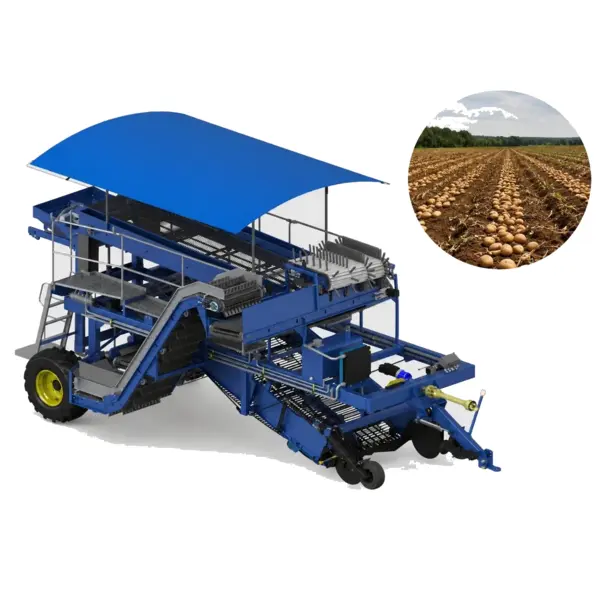
The income projections below are calculated for a 10 ha Korean highland potato farm transitioning from un-cleared hand-tractor operation through the 3-year system build-out. All assumptions are stated; adjust for your specific situation.
| Farm stage | Yield t/ha | 1학년 % | G1 price KRW/Kg | Gross revenue/ha | 10 ha gross |
|---|---|---|---|---|---|
| Before clearing (baseline) | 22 | 68% | 1,100 | ~19,100,000 | ~191M |
| Year 1 cleared, cooperative G1 | 27 | 90% | 1,000 | ~24,330,000 | ~243M |
| Year 2–3, GAP + direct market | 27 | 90% | 1,300 | ~31,600,000 | ~316M |
| Year 4+, cold storage (Dubaek Jan.) | 27 | 90% | 1,600–2,200 | ~39–54M | ~390–540M |
Revenue figures are gross before input costs (seed, fertiliser, pesticides, irrigation: approximately 4,000,000–7,000,000 KRW/ha) and machinery operating costs. Prices are representative market ranges; actual market prices vary by year, variety, and buyer relationship.
Five Mistakes Beginners Make — and How to Avoid Them
자주 묻는 질문
How do I start Korean highland potato farming with no previous experience?
The practical starting point is a field assessment: determine how many hectares of highland land are available, what the current stone density is (visual count of surface stones per m²), and what the existing tractor inventory is. With this information, Korea Watanabe can provide a system recommendation identifying which machines to purchase first, the applicable subsidy, the expected first-year revenue improvement, and the seasonal calendar for the specific altitude and county. The initial consultation is free. Most beginners find that starting with the THOR 2.4 and CT-2100 암석 수집기 Stage 1 system — with contracted tillage and potato operations in Year 1 — produces the most manageable entry into the full system. The full system can be built at the pace that the cleared-field revenue supports.
What is the realistic Korean highland potato income per hectare after stone clearing?
The honest answer ranges from 19,000,000 KRW/ha (gross, cooperative channel, un-cleared baseline) to 54,000,000 KRW/ha (gross, direct market with cold storage, Year 4+ Dubaek). A realistic Year 2 target for a cleared field with GAP certification and cooperative-to-direct market transition is approximately 28,000,000–34,000,000 KRW/ha gross. After input costs (seed, fertiliser, pesticides, irrigation: 4,000,000–7,000,000 KRW/ha) and machinery operating cost (approximately 3,000,000–5,000,000 KRW/ha), net income per hectare typically reaches 18,000,000–22,000,000 KRW/ha by Year 2–3 on a well-managed 10 ha Korean highland potato system with full clearing and GAP certification established. These figures are illustrative — Korea Watanabe provides farm-specific projections using your actual land area, tractor inventory, and target variety at the consultation stage.
Is Gangwon-do potato farming viable for farms below 5 ha?
Yes, though the economics of the full machinery system are tighter at smaller scale. For farms below 5 ha, the recommended approach is: (1) hire a THOR 2.4 contractor for primary clearing (eliminating the machine capital cost while achieving the clearing outcome); (2) purchase the EP-EW-4000 rock rake for annual maintenance (appropriate for a 75–100 HP tractor at much lower cost than the THOR 2.4); and (3) contract potato planting and harvest until the farm’s revenue supports the full machinery investment. At 3–5 ha scale with this hybrid contractor-and-own-machine approach, the quality improvement from stone clearing is fully achievable, and the net income per hectare trajectory is similar to a larger farm — the difference is that the scaling-up path takes longer because the per-hectare revenue base is smaller.
Which potato variety should a beginner Korean highland farmer start with?
Sumi is Korea Watanabe’s consistent recommendation for first-year Korean highland potato farmers. Sumi has the widest market channel access (cooperative to direct market), the most forgiving management requirements of the four main highland varieties (Sumi, Daejima, Dubaek, Atlantic), and the broadest altitude tolerance (500–800 m). It produces reliable Grade 1 results on well-cleared highland fields and is the variety most likely to be accepted by all market channels including the cooperative bulk market as the fallback. In Year 2 or 3, once clearing is established and market relationships are developing, diversification into Dubaek (for cold storage premium) or Daejima (for large-tuber premium) can be introduced on specific field blocks without disrupting the Sumi base. Starting with multiple varieties simultaneously increases management complexity and market channel requirements before the foundation systems are stable.
How long does the Korean highland potato farming system take to become fully self-funding?
The Stage 1 machine investment (THOR 2.4 + CT-2100 after 40% subsidy) is recovered within the first cleared-field growing season for most 10 ha Korean highland potato operations. Stage 2 (PSW-3200 + EP-EW-4000) is funded from Year 1’s additional revenue and applied in January of Year 2 — the machinery costs are effectively pre-funded before the January application. Stage 3 (full 감자 기계) is funded from Year 2’s higher direct-channel revenue and applied in January of Year 3. By Year 3, the complete system is in place with all investments funded from cleared-field revenue, not from external borrowing. From Year 3 onward, the annual machinery operating cost (fuel, wear parts, maintenance) of approximately 12,000,000–18,000,000 KRW per year is a small fraction of the annual revenue — the system becomes a stable, self-funding enterprise. The five-year point is where most Korean highland farmers describe the transition as complete: the stone has depleted to maintenance level, the market channels are established, GAP is certified, and the income trajectory is predictable.
Start Your Korean Highland Potato System — Free Consultation
Tell Korea Watanabe your land area, altitude, current tractor, and target crop. We provide a Stage 1 machine recommendation, the subsidy eligibility confirmation, a Year 1 income projection, and the January application preparation — all within 1–2 working days and at no charge.
편집자: Cxm