Korea Watanabe Rock Crusher Tractor Co., Ltd. is headquartered in Ansan-si, Gyeonggi-do. It is the exclusive Korean distributor for the Watanabe agricultural machinery range — stone crushers (THOR 2.4, THOR 3.0, THOR FLM), the THOR ST soil stabilizer, the BlackBird rock rake, the CT-2100 rock picker, the PSW-3200 rotavator, the EP-EW-4000 rock rake, and the complete Watanabe potato machinery system.
The Watanabe brand originates in Brazil — specifically in the agricultural engineering community that developed around the Japanese-Brazilian immigrant farming communities of Paraná state, where rock-strewn basalt highland soils presented exactly the stone clearing challenge that led to the development of the original THOR concept. Understanding this origin explains something that Korean farmers sometimes question: why is a Brazilian-designed machine — rather than a Korean, Japanese, or European design — the best available option for Korean highland granite and Jeju Island basalt clearing? The answer is geological, and it is compelling.
The Geological Connection — Why Paraná Basalt and Korean Granite Are the Same Problem
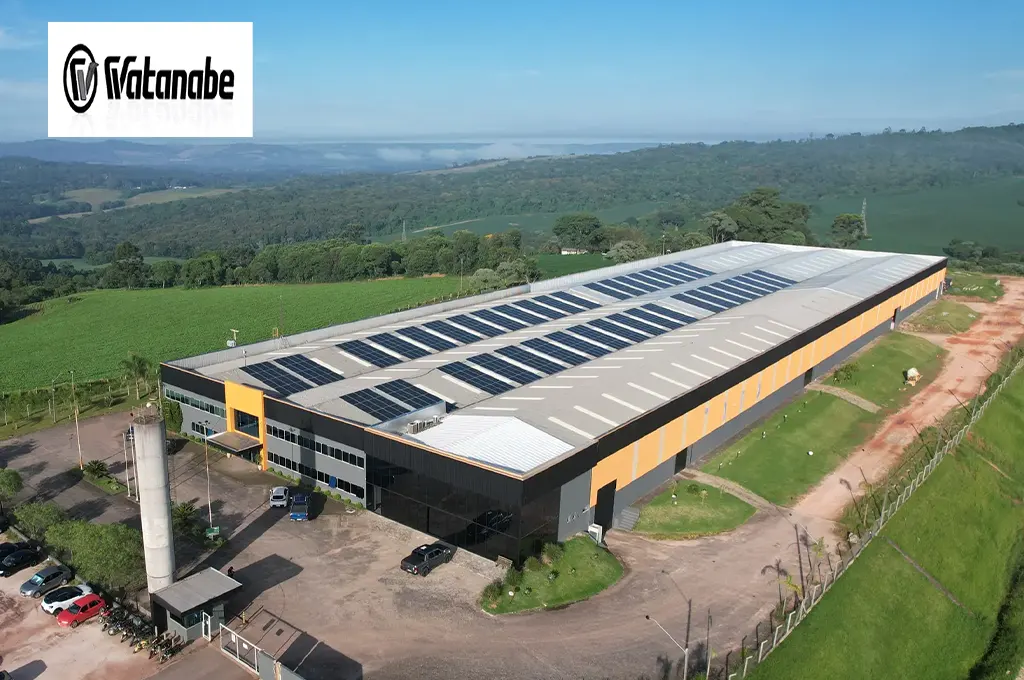
The Paraná highland plateau of southern Brazil is underlain by a massive basalt flood lava formation — one of the largest continental flood basalt deposits in the world. The agricultural soils of this plateau are thin, stone-rich, and challenging to clear because the underlying basalt regularly fractures and delivers fragments to the surface through freeze-thaw action, root pressure, and erosion. Sound familiar? It should — because this is functionally identical to the agricultural geology of Gangwon-do’s Taebaek mountain range and Jeju Island.
Paraná Highland Basalt (Brazil)
- ▸Continental flood basalt geology
- ▸Average Mohs hardness 6–7
- ▸Thin agricultural soil over rock
- ▸Annual frost-heave on highland
- ▸High-altitude crop production (potato, soybean, wheat)
Taebaek / Jeju Basalt & Granite (Korea)
- ▸Precambrian granite + Tertiary basalt (Jeju)
- ▸Average Mohs hardness 6–7
- ▸Thin highland soil, shallow bedrock
- ▸Severe freeze-thaw cycles on highland
- ▸High-altitude crop production (potato, ginseng, cabbage)
The mechanical challenge of agricultural stone clearing on basalt and granite soils at 6–7 Mohs hardness is qualitatively different from clearing softer limestone, sandstone, or alluvial gravel found in agricultural zones across much of Europe, Japan, and North America. The THOR’s design — its rotor tip speed, carbide tooth metallurgy, oil-cooled transmission, and housing geometry — was evolved specifically over decades of operation in Paraná basalt conditions. This evolution produced a machine optimised precisely for the rock hardness, the frost-heave stone distribution pattern, and the highland crop production calendar that Korean highland farmers experience. European stone crushers designed for French limestone or German gravel handle Korean granite poorly and wear much faster. Korean domestic machines have not historically been purpose-built for the THOR’s operational niche.
50+ Years of Basalt Validation — What That Means for Korean Buyers
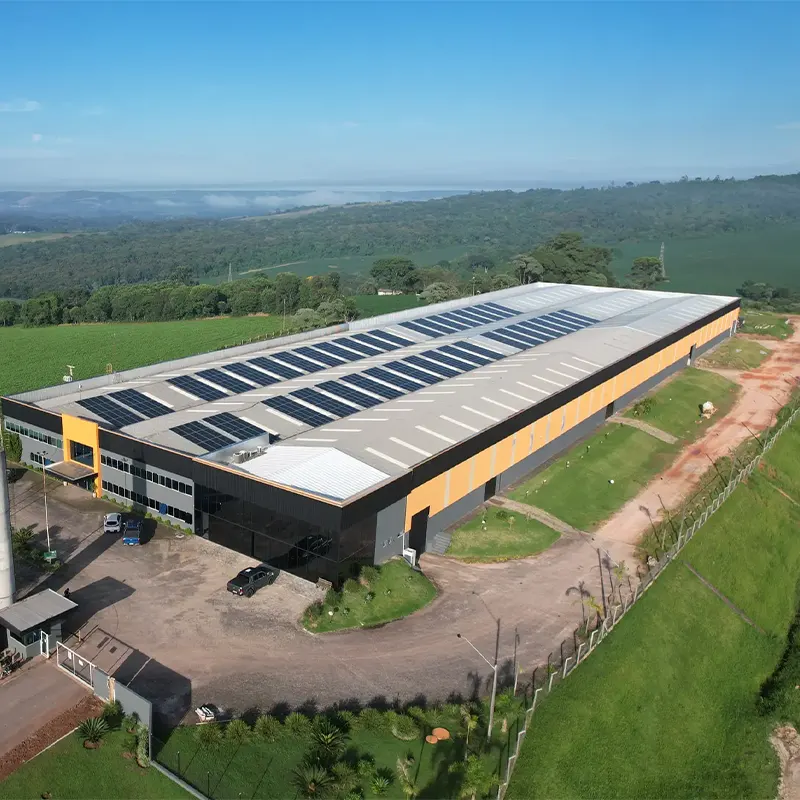
Watanabe has been engineering and manufacturing stone crushers for agricultural use in Brazil for over 50 years. This history matters for Korean buyers in concrete and measurable ways — not as marketing language, but as engineering specification:
Korean Certifications — What Watanabe Machines Have Passed for the Korean Market
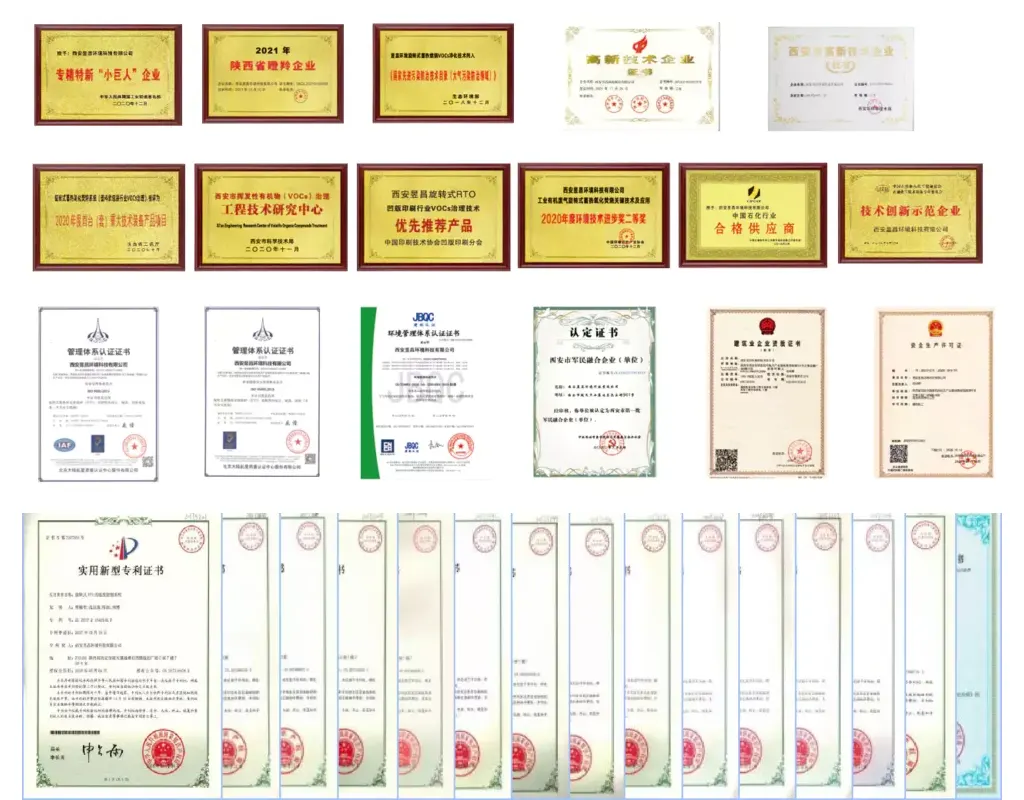
Agricultural machinery sold in Korea for use in Korean government subsidy programs must carry Korean quality certification (농업기계 검정) — a performance and safety assessment conducted by the Korea Agricultural Machinery Institute (한국농업기계연구소) or approved testing bodies. This certification verifies that the machine performs at its specified ratings under Korean testing conditions, meets Korean safety standards, and is eligible for inclusion in the Ministry of Agriculture, Food and Rural Affairs (MAFRA) eligible equipment register.
Watanabe machines marketed through Korea Watanabe carry Korean agricultural machinery certification for the categories in which they are sold — this certification status is what enables Korean farmers to apply for purchase subsidies for Watanabe equipment through the standard 농업기계 구입 지원사업 program. Korea Watanabe provides certification documentation as part of the subsidy application support package. When comparing Watanabe equipment to other imported brands, confirm Korean certification status with the supplier — not all imported machines available in Korea carry Korean 농업기계 검정 certification, which affects subsidy eligibility and signals whether the machine has been tested under Korean conditions.
Korea Watanabe Operations — Local Stock, Korean Support, Korean Service
Korea Watanabe Rock Crusher Tractor Co., Ltd. operates from Ansan-si, Gyeonggi-do — a logistics-optimised location with road access to all Korean highland agricultural regions:
Korea Local Stock
THOR 2.4, THOR 3.0, CT-2100, PSW-3200, EP-EW-4000, and the complete potato machinery range maintained in Ansan-si local stock. 1–3 business day delivery across Korea — including Gangwon-do highland, North Gyeongsang, and Jeju Island.
Korean-Language Support
All technical support, warranty handling, and after-sales service provided in Korean from Ansan-si. No translation intermediaries. Korean agricultural terminology, Korean crop calendar awareness, and Korean highland terrain knowledge built into every product consultation.
Local Spare Parts
Replacement carbide teeth, THOR rotor components, CT-2100 tine sets, PSW-3200 blades, and all maintenance parts stocked locally. Next-day domestic dispatch during the operating season means Korean farmers are never more than 24 hours from parts when peak-season downtime counts most.
Subsidy Documentation
Complete 농업기계 보조금 application documentation support — Korean-language specifications, certification confirmation, official purchase invoices (세금계산서), and guidance on the current year’s program eligibility and application timing. Korea Watanabe has supported hundreds of Korean subsidy applications across the MAFRA machinery program and provincial supplementary programs.
The Korea Watanabe Product Range — What We Supply for Korean Agriculture
Our Approach — Honest Recommendations, Not Catalogue Sales
Korea Watanabe’s approach to machine recommendations differs from standard agricultural machinery dealership practice in one specific and important way: we tell Korean farmers when the Watanabe machine is not the right solution for their application. The guides published on this website include explicit “not for this application” guidance — because recommending the wrong machine to a Korean farmer creates a customer who is disappointed with their purchase, doesn’t achieve the results they needed, and doesn’t trust the recommendation process.
The guides on this website consistently include:
- ▸
Honest scale thresholds: The CT-2100 is not cost-effective for operations below 2 ha. The EP-AWB-3200 trailed digger adds no value on short-row highland terraces below 80 m row length. The THOR ST requires a CVT tractor that many Korean farmers do not own — confirmed before ordering, not discovered after delivery. - ▸
Competitor machine acknowledgement: The rock rake vs stone crusher decision guide, the stone crusher buying criteria guide, and the THOR model selection guide all acknowledge that there are conditions where other approaches or other machines may be more appropriate — and we explain what those conditions are rather than recommending the most expensive Watanabe machine regardless of suitability. - ▸
Subsidy guidance without inflating purchase intent: The Korean agricultural machinery subsidy guide explains the process accurately — including the warning that budget depletes on a first-come basis and that purchasing before approval is not eligible — rather than presenting subsidy as a guaranteed discount to encourage premature purchase decisions.
This approach produces customers who are confident in their purchase decision when they order from Korea Watanabe — because they have access to sufficient information to evaluate the recommendation independently. Korean highland farmers who have been farming the same granite soil for 20 years do not need to be told that their soil is stony. They need to know whether a specific machine will perform on their specific stones, at their specific farm scale, with their specific tractor, in their specific Korean growing season. That is the information we provide.
The Technical Reasons Brazilian Engineering Excels on Korean Rock
Beyond the geological parallel between Paraná basalt and Korean highland granite, there are specific technical engineering reasons why the THOR range performs on Korean agricultural conditions in ways that machines designed for softer rock types do not. Korean highland farmers sometimes ask why machines designed for European limestone or Japanese alluvial gravel soils fail to deliver the same service life and throughput that they achieve in those softer conditions when deployed on Korean granite — and why the THOR, designed for a harder geological environment, does not have this limitation.
Rotor Tip Speed — Calibrated for Hard Rock Impact Energy
The THOR’s rotor tip speed — the speed at which the carbide tooth tips travel through their circular arc as the rotor turns — is engineered for the specific impact energy required to fracture granite and basalt at 6–7 Mohs hardness. This impact energy requirement is fundamentally different from the energy needed to fracture limestone (Mohs 3), sandstone (Mohs 4–6 depending on cement), or soft alluvial gravel. Machines designed for softer rock typically run at lower rotor tip speeds that are sufficient for softer materials but deliver insufficient impact energy for reliable granite fracture — particularly for the large, competent granite boulders that characterise Korean highland frost-heave conditions. The THOR’s 1000 RPM PTO drive and specific rotor diameter combination produces the tip speed that Korean granite reliably requires.
Tooth Holder Geometry — Designed for Shock, Not Just Abrasion
Most agricultural stone crusher carbide tooth designs are primarily optimised for abrasive wear resistance — the tooth material is hard and resists gradual wear from repeated abrasive contact with rock particles. This optimisation is appropriate for softer, crumbling rock types where abrasion rather than impact is the dominant tooth loading mechanism. Korean granite and Paraná basalt present a different primary failure mode: impact shock loading. When a THOR carbide tooth strikes a competent granite boulder, the tooth experiences a rapid deceleration shock load that creates stress concentration at the tooth-to-holder interface and within the carbide tip itself. Tooth holder geometry designed for abrasion-only conditions fails by tooth ejection under Korean granite impact loads. Watanabe’s tooth holder geometry includes specific stress distribution features derived from decades of impact-fracture operation on hard basalt — ensuring the tooth remains securely held under the impact conditions characteristic of Korean granite boulders above 10 Kg.
Housing Plate Material Specification — For High-Velocity Stone Fragment Erosion
The THOR’s rotor housing interior — the surfaces that contain the high-velocity stone fragments thrown by the rotor before they exit through the rear grid — experiences extreme erosive wear from stone fragments traveling at rotor tip speed. The housing plate material specification (wear-resistant steel with documented hardness from the Watanabe manufacturing specification) was selected specifically for this fragment velocity and rock hardness combination. Machines with mild steel housings designed for lower-velocity fragment fields (softer rock types that require lower tip speed) experience rapid housing erosion when operated on Korean granite at THOR tip speeds — producing through-wear that exposes the rotor mechanism within one or two seasons.
These three technical factors — rotor tip speed, tooth holder geometry, and housing material — combine to produce a machine that operates on Korean highland granite and Jeju basalt with the same reliability and service life that it delivers in Paraná basalt. They also explain why Korean farmers who have tested lighter-specification imported machines on their granite fields consistently report shorter service life, higher maintenance frequency, and ultimately lower cost-per-tonne of rock processed than the THOR achieves on the same fields.
Domande frequenti
Is Korea Watanabe the exclusive distributor for Watanabe products in Korea?
Yes — Korea Watanabe Rock Crusher Tractor Co., Ltd. is the authorised Korean distributor for the Watanabe range. Purchases made through Korea Watanabe come with Korean warranty terms, Korean-language technical support from Ansan-si, and Korean 농업기계 검정 certification documentation for subsidy applications. Watanabe machines purchased through other channels (grey market imports, third-party resellers) may not include Korean certification documentation, may not carry Korean warranty terms, and may not have access to Korean local spare parts stock from Korea Watanabe.
Can I visit Korea Watanabe’s facility in Ansan-si to see the machines in person?
Visits to the Korea Watanabe facility in Ansan-si, Gyeonggi-do can be arranged by appointment. Contact Korea Watanabe through the website contact form or by telephone to schedule a visit. For farmers considering significant equipment investments — particularly complete potato machinery systems or the THOR+CT-2100 clearance system — a facility visit is encouraged to inspect machine dimensions, construction quality, and tractor compatibility points (PTO shaft, Cat.2 hitch geometry, hydraulic valve requirements) before purchase.
Does Korea Watanabe provide training or demonstration operations for new buyers?
Korea Watanabe provides operational setup guidance for all machines at the time of delivery — covering correct tractor configuration, PTO and hitch setup, initial operating speed and depth settings, and safety procedures specific to the terrain type (flat field, sloped highland, orchard alley). For the THOR 2.4 Kit Drawbar system — which involves a different hitching procedure from standard three-point hitch mounting — delivery guidance includes a Kit Drawbar connection demonstration. Contact Korea Watanabe about the specific guidance format available for the machine you are purchasing, as the level of on-site training support varies by machine type and delivery location.
Are Watanabe machines designed for Korean domestic voltage and connection standards?
Watanabe stone crushers and implement machines are PTO-driven — they are powered by the tractor’s power take-off shaft, not by electrical mains connection. They have no electrical mains connection requirement and no voltage standard compatibility issue. The only electrical interface between the machine and the tractor is the standard 7-pin or 13-pin implement lighting connector (if the machine has lighting) and the hydraulic solenoid connection (if applicable). These are standard agricultural implement connectors that Korean tractors support. Some machines with electronic cab control systems (DCW 2.2 binder spreader) use standard 12V tractor cab connections that are compatible with Korean tractors.
50+ Years of Basalt Engineering. Korean Stock. Korean Support. What Do You Need?
Crop type + stone condition + terrain gradient + tractor HP → specific Watanabe machine recommendation with honest suitability assessment. Contact Korea Watanabe, Ansan-si, Gyeonggi-do.
Redattore: Cxm