Fifty-one application scene articles into the E-series guide, the pattern is consistent: every commercial crop studied has produced a stone management argument specific to the chemistry, geography, and commercial quality standard of that crop. The fifty-second crop introduces the argument into a world that none of the prior fifty-one have entered — the world of haute couture perfumery. Ylang-ylang (Cananga odorata (Lam.) Hook.f. & Thomson var. genuina) is the most commercially significant aromatic species in the Indian Ocean island region, the first E-series crop whose primary commercial destination is the fine fragrance market, and the first where a specific named product — Chanel No. 5, one of the world’s most recognisable luxury objects — provides the terminal reference point for the stone management commercial argument.
The connection from Comoros Island basalt stone to the perfume counter of a Paris department store operates through three links: the volcanic basalt soils of Grande Comore restrict the ylang-ylang tree’s feeder root zone, depleting the iron availability that the linalool biosynthetic pathway requires; lower linalool synthesis shifts the oil composition away from the aromatic profile that defines the Extra distillation fraction; and an Extra fraction reclassified to Grade I represents a price reduction of approximately US$120–200/kg at the Comoros farmgate for every kilogram of oil produced. The rock crusher for ylang-ylang application across the Comoros Islands, Madagascar’s Nosy Be, and Indonesia’s volcanic production zones addresses all three links through the same mechanical clearing argument that has now been established for fifty-one prior crops.
Chanel No. 5 — The First Named Luxury Product in This Guide
Chanel No. 5, created by perfumer Ernest Beaux in 1921, uses ylang-ylang Extra fraction as one of its signature floral components — contributing the characteristic warm, slightly spicy-floral quality that distinguishes the scent from lighter floral soliflores. The formulation has been continuously produced for over a century, maintaining the Comoros islands as a strategic raw material source throughout. The fragrance house Chanel maintains long-term supply agreements with Comoros ylang-ylang cooperatives and distillers that specify Extra fraction quality standards more exacting than the ISO 3063 specification: minimum linalool content of 22%, minimum benzyl acetate content of 12%, minimum geranyl acetate content of 8% — each of these compounds determined by the tree’s capacity to synthesise specific terpenoid and phenylpropanoid precursors before the flowers are harvested. Stone restriction at the root zone degrades this biosynthetic capacity. A ylang-ylang plantation on volcanic basalt soils that have not been cleared of stone fragments produces oil that may pass ISO 3063 but fail the major fragrance house’s proprietary Extra quality specification — leaving the producer selling to the soap and cosmetics market at Grade I or Grade II pricing rather than the fine perfumery market at Extra pricing.
Ylang-ylang for fine perfumery does not move directly from Comoros distiller to Parisian fragrance house. The standard commercial route involves three intermediaries: (1) the Comoros island cooperative or independent distiller, who produces the oil and sells to (2) a Comoros or regional export broker, who consolidates oil from multiple distillers to meet fragrance-house volume requirements and subjects each batch to GC-MS quality analysis before export, and then sells to (3) the fragrance house’s raw material procurement team in Grasse (France) or New York, who verifies that the batch meets their proprietary compositional specification. At each stage, a batch that fails Extra qualification is reclassified to Grade I and diverted to a lower-value destination — personal care, soap, cosmetics. The price gap at Comoros farmgate between Extra and Grade I has ranged from US$80/kg to US$250/kg depending on global fragrance demand cycles, with the 2020–2024 period showing Extra prices of US$500–700/kg and Grade I prices of US$280–400/kg. A single 500-litre drum of oil reclassified from Extra to Grade I on a quality specification failure represents approximately US$50,000–100,000 in foregone revenue for the producing cooperative at the lower end of these price ranges.
The E-series has covered aromatic crops before: lavender (E-11), coffee (E-17), cardamom (E-44), cinnamon (E-47), cloves (E-48), nutmeg (E-49) — but all of these are primarily food-flavour or culinary-aromatic crops where the fragrance industry is a secondary market. Ylang-ylang is the first crop where fine perfumery is the primary commercial destination for the highest-grade fraction, and where the quality specification is defined by a perfume formula rather than by a food safety standard or pharmacopoeia. This distinction matters for the stone management argument: the aromatic precision required by a fine fragrance formulation — where specific terpene ratios must fall within tight GC-MS windows — is the most exacting compositional standard in the E-series, stricter than ISO food-grade aromatic specifications and stricter than the pharmaceutical-grade specifications of the spice series. Every compositional variable in ylang-ylang Extra fraction production traces back to the tree’s metabolic state during flower development — and the root zone mineral environment is the primary determinant of that metabolic state.
The Fraction System — Extra, Grade I, II, III and the Price Cascade
Ylang-ylang is distilled using steam distillation of freshly harvested flowers, and the distinctive feature of its production system — the practice that makes it categorically different from any other essential oil in this series — is the collection of the distillate in sequential fractions as the distillation progresses over 16–22 hours. Each fraction has a different aromatic profile because the various volatile compounds in the ylang-ylang flower have different volatility: the lightest, most fragrant components distil first (collected as Extra); the heavier, deeper-noted components distil progressively later (collected as Grade I, then Grade II, then Grade III). The distiller makes a commercial decision at each collection point — whether to continue to the next fraction or to stop and sell the current batch as “Complete” (an unseparated mixture of all fractions).
Linalool — The Ninth Iron-Dependent Quality Chain
Linalool is a monoterpene alcohol — a six-carbon compound with a characteristic light, floral-woody scent that provides the transparency and lift characteristic of ylang-ylang Extra fraction. It is the single compound most responsible for Extra fraction qualification: when GC-MS analysis places a batch’s linalool content below the 20% minimum, the batch fails Extra regardless of all other parameters. Linalool is synthesised in the ylang-ylang flower tissue via the MEP (methylerythritol phosphate) pathway — the plastidic terpene biosynthesis route that has appeared in E-44 (cardamom 1,8-cineole), E-45 (turmeric curcumin mevalonate branch), E-49 (nutmeg myristicin via DXPS), E-50 (argan γ-tocopherol via DXR), and E-51 (star anise anethole via PAL connected to shikimate). The rate-limiting enzyme in the MEP pathway at the first committed step is 1-deoxy-D-xylulose-5-phosphate reductoisomerase (DXR), which requires Fe²⁺ as a catalytic cofactor for its reductive isomerisation reaction. This is the same DXR-Fe²⁺ dependency that limits 1,8-cineole synthesis in cardamom (E-44) and tocopherol synthesis in argan (E-50) — the ninth time the Fe²⁺-DXR-MEP chain has appeared in the E-series.
The mechanism connecting root zone stone to Extra fraction failure in ylang-ylang operates through four steps: (1) Basaltic volcanic stone in the 0–30 cm root zone of Comoros ylang-ylang trees creates a physical root restriction zone. Where root density is reduced by stone volume, the feeder root surface area in contact with the soil mineral fraction is proportionally lower. (2) The soil mineral fraction around each basalt fragment has locally elevated pH from weathering of the basaltic silicate matrix (not as strongly calcareous as limestone, but sufficient to elevate pH above 7.0 in pockets adjacent to stone fragments), reducing Fe²⁺ solubility through hydroxide precipitation. (3) Lower plant-available Fe²⁺ reduces the activity of the DXR enzyme in ylang-ylang flower tissue during the flower’s development phase (approximately 6–12 days from bud initiation to full anthesis readiness). DXR converts 1-deoxy-D-xylulose-5-phosphate to 2-C-methyl-D-erythritol-4-phosphate — the rate-limiting step in MEP pathway flux to all downstream terpenoids, including linalool, geraniol, and geranyl acetate (all Extra fraction components). (4) Lower DXR activity produces less linalool per unit of flower tissue, shifting the oil composition toward the heavier sesquiterpenes (caryophyllene, germacrene-D) that dominate later fractions. The Extra/Grade I boundary is crossed when linalool falls below 20% — a 2–4% compositional shift that is within the range of root-zone mineral variation between stone-cleared and uncleaned Comoros plantation sites.
Extra fraction qualification requires not only minimum linalool content but minimum benzyl acetate and geranyl acetate content. These ester compounds contribute the distinctively sweet, fruity-floral character of ylang-ylang Extra that distinguishes it from Grade I’s heavier profile. Benzyl acetate is synthesised from benzyl alcohol (via phenylpropanoid benzaldehyde reduction) and acetic acid — a pathway that involves iron-dependent alcohol dehydrogenase activity and shares the same Fe²⁺ dependency as the PAL-phenylpropanoid chain described across E-45 to E-49. Geranyl acetate is an MEP-derived monoterpene ester (geraniol + acetyl-CoA) — directly connected to the DXR-Fe²⁺ pathway of the linalool argument. Stone restriction therefore degrades both supporting esters alongside linalool through the same root-zone Fe²⁺ depletion mechanism, creating a coordinated reduction across all three Extra fraction specification parameters from a single mineral access deficit.
Karthala Volcano — The Most Active Stone Source in the E-Series
The Comoros Islands are a volcanic archipelago in the Indian Ocean between Madagascar and the East African coast — four islands (Grande Comore/Ngazidja, Anjouan/Nzwani, Mohéli/Mwali, and Mayotte) formed by sequential volcanic activity from the same hotspot that created the Comoros volcanic ridge. Grande Comore is the youngest and most geologically active island, dominated by the Karthala shield volcano — one of the most active volcanoes in the world by eruption frequency (11 recorded eruptions since 1857, with ongoing minor activity). The agricultural soils of Grande Comore are volcanic ultramafic and mafic rocks — primarily basalt and lapilli (Mohs 5–7) at 5–30 cm depth in the soils developed on recent (decades to centuries-old) lava flows and tephra deposits. Older soils on the island’s flanks and in the valleys have had more time for weathering and organic matter accumulation, producing deeper, more productive red soils where ylang-ylang establishment and stone management investment shows the highest return. Newer soils from recent eruption deposits may be too young and shallow for commercial ylang-ylang production regardless of stone management.
Machine System — Extra Fraction Protocol for Volcanic Island Conditions
Pertanyaan yang Sering Diajukan
Rock crusher for ylang-ylang — how does Karthala volcano’s ongoing activity affect the stone management cycle on Grande Comore plantations, and does the clearing investment hold over multiple eruption cycles?
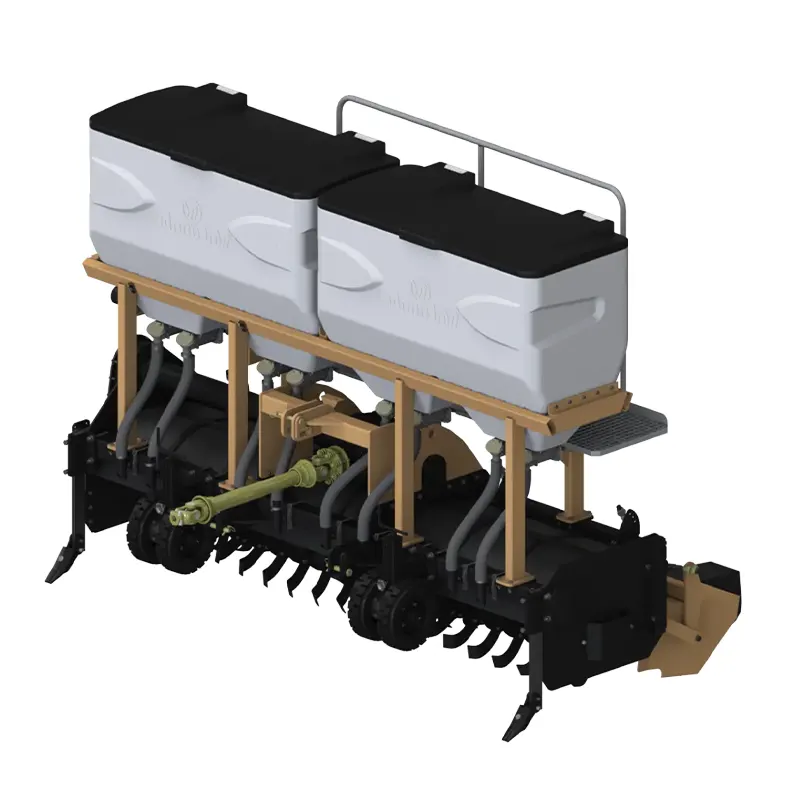
Karthala’s ongoing activity creates a stone management dynamic unique in the E-series: unlike frost heave (which returns sub-surface stone from below the cleared depth), Karthala delivers NEW stone to the field surface and sub-surface from above, through ash fall and lapilli (small volcanic rock fragments) deposition during eruption events. The THOR clearing investment addresses the accumulated stone in the existing soil profile — the stone present from decades of prior volcanic activity and soil formation. This cleared zone remains cleared at depth (new volcanic material lands on the surface, not at 15–25 cm depth). The management of ongoing Karthala material is handled by the annual BlackBird surface pass, which removes ash-fall stone from the field surface each season before it is incorporated into the soil profile by cultivation or root activity. Major eruption events (such as the 2005 eruption that deposited significant ash across agricultural areas of Grande Comore) may require additional BlackBird passes or shallow THOR passes to address elevated lapilli deposits. The 10–15 year THOR repeat cycle that applies to most other E-series sites may compress to 6–8 years on the most active Karthala slopes, where continuous volcanic stone delivery from the volcano above the plantation zone is ongoing. Farms on the lower, older, more weathered soils further from Karthala’s active vent zones have slower stone accumulation and longer THOR repeat cycles. Confirm the site-specific assessment with Korea Watanabe before scheduling the clearing programme.
Is the Extra fraction linalool content specification the same across all major fine fragrance houses, or do Chanel, Dior, and Givaudan each use different thresholds?
The ISO 3063 specification for ylang-ylang Extra fraction establishes minimum linalool content of 20% and minimum benzyl acetate content of 10% — these are the baseline industry standards that any batch must meet to be commercially classified as Extra. However, major fine fragrance houses and flavour and fragrance (F&F) companies (Givaudan, Firmenich, IFF, Symrise) typically apply proprietary specifications that are stricter than ISO 3063, based on the specific sensory and functional requirements of their formulations. Chanel’s proprietary Extra specification is understood to require linalool above 22% and benzyl acetate above 12% — 2 percentage points stricter than ISO minimum on both parameters. Dior’s ylang-ylang Extra specification (used in J’adore) reportedly specifies geranyl acetate minimum 9%, above the ISO 8% minimum. Givaudan’s specification for its ylang-ylang Extra purchasing varies by customer formulation, but GC-MS acceptance criteria are applied at intake and batches failing any parameter are reclassified and re-priced before sale. The practical implication: a batch that passes ISO 3063 Extra classification (linalool 20.5%) may still fail a major fragrance house’s proprietary standard (linalool 22% minimum). The incremental quality gained by stone clearing that lifts a plantation’s average linalool from 19% (fails ISO Extra) to 23–24% (passes all major fragrance house specifications) produces a disproportionate commercial benefit: it doesn’t just restore one price point, it opens access to the premium fine fragrance supply contracts that pay the highest farmgate prices in the ylang-ylang market.
Ylang-ylang flowers are traditionally harvested at night — does the nighttime harvesting practice interact with the stone management argument in any direct way?
The traditional practice of harvesting ylang-ylang flowers at night (typically from 21:00 to 05:00 local time) or in the very early morning is based on two well-documented phenomena: (1) the flower’s essential oil content peaks at night, when stomatal closure reduces volatile terpene loss through transpiration, and (2) cooler night temperatures slow the enzymatic degradation of linalool and other volatile esters that begins immediately after flower detachment from the tree. Both phenomena are real and support the nighttime harvest practice for Extra fraction yield. The interaction with stone management is indirect but commercially significant: a well-nourished tree on cleared ground with adequate Fe²⁺ for DXR activity synthesises more linalool per unit of flower tissue during the flower’s development — so the linalool peak at nighttime harvest is higher in absolute terms on a cleared-soil tree than on a stone-restricted tree. Stone management raises the baseline linalool content of the oil; nighttime harvesting captures that elevated content at its daily maximum. The two practices reinforce each other: a plantation that combines stone clearing with rigorous nighttime harvest timing captures both the compositional improvement from better mineral nutrition and the diurnal peak advantage from harvest timing. Farms that invest in stone clearing without also maintaining strict harvest timing discipline capture only part of the potential Extra fraction improvement; the combination is the commercial optimum.
Can the Comoros and Madagascar stone clearing argument from this article apply directly to Réunion Island’s ylang-ylang production, which shares the same Indian Ocean volcanic geology?
Réunion Island (La Réunion, France’s Indian Ocean overseas department) shares the broad volcanic geological context of Comoros and Nosy Be — all three are part of the East African Rift system’s Indian Ocean volcanic arc — but the specific stone management context differs in important respects. Réunion’s agricultural zones are primarily on the Piton de la Fournaise volcanic shield’s older, more weathered flanks and in the cirques (high-altitude mountain basins) — deeper soils with better organic matter development than the young Karthala slopes of Grande Comore. Stone content in Réunion agricultural soils is generally lower at 10–20 cm depth than in Comoros, because Réunion’s older soil profiles have had more time for weathering and stone reduction. However, Réunion’s ylang-ylang production is relatively small (a few hundred hectares, primarily in the western coastal zone) and serves primarily the luxury French perfumery market with a premium single-origin identity — the commercial justification for stone management investment is therefore comparable to or higher than the Comoros argument on a per-hectare basis. The stone clearing protocol for Réunion: THOR 2.4 at 16–22 cm (shallower profile than Comoros on the well-developed cirque soils); CT-2100 full collection; BlackBird annual surface pass before harvest season. Réunion ylang-ylang falls under French agricultural regulation and any subsidised equipment investment under France’s agricultural modernisation programme (Plan de Compétitivité et d’Adaptation des Exploitations) should be explored before private investment. Contact Korea Watanabe for the current Réunion-specific equipment specification and distributor network.
What is the ROI for ylang-ylang stone clearing in the Comoros — combining Extra fraction reclassification improvement, flower yield increase, and tree longevity over a 20-year analysis period?
For a 1 ha Grande Comore ylang-ylang plantation (500 trees/ha at 4 m × 5 m spacing, Karthala basalt stone at 22% volume density 8–25 cm, trees at 6–8 years productive age): Investment (THOR 2.4 + CT-2100 + PSW-3200 + BlackBird 2× annual for 1 ha, 20-year period): approximately KMF 600,000–900,000 initial (US$1,300–2,000) + KMF 80,000–120,000/year (US$175–265/year) × 20 years = KMF 2,200,000–3,300,000 total (US$4,800–7,300). Benefits over 20-year analysis period: (1) Extra fraction reclassification improvement: on stone-restricted Comoros sites, Extra fraction proportion of total distillation is typically 25–35%; on cleared sites, 45–55%. Revenue improvement from 10–20% Extra proportion gain: 500 trees × 0.5 kg oil/tree/year × 15% Extra improvement × 20 years × US$200/kg price differential (Extra vs Grade I) = US$30,000. (2) Flower yield improvement: cleared trees produce approximately 40–70% more flowers per tree per year (Comoros Agricultural Ministry data from comparative studies at Ngazidja research station). Average 35% improvement: 500 trees × 0.35 yield improvement × 0.5 kg oil × 20 years × US$400/kg average blended price = US$70,000. (3) Tree longevity improvement: ylang-ylang trees on cleared ground show lower incidence of root disease and longer productive life — conservatively adds 3–5 productive years beyond the 20-year analysis period (not monetised here). Total monetised 20-year benefit: approximately US$100,000. Against investment US$4,800–7,300: ROI 14:1 to 21:1 over 20 years. The Comoros ROI is among the strongest in the E-series, reflecting the extreme price differential between Extra and Grade I, the dramatic flower yield improvement from stone clearing on young volcanic soils, and the relatively low initial investment cost on Comoros plantations where labour costs are lower than European or North American contexts.
Rock Crusher for Ylang-Ylang — Volcanic Island Root Zone, Extra Fraction and Linalool Protocol
Island + stone type (basalt/gabbro) + tree age + current Extra fraction proportion + linalool baseline + fragrance house supply target → Korea Watanabe provides the correct rock crusher for ylang-ylang volcanic island clearing specification, Fe chelation programme and 20-year Extra fraction reclassification ROI calculation for Comoros, Madagascar, and Indonesia production zones.
Korea Watanabe Rock Crusher Tractor Co., Ltd. — Ansan-si, Gyeonggi-do
Editor: Cxm