
L'élevage bovin coréen, tant la filière Hanwoo que l'industrie laitière, est confronté à une pression croissante sur trois fronts simultanément : une pénurie chronique de main-d'œuvre due à la baisse du taux de transmission des exploitations agricoles dans les zones rurales ; un durcissement des réglementations environnementales concernant la gestion des déjections animales et les émissions d'ammoniac ; et une sensibilisation accrue des producteurs et des consommateurs aux conditions de bien-être animal dans les systèmes d'élevage intensif. L'étable à compost, connue dans la pratique agricole coréenne sous le nom de 발효우사 (발효 : fermentation ; 우사 : étable), répond à ces trois problématiques grâce à une conception unique.
L'étable à compost n'est pas un concept nouveau en élevage international : elle est pratiquée depuis les années 1990 dans les exploitations laitières scandinaves, s'est répandue en Amérique du Nord et au Brésil dans les années 2000 et 2010, et a gagné en popularité dans les élevages bovins coréens au cours des années 2020. Ce qui rend ce système fonctionnellement viable – et le distingue des bâtiments d'élevage conventionnels sur litière profonde – c'est l'aérateur : cet outil monté sur tracteur mélange, retourne et aère la litière pour maintenir le processus de fermentation aérobie indispensable au bon fonctionnement du système. Le Watanabe Aérateur de compost EP-DESTROYER Il s'agit de la machine qui remplit cette fonction dans la gamme d'outils agricoles Watanabe.
Ce guide explique en détail le système de bâtiment d'élevage à compost : son fonctionnement, ses exigences, les avantages qu'il offre par rapport aux bâtiments d'élevage conventionnels à caillebotis ou à sol en béton, et comment évaluer s'il convient à votre exploitation bovine coréenne.
Qu'est-ce qu'une grange à compost ? — Le système et sa logique de base
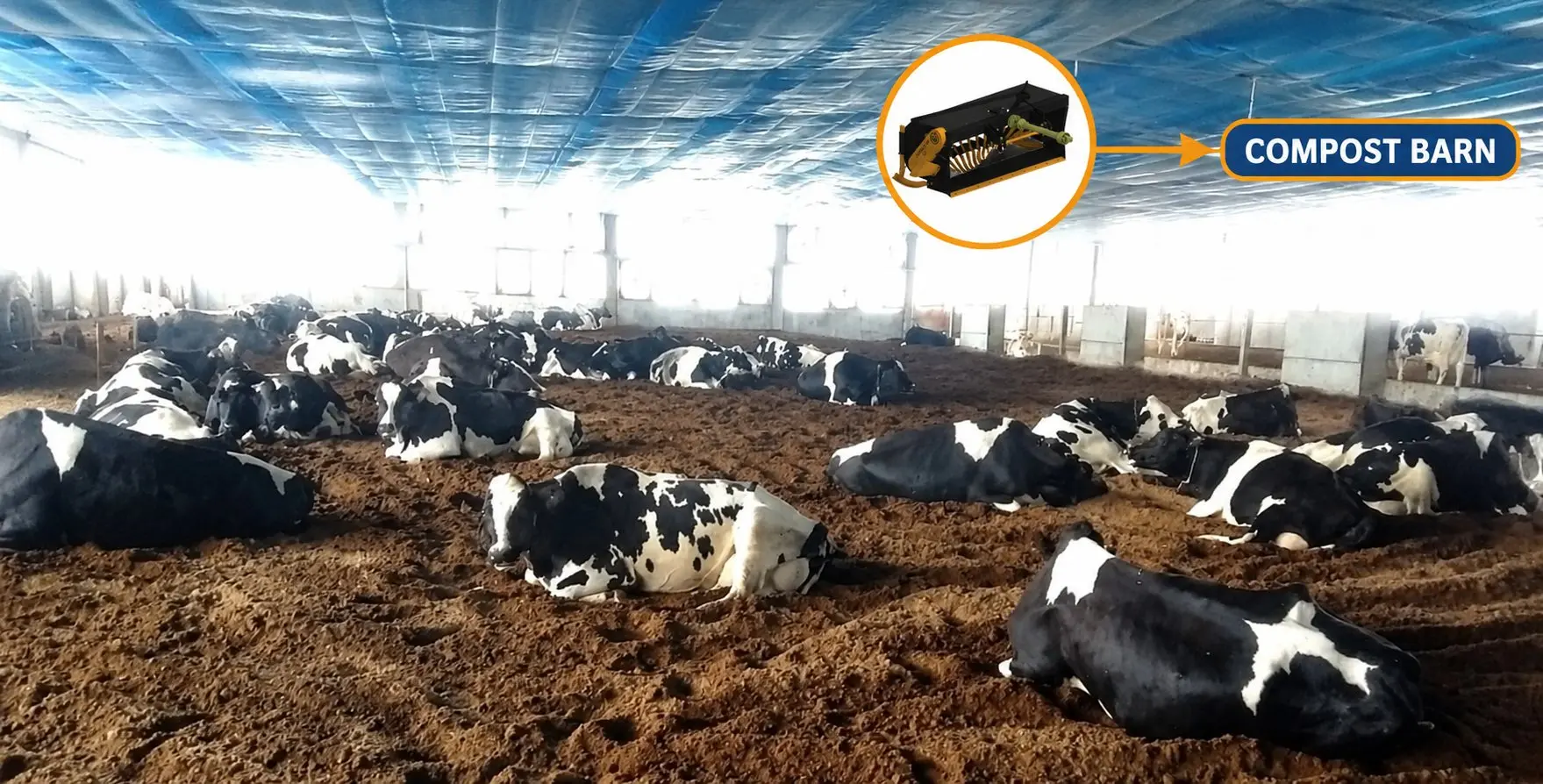
Une étable à compost est un système d'élevage où les bovins vivent sur une litière épaisse – généralement composée de copeaux de bois, de sciure, de paille de riz ou d'un mélange de ces matériaux – plutôt que sur des caillebotis en béton ou des tapis en caoutchouc. Son principe de fonctionnement repose sur le compostage aérobie : la litière, continuellement enrichie en fumier et en urine, subit une décomposition biologique en présence d'oxygène. Correctement géré, ce processus aérobie génère suffisamment de chaleur pour maintenir une température de 40 à 55 °C dans les zones actives de la litière, limitant ainsi la prolifération des agents pathogènes et accélérant la décomposition de la matière organique.
L'exigence opérationnelle essentielle qui distingue un bâtiment de compostage bien géré d'un système conventionnel à litière profonde est l'aération régulière. Le processus de compostage aérobie consomme rapidement l'oxygène. Sans brassage et retournement réguliers de la litière, les conditions anaérobies, responsables de la production d'ammoniac, de sulfure d'hydrogène et d'odeurs désagréables, remplacent rapidement les conditions aérobies qui apportent les bienfaits du bâtiment de compostage. L'aérateur permet de réintroduire de l'oxygène dans la litière deux fois par jour (fréquence d'aération minimale recommandée par les protocoles de gestion des bâtiments de compostage coréens et internationaux).
Les quatre conditions de fonctionnement de base
Les recherches internationales sur les systèmes de bâtiments de compostage — y compris les études de l'Université du Kentucky (le principal centre de recherche américain sur la gestion des bâtiments de compostage), les directives du Conseil danois de l'agriculture et de l'alimentation pour les opérations scandinaves et les recherches brésiliennes d'Embrapa Dairy Cattle (pertinentes compte tenu des origines brésiliennes de Watanabe) — identifient quatre conditions qui doivent être maintenues simultanément pour que le système fonctionne correctement :
1. Rapport carbone/azote adéquat dans la litière. Le fumier frais de bovins présente un faible rapport C/N, avec une teneur en azote trop élevée pour un compostage aérobie efficace. Les matériaux de litière (copeaux de bois : C/N d’environ 300/1 ; sciure de bois : C/N de 200 à 500/1 ; paille de riz : C/N de 60 à 80/1) permettent de diluer la charge azotée à un niveau favorable au développement de populations bactériennes aérobies actives. Le choix et le volume de la litière constituent une décision de gestion qui détermine directement si le système atteint des conditions aérobies ou anaérobies.
2. Teneur en humidité de 40–65%. Les bactéries du compostage aérobie ont besoin d'humidité pour fonctionner, mais leur activité est inhibée par un excès d'humidité qui sature les pores et limite la diffusion de l'oxygène. Le taux d'humidité d'une litière de compost correctement gérée (mesuré en pressant une poignée et en observant si du liquide s'en écoule) doit être humide, mais pas détrempé. Une forte densité d'élevage, une infiltration importante d'eau de pluie à travers le toit ou les murs du bâtiment, ou un excès d'eau provenant des abreuvoirs font dépasser le seuil d'humidité nécessaire au compostage aérobie.
3. Un espace poreux suffisant pour la diffusion de l'oxygène. Les matériaux de litière à particules fines (sciure fine, paille bien décomposée) se compactent plus rapidement que les matériaux à particules grossières (copeaux de bois, paille grossièrement broyée), réduisant ainsi la porosité et limitant la diffusion de l'oxygène dans le litière. La fonction de brassage physique de l'aérateur recrée la porosité réduite par le compactage entre deux passages d'aération.
4. Fréquence d'aération. L'aération deux fois par jour, généralement avant la traite ou la distribution de la nourriture du matin et du soir, est la fréquence minimale recommandée par les normes internationales de gestion des étables à compost. Durant les étés chauds coréens (juillet-août), les températures ambiantes élevées favorisent l'activité microbienne mais augmentent également l'évaporation de l'humidité ; il est donc important de surveiller l'humidité de la litière pendant l'été afin d'éviter qu'elle ne se dessèche en dessous de son niveau optimal.
L'aérateur EP-DESTROYER — Caractéristiques et fonctionnement
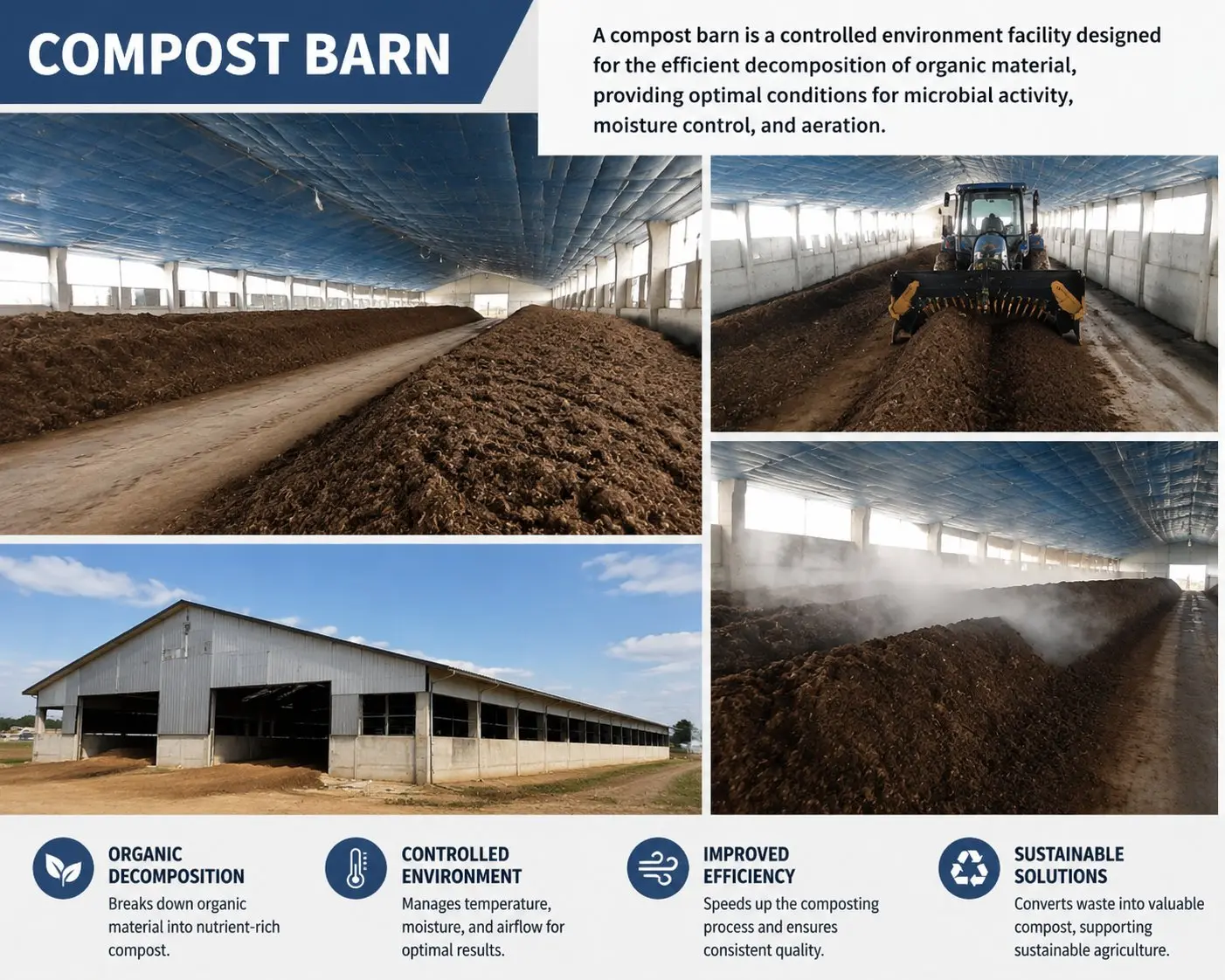
L'aérateur rotatif Watanabe EP-DESTROYER, monté sur tracteur, est spécialement conçu pour la gestion de la litière des bâtiments d'élevage. Il se fixe sur l'attelage trois points arrière de catégorie 2 et est entraîné par la prise de force (PDF) du tracteur à 540 tr/min. Le rotor de la machine est équipé de dents ou de palettes de mélange qui pénètrent la litière jusqu'à 80 cm de profondeur lors du passage du tracteur dans le bâtiment. Ce procédé permet de fragmenter les zones compactées, de recréer des espaces poreux et de réoxygéner la litière. Deux modèles sont disponibles pour s'adapter aux différentes largeurs de bâtiments et aux différentes puissances de tracteur.
| Spécification | EP-DESTROYER 2.0 | EP-DESTROYER 3.0 |
|---|---|---|
| Largeur de travail | 2,0 m | 3,0 m |
| Profondeur d'aération | 80 cm | 80 cm |
| puissance minimale du tracteur | 75 CV | 80 CV |
| Poids | 460 kg | 660 kg |
| catégorie de liaison | Cat. 2 | Cat. 2 |
| vitesse de prise de force | 540 tr/min | 540 tr/min |
ⓘ CV = puissance en chevaux-vapeur (valve). Toutes les spécifications proviennent de la brochure officielle Watanabe. Une prise de force (PDF) à 540 tr/min est requise ; assurez-vous que votre tracteur dispose d’une PDF à 540 tr/min (la quasi-totalité des tracteurs coréens de plus de 50 ch proposent des options de PDF à 540 et 1 000 tr/min).
Pourquoi une profondeur d'aération de 80 cm change tout
La profondeur de travail de 80 cm de l'EP-DESTROYER est la spécification qui détermine le plus directement son efficacité dans la gestion de la litière des bâtiments de compostage. Comprendre l'importance de cette profondeur nécessite de comprendre comment la litière se stratifie au fil du temps en l'absence d'aération.
Les 20 à 30 premiers centimètres d'une couche de litière épaisse non aérée constituent la couche la plus récemment déposée : la plus meuble, la plus riche en azote provenant du fumier frais et la plus aérobie. En dessous, entre 30 et 60 cm, se trouve une zone de transition où le compactage commence à limiter la diffusion de l'oxygène. Au-delà de 60 cm, dans une couche non aérée, les conditions anaérobies prédominent généralement, produisant du méthane, du sulfure d'hydrogène et de l'ammoniac au lieu de la chaleur et du dioxyde de carbone caractéristiques d'un compostage sain. Un aérateur fonctionnant seulement jusqu'à 40-50 cm (courant dans les systèmes d'aération à usage général basés sur un cultivateur) ne peut pas atteindre et perturber de manière constante la zone anaérobie qui se développe en profondeur dans une installation de compostage correctement gérée, avec un apport annuel de litière supérieur à 30 cm.
L'EP-DESTROYER, avec sa portée de 80 cm, pénètre la zone aérobie superficielle et atteint les zones de transition et de début d'anaérobie, fracturant physiquement les couches compactées et réintroduisant l'oxygène atmosphérique sur toute l'épaisseur active de la litière. Cette pénétration en profondeur est à l'origine de l'homogénéité de température sur toute l'épaisseur de la litière, caractéristique des bâtiments de compostage correctement gérés, et de l'absence des zones anaérobies odorantes qui caractérisent les systèmes de compostage profond mal aérés.
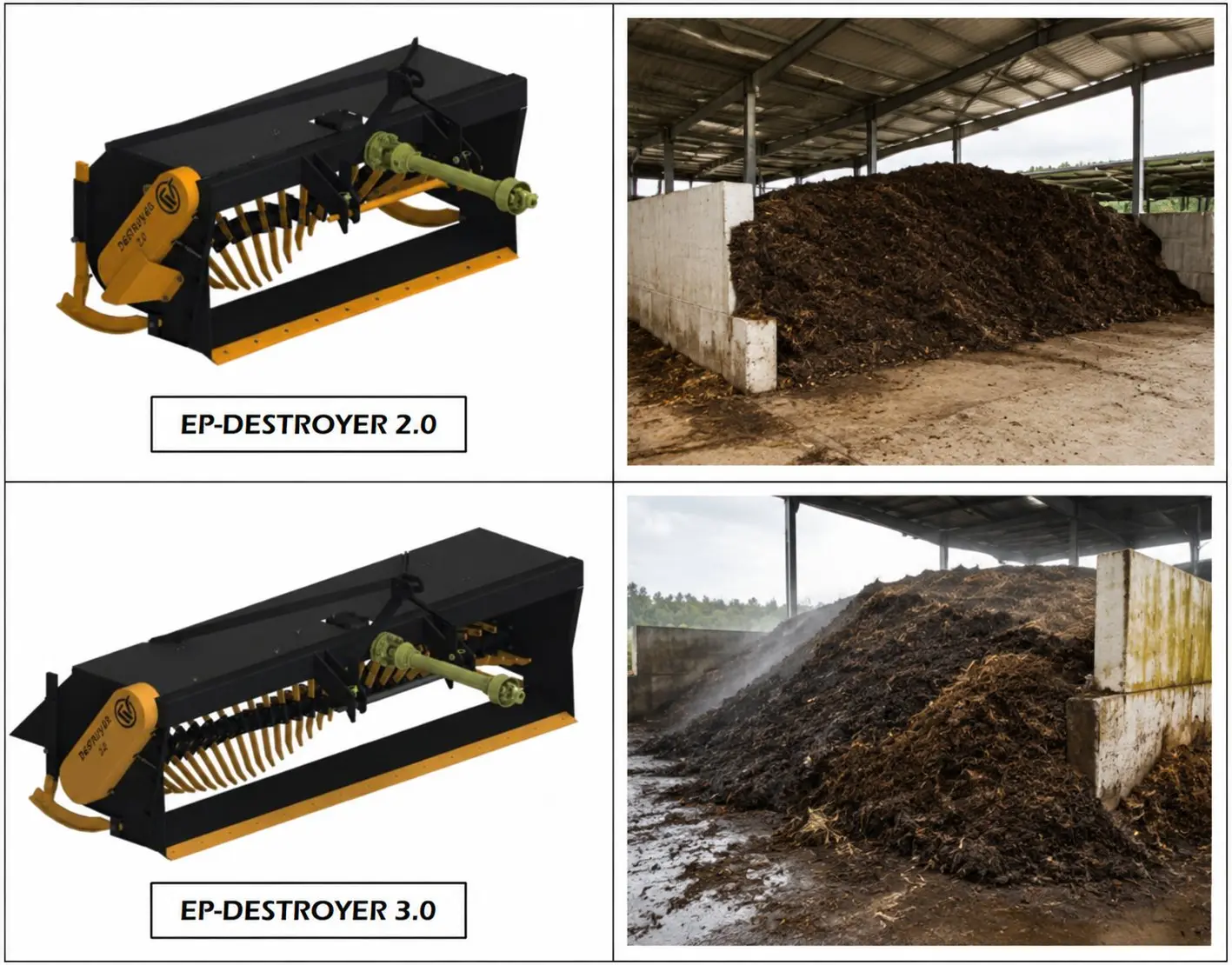
Choisir entre EP-DESTROYER 2.0 et EP-DESTROYER 3.0
La sélection entre les EP-DESTROYER 2.0 et EP-DESTROYER 3.0 est principalement fonction de la largeur intérieure de la grange et de la puissance du tracteur :
EP-DESTROYER 2.0 (2,0 m, 75 CV minimum) : Idéal pour les étables d'une largeur intérieure de 6 à 10 m. Pour une étable de 8 m de large, 4 passages avec le modèle 2,0 m sont nécessaires, permettant de couvrir toute la surface en 15 à 20 minutes d'aération active par passage. La plupart des tracteurs compacts coréens de plus de 75 ch sont compatibles avec le modèle 2,0 m. Ce modèle est plus accessible aux petites exploitations d'élevage bovin coréennes disposant déjà de tracteurs de 80 à 100 ch.
EP-DESTROYER 3.0 (3,0 m, 80 CV minimum) : Adapté aux bâtiments d'une largeur intérieure de 9 à 15 m, ou aux grandes exploitations où la réduction du nombre de passages d'aération par session est une priorité. Un bâtiment de 12 m de large nécessite 4 passages avec le modèle 3,0 m, soit le même nombre de passages qu'un bâtiment de 8 m avec le modèle 2,0 m, mais couvrant une surface supplémentaire de 501 TP5 T. Son poids de 660 kg, contre 460 kg pour le modèle 2,0 m, requiert un tracteur proportionnellement plus puissant et plus lourd pour un fonctionnement stable.
Avantages avérés des bâtiments à compost : témoignages d’exploitants coréens
Les avantages les plus fréquemment rapportés par les éleveurs de bétail coréens ayant adopté les systèmes d'étables à compost correspondent étroitement aux résultats documentés dans la littérature scientifique internationale sur le sujet. Les avantages suivants reposent sur des résultats de recherche établis et sur l'expérience des exploitants coréens, et non sur des arguments marketing :
Réduction de la main-d'œuvre dans la gestion du fumier
Les étables classiques à caillebotis nécessitent le raclage, le rinçage ou l'enlèvement mécanique du fumier accumulé – une tâche quotidienne ou plurihebdomadaire selon la conception de l'étable. La gestion de la litière compostée requiert deux passages quotidiens de tracteur pour l'aération, ainsi qu'un apport périodique de litière (généralement toutes les 2 à 4 semaines à raison de 1 à 2 kg de sciure ou de copeaux de bois par vache et par jour). La litière est entièrement retirée une fois par an lorsque le compost accumulé atteint la profondeur d'enlèvement pratique, généralement après 6 à 12 mois d'accumulation selon la conception de l'étable et la densité d'élevage.
Les éleveurs coréens de bovins Hanwoo et de vaches laitières qui ont adopté ce système constatent systématiquement une réduction nette du temps de travail quotidien lié au fumier : les passages du tracteur pour l’aération sont plus rapides par animal que les opérations de raclage et de manutention qu’ils remplacent dans les systèmes conventionnels. L’enlèvement annuel de la litière et l’élimination du compost (un compost mûr ayant une valeur commerciale comme amendement du sol) permettent de concentrer davantage le travail de gestion sur une opération planifiée et prévisible, au lieu d’une manutention quotidienne.
Réduction de l'ammoniac et des odeurs
La production d'ammoniac dans les bâtiments d'élevage est principalement liée à l'activité de l'uréase, une enzyme qui transforme biologiquement l'urée (principal composé azoté de l'urine des bovins) en ammoniac en présence d'humidité. Dans les étables conventionnelles à sol en béton, le fumier et l'urine s'accumulent à la surface du sol, créant des conditions optimales pour l'activité de l'uréase : humidité suffisante, température adéquate et grande surface exposée. Les concentrations d'ammoniac dans les étables conventionnelles coréennes mal ventilées dépassent régulièrement 20 à 30 ppm, soit plus de 25 ppm, seuil à partir duquel la fonction respiratoire des bovins commence à être altérée.
Dans une installation de compostage correctement gérée, les conditions aérobies et de température élevée de la zone de compostage active inhibent l'activité de l'uréase et accélèrent l'incorporation de l'azote dans la biomasse microbienne plutôt que la volatilisation de l'ammoniac. La température dans cette zone (40 à 55 °C) est supérieure à la plage optimale pour l'activité de l'uréase, ce qui réduit la production d'ammoniac par rapport à la température ambiante d'un sol conventionnel. Les exploitants coréens d'installations de compostage constatent des améliorations visibles de la qualité de l'air : diminution des irritations oculaires et respiratoires, et réduction de l'odeur d'ammoniac à l'entrée. Ces résultats concordent avec les données de réduction d'ammoniac issues de recherches internationales sur les installations de compostage.
Bien-être animal et santé mammaire (exploitations laitières)
Dans les exploitations laitières coréennes, le nombre de cellules somatiques (NCS), principal indicateur de la santé mammaire et de l'incidence des mammites subcliniques, détermine directement les primes et les déductions liées à la qualité du lait dans le système de paiement coréen. La litière épaisse, sèche et douce d'une étable à compost correctement gérée réduit l'exposition des trayons aux agents pathogènes environnementaux responsables de mammites (principalement Streptococcus uberis et les coliformes) qui prolifèrent dans les litières conventionnelles humides et contaminées ou sur les surfaces en béton.
Les recherches internationales sur la litière compostée et le comptage des cellules somatiques (CCS) démontrent de façon constante qu'une litière compostée correctement gérée maintient une faible contamination bactérienne de sa surface, car les conditions aérobies et de température élevée empêchent la survie des agents pathogènes dans la litière active. L'expression « correctement gérée » est essentielle : une litière anaérobie, froide et humide (conséquence d'une aération insuffisante) produit exactement l'effet inverse, à savoir une forte contamination bactérienne et un risque accru de mammite. Le rôle de l'aérateur EP-DESTROYER dans le maintien de conditions aérobies est donc directement lié à la santé mammaire.
Valeur de la litière retirée comme compost
Lorsqu'on retire la litière accumulée d'un bâtiment de compostage correctement géré (généralement une fois par an), on obtient un compost mûr dont la composition en azote, phosphore et potassium (NPK) est comparable à celle d'un compost de qualité moyenne. Les agriculteurs coréens, notamment les maraîchers et les producteurs de pommes de terre, privilégient un compost de qualité pour amender leurs sols. Par ailleurs, les éleveurs coréens utilisant des bâtiments de compostage vendent ou utilisent de plus en plus la litière retirée comme engrais pour leurs cultures. Ce procédé transforme un poste de dépense lié à l'élimination du fumier en une ressource valorisable, améliorant ainsi la rentabilité globale du système de compostage par rapport aux méthodes conventionnelles de gestion et d'élimination du fumier.
Configuration requise — Ce dont une grange à compost a besoin pour fonctionner
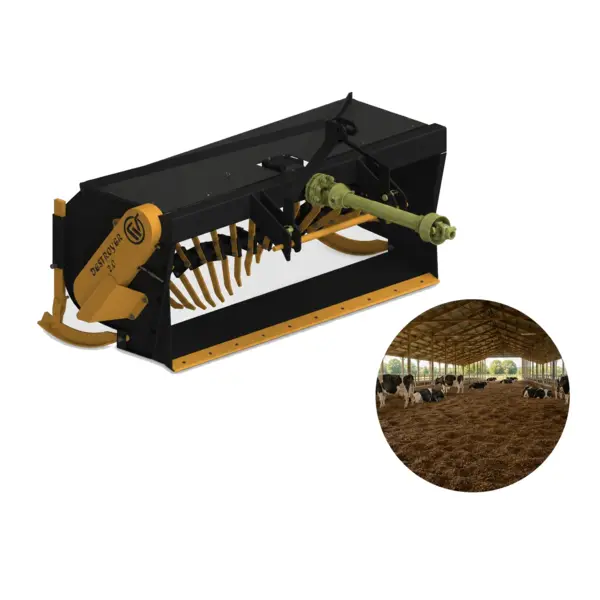
Le système de compostage ne fonctionne correctement que si la structure du bâtiment, le programme de litière et le calendrier de gestion sont parfaitement adaptés. Toute défaillance d'un élément compromet le bon fonctionnement des autres. Les exigences suivantes s'appliquent aux installations de compostage coréennes :
Structure de la grange — Largeur, hauteur et ventilation
Largeur par vache : Les recommandations coréennes concernant la conception des bâtiments d'élevage à compost préconisent une surface de litière minimale de 9 à 10 m² par vache laitière adulte et de 7 à 8 m² par bovin Hanwoo, pour des densités d'élevage typiques en Corée. Le surpeuplement, erreur de gestion la plus fréquente lors de la conversion de bâtiments d'élevage à compost en Corée, entraîne une humidité excessive due au volume de fumier et d'urine par unité de surface de litière, créant ainsi des conditions anaérobies, quelle que soit la fréquence d'aération.
Hauteur du toit et débord de toit : Une hauteur de toit adéquate (minimum 4 m au faîtage) et un débord suffisant (1,5 à 2 m) sur les parois latérales empêchent l'infiltration de la pluie dans la zone de compostage, un des principaux défis en matière de gestion de l'humidité lors de la construction d'installations de compostage en Corée, compte tenu des fortes précipitations de la mousson (juin à août). Durant ces épisodes, la zone de compostage exposée directement à la pluie dépasse rapidement la limite d'humidité 65% requise pour le compostage aérobie.
Ventilation: Une ventilation naturelle, grâce à des aérations de faîtage ouvertes et des ouvertures latérales réglables, est essentielle à la gestion de l'humidité. Le processus de compostage aérobie produit de la vapeur d'eau qui doit être constamment évacuée de l'air du bâtiment. Un bâtiment de compostage mal ventilé accumule un air très humide qui se condense dans la litière, augmentant ainsi le taux d'humidité même en l'absence de pluie. C'est pourquoi, en Corée, durant l'été, lorsque l'humidité ambiante est déjà élevée, une conception soignée de la ventilation est indispensable.
Matériaux de literie — Type, qualité et volume
Les copeaux de bois grossiers (taille des particules de 5 à 20 mm) sont généralement considérés comme le matériau de litière le plus performant pour les opérations de compostage en Corée — ils maintiennent un espace poreux pour la diffusion de l'oxygène mieux que la sciure fine, se décomposent suffisamment lentement pour maintenir la structure du paquet pendant la période d'accumulation annuelle et sont disponibles auprès des opérations de transformation du bois dans les régions rurales coréennes (en particulier les zones de récolte de bois de Gangwon-do et de Gyeongsang du Nord).
La paille de riz, largement disponible en Corée, est une excellente litière une fois broyée. Cependant, sa décomposition plus rapide que celle des copeaux de bois nécessite des apports plus fréquents pour maintenir l'épaisseur du compost. Plusieurs exploitations de compostage coréennes utilisent un mélange de copeaux de bois 70% et de paille de riz 30% comme litière économique et équilibrée, alliant les avantages structurels des copeaux de bois au coût inférieur de la paille de riz.
Épaisseur initiale de la litière à l'installation de l'étable : 30 à 40 cm de copeaux de bois grossiers ou équivalent. Apport annuel : environ 1 à 2 kg de litière sèche par vache et par jour pour compenser la décomposition et l'absorption d'humidité. Sur 12 mois à ce rythme, l'épaisseur de la litière augmente de 15 à 30 cm ; la quantité de matière accumulée retirée lors du nettoyage annuel correspond généralement à 45 à 70 cm de compost bien décomposé.
Programme d'aération — Deux fois par jour, tous les jours
Deux passages quotidiens de l'aérateur EP-DESTROYER (matin et soir) constituent la fréquence minimale pour maintenir des conditions aérobies dans un bâtiment de compostage coréen, à des densités d'élevage commerciales. L'intervalle entre les passages ne doit pas excéder 12 heures, car des conditions anaérobies peuvent se rétablir dans les zones compactées 8 à 10 heures après un passage d'aération par temps chaud. En été (juillet-août, lorsque les températures ambiantes atteignent 28 à 35 °C), il peut être avantageux d'effectuer trois passages par jour sur les sections les plus chargées du bâtiment, car la hausse des températures ambiantes accélère à la fois l'activité aérobie et le rétablissement du milieu anaérobie.
Le passage du tracteur pour l'aération couvre systématiquement l'ensemble de la surface de l'étable, généralement par passages successifs et perpendiculaires à l'axe longitudinal du bâtiment, garantissant ainsi le traitement de toute la litière à chaque aération. Pour une étable de 50 vaches (10 m² par vache, soit 500 m² de surface totale), à une vitesse d'aération pratique d'environ 0,5 à 1 km/h avec l'EP-DESTROYER, chaque passage d'aération complet dure de 15 à 25 minutes, selon les obstacles internes et les contraintes de manœuvre. Le temps total d'utilisation du tracteur pour deux passages d'aération est de 30 à 50 minutes par jour.
Conversion d'une étable à compost : aspects économiques pour les élevages bovins coréens
L'analyse économique du passage à un système de bâtiment d'élevage à compost en Corée repose sur la comparaison des coûts d'investissement et d'exploitation du nouveau système avec les coûts évités par le système actuel, auxquels s'ajoute la valeur des bénéfices obtenus. Cette analyse diffère sensiblement entre les exploitations laitières et les élevages de bovins Hanwoo.
Éléments de coût du système de grange à compost
Transformation de grange ou construction neuve : Pour les bâtiments d'élevage existants à sol en béton, la conversion comprend généralement : l'aménagement d'une litière (suppression des allées d'alimentation ou modifications pour créer cette zone), la mise en place d'une ventilation améliorée (aérateurs de faîtage, ouvertures latérales réglables) et la vérification de l'étanchéité de la toiture afin d'empêcher les infiltrations d'eau de pluie. Les bâtiments d'élevage à compost neufs sont conçus dès le départ avec les dimensions, la ventilation et l'accès nécessaires au tracteur d'aération ; il s'agit généralement d'une structure plus simple et moins coûteuse par animal qu'un bâtiment d'élevage conventionnel à sol en béton, car la litière ne nécessite aucun système de drainage.
Aérateur EP-DESTROYER : L'EP-DESTROYER 2.0 ou 3.0 est le principal équipement spécifique au système de compostage. Les deux modèles fonctionnent avec des tracteurs standard de catégorie 2 à attelage trois points de 75 à 80 ch. Dans la plupart des élevages bovins coréens, le tracteur agricole existant convient parfaitement à l'EP-DESTROYER. Si un tracteur d'aération dédié est nécessaire pour les opérations où le tracteur agricole est affecté à d'autres tâches pendant les deux séances d'aération quotidiennes, un tracteur compact de 80 à 100 ch est suffisant pour l'EP-DESTROYER 2.0, à un coût nettement inférieur à celui des tracteurs agricoles plus puissants.
Coût annuel des matériaux de literie : Avec une consommation d'environ 1,5 kg de copeaux de bois secs par vache et par jour, une étable de 50 vaches nécessite environ 27 tonnes de copeaux de bois secs par an. Les déchets de scierie et de transformation du bois coréens (principale source de litière compostée) sont disponibles à des prix variables selon le lieu et la saison ; les exploitations situées près des zones de transformation du bois de Gangwon-do ont généralement accès à une litière moins chère que celles situées en périphérie des villes.
Coûts évités grâce à la conversion
Les principales économies réalisées grâce à la conversion des élevages bovins coréens en étables à compost concernent la main-d'œuvre et le matériel de gestion du fumier. La gestion du fumier dans les étables à sol bétonné (raclage, pompage, gestion des lagunes et épandage) est exigeante en main-d'œuvre et nécessite un équipement spécialisé. Plusieurs éleveurs laitiers coréens ayant opté pour des étables à compost font état de réductions significatives du temps de travail annuel total par vache consacré à la gestion du fumier. Le gain de temps lié à l'aération est compensé par la réduction du temps de raclage et de manutention, ce qui permet une économie nette de main-d'œuvre quotidienne de 30 à 60 minutes pour un élevage de 50 vaches.
Pour les exploitations laitières coréennes, l'amélioration du taux de cellules somatiques (TCS) grâce à une meilleure santé mammaire sur une litière de compost propre et sèche se traduit directement par des primes de qualité dans le système de paiement du lait coréen. Les exploitations qui maintiennent un TCS inférieur à 200 000 cellules/mL bénéficient de primes de qualité ; celles dont le TCS dépasse 400 000 cellules/mL subissent des déductions. Le passage d'une litière conventionnelle humide et contaminée à une litière de compost correctement gérée a permis aux exploitants coréens de réduire le TCS de 20 à 40 %, ce qui représente une amélioration significative de leurs revenus laitiers.
Le bâtiment de compostage est-il adapté à votre exploitation en Corée ?
Le système d'étable à compost n'est pas adapté à toutes les exploitations bovines coréennes. Les conditions suivantes favorisent sa conversion :
Favorable: Exploitations ayant accès à des matériaux de litière locaux à un coût raisonnable (à proximité des usines de transformation du bois, disponibilité de paille de riz) ; exploitations disposant de structures de grange existantes pouvant être adaptées pour une ventilation adéquate ; exploitations confrontées à des contraintes de main-d'œuvre dans la gestion du fumier ; exploitations laitières présentant des problèmes de SCC attribuables à la mammite environnementale ; exploitations disposant de terres cultivées adjacentes ou entretenant des relations avec des producteurs agricoles qui valorisent le compost comme amendement du sol.
Moins favorable : Exploitations dans des zones densément urbanisées où l'utilisation biquotidienne du tracteur pour l'aération crée des contraintes opérationnelles ; exploitations sans accès à une litière bon marché à une distance de transport économique ; exploitations où la structure existante de la grange ne peut être modifiée pour assurer une ventilation naturelle adéquate sans investissement important ; très petites exploitations (moins de 20 animaux) où le coût d'investissement de l'EP-DESTROYER et de la modification de la grange a une longue période de retour sur investissement par rapport aux économies de main-d'œuvre réalisables.
L'engagement de la direction est la condition essentielle : le système de compostage exige une grande rigueur dans le respect du programme d'aération biquotidienne, du programme d'ajout de litière et du contrôle de l'humidité. Dans les exploitations où le suivi régulier des opérations de tracteur (deux fois par jour) ne peut être assuré – faute de main-d'œuvre, en raison de l'organisation de l'exploitation ou par préférence de l'opérateur – le compost sera mal géré et de qualité inférieure à celle d'un système conventionnel. L'EP-DESTROYER est un outil qui facilite une gestion optimale ; il ne remplace pas la rigueur de gestion requise par le système.
Foire aux questions — Grange à compost et EP-DESTROYER
Que se passe-t-il si nous manquons l'aération du matin ou du soir pendant quelques jours ?
Un seul oubli d'aération n'endommage pas durablement un litière bien établi : la population bactérienne aérobie possède une certaine capacité tampon. Cependant, l'absence répétée d'au moins une des deux aérations quotidiennes permet la reconstitution de zones anaérobies dans les zones compactées, provoquant initialement des concentrations élevées d'ammoniac et, sur une période d'une à deux semaines, une détérioration progressive de la litière vers des conditions anaérobies dans ces zones. Le système est plus tolérant au changement climatique lors des saisons fraîches et sèches du printemps et de l'automne coréens que lors des périodes chaudes et humides de juillet-août, où la reconstitution des zones anaérobies est plus rapide. Si l'aération ne peut être assurée en cas de maladie, de congés ou d'arrêt de production, l'ajout de litière pour diluer l'humidité compense partiellement, mais ne remplace pas l'aération physique.
Comment ce système fonctionne-t-il pendant l'humidité estivale et la saison de la mousson en Corée ?
La saison de la mousson coréenne (de juin à juillet) représente la période la plus critique pour la gestion de l'humidité dans les bâtiments de compostage. Les mesures de gestion courantes consistent à prévenir les infiltrations d'eau (par exemple, un débord de toit suffisant et la gestion des parois latérales pendant les épisodes pluvieux), à optimiser la ventilation et, dans certaines exploitations, à réduire temporairement la densité d'élevage lors des pics de mousson. Augmenter la fréquence d'aération à trois passages par jour pendant les périodes les plus humides contribue à maintenir des conditions aérobies optimales. Certains exploitants coréens ajoutent de la litière sèche (copeaux de bois) avant et pendant la mousson afin de limiter l'humidité résiduelle. Le système peut être géré pendant toute la saison de la mousson coréenne, mais cela exige une attention plus soutenue qu'au printemps et en automne.
Le compost utilisé comme litière est-il adapté à une utilisation directe sur les terres cultivées après son enlèvement ?
Oui, le compost issu d'une installation de compostage correctement gérée, après 8 à 12 mois de maturation, est un compost bien mûr, dont l'activité biologique est suffisante pour réduire les niveaux de pathogènes et pour fournir de l'azote sous une forme organique assimilable par les plantes. En Corée, le compost provenant des élevages est réglementé par la loi sur la gestion des déjections animales (가축분뇨의 관리 및 이용에 관한 법률), qui fixe des normes de qualité pour le compost d'élevage utilisé comme amendement des sols agricoles. La litière extraite d'une installation de compostage correctement gérée répond généralement aux normes de qualité des composts d'élevage de catégorie 1 ou 2 et peut être vendue, utilisée sur les terres cultivées de l'exploitation ou transférée à des agriculteurs voisins dans le cadre des accords autorisés par la réglementation en vigueur. Avant de commercialiser la litière extraite comme compost, veuillez vous renseigner auprès de votre service local de vulgarisation agricole (농업기술센터) afin de vérifier les exigences de conformité.
L'EP-DESTROYER peut-il être utilisé sur d'autres cultures ou pour d'autres applications que les hangars à compost ?
L'EP-DESTROYER est un cultivateur rotatif conçu spécifiquement pour le brassage vigoureux et en profondeur (80 cm) requis pour l'aération des litières de compost. La géométrie de son rotor, sa profondeur de travail et ses exigences en matière de prise de force sont adaptées à cette application. Bien que la machine soit physiquement capable de fonctionner dans des sols meubles, la profondeur de travail de 80 cm qui la rend efficace dans les composteurs dépasse la profondeur de travail habituelle des rotoculteurs agricoles ; elle entraînerait un travail excessif du sol et une surconsommation d'énergie pour le travail du sol en plein champ. L'EP-DESTROYER est un outil dédié à l'aération des composteurs ; le rotoculteur PSW-3200 est l'outil Watanabe conçu pour le travail du sol en plein champ.
Existe-t-il des subventions du gouvernement coréen pour la conversion des bâtiments de compostage ?
Le gouvernement coréen propose des aides pour les infrastructures de gestion des déjections animales, notamment la modification des bâtiments d'élevage et l'acquisition d'équipements pour une meilleure performance environnementale. Ces aides sont disponibles via plusieurs programmes administrés par le ministère de l'Agriculture, de l'Alimentation et des Affaires rurales (농림축산식품부) et le ministère de l'Environnement (환경부). Parmi les programmes concernés figurent le Projet de soutien à l'amélioration de l'environnement d'élevage (축산환경개선지원사업) et les programmes provinciaux complémentaires. Les critères d'éligibilité et les taux de subvention étant susceptibles d'évoluer chaque année, il est conseillé de vérifier la disponibilité des programmes auprès de votre agent régional de vulgarisation agricole (축산기술원 ou 농업기술센터) avant d'investir dans la conversion d'un bâtiment d'élevage. L'EP-DESTROYER, en tant qu'outil de gestion des déjections animales, peut être éligible aux aides pour l'équipement d'amélioration de l'environnement d'élevage. Nous pouvons vous fournir la documentation technique nécessaire à vos demandes de subvention.
Vous envisagez de convertir votre étable en bâtiment de compostage ? Commencez par une consultation.
Indiquez-nous la taille de votre troupeau (laitier ou Hanwoo), les dimensions de votre étable actuelle, la puissance de votre tracteur et votre accès à la litière locale : nous vous confirmerons le modèle EP-DESTROYER adapté à votre étable et à votre tracteur, et vous mettrons en relation avec des ressources coréennes pour la gestion des bâtiments de compostage. Les modèles EP-DESTROYER 2.0 et 3.0 sont disponibles en stock à Ansan-si, Gyeonggi-do, en Corée.
Éditeur : Cxm