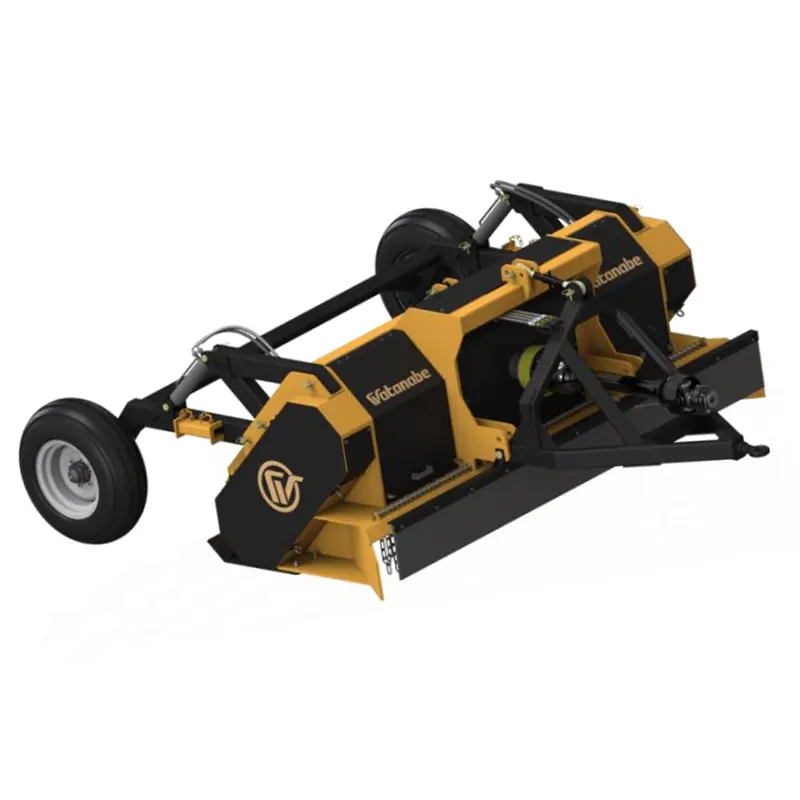
Una de las consultas más comunes que recibe Korea Watanabe antes de la compra de una trituradora de piedra es una variación de la misma pregunta: “Mi tractor tiene 130 CV, ¿es suficiente para la trituradora de piedra?” Trituradora de rocas THOR 2.4La respuesta honesta es no, y este artículo explica exactamente por qué existe ese límite, qué sucede físicamente cuando una trituradora de piedra funciona por debajo de su potencia mínima requerida y cómo leer las especificaciones de los tractores coreanos para confirmar si su máquina específica cumple con el estándar.
Elegir el adecuado Potencia del tractor para una trituradora de piedra Es más técnico de lo que sugieren la mayoría de las guías de equipos. La potencia mínima de 180 HP en el THOR 2.4 no es una afirmación de marketing conservadora ni una medida de protección contra posibles responsabilidades. Se deriva directamente del requerimiento de energía física del rotor en el momento preciso en que una piedra de granito de 25 centímetros ingresa a la cámara de trituración con un diámetro de rotor de 550 mm y 1000 RPM. Comprender esta derivación, incluso sin conocimientos de ingeniería, permite a cualquier agricultor de las tierras altas de Corea tomar una mejor decisión de compra y protege su inversión del tipo específico de falla mecánica que causa la falta de potencia.
Potencia de la toma de fuerza (PTO) frente a potencia del motor: la brecha que los compradores coreanos suelen pasar por alto.
Cuando un fabricante coreano de tractores anuncia una máquina de 180 CV, esa cifra se refiere a la potencia nominal del motor: la potencia máxima que puede desarrollar en el cigüeñal en condiciones de prueba controladas. La potencia real que se entrega a una trituradora de piedra montada en la toma de fuerza trasera siempre es inferior a esta cifra, ya que se consume energía en la transmisión entre el motor y el eje de salida de la toma de fuerza.
La cadena de transmisión de potencia: dónde se pierde potencia antes de llegar al rotor.
(condiciones de prueba)
transmisión (–5–7%)
eje (–3–5%)
Caja de cambios THOR 2.4
En un tractor agrícola coreano de 180 CV, en condiciones normales de funcionamiento, la trituradora de piedra recibe aproximadamente entre 152 y 162 CV en su eje de entrada. La especificación de 180 CV proporciona un margen suficiente para la carga de trabajo sostenida de la THOR 2.4. Un tractor de 150 CV suministra aproximadamente entre 127 y 135 CV a la trituradora, lo cual resulta insuficiente para la fragmentación sostenida de piedras pesadas.
En la práctica, si su tractor tiene una potencia de 175 CV o superior, proporcionará la potencia adecuada a la entrada THOR 2.4. Si su potencia es inferior a 170 CV, el margen de potencia se reduce tanto que Korea Watanabe exige una confirmación de compatibilidad específica del modelo antes de recomendar su uso. Los tractores con una potencia inferior a 165 CV no deben utilizarse con el THOR 2.4 en las condiciones de funcionamiento habituales en las tierras altas de Corea, ya que el riesgo de que se produzcan los problemas descritos en la Sección 3 se vuelve inaceptablemente alto.
La ingeniería detrás del mínimo de 180 HP: inercia del rotor, carga de impacto y margen de seguridad.
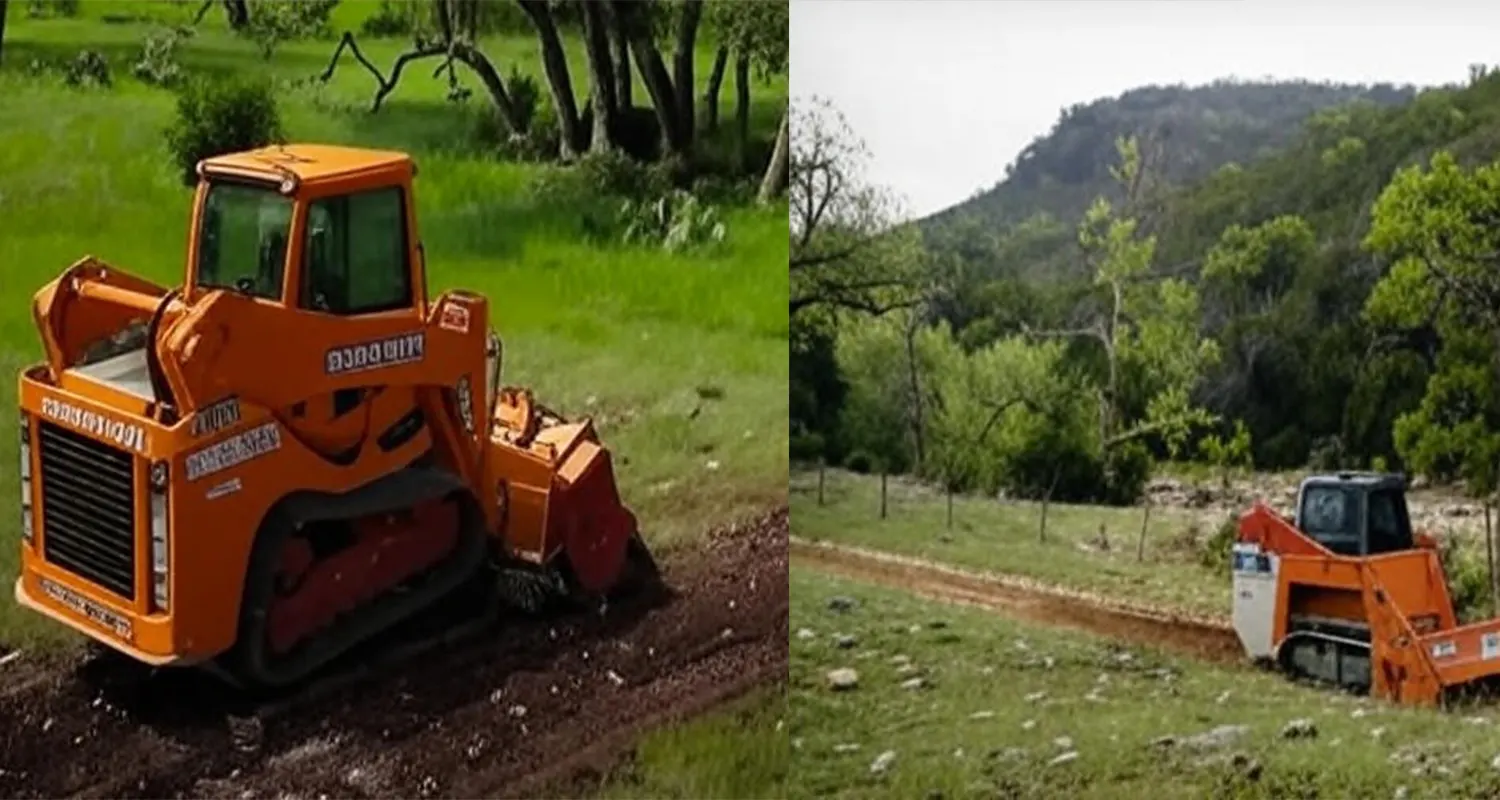
El rotor del THOR 2.4 es un conjunto de acero de 550 mm de diámetro y un peso aproximado de 450 a 500 kg, que gira a 1000 RPM accionado por la toma de fuerza (PTO). Con este diámetro y velocidad, las puntas de los dientes se desplazan a unos 28-29 metros por segundo, la velocidad a la que entran en contacto con la piedra y la fragmentan. La energía cinética almacenada en este conjunto giratorio es considerable, y es precisamente esta energía la que realiza el trabajo de fragmentación.
Cuando el THOR 2.4 se encuentra con una piedra de granito de 25 cm a velocidad normal de funcionamiento, suceden dos cosas simultáneamente:
El rotor utiliza su energía cinética almacenada para fragmentar la piedra.
El rotor desacelera ligeramente al transferir impulso a la piedra. El efecto de volante de inercia del rotor —la energía rotacional almacenada del conjunto de 450 kg que se mueve a más de 28 m/s— hace que esta desaceleración sea moderada en una máquina con la potencia adecuada. El impacto se completa en aproximadamente 30-50 milisegundos, y el rotor recupera su velocidad de funcionamiento a medida que el motor del tractor compensa el breve gasto de energía.
El motor del tractor debe restablecer la velocidad del rotor en la siguiente rotación.
Tras la desaceleración por impacto, la toma de fuerza del tractor debe suministrar el par suficiente para que el rotor vuelva a girar a 1000 rpm antes de encontrarse con la siguiente piedra. En un terreno con varias piedras por metro lineal, estas pueden entrar en el rotor a intervalos inferiores a 200 milisegundos. El motor debe mantener una potencia media que cubra tanto la energía de impacto como la carga continua de fricción y de los cojinetes, de forma constante, durante horas de funcionamiento.
La especificación de 180 CV fue determinada por el equipo de ingeniería de Watanabe en función de las peores condiciones de funcionamiento: densidad máxima de la piedra en el rango de tamaño objetivo (granito de 30 cm de diámetro), profundidad máxima de trabajo (30 cm) y pérdida de potencia a través de la transmisión del tractor. La cifra incluye un margen de seguridad por encima del mínimo calculado, pero este margen no es suficiente para que los tractores con poca potencia puedan operar la THOR 2.4 a máxima profundidad en granito coreano.
| Parámetro | THOR 2.4 | THOR 3.0 |
|---|---|---|
| Potencia mínima del tractor (HP) | 180 caballos | 230 caballos |
| Diámetro del rotor | 550 milímetros | 600 milímetros |
| Velocidad de la toma de fuerza requerida | 1.000 RPM | 1.000 RPM |
| Categoría de enganche | Gato 2 | Gato 2 |
| Diámetro máximo de la piedra | 30 cm | 40 cm |
| Peso de la máquina | 2.300 kg | 2.800 kg |
| Se requieren válvulas hidráulicas traseras | 1 (mín.) — 2 para el modo de pendiente de la barra de tiro del kit | 2 (obligatorio) |
¿Qué sucede cuando la potencia del tractor cae por debajo del mínimo? — Un escenario práctico paso a paso.
Reducir la potencia de una trituradora de piedra con toma de fuerza no produce una máquina más lenta pero funcional, sino una secuencia de eventos mecánicos que la dañan progresivamente. A continuación, se describe la experiencia de un operador en las tierras altas de Corea y lo que sucede internamente cuando una trituradora THOR 2.4 es impulsada por un tractor con una potencia inferior a 180 CV sobre granito duro con piedras de más de 25 cm de diámetro:
Tractores coreanos y compatibilidad con THOR: Cómo interpretar correctamente las especificaciones.
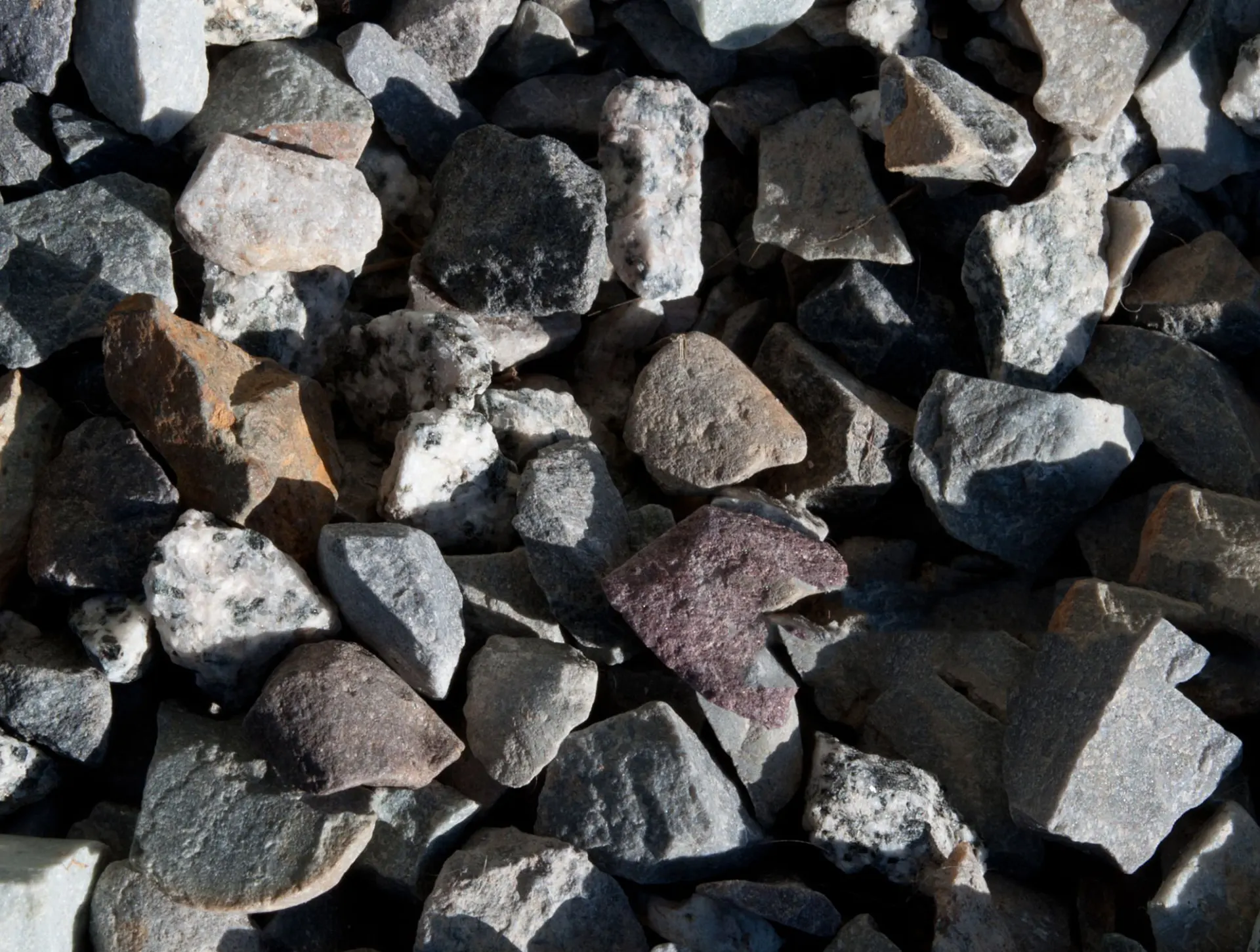
Las marcas coreanas de tractores —LS Mtron, TYM, Kukje (TRZ) y Dongyang— fabrican máquinas con una potencia de entre 150 y 220 CV que se utilizan habitualmente en las explotaciones agrícolas de las tierras altas de Corea. Para consultar la ficha técnica del tractor coreano y determinar los parámetros relevantes para la compatibilidad con THOR 2.4, es necesario comprobar cuatro datos específicos, no solo la cifra principal de potencia del motor:
Servicio de confirmación de compatibilidad de Korea Watanabe
Indique a Korea Watanabe el modelo y el año de fabricación de su tractor. En un plazo de 1 a 2 días hábiles, Korea Watanabe confirmará si el modelo específico cumple con los cuatro requisitos de compatibilidad para el THOR 2.4 o el THOR 3.0, y si se requieren modificaciones de configuración (válvula hidráulica adicional, contrapesos) para que la máquina pueda operarse de forma segura. Este servicio es gratuito para todos los posibles compradores.
¿Cuándo optar por los 230 CV? — La decisión sobre el THOR 3.0
El Trituradora de rocas THOR 3.0 Requiere 230 CV, 50 CV más que el THOR 2.4. El rotor de 600 mm (frente a 550 mm) procesa piedras de hasta 40 cm en lugar de 30 cm, y el ancho de trabajo más amplio de 3,0 m aumenta la tasa de cobertura diaria en aproximadamente 251 TP5T con respecto al THOR 2.4. Tres escenarios específicos justifican la inversión de 230 CV y el tractor más grande necesario:
Operaciones a escala de contratista (más de 20 hectáreas por temporada)
A escala de contratista, la tasa de cobertura diaria determina directamente los ingresos por máquina por temporada. El ancho de 3,0 m del THOR 3.0, a una velocidad de avance equivalente, cubre aproximadamente 251 TP5T más de superficie por día que el THOR 2.4 de 2,4 m. En una temporada de desbroce de 60 días, esto se traduce en aproximadamente 12 a 15 hectáreas adicionales de capacidad de servicio, lo suficiente para justificar el costo adicional de la máquina y el tractor mediante los ingresos adicionales del contrato.
Nuevo terreno con una densidad de piedras confirmada de 35 a 40 cm.
Si la evaluación de campo confirma que las piedras tienen predominantemente un diámetro de entre 30 y 40 cm —algo común en terrenos de matorrales recién desbrozados o en zonas de montaña de primera generación—, la capacidad máxima de 40 cm de la THOR 3.0 proporciona el margen de seguridad que no ofrece el límite de 30 cm de la THOR 2.4. Si bien es técnicamente posible operar una THOR 2.4 con piedras de 35 cm en condiciones de baja densidad, esto genera altas cargas de impacto en la cubierta y los dientes en la parte superior del rango de diseño.
Operaciones combinadas BlackBird de 9,5 m
El rastrillo para piedras BlackBird de 9,5 m está diseñado específicamente para acoplarse al THOR 3.0 mediante un enganche trasero. El THOR 3.0 fragmenta la piedra mientras el BlackBird la recoge simultáneamente en un ancho de 9,5 m. Esta combinación ofrece la mayor productividad en la gestión de piedras de la gama Watanabe y requiere específicamente el THOR 3.0. No es compatible con el THOR 2.4.
Para la mayoría de los agricultores de las tierras altas coreanas —granjas individuales de 5 a 20 hectáreas que utilizan la trituradora de piedra para la preparación del terreno y el mantenimiento anual— la THOR 2.4 con un tractor de 180 CV es la opción correcta y óptima. La THOR 3.0 resuelve problemas que la mayoría de las granjas no tienen.
Antes de comprar: la revisión de cinco puntos para comprobar la preparación del tractor.
Tanto si ya posee un tractor como si va a comprar uno junto con el THOR 2.4, utilice esta lista de verificación para confirmar que está listo antes de comprometerse con la compra de la trituradora de piedra:
Preguntas frecuentes
¿Puede un tractor de 100 CV accionar alguna máquina de gestión de piedras de Watanabe?
Sí, el Rastrillo para rocas EP-EW-4000 Requiere un tractor de al menos 75 HP y es la máquina Watanabe correcta para tractores de tierras altas coreanas de 75 a 130 HP. La EP-EW-4000 funciona como una máquina de limpieza de piedras de mantenimiento anual en campos que ya han recibido la limpieza primaria THOR 2.4. Recoge piedras superficiales levantadas por heladas de la zona de 0 a 8 cm de profundidad con una cobertura de 8 a 12 ha por día. Para un tractor de 100 HP, el sistema práctico para las tierras altas coreanas es: contratar a un contratista THOR 2.4 para la limpieza primaria inicial de campos sin limpiar, luego mantener los campos limpios usted mismo con una EP-EW-4000 adecuada para el tractor existente. Esta combinación proporciona el resultado de limpieza de piedras a un costo de capital apropiado para pequeñas explotaciones agrícolas.
¿Cuál es la potencia mínima del tractor THOR 2.4 en terreno llano en comparación con las pendientes de las tierras altas coreanas?
La potencia mínima de 180 CV se aplica independientemente de la pendiente del terreno, ya que se deriva de la carga de fragmentación de la piedra, no de la carga de tracción. En terreno llano, las ruedas motrices del tractor tienen menos resistencia que superar, lo que significa que hay un poco más de potencia disponible para la carga de la toma de fuerza (TDF); sin embargo, la diferencia es modesta (5-8 CV) y no modifica significativamente la potencia mínima de 180 CV. En las pendientes de las tierras altas coreanas superiores a 10%, el motor del tractor trabaja simultáneamente contra la carga de la TDF y la resistencia de la pendiente, por lo que no se recomienda operar justo a la potencia mínima de 180 CV en terrenos inclinados, ya que el margen se consume con la carga de tracción en pendiente. Para operar en pendientes en terrenos de las tierras altas coreanas, Korea Watanabe recomienda tractores con 185-200 CV o más.
¿El uso de una velocidad de toma de fuerza (PTO) más baja (modo económico de 540 RPM) reduce la potencia del tractor necesaria para la trituradora de piedra?
No, el THOR 2.4 debe operarse a 1000 RPM de la toma de fuerza (PTO). Un ajuste de modo económico de 540 RPM reduce la velocidad del rotor a aproximadamente la mitad de su velocidad operativa de diseño. A esta velocidad reducida, la velocidad de la punta del diente cae por debajo del umbral para una fragmentación efectiva del granito: los dientes se desvían de las piedras en lugar de fracturarlas, y la energía cinética almacenada en el rotor es insuficiente para la energía de impacto requerida. Operar el THOR 2.4 a 540 RPM también conlleva el riesgo de daños en la caja de engranajes, como se describe en la Sección 3, ya que el rotor no puede acumular la energía del volante que modera la carga de impacto en la caja de engranajes de entrada. No existe un modo económico para la operación de la trituradora de piedra con toma de fuerza (PTO): 1000 RPM es la velocidad operativa de diseño y la única velocidad operativa segura.
Si tengo un tractor de 180 CV pero es viejo y el motor no produce toda su potencia, ¿seguirá funcionando el THOR 2.4?
El desgaste del motor, el estado del filtro de aire, el estado de los inyectores de combustible y el rendimiento del turbocompresor afectan la potencia real de un tractor antiguo. Un tractor con una potencia nominal de 180 HP, pero que opera a una potencia máxima de 85% debido a su antigüedad o problemas de mantenimiento, ofrece efectivamente el rendimiento de la toma de fuerza de una máquina de 153 HP, lo que está al límite de los requisitos del THOR 2.4. Antes de combinar un tractor antiguo con un nuevo THOR 2.4, haga revisar el motor para confirmar que está operando a su potencia nominal o cerca de ella: limpie o reemplace el filtro de aire (la causa más común de pérdida de potencia en tractores expuestos al polvo de las tierras altas coreanas), revise el sistema de inyección de combustible y verifique la presión de sobrealimentación del turbocompresor. Korea Watanabe puede asesorar sobre los estándares mínimos de mantenimiento para tractores antiguos que se combinan con trituradoras de piedra Watanabe nuevas, y recomienda una prueba práctica de campo (una hora de operación del THOR 2.4 a máxima profundidad en granito coreano) antes de comprometerse con la combinación.
¿La elección entre una trituradora de piedra de 180 CV y una de 230 CV depende únicamente del tractor, o también de la envergadura de la explotación?
Ambas opciones. La decisión entre 180 HP / THOR 2.4 y 230 HP / THOR 3.0 depende de la potencia disponible del tractor, la densidad y el tamaño de las piedras de la finca, la superficie operativa anual y la escala de operación (finca propia frente a servicios de contratistas). Para la mayoría de las fincas de las tierras altas coreanas que operan menos de 20 ha al año en sus propios campos con la densidad típica de piedra granítica (predominantemente por debajo de 25 cm de diámetro después de la limpieza inicial), el THOR 2.4 con un tractor de 180 HP adecuado produce el rendimiento correcto con un menor costo de capital. Pasar al THOR 3.0 y un tractor de 230 HP añade aproximadamente 30–40% al costo de inversión de la máquina, pero produce aproximadamente 25% más de cobertura diaria y maneja piedras de hasta 40 cm, un paso justificable para contratistas o fincas con una densidad de piedra grande confirmada o requisitos de cobertura anual superiores a 20 ha. Korea Watanabe proporciona una recomendación específica para el perfil de su finca en la consulta inicial.
Confirma la compatibilidad de tu tractor — Gratis, 1-2 días laborables
Envíe a Korea Watanabe el modelo de su tractor, el año de fabricación y el número de serie. Confirmaremos la compatibilidad con THOR 2.4 o THOR 3.0, la potencia de la toma de fuerza (PTO), la categoría del enganche y el número de válvulas hidráulicas, y le indicaremos exactamente qué necesita confirmarse o modificarse antes de la compra.
Editor: Cxm